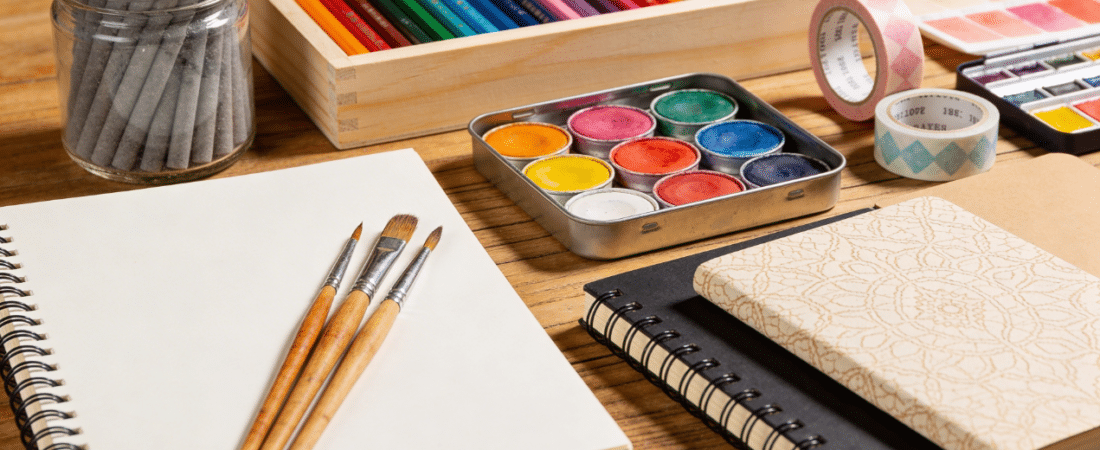

This guide covers everything you need to know about choosing and using art and crafts supplies for classrooms, home crafters, and serious artists. Whether you’re setting up a preschool classroom, stocking a K–5 art room, creating a home craft corner, or equipping a professional studio, you’ll find practical answers here.
We’ll walk you through what to buy, which brands and types to consider, and how to match supplies to ages and projects. Think of this as your roadmap to building a collection that actually gets used.
- Overview of Art & Craft Supplies for Home, School, and Studio
- Core Types of Arts & Crafts Supplies We Offer
- Best Arts & Crafts Supplies for Classroom Learning
- Popular and Trend-Driven Supplies in 2024
- Brands and Quality Levels to Consider
- Who Benefits from Arts & Crafts Supplies and How to Use Them
- Using Art & Craft Supplies to Support Learning and Development
- Buying Tips: Choosing the Right Arts & Crafts Supplies
- Key Takeaways
- Ready to Create?
Overview of Art & Craft Supplies for Home, School, and Studio
The global arts and crafts supplies market exceeded $50 billion in 2024, and with 70% of parents purchasing supplies for home education post-pandemic, demand continues to grow. From preschool sensory projects to professional watercolor paintings, the right materials make the difference between frustration and creative joy.
Art supplies serve concrete environments with distinct needs:
- Preschool classrooms require large-grip tools, washable everything, and materials safe for children under 5
- K–5 art rooms need durable bulk packs that withstand daily use from 20–30 students
- Home craft corners benefit from versatile, compact supplies that store easily
- Hobby studios call for mid-range products with variety in colors and finishes
- Professional art studios demand artist-grade materials with archival quality
This article will help you find the perfect craft supplies for any setting, from essential tools like scissors and glue to specialty items like polymer clay and brush pens.
Core Types of Arts & Crafts Supplies We Offer
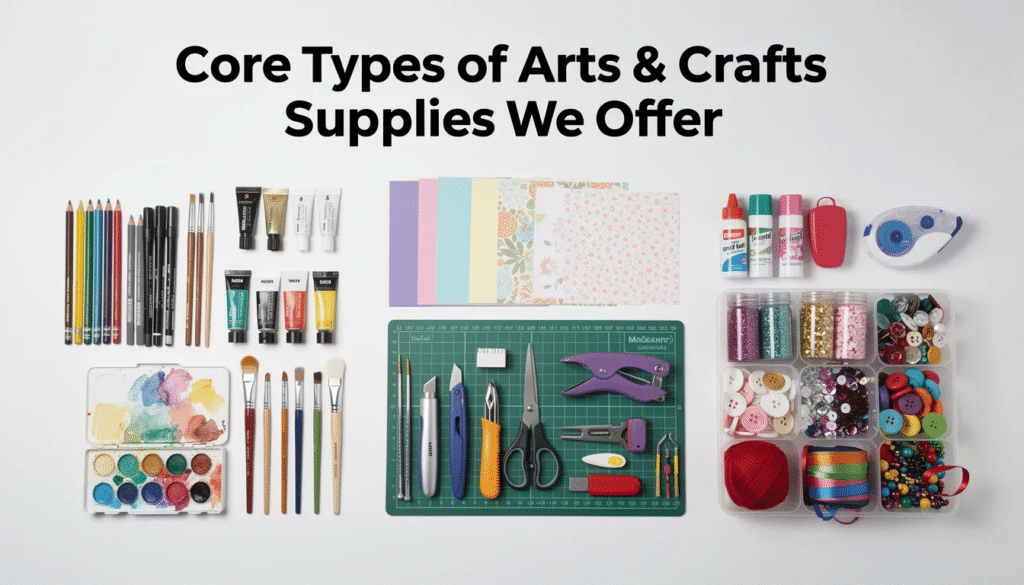
The breadth of crafts supplies arts encompasses runs from basic classroom packs to professional-grade paints and specialty papers. Understanding the main categories helps you shop smarter and stock more efficiently.
Here’s an overview of key categories with typical 2024 price ranges:
- Paper packs and surfaces: Construction paper assortments ($8–$15), watercolor blocks ($12–$40), mixed-media sketchbooks ($10–$25)
- Drawing tools: Washable marker sets ($5–$20), bulk crayon packs ($15–$45), colored pencil tins ($15–$60)
- Paints: Tempera paint sets under $25, acrylic bottle sets ($15–$35), premium watercolor paints around $40–$80 per set
- Modeling materials: Air-dry clay 5lb packs ($12–$20), polymer clay sets ($15–$30), modeling dough for toddlers ($8–$15)
- Craft materials: Felt sheet assortments ($8–$15), chenille stems bulk packs ($5–$12), bead kits ($10–$25)
- Adhesives and tools: Glue stick class packs ($12–$25), low-temp glue guns ($8–$20), scissor sets ($15–$40)
- Kids’ craft kits: Slime labs ($10–$25), bracelet kits ($12–$20), paint-your-own ceramics ($15–$30)
Paper, Pads, and Surfaces
Paper forms the foundation for countless creative projects. The variety of surfaces available means you can match paper to technique, age group, and intended outcome.
Popular surface types include:
- 9”×12” sulphite drawing paper packs (standard for classroom sketching and coloring)
- 18”×24” newsprint pads (economical for quick studies and practice)
- 140lb watercolor blocks (heavyweight paper that withstands wet media without buckling)
- Mixed-media sketchbooks (versatile for pencils, markers, and light washes)
- 48” kraft paper rolls (ideal for group murals and table covers)
Understanding paper grades:
Student-grade paper works well for practice and daily classroom use, while artist-grade options offer heavier weight, acid-free composition, and superior texture for archival work. Smooth finishes suit markers and fine pens, while textured surfaces grip wet media and add visual interest to watercolors and pastels.
Concrete use cases by age:
- Kindergarten: Thick finger painting sheets that absorb moisture without tearing
- 4th grade: Poster board and construction paper for project presentations
- Adults: Cold-press watercolor journals for urban sketching and travel art
Drawing Tools: Crayons, Colored Pencils, and Markers
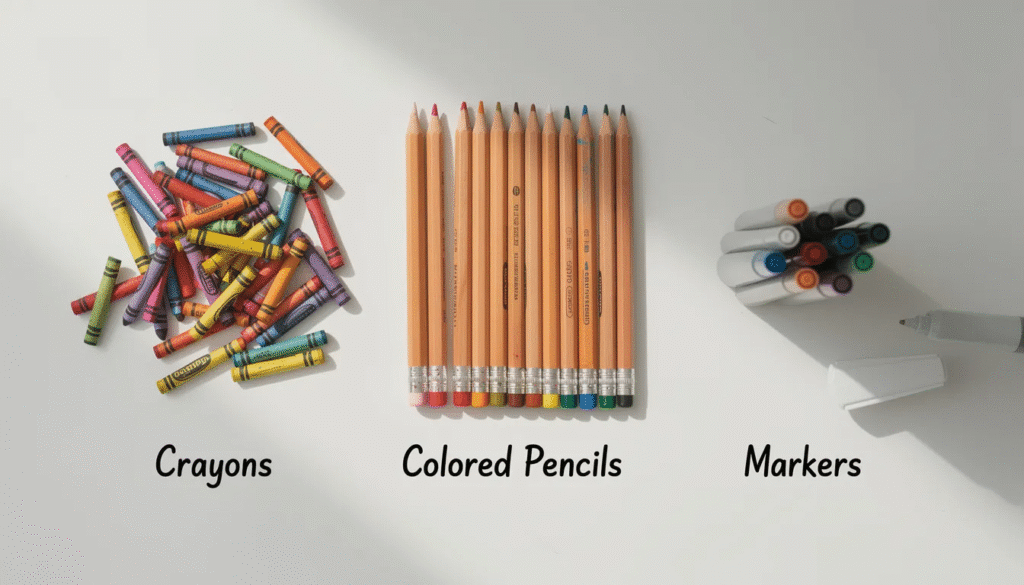
Drawing tools span a wide range from first crayons to professional illustration markers. Matching the right tool to the user’s age and purpose makes all the difference.
Kid-friendly options:
- 24-count washable marker sets with broad tips for easy grip
- Bulk class packs of 800 crayons in assorted colors for group sharing
- Jumbo triangular crayons that prevent rolling and fit small hands
- Non-toxic certifications (ASTM D-4236) ensuring safety for early childhood
Classroom essentials:
- 36-count marker tubs for art stations
- 72-color colored pencil tins for upper elementary detail work
- Low-odor dry-erase markers for whiteboards and learning centers
Hobbyist and teen supplies:
- Dual-tip alcohol markers for blending and illustration
- Fine liner pens for lettering and journaling
- Watercolor pencils that activate with water for mixed effects
Safety note: Washable, low-odor classroom markers differ significantly from permanent and alcohol-based markers suited for older students and adults. Always check age recommendations and ventilation requirements for solvent-based products.
Paints and Painting Tools
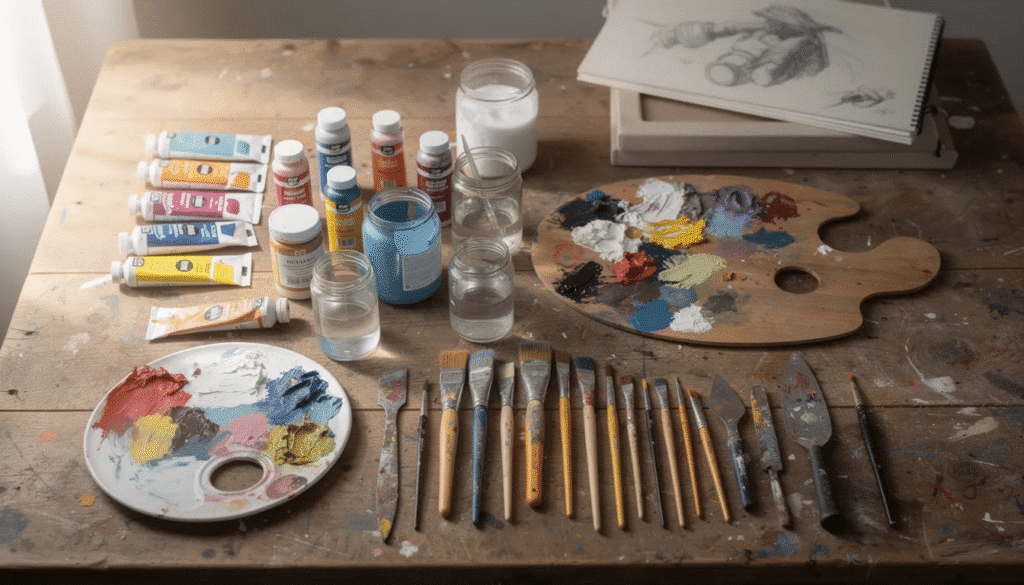
Painting remains one of the most popular arts activities across all ages. The right paint type and tools transform the experience from messy frustration to vibrant colors and creative success.
Main paint types:
- 1-gallon jugs of washable tempera for preschool (easy cleanup, vivid coverage)
- 2oz acrylic bottles for craft projects (quick-drying, versatile on multiple surfaces)
- Pan watercolors for grades 2–5 (affordable, portable, minimal mess)
- Artist-grade tubes for advanced work (higher pigment load, lightfast ratings)
Painting tools to stock:
- Natural and synthetic brushes in classroom sets of 24 (various sizes and shapes)
- Foam brushes for broad coverage and stenciling
- Plastic palettes and paper plates for mixing custom colors
- Water cups with anti-spill rims
- Smocks and table-cover rolls for protection
2024-relevant additions:
- Metallic tempera colors for seasonal decor and holiday projects
- Fabric paint sets for T-shirts, tote bags, and wearable art
- Acrylic pouring medium kits for trending pour-painting techniques
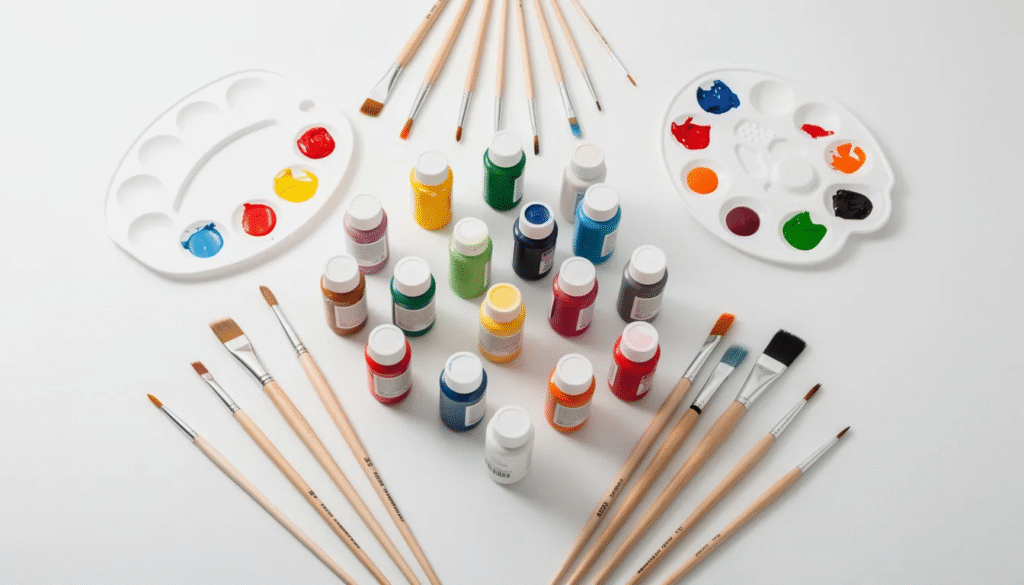
Adhesives, Cutters, and Craft Essentials
Every crafter needs reliable adhesives and cutting implements. These essential tools form the backbone of assembly and finishing work across all project types.
School glues and adhesives:
- White glue in 4oz bottles (paper and lightweight materials), which can also be used to create glue paint craft projects
- Glue sticks in class packs of 30 (clean, quick application)
- Tacky glue for heavier embellishments (sequins, buttons, fabric)
- Low-temp mini hot glue guns for supervised older kids and adults
- Double-sided tape and adhesive dots for instant bonding
Cutting tools by age:
- 5” blunt-tip scissors for ages 3–5 (rounded tips, finger loops)
- 7” student scissors for older children (sharper blades, ergonomic grips)
- Craft knives and cutting mats for advanced crafters (precision cuts on thick materials)
Essential extras:
- Masking tape and painter’s tape (temporary adhesion, clean removal)
- Staplers and staple removers (binding booklets and displays)
- Hole punches (creating perforations for bindings or embellishments)
Safety features to prioritize include rounded tips, comfortable finger loops, non-slip grips, and silicone-padded handles that reduce hand fatigue during extended use.
Crafting Materials: Foam, Felt, Beads, and More
Loose craft materials invite open-ended creativity. These various materials combine in endless ways to create everything from simple collages to complex mixed-media art.
Popular craft materials:
- Adhesive foam shapes (hearts, stars, letters) for quick embellishment
- Felt squares in 9”×12” (soft texture, easy cutting, no fraying)
- Chenille stems/pipe cleaners (bendable, colorful, structural)
- Pony beads and wooden beads for stringing and patterns
- Sequins, glitter, and feathers for decorative accents
- Googly eyes in various sizes for character creation
Concrete project examples:
For seasonal themes, you might also explore polar bear winter crafts for kids or tissue paper stained glass crafts that work well on windows and classroom displays.
- 2024 Valentine’s cards: Foam hearts, stickers, and paper doilies
- Fall leaf mobiles: Felt leaves, wooden beads, and yarn hangers
- Winter holiday ornaments: Glitter foam, ribbon, and chenille stems
Buying considerations:
Bulk classroom assortments provide variety and value for groups, while smaller home craft packs suit occasional projects. Beads and small items carry age recommendations (typically 3+ with supervision) due to choking hazards for younger children.
Modeling, Sculpture, and 3D Building Supplies
Three-dimensional projects develop spatial thinking and hands-on problem-solving. These mediums range from simple dough play to complex sculpture work.
Modeling materials:
- 1lb and 5lb packs of air-dry clay (no kiln needed, hardens overnight)
- Oven-bake polymer clay sets (permanent after baking at 275°F)
- Modeling dough for toddlers (soft, reusable, safe if tasted)
- Papier-mâché materials (newspaper strips, paste, drying time 24–48 hours)
3D structure supplies:
- Wood craft sticks in sets of 400 (standard, mini, and colored variants)
- Wooden dowels for armatures and structural support
- Cardboard cones, boxes, and tubes for building bases
- Foam balls and shapes (lightweight, easy to paint and decorate)
- Wire for advanced armatures and sculptures
Example projects by grade:
- 5th grade: Solar system models using painted foam spheres or other creative space crafts for kids and adults
- Middle school: Mask-making with papier-mâché over balloon forms
- Home crafters: Jewelry dishes and decorative bowls with air-dry clay, or themed builds like a DIY cardboard sword craft
Best Arts & Crafts Supplies for Classroom Learning
Teachers in 2024 balance educational standards, tight budgets, and the need to foster creativity. This section spotlights classroom-ready picks designed for repeated daily use from August through June, complementing broader guides to the best art supplies for young artists.
The key is finding bulk packs, durable tools, and non-toxic, washable products that perform consistently across typical class sizes of 20–30 students.
Classroom priorities:
- Washable formulas that clean up easily from hands, tables, and clothing
- Durable construction that withstands daily handling by multiple students
- Bulk quantities that eliminate mid-year reordering
- Non-toxic certifications meeting ASTM D-4236 standards
- Clear packaging for easy inventory checks
Top-Rated Classroom Craft Essentials
Teachers consistently rate certain products highest for coverage, vibrant colors, and ease of cleanup. These workhorses belong in every art room.
Teacher favorites:
- 12-color classroom tempera sets (consistent coverage, true-to-package colors)
- 250-sheet construction paper assortments in assorted colors (sturdy weight, vivid hues)
- 36-count marker tubs (organized storage, cap colors match ink)
- 96-count crayon boxes (economical per-student cost)
- 30-pack glue stick cartons (twist-up design prevents mess)
Why teachers prefer these items:
- Predictable performance project after project
- Kid-friendly design with chunky grips and sturdy barrels
- Easy distribution and collection in classroom settings
- Colors that photograph well for documentation and portfolios
Example full-class project: A spring mural using tempera paints on kraft paper roll, with construction paper cutouts, glue sticks for assembly, and markers for detail work. This single project draws from five core supply categories.
Age-Appropriate Kits and Projects for Preschool to Grade 5
Curated kits simplify prep time by bundling everything needed for a project in one package. Kids benefit from age-matched challenges that build skills progressively.
Ages 3–4 (Preschool):
- Sensory collage kits with textured papers, foam shapes, and chunky glue sticks
- Project duration: 20–30 minutes
- Focus: Exploration, color recognition, basic assembly
Grades K–2:
- Craft stick puppet kits with googly eyes, felt, and markers
- Paper bag animal kits with templates and pre-cut shapes
- Project duration: 30–45 minutes
- Focus: Following steps, fine motor development, storytelling
Grades 3–5:
- Simple embroidery or weaving boards with yarn and plastic needles
- 3D paper sculpture kits with scoring and folding
- Project duration: 45–60 minutes
- Focus: Pattern following, patience, finished product pride
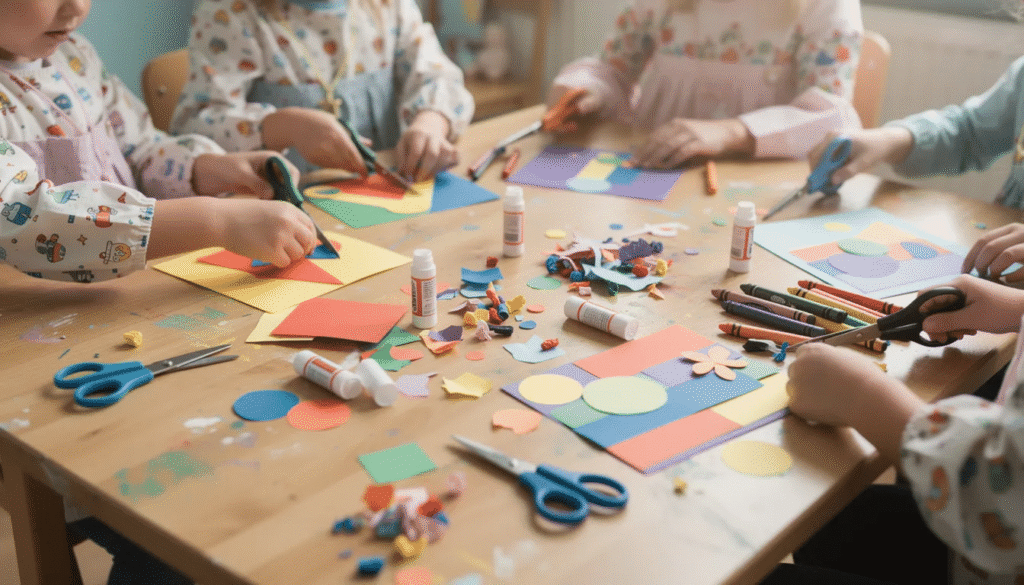
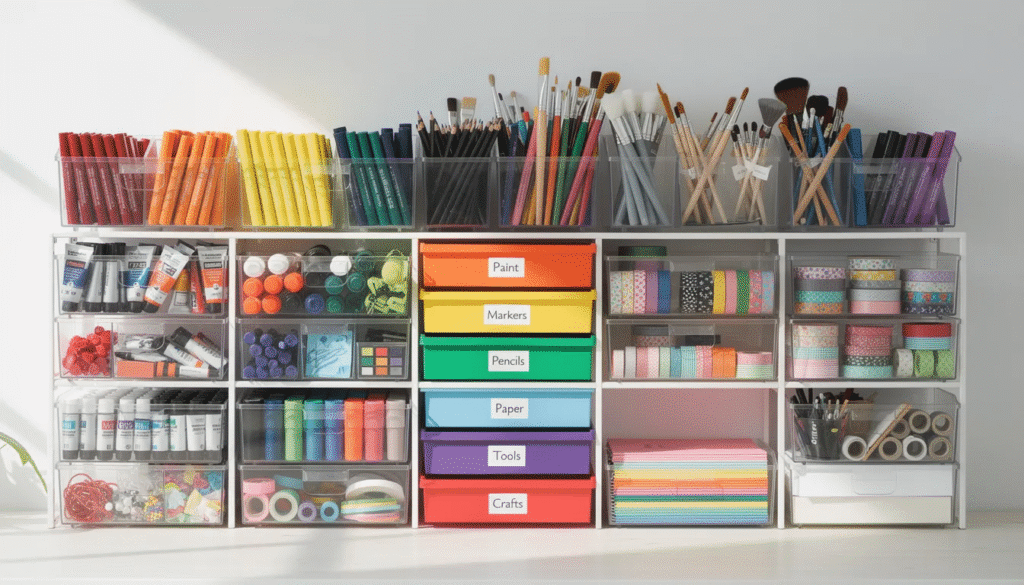
Storage and Organization for Classroom Art Areas
Good organization extends supply life and reduces chaos during transitions. Modular storage solutions keep materials visible and accessible for independent student use.
Recommended storage solutions:
- Plastic caddies for markers and scissors (portable for table groups)
- Labeled bins for paper sizes (8.5”×11”, 9”×12”, 12”×18”)
- Rolling carts with 10 drawers for paints and brushes (mobile between rooms)
- Clear shoebox-size bins for beads and small items (visibility prevents forgotten supplies)
Quick organization tips:
- Color-code bins by material type (blue for paper, green for paints, red for drawing tools)
- Use picture labels for non-readers and English language learners
- Set up “grab-and-go” project tubs pre-stocked with everything for specific lessons
- Place frequently used supplies at student height, specialty items higher
Popular and Trend-Driven Supplies in 2024
Trends shift year to year, and 2024 brings particular interest in personalized gifts, sustainable materials, and hands-on experiences. These supplies work beautifully for after-school clubs, weekend workshops, and family gift-making sessions.
Current popular themes:
- Cottagecore décor (natural materials, muted colors, botanical motifs)
- Hand-lettered journals and planners
- Personalized gifts (custom tote bags, decorated phone grips, monogrammed items)
- Eco-friendly crafting (recycled papers, refillable markers, plant-based materials)
Sustainable supplies including recycled paper stocks and biodegradable glues have seen demand increase by 25% among eco-conscious consumers.
Kids’ and Family Craft Kits
Ready-made kits remove the guesswork from family craft time. These products include measured ingredients, clear instructions, and all necessary tools.
Specific kit types:
- Slime labs with pre-measured ingredients (ages 6+, adult supervision for activator)
- Bracelet and charm kits (ages 8+, develops pattern skills)
- Paint-your-own ceramic figurines (ages 6+, includes paints and brushes)
- DIY science-and-art fusion kits like crystal growing or bath bomb making (ages 8+)
Seasonal favorites for late 2024:
- Valentine’s charm bracelet kits with heart beads and friendship symbols
- Winter holiday ornament painting sets with ceramic or wood blanks
- New Year’s time capsule kits for family memory-making
Experience factors to consider:
- Time needed: 30 minutes to 2 hours depending on complexity
- Mess level: Low (sticker crafts) to high (slime, paint)
- Keepsake value: Many kits produce items kids treasure for years
Home Décor and Seasonal Crafting Supplies
Creating handmade home décor adds personal touches to living spaces and makes meaningful gifts. These supplies support wreaths, centerpieces, and wall art throughout the year.
Core décor supplies:
- Wire wreath forms in various sizes (12”, 18”, 24”)
- Faux greenery and seasonal florals
- Ribbon spools in assorted colors and patterns
- Floral tape and wire for securing elements
- Hot glue sticks in bulk packs
Seasonal project ideas:
- Spring 2024: Floral wreaths with pastel ribbons and faux blooms
- Summer: Painted welcome signs on unfinished wood
- Fall 2024: Pumpkin and leaf garlands using felt and burlap
- December 2024: Holiday door décor with evergreen picks and ornaments
Surface options for customization:
- Unfinished wood signs and cutouts
- Stretched canvases in various sizes
- Mason jars for centerpieces and luminaries
- Glass vases ready for painting or decoupage
Lettering, Journaling, and Mixed Media Trends
Bullet journaling, modern calligraphy, and mixed-media art journals continue to grow in popularity. Adult coloring books alone sell 12 million units annually in the US.
Specific supplies for these hobbies:
- Brush pens for modern calligraphy (flexible tips create thick-thin variation)
- Archival fineliners in various point sizes (0.1mm to 0.8mm)
- Stitch-bound notebooks with lay-flat binding
- Mixed media sketchbooks with grid or dot layouts
2024 sustainability note:
Rising interest in eco-friendly options includes recycled paper notebooks, refillable brush markers, and plant-based inks. Look for FSC-certified papers and products with minimal plastic packaging.
Pairing recommendations:
- Brush pens + smooth 160gsm paper = crisp calligraphy
- Fineliners + dot grid journals = precise bullet journaling
- Watercolor pens + mixed media paper = spontaneous illustration
Brands and Quality Levels to Consider
Understanding the difference between budget classroom brands, mid-range hobby brands, and professional-grade fine art brands helps you match your investment to your purpose.
We prioritize non-toxic, safety-tested, and reliable products across all price points. Whether you’re stocking supplies for a classroom of 25 or building a personal studio collection, there’s an appropriate tier for your needs.
Matching brand tier to purpose:
- Bulk classroom use: Value brands with washable formulas and durable construction
- Weekend crafting: Mid-range hobby brands with good color variety
- Portfolio and gallery work: Artist-grade brands with archival quality
Classroom and Kid-Focused Brands
Classroom-focused brands engineer products specifically for the demands of educational settings and young users.
Key attributes:
- Extra-washable formulas that release from skin and most fabrics
- Sturdy barrels and casings that resist snapping and breaking
- Large-size crayons and markers designed for small hands
- Non-toxic certifications meeting all safety standards
Packaging designed for schools:
- Mega packs (200+ count crayons, 8-gallon paint bundles)
- Dispenser boxes that store neatly and distribute easily
- Stackable tubs that maximize shelf space
- Class-size assortments matching typical student counts
These products optimize for school budgets with lower per-unit costs while maintaining the durability needed for daily use by multiple children.
Hobby and DIY Craft Brands
Mid-range hobby brands offer the sweet spot between value and quality for weekend crafters, Etsy sellers, and community workshop leaders.
Product types in this tier:
- Versatile acrylic paint sets with 24–48 colors
- Fabric paints for wearables and home textiles
- Chalk paints for furniture and home décor
- Scrapbooking tools and embellishments
- Basic wood-burning and pyrography kits
Why hobbyists choose this tier:
- Reliable performance without professional prices
- Wider color variety including specialty finishes (matte, satin, metallic, glitter)
- Suitable for products made for sale at craft fairs or online
- Good balance of quality and value for learning new techniques
Artist-Grade Fine Art Brands
Artist-grade materials feature higher pigment loads, lightfast ratings (meeting ASTM standards for fade resistance), and archival quality that ensures work lasts for decades.
Examples of artist-grade products:
- Extra-fine gouache tubes with intense pigment saturation
- Professional watercolor pans with single-pigment formulations
- Synthetic and natural-hair brushes with precise tip control
- Archival synthetic papers that won’t yellow over time
Typical users:
- Art students in college programs
- Professional illustrators and fine artists
- Serious hobbyists preparing gallery work or commissions
- Anyone creating pieces intended for sale or long-term display
The investment in artist-grade supplies pays off through superior results, color mixing accuracy, and longevity of finished work.
Who Benefits from Arts & Crafts Supplies and How to Use Them
Art and crafts supplies serve a remarkably broad audience: teachers, parents, after-school staff, therapists, and independent artists all rely on quality materials to achieve their goals.
These supplies function as tools for creativity, emotional expression, skill building, and academic integration. The following sections show concrete, practical uses rather than abstract benefits.
Teachers and Classroom Educators
Art supplies support curriculum across subjects in 2024, extending far beyond dedicated art classes.
Cross-curricular applications:
- Science: Clay models of the water cycle, painted diagrams of plant cells, 3D animal habitat dioramas
- Math: Pattern block mosaics, symmetry paintings, fraction pizzas using colored paper wedges
- Language arts: Illustrated storyboards, character portraits, vocabulary posters
- Social studies: Cultural mask projects, illustrated timelines, geography relief maps
Example lessons with supply lists:
- Earth Day sculpture unit: Recycled materials, tape, paint, found objects—students create art while learning about sustainability
- Storyboard project: 12”×18” paper, markers, colored pencils—students visualize narrative sequence from reading assignments
- Historical diorama: Shoeboxes, construction paper, clay, craft sticks—students recreate scenes from studied time periods
Predictable, bulk-available supplies align with school-year planning and budgets, allowing teachers to plan curriculum knowing materials will be accessible.
Parents, Caregivers, and Home Schoolers
Home crafting supports family bonding, birthday parties, and homeschooling curriculum enrichment.
Weekend family project ideas:
For inspiration, you can draw from colorful weekend craft ideas for all ages or try outdoor-inspired nature stick crafts for kids.
- Seasonal décor crafts (wreaths, painted rocks, holiday ornaments) or curated DIY kits for creative projects
- Handmade gift-making for relatives
- Collaborative family murals or scrapbooks
Low-prep options for busy evenings:
- Coloring pages and coloring books (minimal setup, calming activity)
- Sticker collages with pre-made sheets and paper backgrounds
- Ready-made craft kits with all materials included
Setting up a home art station:
- Labeled bins for paper, drawing tools, paint, and glue
- Child-height shelving for independent access
- Washable tablecloth or craft mat for easy cleanup
- Aprons or old shirts designated as “art clothes”
The goal is making creative time easier by reducing setup and cleanup barriers.
Therapists, Counselors, and Program Coordinators
Art materials support emotional expression, sensory integration, and social skill development in clinical and program settings.
Therapeutic applications:
- Clay work for stress relief and grounding (tactile, rhythmic kneading)
- Collage for identity exploration with teens (visual self-representation)
- Group murals for teamwork building (collaborative decision-making)
- Mandala coloring for mindfulness and anxiety reduction
Setting considerations:
- Safe, non-toxic materials appropriate for all ages and abilities
- Easy-to-clean supplies that maintain hygienic environments
- Variety of options to match individual preferences and needs
- Open-ended materials that avoid “right/wrong” outcomes
Studies indicate crafting boosts mental health outcomes, with adult mandala kits seeing 15% yearly sales increases as therapeutic applications grow.
Using Art & Craft Supplies to Support Learning and Development
For more on how creative activities build skills and confidence, see this overview of the art and craft benefits for child development and growth.
Art isn’t “extra”—it develops fine motor skills, creativity, problem-solving, and cross-curricular understanding. Research shows crafting boosts fine motor skills by 20% in children who engage regularly with hands-on materials.
Core skills developed through art activities include cutting, drawing, planning, collaboration, and reflection on finished work.
Fine Motor Skills and Hand-Eye Coordination
Specific art activities target motor development at each age and stage.
Ages 3–5:
- Cutting with child-size scissors develops hand strength and bilateral coordination
- Threading beads on yarn practices pincer grasp and sequencing
- Modeling with dough strengthens hand muscles for future writing
Ages 5–7:
- Large crayons and thick markers support developing tripod grip
- Lacing cards practice hand-eye coordination and pattern following
- Sticker mosaics develop precision placement skills
Ages 7+:
- Thinner pencils and fine-tip markers refine control
- Small clay sculpture projects challenge detailed finger work
- Embroidery and weaving develop patience and fine manipulation
Creativity, Problem-Solving, and Critical Thinking
Open-ended supplies invite experimentation and design thinking that structured activities cannot replicate.
Materials that spark creativity:
- Assorted paper scraps in various colors, patterns, and textures
- Recyclables like cardboard tubes, bottle caps, and fabric scraps
- Mixed media bins combining yarn, buttons, ribbon, and found objects
Project types that develop thinking skills:
- Designing an invention prototype from cardboard and tape
- Planning a mural layout collaboratively with peers
- Reimagining a story scene through collage interpretation
- Creating solutions to design challenges (build a bridge, design a habitat)
Reflecting on choices—color, shape, composition, material selection—strengthens critical thinking and communication skills as students explain their creative decisions.
Integrating Art into Core Subjects
Art activities enhance retention and understanding across the curriculum.
Science integration:
- Clay models of the water cycle with labeled stages
- Painted diagrams of plant cells showing organelles
- 3D animal habitats made from shoeboxes and craft materials with plants and natural elements
Math integration:
- Pattern block mosaics exploring symmetry and tessellation
- Symmetry paintings using fold-and-press techniques
- Fraction pizzas using colored paper wedges (halves, quarters, eighths)
Language arts and social studies:
- Illustrated timelines showing historical events
- Character portraits based on text descriptions
- Cultural mask projects exploring world traditions
Each activity pairs academic content with hands-on engagement, building memory and understanding.
Buying Tips: Choosing the Right Arts & Crafts Supplies
Smart purchasing prevents waste and ensures supplies actually get used throughout the year. Key factors include age, skill level, safety, storage space, budget, and specific project needs.
Use these guidelines as a checklist when planning your purchases.
Safety, Age Ratings, and Non-Toxic Standards
Safety comes first, especially with young children.
Essential safety checks:
- Look for non-toxic certifications (ASTM D-4236) on all products used by children
- Check age recommendations on packaging and follow them
- Avoid small parts (beads, buttons, sequins) for children under 3 due to choking hazards
Age-appropriate tool use:
- Hot glue guns: Ages 8+ with adult supervision, or adult-only
- Craft knives: Ages 12+ with training, or adult-only
- Solvent-based markers: Teens and adults only, with ventilation
- Training scissors with blunt edges: Ages 3–5
When in doubt, choose the safer option and supervise closely when introducing new tools.
Budgeting and Buying in Bulk vs Single Items
Strategic purchasing maximizes your budget across the entire year.
Bulk vs. single comparison:
Item | Classroom Bulk Pack | Home Pack | Cost Savings |
|---|---|---|---|
Construction paper | 250 sheets, $12 | 50 sheets, $5 | 52% per sheet |
Crayons | 96 count, $15 | 24 count, $4 | 60% per crayon |
Glue sticks | 30 pack, $18 | 6 pack, $5 | 28% per stick |
Markers | 36 count, $20 | 12 count, $8 | 17% per marker |
Budget planning tips: |
- Plan purchases around school calendar and holiday seasons for deals
- Stock up on high-use essentials (paper, glue, markers) in larger quantities
- Buy smaller quantities of specialty items until you know you’ll use them
- Check for multi-packs and themed bundles during back-to-school and holiday sales
Planning for Storage, Cleanup, and Longevity
Proper storage extends supply life and keeps creative spaces functional.
Low-mess supply choices:
- Washable paints and markers for young children and small spaces
- Glue sticks instead of liquid glue for less dripping
- Capped markers with click-shut lids to prevent drying
Organization essentials:
- Clear bins that let you see contents at a glance
- Label maker or printed labels for consistent organization
- Simple shelf systems at appropriate heights for users
Extending supply life:
- Seal paint lids properly after each use (wipe rims first)
- Store markers horizontally to prevent ink pooling
- Keep paper in dry, flat areas away from humidity
- Test markers periodically and remove dried-out ones
Key Takeaways
- Match supplies to your setting: bulk packs for classrooms, versatile mid-range for home crafting, artist-grade for professional work
- Prioritize safety with non-toxic certifications and age-appropriate tools
- Stock up on high-use essentials (paper, glue, markers, crayons) and experiment with smaller quantities of specialty items
- Good organization extends supply life and makes creative time easier
- Art activities develop fine motor skills, creativity, and academic understanding across subjects
Ready to Create?
The right art and crafts supplies transform ideas into tangible creations that teach, delight, and inspire. Whether you’re outfitting a classroom for the year, setting up a home craft corner for weekend projects, or building a studio collection for serious art-making, start with quality essentials and expand from there.
Consider your specific needs—ages of users, types of projects, available storage, and budget—then build a collection that will actually get used. The best supplies are the ones that make it easier to say yes to creativity, whenever inspiration strikes.