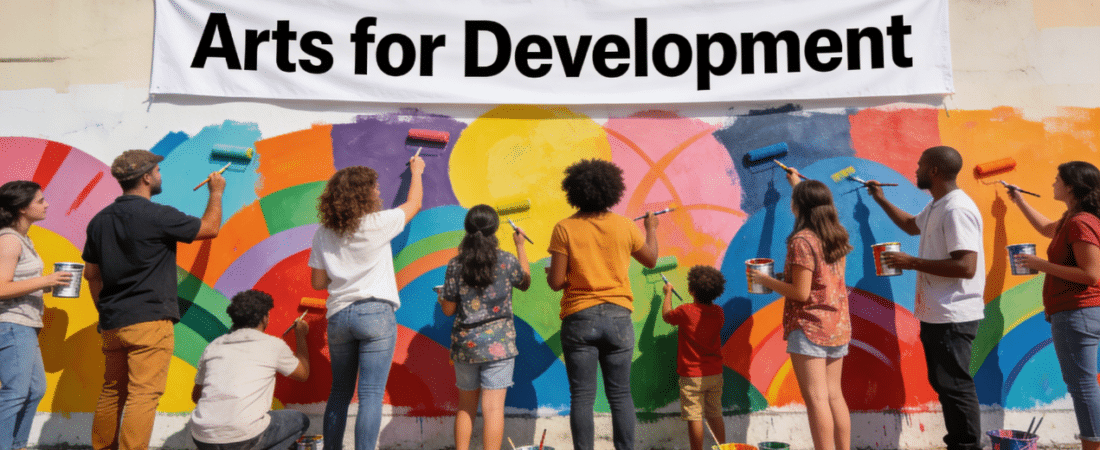

This article is for anyone interested in how art can help communities and the world. Arts for development is now recognized as very important for making communities and the planet healthier and happier. We will explore what arts for development means, how it has grown, and real-world examples of its impact.
For a long time, people didn’t think much about how art could help solve big problems in the world. But now, more and more people know that arts for development is essential for building community, supporting development, nurturing health and well-being, and contributing to economic opportunity. The United Nations, which is a group of countries working together, says that learning about different cultures and protecting special places is a big part of making the world a better place. Arts for development also plays a key role in community development, supporting economic well-being, and promoting sustainability through creative projects and cultural initiatives. Artists and communities everywhere use art to help with things like climate change, helping people get along, and feeling less stressed, and this article will explore how arts for development can address these global challenges.
Arts and culture are essential for building community, supporting development, nurturing health and well-being, and contributing to economic opportunity. They help people connect, foster a sense of belonging, and create opportunities for economic growth. Arts and culture also play a vital role in achieving the United Nations Sustainable Development Goals (SDGs), which aim to make the world a better, fairer, and more sustainable place for everyone.
- What is Arts for Development?
- How Has Arts for Development Grown?
- How Does Art Help Communities?
- The Role of Art in Sustainable Development
- How Kids and Young People Use Art to Make a Difference
- Big Projects Using Art to Help Communities
- How Can You Get Involved?
- Why Measuring Art’s Impact is Important
- Challenges to Remember
- The Future of Arts for Development
What is Arts for Development?
Arts for development means using different types of art—like painting, music, dancing, and storytelling—to help people and communities grow and solve problems. It’s not just about making pretty pictures or fun shows. It’s about using art to bring people together, share stories, and make life better for everyone.
Arts and culture are essential for building community, supporting development, nurturing health and well-being, and contributing to economic opportunity.
People use arts for development in many ways:
- Helping people find jobs by making crafts or starting creative businesses.
- Using art to help people feel better when they are sad or sick.
- Teaching kids through arts and crafts, songs, plays, and drawing.
- Bringing communities together after hard times like disasters or conflicts.
- Using art to show how climate change is affecting the planet and inspire people to help.
- Using arts for education and building knowledge, supporting learning and capacity building in communities.
- Providing resources and fostering innovation through arts initiatives, which help communities develop new ideas and solutions.
Arts for development also brings new perspectives and shares knowledge, helping communities understand and address their challenges in creative ways. Arts foster connection, amplify marginalized voices, and drive local action through creative expression.
Creative placemaking turns neglected areas into vibrant community assets.
Now that we understand what arts for development means, let’s look at how it has grown over time.
How Has Arts for Development Grown?
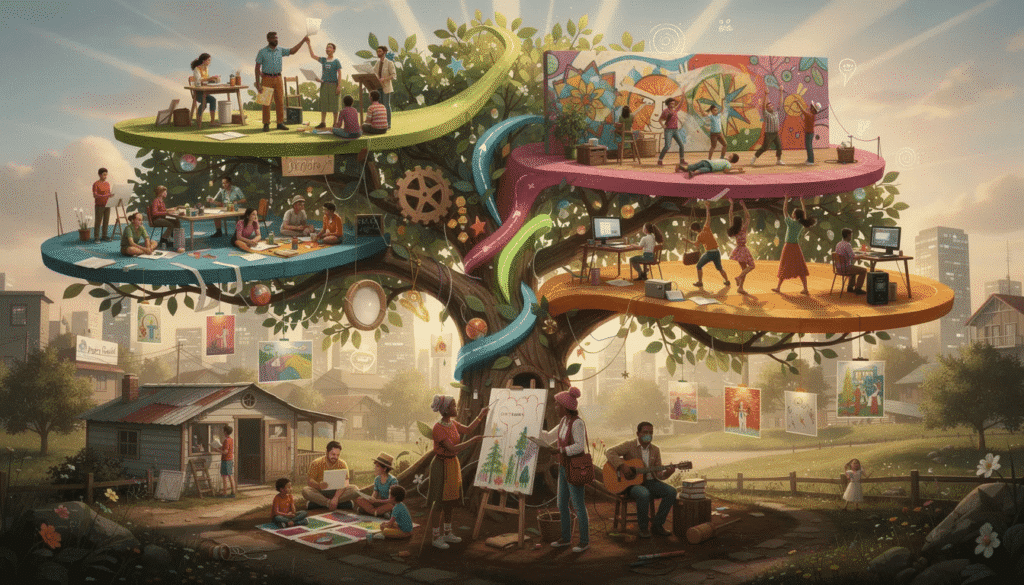
A long time ago, in the 1980s and 1990s, people started using plays and songs to talk about important community problems in places like Latin America and South Africa. These arts helped people understand each other better and work together.
In the 2000s, big groups like the United Nations began to see how important culture and art are for helping communities grow and stay healthy. Now, many cities and countries have plans to use art as a part of their development work.
Research has played a key role in tracking and understanding the growth and impact of arts for development, helping to inform strategies and measure community outcomes. Since 2002, Arts for Global Development, Inc. has been facilitating a multi-disciplinary, cross-sectoral and participatory approach to development, serving as an important example in the field.
With this background, we can explore the many ways art helps communities today.
How Does Art Help Communities?
Art helps in many important ways:
Bringing People Together
When people make art together, they feel connected and stronger as a community. Collaboration—especially cross-sector collaboration among artists, cultural organizations, and local groups—is essential for effective community development through the arts.
Helping People Feel Better
Music, painting, and dance can help people heal from sadness or stress. Collective care shape is influenced by identity, place, and community-driven efforts, with arts projects fostering dignity, belonging, and well-being.
Creating Jobs
Making and selling art can help people earn money and keep their traditions alive. A net of partnerships and networks supports arts-based community development, connecting different sectors and amplifying social impact.
Protecting the Planet
Art can show how nature is changing and encourage people to take care of the Earth. Creative spaces and exhibitions provide vital platforms for community engagement, dialogue, and advocacy on social and environmental issues.
Making Neighborhoods Better
Murals and public art make places more beautiful and can help stop people from being forced to move away. Public art spaces can also increase property values by 15–20% and boost local business.
Real-World Examples
- In the Skaramagas Refugee Camp, migrants painted their own housing, fostering a sense of ownership.
- The Favela Painting Project in Brazil transforms urban landscapes and builds community pride.
- The High Line in New York, once a disused railway, became an elevated public park that drove significant local economic development.
- Wynwood Walls in Miami turned a derelict neighborhood into a major tourist destination, boosting local business.
- Local artists in Uganda craft sculptures of endangered species, raising awareness of deforestation and funding tree planting.
- The Blue Trees is a global installation raising awareness of deforestation.
- The City of Gainesville, FL is leveraging arts and culture to better understand and address community challenges such as gun violence and safety.
Beyond these community benefits, art also plays a crucial role in sustainable development.
The Role of Art in Sustainable Development
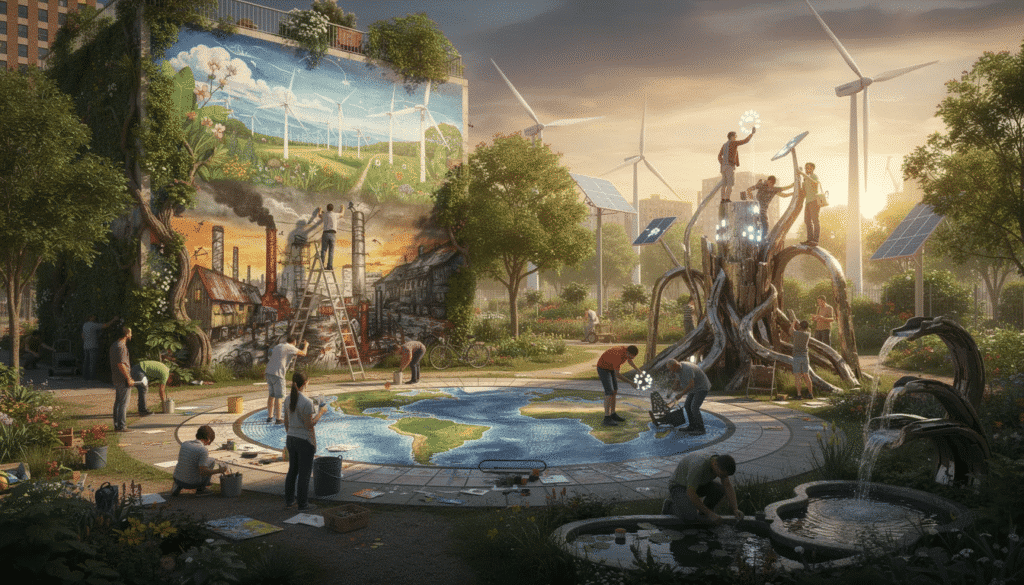
Art is playing a bigger role than ever in tackling the global development challenges of our time, especially the climate and nature crises. Around the world, local artists and communities are using creative expression to challenge societal inequities and promote sustainable development in ways that are both innovative and inspiring.
Art and Climate Action
For example, textile arts are being used to raise awareness about environmental degradation and the importance of collective care for our planet. Through weaving, embroidery, and fabric art, artists tell stories about how climate change affects their communities and encourage others to take action. These creative projects not only highlight the urgent need for climate action but also celebrate cultural identity and traditions.
Textile Arts for the Environment
Textile arts, such as weaving and embroidery, are powerful tools for sharing stories about environmental change and inspiring action. These projects connect people to their heritage while raising awareness about the need to protect the planet.
Art Therapy and Well-being
Art therapy is another powerful tool being used by organizations worldwide to support mental well-being, especially as people face financial stress and social fragmentation caused by climate change and other global challenges. By providing safe spaces for creative expression, art therapy helps individuals and communities heal, build resilience, and strengthen their sense of belonging.
Measuring Impact
Measuring the impact of art-based initiatives—such as tracking the verification of successful waiting times for programs—helps ensure these projects are truly making a difference in promoting sustainable development and addressing societal inequities. Researchers and practitioners are exploring best practices and sharing lessons learned from successful case studies around the world, from projects that reduce waste and promote recycling to those that raise awareness about climate change and its effects on human health.
Participatory Approaches
However, it’s important to remember that some art forms use hazardous materials, which can harm the environment. That’s why a participatory approach is needed, where artists, organizations, and communities work together to make decisions that protect both people and the planet. By involving everyone in the process, we can find new ways to create art that is safe, sustainable, and meaningful.
Art has the unique power to shape how identity, nature crises, and collective care intersect. It is being used in innovative ways to promote social justice, challenge the root causes of environmental degradation, and inspire collective action. This multi-disciplinary, cross-sectoral approach brings together artists, organizations, and communities to create new ways of understanding and addressing global challenges.
As the global community recognizes the importance of art in sustainable development, it is being included in international agreements and climate policy frameworks. By supporting local artists and creative communities, we can build a more just and sustainable world that values creativity, diversity, and collective care.
Art is a fundamental tool for development, helping us respond to the challenges facing our planet. By prioritizing the use of art in sustainable development, we can harness its transformative power to create a better future for everyone.
Now, let’s see how kids and young people are using art to make a difference.
How Kids and Young People Use Art to Make a Difference
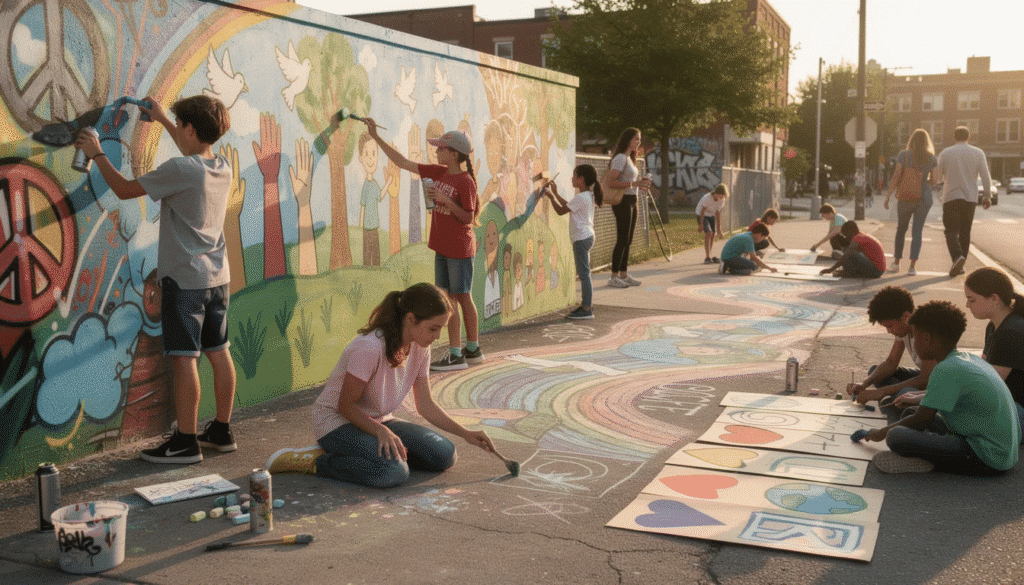
Young people use art to express themselves and their ideas about the world. When kids and teens paint murals, write poems, or perform plays, they learn important skills like working with others and speaking up for what they believe in.
For example, in Gainesville, Florida, a project called One Nation One Project helps young people use art to talk about safety and peace in their neighborhoods. In other places like Colombia and Kenya, young artists use hip-hop and graffiti to share their stories and bring hope to their communities.
Next, let’s look at some big projects that use art to help communities.
Big Projects Using Art to Help Communities
ArtPlace America in the United States
In the United States, ArtPlace America helped many cities include artists in their plans to build better housing and healthier neighborhoods.
Los Angeles: Preserving Culture
In Los Angeles, artists helped long-time residents keep their culture alive even as neighborhoods changed.
Minnesota: Immigrant Communities
In Minnesota, art helped immigrant communities feel healthier and more connected.
Native American Communities
Native American communities use traditional art to protect their culture and create new opportunities.
Now that you’ve seen some big projects, here’s how you can get involved.
How Can You Get Involved?
Anyone can help make a difference with art!
- If you like to draw, sing, or dance, you can join local art groups or clubs.
- Community groups can work with artists to create murals or shows about important topics.
- Schools and cities are starting to include art in their plans to make communities better.
- You can also share your art to tell stories about your community and what matters to you.
Let’s see why it’s important to measure the impact of art.
Why Measuring Art’s Impact is Important
It’s important to know how art helps people and communities. Researchers and organizations look at:
- How many people join art projects.
- How art makes people feel happier and safer.
- How art helps communities come together.
- How art creates jobs and supports local businesses.
This helps show others why art is a powerful tool for change.
Now, let’s consider some challenges to keep in mind.
Challenges to Remember
Art for development isn’t always easy. Sometimes, artists don’t get to make decisions or get paid fairly. Artists also often face limited access to preventive care, which can impact their health and safety while engaging in creative practices. Sometimes, art projects can accidentally cause problems like pushing people out of their neighborhoods. It’s important to listen to the community and make sure art helps everyone in a fair way.
Looking ahead, let’s see what the future holds for arts for development.
The Future of Arts for Development
Art will keep playing a big role in making the world better. New technology like digital art and virtual reality will help even more people join in. Artists will work together with scientists, teachers, and leaders to solve big problems like climate change and inequality.
For kids and adults alike, art is not just fun—it’s a way to connect, heal, and create a better future for all of us.
Remember, your creativity can help change the world. Whether you paint, sing, dance, or tell stories, your art has the power to make a difference!