
Looking for a creative activity that keeps kids entertained while teaching them about recycling? Egg carton animals are the perfect project. With just a few simple materials and about 30 minutes, children can transform ordinary cardboard into adorable creatures they’ll love to play with and display.
- Quick Answer: What Is a Carton Animal Craft?
- Why Make Carton Animals? (Benefits for Kids and Adults)
- Materials and Tools You’ll Need for Carton Animals
- Step-by-Step: How to Make Simple Carton Animals
- Project Ideas: Specific Carton Animals to Make
- Creating 3D Carton Animal Portraits
- Tips for a Smooth, Low-Stress Craft Session
- Extending the Activity: Learning and Play Ideas
Quick Answer: What Is a Carton Animal Craft?
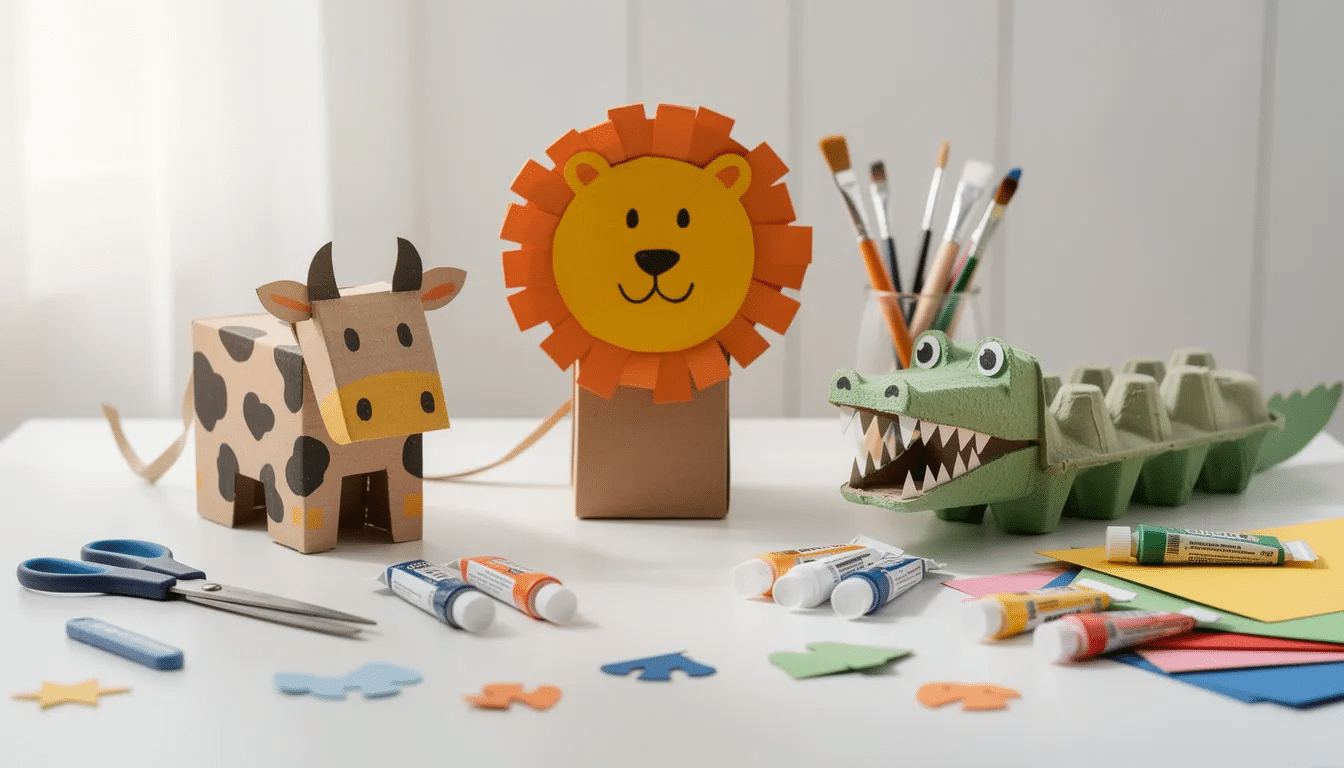
A carton animal is simply an animal figure made from recycled cardboard or egg cartons. These crafts have become a staple in homes, classrooms, and after-school clubs because they combine creativity with environmental awareness. The basic idea is straightforward: take something destined for the recycling bin and turn it into something fun.
Children use real cardboard egg cartons, scissors, glue, and paint to transform each cup into animals like turtles, frogs, cats, dogs, and dinosaurs. The egg carton’s natural cup shape provides a ready-made body, shell, or head that kids can decorate however their imagination leads them.
This guide focuses on easy, step-by-step egg carton animal projects that can be finished in about 30–45 minutes per animal. Whether you’re a parent planning a rainy-day activity or a teacher setting up a classroom craft corner, these projects deliver quick results.
Key benefits of making egg box animals:
- Low cost since you’re using cartons you’d otherwise throw away
- Eco-friendly recycling lesson built into every project
- Simple materials already found at home or in school art cupboards
- Perfect for mixed-age groups from toddlers to tweens
This article covers four specific project outcomes: a carton turtle, carton caterpillar, carton farm animals, and 3D carton animal portraits for hanging on walls, all of which pair nicely with themed activities like an egg carton treasure chest craft for pretend play.
Why Make Carton Animals? (Benefits for Kids and Adults)
Egg carton animal crafts have been popular in homes and classrooms since at least the 1990s as a classic recycled art project. There’s a reason this activity has stood the test of time—it works for nearly every age group and skill level.
Developmental benefits for children:
- Fine motor practice from cutting cardboard and painting small details
- Problem-solving skills while figuring out how to assemble 3D shapes
- Storytelling abilities when naming and playing with finished animals
- Colour recognition and mixing when choosing paint combinations
- Following instructions and sequential thinking during assembly
Parents and teachers can use carton animals as a low-prep activity for rainy days, after-school clubs, or Earth Day events in April each year. The materials are inexpensive, cleanup is manageable, and kids walk away with a tangible creation they’re proud of, much like when they explore themed DIY craft kits for creative projects.
The environmental angle matters too. When you recycle egg cartons into art, you’re introducing kids to upcycling concepts in a hands-on way. Instead of lecturing about sustainability, you’re showing them how to create something new from something old.
Carton animals are ideal for mixed-age groups. Adults can pre-cut shapes for younger kids while older children design details themselves. A five-year-old and a ten-year-old can work side by side on the same project with different levels of independence.
Materials and Tools You’ll Need for Carton Animals
This section is a practical shopping and prep list for a standard group of 4–6 children. Gather everything before you start to make the craft session smooth and enjoyable.
Base materials:
- Cardboard egg cartons (12-egg or 18-egg sizes work best)
- Use real cardboard rather than foam or plastic since cardboard absorbs paint well and is easier to cut
- Save cartons for 2–3 weeks before your craft day to build up a good supply
Cutting tools:
- Child-safe scissors for kids over age 5
- Stronger craft scissors for adults to handle thick cardboard edges
- Optional: a craft knife for precise cuts (adults only)
Adhesives:
- White PVA glue for most attachments
- Glue stick for paper details and lightweight pieces
- Hot glue gun (low-temperature) for fast assembly with older kids or adult supervision
Paint options:
- Washable tempera paint for younger kids—easy cleanup and won’t stain permanently
- Acrylic paint for brighter, longer-lasting colours—note that acrylic can stain clothes, so aprons or old T-shirts are recommended
- Small brushes in various sizes for base coats and details
Decorative extras:
- Googly eyes in assorted sizes
- Coloured pipe cleaners for antennae, tails, and legs
- Craft foam sheets for feet, ears, and fins
- Felt scraps for soft textures
- Markers for fine details like smiles and whiskers
- Cotton buds for painting tiny dots and patterns
For larger projects or ongoing craft corners, consider building a small kit of the best art supplies for young artists so kids always have quality materials ready to use.
Protective items:
- Plastic tablecloth or old newspaper to cover work surfaces
- Paper plates as paint palettes
- Small recycled jars or yoghurt pots for water
- Paper towels for spills and brush cleaning
Step-by-Step: How to Make Simple Carton Animals
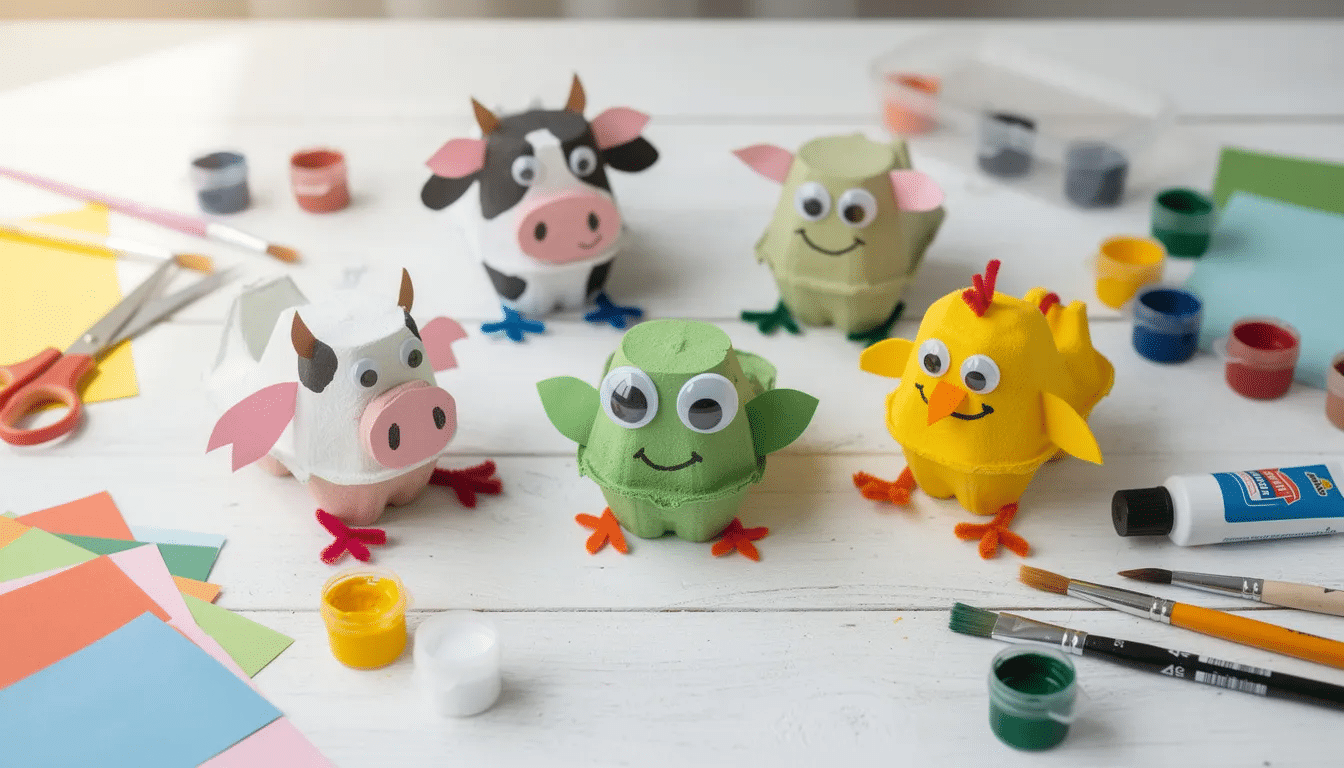
This section gives a general method that works for most egg carton animals. Master this process, and you can adapt it for any creature your kids want to make, from simple critters to more adventurous builds like a DIY cardboard sword craft.
Step 1: Cut out the egg cups
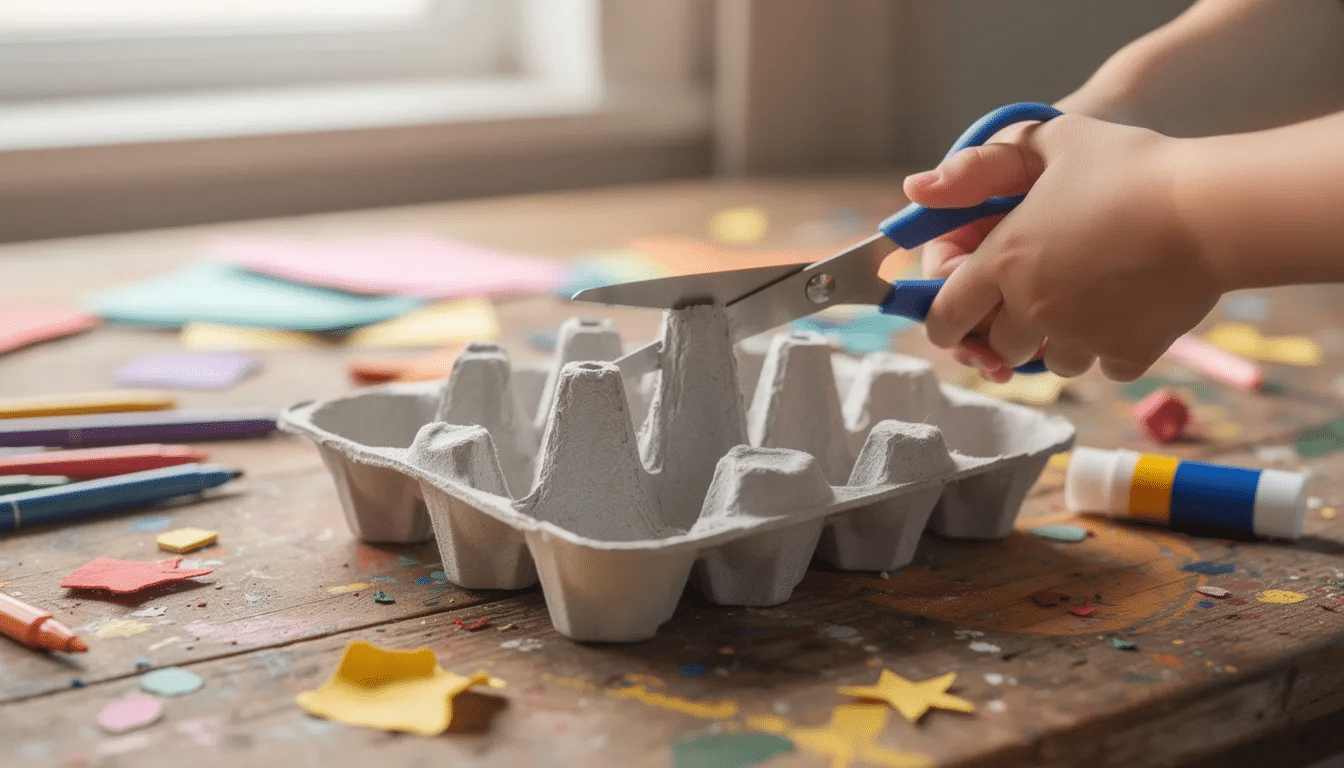
Carefully cut individual cups from the egg carton. For a turtle shell or frog body, you need one cup. For a caterpillar, keep 4–6 cups connected in a row. Trim edges so each piece sits flat on a table.
Step 2: Plan your design
Before painting, sketch a small pencil design on paper. Decide what animal you’re making and what features it needs. A frog needs big eyes and a wide mouth. A turtle needs a head, tail, and four feet. Planning prevents wasted paint and materials.
Step 3: Apply the base coat
Paint the entire egg cup in your animal’s main colour. Use broad strokes and cover all visible cardboard. Allow 10–15 minutes to dry completely before adding details. Rushing this step leads to smudged designs.
Step 4: Add features and details
Once dry, add spots, stripes, or facial features with smaller brushes or cotton buds. Use markers for fine lines like whiskers or smiles. This is where each animal gets its personality.
Step 5: Attach decorations
Glue on googly eyes for instant cuteness. Cut ear shapes from coloured paper or craft foam and attach with PVA glue. Create tails from pipe cleaners, wings from felt, or feet from foam pieces. For faster drying, adults can use hot glue on these parts.
Step 6: Let everything dry
Set finished animals aside for 15–20 minutes. While waiting, children can design a background or name tag for their animal on a separate piece of cardboard, or experiment with colourful tissue paper stained glass crafts that can dry at the same time.
Project Ideas: Specific Carton Animals to Make
This section outlines several concrete project patterns rather than just general inspiration. Each idea includes specific construction notes so you know exactly what the finished animal should look like, and you can easily pair them with other simple favourites like a crab paper plate craft for kids.
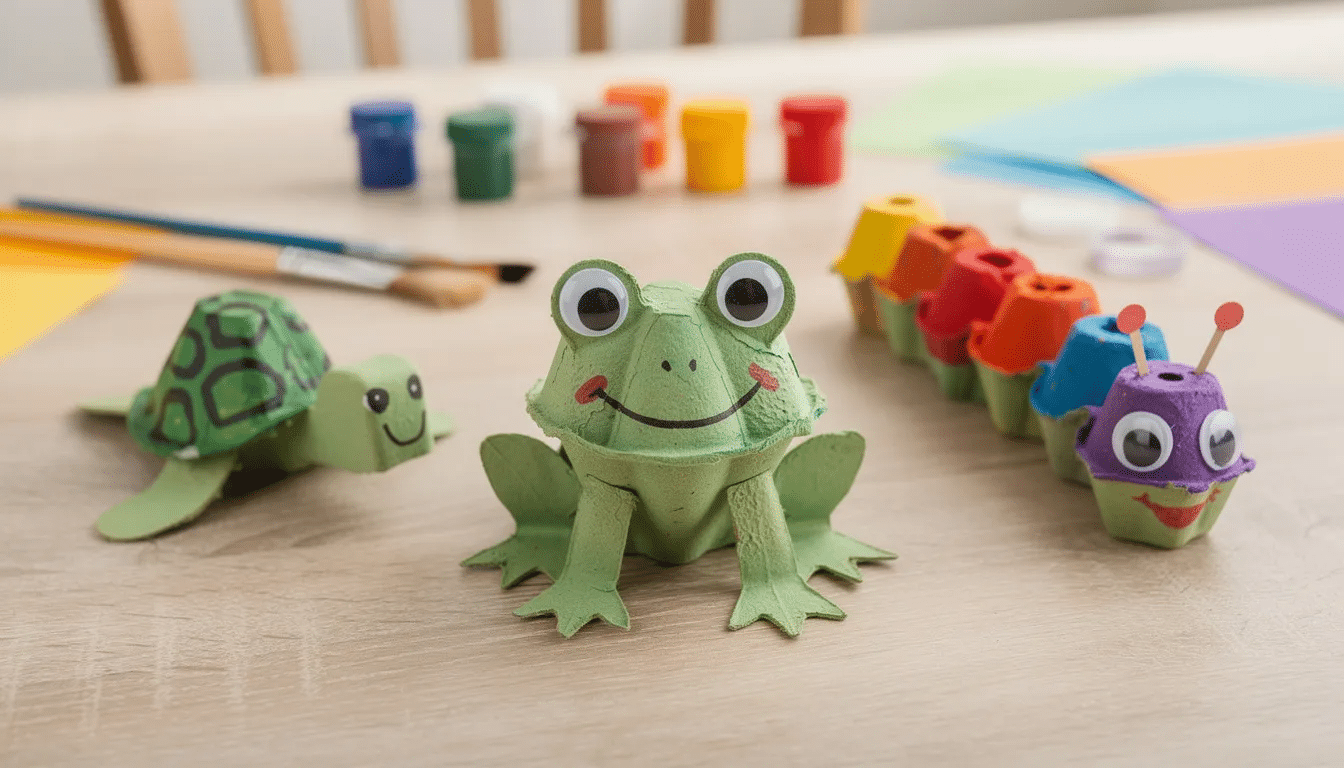
Carton Turtle
- One egg cup for the domed shell
- 4 small foam feet glued underneath at corners
- A paper head attached to one end with a simple oval shape
- Green paint with yellow spots on the shell
- Add a tiny smile and nose dots with a black marker
- Trim a small paper tail and glue it to the back
Carton Caterpillar
- Keep 4–6 egg cups connected in a row
- Paint each segment a different colour to create a rainbow effect
- Poke two holes in the front cup and insert pipe cleaner antennae
- Add googly eyes and a cheerful smile
- Optional: paint different facial expressions on each segment for a silly effect
Carton Frog
- One upside-down egg cup painted bright green
- Wide paper mouth cut in an oval and glued beneath the front edge
- Two big googly eyes mounted on small raised paper circles for a bug-eyed look
- Long red paper tongue curling outward from the mouth
- Optional: add darker green spots for texture
Simple Farm Collection
Animal | Paint Colour | Special Features |
|---|---|---|
Chick | Yellow | Orange paper beak, tiny wings |
Pig | Pink | Round paper snout, curly pipe cleaner tail |
Cow | White with black spots | Foam ears, pink nose |
Sheep | White | Cotton ball wool glued over body |
Fantasy Animals |
For adventurous crafters, try a carton dragon or unicorn. Paint scales in shimmery colours, add glitter details for magic, and cut wings or a horn from shiny card saved from old gift boxes. A fox works beautifully too—orange paint, white paper chest, pointed ear shapes, and a bushy pipe cleaner tail. You might also enjoy adding some fun dragonfly craft ideas for kids to your fantasy or garden-themed displays.
Creating 3D Carton Animal Portraits
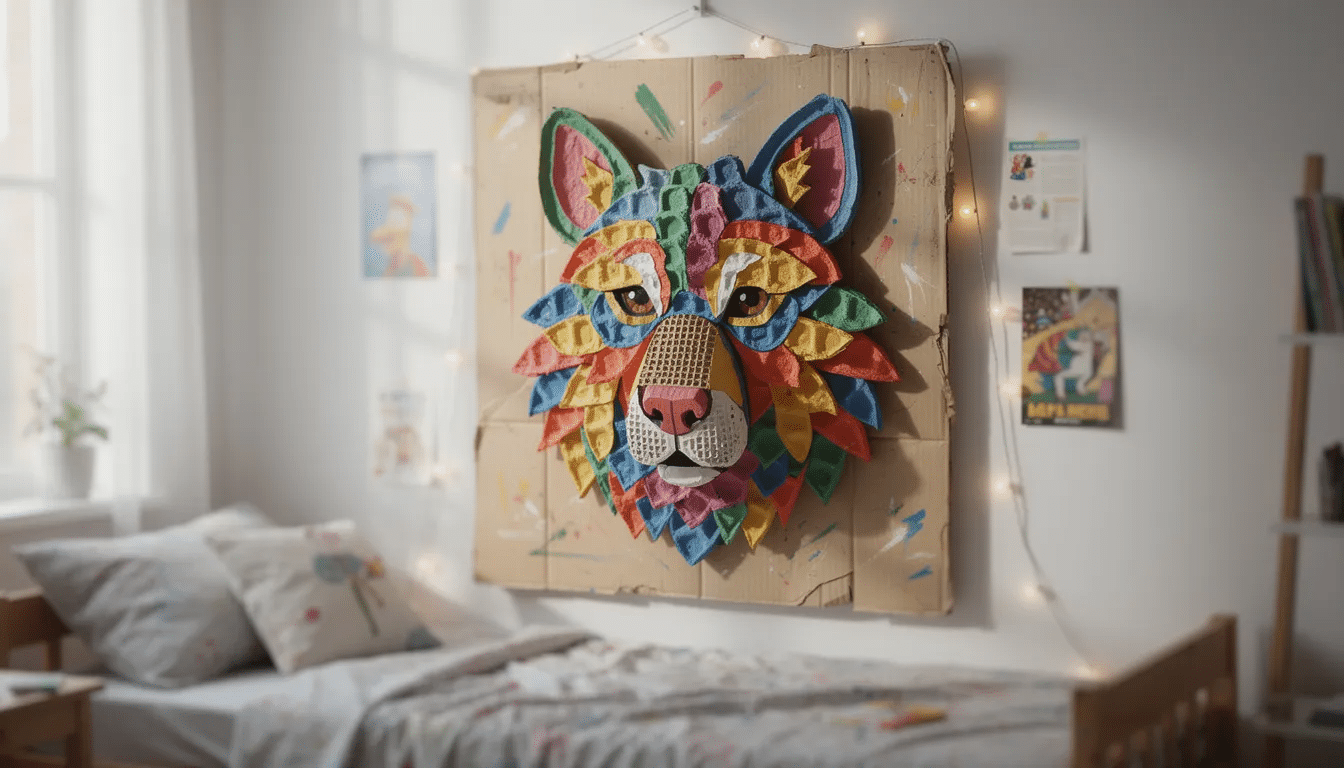
This section moves from free-standing animals to framed, 3D animal portraits suitable for hanging on kids’ bedroom walls or classroom displays. These make adorable gifts and brighten any space.
Prepare your canvas
Use a flat piece of sturdy cardboard cut from an old delivery box. Trim it into rectangles, circles, or ovals about the size of an A5 sheet. Sand any rough edges gently or cover them with tape for safety.
Plan the composition
Position a painted egg cup animal head near the centre of your cardboard. Sketch the body below it in pencil—this is where imagination takes over. Add clothes like T-shirts, dresses, or superhero capes. Draw simple background shapes like clouds, trees, or a frame around the edge.
Paint the background first
Choose bold colours for the background and paint everything except where the 3D head will go. Let this dry completely before the next step. Waiting prevents paint from getting on your finished animal head.
Attach the 3D element
Once the background is dry, glue the finished egg carton head on top using PVA or hot glue. This creates a raised 3D effect that makes the portrait pop. The contrast between flat painted body and raised carton head looks surprisingly professional.
Create a frame
Paint a border around the edges or glue on strips of coloured paper to mimic a real picture frame. This finishing touch makes the portrait feel complete and ready for display.
Hanging methods:
- Tape a loop of ribbon or string to the back
- Glue on a magnet for fridge display
- Prop the portrait on a shelf or classroom ledge
- Use a bit of poster tape to hang directly on the wall
Tips for a Smooth, Low-Stress Craft Session
A bit of preparation makes carton animal sessions easier, especially with larger groups or younger children. These practical tips come from real classroom and family craft experiences.
Before kids arrive:
- Pre-cut egg cups and basic ear shapes for ages 3–6 to avoid frustration with thick cardboard
- Have a finished sample animal ready so children see a concrete example of what they’re working toward
- Set out all materials in easy-to-reach containers
Station setup:
- Create a “paint station” with brushes, palettes, and water cups
- Set up a separate “glue and details station” with googly eyes, foam, and pipe cleaners
- Designate a drying area away from wet paint where finished animals can set
Organisation tricks:
- Use masking tape or sticky notes with each child’s name under their drying animals
- This prevents confusion in classrooms or holiday clubs
- Number each workspace if you’re working with a large group
Paint choice guidance:
Setting | Recommended Paint | Why |
|---|---|---|
Nurseries and early years | Washable tempera | Protects clothes and furniture |
Primary classrooms | Tempera or washable acrylics | Balance of colour and cleanup |
Family projects with supervision | Acrylic paint | Brightest colours, permanent results |
Time management: |
- Allow 30–45 minutes per simple animal
- Build in 10–15 minutes for drying between paint coats
- Keep wet wipes nearby for quick hand cleaning
Extending the Activity: Learning and Play Ideas
Carton animals can be used after craft time for stories, games, and simple educational activities. The fun doesn’t have to end when the glue dries, especially when you add large-scale imaginative builds like a cardboard time machine project into your play space.
Storytelling and dramatic play:
Turn a group of carton animals into characters for a short play or puppet show. Children can write or improvise a story set on a farm, in a pond, or in a jungle. This extends a 45-minute craft into an hour of creative play.
Science connections:
Match each animal to its habitat, diet, or sound in early primary lessons. Ask questions like “Where does a frog live?” or “What does a turtle eat?” to connect craft time with curriculum content, or branch out into themed projects such as owl crafts for kids when you study nocturnal animals.
Literacy extension:
Have children write a short description or name card for each animal, including:
- Species name
- Favourite food
- A fun fact
- A picture drawn by the child
Event decorations and prizes:
Use carton animals as decorations at themed events such as:
- Earth Day (22 April)
- World Environment Day (5 June)
- School eco-weeks
- Birthday parties with animal themes
Winter terms are also perfect for mixing in seasonal projects like polar bear winter crafts alongside your carton creations.
Children enjoy seeing their creations displayed, and these handmade pieces make perfect take-home prizes or classroom displays that parents love to photograph.
Carton animal crafts offer a perfect blend of creativity, recycling, and hands-on fun that works for nearly any age group. Whether you’re making a simple frog or an elaborate 3D portrait, these projects deliver adorable results with minimal cost and maximum enjoyment.
Ready to get started? Grab those egg cartons from your recycling bin, gather your paints and googly eyes, and let the crafting begin. Your kids will love bringing these cute creatures to life—and you’ll love watching their imagination work.