
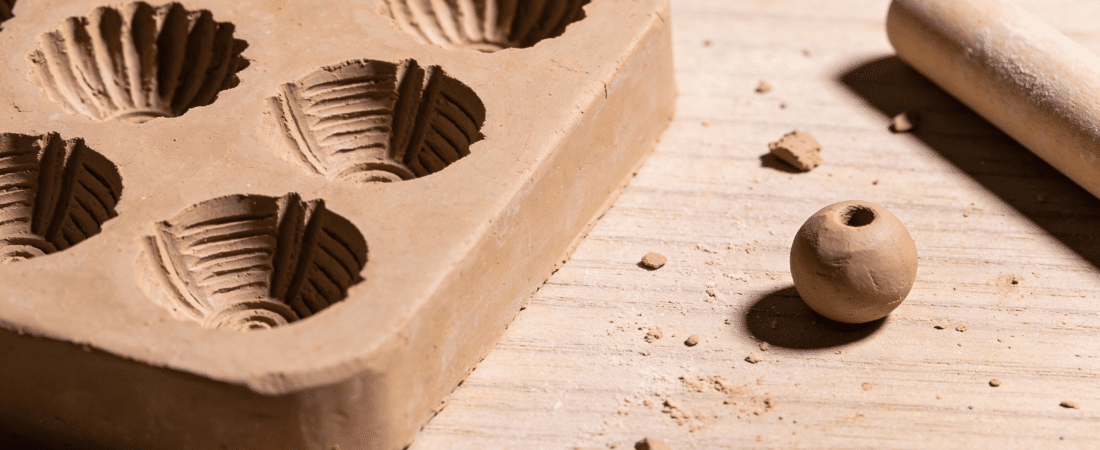

Clay bead molds are specialized tools designed to help artists and hobbyists create beautifully shaped beads with ease and consistency. Using a clay bead mold helps create consistent, detailed, and professional-looking jewelry components. Using a clay bead mold allows you to produce unique, uniform beads that would be difficult and time-consuming to shape by hand. These molds come in various shapes and sizes, and are typically made from materials such as silicone, rubber, or plastic, which offer flexibility and durability. Whether you’re crafting jewelry, home décor, or art pieces, clay bead molds are essential supplies for anyone looking to add professional-quality beads to their projects.
This guide is for jewelry makers, crafters, and anyone interested in creating custom clay beads. Clay bead molds simplify the process of making professional-quality beads, saving time and ensuring consistent results for your creative projects.
- Clay Bead Mold Types And Shapes
- Choosing A Clay Bead Mold
- Customizing Your Clay Bead Mold
- Preparing Clay For Molds
- Baking And Curing Clay Beads
- Demolding And Finishing Clay Beads
- Decorating And Sealing Clay Beads
- Using Clay Bead Molds With Resin And Metal Clay
- Care, Cleaning, And Storage For Molds
- Troubleshooting Common Clay Bead Mold Issues
- Accessories And Add-Ons For Clay Bead Molds
- Product Variants, Sizes, And Packs
- Returns, Warranty, And Seller Notes
- Suggested Projects Using Clay Bead Molds
Clay Bead Mold Types And Shapes
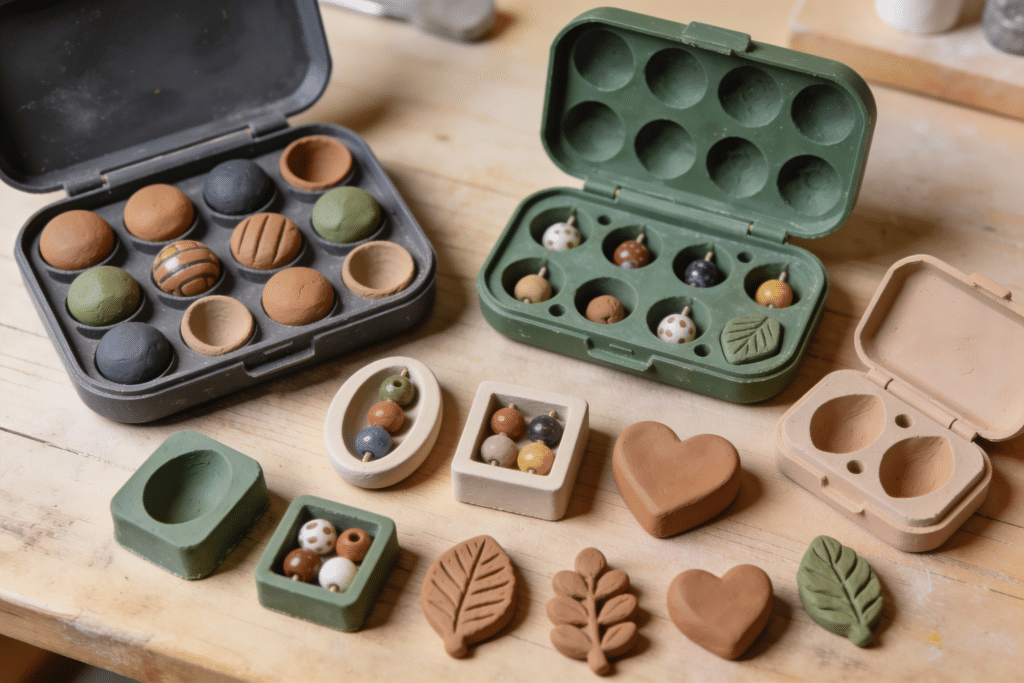
Clay bead molds come in a wide range of shapes to suit different artistic needs. Common shapes include:
- Round
- Oval
- Square
- Heart
- Botanical-inspired designs
The main types of clay bead molds are flexible silicone, rigid plastic, press molds, and 3D-printed molds.
Open molds are shallow and allow easy pressing of clay into cavities, making them ideal for flat-backed beads or embellishments. Closed molds, on the other hand, consist of two matching halves that can be joined to create hollow beads with channels for threading. Each mold type has its advantages: open molds offer simplicity and quick bead creation, while closed molds provide more complex, three-dimensional bead shapes.
Choosing A Clay Bead Mold
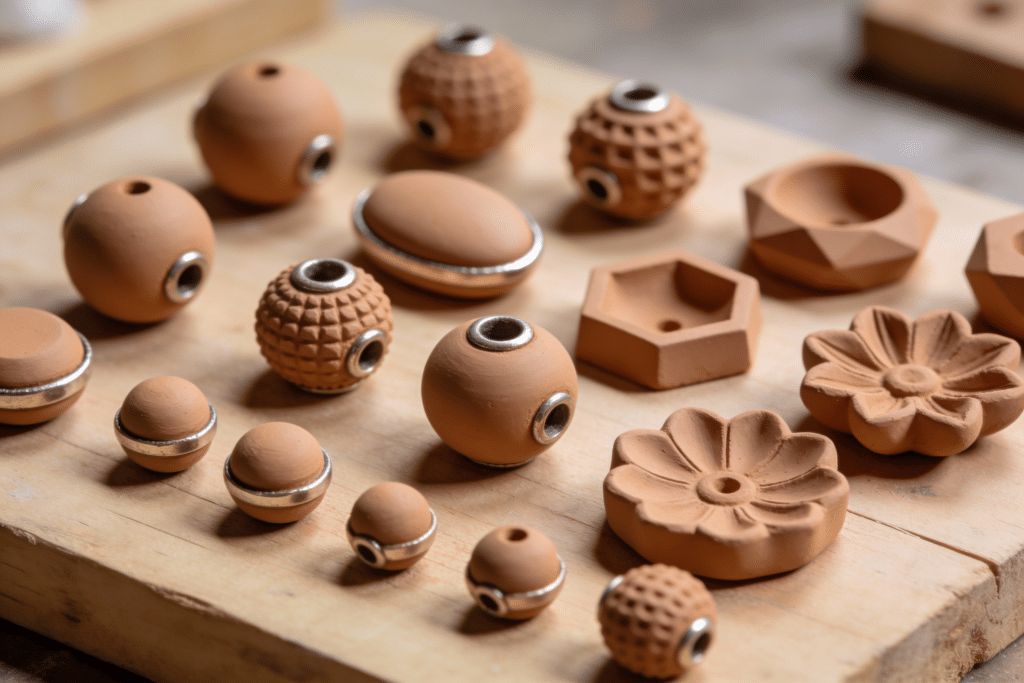
When selecting a clay bead mold, consider your project requirements carefully. Match the mold size to the type of jewelry you plan to create—smaller molds for delicate earrings or larger molds for statement pendants. Evaluate the mold’s flexibility and detail resolution to ensure it captures the intricate designs you want. Also, check the mold’s heat resistance rating if you plan to bake your beads inside the mold, as some silicone molds can withstand high oven temperatures while others cannot.
Customizing Your Clay Bead Mold
Customizing your clay bead mold is an exciting way to make your jewelry and craft projects truly your own. Over the past month, many artists have discovered just how easy and rewarding it is to work with our flexible silicone molds, which are designed to help you create beads in any shape you can imagine. Whether you’re looking to add a personal touch to your work or experiment with new techniques, our molds and supplies make the process simple and enjoyable.
Selecting Your Mold
To start, select your favorite clay and the mold that best fits your creative vision. Our molds are competitively priced, and we offer a wide range of tools and supplies to help you achieve the perfect look. If you ever have questions about which product to choose or how to use a particular tool, our team is always available—just contact us for expert advice.
Personalizing Techniques
Personalizing your clay beads is easy with the right supplies. Try adding foils, Panpastels, or mica powders to your clay before molding to create unique textures and vibrant finishes. These techniques allow you to design beads that stand out and reflect your individual style. Our molds are designed for high performance, making it easy to create intricate and beautiful beads every time you work with them.
Ordering and Support
Before you begin, take a moment to review the product instructions and description to ensure you’re using your mold correctly. If you need assistance at any point, don’t hesitate to contact us—we’re here to help you get the most out of your purchase.
When you’re ready to order, simply add your chosen item to your cart and follow the easy checkout process. We offer secure payment options and a straightforward return policy: if you’re not completely satisfied, you can return your unused mold in its original packaging for a full refund or exchange.
Artists love the quality and versatility of our clay bead molds, and we’re confident you’ll feel the same. Each mold is designed to save you time and help you create high-quality beads with ease, so you can focus on bringing your creative ideas to life. Whether you’re making simple, elegant beads or more complex, detailed designs, our products are made to support your artistic journey.
No matter your skill level, our clay bead molds are the perfect addition to your toolkit. They’re easy to use, fun to experiment with, and designed to help you create beads you’ll love. Place your order today and discover how our molds can transform your creative process—one beautiful clay bead at a time.
Preparing Clay For Molds
Proper preparation of polymer clay is crucial for successful bead making.
Conditioning the Clay
Begin by conditioning the clay thoroughly until it is soft and pliable. Conditioning clay involves kneading it thoroughly until soft and pliable to remove air bubbles and prevent cracking.
Measuring and Filling the Mold
Measure the correct amount of clay to fill each mold cavity without overflow. Press the clay evenly into each cavity to capture all the mold’s details, then use a flat tool or your fingers to remove any excess clay flush with the mold edges. This ensures smooth bead edges and consistent shapes.
Baking And Curing Clay Beads
Follow the clay manufacturer’s baking instructions carefully to cure your beads properly. Confirm that your mold is oven-safe at the required temperature to avoid damage. If you are creating solid beads, vent or open any channels before baking to allow air to escape and prevent bubbling. Baking times and temperatures vary depending on the clay type, so always adhere to the recommended guidelines for best results.
Demolding And Finishing Clay Beads
After baking, allow the mold and beads to cool completely.
Easing Demolding
Chilling the mold briefly in the freezer can help ease demolding by slightly contracting the clay. Carefully pop the beads out of the mold, taking care not to distort their shape.
Smoothing and Drilling
Sand any rough edges smoothly using fine-grit sandpaper or sanding tools. If your bead design requires holes for stringing, drill or ream them now to prepare for assembly.
Decorating And Sealing Clay Beads
Enhance your beads by applying mica powders for a shimmery effect or adding foil accents for a metallic touch. You can also paint beads with acrylic paints to add color and detail. Once decorated, seal your beads with an appropriate varnish or sealant to protect the surface and preserve your artwork. This step adds a professional finish and increases bead durability.
Using Clay Bead Molds With Resin And Metal Clay
Many clay bead molds are versatile and can be used with resin casting or metal clay. For resin, ensure the mold is rated for resin use to prevent damage. When working with metal clay, you can create hollow beads by joining two mold halves, allowing for lightweight yet intricate designs. This technique saves material and adds dimension to your jewelry pieces.
Care, Cleaning, And Storage For Molds
Proper care extends the life of your clay bead molds. Wash molds gently with mild soap and warm water after each use to remove clay residue. Avoid harsh chemicals or abrasive scrubbing that can damage the mold surface. Store molds flat in a cool, dry place away from heat sources to prevent warping. Before reuse, inspect molds for tears or damage that could affect bead quality.
Troubleshooting Common Clay Bead Mold Issues
If clay sticks inside the mold, try freezing the mold briefly to harden the clay and ease removal. Small tears in silicone molds can be repaired with silicone adhesive to restore functionality. To prevent misshapen beads, chill your conditioned clay before pressing it into the mold. Eliminate trapped air bubbles by pressing clay firmly and tapping the mold gently before curing.
Accessories And Add-Ons For Clay Bead Molds
Enhance your bead-making process with useful accessories such as:
- Bead fitting adaptors, which help attach beads to chains or earring posts
- Sanding and polishing tools, essential for smoothing and shining finished beads
- Storage trays designed for beads to keep your creations organized and protected while you work on multiple projects
Product Variants, Sizes, And Packs
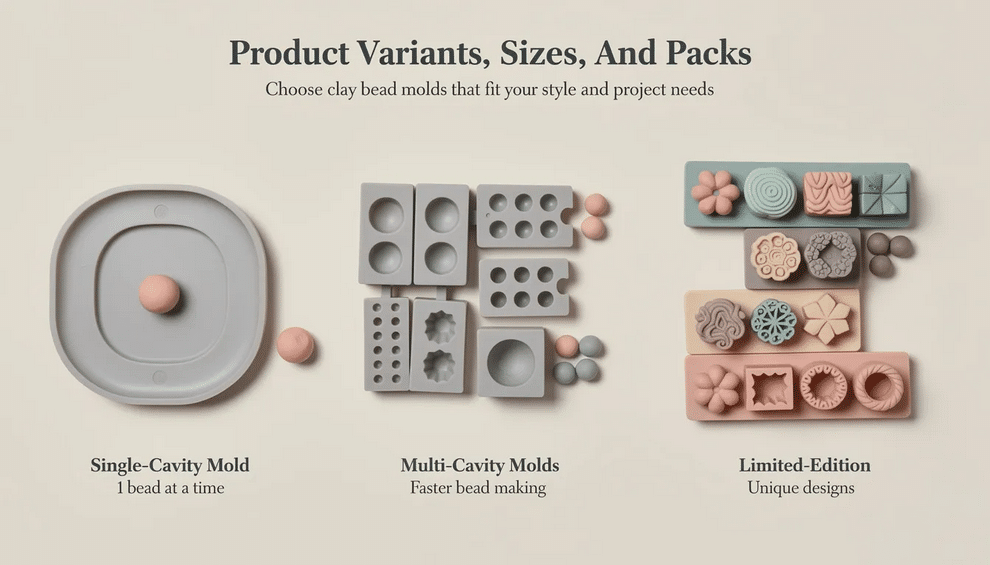
Clay bead molds are available as single-cavity molds for creating one bead at a time or multi-cavity molds that produce several beads simultaneously, saving time. Limited-edition molds and bundle packs offer unique designs and value for collectors and artists who love variety. Choose molds that fit your style and project needs to maximize creativity.
Returns, Warranty, And Seller Notes
When purchasing clay bead molds, review the seller’s return policy and warranty information. Some molds, especially limited editions, may have specific disclaimers regarding returns or exchanges. Keep unused molds in their original packaging to ensure eligibility for returns if needed. Contact the seller promptly if you encounter any defects or issues with your order.
Suggested Projects Using Clay Bead Molds
Create stunning bracelets by selecting coordinating bead shapes and sizes, stringing them onto elastic or wire.
For earrings, pair matching beads from your molds with earring hooks for a quick and elegant accessory.
Use focal pendant beads from larger molds as statement pieces in necklaces.
Experiment with different colors, finishes, and embellishments to customize each project and showcase your artistic style.
This comprehensive guide covers everything you need to know about clay bead molds—from choosing the right mold and preparing clay to finishing your beads and troubleshooting common issues. With the right tools and techniques, you can create beautiful, one-of-a-kind beads that elevate your jewelry and craft projects. Happy bead making!