
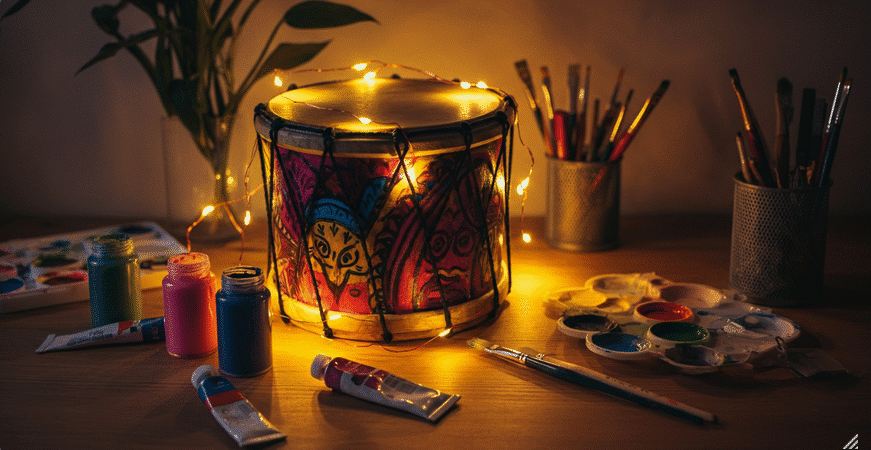

A DIY marching drum is a fun, hands-on project perfect for parents, kids, and beginners who want to create their own musical instrument at home. This guide will walk you through everything you need to know to make a marching drum from common household materials, including what supplies to gather, step-by-step building instructions, and troubleshooting tips. Whether you’re looking for a creative family activity, a school project, or a way to introduce children to music, making a DIY marching drum is a valuable project that encourages creativity, resourcefulness, and hands-on learning.
By following this guide, you’ll learn how to build a marching drum that’s lightweight, customizable, and easy to carry—ideal for parades, playtime, or music practice at home.
What Is a DIY Marching Drum?
A DIY marching drum is a homemade percussion instrument designed to be carried and played while marching. The drum shell can be made from plastic buckets, cardboard boxes, or metal cans. For beginners, a large, sturdy plastic container or bucket is recommended as the drum shell, but you can also use 5-gallon buckets, coffee cans, or formula cans. The drumhead can be made from a stretched balloon, a plastic sheet secured with rubber bands or tape, or simply a tight layer of packing tape or duct tape. Using rubber bands can help secure the drumhead, and a taut drumhead is crucial for producing a good sound.
Why Make a DIY Marching Drum?
Making your own marching drum is a fantastic way to connect with school band traditions, foster creativity, and spend quality time with kids. It’s also a budget-friendly alternative to buying a new instrument and allows for full customization in terms of size, sound, and decoration.
My Experience: A Fun Family Project
Making a DIY marching drum felt like the perfect project to do with my daughter. I’m always hunting for new crafts, especially the kind you can pull together with stuff lying around the house. My little one? She loves wild noises and never seems to run out of energy, so turning an old cake tin into a drum was right up her alley. She gets something fun, and I get a happy kid—noisy, but still happy. I wasn’t sure giving her a new way to be loud was the smartest move on my part, but she took to it right away. Let’s jump in and make some music.
Getting Your Supplies for a Marching Snare Drum
First, gather what you need. I didn’t have to leave the house for much—maybe you won’t either.
Here’s what I used:
- Cake storage tin with lid (about 20cm wide and 10cm high)
- Spray paint in white, yellow, and blue
- Masking or Washi tape
- Half a meter of ribbon (about 1 meter is ideal for most children, or you can use a shoulder strap from a gym bag as a practical carrier)
- Two pop rivets
- Two pieces of dowel, 25cm each (1/2cm wide), and one piece, 10cm (1cm wide)
- Strong glue
- A few handfuls of rice, lentils, or pulses for sound
You can also use a 5-gallon bucket to make a simple and effective marching drum. This is a great way to keep the cost low by using common household items.
Note: Consider the cost and available gear when gathering supplies. Gear like clips or carriers can be used to attach or carry the drum, and using a clip can make the strap more secure.
With your supplies ready, let’s move on to building your drum step by step.
Common Household Materials for DIY Marching Drums
Before you start building, here’s a quick summary of the most common materials you can use for your DIY marching drum:
- Drum Shell: Large, sturdy plastic containers or buckets, 5-gallon buckets, coffee or formula cans, plastic buckets, cardboard boxes, or metal cans.
- Drumhead: Packing tape or duct tape (layered tightly), stretched balloon, plastic sheet secured with rubber bands or tape.
- Securing the Drumhead: Use rubber bands, strong tape, or a combination to keep the drumhead taut and secure.
These materials are easy to find around the house and make the project accessible for beginners and families.
Step-by-Step Guide to Your DIY Marching Drum
With your materials gathered, it’s time to get hands-on. Here’s how to build your drum, step by step.
Step 1: Getting the Tin Ready
- Clean the tin well. You can use a cake tin or even a plate as the base for your DIY marching drum.
- Scrape off any labels or stickers, and make sure to smooth the edges of the tin to avoid any sharpness.
- Paint needs a bare surface or it just peels off. Once dry, take off the lid.
- Before painting, find and mark the center of the lid or tin for proper alignment of your pattern later.
- Spray the lid blue. Paint the rest of the tin white. Let both dry completely.
- Apply a couple of coats for the best look, waiting between layers to avoid drips.
Step 2: Painting the Pattern
- Use a ruler and pencil to measure the tin and mark even triangles for your pattern.
- Tape off every other triangle using masking or washi tape.
- Lay the tape flat and smooth on both sides of the triangles you want to protect.
- Ensure the tape adheres firmly to prevent paint bleed and keep those sections white.
- Spray the open triangles yellow.
- Wait for them to dry, then carefully peel off the tape.
- Repeat the process for blue triangles, taping off yellow and white as you go.
Step 3: Making the Strap
- Mark the points along the rim where you want to attach the strap.
- Drill holes at each point, or use a nail if you don’t have a drill (hold a block of wood inside to keep the tin from bending).
- Fold over each end of the ribbon about an inch and sew them down.
- Pop a rivet through the ribbon and tin at each spot, or use screws and a screwdriver to secure the strap.
- Double-check that your strap isn’t twisted.
Alternative Carrying Methods:
- Attach a hook or loop to the drum near the rim for a paracord or other strap.
- Use a sling and a leg rest for comfortable carrying.
- Adjust the strap length to reduce swing and keep the drum steady.
- Position the drum so it sits comfortably against your abdomen for better playability.
Tip: A multi-angle carrying hook can help balance the drum even better when using a sling.
No rivet set? Grab a nut and bolt—works just as well.
Step 4: Making Drumsticks
- Measure and cut the thicker dowel to a length of 5cm for each beater.
- Drill a hole right down its middle to fit the thinner dowels.
- Slice that drilled piece in half so you have two beaters.
- Glue a beater on each thin dowel end.
- Let them dry.
- Sand rough parts smooth.
- Finish up with a splash of yellow spray paint.
Tip: Hit the center of the drum for a deep sound, or try hitting the edge for a sharper tone.
Step 5: Final Details
- Add a handful of rice, lentils, or even bells inside the drum for a shuffle sound when shaken.
- Pop the lid back on.
- Run a bead of strong glue around the edge, making sure the edges are sealed and smooth to keep everything secure.
Now your drum is sturdy and ready for action!
With your drum assembled, you’re ready to start playing and exploring different rhythms.
Tips for Playing a Marching Snare
Finding the Right Position
- Make sure the drum sits at the right height on your body.
- Adjust your grip so your thumb and fingers can control the drumsticks with ease.
Practicing Technique
- Use your wrists and arms to create even, steady beats.
- Focus on consistency for that crisp, powerful snare sound.
Exploring Sounds
- Try different types of sticks or a wire brush to explore a range of sounds and effects.
- Hit different parts of the drum (center vs. edge) for varied tones.
Improving Skills
- Start with simple rhythms and gradually challenge yourself with more complex patterns.
- Consider joining a course or seeking tips from an experienced marching snare drummer.
- Practice regularly to build confidence and skill.
Troubleshooting and Extra Tips
- Securing the Drumhead: For a simple DIY marching drum, secure a tight drum head with packing tape or duct tape. The drumhead can also be made from a stretched balloon or a plastic sheet secured with rubber bands or tape. Using rubber bands can help keep the drumhead in place and taut, which is crucial for producing a good sound.
- Safety: For safety, adults should handle sharp tools when making DIY drums, especially with younger creators involved.
- Carrying Options: Paracord or sturdy ribbon can be used for the strap of a DIY marching drum. Paracord measuring approximately 44–46 inches is ideal for attaching straps. A shoulder strap from a gym bag can be a practical solution for carrying your drum.
- Decoration: Personalize your drum with paint, markers, or stickers for extra fun.
- Sound Quality: A taut drumhead is essential for a good sound. Layering duct tape or heavy-duty packing tape can help if you’re using a lighter container.
Enjoy Your New Creation
Handing my daughter a make-it-yourself drum might not have been the quiet choice, but watching her play made it all worth it. She’s been loving it—and so have her friends. I might have to whip up a couple more if I want to keep the peace at playdates. This project was fast, easy, and the smiles were endless.
Making your own DIY marching drum is a fun way to connect with school marching band traditions and the long-standing tradition of homemade instruments in families and schools. Plus, its portability makes it perfect for summer activities or trips, so your child can keep practicing even when away from their usual school setting. If you’re looking for something hands-on that both you and the kids can enjoy, take an afternoon and try making your own DIY marching drum.