
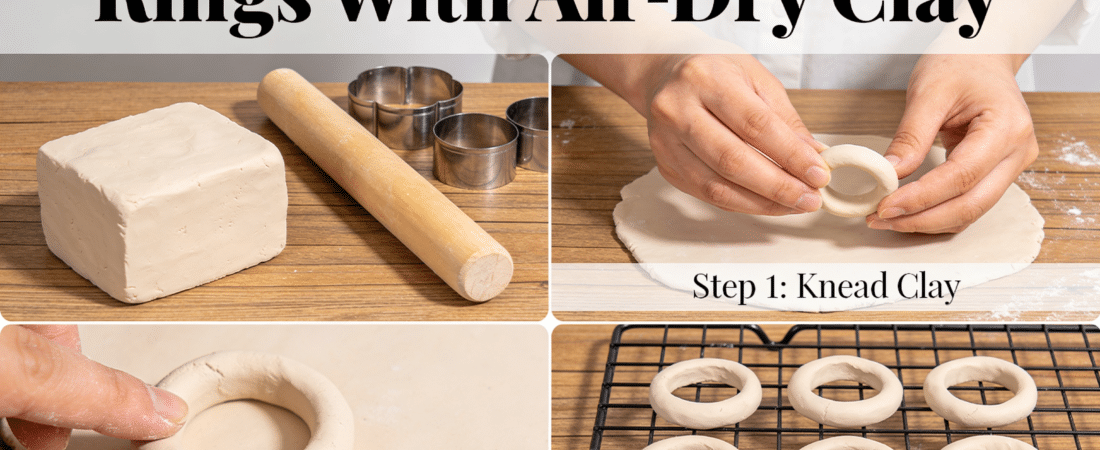

If you’re searching for how to make clay rings with air dry clay, you’re in the right place! This guide is perfect for beginners and hobbyists looking for a simple, no-bake way to create custom jewelry at home. Making your own wearable air dry clay rings is a fun and creative project that anyone can try, even if you have no prior experience with clay. Air dry clay is affordable, easy to use, and doesn’t require a kiln or oven, making it accessible for all skill levels. Whether you want a simple, elegant band or a detailed, artistic design, this guide will walk you through the entire process. Each ring typically takes about 24 to 72 hours to dry fully, depending on its thickness, so you’ll need to wait patiently for the clay to dry before moving on to the next step. Most air dry clays take about 48 hours for a full cure, depending on the thickness of the project. With just a bit of patience and creativity, you’ll have unique, handmade rings to wear or gift. Air-dry clay rings are intended for decorative light wear and should not be exposed to water for long periods.
- Supplies for Air Dry Clay Rings
- Prep and Condition Air Dry Clay
- How to Shape a Clay Ring Band
- How to Make Marbled and Geometric Clay Ring Designs
- Polymer Clay vs Air Dry Clay for Rings
- Drying Tips for Dry Clay and Small Pieces
- Finishing, Painting, and Sealing Air Dry Clay Rings
- Troubleshooting Common Dry Clay Problems
- Clay Ring Ideas and Decoration Inspiration
- Clay Ring Tutorials and Next Steps
- Displaying Your Finished Rings
- Safety, Care, and Wearing Tips for Clay Rings
Supplies for Air Dry Clay Rings
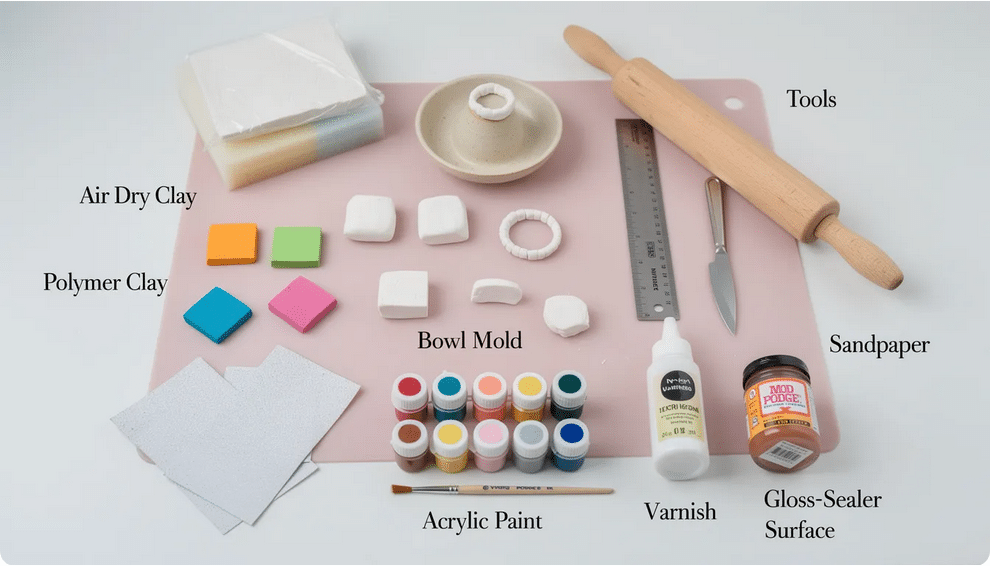
Before you start, gather all the necessary materials to ensure a smooth crafting experience. You will need:
- Air dry clay (the main material for your rings)
- Optional: Polymer clay for comparison or mixed projects
- Basic tools such as a sharp blade or craft knife, rolling pin, and ruler
- A small bowl to use as a mold and drying support
- Sandpaper for smoothing edges
- Acrylic paint for decorating
- Water-based varnish or a gloss sealer like Mod Podge to seal and protect your finished rings
- A silicone mat, glass, or plastic surface to prevent sticking while working with the clay
Store air-dry clay on a smooth, non-porous surface or foam mat to prevent cracking.
Having all your supplies ready will make the process more enjoyable and efficient. Remember to cover any unused clay to prevent it from drying out.
Prep and Condition Air Dry Clay
Conditioning means kneading the clay until it is soft and pliable. Start by conditioning your air dry clay. Knead it thoroughly until it becomes soft and pliable. After kneading, test the clay’s consistency by pressing and stretching it gently—if it feels too dry or sticky, adjust with a light mist of water or let it air out briefly until it’s at the optimal workability. This step is essential to remove air pockets and ensure the clay is smooth and workable. Roll and compress the clay repeatedly to eliminate any trapped air that could cause cracks during drying.
To make a clay ring, start by rolling a small ball of air dry clay into the basic size and shape you want your finished ring to be. Pull the clay gently to form the ring band, adjusting the thickness and size as needed. When smoothing the surface, use minimal water to avoid making the clay brittle or sticky.
Remember to keep any unused clay sealed tightly in its container to prevent it from drying out prematurely.
How to Shape a Clay Ring Band
To create the ring band, follow these directions carefully for best results:
- Measure your finger circumference using a flexible tape measure or a strip of paper, and use a ruler or measuring tape to get an accurate measurement before cutting the clay into a strip.
- Roll the conditioned clay into an even snake-like shape, aiming for a consistent thickness of about 1/4 inch throughout to avoid brittleness.
- Cut the clay band slightly longer than your measured finger size. Wrap the clay strip around your finger and cut off any excess.
- At this stage, join the ends by scratching both surfaces and adding a tiny drop of water to create a strong bond, then smooth the seam with a wet finger to create a seamless ring.
Use a Small Bowl Mold for Shaping
To give your ring band a natural curve, press it gently over a small bowl that matches the desired ring shape. This bowl will support the ring’s curve during air drying, helping to prevent warping. You can also place the ring inside the bowl while it dries to maintain its shape.
How to Make Marbled and Geometric Clay Ring Designs
Marbled Rings
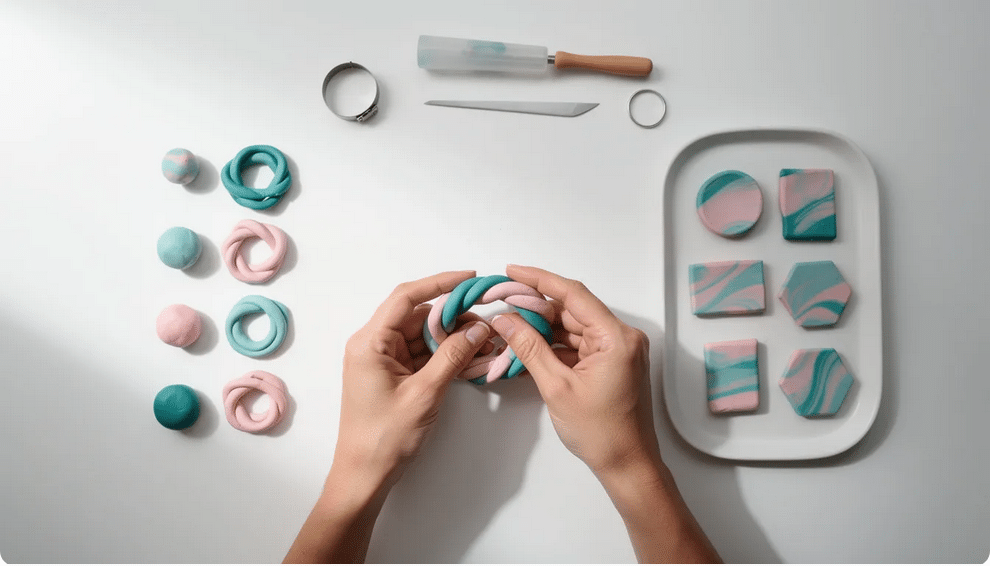
A marbled ring is created by partially mixing two or more colors of air dry clay without fully blending them together. This technique results in a beautiful, swirled pattern that makes each ring unique.
- Marbled Effect: Take two different colors of air dry clay and partially mix them by folding together lightly without fully blending. This creates a beautiful marbled pattern perfect for unique rings.
Geometric Rings
A geometric ring is made by shaping small balls of air dry clay into various geometric forms before they fully dry. This gives your ring a modern, faceted look.
- Geometric Facets: Roll a ball of clay and let it dry slightly until firm but still workable. Then, use a craft knife to carve geometric facets, giving your ring a modern, gemstone-like appearance.
- Decorative Tops: Attach decorative clay pieces on top of your ring band by scoring both surfaces and pressing them together firmly. This helps the pieces adhere securely.
- Draw Designs: Use a pointed tool or toothpick to draw or sketch patterns directly onto the clay surface for added embellishment.
- Stamp Patterns: Press stamps, rubber stamps, or textured objects into the clay to create decorative and professional-looking textured patterns on your rings.
Polymer Clay vs Air Dry Clay for Rings
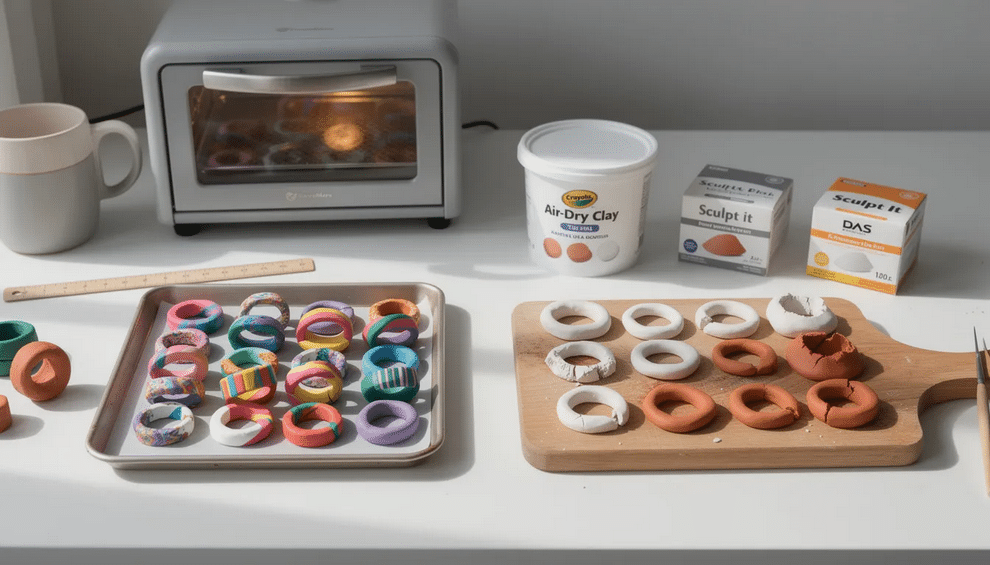
Polymer clay rings are an oven-baked alternative that tends to be more durable and less prone to cracking. However, air dry clay offers the advantage of no baking or kiln required, making it more accessible for beginners or casual crafters. Crayola air dry clay is an affordable option that comes in white or terra cotta, dries to a nice white color, and has a weight similar to regular kiln-fired ceramics. Other brands like Sculpt It and DAS are also available, but they tend to be pricier than Crayola. Keep in mind that some air dry clays can feel spongy or plastic-like when dried, which may not be ideal for all projects. Air dry clay rings may be more fragile and require gentle handling.
Drying Tips for Dry Clay and Small Pieces
Proper drying is crucial for successful clay rings:
- Lay your rings flat in a single layer on a clean surface.
- To prevent distortion, place rings in a small bowl of rice or use other supports to hold their shape.
- Flip the rings periodically to ensure even drying on all sides.
- For faster drying, place rings in a cold oven set to a low temperature for 20–30 minutes and allow them to cool inside.
- Let the shaped clay dry for about 24 hours before decorating.
- Let the clay ring dry completely before wearing it, which usually takes about 24 to 48 hours depending on thickness.
- Allow 24 to 72 hours for drying, depending on the thickness of your rings.
Air-dry clay rings generally take 1–4 days to dry depending on thickness. For a full cure, expect the process to take about 48 hours or up to 2 to 3 days, depending on environmental conditions and the thickness of your project.
Finishing, Painting, and Sealing Air Dry Clay Rings
Sanding and Smoothing
Once dry, use fine-grit sandpaper (400 to 600 grit) to gently sand out any bumps or fingerprints for a smooth, professional finish. For even smoother edges, dip your finger in water and gently run it along the edges to refine and soften them.
Painting and Decorating
Paint your rings with thin layers of acrylic paint, allowing each layer to dry before applying the next. You can also decorate air dry clay with stamps or paint after it has dried. To achieve a ceramic-like finish, apply a glaze to your rings—note that while glaze gives a glossy look, it does not make the rings food safe.
Sealing and Glazing
For a durable, water-resistant finish, apply 2–3 coats of a water-based polyurethane varnish or UV resin. Using a water-based brush-on varnish can further enhance the finish of your rings. Finally, cover the finished ring with a glaze or topcoat to seal and protect your creation, adding a lovely shine.
Troubleshooting Common Dry Clay Problems
If you notice cracks, rehydrate the area by dipping a finger in water and smoothing the surface gently. To avoid warping, always support your rings during drying, using molds or bowls as needed. If your ring breaks or has excess clay, carefully trim or reshape with a craft knife and smooth the edges.
Clay Ring Ideas and Decoration Inspiration
Simple and Marbled Bands
Explore different styles to make your clay rings stand out:
- Simple single-color bands for everyday wear
- Marbled rings mixing two or more clay colors
Geometric and Patterned Rings
- Geometric rings with carved facets or shapes
- Add gold leaf, painted accents, or stamped patterns for extra flair
Trinket Dishes and Other Projects
You can also use air dry clay to make trinket dishes—these dishes are easy to create and let you get creative with shapes and decoration. Trinket dishes are perfect for holding jewelry, potpourri, or other small items. Try using cookie cutters or templates to shape your trinket dishes for a neat finish.
Air dry clay projects can totally include decorative items like napkin rings and holiday ornaments, so feel free to experiment beyond just rings!
Clay Ring Tutorials and Next Steps
For more advanced techniques, check out longer clay ring tutorial guides online for step-by-step instructions. Practice different shapes, textures, and finishes to develop your skills. Look for an image of finished rings or step-by-step image references for inspiration, and consider sharing your own creations. This post is just the beginning of your creative journey with air dry clay projects.
Displaying Your Finished Rings
After you’ve completed your air dry clay rings, it’s time to let your creativity shine with how you display them! Showcasing your handmade jewelry is not only a fun part of the crafting process, but it also keeps your clay rings organized and ready to wear or share. Here are some inspiring ideas to help you display your finished rings in style:
- Small Bowl or Dish: Place your rings in a decorative small bowl or dish on your table, dresser, or shelf. This simple method keeps your air dry clay rings within easy reach and adds a touch of handmade charm to your space.
- DIY Clay Ring Stand: Use leftover air dry clay or polymer clay to create a custom ring holder. Shape the clay into a cone, tree, or any creative form, let it dry, and use it to display your rings. This is a great way to match your display to your jewelry’s unique style.
- Ring Display Board: Cut a piece of sturdy cardboard or cardstock into a fun shape, then use Mod Podge or glue to attach your rings. This makes a portable and eye-catching way to show off your collection, perfect for craft fairs or your crafting table.
- Share Online: Snap a photo of your finished rings and post it on social media or your Etsy shop. Sharing your air dry clay projects online is a great way to connect with other makers, get feedback, and inspire others with your creative process.
- Gift Presentation: Air dry clay rings make thoughtful, personalized gifts. Present them in a handmade bowl, a decorated box, or on a custom display card for an extra special touch.
- Wear and Enjoy: Of course, the best way to display your clay rings is to wear them! Show off your unique jewelry and let your creativity be your daily inspiration.
If you’re looking for even more ways to display your clay rings, try these creative ideas:
- Ring Tree or Holder: Invest in or make a ring tree to keep your rings organized and easy to grab. These holders are perfect for your bedside table or bathroom counter.
- Shadow Box or Display Case: Arrange your rings in a shadow box or glass display case to create a mini gallery of your air dry clay projects. This is a beautiful way to showcase your favorite pieces and protect them from dust.
- Ring Journal or Diary: Document your ring-making journey by attaching photos or sketches of each ring in a journal. This is a fun way to track your progress and gather inspiration for future clay ring ideas.
- Craft Fairs and Markets: If you love making clay rings, consider selling your creations at local craft fairs or markets. Use creative displays to attract attention and share your passion for air dry clay jewelry.
- Video Tutorials and Sharing: Record your ring-making process and finished pieces for YouTube or other video platforms. Sharing your clay ring tutorials can inspire others and help you connect with the crafting community.
No matter which display method you choose, remember to have fun and let your personality shine through. Displaying your finished rings is a wonderful way to celebrate your hard work, share your love of crafting, and find new inspiration for your next air dry clay project. Happy creating!
Safety, Care, and Wearing Tips for Clay Rings
Remember to avoid soaking your clay rings in water for long periods, as this can weaken the material. Handle your rings gently to extend their wear life, and store them safely when not in use.
We hope this detailed guide inspires you to create your own beautiful air dry clay rings. Happy crafting! Don’t forget to share your creations and explore more DIY clay ring projects for endless fun and creativity.