

Paper mache has been a go-to craft technique for centuries, from ancient Chinese armor to modern Halloween costumes. While flour and water paste remains the classic method, liquid starch offers a cleaner, smoother alternative that many crafters prefer for projects requiring a professional-looking surface. This guide walks you through everything you need to know about making paper mache with liquid starch, from gathering materials to finishing your creation with paint.
- Quick answer: basic liquid starch paper mache recipe
- What you need for liquid starch paper mache
- Preparing paper and forms
- Step-by-step: how to make paper mache with liquid starch
- Drying, painting, and sealing your starch paper mache
- Liquid starch vs. flour-and-water paper mache
- Tips, troubleshooting, and project ideas with liquid starch
Quick answer: basic liquid starch paper mache recipe
Liquid starch like Sta-Flo is basically a ready-made paper mache paste that requires zero cooking or mixing ratios. You pour it straight from the bottle, dip your newspaper strips, and start layering. The result is a smooth, hard shell that works nicely for masks, bowls, piñatas, and decorative props.
This method has been popular among crafters since the 1960s when concentrated liquid starch became widely available in U.S. supermarkets. The process works fine with any brand of liquid laundry starch, though Sta Flo remains the most commonly referenced option. Here’s the at-a-glance recipe:
- Tear newspaper into strips approximately 1 inch wide and 6-8 inches long
- Pour liquid starch into a large bowl—no mixing required
- Dip each strip into the starch, then squeeze between your fingers to remove excess
- Layer strips over your form (balloon, cardboard, or crumpled paper)
- Apply 3-6 layers depending on desired strength
- Let dry completely for 24-48 hours in a warm, ventilated space
- Paint with acrylic paint and seal with clear acrylic spray
A quick safety note: work in a well-ventilated area and cover your table with plastic or old newspapers to control the mess. While liquid starch is non-toxic, keeping a damp cloth nearby helps clean sticky fingers between strips.
Key advantages over flour glue include:
- Smoother finish with fewer visible paper fibers
- Often requires fewer layers for a hard shell
- No cooking or precise ratio mixing needed
- Less prone to mold when the finished project stays dry
- Dries clear rather than cloudy
What you need for liquid starch paper mache
This section covers specific supplies and simple substitutions so you can start your project without multiple store trips. Most materials are common household items or easy to find at craft and grocery stores.
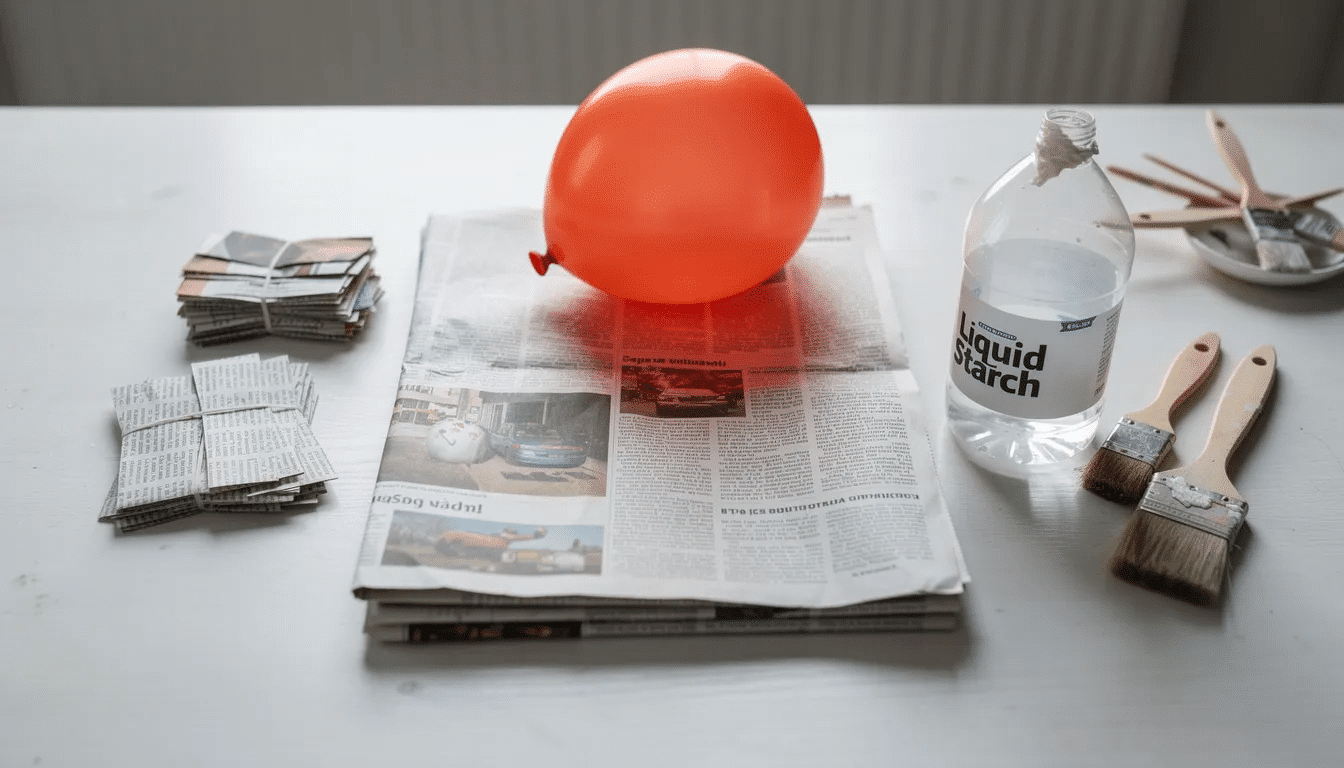
For a medium project like an 8-10 inch balloon mask or decorative bowl, gather these materials, especially if you’re stocking up on art supplies for young artists:
- 1 medium bottle (about 64 oz / 1.9 L) liquid laundry starch such as Sta-Flo
- 1-2 full newspapers or a roll of brown kraft paper
- Paper towels for the final smoothing layer (optional)
- Masking tape for securing forms and covering gaps
- Balloons in various sizes for bowls, masks, and round shapes
- Thin cardboard from cereal boxes or shipping boxes for flat forms—perfect if you also want to build a detailed cardboard sword
- Acrylic craft paints in your chosen colors
- Clear acrylic spray sealer (gloss or matte finish)
Basic tools you’ll need include a large mixing bowl for the starch, scissors for cutting cardboard, a plastic table cover or drop cloth, an old shirt or apron to protect clothing, and access to a warm room or a small fan to speed drying.
- Optional tweaks: Add a small amount of white PVA glue (like Elmer’s Glue) to your liquid starch for extra strength on structural pieces, or add water if the consistency feels too thick for smooth application.
Preparing paper and forms
The quality of your paper mache projects depends heavily on how you prepare your strips and base forms. Torn paper creates edges that blend seamlessly into each other, while properly constructed forms provide the shape and support your layers need to cure into a strong shell.
Tear your newspaper with the grain of the paper rather than cutting with scissors. Tearing creates feathered edges that overlap smoothly, while cut edges create visible ridges in your finished surface. Aim for strips about 1-1.5 inches (2.5-4 cm) wide and 6-8 inches (15-20 cm) long. Tear a bunch of strips before you start dipping—you’ll want both hands free for the wet work.
The form underneath your paper mache determines the final shape. Choose your base material based on what you’re creating:
- Balloons work perfectly for bowls, piñatas, masks, and any round or oval shapes
- Cereal boxes and shipping boxes can be cut into flat panels, geometric shapes, or bent into curves
- Crumpled newspaper taped into rough shapes creates animal bodies, Halloween props, and costume pieces
- Cardboard tubes from paper towels or wrapping paper make excellent arms, legs, handles, and structural supports
- Aluminum foil sculpted over wire provides lightweight armatures for complex figures
Before adding any starch-soaked paper, use masking tape to cover gaps, smooth corners, and firmly attach separate pieces of your form. This creates a unified surface that your paper layers can grip without sliding.
Step-by-step: how to make paper mache with liquid starch
This is the core process that transforms a pile of newspaper and a bottle of starch into a durable, paintable creation. Follow these steps from first strip to final dry shell.
Step 1: Pour liquid starch into your bowl to a depth of about 1 inch. If the starch feels extremely thick—almost like a paste rather than thin pancake batter—add water at roughly a 10-20% ratio and mix until the consistency smooths out. The mixture should coat paper easily but not be so runny that it drips everywhere.
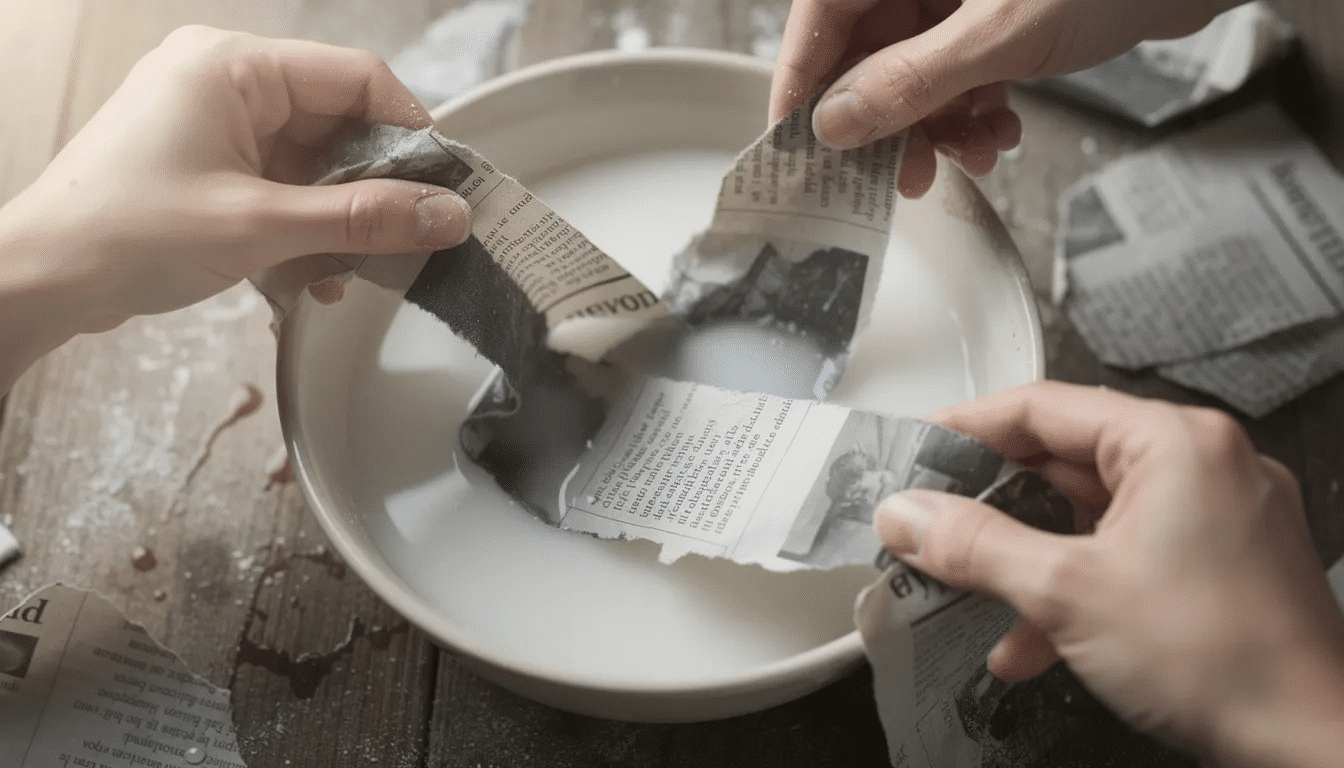
Step 2: Dip one paper strip at a time into the starch, making sure it’s fully saturated. Run the wet strip between two fingers to squeeze off excess water and starch. The strip should feel damp throughout but not be dripping wet. Too much liquid leads to longer drying times and weaker adhesion.
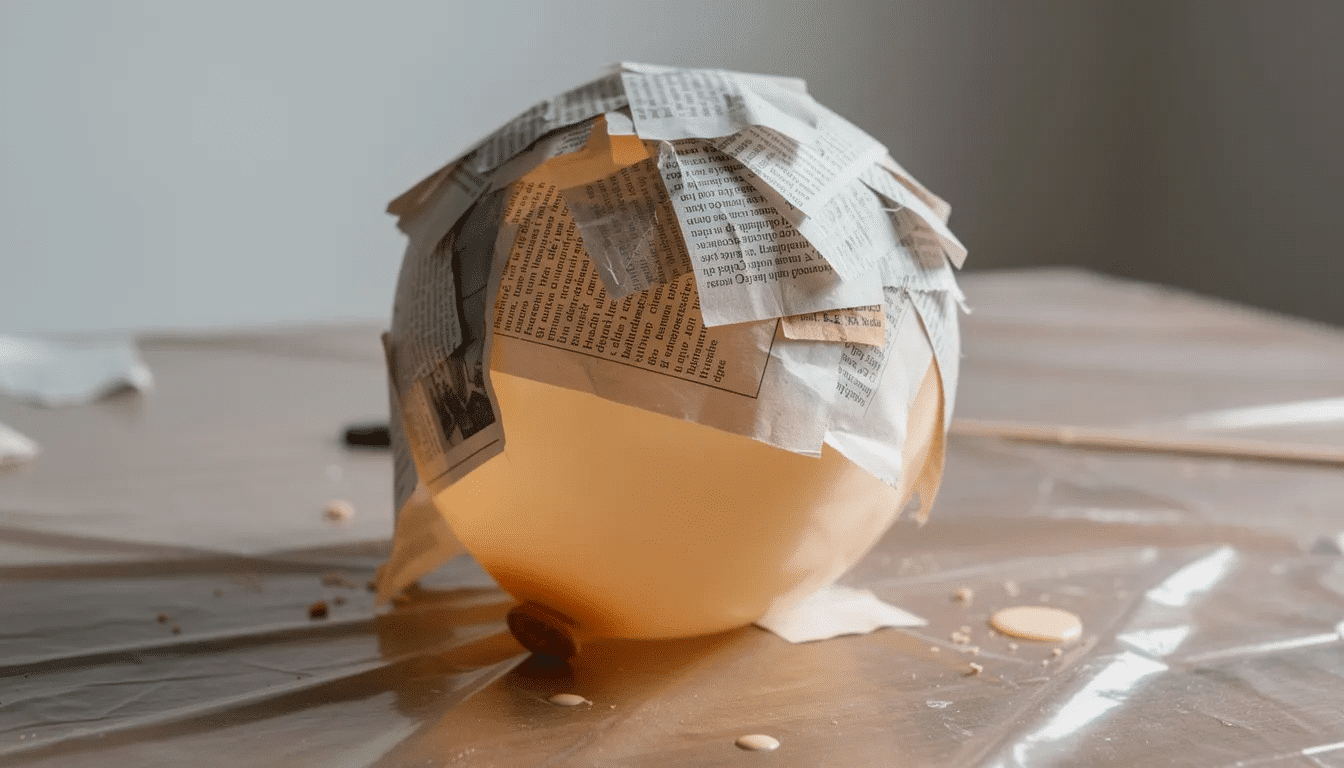
Step 3: Apply the first layer of strips directly to your form, starting at the center and working outward. Gently smooth out wrinkles and air bubbles with your fingers as you work. Overlap each strip by about half an inch to create a continuous surface without gaps.
Step 4: For the second and third layers, cross the direction of your strips. If your first layer ran horizontally, apply the next layer vertically. This cross-hatching technique dramatically increases the strength of your finished shell, similar to how plywood gains strength from alternating wood grain directions.
Step 5: Build up 3-4 layers for children’s crafts and light decorative pieces. For sturdier masks, costume props, or functional bowls, apply 5-7 layers total. Consider adding an extra layer around edges, joints, and handles where stress concentrates.
Step 6: Set your piece in a warm, well-ventilated spot to dry completely. This typically takes 24-48 hours depending on how thick your layers are and your local humidity. Avoid the temptation to speed things up with direct heat from a hair dryer, which can warp the paper unevenly.
Step 7: Once fully dry and hard, remove the form carefully. For balloon-based projects, use a pin to pop the balloon, then peel it away from the inside of the shell. The paper mache should sound hollow when you tap it and feel room temperature throughout—any cool spots indicate moisture still trapped inside.
For a concrete example: imagine creating a child’s astronaut helmet for a school play. Start with a balloon inflated to roughly head-size, apply 6 layers of starch-soaked strips with proper cross-hatching, let it dry for 48 hours, then cut out a face opening, paint it white with metallic silver accents, and seal with clear spray. The liquid starch method produces a light but sturdy helmet that holds up through rehearsals and performances.
Drying, painting, and sealing your starch paper mache
Liquid starch dries more slowly than thin flour paste due to its higher moisture content, so patience during the drying phase directly affects your project’s final strength. Rushing this stage leads to soft spots, warping, and potential mold growth inside the shell.
Ideal drying conditions and methods include:
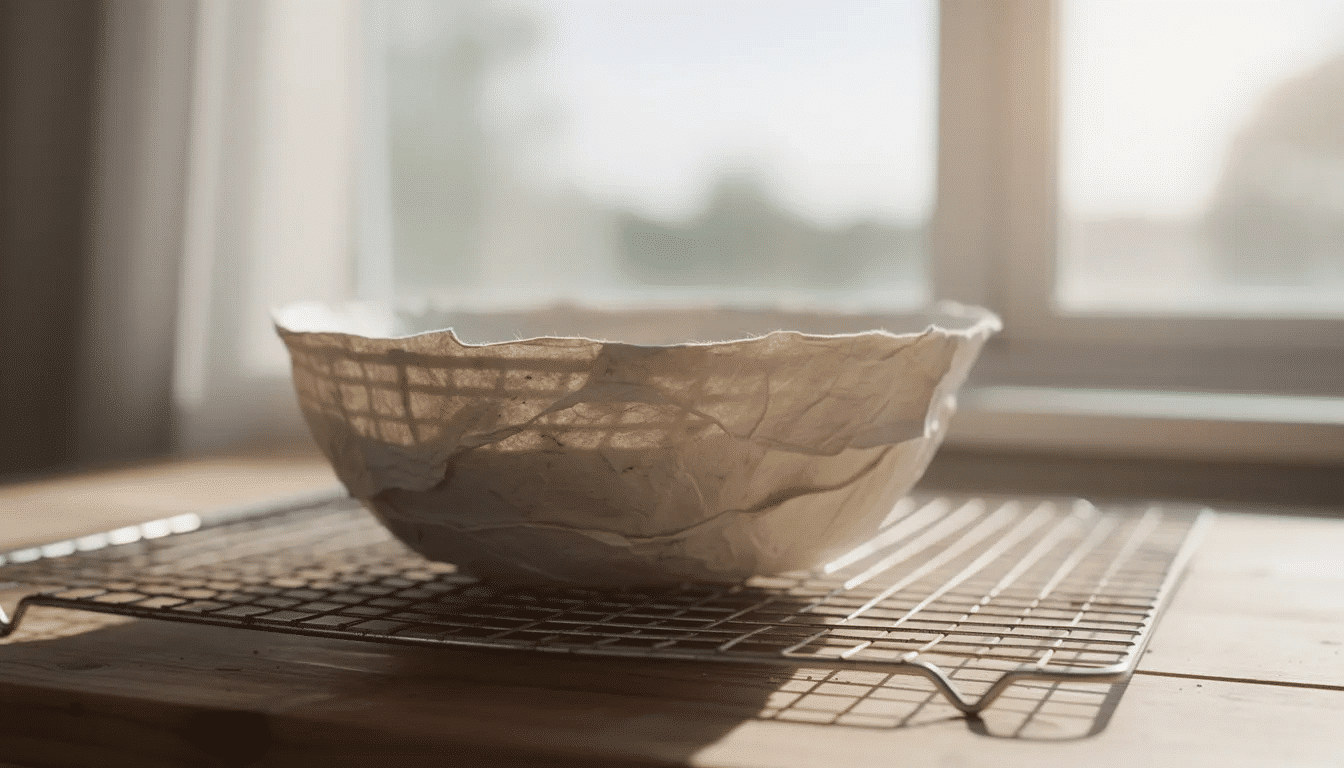
- Place your project on a wire rack or overturned bowl so air can circulate underneath and around all surfaces, just as you would when drying wax paper stained glass and suncatchers
- Keep the piece in a room at roughly 68-75°F (20-24°C) with good airflow
- Avoid damp basements, bathrooms, or any space where humidity stays high
- Use a small fan set on low to gently speed drying, but don’t point high heat sources directly at the piece
- Rotate the project every few hours if possible to ensure even drying
Check for complete dryness before moving to finishing steps. The shell should feel firm and rigid, not flexible when you press gently. It should not feel cool to the touch anywhere—cool spots mean moisture remains trapped. Any discoloration or soft areas indicate more drying time is needed.
Basic finishing transforms your dried paper mache from craft project to display-worthy piece:
- Sand lightly with fine-grit sandpaper (220-320 grit) if you want a very smooth surface before painting
- Apply 1-2 coats of white gesso or white acrylic paint as a base layer to cover newsprint and create a uniform surface for color
- Paint with acrylic craft paints in your chosen colors—bright primaries work great for kids’ projects, while metallics and earth tones suit props and décor, much like colorful tissue paper crafts
- Finish with 1-2 coats of clear spray sealer, working outdoors or in a well-ventilated area, to protect the paint and add durability
Liquid starch vs. flour-and-water paper mache
The history of papier mache stretches back thousands of years, with flour-and-water mixtures serving as the traditional adhesive for most of that time. Liquid starch entered the craft scene relatively recently but has earned a dedicated following among serious makers. Understanding when to use each method helps you choose the right approach for your specific project.
Flour and water paste typically uses a 1:1 ratio—2 cups flour to 2 cups water—mixed smooth with an optional tablespoon of salt to prevent mold. This classic recipe costs almost nothing and produces a reliable adhesive. However, the organic flour can attract pests, develop odors, and promote mold growth if the finished piece gets damp. The texture also tends to show more paper fibers in the final surface.
Liquid starch advantages worth considering:
- Ready to use straight from the bottle with no cooking or precise ratio mixing
- Tends to produce a smoother surface with fewer visible paper fibers
- Usually requires fewer layers to achieve a hard shell, saving time on large props and masks
- Contains less food-based material, which some crafters feel reduces odor and discourages pests
- Dries clear rather than with the slight cloudiness flour paste can leave
Liquid starch drawbacks to keep in mind:
- Can take significantly longer to dry fully, especially in humid climates—sometimes 50% longer than flour paste
- Costs more per project than simple pantry flour, though a $5-10 bottle makes many projects
- Availability varies by country; Sta-Flo is easy to find in U.S. supermarkets but may be harder to locate elsewhere
For kids’ projects, flour mixtures remain extremely cheap and perfectly safe—children can even help mix the paste. Many adults prefer liquid starch for bigger builds like costumes, masks, and cosplay props where the time savings from fewer layers and the smoother finish justify the slightly higher material cost.
Tips, troubleshooting, and project ideas with liquid starch
Even experienced crafters run into issues with paper mache crafts. Strips might sag, bubbles form, or drying takes longer than expected. These practical solutions address the most common problems.
Troubleshooting common issues:
- If strips slide or sag off your form, you’re using too much starch. Squeeze more thoroughly between your fingers and let the first layer partially dry before adding more.
- If bubbles form under the paper, gently press them out toward the edges with your fingers while the paper is still wet. Work from the center outward.
- If drying takes longer than 48 hours, move your project to a warmer room, position a fan nearby, and avoid sealing or painting until the piece feels completely dry throughout.
- If the shell feels weak or flexes when dry, add 2-3 more layers and let them cure. Focus extra reinforcement on stress points like edges, joints, and handles.
- If you notice any mold forming, the piece likely wasn’t fully dry before sealing. Unfortunately, once mold starts, it’s difficult to stop—start fresh and ensure complete drying next time.
Project ideas well-suited to liquid starch techniques, or to mix and match with other colorful weekend craft ideas:
- Large character masks for school plays—animals, astronauts, robots, and fantasy creatures
- Decorative bowls and trinket dishes that make thoughtful handmade gifts
- Lightweight cosplay armor pieces built over cardboard armatures, or character accessories inspired by easy owl crafts for kids
- Seasonal decorations like Halloween pumpkins, Easter eggs, or festive holiday ornaments and decorations formed over balloons
- Furniture overlays and decorative panels for upcycling projects or even a playful recycled Christmas wreath
- Clay-like sculptural pieces using paper pulp mixed with liquid starch, or pair your project with DIY craft kits for creative learning
Storage advice: Unlike homemade flour paste that spoils quickly, unused liquid starch can be poured back into a labeled jar and reused for several more days when kept covered. Store it in the refrigerator if you won’t use it within a week. However, paper strips already soaked in starch should be discarded after each session—they’ll dry out and become unusable, or grow mold if left damp.
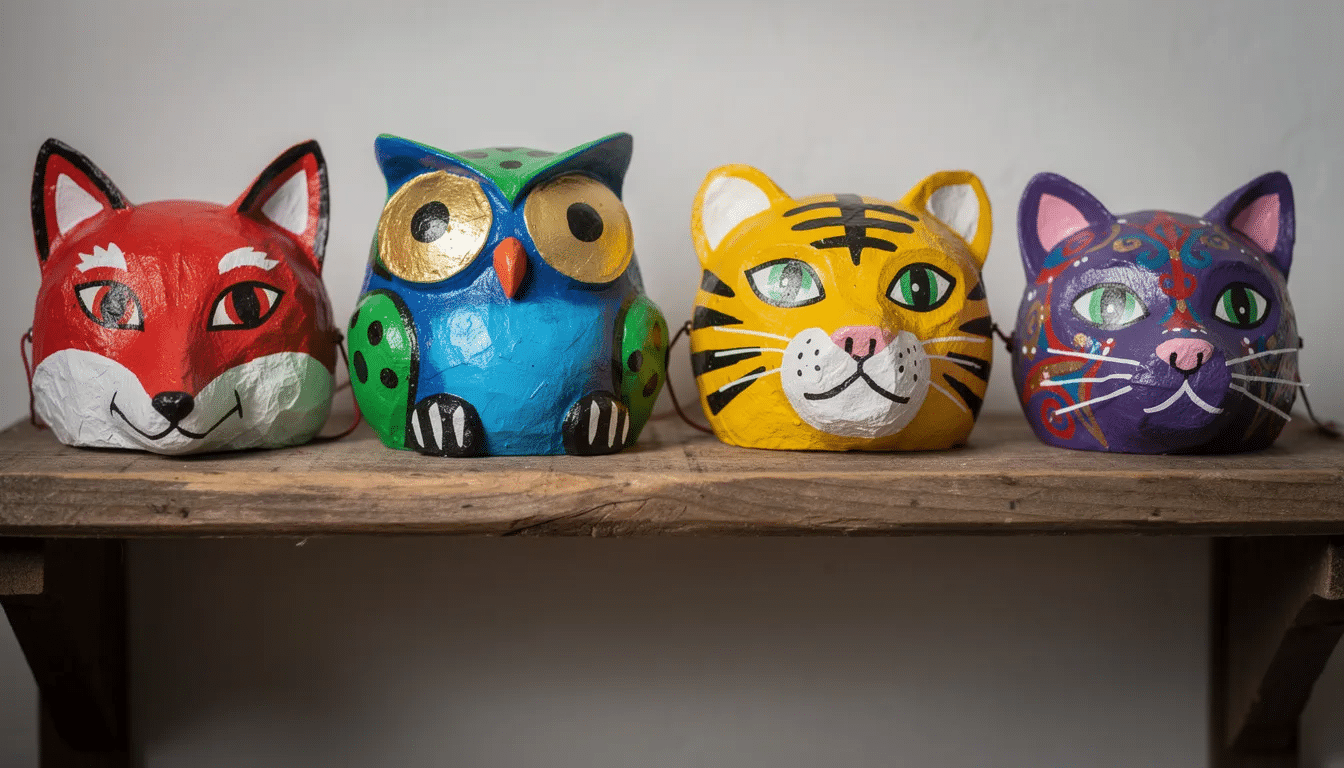
Paper mache with liquid starch opens up a world of creative possibilities, from quick kids’ crafts to sophisticated props and art pieces. The method rewards patience during drying but pays off with that smooth finish and durable shell that crafters love.
Start with something simple—a small bowl formed over a balloon or a basic mask shape. Once you see how nicely the starch creates that hard, paintable surface, you’ll have the confidence to tackle bigger projects. The techniques scale up easily to costume pieces, large decorations, and detailed sculptures. Grab a bottle of liquid starch this weekend and give it a try. Your first project might be a bit rough around the edges, but that’s part of the fun—and your second attempt will be that much better.