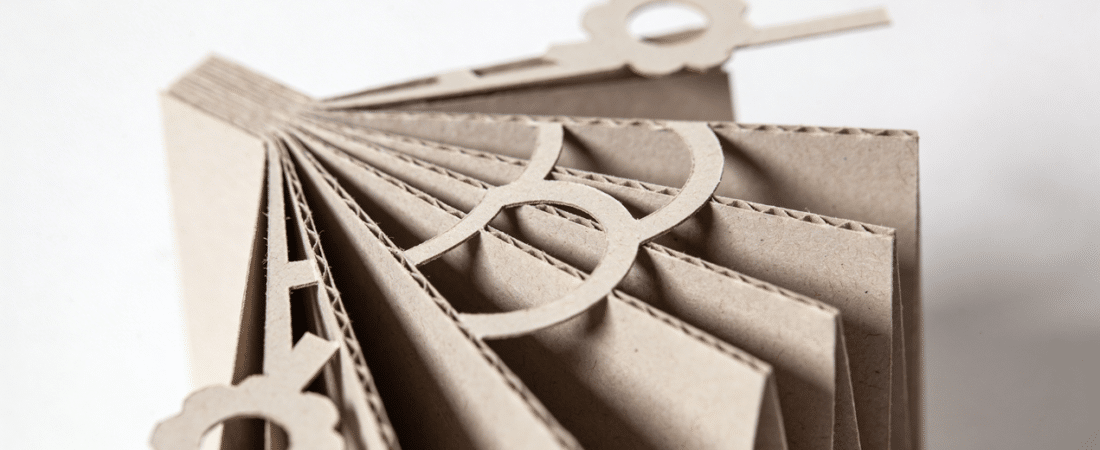

Papercraft craft is exactly what it sounds like: creative projects made mainly from paper and card. Whether you’re folding a simple origami heart, cutting decorative shapes for a party banner, or assembling handmade cards for friends and family, papercraft covers a wonderful range of techniques that anyone can learn.
The best part? This hobby is inexpensive, beginner-friendly, and perfect for rainy afternoons, school holidays, and weekend DIY sessions. You don’t need a dedicated craft room or expensive supplies to get started. Many projects can be done with materials already sitting around your house—printer paper, cardboard packaging, old magazines, and gift wrap from past birthdays all work beautifully, whether you’re making simple decorations or tackling a more structured project like a cardboard sword craft.
In this post, you’ll find specific craft ideas like paper flowers, garlands, and origami hearts, plus the tools and tips you need to get started quickly. If you’re craving even more inspiration, you can also explore colorful craft ideas for a fun weekend once you’ve tried a few of the projects here. Each section focuses on practical, step-by-step style explanations rather than generic theory, so you can actually sit down and create something today.
- Why Papercraft is the Perfect Craft Hobby
- Essential Tools & Materials for Papercraft Craft
- Easy Papercraft Craft Ideas for Beginners
- Popular Types of Papercraft Techniques
- Seasonal & Party Papercraft Craft Projects
- Tips for Successful Papercraft Craft Sessions
- Getting Started with Your First Papercraft Project
Why Papercraft is the Perfect Craft Hobby
Papercraft suits kids, teens, and adults equally well—including busy people who only have 30 to 60 minutes at a time. It offers many of the same developmental benefits you’ll find in broader arts and crafts for child development, from motor-skill practice to emotional expression. Unlike painting or pottery, paper projects can be paused mid-fold and picked up later without any materials drying out or going to waste.
The cost barrier is remarkably low. Basic papercraft can start under $10 using school glue, scissors, and copy paper you already own. Compare that to other creative hobbies that require specialised equipment, and you’ll see why so many people prefer paper as their primary medium. The mess factor is minimal too—no paint splatters, no clay residue on your table, and everything stores flat in a drawer or box, making it ideal for small homes and apartments.
Beyond the practical advantages, papercraft offers genuine mental health benefits. It’s relaxing, screen-free time that gives your brain a break from notifications and scrolling. The process of folding, cutting, and creating with your hands is genuinely meditative. Many people find that working on a simple origami design or cutting shapes for a garland helps them decompress after a long day.
The everyday uses are endless: custom birthday cards for friends, party bunting for celebrations, classroom decorations for teachers, handmade gift boxes for 2026 holidays, and personalised envelopes for special letters. The same basic tools work across all these projects, so once you collect a few supplies, you can tackle cardmaking, scrapbook pages, origami figures, and seasonal decor without buying anything new.
Essential Tools & Materials for Papercraft Craft
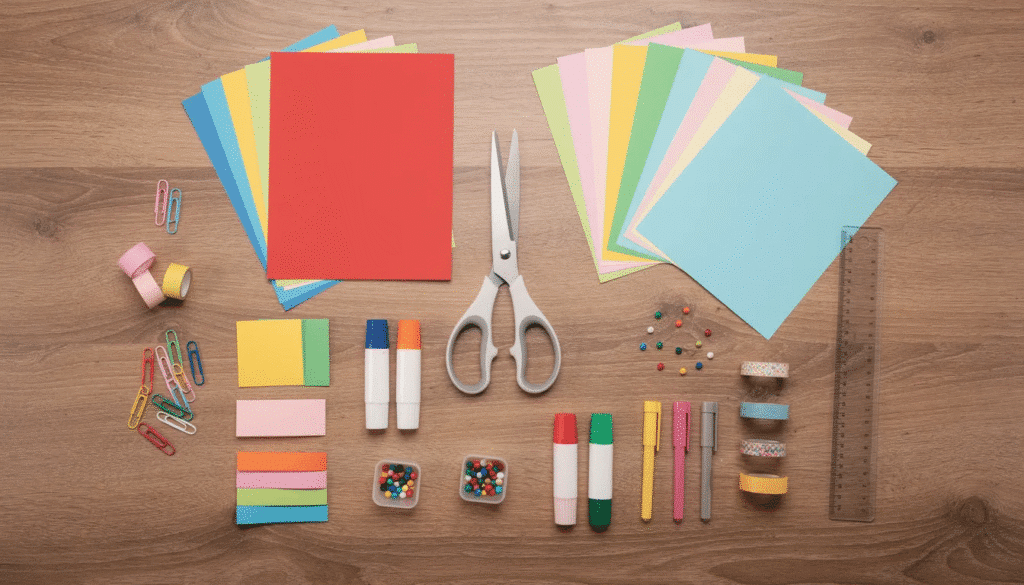
You don’t need a craft room or expensive gadgets to begin in 2026. Most successful papercrafters started with whatever they had in a kitchen drawer, and you can do the same. The key is organising a few basics so they’re handy when inspiration strikes.
Paper & Card
- A4 printer paper (great for origami and practice projects)
- Recycled cereal boxes (sturdy card for templates and box making)
- Brown kraft paper from parcels (excellent rustic gift wrap)
- 12” x 12” scrapbook paper pads (coordinated colours and patterns)
- Coloured construction paper (range of options for kids’ projects)
- Thicker cardstock (around 160 to 200gsm, holds shapes for 3D flowers and standing decorations)
Cutting Tools
- Regular household scissors (for most paper cutting tasks)
- Small detail scissors with pointed tips (for intricate curves)
- Metal ruler and craft knife (for straight edges on cards and box templates)
- Cutting mat (to protect surfaces)
- Safe storage for sharp tools (especially around children)
Adhesives
- Glue sticks (quick, dry projects like collages and simple cards)
- White PVA glue (stronger bonds for heavier paper and 3D constructions)
- Double-sided tape (neat, invisible joins on cards and envelopes)
- Small foam pads (for layered decoupage and raised elements)
Decorative Extras
- Felt-tip pens and colouring pencils (add details and shading)
- Washi tape (instant borders and decorative strips)
- Leftover ribbon, stickers, sequins (embellishments from old craft kits or party supplies)
- Ink pads and stamps (for stamping possibilities on cards and tags)
Keep all your tools in a small box or shoe box to create a “papercraft kit” that you can pull out quickly whenever you have a spare 30 minutes. Having everything in one place removes the friction of gathering supplies and makes spontaneous crafting much easier.
Easy Papercraft Craft Ideas for Beginners
The following projects usually take under 30 minutes each, making them perfect for a quick creative session. Each idea can be customised for birthdays, baby showers, Valentine’s Day, or school projects in 2026—simply swap the colours and patterns to match your occasion.
These project overviews will walk you through the process in plain language. You don’t need prior experience, and most can be completed by children with a bit of adult supervision for the cutting steps. For very young makers, themed projects such as a crab paper plate craft are another fun, simple option to try alongside the paper ideas here.
Paper Butterflies Wall & Party Decor
Creating a paper butterfly starts with folding a piece of A4 paper or coloured card in half. Draw half a butterfly shape along the fold—one wing and half the body—then cut along your line. When you unfold the paper, you’ll have a perfectly symmetrical butterfly.
You can use templates printed from the computer or trace around a picture of a real butterfly to get your shape. For a more organic look, draw freehand curves and let each butterfly turn out slightly different. The variety actually makes wall displays more interesting.
These butterflies work beautifully for decorating bedroom walls, pinning on a corkboard, gluing onto gift bags, or creating a “butterfly swarm” backdrop for birthday photos. To add visual interest, try layering two butterfly shapes—one smaller, one larger—with a foam pad between them for a 3D effect. You can also draw details with markers or add a touch of glitter glue along the wing edges.
Expect to spend about 10 to 20 minutes making several butterflies, depending on how much detail you add. This project suits children aged about 6 and up with supervision for the cutting, though adults often find it relaxing too.
Simple Paper Feathers for Boho Decorations
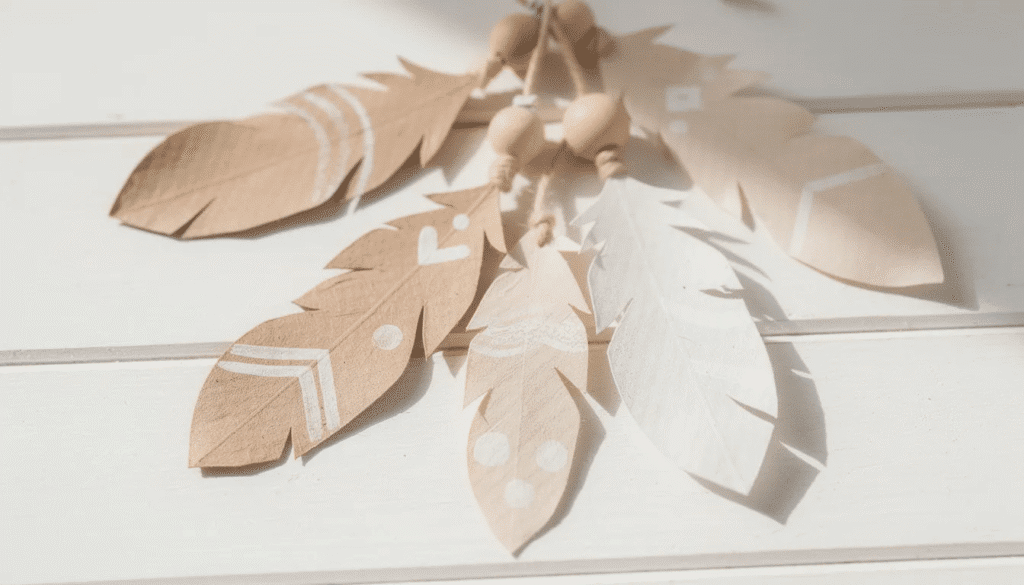
Paper feathers have a lovely organic look that works well for boho-style decorations, and they’re surprisingly quick to make. Start by folding a strip of paper lengthwise, then cut an elongated half-leaf shape along the fold. Before unfolding, snip angled cuts from the outside edge toward the fold to mimic the barbs of a real feather.
Old magazines, coloured craft paper, and metallic wrapping paper all create interesting textures and patterns for feathers. Using a mix of papers in a single project adds visual depth without any extra effort, and kids especially enjoy pairing these with other bright projects like rainbow crafts for a really colourful display.
String several feathers together to create a garland, attach them to greeting cards for a decorative touch, or glue them around a glass jar to make a boho-style pencil holder. For added realism, draw a central “quill” line down the middle with a darker pen and add subtle shading along the edges.
This is a fast, low-waste project that uses up scrap strips of paper left from other crafts—those odds and ends that seem too narrow to be useful but too nice to throw away.
3D Paper Flowers for Gifts and Home Decor
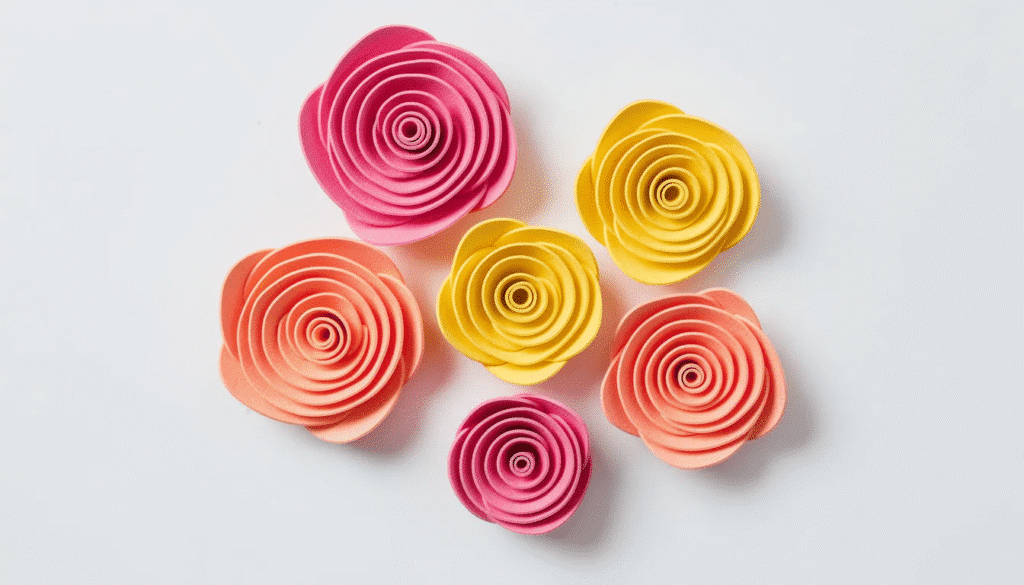
Spiral flowers are one of the easiest 3D paper craft techniques to learn. Start by cutting a circle from cardstock, then cut a continuous spiral from the outside edge toward the centre. Roll the spiral from the outside inward, keeping it fairly tight, then let it relax slightly and glue the base to hold the shape. The result looks like a small rose.
Thicker paper (around 160 to 200gsm) holds its shape much better than thin copy paper, making it ideal for table centrepieces and gift box toppers. Create sets of flowers in two or three coordinating colours for spring decorations, Mother’s Day gifts, or wedding place cards, or switch to tissue paper and try dedicated tissue paper crafts for a softer, more delicate look.
For a different style, try layered petal flowers. Cut simple petal shapes in graduating sizes, stack them with the largest on the bottom, and glue them together at the centre. Add a small paper circle or button in the middle to finish the look.
Display your paper flowers on a canvas for instant wall art, attach them to wreath bases for door decorations, or glue them onto plain notebooks to personalise stationery. A collection of these flowers makes a wonderful handmade gift that never wilts.
Paper Garlands for Parties and Seasons
Paper garlands transform any room quickly and cheaply, especially when you pair them with other handmade festive touches inspired by a dedicated Christmas craft round-up. The basic idea is simple: cut repeated shapes, then either sew them together on a sewing machine with a straight stitch or glue them along a length of string or ribbon.
Seasonal variations are endless. Orange and brown leaves work for autumn 2026, paper snowflakes for winter, pastel circles for Easter, and red hearts for Valentine’s Day. Mix different sizes of the same shape for visual interest, or combine related shapes like stars and moons for a night sky theme.
Hang garlands across mantelpieces, above windows, or along party tables to transform your space. Paint colour sample cards from DIY stores make excellent garland pieces—they’re sturdy, come in beautiful coordinated colours, and they’re free.
Children can help with safe tasks like tracing around cookie cutters onto paper and handing shapes to an adult to string together. It’s a fun way to involve the whole family in party preparation.
Origami Hearts and Simple Folded Shapes
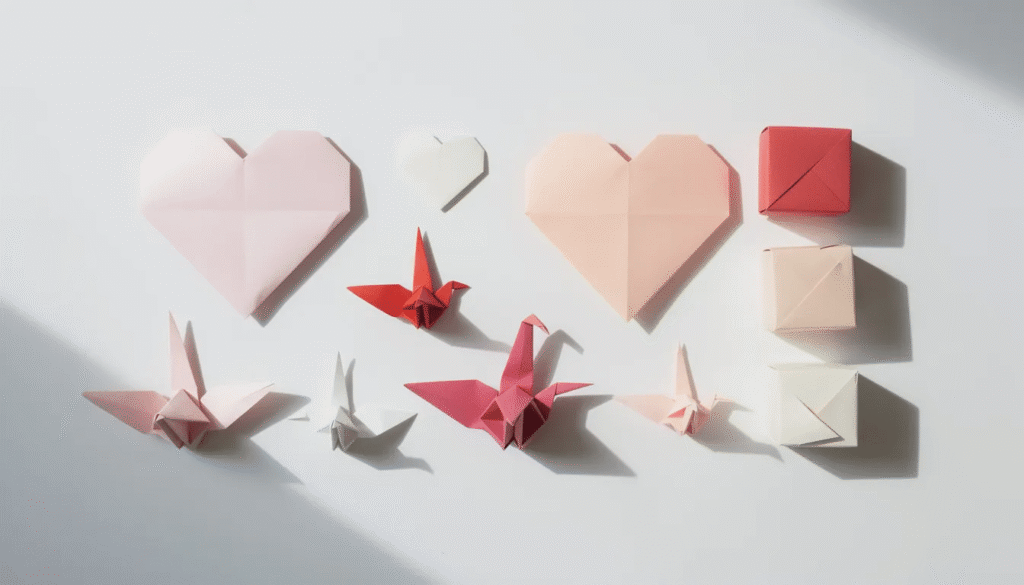
Origami is the Japanese art of paper folding, from the words “oru” (to fold) and “kami” (paper). The wonderful thing about traditional origami is that it only requires one square sheet per project—no scissors, no glue, just your hands and paper.
Beginners can start with an easy origami heart or winged heart that folds flat but has enough dimension to be charming, or branch out into other heart crafts like garlands, wreaths, and bookmarks if you love this motif. Some heart designs even have a pocket where you can hide a tiny note, perfect for Valentine’s Day or anniversaries.
Thinner paper makes folding easier and keeps creases crisp. Dedicated origami paper works beautifully, but you can also cut standard printer paper into squares. The key is using paper that holds a fold without springing back.
Use finished hearts to tuck into lunch boxes, attach to gift tags, or scatter across tables for romantic dinners. Following a step-by-step diagram or video tutorial while folding helps enormously—pause at each step until the fold feels natural before moving on. Many origami designs that look complicated actually take under 20 to 30 minutes once you’ve learned the sequence.
Popular Types of Papercraft Techniques
Papercraft is a broad category that includes stamping, decoupage, cardmaking, scrapbooking, creative lettering, and die-cutting, among others. You don’t have to learn everything at once. Most successful crafters pick a single technique that appeals to them and build from there, gradually adding new skills as their confidence grows.
The following sections explore each major technique, describing what it involves and offering a simple starter idea so you can decide which to try first.
Stamping on Paper Cards and Tags
Stamping uses rubber or clear acrylic stamps pressed into ink pads, then onto card, to create repeatable designs and messages. It’s one of the fastest ways to decorate paper projects, and stamped images look polished and professional even when you’re just starting out.
A good starting point is one alphabet stamp set and one sentiment stamp like “Happy Birthday” or “Thank You.” With just these two items, you can create cards for most occasions. Different ink colours instantly change the mood—black reads as clean and modern, pastels work for baby cards, and metallic gold suits Christmas 2026 celebrations perfectly.
Use thicker stamping card or smooth cardstock to avoid ink bleeding and to get crisp impressions. Let ink dry for a minute before handling to prevent smudging.
Simple stamping projects include gift tags, mini note cards tied with ribbon, and bookmarks decorated with stamped patterns or inspirational phrases. Once you build confidence, you might explore layering stamps, adding watercolour washes over stamped images, or combining stamping with other techniques.
Layered Decoupage for 3D Effects
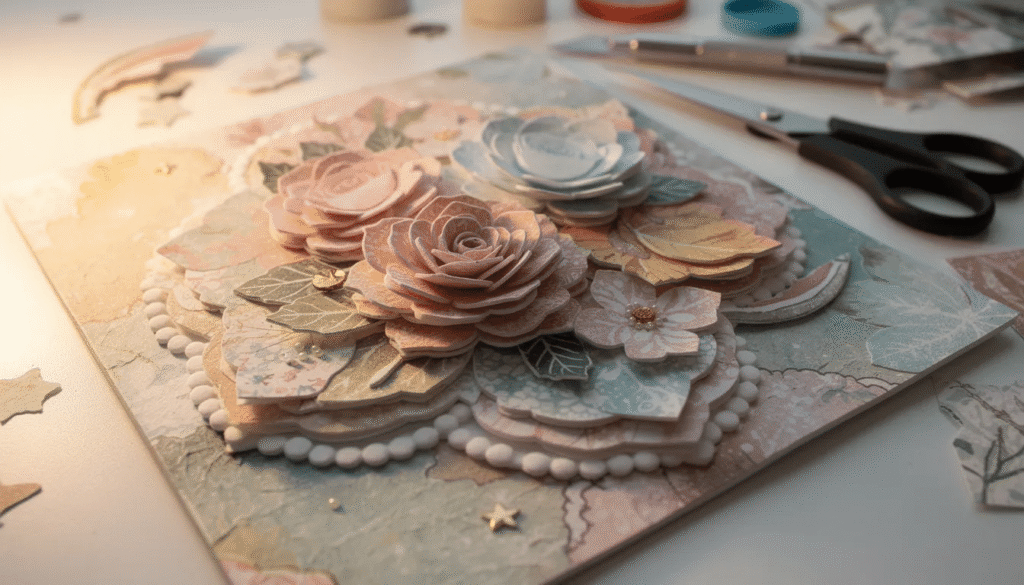
Decoupage involves cutting out repeated images and layering them with foam pads or glue to build a raised, 3D motif. The technique creates striking focal points on handmade cards that genuinely look like professional work.
Printed floral sheets, butterflies, and Christmas motifs like trees and baubles all work well for decoupage. Ready-printed decoupage papers and kits exist at most craft stores, but beginners can also print their own designs in multiples at home using a computer and colour printer.
The basic process works like this: cut several copies of your chosen image, leave one as a flat base layer, then cut progressively smaller details from additional copies to stack on top. Use foam pads between layers to create lift and shadow. The result has depth and dimension that flat images simply can’t match.
Decoupage is ideal for special keepsake cards—milestone birthdays, weddings, new baby announcements, and retirement celebrations all benefit from the extra effort this technique requires.
Cardmaking for Every Occasion
Cardmaking is one of the most practical papercraft crafts because it produces something genuinely useful. Making your own cards means you can create personalised greetings instead of buying mass-produced ones that look like everyone else’s.
Common card sizes include A6, A5 folded, 5 by 7 inches, and 6 by 6 inches square. You can buy pre-made card blanks in these sizes or cut and fold cardstock yourself at home using a bone folder for crisp creases.
A simple card layout consists of three elements: a background paper slightly smaller than the card front, a central focal image (stamped, decoupaged, or die-cut), and a sentiment strip with your message. This basic formula works for virtually any occasion and can be dressed up or simplified depending on your time and materials.
Seasonal applications include handmade Christmas cards, birthday cards for 2026 school friends, and thank-you cards after weddings or graduation parties. Even basic designs feel more thoughtful and memorable for recipients than store-bought alternatives when they include a hand-written message.
Scrapbooking to Preserve Memories
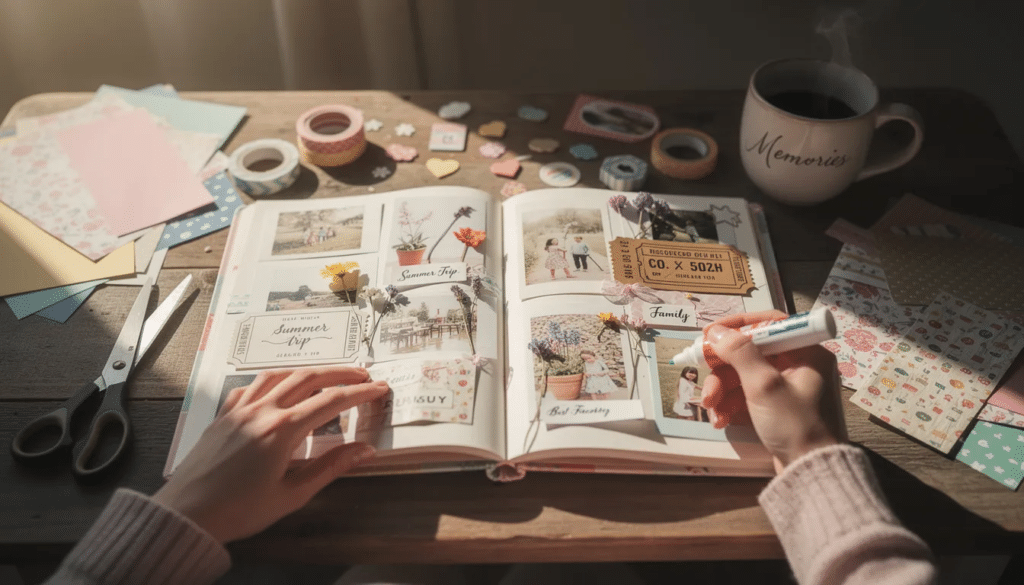
Scrapbooking arranges photos, tickets, notes, and small flat keepsakes on themed pages to tell a story. It’s a creative way to preserve memories that might otherwise end up forgotten in a box or lost on a phone.
Using acid-free papers and adhesives protects photos from yellowing over the years—this matters if you’re creating something you hope to keep for decades. Most scrapbook supplies at stores are already acid-free, but it’s worth checking labels.
Concrete page ideas include a holiday 2025 photo spread with ticket stubs and maps, a child’s first school year with artwork and class photos, or a wedding album incorporating invitations and table numbers alongside professional pictures.
Embellishments bring scrapbook pages to life: decorative borders cut from patterned paper, stamped dates, handwritten captions explaining who and where, and small pockets for extra photos or journaling cards. You can work in full 12 by 12 inch albums or create more compact memory books using A5 notebooks.
Creative Lettering and Doodling on Paper
Modern lettering is stylised writing used to decorate journal pages, cards, envelopes, and planner spreads. You don’t need fancy calligraphy training to get started—anyone who can write can learn to letter.
Beginners should start with simple faux calligraphy using an ordinary fine-liner or felt-tip. Write a word normally, then go back and thicken all the “down” strokes manually by drawing a second line beside them. This creates the thick-thin variation that makes lettering look elegant.
Practice favourite quotes, names, and days of the week, then use your lettered words on wall posters and greeting cards. Doodles like banners, arrows, flowers, and stars pair well with lettering to fill empty corners on paper projects.
The barrier to entry is genuinely low—you don’t need expensive brush pens to start experimenting. A regular pen and some copy paper are enough to begin developing your style.
Die-Cutting and Punching (Optional Advanced Tools)
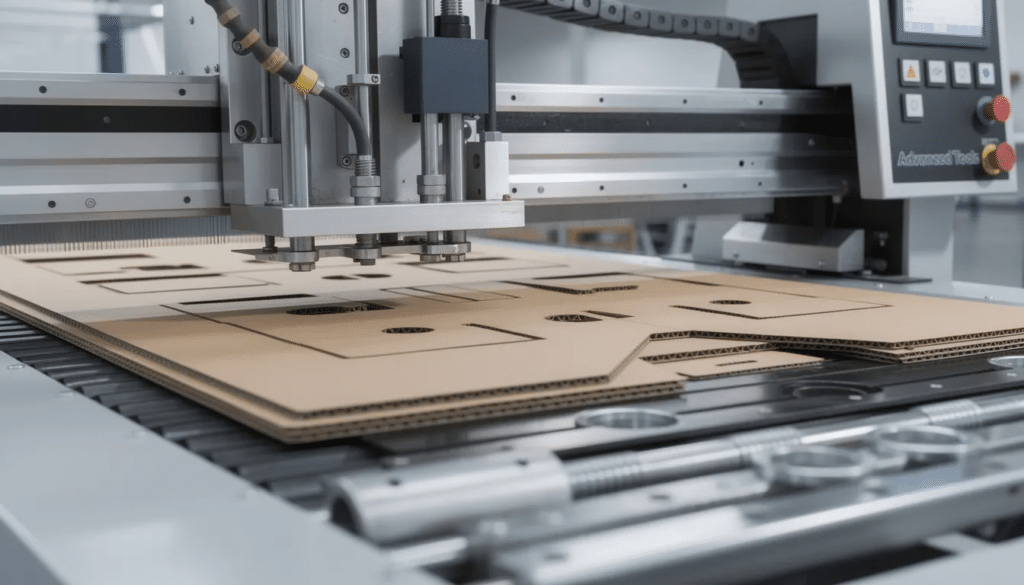
Die-cutting machines and simple paper punches create precise shapes and patterns faster than hand-cutting. They’re not essential for beginners, but they can speed up production significantly once you’re making larger quantities.
Manual die-cutting machines use metal dies in shapes like labels, flowers, and letters. You sandwich paper between the die and cutting plates, roll it through the machine, and out comes a perfect shape. Small hand punches create circles, hearts, butterflies, and stars with a simple squeeze.
Before investing in a machine, try cheaper punches first or borrow a die-cutting machine from a friend or local craft group. Many community centres and libraries now have crafting equipment available for members.
Project ideas for these tools include layered die-cut snowflakes for winter 2026 cards, punched confetti for party tables, and intricate frames around scrapbook photos. Think of die-cutting as an optional upgrade that makes sense once you know you enjoy papercraft enough to justify the expense.
Seasonal & Party Papercraft Craft Projects
Papercraft truly shines during holidays and celebrations because it lets you personalise everything from decor to gift wrap. Handmade party decorations create a cohesive look that mass-produced items simply can’t match, and guests genuinely notice the extra effort.
The following seasonal ideas reuse techniques already covered—cutting shapes, folding, stamping, and simple gluing. Once you’ve mastered the basics, adapting them for different occasions becomes straightforward.
Christmas & Winter Papercraft Ideas
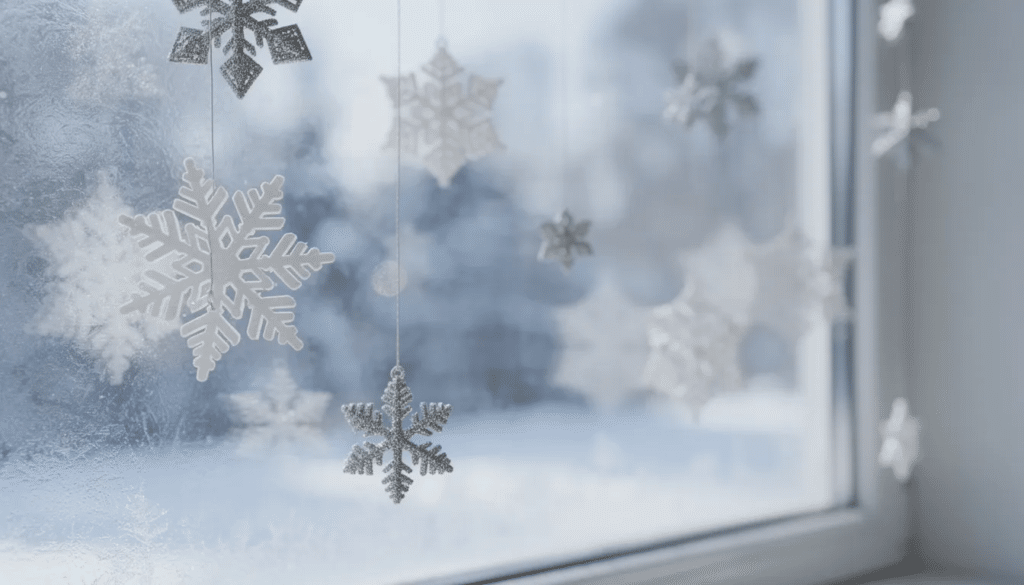
Winter offers endless papercraft possibilities. Hand-stamped Christmas cards with simple tree or snowflake designs take minutes to make but feel far more personal than bought alternatives. Paper snowflake window decorations cut from white paper create a festive look that costs almost nothing.
Star or tree garlands in gold, silver, and white transform a room for December 2026 celebrations. Cut shapes from glitter card for extra sparkle, or keep things simple with plain white for a Scandinavian aesthetic.
DIY gift tags made from leftover cardstock dress up wrapped presents beautifully. Stamp them with snowflakes, draw simple baubles, or letter the recipient’s name by hand. Brown kraft paper makes excellent gift wrap when decorated with paper cut-outs and tied with simple string—the rustic look is both stylish and economical.
Paper chains made from red, green, and gold strips remain a nostalgic craft to do with children before the holidays. They’re one of the simplest projects in this guide and genuinely fun for the whole family, and you can complement them with wax paper crafts like suncatchers and faux stained glass for extra winter colour in your windows.
Spring, Easter & Floral Papercrafts
Spring calls for fresh colours and cheerful motifs. Pastel-coloured banners with egg or bunny shapes brighten Easter brunch decorations. Cut shapes from soft pinks, blues, greens, and yellows, then string them across windows or along mantels.
Combine the paper flower techniques described earlier into spring wreaths for doors or as centrepieces for family gatherings. A ring of spiral roses in graduating shades of pink looks surprisingly professional and lasts far longer than real flowers.
Small origami bunny boxes hold chocolate eggs or sweets perfectly for Easter egg hunts. You can find fold patterns online and follow along with a video tutorial until the process feels natural, or try colourful tissue paper stained glass crafts to hang in windows as part of your spring display.
Scrapbook pages featuring outdoor photos from March through May benefit from soft colour palettes. Add die-cut flowers, leaf shapes, and handwritten journaling about spring walks and family outings.
Halloween & Autumn Papercraft Decorations
Halloween decorations lend themselves perfectly to paper cutting. Black paper bats and orange pumpkins stuck on walls or windows create instant atmosphere for October parties. The flat shapes roll up easily for storage and can be reused year after year.
A paper “spider web” garland made from white card triangles with cut-out negative-space patterns looks impressive spanning a doorway or window. It’s more complicated than basic shapes but still achievable in an evening.
Rich autumn colours—deep orange, rust, gold, and dark green—work beautifully for leaf garlands and table place cards for an autumn dinner party. Use real leaves as templates by tracing around them, or draw freehand curves for a more stylised look.
Quick Halloween treat bags can be made from folded and glued paper, decorated with simple stamped faces or drawn jack-o’-lanterns. These work well for school events and community parties where you need multiples.
Birthday & Celebration Papercraft
Birthday parties benefit enormously from coordinated papercraft. Essential projects include personalised banners spelling out the birthday person’s name, matching cupcake toppers, and handmade invitations that set the theme before guests even arrive.
Simple place cards made from folded rectangles of cardstock with hand-lettered names work for dinner parties and weddings alike. They take minutes to make but add a polished touch to table settings.
Coordinate colours and motifs across invitations, bunting, and thank-you notes for a cohesive party theme. This “branded” look makes celebrations feel more special and photograph better too.
Small favour boxes or envelopes made from patterned paper hold sweets or small keepsakes for guests to take home. Box making sounds complicated but actually follows simple fold-and-glue patterns once you understand the basic structure.
Tips for Successful Papercraft Craft Sessions
Planning ahead makes crafting sessions feel fun rather than stressful. A few minutes of preparation saves frustration during the actual creating process.
- Clear your workspace and gather all materials before you begin. Having to hunt for scissors or the right colour paper mid-project breaks your creative flow.
- Keep a scrap paper pile handy for testing cuts, practising stamps, or trying out colour combinations before committing to your good paper.
- If you’re new to papercraft, start with easier projects like the paper butterflies or simple garlands described earlier. Build confidence before moving to more detailed techniques like decoupage or intricate paper cutting.
- Time-saving tip: Mass-cut shapes in one sitting, then assemble projects later—cutting twenty circles at once is faster than cutting five circles four separate times.
- Pre-score fold lines with a blunt knife or bone folder before folding for cleaner, crisper creases.
- Supervise children using scissors and never let them handle craft knives. Store sharp tools and liquid glues out of reach after each session.
- Embrace experimentation. “Mistakes” often lead to unexpected design ideas. A blob of glue becomes a spot for an extra embellishment. An off-centre cut becomes a deliberately asymmetrical design. Some of the most creative results come from happy accidents.
Getting Started with Your First Papercraft Project
You’ve now explored a range of techniques, from simple paper cutting to stamping, origami, and seasonal decorations. The wonderful thing about papercraft is that anyone can begin with materials already at home and one clear idea of what to make.
Here’s a concrete starting plan: pick one project from this guide—paper butterflies are great for absolute beginners, or try a simple stamped card if you have ink pads and stamps. Choose your colours, gather your tools, and schedule 30 minutes this week to actually sit down and create.
Save your paper scraps in a box or envelope for future projects. Build a small tool kit with scissors, glue, and a few pens. Gradually try new techniques like origami or decoupage as your confidence grows. Each project teaches you something that makes the next one easier.
Use papercraft throughout the year for birthdays, holidays, school projects, and home decor—not just as a one-off activity. The skills transfer across occasions, so once you learn to make a garland for a party, you can adapt the same technique for Christmas decorations or classroom displays.
Making something by hand brings a particular satisfaction that buying ready-made items simply can’t match. Your friends and family will notice the thought behind handmade cards and decorations. And you’ll have discovered a creative, relaxing hobby that costs almost nothing and rewards you with tangible results you can actually use.