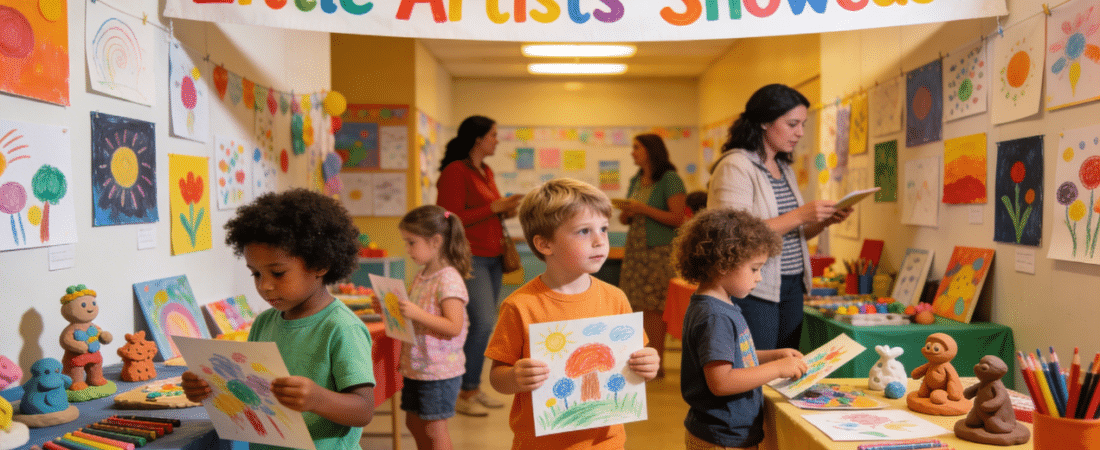

A preschool art show transforms your classroom into a mini gallery where 3–5 year olds become celebrated young artists. Picture families walking through displays of colorful paintings, textured collages, and clay creations—each piece labeled with a child’s name and a short quote about their inspiration.
This guide is for anyone planning an art show for preschoolers, whether in a classroom, childcare center, or home program. It is designed for preschool teachers, childcare providers, and parents who want to create a meaningful event that celebrates creativity and connects families with classroom learning. Hosting an art show for preschoolers is a meaningful way to celebrate creativity and connect families with classroom learning.
The process of making art is at the heart of any preschool art show, and suitable projects prioritize process over product, featuring tactile and collaborative creations like murals and salt paintings. Suitable preschool art show projects prioritize process over product, featuring tactile and collaborative creations like murals and salt paintings. The process of making art is at the heart of any preschool art show, and a variety of mediums such as 3D yarn sticks, collage, and paintings are typically included. Organize a preschool art show by focusing on the process rather than perfection, featuring varied mediums like 3D yarn sticks, collage, and paintings.
This guide walks you through planning and hosting an art show in a preschool, childcare center, or home program. Whether you’re aiming for a May celebration or a December winter showcase, you’ll find everything you need to create a memorable event that celebrates children’s creativity.
Why host an art show for preschoolers?
- Celebrate what kids have been creating all year
- Strengthen connections between families and your program
- Give children a sense of pride and accomplishment
- Showcase early learning in a tangible, meaningful way
- Why Host an Art Show for Preschoolers?
- Choosing a Theme and Date for Your Preschool Art Show
- Planning and Setting Up the Preschool Art Show
- Creating the Art: Project Ideas for Preschool Shows
- Displaying Preschool Art Like a Real Gallery
- Engaging Families and Building Community
- After the Show: Packing Up and Sending Art Home
Why Host an Art Show for Preschoolers?
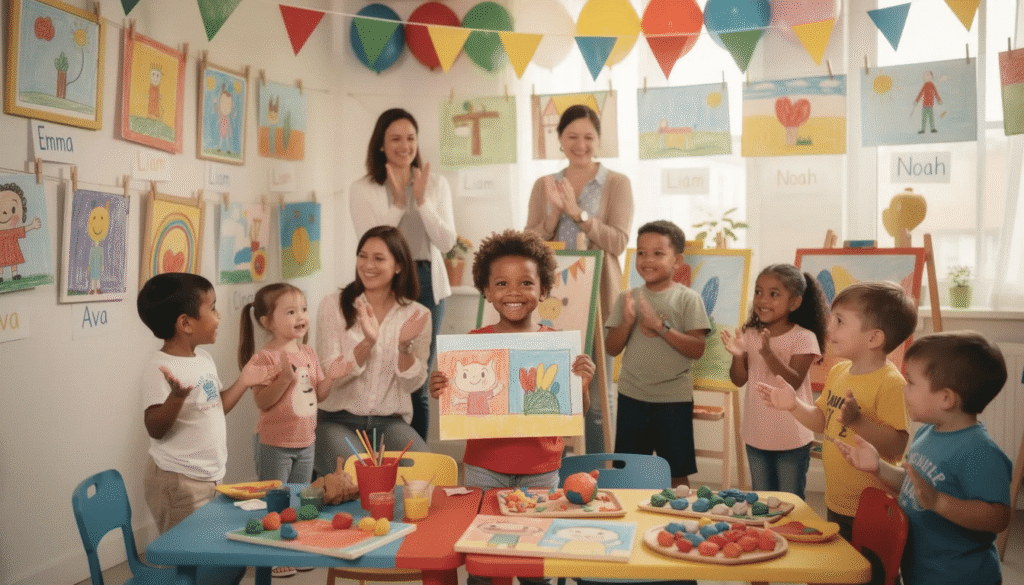
When preschoolers see their work displayed with titles and “artist” labels, something shifts. They stand a little taller. They point and say, “I made that!” This confidence-building moment is one of the primary reasons to invest substantial time in organizing a preschool art show.
Unlike toddlers, children in the pre k age range bring a social dimension to their art. They want to share their work, tell stories about what they created, and hear what others think. An art show gives them a structured opportunity to practice these skills—talking about their choices, answering questions from families, and celebrating alongside their peers.
For parents and caregivers, the show offers a window into daily classroom life. They see evidence of fine motor development in scissor cuts and brush strokes. They notice the color mixing experiments and storytelling through pictures. These art experiences make abstract learning goals concrete and visible.
An annual or twice-yearly art show can become a beloved school tradition. Consider a December winter show and a May spring show to bookend the year. Families begin to expect it, and children look forward to the excitement of sharing their world with the people they love.
Benefits at a glance:
- For children: Pride, confidence, vocabulary development, social skills practice
- For families: Insight into classroom activities, connection to learning goals, quality time with their child
- For teachers: Documentation of growth, community building, celebration of curriculum
Choosing a Theme and Date for Your Preschool Art Show
A clear theme ties your show together and gives children a shared focus for their projects. It also makes planning easier because you can connect art activities to books, songs, and science topics already in your curriculum.
- Pick a theme early. Choose something broad enough to allow variety but specific enough to feel cohesive—“Famous Artists,” “Day and Night,” “Seasons of the Year,” or “Around the World” all work well.
- Schedule strategically. A weekday evening (Thursday at 5:30–7:00 p.m.) or Saturday morning tends to maximize family attendance. Avoid holidays and school events that compete for attention.
- Plan 4–6 weeks ahead. This timeline allows children to create 8–10 pieces in different media—paint, collage, clay, and mixed materials.
- Decide on location. Will the show be indoors, outdoors, or a mix? Paintings might hang inside the classroom while 3D work sits on playground tables.
- Consider the weather. If you’re planning an outdoor component in May, have a backup plan for rain.
Sample Themes for a Preschool Art Show
- “Art Around the Clock” – Day and night skies, clocks, sun and moon imagery. Great for exploring opposites and time concepts.
- “Color Explorers” – Rainbow art, monochrome pieces, color mixing experiments. Connects naturally to science lessons about light and pigments.
- “Mini Masters” – Monet, Picasso, Van Gogh inspired pieces. Introduces children to art history in an accessible way.
- “Spring Garden Gallery” – Flowers, insects, weather art, growing things. Perfect for an April or May show tied to seasonal observations.
- “Our Neighborhood” – Buildings, vehicles, community helpers, maps. Works well with social studies units about where we live.
- “Texture Town” – Focus on tactile materials—sandpaper, fabric, bubble wrap, corrugated cardboard. Highlights sensory exploration.
Each theme can connect to picture books you’re already reading. For example, a water lilies project pairs naturally with books about ponds, frogs, and gardens.
Planning and Setting Up the Preschool Art Show
A simple timeline keeps the process manageable and ensures nothing falls through the cracks.
Six weeks out: Choose your date and theme. Begin gathering art supplies and materials for the first projects.
Four weeks out: Start creating art with children. Aim for 2–3 pieces per week across different media.
Two weeks out: Design and send invitations. Begin planning your display layout.
One week out: Prepare labels, signage, and artist statements. Confirm refreshment plans.
Day before: Set up displays, hang artwork, and do a final walkthrough.
Day of: Host the show, take photos, and enjoy watching families explore.
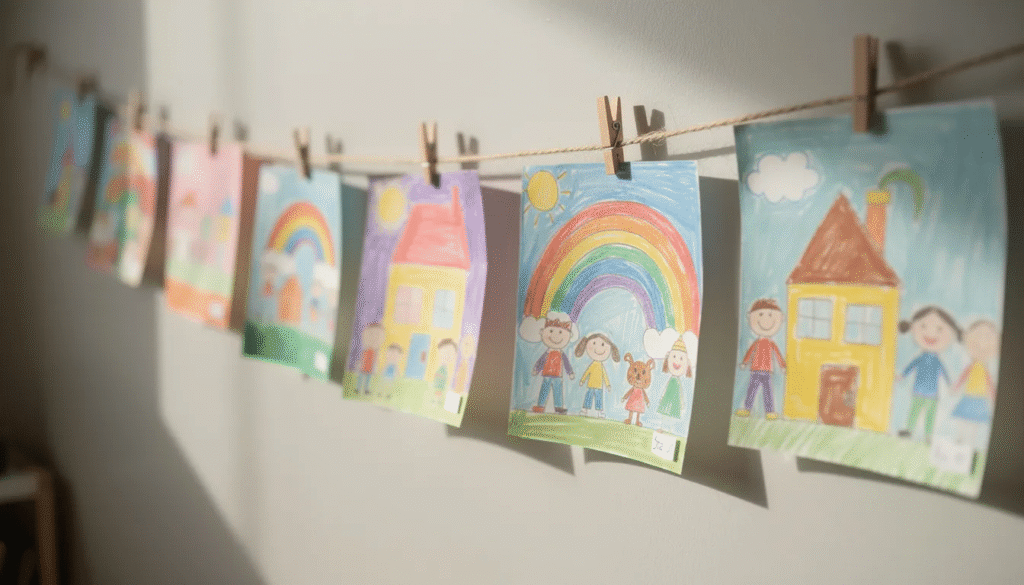
Transforming a classroom or hallway into a gallery doesn’t require expensive supplies. Yarn or twine stretched across walls creates instant hanging space. Clothespins and painter’s tape keep things secure without damaging surfaces. Low tables and child-height easels work perfectly for 3D pieces and clay sculptures.
Labeling matters more than you might expect. Each piece should include the child’s name, the artwork title (which children can help create), and a short description of materials and inspiration. Something as simple as “Tempera paint on cardboard, inspired by Starry Night” helps families understand the process behind the product.
Practical setup tips:
- Hang art at child-eye level (3–4 feet from the floor) so young children can view their own work
- Use a hot glue gun to secure heavier 3D pieces to display boards (keep out of children’s reach during setup)
- Avoid sharp staples in areas where children can reach
- Secure all displays so curious toddlers or siblings cannot pull them down
- Create clear pathways so families can move through without crowding
Invitations, Schedules, and Event Details
- Let children help create invitations. Stamped stars, painted borders, or hand-drawn frames around printed text add personal touches that families treasure.
- Send invitations 2–3 weeks in advance. Follow up with reminder emails or private social media posts to families one week before.
- Keep the schedule simple. 15 minutes for arrival, 30–40 minutes for gallery viewing, 15 minutes for a closing circle or song, and optional snack time.
- Include essential details. Date, time, location, parking instructions, and whether siblings and grandparents are welcome.
- Note any restrictions apply. If space is limited, mention RSVPs or staggered arrival times.
Sample Invitation Text:
You’re invited to our Preschool Art Show! Join us Thursday, May 22nd from 5:30–7:00 p.m. in Room 4. Your young artist can’t wait to show you their work!
Creating the Art: Project Ideas for Preschool Shows
The best preschool art show ideas balance process art philosophy with display-ready results. This means children make their own choices about colors, placement, and technique while still creating pieces that translate well to a gallery setting.
The process of making art is at the heart of any preschool art show, and suitable projects prioritize process over product, featuring tactile and collaborative creations like murals and salt paintings. Process art activities emphasize exploration over predetermined outcomes. When you offer new materials and open-ended prompts, you support each child’s creativity and give them ownership of their work. The finished pieces reflect genuine artistic decisions rather than cookie-cutter copies.
Plan for variety. A mix of 2D and 3D projects makes your show feel rich and interesting. Include paintings, collages, clay work, printmaking, and at least one collective work created by the whole class.
For a late-April or early-May show, create one project per week during April. This pace gives children time to explore without rushing, and it gives artwork time to dry and be photographed before display.
Consider adding artist statements—short sentences dictated by the child about each artwork. “I used yellow paint because it’s sunny” or “This is my dog running” adds personal context that families love.
Day and Night Sky Canvases
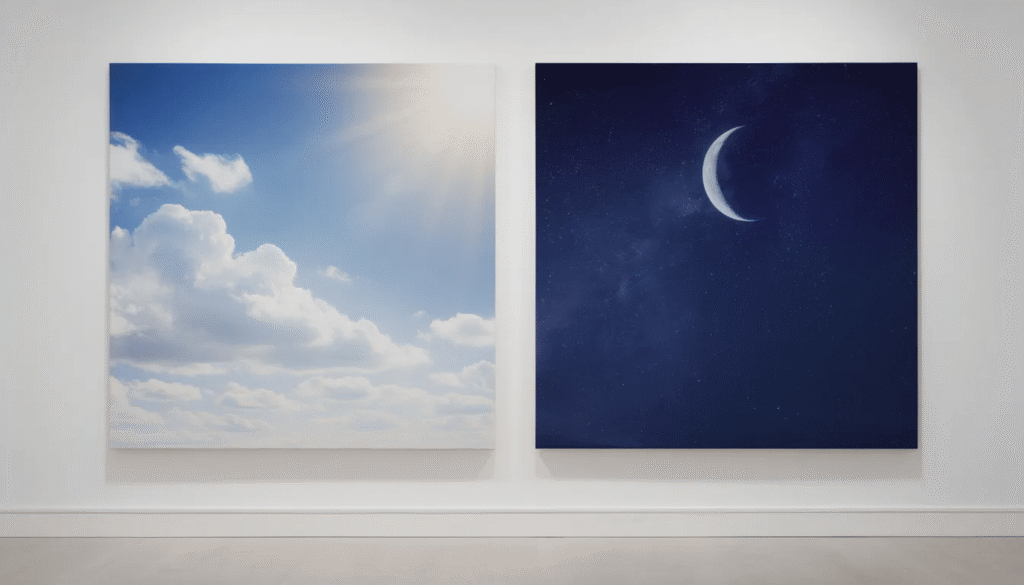
This two-part project creates a stunning visual contrast when displayed side by side.
Day Sky Canvas:
- Provide a large canvas or heavy paper as the base
- Children mix several shades of blue and white to create a varied sky
- Add a sun using yellow paint (children choose placement and size)
- Glue cotton balls or pom-poms for clouds
- Let dry completely before display
Night Sky Canvas:
- Start with a black canvas or dark blue paper
- Children stamp stars using cookie cutters dipped in yellow paint
- Sprinkle fine glitter while paint is wet for a glowing effect
- Add a moon using paper circles or painted shapes
- Consider adding abstract art elements like swirling brushstrokes
Display suggestion: Hang the two canvases side by side with a label such as “Our Day and Night Skies – April 2026, Created by Room 3.”
Famous Artist Inspired Pieces (Monet, Picasso, Van Gogh)
Introducing famous artists gives children context for their own creative work and sparks interesting conversations with families during the show.
Monet-Inspired Water Lilies:
- Children paint “water” backgrounds using blue and green watercolor
- Glue green cupcake liners as lily pads
- Add tissue paper flowers in pink, purple, and white
- Display with a small printed photo of Monet’s original painting
Picasso-Inspired Faces:
- Provide sturdy paper plates as the base
- Children use colorful air-dry clay or Model Magic to create facial features
- Encourage placing eyes, noses, and mouths in playful, unexpected spots
- Emphasize that in abstract art, there’s no “wrong” placement
Van Gogh-Inspired Starry Skies:
- Use thick tempera or finger paint on dark paper
- Children create swirling patterns using different colors
- Add yellow circles for moons and stars using cotton swabs or small brushes
- The art teacher can demonstrate the swirling technique without requiring exact replication
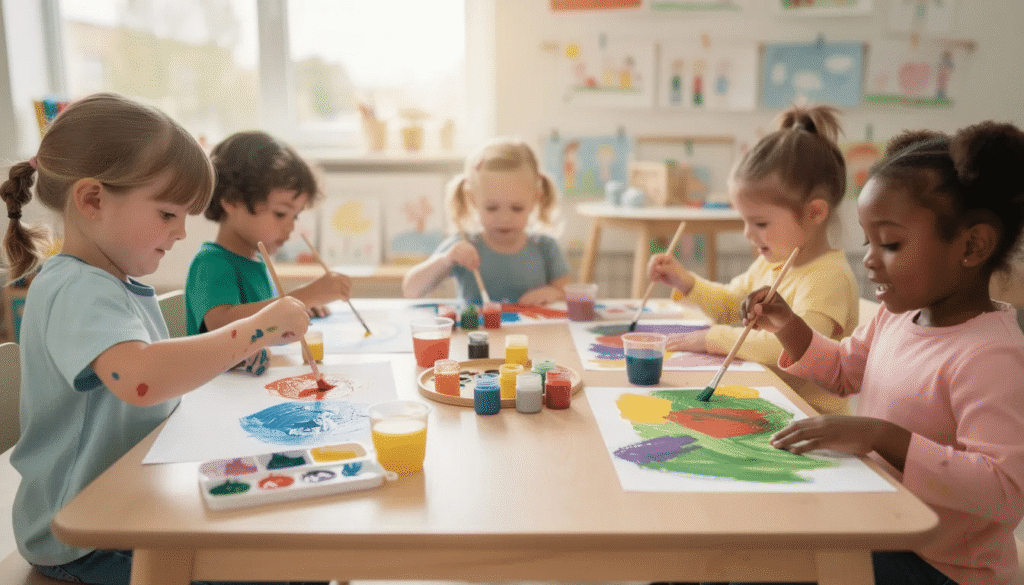
Key philosophy: These projects introduce art techniques while honoring children’s own methods. The goal isn’t perfect replication—it’s inspired exploration.
Textured Trees and Nature Collage
This project emphasizes tactile exploration and works beautifully as a collective work.
- Create tree trunks using cardboard strips layered with tissue paper and glue for rough, bark-like texture
- Add branches with twisted brown paper or yarn
- Make leaves using sponges or fingerprints in seasonal colors (green for May, orange and red for October)
- Combine individual trees into a large class “forest” mural for the hallway
Materials needed: Cardboard, tissue paper in brown shades, glue, sponges, tempera paint in leaf colors, large paper for mural backing
Display idea: Stretch the forest mural along a hallway or fence during the show. Add a label explaining that each child created at least one tree, making this a true group project.
Displaying Preschool Art Like a Real Gallery
The way you display artwork communicates value. When children see their prints and paintings hanging like museum pieces, they understand that their creative work matters.
Hang art at child-eye level—about 3–4 feet from the floor—so preschoolers can view their own work comfortably. This placement also creates intimate viewing for adults who naturally bend down to look alongside their children.
Yarn or cording stretched along walls or fences provides flexible hanging space. Use clothespins to clip artwork, making it easy to adjust spacing and replace pieces if needed. For 3D work, set up low shelves, overturned crates, or child-sized tables as display surfaces.
Group artwork thoughtfully. You might organize by project type (all water lilies together), by theme (all night sky pieces in one area), or by child (each student’s portfolio displayed together). Whatever system you choose, label each section clearly so families can easily find their child’s work.
Key display strategies:
- Use consistent spacing between pieces for a polished look
- Add simple information cards describing the technique, materials, and artist inspiration
- Create a “gallery entrance” with a welcome sign and event title
- Include directional signs if the show spans multiple rooms or areas
- Leave enough space between displays for families to gather without blocking pathways
Signage, Labels, and Artist Statements
- Create uniform signs with the event title, date (e.g., “Preschool Art Show – May 22, 2026”), and classroom name
- Use a consistent label format: child’s first name, age, artwork title, and a short quote
- Example label: “Maya, Age 4 – ‘Rainbow Garden’ – ‘I used all the colors because rainbows have everything.’”
- Invite children to name their artworks during circle time a week before the show
- Print labels on cardstock in a readable font (at least 14-point) that parents and grandparents can easily read
- Consider laminating labels for durability if displaying outdoors
Engaging Families and Building Community
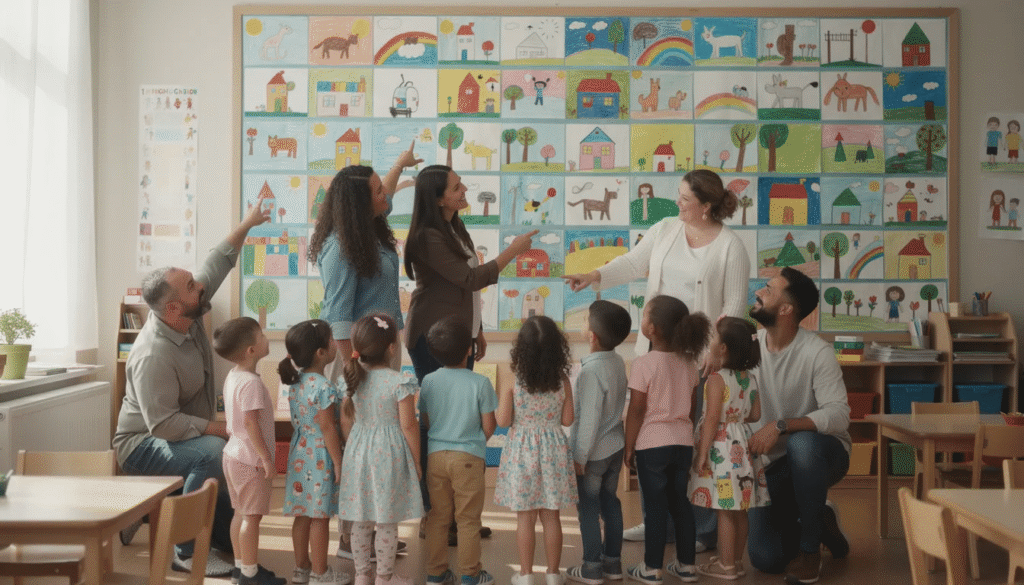
Your art show can double as a family event that strengthens connections between home and school and can inspire creative preschool crafts about family. With some light refreshments, a short welcome from teachers, and plenty of time for casual conversation, the evening becomes more than a viewing—it becomes a community gathering.
Keep food simple and budget-friendly. Fruit trays, crackers, cheese cubes, and small cookies work well. Include clear notes about nut-free policies if needed, and label any common allergens.
Engagement ideas for families:
- Scavenger hunt: Create a simple list (“Find three pieces with stars,” “Spot something blue,” “Look for a painting with yellow paint”)
- Comment cards: Provide small cards where families can write encouraging notes to young artists
- Guestbook: Set up a table where visitors can sign in and leave a message
- Photo station: Designate a spot where families can take pictures with their child and their artwork
Teachers should move through the crowd, pointing out details in children’s work and sharing quick stories about the art-making process. “Did you hear how Maya talked about mixing these colors? She spent a long time getting just the right shade of purple.”
Parent Communication Before, During, and After
Before the event:
- Send a save-the-date 3–4 weeks out
- Follow with a detailed reminder including time, entrance instructions, and optional RSVP
- Mention what to expect: “Come explore your child’s artwork and hear them talk about their creative process!”
During the event:
- Have a sign-in sheet for families at the entrance
- Provide a short printed note explaining how art supports early learning
- Display a brief overview of the projects and techniques explored
After the event:
- Email or post a photo recap (with appropriate permissions)
- Thank families for attending and highlight the children’s effort and joy
Sample Message:
Thank you for joining us last night! We hope you enjoyed seeing your children’s artwork. The pride on their faces was the best part of the evening.
After the Show: Packing Up and Sending Art Home
Once the show ends, you’ll need a system for getting artwork safely into family hands.
- Prepare a labeled large envelope or paper grocery bag for each child
- Leave the show up for one school day after the event so children can walk through with classmates
- Let students take turns being “gallery guides” for their peers
- Include a short “mini portfolio” note inside each bag summarizing what types of art the child explored
- Keep a small sample or digital photo of at least one piece per child (with family permission) for documentation
Sample Portfolio Note:
This spring, your child explored painting, collage, and clay sculpture. They experimented with color mixing, texture, and inspired techniques from famous artists including Monet and Van Gogh. We hope you enjoy these pieces at home!
Reflecting and Planning the Next Art Show
Capture your observations while they’re fresh. Within a day or two of the event, jot down what went well and what could improve.
Reflection questions for teachers:
- Did families have enough time to view all the artwork?
- Was the spacing between displays comfortable for movement?
- Did the lighting work well, or were some pieces hard to see?
- Was the number of projects per child manageable to create and display?
- Did children seem engaged and proud during the event?
Gathering family feedback:
- Offer a short paper form at the exit or send an online survey the next day
- Ask specific questions: “Was the time convenient?” “Could you easily find your child’s work?”
- Include an open-ended question: “What would make next year’s show even better?”
Use these reflections to shape your next art show’s theme, date, and format. Perhaps you’ll rotate between indoor winter shows and outdoor spring shows. Maybe you’ll add more 3D projects or experiment with a different famous artist inspiration.
The fun of a preschool art show isn’t just in the single event—it’s in building a tradition that grows and improves each year. With each show, you learn more about what works for your students, your space, and your community.
Your preschool art show doesn’t need to be elaborate. It needs to be meaningful. When young children see their artwork displayed with care, when families gather to celebrate creativity, and when the classroom transforms into a gallery—that’s when the real learning happens.
Start your planning today. Pick a theme, mark your calendar, and begin creating. Your young artists are ready to share their world with you.