
Whether you started sewing last month or learned to sew years ago, there’s always room to grow. This guide gives you concrete, practical ways to improve sewing skills—starting with what to focus on today.
The focus here is on garment sewing: dresses, skirts, shirts, pajama pants, and children’s clothes. That said, most of these tips apply equally to quilts, bags, and accessories, and can even support DIY craft kits and other creative projects. We’ll combine core technical skills, smart practice strategies, and modern learning resources like sewing books, blogs, and online sewing classes to help you level up.
You don’t need fancy equipment to make real progress. A basic home machine from the 2010s–2020s (think Brother, Janome, or Singer models) works perfectly well. What matters is persistence and intentional practice. Let’s break down the process step by step, mixing mindset shifts, specific techniques, and project ideas to build your skills in a logical order.
Apply the 80/20 Rule to Your Sewing Practice
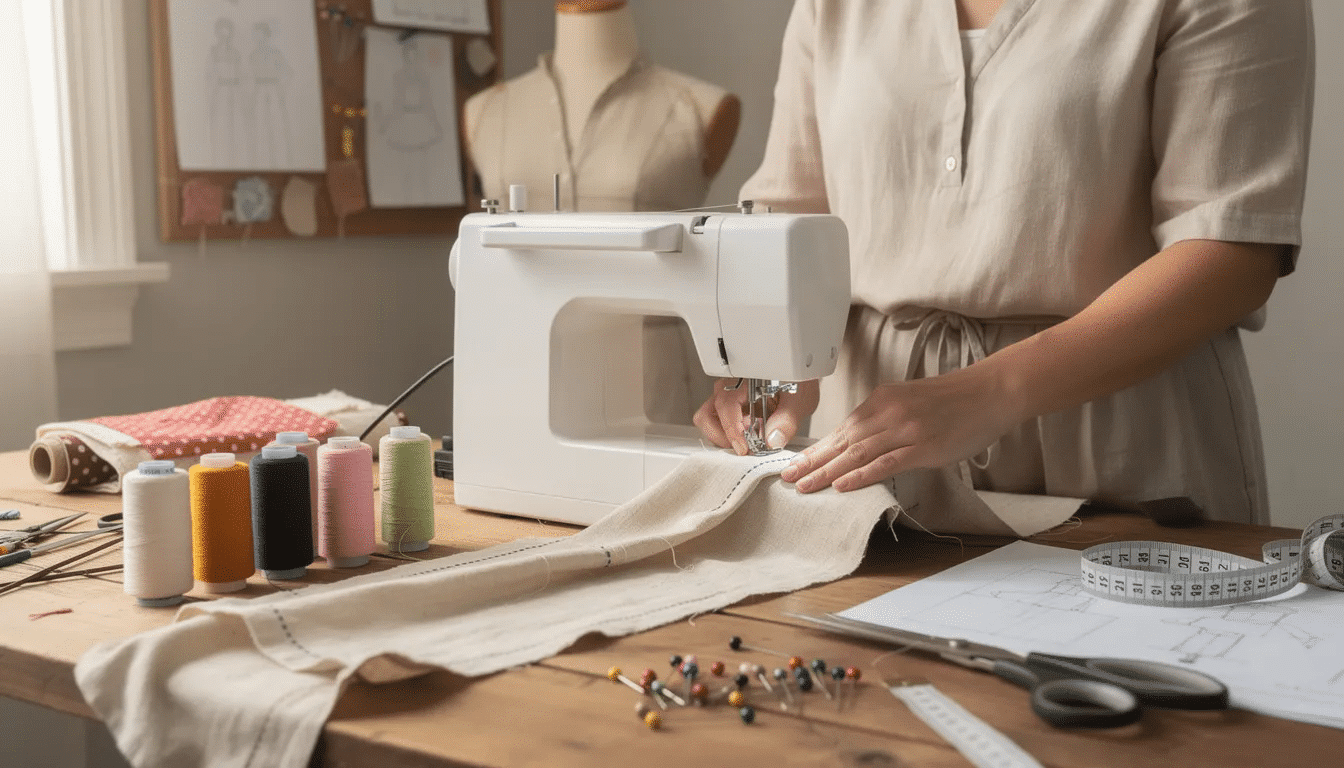
Here’s a principle that can transform how you approach learning: 20% of sewing skills drive 80% of your results. Instead of trying to master all the things at once, focus on the fundamentals that make the biggest difference in your finished garment.
What are those 80% skills? Straight seams, accurate seam allowances (typically 5/8” or 1.5 cm), pressing after each step, and basic pattern reading. These basics determine whether your garment looks polished or homemade. Master these, and everything else becomes easier.
Consider building a 3-month plan focused on repeating these basics on simple projects. Start with tote bags, then move to pajama pants, then a simple skirt. Track your progress with before-and-after photos—snap your seams in January and compare them to March. You’ll actually see the skill gains.
Quality over quantity is the rule here. Fewer projects done carefully in 2024 will teach you more than rushing through dozens of makes.
Know Your Tools and Materials
Getting comfortable with your specific sewing machine and common fabrics is foundational. Your machine isn’t generic—it has quirks, and learning them pays off.
Essential machine knowledge:
- Read your machine manual cover to cover
- Practice winding a bobbin smoothly
- Learn to change needles confidently
- Understand how to adjust stitch tension
- Clean lint from the bobbin area regularly
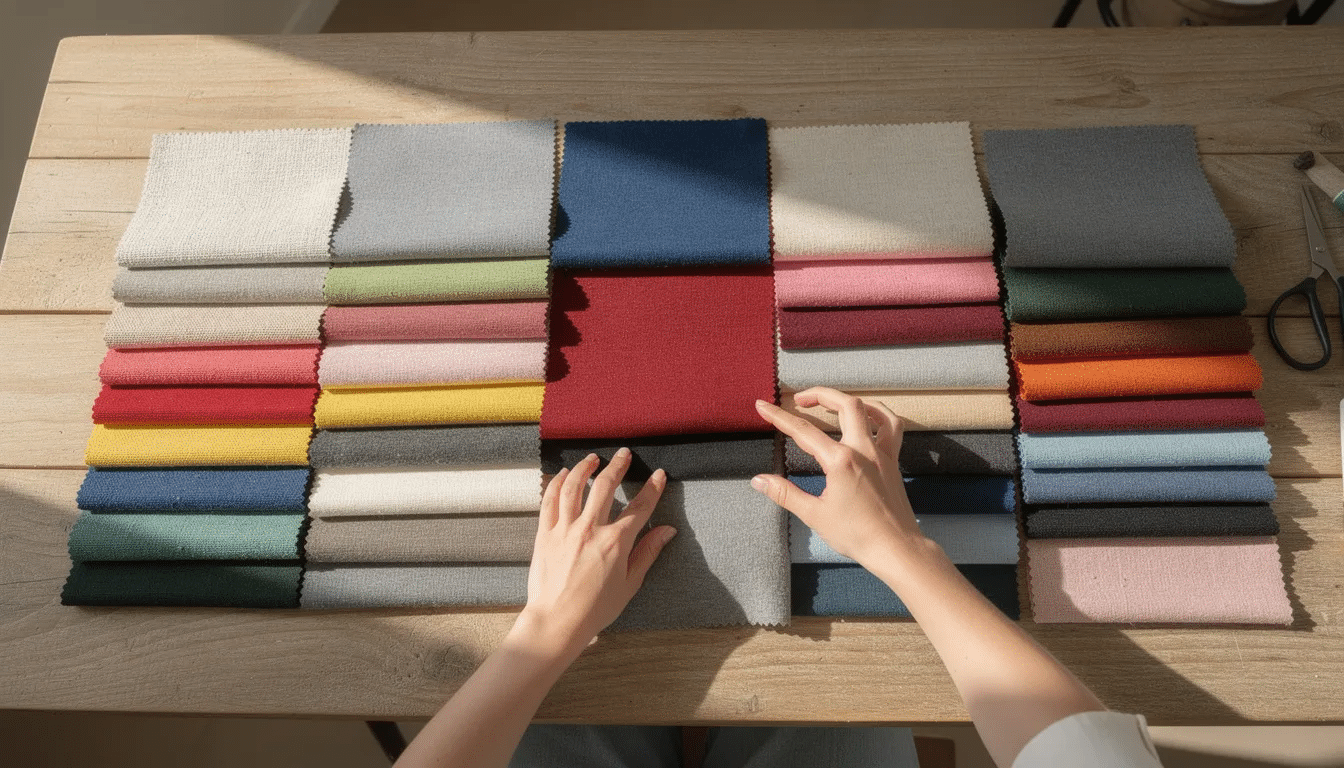
Fabric familiarity matters too. Practice on scraps of different types:
Fabric Type | Category | Common Use |
|---|---|---|
Cotton lawn | Lightweight woven | Blouses, summer dresses |
Quilting cotton | Medium woven | Practice projects, bags |
Denim | Heavy woven | Jeans, jackets |
Rayon challis | Drapey woven | Flowy tops, dresses |
Ponte knit | Stable knit | Pants, structured dresses |
Linen blend | Medium woven | Relaxed garments |
Test the difference between universal, ballpoint, and microtex needles on both knit and woven fabrics. You’ll quickly understand why needle choice matters. |
Create a small “swatch library” in a notebook. For each sample, record the date, fabric type, needle used, stitch length, and your observations. This becomes an invaluable reference for future projects.
Basic tool set to assemble:
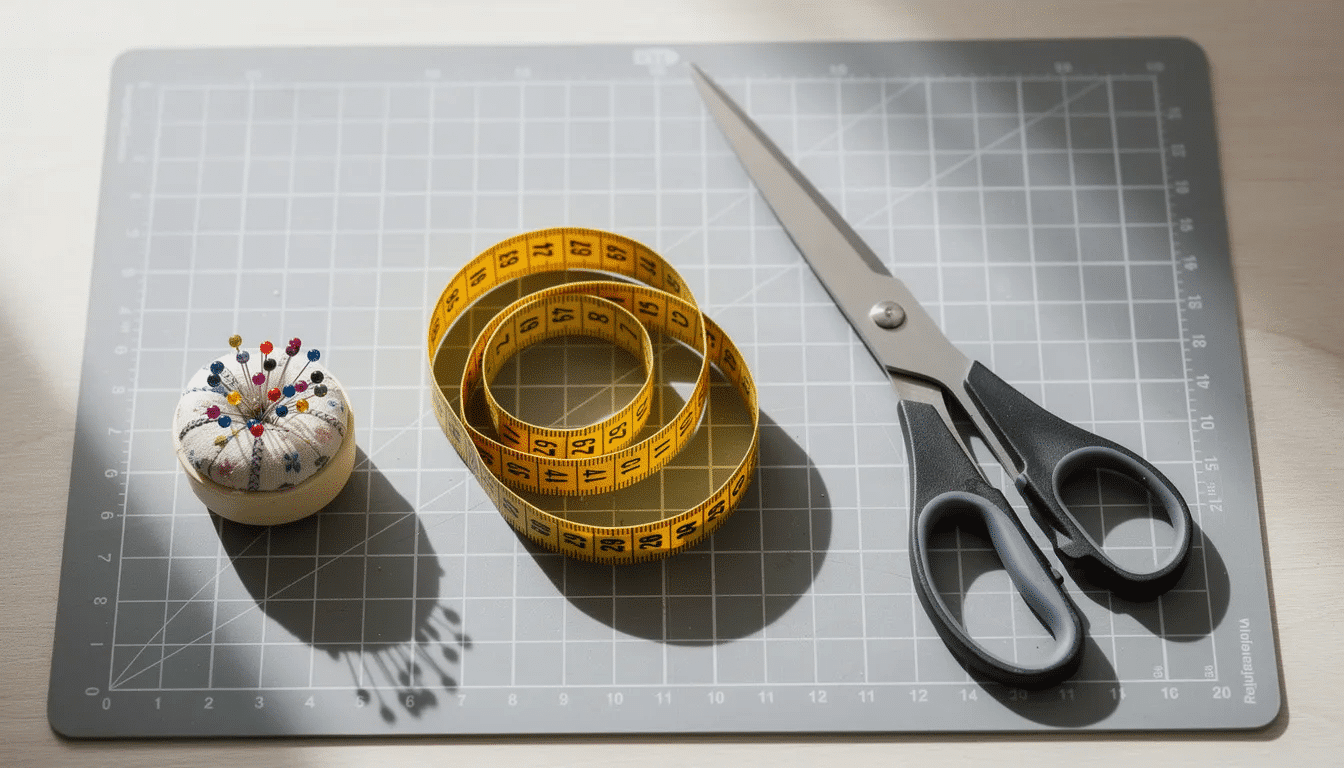
- Sharp fabric scissors (dedicated to fabric only)
- Seam ripper (your best friend for learning)
- Glass-head pins
- Flexible measuring tape
- Clear ruler for pattern work
- Chalk or heat-erasable marking pen
Read and Understand Sewing Patterns (“Read Your Map”)
Think of a commercial pattern as a map. Learning to read it is a skill that improves with every project—and it’s worth investing time upfront.
Start with the pattern envelope:
- Size charts and body measurements
- Recommended fabrics and notions list
- Difficulty level indicators
- Finished garment measurements
Key symbols to learn:
- Grainline arrows (align with fabric selvage)
- Notches (for matching seams)
- Dots (for pivots, darts, or alignment)
- Cutting lines vs. stitching lines
- Fold line indicators
- Seam allowance information
If you’re newer to sewing, start with simple patterns from brands known for clear directions. Many indie pattern companies and “Learn to Sew” lines from major brands offer excellent guidance for building confidence.
Trace your patterns rather than cutting the original tissue. Add personal notes directly on your traced copy: “add 2 cm to sleeve length” or “size 14 at bust, 16 at hips.” These notes make the sewing pattern truly yours.
Read the full instructions once before cutting. Mark any confusing steps and research them later on YouTube or sewing blogs. This prep work prevents mid-project panic.
Cutting, Marking, and Pressing: Slowing Down to Go Faster
Here’s a truth that surprises many sewists: cutting, marking, and pressing often take more time than actual stitching—but they determine the quality of your final product.
Accurate cutting essentials:
- Use a large table or cleared floor space
- Invest in sharp shears or a rotary cutter with self-healing mat
- Try pattern weights instead of excessive pinning
- Cut with the fabric flat, not bunched
Transferring markings:
Different methods work for different fabrics and preferences:
- Tailor’s tacks for delicate or dark fabrics
- Chalk for most wovens
- Frixion pens (heat-erasable) for precise marks
- Tracing paper and wheel for multiple layers
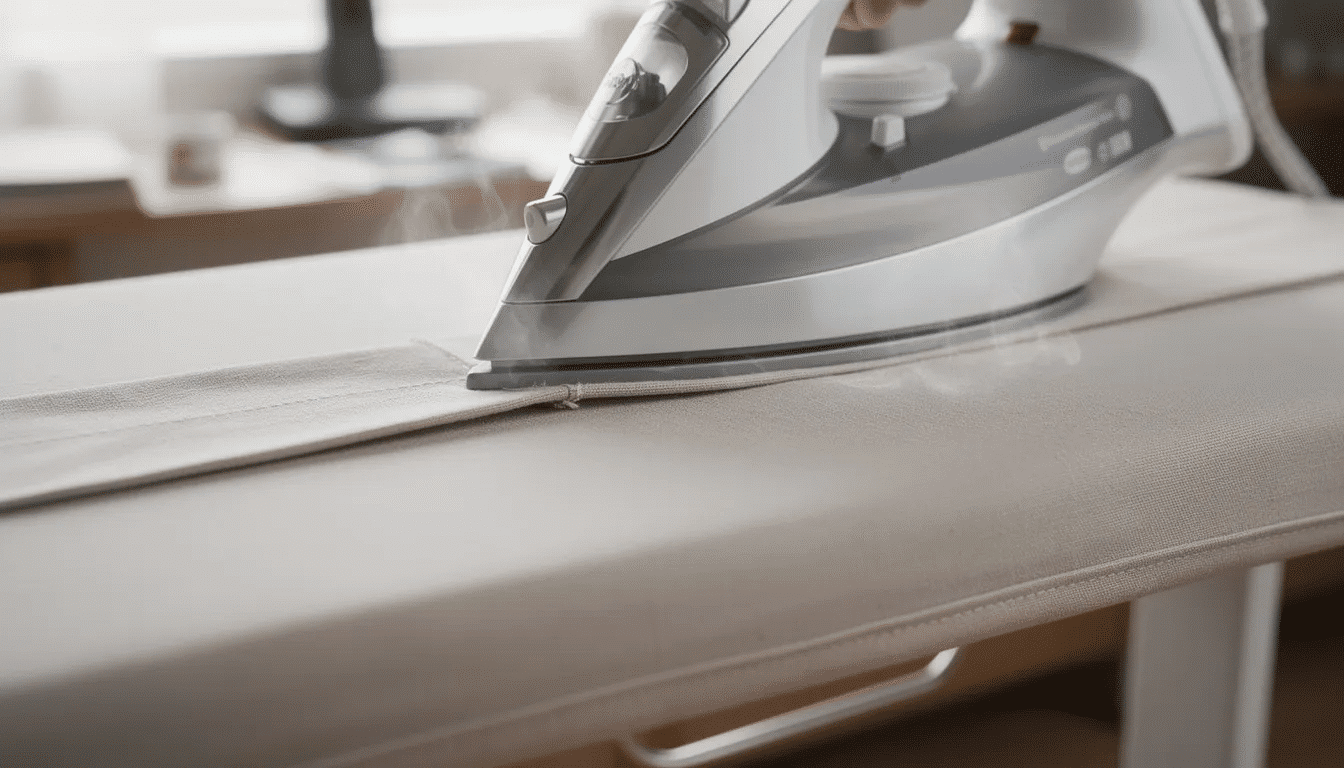
Good pressing is non-negotiable. Press every seam as you sew. Invest in basic pressing tools:
- Steam iron with adjustable settings
- Tailor’s ham for curved seams
- Sleeve board for narrow areas
- Wooden clapper for crisp edges
Compare two similar projects: one pressed at every step, one pressed only at the end. The difference is dramatic and visible.
Schedule enough prep time. Devoting one Sunday afternoon per project just to cutting and marking means you can sew things without rushing through the foundation work.
Sewing Seams with Confidence
Seam accuracy—especially maintaining consistent 5/8” or 1 cm seam allowances—is the backbone of better fit and professional-looking garments.
Straight seam practice:
- Mark lines on scrap fabric at different distances
- Stitch along them with varying stitch lengths
- Focus on watching the seam guide, not the needle
Curved seams and corners:
- Practice necklines and armhole curves
- Learn to pivot neatly at corners (collar points, patch pockets)
- Use shorter stitch lengths around curves for stability
Essential seam finishes to learn:
Finish Type | Best For | Durability |
|---|---|---|
Pinked edges | Low-fray fabrics | Basic |
Zigzag | Medium-fray fabrics | Good |
Serged/overlocked | High-fray fabrics | Excellent |
French seams | Sheer and lightweight | Excellent |
Flat-felled | Jeans, shirts | Superior |
Bias-bound | Heavy wools, visible interiors | Superior |
Use seam guides on your machine bed or magnetic seam guides to keep allowances accurate. Watching the guide rather than the needle makes a real difference in consistency. |
Create a mini “seam sampler” project dated Spring 2024 that you can keep as a reference of various seam types and finishes.
Adding Fullness and Shape
Flat fabric doesn’t fit curved bodies. Fullness techniques—darts, gathers, pleats, tucks, and easing—transform two-dimensional cloth into three-dimensional clothes that hang and move well.
Core techniques to practice:
- Darts: Triangular folds that add shape (common at bust, waist, back)
- Gathers: Distributed fullness for volume (skirts, sleeve heads)
- Pleats: Folded fullness that can be pressed flat or left soft
- Tucks: Decorative folds that add texture and subtle shaping
- Easing: Subtle gathering to fit a larger piece to a smaller one (sleeve caps, shoulder seams)
Project progression for practice:
- Darted pencil skirt
- Gathered dirndl skirt
- Pleated skirt
- Simple woven top with bust darts
Practice each technique on muslin or inexpensive fabric scraps first. Label samples with the date and type of fullness for reference.
Look at RTW garments in your closet. Examine how fullness is used—where darts point, how gathers are distributed, how pleats are pressed. Then copy similar techniques in your sewing.
Mastering these shaping methods lays the foundation for eventually adjusting patterns for better fit on your specific body.
Installing Sleeves
Sleeves bring together many basics: easing, accurate seam allowances, matching notches, and careful pressing. They’re often where intermediates get stuck.
Two main methods:
Method | When to Use | Advantages |
|---|---|---|
Flat construction | Before side seams closed | Easier access, simpler for beginners |
Set-in (round) | After side seams closed | Traditional, more fitted result |
Easing sleeve caps: |
The sleeve cap is typically slightly larger than the armscye (armhole). This ease needs to be distributed without puckers:
- Sew two rows of basting stitches within the seam allowance
- Pull threads gently to draw up the sleeve cap
- Match notches and pin carefully
- Distribute ease evenly, avoiding tucks or gathers
Start with simple woven patterns featuring short, not-too-fitted sleeves. Save fitted shirt or blazer sleeves for after you’ve built confidence.
Practice sleeve insertion multiple times on the same pattern. By the third or fourth try, you’ll see measurable improvement in smoothness and fit.
Use a tailor’s ham and plenty of steam to press sleeve heads. This final pressing transforms sleeve appearance from “I made this” to “this could be RTW.”
Adding Closures: From Elastic to Zippers and Buttons
Closures follow a natural progression. Start simple, then add complexity as your skill level grows.
Progression path:
- Elastic waists: Pajama pants, simple skirts
- Drawstrings: Comfortable pants, casual bags
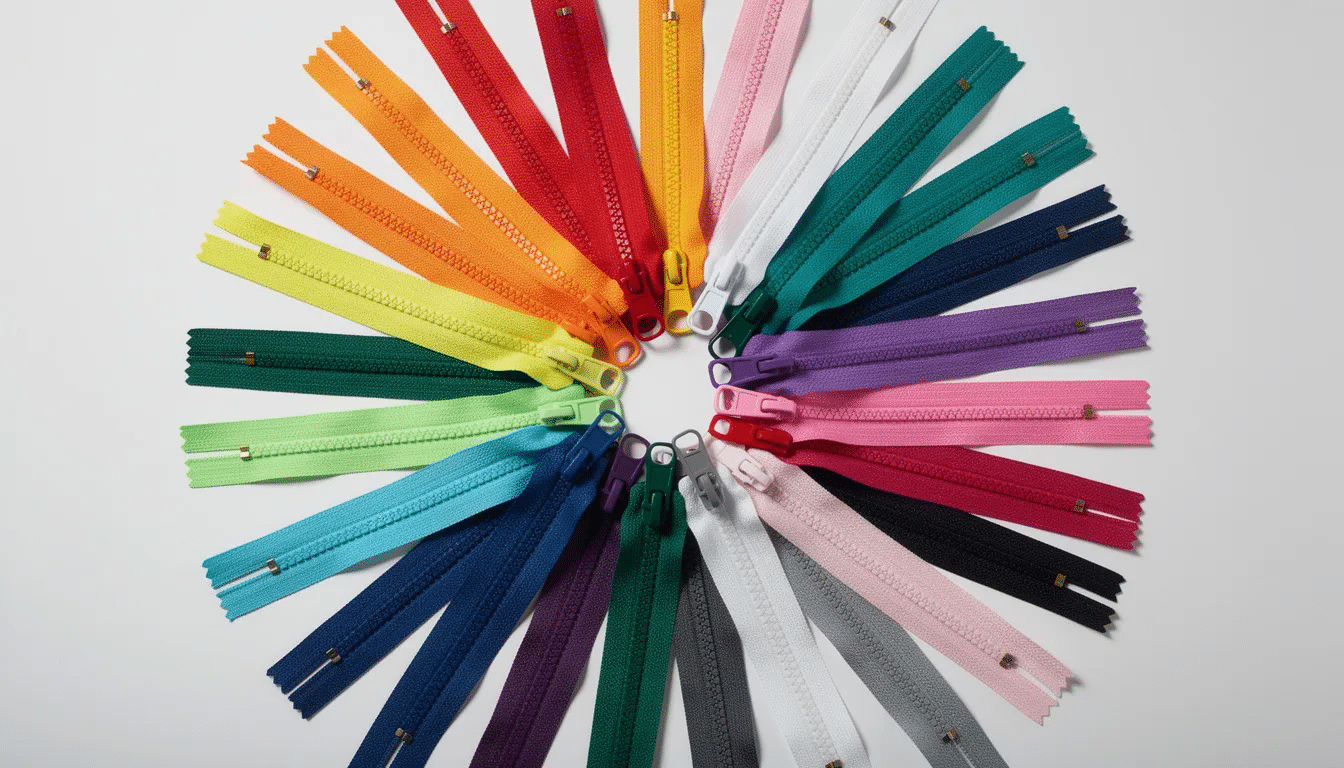
- Simple zippers: Centered zipper in skirt or dress
- Buttons and buttonholes: Shirts, structured garments
- Complex closures: Fly-front zippers, bound buttonholes
Zipper types to learn:
- Centered zipper (visible, symmetric)
- Lapped zipper (covered by fabric fold)
- Invisible zipper (hidden in seam)
- Fly-front zipper (pants construction)
Practice buttonholes repeatedly on scrap fabric. Make a “button hole strip” dated 2024 before committing to a garment. Using a buttonhole foot and proper interfacing behind the button hole area ensures clean results.
Tools that help:
- Zipper foot (standard)
- Invisible zipper foot (specialized)
- Quality elastic in appropriate widths
- Proper interfacing for buttonhole areas
Try at least one new closure type every few months. This steady expansion builds a toolkit of techniques you can apply confidently.
Finishing Edges Like a Pro
Edge finishes—hems, facings, bindings—make the difference between “homemade” and “handmade.” These details separate amateur from polished work.
Key finishes to master:
- Narrow hems: Clean finish for lightweight fabrics
- Blind hems: Invisible from the right side
- Bias-bound edges: Clean finish for armholes, necklines
- Facings: Interior finish for necklines and armholes
- Knit bands and cuffs: Ribbing and neckbands for knits
Practice on common garments:
- Bias-faced scoop neckline
- Bias-bound armholes
- Curved shirt hem
Use matching thread, careful pressing, and topstitching guides (like an edge-stitch presser foot) for neat results. Compare RTW garments to identify hem depths and stitch types, then use those as references.
Create a “finishing sample” board with labeled examples to keep near your sewing table. Seeing quality finishes reminds you what to aim for.
Build Strong Sewing Habits and Mindset
Skill improvement comes not just from techniques, but from consistent habits and realistic expectations. Your mindset matters as much as your machine.
Schedule regular sewing time:
- Even 20–30 minutes on weeknights adds up
- Longer weekend blocks for cutting and complex steps
- Consistency beats intensity
Accept mistakes as learning:
- “Reverse sewing” (unpicking with your seam ripper) is part of the process
- Every seam you rip teaches you something
- Pay attention to why something went wrong, not just that it did
Keep a simple sewing journal:
- Date and pattern name
- Fabric used
- What went well
- What to improve next time
Rotate between easy, relaxing projects (like tote bags or simple bags) and slightly challenging ones. This balance maintains motivation without burnout.
Celebrate skill milestones: first invisible zipper, first lined garment, first well-fitted dress. These wins fuel continued learning.
How to Get Better at Sewing, Practically
Here’s a concise, actionable checklist for quick reference:
Monthly actions:
- [ ] Complete 1–2 sewing projects
- [ ] Practice new techniques on scraps weekly
- [ ] Review one skill book or tutorial each week
Project planning:
- Each project should target one main skill (darts, zippers, knits)
- Choose patterns that stretch you slightly beyond comfort
- Use quality fabric for final versions, inexpensive fabric for practice
Measurable goals example (by end of 2024):
- Sew a button-up shirt with collar and cuffs
- Complete a zippered skirt with invisible zipper
- Make a knit top with neat neckband
Periodically remake an old pattern to see concrete improvement. Comparing your 2023 version to your 2024 version reveals how far you’ve come.
Consistency over 6–12 months usually leads to visible jumps in skill level and confidence. Practice makes perfect isn’t just a saying—it’s the reality of craft mastery.
Intentional Practice: Tips to Build Your Sewing Skills
Beyond basics, you can plan specific strategies to move from beginner to confident intermediate. Intentional practice accelerates growth.
Use each new project as a “lesson” by adding one new technique or complexity. This compound approach means every garment teaches you something.
Plan a seasonal project list:
For spring–summer 2024, you might plan:
- Simple woven shorts (elastic waist)
- Button-front blouse (buttonholes, collar)
- A-line skirt (invisible zipper)
- Knit t shirt (working with stretch)
This deliberately escalating difficulty builds skills systematically.
Use simple garments—pajama pants, simple skirts, basic tees—as skill-building labs rather than just finished products. The point isn’t just having clothes to wear; it’s developing new skills, including decorative techniques like turning a photo into an appliqué.
Revisit successful projects and analyze what went well. Can the topstitching be straighter? Could the seams be finished more cleanly? This analysis drives refinement.
Deliberate practice shortens the time between “trying” and “truly mastering” a technique.
Read Sewing Books and Curated References
Books offer structured, in-depth guidance that complements quick online tips. A good sewing book explains the “why” behind methods, not just the “how.”
Where to find books:
- Local libraries (free patterns of knowledge!)
- Secondhand bookstores
- Local schools sometimes have recommendations
Categories worth exploring:
- Technique encyclopedias (covering stitching, seams, finishes)
- Fitting books (understanding how garments should sit)
- Pattern alteration guides (adjusting for your body)
Read sewing books about fitting and alterations early, even before tackling complex garments. Understanding how clothes should fit on different bodies informs every make.
Start with simpler garments in the books—A-line skirts, loose tops—before tackling tailored jackets or fitted dresses. Build complexity gradually.
Keep notes in the margins or on sticky notes with dates. Mark particularly useful diagrams or methods. These annotations make the book uniquely useful to you.
Try One New Thing on Every Project
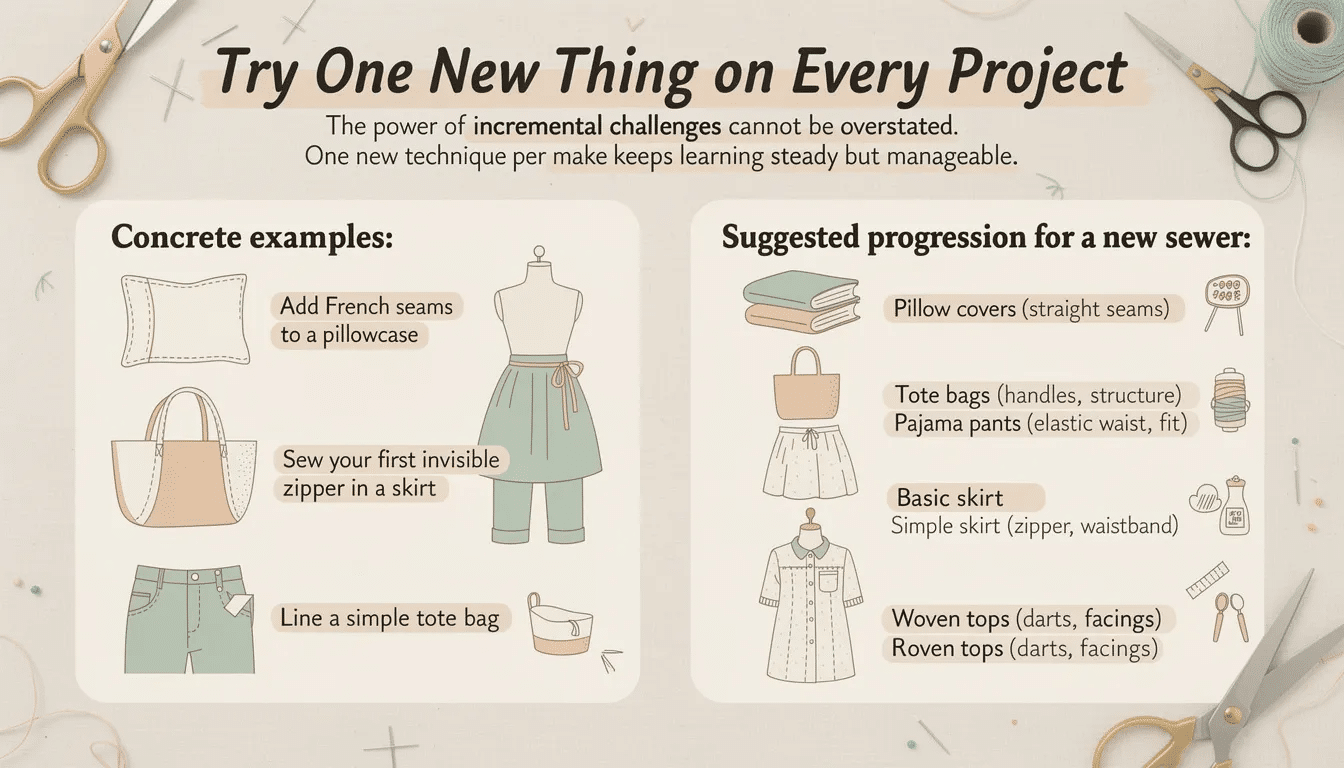
The power of incremental challenges cannot be overstated. One new technique per make keeps learning steady but manageable.
Concrete examples:
- Add French seams to a pillowcase
- Sew your first invisible zipper in a skirt
- Line a simple tote bag
- Try welt pockets on pants
Suggested progression for a new sewer:
- Pillow covers (straight seams)
- Tote bags (handles, structure)
- Pajama pants (elastic waist, fit)
- Simple skirts (zipper, waistband)
- Woven tops (darts, facings)
- Dresses (combining techniques)
Choose patterns that clearly indicate which new skill they’ll teach. Many patterns include notes like “learn darts and facings” or “practice your first zipper.”
Document each new technique in a notebook with pattern name, date, and what you learned. Repeating this approach over a year can add a dozen or more solid techniques to your toolkit.
Sew the Same Pattern More Than Once
Repetition on the same sewing pattern accelerates improvement and reduces decision fatigue. You’re not relearning the construction—you’re refining it.
Good candidates for repetition:
- Zipper pouch
- Basic woven top
- Simple dress
- Favorite pants pattern
Make a first “wearable muslin” from cheap fabric or muslin, then a refined second version in good quality materials. The first teaches construction; the second teaches finishing.
The second or third make can focus on perfecting more detail: topstitching precision, adding lining, cleaner inside finishes. Each version gets better.
Experiment with small adjustments across versions:
- Length changes
- Neckline shape variations
- Different sleeve style
Keep notes on fit changes between versions. Over time, you create a personalized “tried and true” (TNT) pattern collection—patterns you can sew confidently in any fabric.
Explore Well-Illustrated Indie Patterns
Many independent designers offer detailed instructions, diagrams, and photo tutorials that help build new skills. These patterns are often worth the investment.
Characteristics to look for:
- Clear step-by-step photos
- Layered information (overview plus detail)
- Beginner-friendly sizing and style lines
- Video tutorials or sewalongs available
Try at least one indie pattern per season. Exposure to different construction approaches—how various designers handle the same element—broadens your technique vocabulary.
Before choosing a pattern, check:
- Reviews on pattern company websites
- Finished-object photos on blogs and Instagram
- Discussions in online sewing communities
While these patterns often cost more than big-box sale patterns, the extra guidance saves time, fabric, and frustration. The sense of accomplishment from a well-made garment is worth it.
Start with patterns labeled “beginner” or “confident beginner.” Gradually move to “intermediate” designs as your confidence grows.
Use Online Tutorials and Search Wisely
Blogs, YouTube, and photo tutorials clarify confusing instructions and introduce alternative methods. They’re good suggestions for filling knowledge gaps.
How to search effectively:
- Use specific terms: “how to sew welt pockets,” “install invisible zipper,” “burrito method yoke”
- Add “video” or “tutorial” to searches
- Include fabric type if relevant: “sewing knits beginner”
Compare at least two different tutorials for tricky steps. Different teachers explain things differently—find the one matching your learning style. An experienced teacher on video can demonstrate nuances that text can’t capture.
Organize your resources:
- Save or bookmark favorite tutorials
- Create folders: closures, seams, fitting, knits
- Note which tutorials work best for you
Cross-check online tips against trusted reference books when trying advanced techniques. A video might show a shortcut, but the book explains why the traditional method matters.
Combining books, online resources, and personal notes creates a personalized “sewing curriculum” tailored to your goals.
Learn from Others and Share Your Progress
Community, feedback, and inspiration from more advanced sewists accelerate learning. You don’t have to figure everything out alone.
Ways to connect:
- Join local sewing groups or guilds
- Take sewing classes at fabric shops
- Participate in online forums and social media groups
- Follow sewists whose style and skill level align with your goals
Post your finished makes (with construction notes) on social platforms or sewing communities. Constructive feedback—especially on the inside of garments—teaches what you might miss yourself.
Participate in low-pressure challenges:
- “Me-Made May” (wearing only handmade clothes)
- Seasonal sewing plans
- Pattern company sewalongs
- Monthly skill challenges in online groups
Observing others’ work—inside finishes, fit tweaks, fabric choices—teaches as much as tutorials. When someone shares how they achieved a particularly clean finish or solved a fitting problem, that’s free education.
Sharing also provides instant gratification and accountability. Posting a completed project feels rewarding and motivates the next one.
Track Your Sewing Skill Level Over Time
Seeing your own improvement keeps you motivated through the inevitable frustrations of learning a craft.
Documentation methods:
- Take detailed photos of inside and outside of garments
- Date photos by month and year
- Compare seam quality and finishing over time
Simple project rating system:
Rate each project 1–5 on:
- Fit
- Finish quality
- Difficulty level
Note what improved from your last project. This reflection cements learning.
Revisit and compare:
- Try the same pattern or technique after 6–12 months
- Keep a small box of early practice samples (first zipper, first buttonholes)
- Look back after a year—the improvement will surprise you
Sewing skills build cumulatively. The threads of knowledge weave together over time. Steady, intentional practice leads to noticeable mastery—not overnight, but certainly within a year of consistent work.
The challenge is maintaining patience. The fun is in watching simple things become natural. And the reward is a wardrobe of clothes that fit, look professional, and carry the satisfaction of being made by your own hands.
Pick one technique from this article. Apply it to your next project. That’s how you improve sewing skills—one stitch at a time.