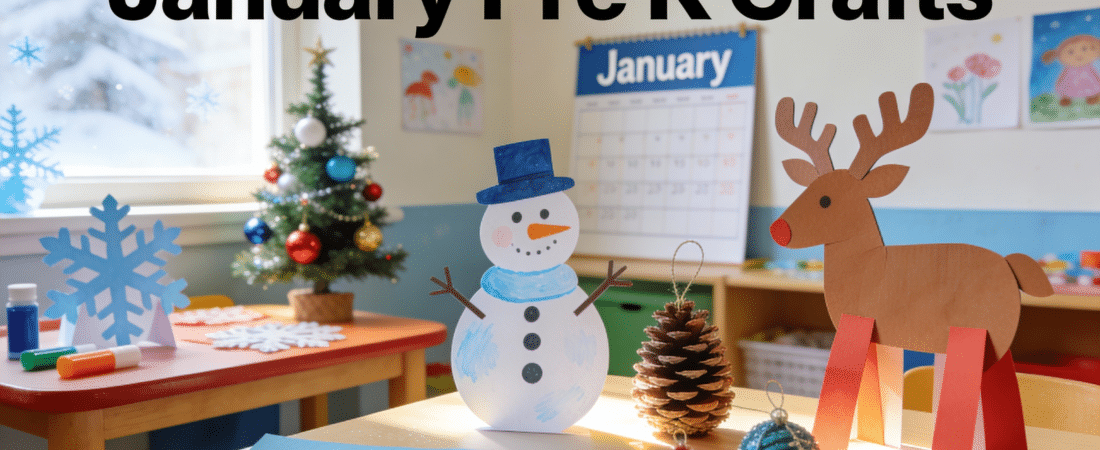

January is the perfect time for cozy, low-prep winter crafts with your 3–5 year olds. Whether you’re in a classroom setting or crafting at home, the winter season offers endless opportunities for creative projects that kids love. These activities work beautifully in a 10–20 minute Pre-K center or morning tub without requiring a trip to the craft store.
Here are your fastest “grab and go” ideas to get started today:
- Paper snowflakes – Fold coffee filters or paper, snip with safety scissors, unfold to reveal unique designs
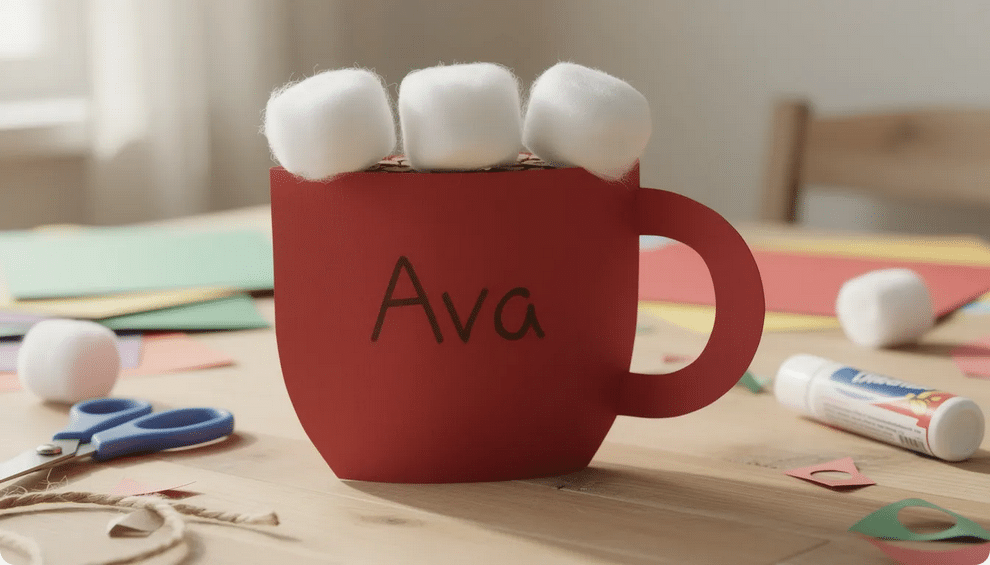
- Hot chocolate mug craft – Decorate a paper mug shape with mini marshmallows made from cotton balls
- Mitten name craft – Write one letter on each mitten cutout, glue in correct order to practice name recognition
- New Year’s crown – Decorate a sentence strip with stickers and pipe cleaners bent into stars
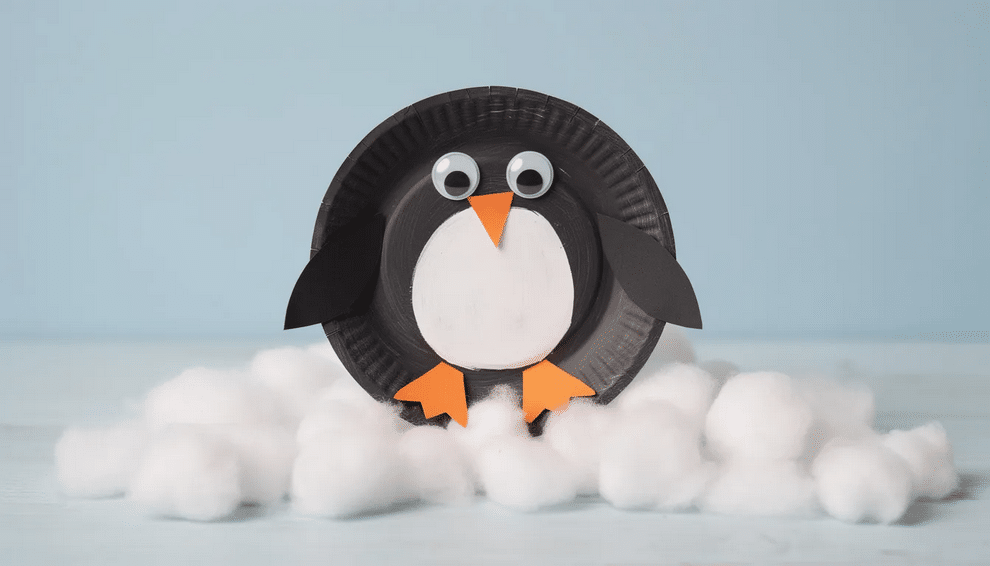
- Penguin paper plate – Paint a plate black, add a white belly oval, orange beak, and googly eyes
All of these preschool crafts use common craft supplies you likely have on hand: construction paper, a glue stick, crayons, cotton balls, and markers. These activities connect to typical January themes including snow, winter animals, New Year celebrations, and early literacy skills like names, letters, and counting to 10.
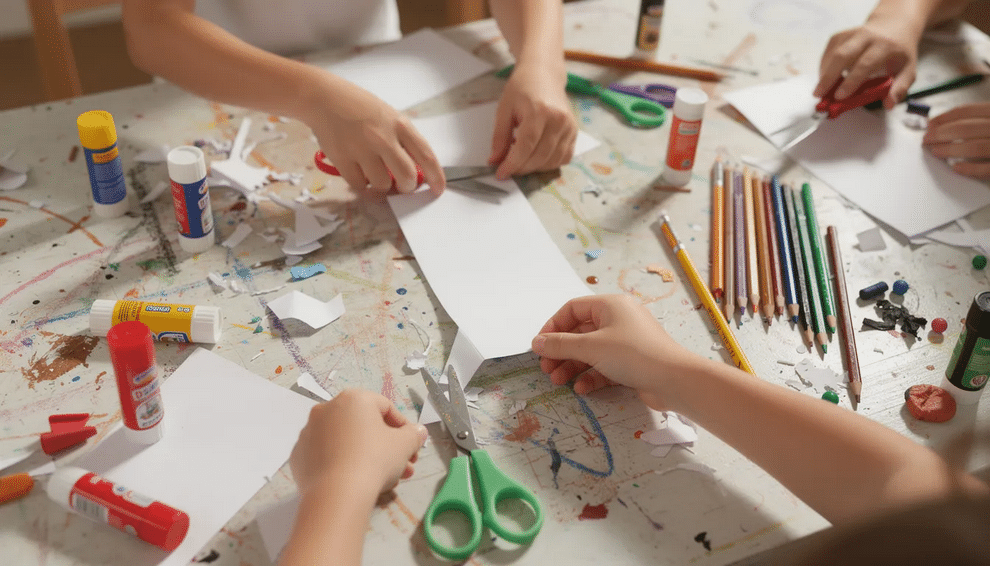
Snowflake & Snowy Day January Crafts
Even if there’s no real snow where you live, snowflake crafts are a wonderful way to talk about winter weather in early January. Little ones are fascinated by the idea that every snowflake is unique—just like them! These activities bring the magic of snowy trees and frosty days right into your classroom or living room.
Coffee Filter January Snowflakes
This super fun project supports scissor skills and introduces color mixing concepts:
- Fold a coffee filter into quarters or eighths
- Let children cut stripes, triangles, or curves along the edges
- Unfold and color with washable markers
- Spray lightly with water to watch colors blend and spread
- Hang to dry for a darn cute winter display
Torn Paper Snowy Scene
This craft activity is perfect for developing hand strength without scissors:
- Provide white and light-blue paper scraps
- Children tear pieces and glue onto dark blue or black paper cardstock
- The result looks like a January blizzard in motion
- Add drops of white paint with cotton swabs for falling snow effect
Salt-Painted Snowflakes
A great fine motor activity that combines art and science:
- Squeeze white glue onto blue or black paper in snowflake shapes
- Cover the glue lines generously with table salt
- Shake off excess salt
- Use a paintbrush to add drops of diluted blue watercolor
- Watch the color spread along the salt lines like magic
These snowflake crafts make beautiful decorations for a “January Winter Wall” or classroom door. Write each child’s name and the year underneath their piece to create a meaningful seasonal display. Skills to emphasize include cutting, tearing, pincer grasp, and winter vocabulary like “icy,” “frosty,” and “frozen.”
Winter Animal Crafts for January Circle Time
January is an ideal month to introduce Arctic animals into your Pre-K themes. Penguins, polar bears, snowy owls, and the arctic fox capture children’s imaginations while teaching about cold-weather habitats. These winter art projects pair perfectly with picture books and science discussions about how animals survive in freezing temperatures.
Paper Plate Penguin
This penguin craft is one of the most popular winter crafts for good reason:
- Paint or color a paper plate black (leave the center white for the belly)
- Cut an oval from white paper and glue to the center
- Add an orange triangle beak and orange feet cut from construction paper
- Add googly eyes for personality
- Glue cotton balls around the base for fake snow
For more fun projects, try this step-by-step guide to creating a cardboard sword.
Pair this craft with a penguin picture book during circle time, or explore 3D art ideas for preschoolers to extend the learning.
Cotton Ball Polar Bear Face
This polar bear craft builds fine motor skills through repetitive gluing:
- Cut a large circle from white cardstock for the bear’s head
- Draw or outline a simple bear face shape
- Children glue cotton balls to fill the entire face
- Add black paper ears and a black paper nose
- Add googly eyes to complete the look
Fork-Painted Snowy Owl
Use an unexpected tool to create feathery texture, which is an excellent way to develop art fine motor skills in children:
- Provide black paper as the background
- Dip a plastic fork into white paint
- Press and drag to create feathery owl body shapes
- Once dry, glue on large yellow circle eyes with black centers
- Add a small orange triangle beak
Looking for more fun activities? Explore creative preschool crafts about family for fun learning activities.
Arctic Fox Mask
Perfect for pretend play and dramatic expression:
- Cut a paper plate into a fox head shape with pointed ears
- Have children glue white tissue paper pieces for fluffy fur
- Add a black nose and eye holes
- Punch holes on the sides and tie yarn for wearing
Connect each animal craft to January science lessons about habitats, cold weather adaptations, and new vocabulary words like “Arctic,” “waddle,” “hibernate,” and “camouflage.”
January New Year & Winter Clothing Crafts
The first week of January offers a natural opportunity to talk about the new year, winter clothing, and classroom routines after winter break. These easy winter crafts help children process the holiday and winter season transition while building important pre-literacy and math skills.
New Year Pipe Cleaner Crown
A fun way to celebrate fresh beginnings:
- Provide each child with a sentence strip sized to fit their head
- Decorate with markers, stickers, and glitter glue
- Bend pipe cleaners into “2026” numbers or simple star shapes
- Attach pipe cleaner decorations to the crown
- Staple to fit and wear proudly
This activity builds bilateral coordination as children twist and shape the pipe cleaners.
Mitten Name Craft
Turn name practice into a fun winter craft:
- Trace mitten shapes onto colored construction paper (one per letter in child’s name)
- Write one letter on each mitten
- Help children identify all the parts of their name
- Glue mittens in correct order onto a long paper strip
- Add a yarn “string” connecting the mittens
Patterned Winter Hat Collage
Practice AB and ABB patterns with this cute craft:
- Provide a winter hats template on cardstock
- Offer pre-cut strips, dots, or squares of scrapbook paper
- Children create patterns across the hat (red-blue-red-blue or circle-circle-square)
- Glue pieces in place
- Add a cotton ball or pom-pom on top
Snow Boot Print Art
Combine art with language development:
- Cut boot shapes from brown or black paper
- Children arrange boots on blue paper
- Stamp “snow” around boots using white paint and sponges
- Once dry, have children dictate a sentence: “In January I wear boots to stay warm”
- Write their words at the bottom
Emphasize fine motor skills, patterning concepts, name recognition, and opportunities for speaking about January routines like putting on coats, winter hats, and mittens before going outside.
Hot Chocolate, Snowmen & Cozy January Crafts
By mid-January, cozy indoor themes become especially engaging for preschoolers. Hot chocolate, snowmen, and warm scarves evoke feelings of comfort that children connect with easily. These popular winter crafts bring warmth to your winter art curriculum while sneaking in math and literacy practice.
January Hot Chocolate Mug Craft
A super easy project that smells like creativity:
- Cut mug shapes from brown or colorful paper (or use a template)
- Children decorate with crayons, stickers, or markers
- Glue cotton balls or paper circles as “marshmallows” at the top
- Write the child’s name on the side of the mug
- Optional: add a real mini marshmallows for sensory fun (check allergies first)
This makes an adorable bulletin board display or a perfect time for a classroom hot chocolate treat!
Build-a-Snowman Craft Center
Set up a snowman craft station for independent exploration:
- Offer precut circles in three sizes (small, medium, large)
- Provide paper hats, scarves, stick arms, and carrot noses
- Children assemble and glue their snowman in any order they choose
- Add 3–5 buttons and count together
- Add googly eyes and a smile
Puffy Paint Melted Snowman
This sensory-rich project uses equal parts shaving cream and white glue:
- Mix the puffy paint in a bowl (1:1 ratio)
- Children spread the mixture in a puddle shape on blue paper
- The texture mimics real snow perfectly
- Add a paper hat, button eyes, and orange carrot nose “sliding off” the melting body
- Let dry overnight (it stays puffy!)
This fun winter craft sparks imaginative narratives about melting and seasonal changes.
Snowman Name or Number Stack
Combine literacy or math with a classic snowman craft:
- Cut circles from white paper (one per letter or number)
- Write one letter of the child’s name or numbers 1–5 on each circle
- Stack and glue vertically to create a snowman body
- Add a hat on top and features to the top circle
- Practice reading names or counting in order
January Fine Motor & Sensory Craft Ideas
January is ideal for calm, table-top fine motor and sensory crafts as kids ease back into routines after the holiday party season. These activities support the developmental goals that make winter crafts so valuable in early childhood education, particularly for children in special education settings who benefit from tactile experiences.
Snowflake Bead Threading
A great fine motor activity for building hand-eye coordination:
- Bend pipe cleaners into simple snowflake or star shapes
- Provide white and blue pony beads
- Children thread beads onto the pipe cleaner arms
- Creates a beautiful snow globes-style decoration to hang in windows
Snowy Rice Tray Letter Practice
Combine sensory play with pre-writing skills:
- Draw a simple snowflake or mitten outline with glue on cardstock
- Sprinkle colored rice or fake snow along the glue lines
- Shake off excess and let dry
- Use leftover rice in a shallow tray for letter tracing practice
Yarn-Wrapped January Snowman
Build hand strength through repetitive wrapping motions: For a fun sensory activity, try making fluffy slime without shaving cream with easy household ingredients.
- Cut two circles from cardboard (one large body, one smaller head)
- Wrap white yarn around each circle until covered
- Glue circles together
- Add simple paper features (hat, eyes, nose) and a felt scarf
This is particularly effective for older kids who need more of a challenge.
Winter Sensory Collage
Offer a variety of textures for a multisensory experience:
- Provide foil scraps (for ice), cotton balls (for snow), sandpaper pieces (for icy roads), and fabric scraps (for scarves)
- Children glue textures onto a January landscape drawing
- Discuss how each texture feels and what it represents
- This wonderful way of exploring supports tactile discrimination skills
Keep instructions very visual and step-by-step for Pre-K success. Focus on pincer grasp development, bilateral coordination, and hand strength building through these engaging activities.
Outdoor January Crafts & Nature Connections
Crisp January days offer opportunities for simple outdoor crafts that connect children to the winter months through nature. These activities extend learning beyond the classroom while building observation skills and environmental awareness.
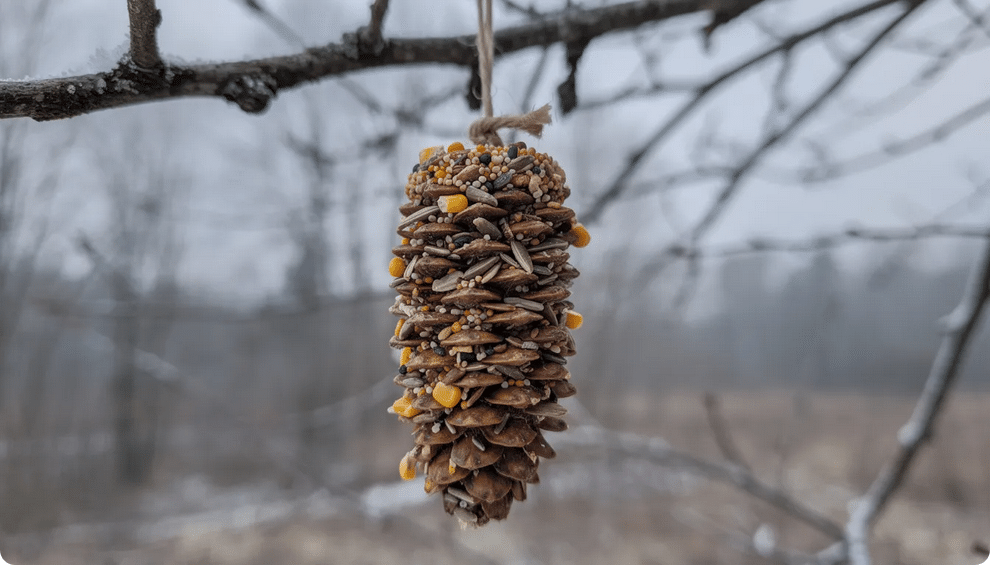
Pinecone Bird Feeders
A classic craft that keeps giving all month long:
- Collect pinecones on a nature walk (or purchase them)
- Spread sunflower seed butter or peanut butter onto the pinecone scales
- Roll in birdseed until covered
- Tie a loop of yarn at the top
- Hang outside and observe winter birds throughout January
This is one of those favorite crafts that teaches children about helping animals in cold weather.
Frozen January Sun Catcher
Create natural winter art with this simple process:
- Collect evergreen needles, small leaves, berries, and nature finds
- Arrange in a shallow dish or pie tin with water
- Add a loop of string or yarn submerged in the water
- Freeze overnight outside (if cold enough) or in a freezer
- Pop out and hang to catch winter sunlight
Snow or Ice Painting
When you have snow or can create ice chunks, try this:
- Bring snow or ice indoors in a bin or tray
- Provide diluted tempera paint or food coloring in squeeze bottles
- Children paint directly on the snow or ice
- Discuss how colors spread, mix, and melt
- Observe changes as the snow melts
Nature Winter Wreath
Bring the outdoors in with this collaborative craft:
- Cut a ring from cardboard for the base
- Collect twigs, dried leaves, and small pinecones
- Add paper snowflakes and popsicle stick snowflakes made earlier
- Glue nature items around the cardboard ring
- Display on your classroom door or at home
Safety reminders: Ensure proper handwashing after handling birdseed or nut butters. Adult supervision is essential when working with freezing temperatures outdoors. Use these activities to build vocabulary like “frost,” “ice,” “melt,” and “freeze.”
Planning Your January Pre-K Craft Calendar
To make the most of your January pre k crafts, spread activities across the four weeks strategically. Use week one for New Year and winter clothing themes while children are still buzzing about holiday memories. Weeks two and three are perfect for snowflakes, snowmen, and snowy day crafts. Wrap up with winter animal and nature crafts in weeks three and four.
Creating a simple visual schedule helps children anticipate and get excited about crafting time. Try labels like “Penguin Monday” or “Snowflake Friday” that children can recognize even before they’re reading independently.
Pairing crafts with read-alouds enhances learning:
| Week | Theme | Suggested Books |
|---|---|---|
| 1 | New Year & Clothing | Books about mittens, hats, and winter routines |
| 2 | Snowflakes & Snow | “The Snowy Day” and snowflake science books |
| 3 | Snowmen & Cozy | “Snowmen at Night” and hot cocoa stories |
| 4 | Arctic Animals | Penguin and polar bear picture books |
Adapting for different ages:
- For younger 3-year-olds: Pre-cut all shapes, offer hand-over-hand guidance, focus on gluing and decorating
- For older 4–5 year olds: Add tracing, writing names, counting elements, and more complex assembly
These January crafts support multiple developmental areas: fine motor skills through cutting, gluing, and threading; language development through new vocabulary and dictation; early math through counting and patterning; and seasonal understanding through weather and animal discussions.
Quick planning tips:
- Gather all craft supplies for the week on Monday morning
- Prep one craft completely before introducing it to children
- Keep a “rescue bin” of extra materials for mistakes or additions
- Photograph finished projects before sending home for portfolio documentation
- Let children love creating at their own pace—process matters more than product
January offers a fresh start for crafting adventures with your preschoolers. Whether you’re making popsicle stick snowflakes, building cotton ball polar bears, or mixing up that puffy paint melted snowman, these winter art projects create meaningful learning experiences. Pick two or three ideas from this list, gather your glue sticks and construction paper, and watch your little ones light up as they create their own winter masterpieces this month.