
Sewing knits doesn’t have to feel like wrestling with fabric that has a mind of its own. Most modern machines can handle knit fabrics perfectly well when set up correctly—but some models and features make it dramatically easier to achieve professional results without the frustration.
This guide cuts through the noise to give you concrete recommendations, practical setup tips, and troubleshooting solutions that actually work. Whether you’re a beginner sewist making your first t-shirt or an experienced sewist building a full knit wardrobe, you’ll find a machine that fits your needs and budget.
- Quick answer: the best sewing machines for knits right now
- Why knits are tricky (and what your machine actually needs)
- Essential features to look for in a sewing machine for knits
- Do you really need a serger or coverstitch for knits?
- Best regular sewing machines for knits (by type and budget)
- Best specialty machines for knits: sergers and coverstitch
- How to set up any sewing machine to sew knits well
- Brand-by-brand considerations for knit sewing
- Testing knit performance before you buy
- Practical troubleshooting tips when sewing knits
- Conclusion: choosing the best sewing machine for your knit projects
Quick answer: the best sewing machines for knits right now
Here’s the thing: you don’t necessarily need a specialized machine to sew stretchy fabrics successfully. But certain models have features that eliminate common headaches like wavy seams, skipped stitches, and stretched-out hems. These picks are based on real-world testing with cotton jersey, ponte, sweater knits, athletic knits, and ribbing—updated for 2026.
- Brother CS7000X (best budget computerized for knits): This computerized sewing machine offers excellent value with 70 built-in stitches including several stretch stitches. The automatic needle threader and easy-to-navigate display make it beginner-friendly, and it handles most knits well with the right needle and walking foot setup.
- Singer Quantum Stylist 9960 (feature-rich for garment sewists): With 600 built-in stitches and extensive customization options, this machine gives you plenty of different stitches for every knit project. It’s particularly good for those doing serious garment making who want room to grow.
- Pfaff Select 4.2 (best mechanical with integrated IDT for knits): The integrated dual transport (IDT) system feeds fabric from above and below simultaneously—a game-changer for preventing wavy seams on lightweight jersey and drapey rayon knits. If you prefer a mechanical machine with rock-solid knit performance, this is it.
- Brother 1034D serger (best affordable serger for knit seams): When you’re ready to level up your knit sewing, this entry-level serger delivers stretchy, professional-looking seams with differential feed that handles everything from swimwear to sweater knits.
- Janome CoverPro 3000 (best hems on knits): For those who want truly professional t-shirt and sweatshirt hems without tunneling, a dedicated coverstitch machine like this one pays for itself in time saved and frustration avoided.
Why knits are tricky (and what your machine actually needs)
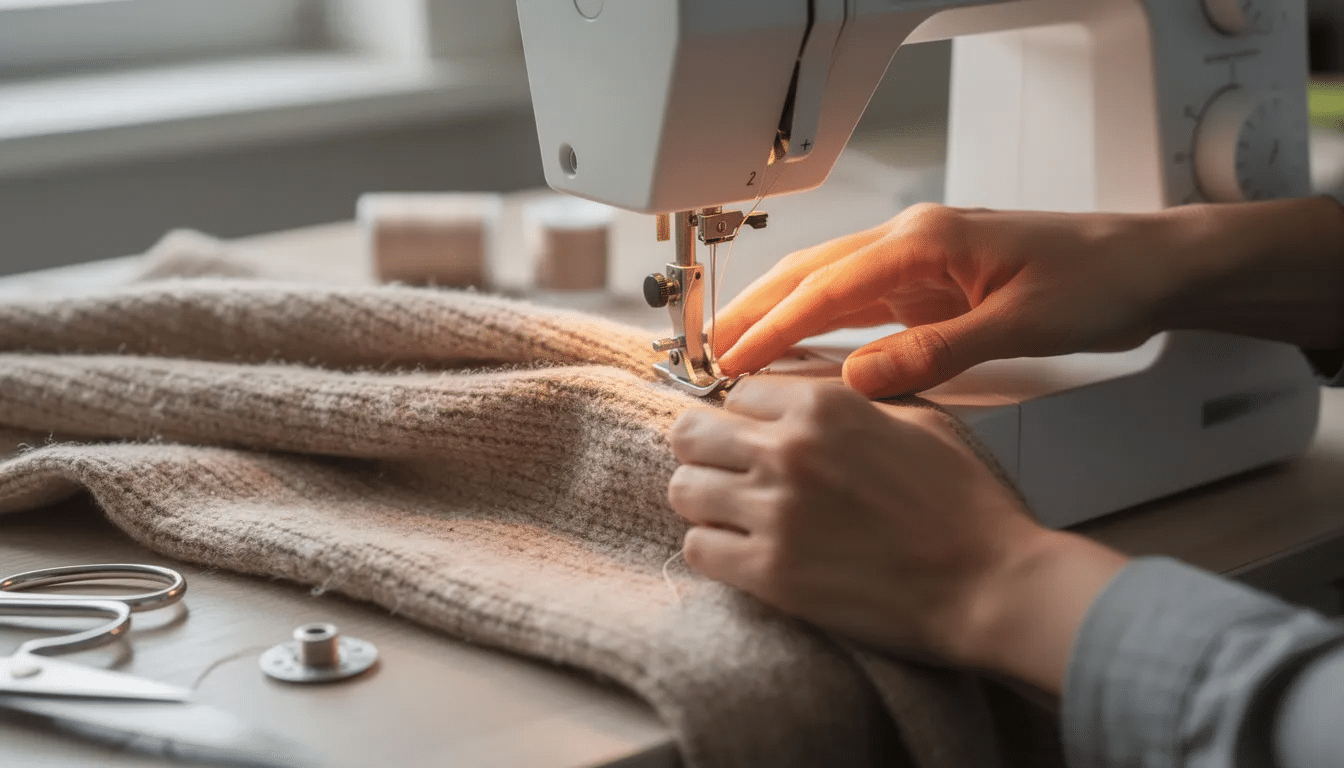
Knit fabrics stretch and recover—that’s what makes them comfortable to wear but challenging to sew. Unlike woven fabric where threads interlace at right angles, knits are constructed from interconnected yarn loops. This fundamental difference causes tunneling, wavy seams, and skipped stitches on machines that aren’t set up properly.
Here’s what actually happens when things go wrong:
- Fabric stretch during sewing causes stretched-out necklines and hems that never recover their original shape
- Different knit structures behave differently—lightweight jersey moves more than stable ponte, and rib knits want to curl at the edges
- Thin knits get “eaten” by the needle plate, pulling down into the machine and causing jams
- Regular straight stitch seams pop when you stretch the garment, because the thread has no give
When people recommend the “best sewing machine for knits,” what they really mean is a machine with:
- A smooth, even feeding system that moves fabric without stretching it
- Ability to adjust how firmly the presser foot presses on fabric
- Access to stretch-friendly stitches and compatibility with appropriate needles and feet
- Consistent stitch quality across different weights and types of knit
Essential features to look for in a sewing machine for knits
Features matter more than brand name when it comes to successful knit sewing. A good machine with the right capabilities will outperform an expensive machine that lacks key features for stretch fabrics. Here’s what to prioritize:
Must-have features:
- Adjustable presser foot pressure: This is perhaps the most important feature for knits. Reducing the pressure helps prevent wavy seams on lightweight jersey and rayon knits. Without this adjustment, your machine may push fabric through unevenly, creating ripples along seam lines. Most machines let you turn a dial or move a lever to change how hard the foot presses down.
- Strong, consistent feed system: Look for dual feed, integrated dual transport (IDT on Pfaff models), or compatibility with a walking foot. These systems feed fabric from both top and bottom, preventing the top layer from shifting or stretching relative to the bottom layer. Standard feed dogs alone often struggle with slippery or stretchy materials.
- Stretch-capable stitches: Your machine needs more than just a straight stitch. The zigzag stitch provides essential stretch for seams. A lightning bolt stretch stitch (narrow zigzag with reinforced stitching) works beautifully for shoulder seams and high-stress areas. Triple stretch stitch adds durability to seams that take a lot of wear.
- Ability to use twin needles: Twin needles create two parallel rows of stitching on the right side with a zigzag on the back—mimicking the coverstitch hem you see on ready-to-wear t-shirts. Typical needle widths range from 2.5mm to 4.0mm, with narrower widths working better for lightweight knits.
- Easy needle and foot changes: You’ll swap between ballpoint and stretch needle types frequently, and you may want different feet for different projects. Quick-change systems save time and frustration.
Nice-to-have features:
- Built-in walking foot or IDT versus needing to buy a walking foot separately—saves money upfront and ensures compatibility
- Differential feed: This lives on sergers and coverstitch machines, not regular machines. It adjusts the speed of front versus back feed dogs, which is gold for rib knits and sweater knits that want to stretch or gather
- Extension table: Provides extra flat surface for supporting drapey knits so they don’t pull or drag while you sew
- Clear needle plate markings for precise seam allowances on garment construction
Do you really need a serger or coverstitch for knits?
You can absolutely sew knits on a regular sewing machine—plenty of people make beautiful t-shirts, leggings, and dresses without ever buying additional equipment. But sergers and coverstitch machines make life easier and give more “ready-to-wear” results once you’re sewing knits regularly.
When a regular machine is enough:
- You’re a beginner making t-shirts and leggings with zigzag stitches or stretch stitches
- You use ballpoint or stretch needles and a walking foot for even feeding
- You sew knits occasionally rather than building a dedicated knit wardrobe
- You’re still learning pattern fitting and don’t want to invest in specialty equipment yet
When to add a serger:
- You sew knits weekly and want fast, strong, stretchy seams in one pass
- You want neatly finished seam allowances inside garments (no raw edges)
- You work frequently with athletic knits, swimwear, or baby clothes that need durable stretch
- You’re tired of the two-step process of sewing seams then finishing edges
When a coverstitch is worth it:
- You care about professional-looking hems on t-shirts and sweatshirts
- You dislike the tunneling or popped hems that can happen with twin needles
- You sew for a small business or produce multiple knit garments per month
- You’ve mastered serger seams and want that final professional polish
Understanding the roles:
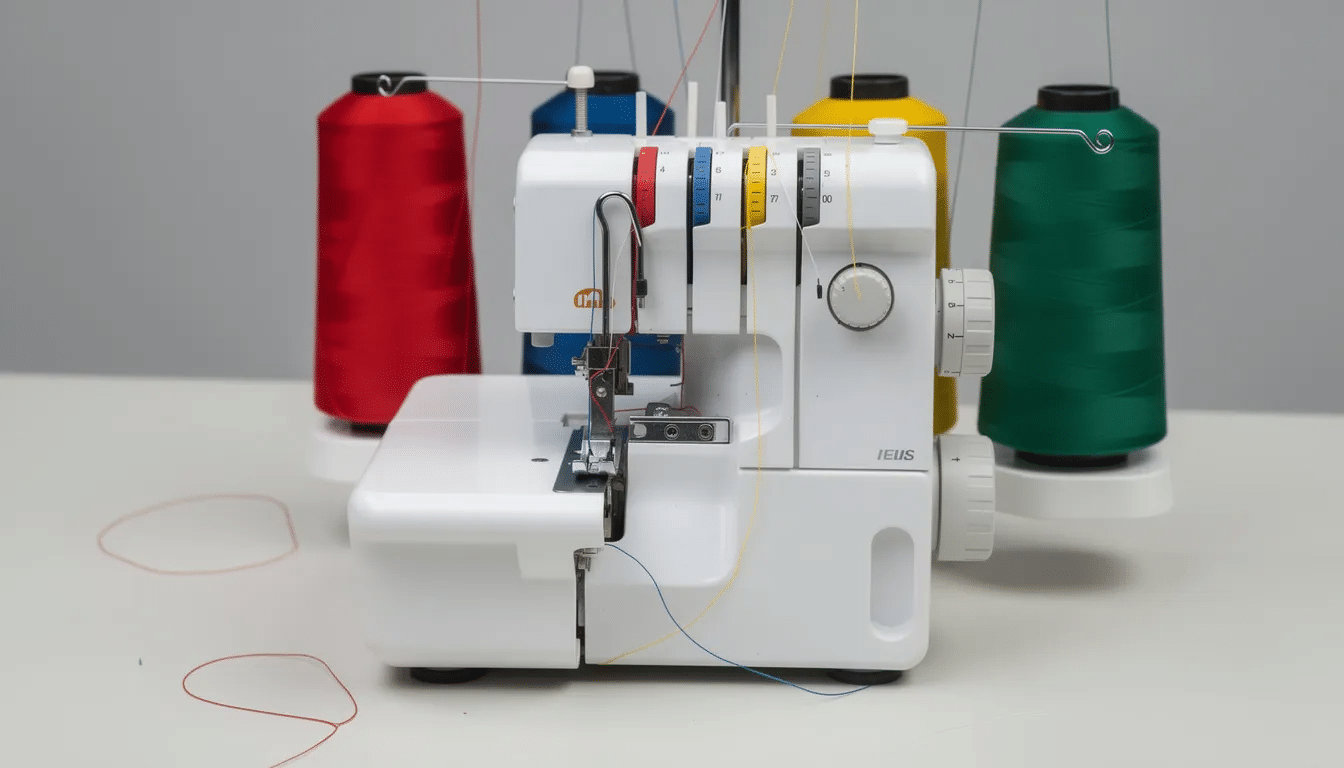
- Serger: Handles seams and edge finishing—sews, trims, and encases raw edges in one operation
- Coverstitch: Handles hems and topstitching with stretch—creates those parallel rows you see on commercial knitwear
- Regular machine: Still needed for buttonholes (with a buttonhole foot), zippers, topstitching details, and anywhere you need precise stitch placement
Most machines can’t do all three jobs. Serious knit sewists often end up with all three types threaded and ready to go.
Best regular sewing machines for knits (by type and budget)
These machines were selected because they handle cotton jersey, ponte, rib knits, and sweater knits well in testing and user reports spanning 2022-2025. All remain widely available as of 2026.
Best budget computerized: Brother CS7000X
This machine consistently emerges as the top recommendation for beginners and budget-conscious sewists. Brother is known for blending affordability with versatile features, and the CS7000X delivers on both fronts.
- Key specs for knits: 70 built-in stitches including stretch stitches, comes with a wide table for an extension table effect, includes multiple presser feet
- Real-world knit performance: Handles light rayon jersey and cotton/spandex well with proper needle choice. Ponte and light sweater knits sew smoothly at moderate speeds.
- Pros for knit sewists: Quiet operation when topstitching long seams, easy to dial in a narrow zigzag, intuitive stitch selection on the LCD screen, great for those just beginning to sew knits
- Flaws but not dealbreakers: No adjustable presser foot pressure (you’ll need to work around this with needle choice and technique). Walking foot sold separately. Thread tension can need tweaking between fabric weights.
Best feature-rich computerized: Singer Quantum Stylist 9960
If you want room to grow and access to nearly every stitch imaginable, this machine delivers. Singer machines offer excellent value and are particularly user-friendly for both beginners and experienced sewers.
- Key specs for knits: 600 built-in stitches with many stretch stitch options, automatic needle threader, extension table included, adjustable stitch width and length
- Real-world knit performance: Excellent results on cotton jersey and ponte. Athletic knits benefit from the stretch stitch settings. Lightweight knits need attention to tension and speed.
- Pros for knit sewists: Tremendous stitch variety means you can find the perfect stretch stitch for any project, strong motor handles multiple layers of knit, helpful for garment making with lots of decorative options
- Flaws but not dealbreakers: Walking foot must be purchased separately for optimal knit handling. Learning curve on all those features. Some find it overwhelming if they just need basics.
Best mechanical with strong feed: Pfaff Select 4.2
For sewists who prefer the simplicity and durability of a mechanical machine, this model stands out for one key reason: integrated dual transport (IDT). This feeding system grips fabric from above and below, eliminating the wavy seams that plague knit sewing.
- Key specs for knits: IDT system built in, adjustable presser foot pressure, solid metal construction, essential stretch stitches included
- Real-world knit performance: Exceptional on lightweight jersey and drapey rayon knits where feeding issues normally appear. Ponte and sweater knits feed perfectly.
- Pros for knit sewists: IDT alone justifies the investment for regular knit sewing. No fumbling with attaching a walking foot—it’s always ready. Rock-solid stitch quality across knit types.
- Flaws but not dealbreakers: Proprietary feet for Pfaff machines (can limit accessory options). Higher price point than basic mechanicals. Fewer built-in stitches than computerized options.
Solid alternatives worth considering:
- Janome Sewist 740DC: Solid feed systems and good stitch quality on knits, with the Janome reputation for reliability
- Elna 3210 Jeans: Surprisingly capable on knits despite being marketed for denim—strong feed system handles stretch fabrics well
- Used Bernina machines: Bernina machines provide unmatched performance and durability. Purchasing used options can reduce the financial burden significantly while still getting premium quality.
Best specialty machines for knits: sergers and coverstitch
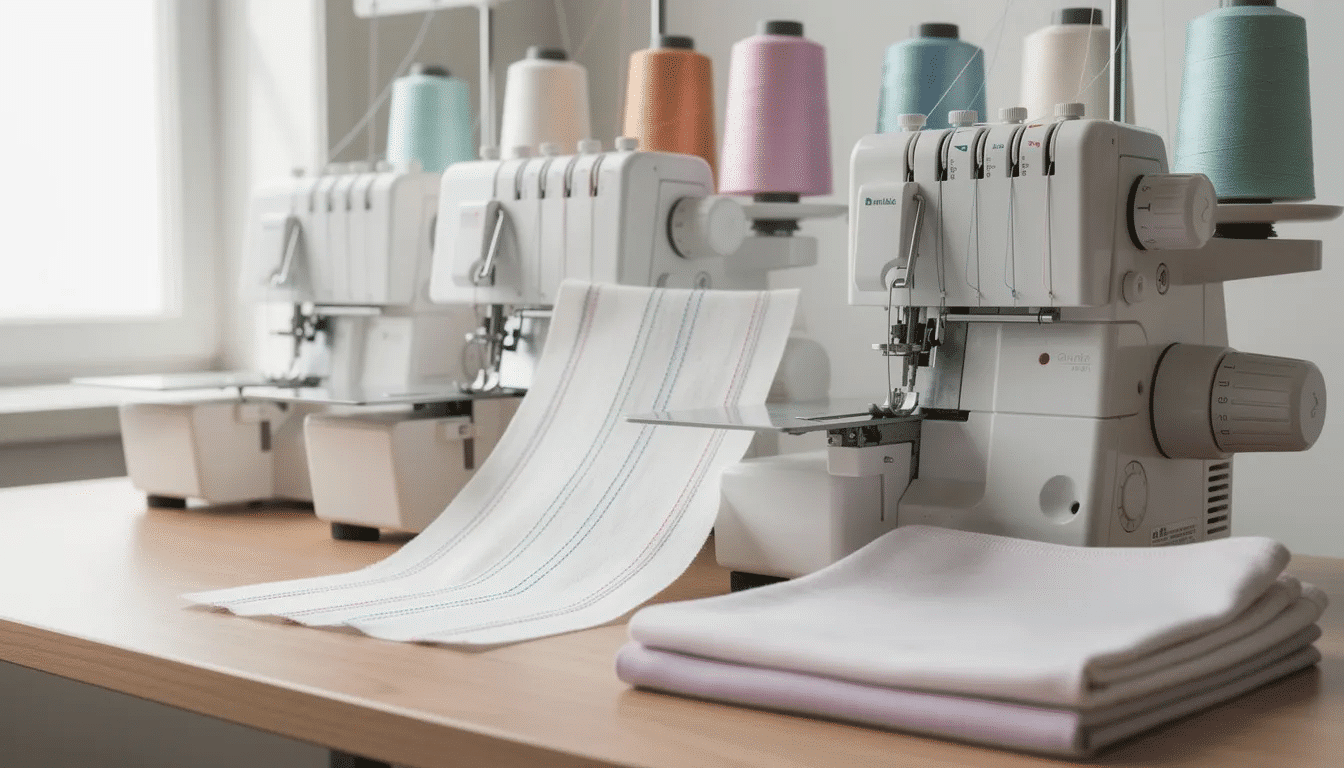
While this article focuses on the best sewing machine for knits, serious knit sewists will get the best results with a combination of regular machine plus serger plus optional coverstitch. Here’s what to consider if you’re ready to expand your setup.
Recommended sergers:
- Brother 1034D: The entry-level workhorse that countless knit sewists start with. Differential feed handles rib knits and sweater knits beautifully, preventing stretching and lettuce edges. Easy threading for beginners, widely available replacement parts, and excellent community support. Perfect for t-shirts, leggings, kidswear, and activewear seams.
- Juki MO-654DE: A midrange option with more robust build quality and smoother cutting on thick knits like ponte and sweatshirt fleece. The blade quality makes a noticeable difference in edge finish. Worth the upgrade if you sew knits frequently or work with heavier materials.
Both machines excel at creating stretchy, professional seams that maintain the elasticity of the original fabric while encasing raw edges beautifully.
Recommended coverstitch machines:
- Janome CoverPro 3000: The gold standard for home coverstitch machines. Great for t-shirt and sweatshirt hems, neckbands, and cover-hemming thicker sweater knits. Features adjustable differential feed that matters specifically on knits—you can prevent stretching on lightweight jersey or ease in fullness on ribbing.
Key features to look for in any coverstitch machine: easy looper threading (this is notoriously tricky), differential feed adjustment, and a flat, free-arm configuration for hemming sleeves and necklines.
How a knit-focused setup might look:
- Regular machine threaded with all-purpose thread for topstitching, buttonholes, and small details like applying interfacing or stay tape
- Serger threaded with four cones in a neutral color, ready for seams at a moment’s notice
- Coverstitch permanently threaded in white, gray, or black for quick hems without re-threading for every project
- Stretch needles and ballpoint needles organized nearby for quick swaps
This three-machine approach represents professional-level knit garment construction. Many sewists find that once they add each piece, they wonder how they ever managed without it.
How to set up any sewing machine to sew knits well
Setup and technique are just as important as the machine model you own. A new sewing machine needs proper configuration before you begin sewing knits, and even a vintage machine can perform well with the right approach.
Needles:
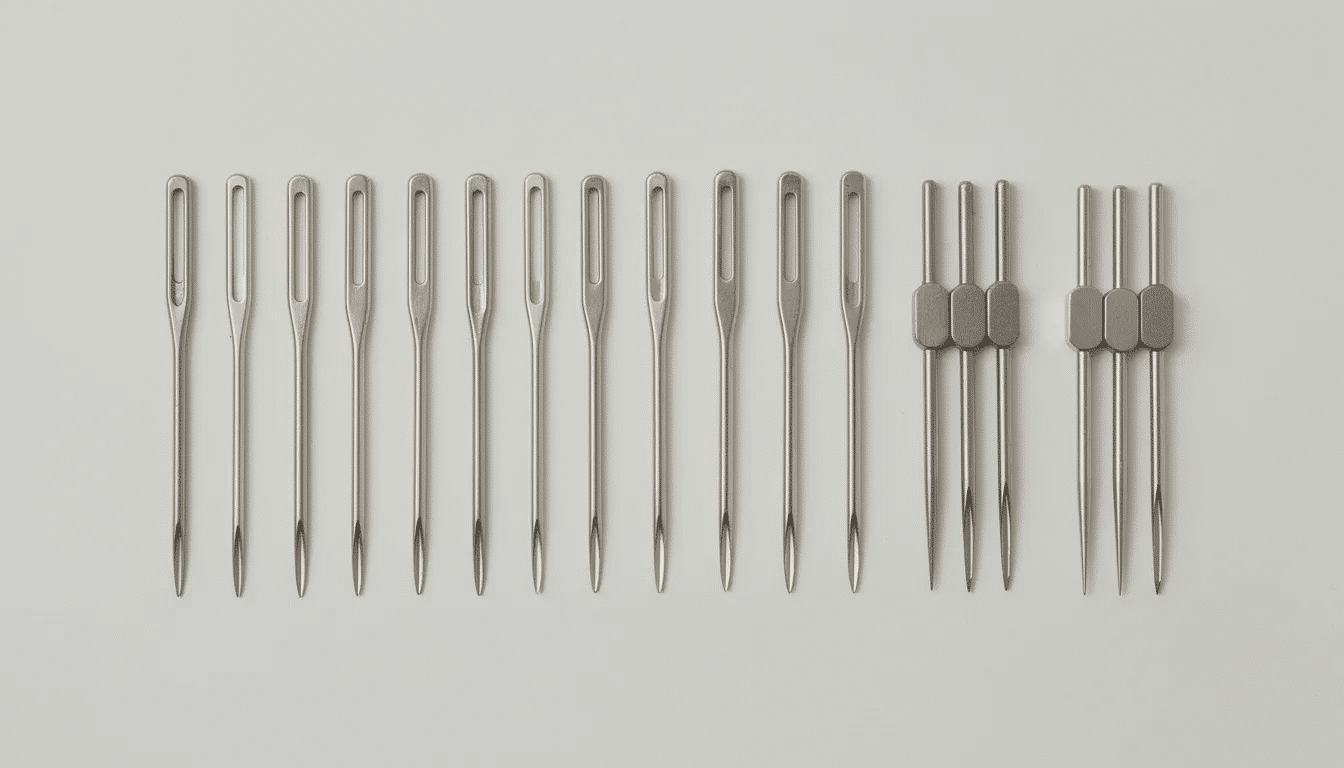
- Use ballpoint needles (75/11 or 80/12) for most cotton jersey and ponte—the rounded tip pushes between knit loops rather than piercing them
- Switch to stretch needles for athletic knits, swimwear, and fabrics with high spandex content—they’re designed for fabrics that actively stretch during sewing
- Twin needles (2.5-4.0mm width) create stretch-friendly hems that mimic ready-to-wear. Use 2.5mm for lightweight knits, 4.0mm for sweatshirt fleece. Avoid on very bulky sweater knits where tunneling becomes severe.
- Change your needle frequently—knits dull needles faster than wovens, and a dull needle causes skipped stitches
Stitches:
- Narrow zigzag (width 0.5-1.0, length 2.5-3.0) works as a primary seam stitch—provides enough give without looking obviously zigzagged on the right side
- Lightning bolt stretch stitch for shoulder seams and high-stress areas if your machine has it—built-in reinforcement prevents popping
- Straight stitch only for vertical seams or where there’s minimal stretch happening (like setting in a zipper)—use with caution and shorter stitch length
Presser foot and tension:
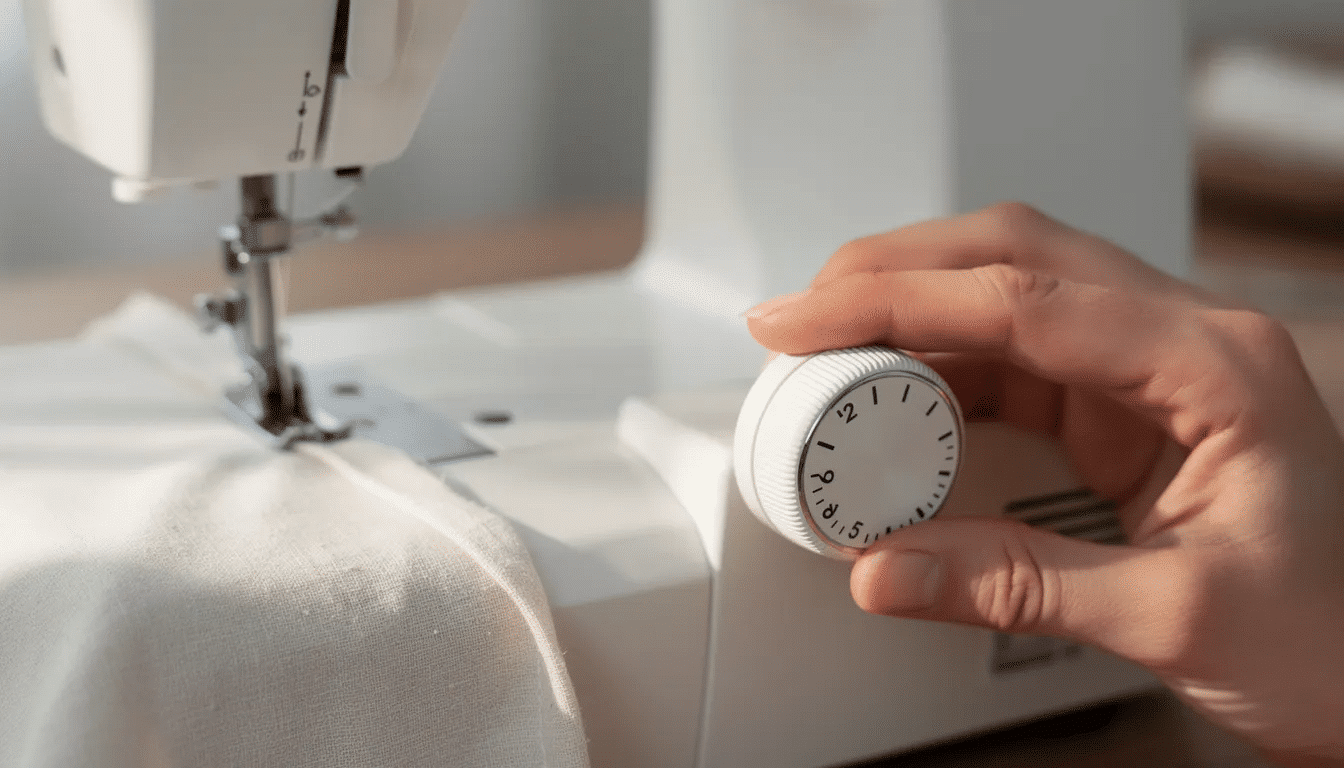
- Lower presser foot pressure on lightweight, drapey knits to avoid rippling along seam lines
- Slightly increase upper thread tension if you see loops sitting on the fabric surface rather than pulling into the fabric evenly
- Use a walking foot or engage IDT whenever possible—this prevents the top layer from shifting relative to the bottom
- Check your bobbin thread—poor quality thread or incorrect bobbin tension causes problems that look like machine issues
Support and stabilizing:
- Use an extension table or large flat surface to keep fabric from pulling or dragging off the side of your sewing table
- Apply stay tape, clear elastic, or fusible tape on shoulders, necklines, and armhole seams to prevent stretching out over time
- Place a small scrap of pattern tissue or tear-away stabilizer under very thin knits to prevent them being pulled into the needle plate
- Let the machine feed the fabric—avoid pushing or pulling, which stretches knits unevenly
Brand-by-brand considerations for knit sewing
Different brands have characteristic strengths and quirks when it comes to handling knits. Here’s what to know about the major players:
Brother:
- Generally excellent value with plenty of stretch stitches included
- Models like the CS7000X handle knits decently with the right needle and walking foot
- Good machines for beginners on a budget
- Limitation: Most Brother models lack adjustable presser foot pressure, which matters for lightweight knits
- Strong community support and readily available accessories
Singer:
- Quantum Stylist 9960 praised for features but needs a separately purchased walking foot for optimal knit handling
- Good value and user-friendly for both beginners and experienced sewists
- Wide stitch variety includes multiple stretch options
- Some models have inconsistent quality control—test before buying if possible
Pfaff:
- IDT (integrated dual transport) is a significant advantage on knits—feeds from above and below without separate walking foot purchase
- Pfaff Select 4.2 exemplifies what people recommend for dedicated knit sewing
- Higher price point but often worth it for serious garment sewists
- Proprietary feet can limit accessory options and increase costs
Janome:
- Renowned for impeccable stitch quality and reliability
- Solid feed systems that handle knits well across the product line
- Sewist 740DC represents a fine mid-range option
- CoverPro coverstitch line is industry-standard for home sewists
- Generally good machines that hold value well
Bernina:
- Unmatched performance and durability, but higher price points
- BERNINA 215 and similar models sew beautifully on knits
- Bernette machines (made in Bernina factories) offer well-made quality at lower price points
- Worth considering used if budget is a concern
- Strong dealer network for support and service
Elna:
- Elna 3210 Jeans actually handles knits well despite being branded for denim
- Strong feed systems translate well to stretch fabrics
- Less brand recognition but solid performer
- Often good value on the used market
The point to remember: presser foot pressure adjustability and access to walking or dual-feed feet are often more important than the logo on the front of the machine.
Testing knit performance before you buy
Never trust marketing claims alone. Bring your own knit swatches to a dealer, or test immediately on arrival if buying online. This sewing experience will tell you more than any review.
Concrete testing steps:
- Bring a variety of knits: cotton jersey, rayon/spandex, ponte, rib knit, and a light sweater knit. Different knits reveal different machine weaknesses.
- Test several stitches on each fabric: narrow zigzag, lightning/stretch stitch if available, triple stitch, and a twin needle hem if possible. Note which combinations feel smooth versus problematic.
- Check for common issues: Look for tunneling (fabric puckering between stitch lines), waviness along seams, skipped stitches, and fabric being pulled into the needle plate. These problems indicate poor knit compatibility.
- Try changing presser foot pressure and see how quickly the machine responds in stitch quality. If you can’t find this adjustment, ask the dealer—it may not exist on that model.
- Attach a walking foot (or engage IDT if available) and compare results to standard foot sewing. The difference should be immediately obvious on lightweight jersey.
- Sew at different speeds—some machines handle knits fine when slow but skip stitches at higher speeds.
If shopping used or for a vintage machine:
- Check smoothness of feed dogs and overall operation
- Listen for unusual noise that might indicate worn parts
- Test how easily the machine switches between wovens and knits
- Verify that presser foot pressure adjustment (if present) actually changes anything
- Bring your own needle and thread to eliminate those variables
Most machines on the market will sew knits adequately. Testing helps you find one that sews knits well—and that’s the difference between fun projects and frustrating ones.
Practical troubleshooting tips when sewing knits
Even the best sewing machine for knits will misbehave without fine tuning. Before blaming your machine, work through these common problems and fixes:
Wavy seams:
- Reduce presser foot pressure—this is the first thing to try
- Shorten stitch length slightly (try 2.0-2.5mm instead of 3.0mm)
- Use walking foot or IDT instead of standard presser foot
- Avoid stretching fabric as you sew—let the feed dogs do the work
- Check that you’re not pushing fabric through faster than the machine wants to go
Skipped stitches:
- Switch to a fresh stretch or ballpoint needle (dull needles are the most common cause)
- Try a needle size up (80/12 instead of 75/11)
- Slow down your sewing speed
- Check that thread path is correct and thread is seated properly in tension discs
- Verify your needle is inserted correctly (flat side facing back on most machines)
Fabric getting sucked into the needle plate:
- Start sewing a few millimeters from the edge rather than right at the edge
- Place a small scrap of tissue paper or stabilizer under the fabric at the starting point
- Hold thread tails when starting a seam to provide resistance
- Switch to a needle plate with a smaller needle opening if your machine offers this option
- Consider a straight stitch throat plate for non-zigzag seams
Popping seams when worn:
- Switch from straight stitch to stretch zigzag or lightning stitch
- Increase zigzag width slightly to allow more stretch
- Check that you’re not sewing with excessive tension
- Consider that the fabric itself may have more stretch than your chosen stitch can handle
Tunneling on hems:
- Use softer knit interfacing in the hem area
- Adjust thread tension (often needs to be loosened)
- Experiment with different twin needle widths—narrower often helps
- Try a wooly nylon thread in the bobbin for more stretch
- Consider whether this fabric really needs twin needle hem or if a zigzag would work better
Pro tip: Keep a dedicated “knit settings” cheat sheet taped near your machine. When you find combinations that work for specific fabrics—needle type, stitch settings, tension, presser foot pressure—write them down. This saves time on every future project with similar materials.
Conclusion: choosing the best sewing machine for your knit projects
The best sewing machine for knits is the one that combines a solid feed system, stretch-capable stitches, and proper setup with the right needles and presser foot pressure. Price matters less than having the specific features that make knit sewing manageable.
Here’s the path forward:
- Beginners can start with a good all-purpose machine like the Brother CS7000X or Singer 9960 plus a walking foot. Add proper stretch needles and learn to use the zigzag stitch for seams.
- Enthusiasts will benefit from adding a serger like the Brother 1034D or a Juki for professional seams. Eventually, a coverstitch machine for polished hems completes the setup.
- Everyone should remember that technique and testing with your own fabrics are as important as the model you buy. A well-configured regular machine beats an expensive machine used incorrectly.
With the right machine and settings, knits become some of the fastest, most comfortable garments to sew. The stretch that makes them tricky to sew is the same stretch that makes them forgiving to fit and wonderful to wear. Your first time hemming a t-shirt without wavy seams or sewing a neckband that lies perfectly flat—that’s when knit sewing goes from challenging to genuinely fun.