
Choosing the right size of cake can feel overwhelming when you’re staring at a bakery menu or planning to bake for an upcoming celebration. Too small, and you’ll leave guests without dessert. Too large, and you’re dealing with mountains of leftovers (though some might call that a win).
This guide breaks down everything you need to know about cake sizing—from quick guest-count formulas to detailed serving charts for every shape and tier combination. Whether you’re planning a backyard birthday or a formal wedding reception, you’ll walk away knowing exactly what cake size fits your event.
- Quick Answer: What Size Cake Do You Need?
- Start with Your Guest Count and Event Type
- Single-Tier Cake Size Guide (Rounds & Squares)
- Two-Tier Cake Sizes for Medium Events
- Three-Tier (and Larger) Cakes for Weddings and Big Parties
- Sheet Cake Sizes and Servings (Rectangle Cakes)
- Wedding vs Party Servings: How Slice Size Changes Cake Size
- How Cake Height and Layers Affect Servings
- Planning Dessert Tables and Mixed Desserts
- How to Calculate Cake Servings Yourself (Simple Formula)
- Ordering and Timing: When to Decide on Cake Size
- Practical Examples: Matching Cake Size to Real Events
- Helpful Tips for Cake Success
Quick Answer: What Size Cake Do You Need?
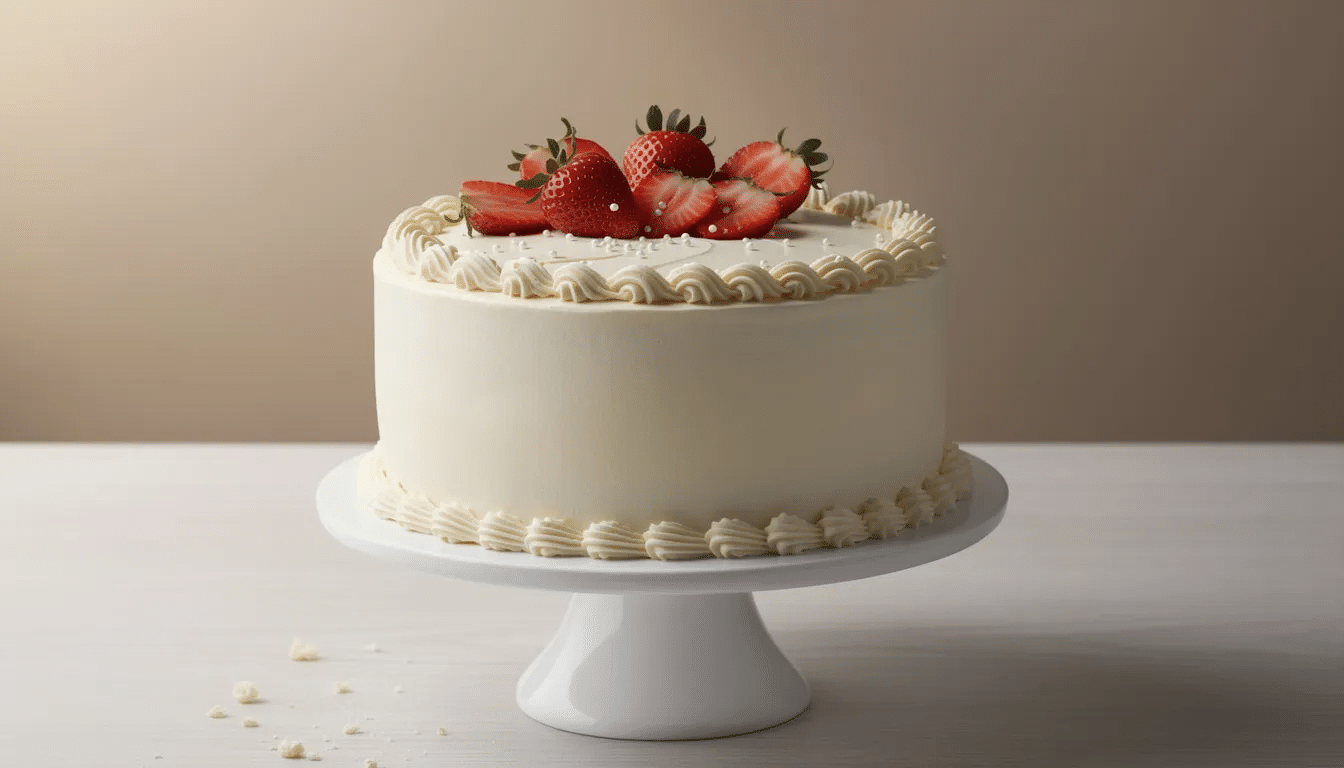
If you’re short on time and need a fast answer, the formula is simple: count your guests, decide if cake is the star dessert or sharing the spotlight, and pick a size that gives you a small buffer. Most bakers recommend adding 5-10% extra servings so you never run short.
Here’s a quick reference to get you started:
- 10 guests → 6” round cake
- 20–25 guests → 8” round cake
- 40–50 guests → 2-tier (6” + 9”) or quarter sheet cake
- 75–100 guests → 3-tier cake or half sheet cake combo
- 100+ guests → 3-tier display cake plus kitchen sheet cakes
Standard serving sizes vary by event type. Party slices typically measure about 1.5” x 2” and work well for casual celebrations where guests might have seconds or other desserts. Wedding servings are smaller—about 1” x 2” and 4” tall—making each cake stretch further for formal occasions.
When in doubt, round up. Running out of cake at a celebration is far worse than sending guests home with a few extra slices wrapped for later.
Start with Your Guest Count and Event Type
Your guest count is the foundation of every cake decision, but the type of event shapes how you interpret that number. A laid-back kids’ birthday party calls for different portions than an elegant anniversary dinner.
Start by asking yourself one key question: Is this cake the only dessert on the menu, or is it sharing space with cupcakes, cookies, or a full dessert table? When cake stands alone as the star, plan for one generous slice per guest. When it’s one option among many delicious treats, you can safely scale back to 0.5–0.75 slices per person.
Here’s how different guest counts typically translate to cake needs:
- Under 10 guests: A 6” round or 8” round single-tier works perfectly for intimate gatherings
- 10–20 guests: An 8” or 9” round single layer cake handles this range comfortably
- 20–40 guests: Consider a 10” single-tier, or step up to a two-tier for visual impact
- 40–75 guests: Two-tier cakes shine here, or opt for a practical half sheet cake
- 75–150+ guests: Three-tier cakes, four-tier designs, or tiered cakes paired with backup sheet cakes
Think about whether you actually want leftovers. Some hosts love having extra cake to freeze for later, share with neighbors, or enjoy with morning coffee the next day. If that sounds appealing, size up by about 10 servings.
For example, a 30-person office celebration in May 2026 with cake as the only dessert would work beautifully with either a 2-tier 6” + 8” combination or a classic 9×13” quarter sheet pan. Both options provide approximately 30-35 servings with a small cushion.
Single-Tier Cake Size Guide (Rounds & Squares)
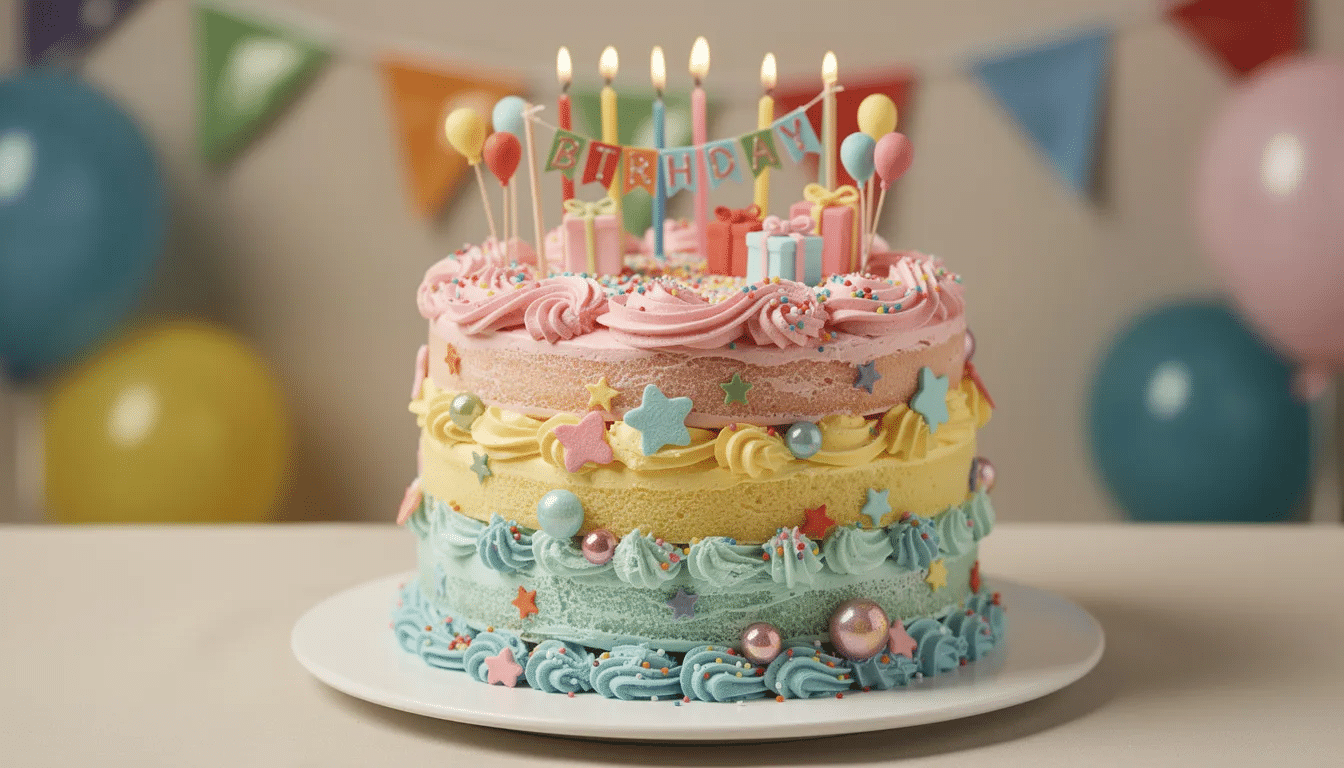
Single-tier cakes are perfect for small birthdays, family dinners, and casual gatherings where you want something homemade and charming without architectural complexity. These one layer designs let the flavors shine—whether you’re making a vanilla cake recipe from scratch or trying that Halloween pumpkin piñata party cake recipe you’ve been eyeing.
Round Cake Servings (4” tall, party-sized slices of 1.5” x 2”):
- 5” round: about 6–8 servings
- 6” round: about 10–12 servings
- 7” round: about 14–16 servings
- 8” round: about 20–24 servings
- 9” round: about 24–28 servings
- 10” round: about 30–38 servings
- 12” round: about 40–50 servings
Square Cake Servings (4” tall, party-sized slices):
- 6” square: about 12 servings
- 8” square: about 24 servings
- 10” square: about 38 servings
Square cakes consistently serve more guests than their round counterparts because you eliminate the curved edges that create smaller corner slices. Cutting in a grid pattern maximizes your number of servings and keeps portions consistent.
Keep in mind that actual serving counts can vary based on who’s doing the cutting. A generous baker might cut thick cake slices that reduce your total count by 15-20%, while precise cuts following a cake serving chart will hit these numbers reliably. Using a kitchen scale to portion filling and icing between layers also helps maintain consistent cake layer heights for even slicing.
Two-Tier Cake Sizes for Medium Events
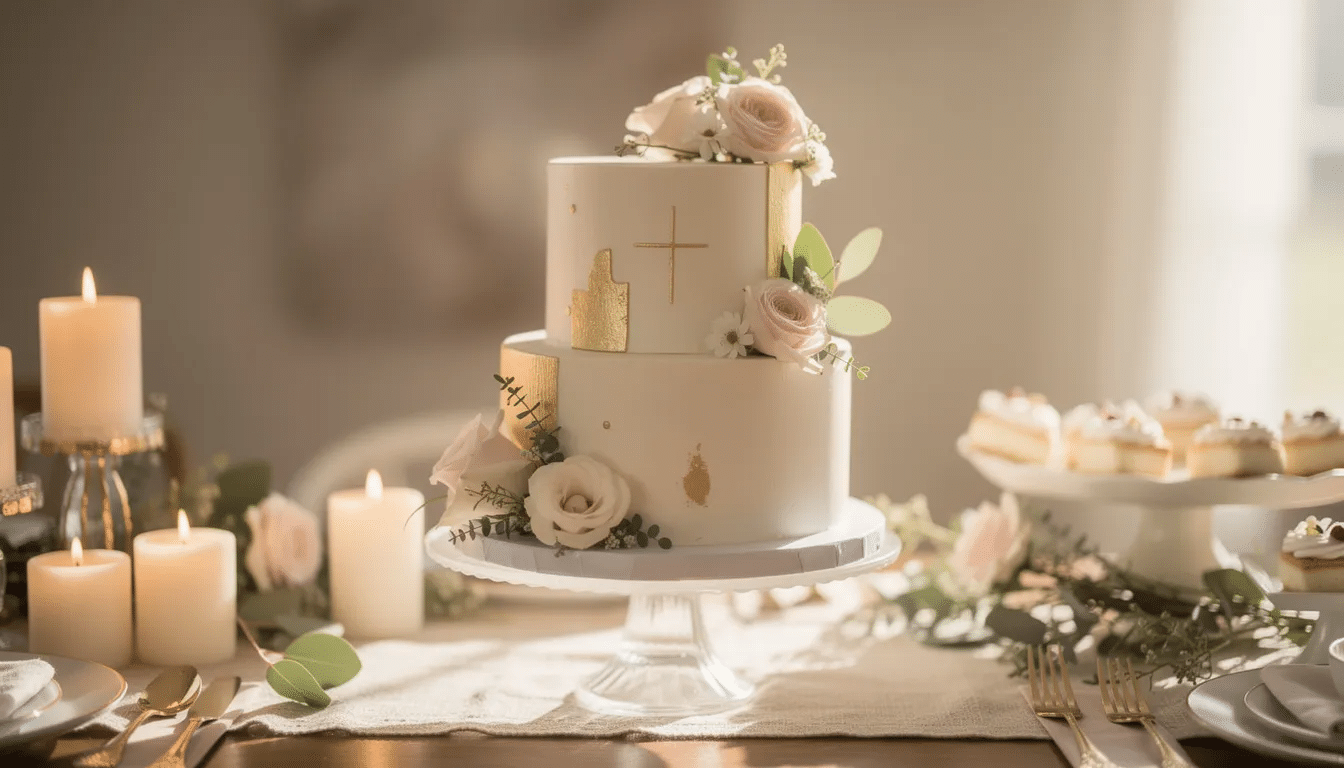
Two-tier cakes add height and elegance without overwhelming complexity, making them ideal for bridal showers, milestone birthdays (think 21st, 30th, or 40th celebrations), and small weddings under 50 guests. The visual impact of stacked tiers transforms a simple dessert into a centerpiece.
Popular Two-Tier Combinations (wedding-style cuts of 1” x 2”, 4” tall):
- 5” + 7”: about 20–25 servings
- 6” + 8”: about 30–35 servings
- 6” + 9”: about 40–45 servings
- 7” + 10”: about 50–55 servings
One important note: many couples save the top tier of their wedding cake for their first anniversary. If you’re planning to freeze that smaller tier, subtract its servings from your usable count. A 6” + 8” combination technically yields 30-35 servings, but if you’re wrapping and freezing the 6” top tier, plan on having only 20-24 servings for guests.
For a 40-guest baby shower in October 2026, choose a 6” + 9” two-tier if cake is the main dessert. This combination provides 40-45 servings—enough for everyone plus a few slices for the parents-to-be to enjoy later.
The bake time for tiered cakes requires attention since each cake pan size needs different oven timing. A 6” round might finish in 25-30 minutes while a 9” round needs 35-45 minutes. Start checking smaller tiers earlier—a toothpick inserted in the middle should come out clean.
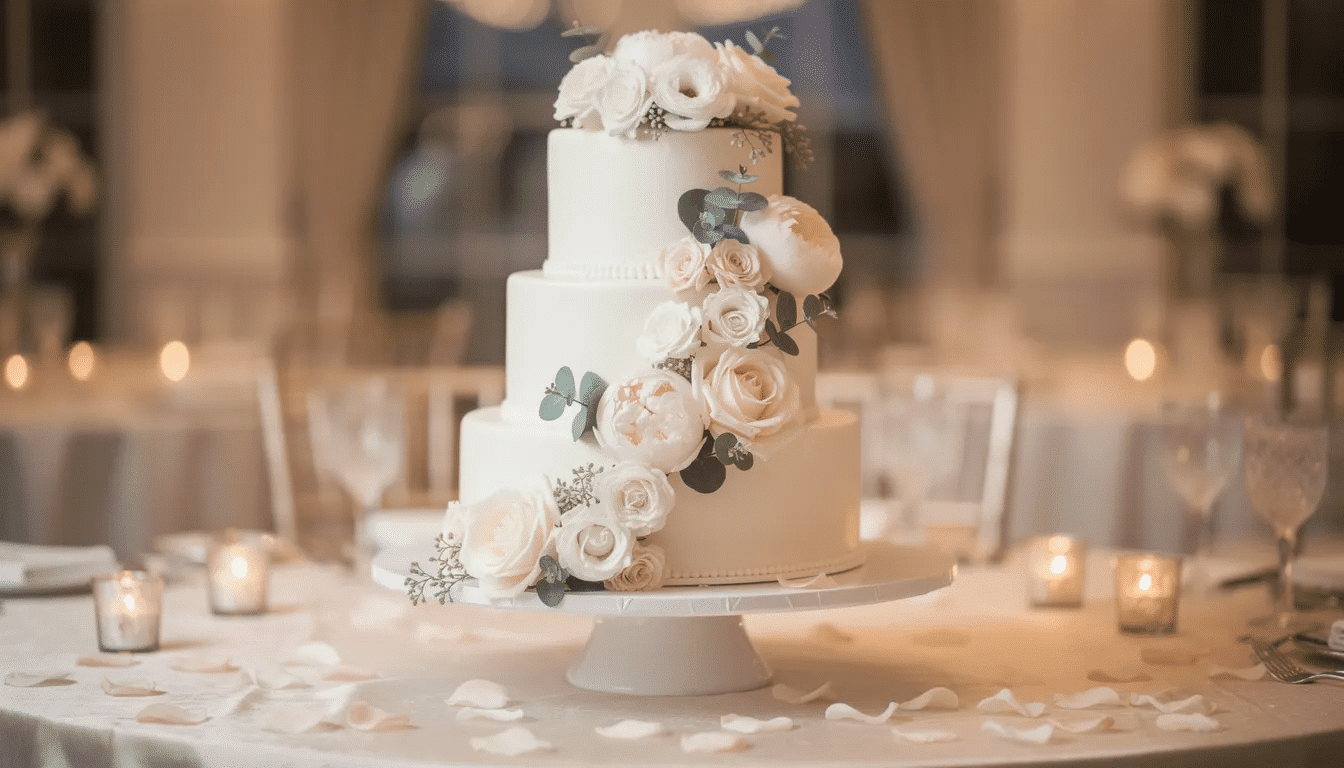
Three-Tier (and Larger) Cakes for Weddings and Big Parties
When guest counts climb above 75, three and four-tier cakes become the go-to choice for weddings, quinceañeras, large anniversary parties, and corporate events. These towering creations make a statement while providing enough cake servings for a crowd.
A tiered cake of this scale requires structural support—dowels inside each tier and sturdy cake boards between layers. This isn’t just decorative; it’s essential engineering that lets each tier sit securely without crushing the layers below.
Popular Three-Tier Combinations (wedding slice size, 1” x 2”):
- 5” + 7” + 9”: about 55–65 servings
- 6” + 8” + 10”: about 75–85 servings
- 6” + 9” + 12”: about 90–100 servings
Four-Tier Example for Large Events:
- 6” + 8” + 10” + 12”: about 125–135 servings
This four-tier combination works beautifully for 100 guests with generous portions or stretches to 120-130 guests with standard wedding slices. The visual drama is unmatched—imagine that towering centerpiece covered in buttercream icing and decorated with fresh flowers.
For very large events (150-200 guests), many caterers recommend a hybrid approach: display a stunning three-tier cake for the ceremonial cutting and photos, then supplement with extra cake from half sheet or full sheet cakes cut in the kitchen. This strategy saves money while ensuring everyone gets a delicious slice without making the display cake impractically large.
Sheet Cake Sizes and Servings (Rectangle Cakes)
Sheet cakes are the workhorses of the baking world—practical, budget-friendly, and perfect for school events, graduations, office celebrations, and any gathering where function matters more than formal presentation. A well-decorated sheet cake can still look impressive while being infinitely easier to transport and cut than a tiered design.
Common Sheet Pan Sizes and Servings:
- Quarter sheet (approximately 9×13”): about 24–30 party servings (2” x 2” cuts); up to 40 wedding-style servings if double-layered
- Half sheet cake (approximately 12×18” or 13×17”): about 40–54 party servings; up to 70–80 wedding-style servings with two layers
- Full sheet (approximately 16×24” or 18×24”): about 70–108 party servings; up to 120–150 smaller servings
Actual sheet pan dimensions vary by brand by 1-2 inches, so check your baker’s specific pan measurements when ordering. Professional bakeries often list their exact cake pan size on menus to eliminate confusion.
A half sheet 12×18” cake with 2×2” slices serves about 54 guests—perfect for a June 2026 graduation party where cake is the star dessert. Add some frosting flowers and a congratulatory message, and you’ve got an affordable centerpiece that feeds a crowd.
The same amount of batter that fills a half sheet could also prepare batches of cupcakes if you prefer individual portions. Many bakers offer cupcake-cake combos where a small tiered cake for cutting pairs with cupcakes for easy serving.
Wedding vs Party Servings: How Slice Size Changes Cake Size
Understanding the difference between wedding servings and party servings is crucial—it can mean the difference between running out of cake and having plenty for everyone.
Standard Serving Size Definitions:
- Wedding slice: about 1” x 2” x 4” tall (a slim, elegant portion)
- Party slice: about 1.5” x 2” or 2” x 2” x 4” tall (a more generous portion)
This distinction exists because wedding receptions typically include multiple courses, cocktail appetizers, and often a full dinner before cake appears. Guests are already satisfied, so a smaller slice feels appropriate. At a birthday party where cake might be the only dessert, guests expect and appreciate larger portions.
The practical impact is significant. That same 8” round cake might serve approximately 24 guests with precise wedding slices but only 15-18 with generous party slices. When a client asks “what size cake for 50 guests?”, the answer genuinely depends on whether they’re hosting a formal wedding or a casual backyard barbecue.
Comparison Example:
A 6” + 8” + 10” three-tier cake yields roughly 75-85 wedding servings or approximately 60-65 party servings. That’s a 20-serving swing based purely on how the cake gets cut.
When ordering from a bakery, clarify which serving style you prefer. A good baker will adjust their size recommendations accordingly, ensuring you don’t run short because of a mismatch in expectations.
How Cake Height and Layers Affect Servings
Most modern layer cakes stand about 4-5” tall, built from two or three cake layers with filling between. This height has become standard because it provides substantial slices while remaining structurally stable.
Here’s how height affects your planning:
- Standard height (3-6” tall): Serving counts remain consistent for a given diameter when cut properly. A 4” tall cake and a 6” tall cake of the same diameter serve the same number of guests—just with taller individual slices
- Extra-tall tiers (6”+): May be split horizontally when serving to create more moderate portion sizes
- Short cakes (under 3” tall): Yield fewer servings because each slice contains less volume; compensate by choosing a larger diameter
For example, a 6” round cake that’s 6” tall still serves about 12 party slices—just taller slices—if sliced properly. The key is maintaining consistent slice width regardless of height.
When baking at home, spoon your batter evenly between pans and fill each about two-thirds full. This helps layers bake evenly and rise to consistent heights. Check with a toothpick—when it comes out clean, your layers are ready to cool before assembly.
If you’re working with a particularly tall carrot cake or dense recipe, consider how the weight affects structure. Dense cakes may need extra support between tiers, and very tall single-tier cakes benefit from being centered on a sturdy cake board.
Planning Dessert Tables and Mixed Desserts
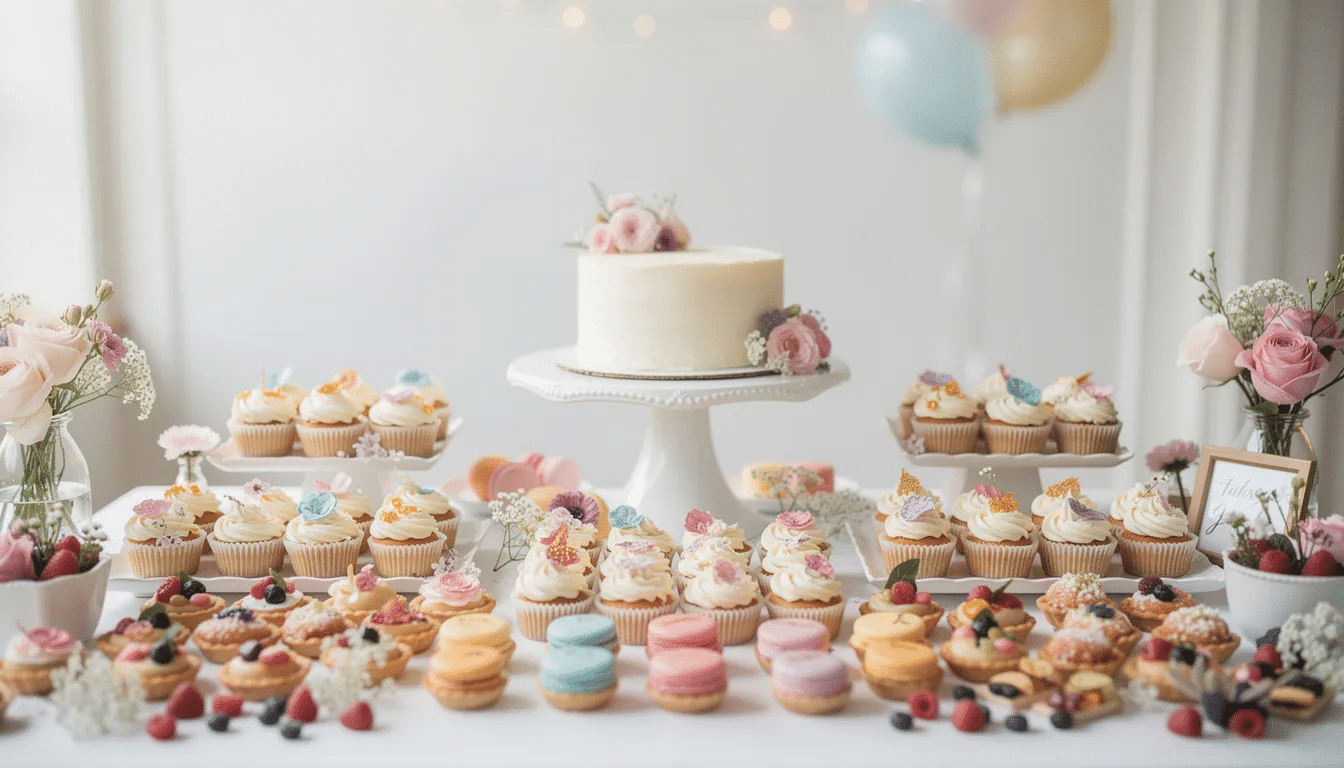
Many events in 2025-2026 feature elaborate dessert tables where cake shares the spotlight with an array of other treats. This trend means you can often downsize your cake while still ensuring everyone leaves satisfied with something sweet.
General Planning Guidelines:
- Cake as main dessert: Plan 1 slice per guest plus 10% buffer for seconds
- Cake as one of many desserts: Plan 0.5–0.75 slices per guest plus 3-4 mini desserts each
- Cake for display/cutting only: A small 6” tier for photos, with cupcakes or other treats for actual serving
Popular mini-dessert pairings include:
- 2-bite brownies or blondies
- 2” decorated sugar cookies
- Mini cupcakes with swirled frosting
- Pastel macarons
- Chocolate-dipped strawberries
- Cake pops or petit fours
For 60 guests with a full dessert table, a 2-tier 6” + 9” cake (40-45 servings) plus 150-200 mini desserts works beautifully. Guests can sample the cake and fill their plates with variety, creating an Instagram-worthy spread without requiring a massive tiered centerpiece.
This approach also accommodates dietary restrictions more gracefully—include some gluten-free cookies, dairy-free chocolates, or nut-free options alongside the traditional cake.
How to Calculate Cake Servings Yourself (Simple Formula)
You don’t need complex baking math to estimate servings for any size pan. A simple formula works for rectangular cakes, and standard charts handle rounds reliably.
Formula for Rectangular Cakes:
Servings = (pan length × pan width) ÷ (slice length × slice width)
Concrete Example:
12×18” half sheet, cut into 2×2” party slices: (12 × 18) ÷ (2 × 2) = 216 ÷ 4 = 54 servings
For round cakes, most home bakers rely on established serving charts rather than calculating from scratch. However, for rough planning, know that a round cake pan yields approximately 80% of the servings of a square pan with the same dimensions. A 9” round serves roughly what a 9” square × 0.8 would—so about 24 servings compared to 30.
When doing your own calculations, always round up to the next serving group. If your math says 47 servings, plan for 50. All the hard work you put into preparation shouldn’t end with disappointed guests who missed out on dessert.
Using a kitchen scale to portion batter ensures each layer holds the same amount, which keeps your serving calculations accurate when the cake is assembled and cut.
Ordering and Timing: When to Decide on Cake Size
Finalizing your cake size typically needs to happen 1-4 weeks before your event, with more complex designs requiring longer lead times. Professional bakers book up quickly during peak wedding season, so prepare your details early.
Timing Guidelines:
- Simple single-tier birthday cakes: Order 1-2 weeks in advance
- Two and three-tier custom designs: 3-4 weeks in advance
- Large wedding cakes (3-4 tiers plus sheet cakes) for 2026 peak season: 2-3 months in advance if possible
- Holiday season orders (November-December): Add 1-2 extra weeks to standard timelines
Guest counts often shift as RSVPs trickle in. Choose a size that can flex up or down by approximately 10 servings through slightly thicker or thinner slices. Most professional bakers know how to adjust cutting patterns to accommodate minor variations.
Information to Prepare Before Ordering:
- Event date and time
- Venue details (indoor/outdoor, temperature concerns)
- Guest count range (example: 80-90 confirmed, could reach 100)
- Whether cake is the sole dessert or part of a dessert table
- Dietary requirements (gluten-free tiers, nut-free, vegan options)
- Flavor preferences (note if you have a specific recipe in mind)
Confirm delivery logistics early. A four-tier cake traveling to an outdoor venue in August requires different handling than a sheet cake going to an air-conditioned office. Many bakers charge delivery fees based on distance and setup complexity.
Practical Examples: Matching Cake Size to Real Events
These real-world scenarios illustrate how to apply everything you’ve learned to actual celebrations.
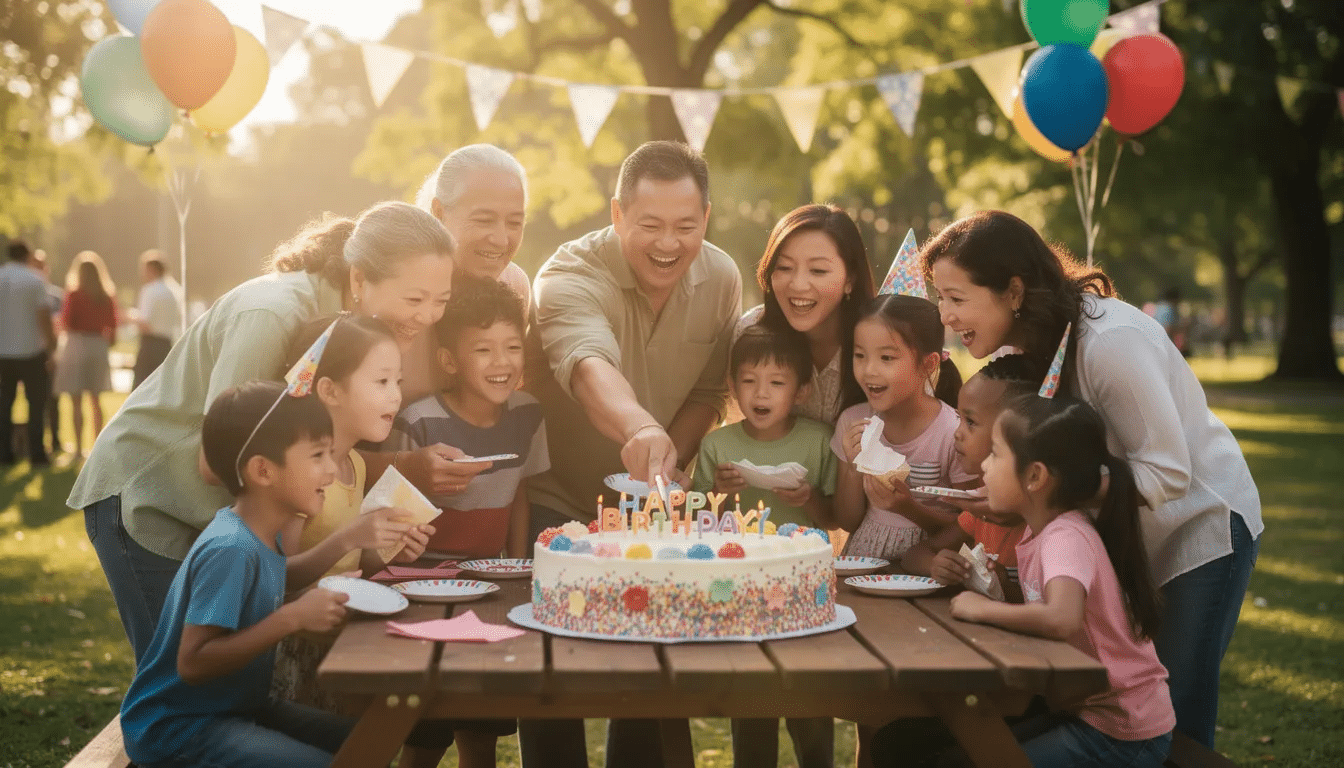
Scenario 1: April 2025 Kids’ Birthday Party 35 children plus 15 adults (50 total), backyard party with cake as the only dessert. Recommendation: Half sheet cake 12×18” (54 servings) or a 10” + 12” two-tier round cake (50-60 servings). The sheet option is easier to transport and cut with kids running around.
Scenario 2: September 2026 Wedding Reception 120 guests, formal dinner before cake, cake is main dessert after dinner. Recommendation: Three-tier 6” + 9” + 12” display cake (90-100 wedding servings) plus one quarter sheet kitchen cake (30 servings). This hybrid approach provides 120+ servings while keeping the display cake elegant rather than overwhelming.
Scenario 3: December 2025 Office Holiday Party 75 employees, desserts table with cookies and brownies alongside cake. Recommendation: Two-tier 6” + 9” cake (40-45 servings) since cake is not the only option. Cover the rest with 100-150 assorted mini desserts. Store any cake leftovers in the fridge overnight or freeze for later.
Scenario 4: July 2026 Backyard Anniversary Celebration 25 guests, casual dinner party, hosts want leftovers to enjoy throughout the week. Recommendation: 10” round single layer cake (30-38 servings) provides generous portions with 5-10 slices remaining. Wrap and freeze extras for coffee treats over the following weeks.
Scenario 5: March 2026 Baby Shower 45 guests, brunch event with cake as the centerpiece, mimosas and light bites served. Recommendation: Two-tier 6” + 9” (40-45 servings) with a bit extra since this is the only substantial dessert. Consider a delicious carrot cake or lemon flavor that pairs well with brunch.
Helpful Tips for Cake Success
After all this planning, here are some final pointers to ensure your cake experience goes smoothly:
- Temperature matters: Let refrigerated cakes sit at room temperature for 30-60 minutes before serving for the best texture and flavor
- Cutting technique: Use a long, thin knife dipped in hot water between cuts for clean slices
- Leftover storage: Cover cut surfaces with plastic wrap pressed directly against the cake, then refrigerate for 3-4 days or freeze for up to 3 months
- Serving order: Cut the bottom tier first on tiered cakes, working your way up
- Backup plan: For large events, substitute a sheet cake for the bottom tier of a display cake—no one will know the difference once slices hit plates
The number of servings you get depends as much on cutting precision as cake size. Consider having one person designated as the cake cutter who follows a consistent pattern rather than letting guests serve themselves in wildly varying portions.
Whether you’re baking a homemade masterpiece or ordering from your favorite local bakery, understanding cake sizes transforms party planning from stressful guesswork into confident decision-making. Bookmark this post, share it with your baker, and never worry about running out of cake again.