

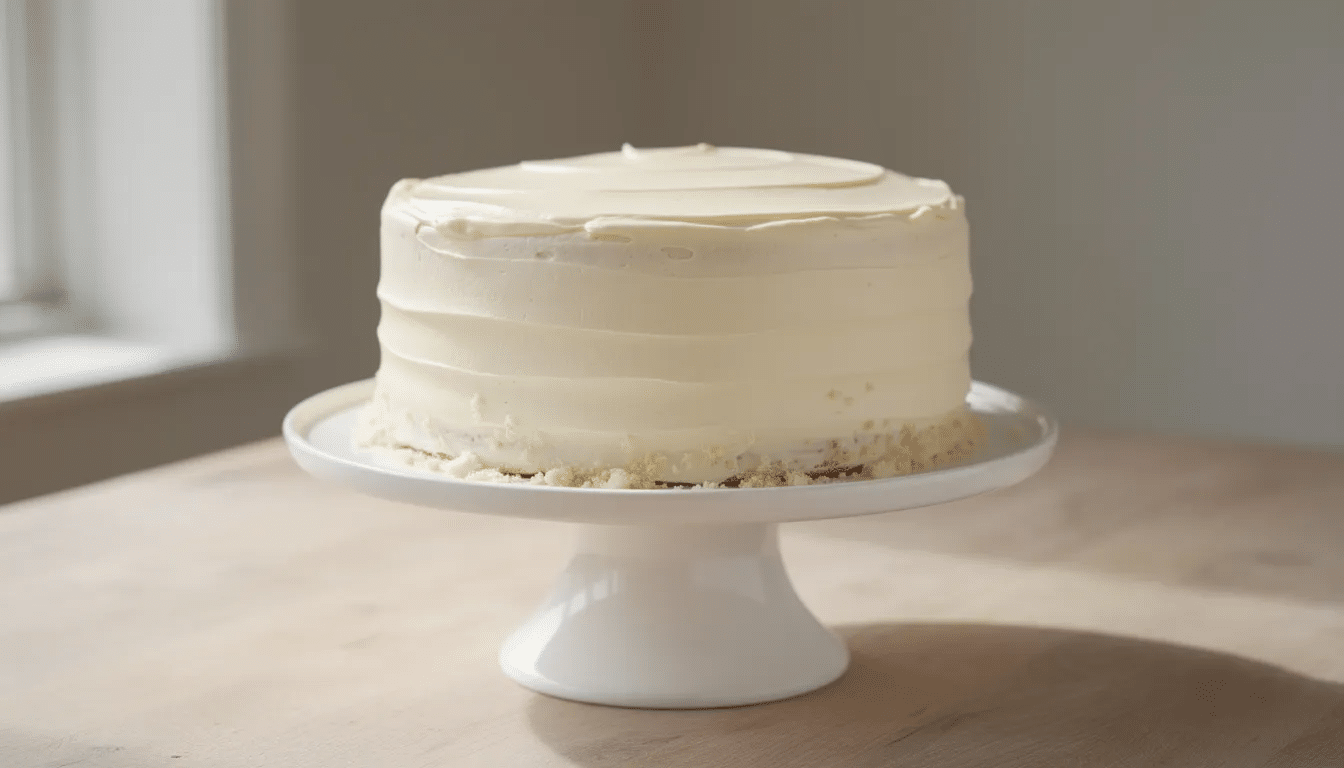
This is a moist vanilla cake recipe developed specifically for home bakers who want bakery-style results without complicated techniques or specialty equipment. The cake stays soft and fresh for 3–4 days at room temperature when stored properly, making it ideal for birthdays, potlucks, and any celebration that requires a bit of advance planning. The texture is soft and plush with a tender crumb that holds together beautifully—never dry, never crumbly. Real vanilla flavor and buttery notes come through clearly, but the sweetness stays balanced rather than overwhelming.
The same batter works for both a classic 2-layer 8-inch round cake and a 9×13-inch sheet cake, with specific bake times given in the instructions. The method combines simple creaming with a warm milk–butter mixture for reliability, even if this is your first layer cake from scratch.
- Why You’ll Love This Cake With Recipe
- Ingredients for the Vanilla Cake
- Essential Equipment and Pan Sizes
- Step-by-Step: How to Make This Vanilla Cake
- Why This Method Keeps the Cake Moist for Days
- Simple Vanilla Buttercream Frosting (Optional)
- Decorating Ideas and Flavor Variations
- Tips for Foolproof Success
- Pan Size Conversions and Baking Times
- Storage, Make-Ahead, and Freezing
Why You’ll Love This Cake With Recipe
This vanilla cake recipe uses only common pantry ingredients you probably already have: all-purpose flour, eggs, sugar, butter, milk, baking powder, salt, and vanilla. The crumb stays tender and moist on Day 1 and remains pleasantly soft by Day 4—tested repeatedly in home kitchens to confirm. It slices cleanly whether you’re building a frosting-heavy birthday cake or keeping things simple with just powdered sugar on top.
The batter is versatile enough to bake as cupcakes (about 18–20 standard cupcakes, baked 18–20 minutes at 350°F / 175°C). And if you forget to bring your eggs or milk to room temperature before starting? There are quick fixes covered in the tips section. This recipe is forgiving because cake baking shouldn’t feel stressful.
Ingredients for the Vanilla Cake
All quantities below make a 2-layer 8-inch (20 cm) round cake baked at 350°F / 175°C. Using a kitchen scale for gram measurements gives the most consistent results, but cup measurements work well too.
Dry Ingredients:
- 2 cups (260 g) all-purpose flour
- 1 ½ teaspoons baking powder
- ½ teaspoon fine salt
Wet Ingredients:
- 1 ¼ cups (250 g) granulated sugar
- ½ cup (115 g) unsalted butter, softened to about 65°F / 18°C
- 3 large eggs at room temperature (about 50 g each without shell)
- 1 tablespoon pure vanilla extract
- ¾ cup (180 ml) whole milk, gently warmed
- 2 tablespoons (30 g) neutral oil (such as canola oil or sunflower oil) for extra moisture
The addition of a tiny bit of oil alongside butter is intentional—it helps the cake stay incredibly soft and moist over several days without becoming greasy. Butter provides flavor; oil provides lasting tenderness.
Optional Flavor Variations:
- ½ teaspoon almond extract added with the vanilla
- Zest of 1 lemon folded into the batter
- Swap 2 tablespoons of flour for cocoa powder for a light marbled effect
Essential Equipment and Pan Sizes
Using the right pan size and preparing it well prevents sinking centers or frustrating sticking. Poor pan prep is one of the most common reasons cakes fail to release cleanly.
Primary Setup:
- 2 x 8-inch (20 cm) round cake pans, at least 2 inches (5 cm) deep
- Parchment paper circles cut to fit pan bottoms
- Softened butter or neutral oil for greasing
Alternative Pan Options:
- One 9×13-inch (23×33 cm) rectangular pan for a single-layer sheet cake
- 2 x 9-inch (23 cm) round pans for thinner cake layers
- About 18–20 standard cupcakes using a 12-cup muffin tin (bake in batches if needed)
A stand mixer fitted with the paddle attachment makes creaming effortless, but an electric mixer works equally well. You can even mix by hand with a sturdy whisk and some extra effort—just expect your arm to get a workout during the creaming stage.
Other Tools You’ll Need:
- 2–3 mixing bowl sizes
- Fine-mesh sieve for sifting (optional but helpful)
- Rubber spatula for scraping
- Wire rack for cooling
- Toothpicks or a cake tester for doneness
- Optional: kitchen scale for accurate measuring
Verify your oven temperature with an oven thermometer if possible. Even a 15–20°F (10°C) difference can significantly affect baking time and results.
Step-by-Step: How to Make This Vanilla Cake
This walkthrough covers everything from preheating to cooling, aimed at consistent results every time. Follow the steps in order, and you’ll have a perfect cake ready for frosting.
Preheat and Prep
Set your oven to 350°F (175°C) at least 15–20 minutes before baking. Ovens need time to reach and stabilize at the target temperature.
Grease your cake pans with softened butter or oil, line the bottoms with parchment paper, then lightly dust the sides with flour. Tap out any excess flour over the sink.
Mix Dry Ingredients
In a medium mixing bowl, whisk together the flour, baking powder, and salt until evenly combined. Set this aside. Sifting isn’t strictly necessary for this recipe, but it helps break up any lumps and ensures even distribution of the leavening.
Cream Butter and Sugar
Check that your butter is soft but not shiny or oily—it should hold a fingerprint when pressed but feel cool to the touch. Overly soft butter won’t cream properly.
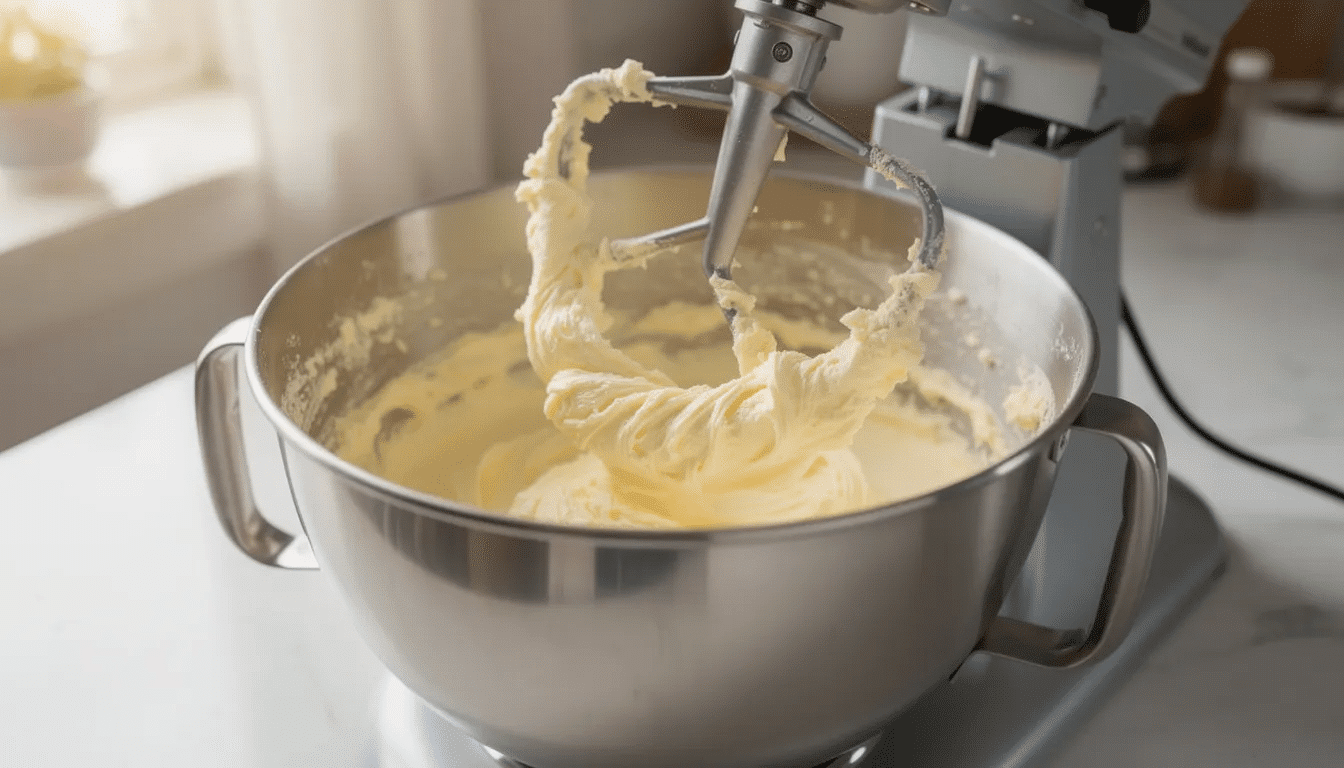
In a large bowl or the bowl of a stand mixer fitted with the paddle attachment, beat the butter and sugar on medium speed for 3–4 minutes until pale and fluffy. Scrape down the sides of the bowl once or twice during this process. Proper creaming can increase batter volume by up to 50%, creating that fluffy texture everyone loves.
Add Eggs and Vanilla
Add the eggs one at a time, mixing on low speed just until combined after each addition. Adding eggs too quickly can cause the batter to break or curdle.
Add the vanilla extract and beat briefly until incorporated. Avoid overbeating at this stage—you want the eggs blended, not whipped.
Combine Dry Ingredients with Liquids
This step uses the alternating method to ensure a smooth, even cake batter:
- Add one-third of the dry mixture to the bowl. Mix on low speed until just blended.
- Add half of the warm milk plus all of the canola oil. Mix until combined.
- Add another third of the dry mixture. Mix briefly.
- Add the remaining milk. Mix until combined.
- Add the last third of the dry ingredients. Mix minimally—just until no streaks of flour remain.
Overmixing at this stage develops excess gluten, which can make your cake tough rather than tender.
Final Batter Check
Scrape the bowl thoroughly with a rubber spatula, folding gently from the bottom to ensure no flour pockets remain hidden. The ideal batter should be smooth, pourable but thick, forming soft ribbons when lifted with a spatula.
Bake
Divide the batter evenly between your prepared pans. An offset spatula or the back of a spoon helps smooth the tops.
Baking Times at 350°F / 175°C:
Pan Size | Approximate Time |
|---|---|
2 x 8-inch rounds | 25–30 minutes |
2 x 9-inch rounds | 22–26 minutes |
9×13-inch pan | 28–32 minutes |
Standard cupcakes (18–20) | 18–20 minutes |
Doneness Cues: |
- Edges turn golden and pull slightly away from the pan
- Centers spring back when lightly touched
- A toothpick inserted in the center comes out with a few moist crumbs but no wet batter
Don’t over bake—this is the single biggest cause of dry cake. Check at the earlier time and add minutes as needed.
Cool
Let the cakes cool in their pans for 10–15 minutes. This allows them to set enough to handle without breaking.
Turn the cakes out onto a wire rack and peel off the parchment paper. Allow them to cool completely—about 1–2 hours—before frosting. Frosting a slightly warm cake causes buttercream to melt and slide, creating a mess rather than a masterpiece.
Why This Method Keeps the Cake Moist for Days
The combination of butter for flavor and oil for tenderness is what sets this recipe apart from traditional cake recipes that rely on butter alone. Oil remains liquid at room temperature, which means the crumb stays soft even after refrigeration, while butter contributes that delicious richness you expect from a special cake.
Using whole milk rather than skim adds both fat and protein, contributing to a tender crumb and longer shelf life. The milk’s natural sugars also participate in browning during baking, giving you those golden edges.
Moderate creaming—enough to incorporate air without creating huge, fragile bubbles—ensures the cake rises evenly and maintains its structure over time. Overbeaten batter can collapse in the oven, leaving you with a dense, dry result.
Baking just until done prevents excess moisture loss. Don’t rely only on color; use the toothpick inserted test and a gentle finger press to confirm doneness.
Storage Guidelines:
- Store cooled cake well-wrapped at room temperature (around 68–72°F / 20–22°C), away from direct sunlight
- Maintains moisture for up to 4 days when properly wrapped
- Refrigerate only if frosting is perishable (cream cheese or whipped cream)
- Refrigeration can dry cake slightly unless it’s well-wrapped and heavily frosted
Simple Vanilla Buttercream Frosting (Optional)
This straightforward American-style buttercream is designed to pair perfectly with the vanilla cake, providing just enough sweetness without being overly sweet. The recipe makes enough to fill and generously frost a 2-layer 8-inch cake.
Ingredients:
- 1 cup (230 g) unsalted butter, softened
- 3–3 ½ cups (360–420 g) powdered sugar, sifted
- 2–3 tablespoons (30–45 ml) whole milk or heavy cream
- 1 ½ teaspoons pure vanilla extract
- Pinch of fine salt to balance sweetness
Instructions:
- Beat softened butter on medium speed for 2–3 minutes until light and creamy using a stand mixer fitted with the whisk attachment or paddle attachment.
- Add powdered sugar in 2–3 additions on low speed to avoid a sugar cloud coating your kitchen.
- Add vanilla extract, salt, and 2 tablespoons milk or cream.
- Beat on medium-high for 2–3 minutes until fluffy and smooth.
- Add more liquid by the teaspoon if needed for a spreadable consistency. The frosting should hold its shape but spread easily.
Adjusting Sweetness: If the frosting tastes too sweet, try adding another tiny pinch of salt rather than reducing the sugar—salt cuts perceived sweetness without affecting texture. You can also add an extra splash of vanilla beans paste for deeper flavor.
Buttercream frosting can be made 1–2 days ahead and stored covered in the refrigerator. Bring it back to room temperature and re-whip before using.
Decorating Ideas and Flavor Variations
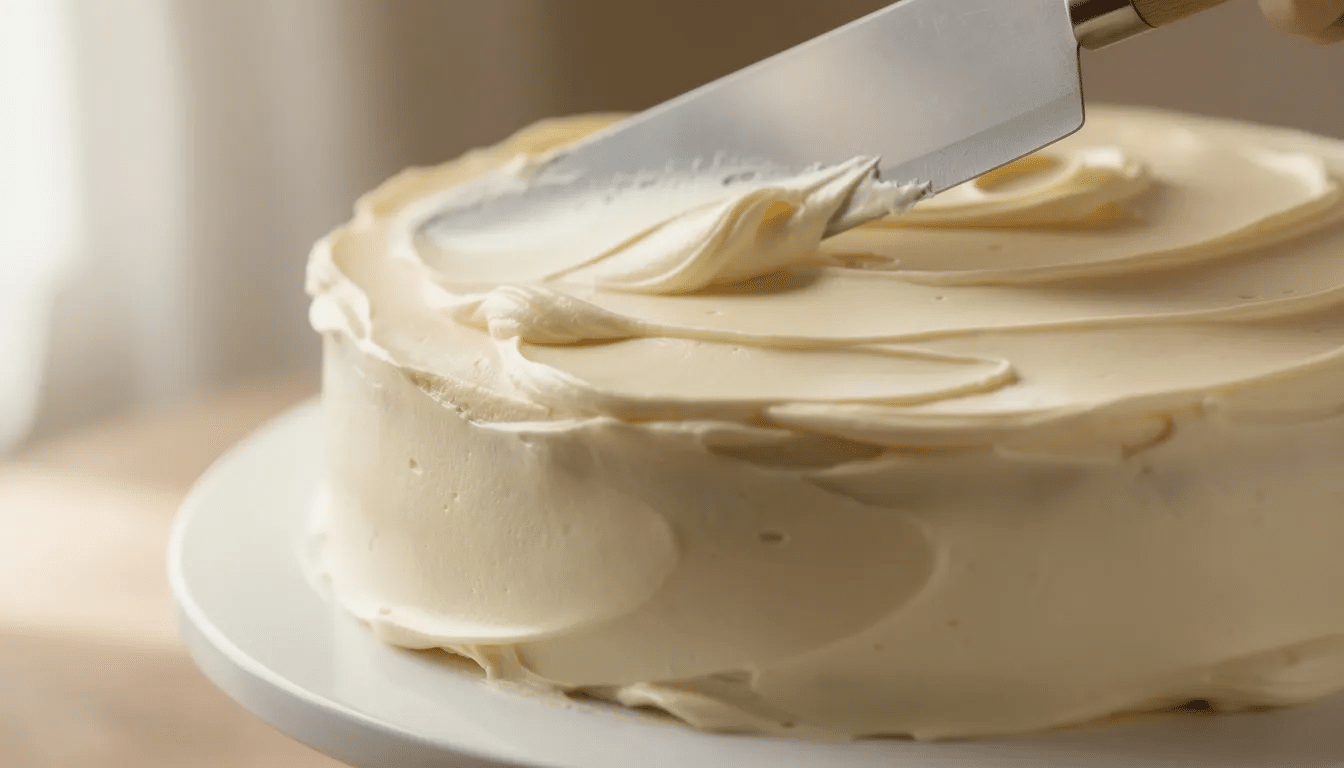
Decorating cakes doesn’t require professional training or specialty tools. A smooth layer of your favorite frosting and a handful of sprinkles create a perfectly beautiful birthday cake. Sometimes the simplest approach is the most elegant.
Decoration Styles:
Style | Description |
|---|---|
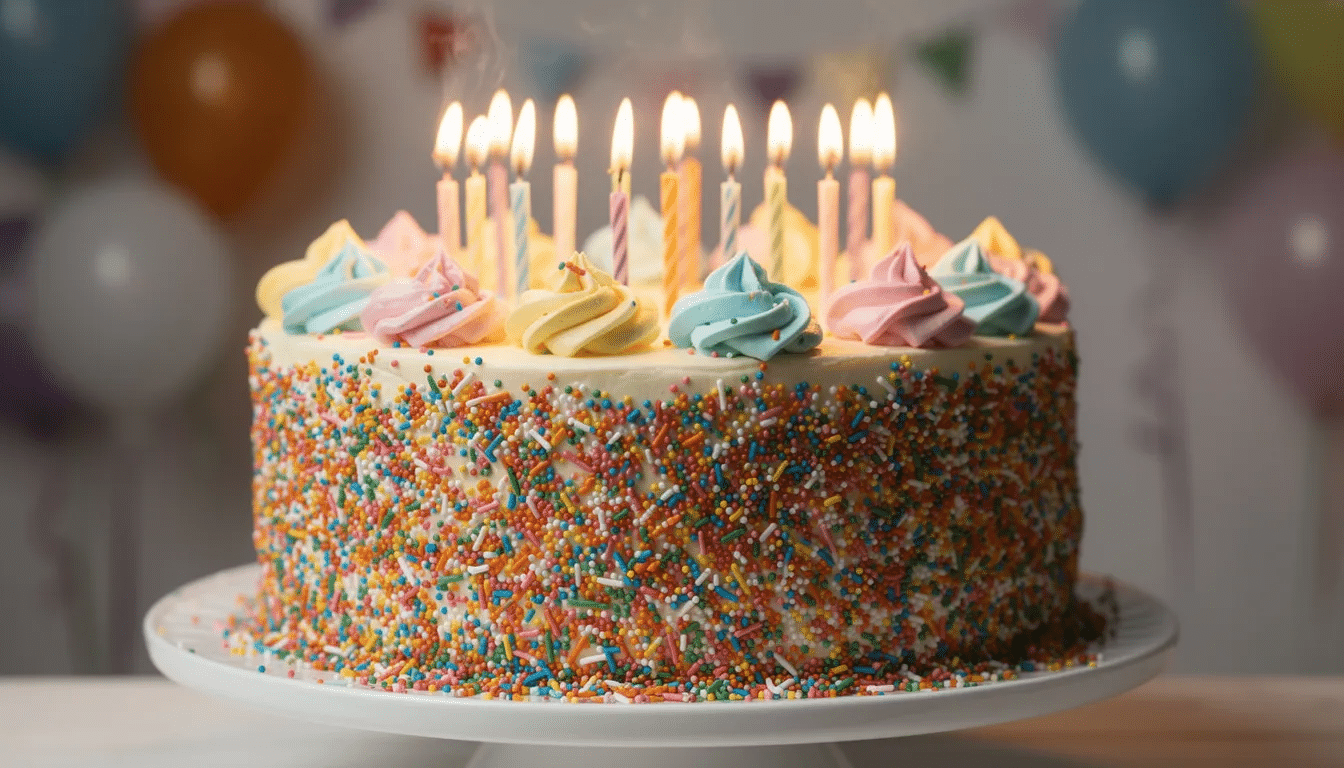
Classic Birthday | Vanilla buttercream, rainbow sprinkles, simple piped borders |
Minimalist/Semi-Naked | Thin layer of frosting exposing cake layers, fresh berries on top |
Powdered Sugar Finish | Unfrosted layers dusted generously with powdered sugar before serving |
Chocolate Drip | White or chocolate frosting with chocolate ganache drips down the sides |
Flavor Variations Using the Same Base Recipe: |
Lemon Cake: Add finely grated zest of 1–2 lemons to the batter and 1 teaspoon lemon zest to the frosting. Optionally replace 2 tablespoons of milk in the batter with fresh lemon juice.
Almond Cake: Replace ½ teaspoon of vanilla with ½ teaspoon almond extract. Top with toasted sliced almonds pressed into the sides of the frosted cake.
Berry-Filled Cake: Spread a thin layer of raspberry or strawberry jam between cake layers beneath the buttercream frosting. The tartness balances the sweet frosting beautifully.
Chocolate Marble: Divide finished batter in half. Fold 3 tablespoons cocoa powder into one half. Alternate spoonfuls in the pan and swirl with a knife.
Match your decorations to the occasion: bright colors and candles for birthdays, simple cocoa dusting and berries for more formal dinners, sprinkles and candy for kids’ parties, and consider creative birthday decorations with balloons at home to tie everything together.
Tips for Foolproof Success
These tips address the most common cake issues: sinking centers, dense texture, and dry crumb. Following them dramatically improves your chances of success, especially if you’re still building confidence with baked goods.
Room Temperature Ingredients
Eggs, milk, and butter at room temperature (about 65–70°F / 18–21°C) blend more easily, creating a smooth batter and even rise. Cold eggs can cause butter to seize up, leaving lumps. If you forgot to set ingredients out, place eggs in warm water for 5 minutes and microwave butter in 5-second bursts until just softened (not melted).
Measuring Flour Correctly
Spoon flour into your measuring cup and level it off with a straight edge. Scooping directly from the bag compacts the flour, adding up to 30% more than intended—a guaranteed path to dense, dry cake. Better yet, use gram measurements with a kitchen scale for perfect accuracy.
Using cake flour instead of all-purpose creates an even more tender crumb, though all-purpose works perfectly well for this recipe.
Fresh Leaveners
Baking powder loses potency over time. Check that yours is within date and stored in a sealed container. Test older baking powder by adding ½ teaspoon to ¼ cup hot water—it should bubble vigorously. Replace baking powder every 6–12 months for reliable lift. The same applies to baking soda if you’re adapting other recipes.
Mixing Guidelines
Once flour enters the bowl, mix only until combined. Overmixing develops gluten—great for bread, terrible for cakes. A tough, chewy texture is almost always caused by overmixing at the final stage.
Oven Habits
Avoid opening the oven door for the first 20 minutes of baking. Sudden temperature drops cause cakes to sink in the center. If you need to check doneness, wait until at least three-quarters of the minimum bake time has passed.
Cooling and Slicing
Wait until cakes are fully cool before slicing or frosting. Warm cake crumbles easily and melts frosting on contact. Slightly chilled cake layers (15–20 minutes in the refrigerator) are easier to level and fill without crumbling.
Pan Size Conversions and Baking Times
The base recipe adapts to several common pan sizes as long as you don’t fill pans more than ⅔ full. Overfilled pans cause batter to overflow or form domed tops that crack.
Baking Times at 350°F / 175°C:
Pan Size | Fill Level | Bake Time |
|---|---|---|
2 x 8-inch (20 cm) round pans | ⅔ full | 25–30 minutes |
2 x 9-inch (23 cm) round pans | ½ full | 22–26 minutes |
1 x 9×13-inch (23×33 cm) pan | ⅔ full | 28–32 minutes |
Standard cupcakes (18–20) | ⅔ full | 18–20 minutes |
Bundt pan (10–12 cup) | ⅔ full | 45–55 minutes |
Important Notes: |
- Darker metal pans absorb more heat and may bake slightly faster—begin checking a few minutes early
- The toothpick inserted test and gentle finger press are more reliable than time alone, since ovens vary significantly
- Glass or ceramic pans often require a lower temperature (325°F / 163°C) and longer bake time
- For a bundt pan, grease thoroughly with softened butter and dust with flour to ensure clean release
Doubling the recipe works for tall three layers cakes, but bake pans on the center rack with enough air circulation around each. Crowded ovens bake unevenly. This base also adapts well to themed creations like a Halloween pumpkin piñata party cake when you’re ready to experiment.
Storage, Make-Ahead, and Freezing
This best vanilla cake is designed to be made ahead, making it practical for celebrations that require advance prep, especially when you’re also planning eye-catching balloon arches and garlands for parties. No more last-minute baking stress.
Room Temperature Storage
Unfrosted cake layers can be wrapped tightly in plastic wrap and kept at room temperature for up to 2 days. They’ll stay moist and ready for decorating when you have time.
Frosted cake with buttercream frosting can be kept under a cake dome at room temperature for 2–3 days. The frosting actually helps seal in moisture, keeping the crumb soft.
Refrigeration
Cakes with cream cheese frosting, fresh fruit fillings, whipped cream, or chocolate frosting made with dairy must be refrigerated. Cover loosely with plastic wrap or store in an airtight container.
Bring refrigerated cake to room temperature for 30–60 minutes before serving. Cold cake has a firmer, less pleasant texture, and the flavors taste muted.
Freezing Instructions
For longer storage, freezing works beautifully:
- Cool cake layers completely
- Wrap each layer tightly in plastic wrap
- Add a layer of aluminum foil for extra protection
- Freeze for up to 2 months
Thaw frozen layers in their wrapping at room temperature for 2–3 hours before unwrapping and frosting. Removing the wrapping too early allows condensation to form directly on the cake surface.
Even after freezing and thawing, the cake retains its super moist crumb and delicious vanilla flavor when wrapped properly. Many bakers actually prefer making layers ahead and freezing them—the texture sometimes improves as moisture redistributes.
This vanilla cake recipe delivers exactly what you need: a soft, incredibly soft crumb that stays fresh for days and tastes like it came from a professional bakery. Whether you’re making a simple white cake for a weeknight dessert, an elaborate birthday cake with all the trimmings, or cupcakes for a school event, this is the best cake foundation you’ll find.
Once you’ve mastered this base, you’ll have a reliable starting point for dozens of celebrations and other recipes to come. The same techniques apply whether you’re adapting it into a pound cake recipe, experimenting with a box mix upgrade, or creating the most popular recipes your family requests year after year.
Try it for your next special occasions—and don’t be surprised when everyone asks for the recipe.