Kindergarten marks a transformative year when young children build the foundations for reading, math, and lifelong curiosity. At ages 4 to 6, kids learn best through hands-on experiences, movement, and playful learning that engages multiple senses at once. A well-rounded list of kindergarten activities ensures that every child gets opportunities to explore literacy, numbers, science, creativity, and social connections throughout their day.
This guide is designed for both teachers planning classroom rotations and parents looking for meaningful ways to support learning at home during the 2024–2025 school year. Whether you’re setting up centers, leading morning meetings, or filling weekend afternoons, you’ll find concrete ideas you can use right away.
Here’s what we’ll cover:
- Daily routine and circle time activities that build predictability and focus
- Morning meeting games and icebreakers for the first weeks of school and beyond
- Literacy activities targeting phonemic awareness and letter recognition
- Math and number sense games for counting, patterns, and shapes
- Science explorations that spark curiosity about the natural world
- Creative arts projects that strengthen fine motor skills
- Gross motor and movement games for active breaks
- Social-emotional learning activities that build empathy and self-regulation
- Home-school connection ideas families can try after school
- A sample weekly schedule to help you plan balanced instruction
- Daily Routine & Circle Time Activities
- Morning Meeting Games & Icebreakers
- Literacy Activities for Kindergarten
- Math & Number Sense Activities
- Science & Exploration Activities
- Creative Arts & Fine Motor Activities
- Gross Motor & Movement Games
- Social-Emotional Learning & Character-Building Activities
- Home–School Connection Activities
- Planning a Weekly Kindergarten Activity Schedule
- Conclusion & Next Steps
Daily Routine & Circle Time Activities
A typical kindergarten morning often begins around 8:30 a.m. with circle time, when students gather on the carpet for about 15 to 30 minutes of whole-group activities. This daily routine serves as an anchor for kindergarten students, helping them transition from home to school and preparing their minds for learning. Predictable routines calm anxious children, build body awareness, and establish classroom expectations that carry through the rest of the day.
Circle time activities should blend movement, conversation, and skill-building. Start with a greeting song that includes each child’s name, giving every student a moment to feel seen and welcomed. Follow this with a “Question of the Day” chart where kids place a sticky dot under their answer (for example, “Do you like apples or oranges better?”). This simple voting activity introduces graphing concepts and sparks discussion. Next, move to the calendar and weather check, using a physical calendar chart, days-of-the-week cards, and a weather wheel to teach sequence and time concepts. Ask students to count the days, identify the correct letter that starts today’s name, and predict what weather they’ll see outside.
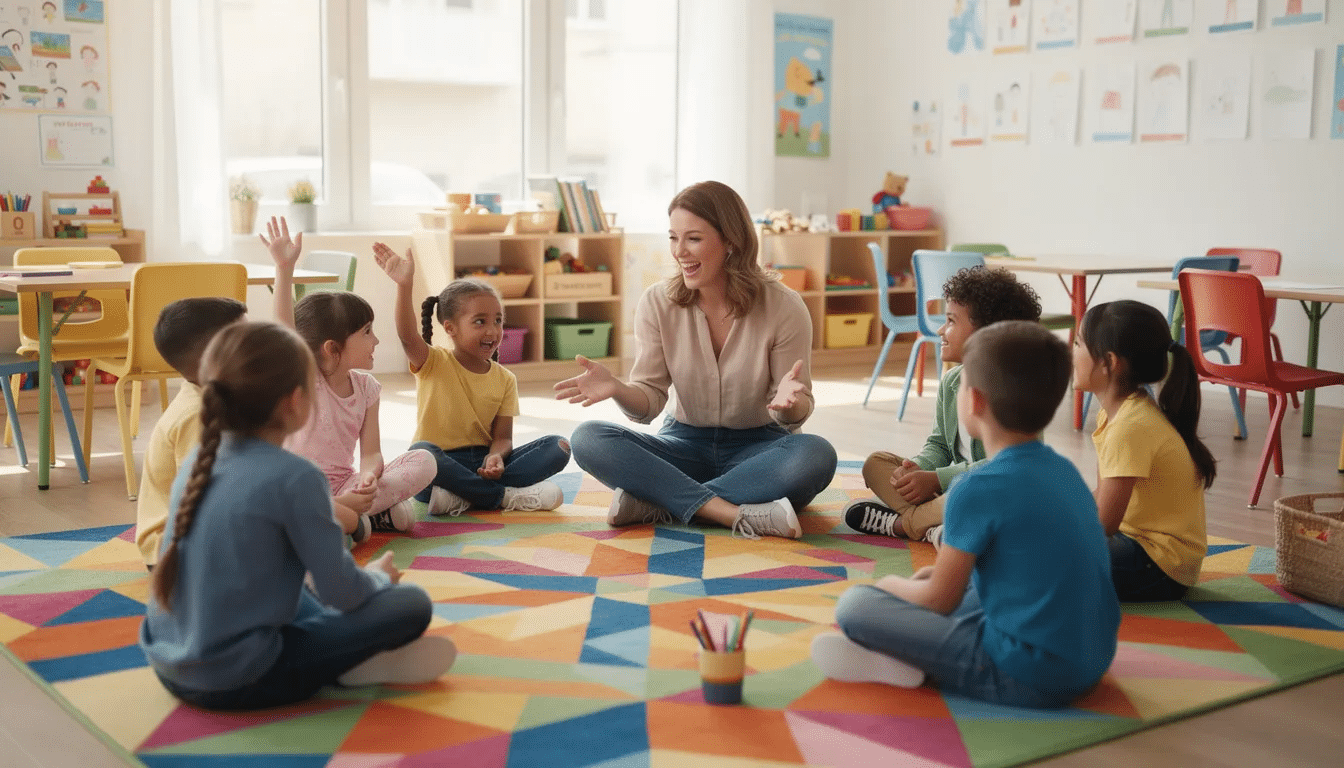
Three concrete circle time games work especially well for whole-class engagement:
- Mystery Missing Object: Place 5 to 8 different objects on a tray, have students close their eyes, remove one item, and challenge them to identify what’s missing. This memory game sharpens observation and recall.
- Would You Rather: Pose silly questions (“Would you rather be a dinosaur or a dragon?”) and have children move to different sides of the carpet based on their answer. Kids love this because it gets them moving and talking.
- Emotion Charades: One child stands in front of the group and acts out an emotion (happy, frustrated, excited) while classmates guess. This builds vocabulary for feelings and supports social-emotional growth.
Materials for these activities include picture cards, bean bags for passing during songs, small objects for the mystery game, and emotion posters displayed at child eye level for reference.
Morning Meeting Games & Icebreakers
Morning meeting games are essential during the first six weeks of kindergarten when children are learning names, building friendships, and establishing classroom norms. These same games remain valuable all year for energizing sleepy mornings and reinforcing social skills like turn-taking, listening, and including everyone.
Simon Says remains a classic game that builds listening comprehension and body awareness. One student or the teacher gives commands (“Simon says touch your nose”), and players must follow only when the phrase “Simon says” comes first. This great game takes about 5 minutes and requires no materials at all.
Four Corners works well in larger spaces. Label four corners of the room with pictures (animals, colors, or numbers), play music, and when the music stops, children freeze in their chosen corner. Call out one corner, and those students sit down. This fun game practices following directions and builds anticipation.
Silent Ball is such a fun game for building self-regulation. Students stand in a circle and toss a soft foam ball to each other without speaking. Anyone who talks, drops the ball, or makes a bad throw sits down. The last person standing wins. This game typically runs 5 to 10 minutes and teaches impulse control.
Where the Wind Blows invites children to change seats based on shared characteristics. The leader says, “The wind blows for everyone wearing blue,” and those children must find a new spot on the carpet. This helps kids notice similarities with classmates and is a fantastic way to build community.
Beach Ball Questions uses a beach ball with questions written on each colored section. The first child catches the ball, reads (or has the teacher read) the question under their thumb, answers aloud, and tosses to the next child. Questions might include “What’s your favorite food?” or “Do you have a pet?”
Welcome Song incorporates music and names. Sing a simple tune that inserts each student’s name (“Good morning, good morning, good morning to Maya!”) while clapping or waving. This ensures every kindergarten kid hears their name spoken kindly at least once each morning. Teachers find this helps shy children feel included and gives young learners a predictable, comforting start to their day.
Literacy Activities for Kindergarten
Phonemic awareness and letter recognition form the backbone of early reading success. By the end of kindergarten, most children should recognize all the letters of the alphabet, connect letters to their sounds, and begin blending sounds into simple words. The activities below target these skills through hands-on learning and whole-group engagement.
ABC Sensory Bin fills a plastic container with rice or sand and buries magnetic letters inside. Students find letters, name them, and match them to an alphabet chart. This tactile experience builds letter recognition while strengthening hand muscles. For added challenge, have children name a word that starts with each letter they find. Alphabet Mystery Bag takes a similar approach: place small objects (ball, car, feather, key) in a brown paper bag and have one child pull out an item, identify its first letter, and match it to the correct letter card. These activities support phonemic awareness by connecting sounds to symbols.
Letter Hop on Floor Cards tapes laminated letter cards to the floor in a path. Call out a letter or sound, and students hop to it. When a child adds a jumping motion to letter practice, learning becomes so much fun, and kinesthetic learners thrive. Name That Sound with Instruments uses rhythm sticks, triangles, or tambourines. Say a word, and students tap out each sound they hear. This isolates phonemes and prepares children for decoding.
For storytelling and vocabulary, Story Builders Circle passes a small stuffed animal around the circle. Each child adds one sentence to a collaborative story, building narrative skills and oral language. Pocket Poem of the Day displays a short poem in a pocket chart; students practice reading it together, then students find sight words or rhyming pairs within the text. Book Character Guess Who describes a character from a read-aloud, and children guess who it is, reinforcing comprehension and memory.
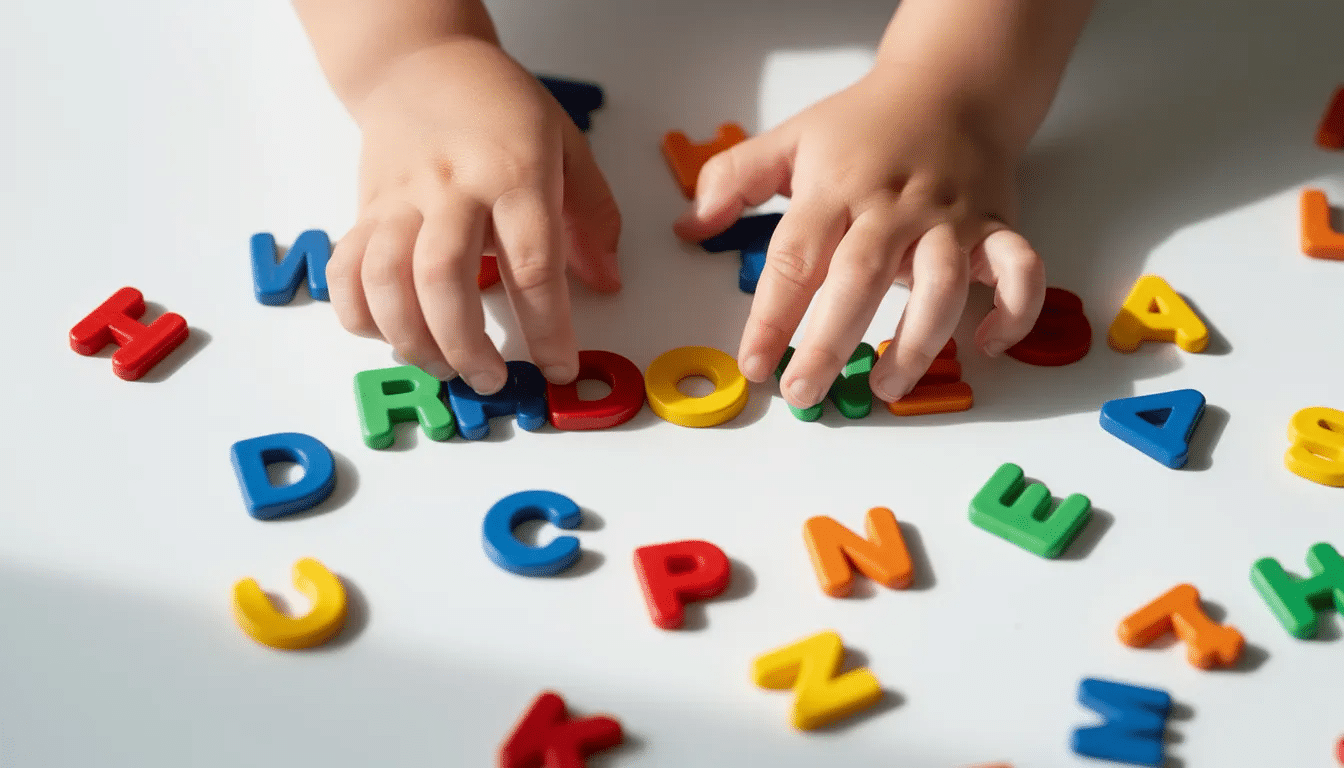
Independent literacy centers might include a quiet reading corner with pillows and baskets of picture books, a listening station with headphones and audiobooks, and a writing center where students draw and label pictures. Whole-group literacy games for circle time, like singing the alphabet song while pointing to letters on a chart or playing “I Spy” with beginning sounds, round out a balanced literacy block.
Math & Number Sense Activities
Kindergarten math goals center on counting to at least 20, recognizing numerals to 10 or 20, understanding simple addition and subtraction, and identifying patterns and shapes. The activities below make these skills concrete through manipulatives, movement, and playful practice.
Number Line Hopscotch uses painter’s tape on the floor to create a number line from 0 to 20. Call out a random number, and students hop to the corresponding number. This physical activity reinforces number recognition and one-to-one correspondence. Counting Caterpillars Craft has children glue circles of construction paper in a line, writing a different numeral on each segment. As they assemble the caterpillar, they practice sequencing and number formation, much like a focused number 9 craft activity for preschoolers can reinforce numeral recognition.
Pattern Bracelets with Beads challenges students to create repeating patterns (red-blue-red-blue or circle-square-circle-square) on pipe cleaners or string. Pattern recognition is foundational for algebraic thinking, and children enjoy wearing their finished creations. Roll & Count with Foam Dice pairs dice rolling with block stacking: roll a number, stack that many blocks, and compare towers with a partner to explore more and less.
Shape Hunt Around the Room sends students on a scavenger hunt for different shapes in the classroom. Circles might be clocks, squares might be windows, and triangles might be yield signs in a picture. Children record their findings by drawing what they find, connecting shape vocabulary to real-world objects.
Ten-Frame Bingo uses egg cartons cut to show ten spaces. Call out a number, and students practice filling the frame with counters to match. This activity builds subitizing, the ability to instantly recognize small quantities, which research shows outperforms abstract counting by 25% in retention. Counting Jar Estimation fills a clear jar with small items (buttons, beans, or pom-poms) and asks children to guess how many before counting together. This introduces estimation and comparison.
Bean Bag Toss Counting sets up buckets labeled with numerals. Children toss bean bags, then count how many landed in each bucket and compare totals. Students learn to record their results using tally marks, connecting physical activity to data collection. Compare and Count Jars places two jars side by side with different quantities, and students practice using vocabulary like “more,” “fewer,” and “equal.”
Most of these activities work well as 10- to 15-minute math centers, with 4 to 6 students rotating through each station. Whole-class games like counting by tens together or playing “What Comes Next?” with number cards fit nicely into morning meeting or transitions. Through these experiences, kindergarten kids develop the math concepts they’ll build on for years to come.
Science & Exploration Activities
Everyday materials become powerful teaching tools when kindergarteners learn to predict, observe, and record their discoveries. Inquiry-based science activities help children develop basic science concepts about the physical world while building vocabulary and critical thinking.
Sink or Float Investigation fills a basin with water and gathers household items like corks, keys, plastic toys, and wooden blocks. Before testing each item, students predict whether it will sink or float and explain their reasoning. After observing, they record results on a simple chart with two columns. This activity introduces density and buoyancy in child-friendly language and encourages children to revise their thinking based on evidence.
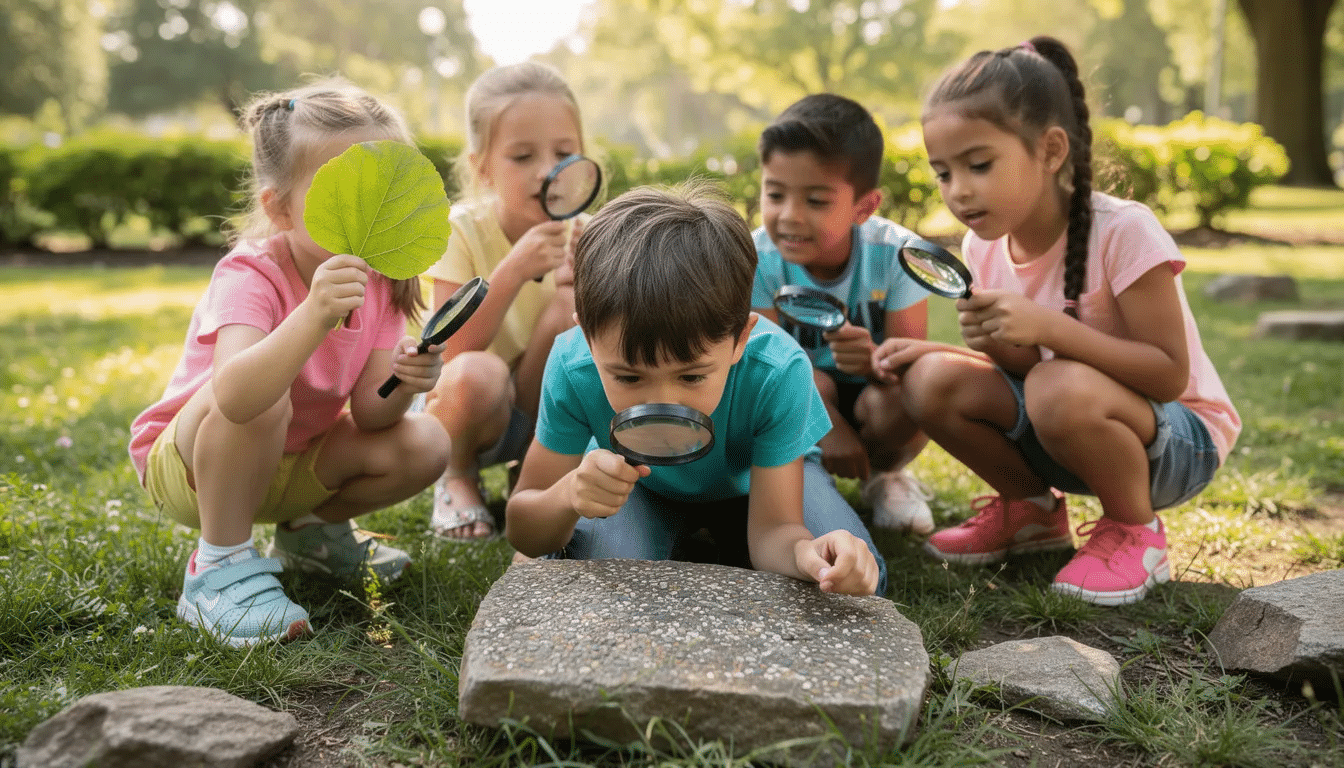
Nature Walk with Collection Bags takes students outside with paper bags to collect leaves, sticks, rocks, and seed pods. Back in the classroom, children sort their findings by color, texture, or size, then create nature collages or try creative nature stick crafts. This exploration connects biology to art and builds observation skills as children notice details they might otherwise overlook.
Make a Weather Chart for One Week tracks daily weather conditions. Each morning, students observe the sky, record whether it’s sunny, cloudy, rainy, or snowy, and discuss patterns at the end of the week. Older children can add temperature readings from a large classroom thermometer.
Magnifying Glass Exploration Station sets up a table with magnifying glasses and a rotating collection of objects—pinecones, feathers, fabric scraps, or leaves. Students draw what they observe up close, practicing careful observation and developing spatial awareness.
Build a Boat from Foil and Test Pennies challenges children to construct a small boat from aluminum foil, then see how many pennies it can hold before sinking. This introduces engineering principles like stability and load-bearing capacity. Children often redesign their boats after the first test, demonstrating problem solving skills in action.
Mix Cornstarch and Water to Make Oobleck creates a non-Newtonian fluid that acts like both a solid and a liquid. Children squeeze it, roll it, and watch it ooze between their fingers, sparking conversation about states of matter.
Grow a Bean in a Clear Cup lets each child plant a bean seed against the side of a clear plastic cup filled with damp paper towels. Over two weeks, students observe and draw the stages of growth, labeling roots, stem, and leaves. Write each child’s name and the planting date on the cup for a personalized science experiment that builds patience and wonder.
Creative Arts & Fine Motor Activities
Art, music, and crafts do far more than fill time—they build finger strength, hand-eye coordination, and self-expression. For kindergarten students, arts and crafts activities support child development, strengthening the same muscles needed for handwriting and providing outlets for processing emotions and ideas.
Playdough Letters and Numbers invites children to roll, pinch, and shape playdough into alphabet letters or numerals. Research shows regular playdough use improves pencil grip by 80 to 90 percent, making this a powerful fine motor workout disguised as play. Students practice forming curves, loops, and straight lines while building letter recognition. Similarly, Pipe Cleaner Sculptures and other art activities that build fine motor skills challenge children to twist and bend wire into shapes, animals, or abstract designs, developing bilateral coordination and creativity.
Cut-and-Paste Shape Collages provide precut paper shapes (circles, triangles, squares, rectangles) in various colors. Children arrange and glue shapes onto paper to create pictures—houses, flowers, or imaginary creatures. DIY craft kits for kids can offer similar structured yet creative projects at home. This activity reinforces shape vocabulary while practicing scissor skills. For children still developing cutting strength, provide thick-lined templates on construction paper for guided cutting practice.
Finger Painting with Primary Colors introduces color mixing in a sensory-rich experience. Lay out red, yellow, and blue washable paints and let children discover that red and yellow make orange, blue and yellow make green. A Class Mural about the Seasons takes this further: tape large chart paper to a wall and invite groups of children to paint scenes from fall, winter, spring, or summer throughout the week.
Make a Card for a Classmate ties art to social-emotional learning. Children fold paper, draw pictures, and dictate or write messages for a peer. This activity works beautifully before holidays or as a kindness project. Illustrate a Favorite Nursery Rhyme connects art to literacy: read “Twinkle, Twinkle, Little Star” or “Hey Diddle Diddle,” then have students draw their favorite scene and share with the class.
Organize materials in labeled art bins (the best art supplies for young artists like crayons, markers, glue sticks, child-safe scissors, washable paints) so children can access supplies independently during center time. Seasonal projects—autumn leaf collages in October, gratitude cards in November, weather paintings in March—keep art connected to classroom themes and the calendar.
Gross Motor & Movement Games
Kindergarteners need frequent movement breaks to stay focused and regulated. Active play every 20 to 30 minutes supports attention, reduces restlessness, and builds gross motor skills essential for coordination and physical health.
Hokey Pokey remains a favorite because it combines music, body awareness, and following directions. Children shake specific body parts (“Put your right hand in, put your right hand out”) while singing along. This classic game teaches left-right discrimination and builds human body vocabulary.
Freeze Dance plays upbeat music while children dance freely around the room. When the music stops, everyone freezes in place. Anyone who moves sits out until the next round. This activity builds listening skills and impulse control. Variations include freezing in specific shapes or poses.
Obstacle Course with Cones and Tunnels transforms the classroom or gym into an adventure. Set up stations for jumping over pool noodles, crawling through tunnels, balancing on a taped line, and hopping between hula hoops. An obstacle course engages large muscle groups and gives children a chance to practice sequencing as they move from one station to the next.
Animal Walk Relay divides children into teams. Each child walks across the room imitating an animal (bear walk on all fours, frog jump, crab walk sideways) before tagging the next student in line. This relay builds coordination while sneaking in vocabulary about animal movement.
Number Line Dance tapes a number line on the floor. Call out simple addition or subtraction problems, and children hop forward or backward along the line to find the answer. This combines gross motor movement with math practice, helping students learn through physical engagement.
Shape Yoga Poses displays pictures of yoga poses that form different shapes (triangle pose, star shape, circle). Children hold each pose while discussing the shape’s attributes. This builds flexibility, balance, and body letters awareness.
Duck, Duck, Goose and Musical Chairs (Cooperative Version) remain staples for group play. In cooperative musical chairs, remove chairs but children share seats instead of being eliminated—everyone squeezes onto fewer and fewer chairs together, building teamwork and laughter.
Safety considerations include clearing floor space of furniture, using soft materials for obstacles, and supervising closely during active games. For children with different ability levels, offer modifications like shorter distances or partner support.
Social-Emotional Learning & Character-Building Activities
Kindergarten activities can intentionally build empathy, self-regulation, and a sense of classroom community. When children feel safe and connected, they’re better able to focus on academic learning throughout the day.
Daily Affirmation Circle begins each morning with positive statements. The first child says something kind about themselves (“I am a good friend”) or about the class (“We are kind to each other”). This practice builds confidence and sets a positive tone. Kindness Chain or Paper Link Garland visually tracks acts of kindness: each time a child notices a classmate being helpful or inclusive, they add a paper link to the chain. By month’s end, the chain stretches across the room.
Gratitude Journal with Weekly Entries gives each child a simple composition notebook. Every Friday, students draw or write one thing they’re grateful for. Over time, children can flip back through their journals and see patterns in what brings them joy.
Emotion Charades works in small groups: one child stands and acts out an emotion while others guess. This builds vocabulary for feelings and helps children recognize emotions in others. Role-Play Empathy Scenes presents short scenarios (“A friend dropped their snack on the floor. How would they feel? What could you do?”) and invites children to act out kind responses.
Breathing Star Exercise teaches self-regulation. Children trace a five-pointed star on paper while breathing in as they trace up and out as they trace down. This simple technique helps kids calm themselves when frustrated or anxious. Create a “calm corner” in the classroom with a soft rug, picture books about emotions, and visual breathing guides at child eye level.
Random Acts of Kindness Chart sets weekly goals. On Monday, introduce the goal (“This week, we’ll try to hold doors open for others”). Throughout the week, children share examples during circle time, and the class celebrates progress on Friday. These routines help young children develop the social skills they’ll rely on throughout their school years.
Home–School Connection Activities
Families play a crucial role in reinforcing what children learn at school. Simple, low-prep activities help parents extend learning without requiring special materials or large chunks of time.
Kitchen Measuring While Cooking turns meal prep into a fun way to teach math concepts. Ask your child to pour half a cup of flour, count out ten blueberries, or identify the shape of a cookie cutter. Cooking together also builds vocabulary and sequencing as children follow recipe steps.
Household Item Sorting uses laundry, toys, or pantry items. Challenge your kindergartner to sort socks by color, arrange toy cars by size, or group canned goods by type. Sorting different objects builds classification skills and pattern recognition.
Evening Storytime with Prediction Questions extends beyond simply reading aloud. Before turning each page, ask “What do you think will happen next?” After reading, discuss favorite characters or what your child would do in the story’s situation. These conversations build comprehension and critical thinking.
Weekend Nature Scavenger Hunts take families outdoors with a simple list: find something red, something smooth, something that makes noise. Children enjoy the treasure hunt format while building observation skills and engaging in imagination-building activities that inspire creative thinking. Take photos or collect items to discuss later.
Names from A–Z Car Ride Game works during errands or road trips. Starting with A, take turns naming things that begin with each letter of the alphabet. This is such a fun game for building vocabulary and phonemic awareness without any materials and complements other engaging group activities for 5 year olds that support social and language development.
Daily Weather Check at Breakfast mirrors classroom routines at home. Look out the window together and discuss what the weather looks like. Is it sunny? Cloudy? What should you wear today? These brief conversations help young children connect school learning to everyday life.
Consider sending home a one-page monthly calendar with one short activity idea per day. Families can choose which activities fit their schedule, respecting that not every household has the same time or resources available. Including simple preschool crafts about family can strengthen home connections. Activities that require only items found around the house, like shaving cream for letter practice on the kitchen table or sidewalk chalk for outdoor number games, work best for busy families.
Planning a Weekly Kindergarten Activity Schedule
Balancing academics, play, and rest across a five-day school week keeps kindergarteners engaged without overwhelming them. A predictable structure helps students know what to expect while giving teachers flexibility to respond to children’s needs.
One approach assigns category focuses to each day: Monday emphasizes math games, Tuesday features a science experiment, Wednesday highlights a creative art project, Thursday centers on literacy games, and Friday focuses on community-building activities. Within each day, alternate between active and quiet activities, whole-group and small-group time.
Here’s a sample week for the first week of October 2025:
Monday: Morning meeting begins with Four Corners (movement), followed by Ten-Frame Bingo at math centers. After recess, students practice Roll & Count with foam dice in small groups.
Tuesday: Circle time includes a weather chart update, then the whole class conducts the Sink or Float investigation. Students record predictions and observations using simple drawings.
Wednesday: After greeting songs, children rotate through art stations: one group creates autumn leaf collages, another practices playdough letters, and a third works on cut-and-paste shape pictures.
Thursday: Literacy day starts with the alphabet song and Letter Hop on Floor Cards. Students rotate through an ABC sensory bin, a listening station, and a partner reading corner.
Friday: The day begins with the Daily Affirmation Circle. During morning meeting, play Beach Ball Questions to help children share about their week. End with a cooperative musical chairs game before dismissal.
Visual schedules with picture cards help kindergarten kids understand the day’s flow. Color-coded lesson plan templates (blue for literacy, green for science, orange for math) keep teachers organized. For more creative kindergarten class ideas, consider integrating outdoor learning, dramatic play, and sensory centers into this structure. Adjust the rotation based on your students’ energy levels and interests—the goal is consistent structure with room for joyful discovery.
Conclusion & Next Steps
A thoughtful list of activities for kindergarten supports reading readiness, number sense, creativity, curiosity, and kindness. When students practice through play, they build neural pathways for learning while developing the motor skills and social connections that make school feel safe and exciting.
Start small: pick three to five activities from this guide for your coming week. Notice which ones spark the most engagement with your particular group or child. Keep a simple reflection journal or checklist to track what worked well and what you might adjust next time.
As the 2024–2025 school year unfolds, revisit this list with fresh eyes. What felt right in September may need refreshing by January as children grow more capable and confident. Adapt freely, combine ideas, and let your kindergarteners’ curiosity guide you. The best kindergarten activities are the ones where learning feels like play—and play becomes the foundation for a lifetime of discovery.