

When the weather refuses to cooperate—whether it’s a January blizzard in Chicago or a 115-degree July afternoon in Phoenix—indoor play becomes more than just a backup plan. It’s an essential strategy for keeping kids active, engaged, and happy year-round. This guide covers everything you need to know about creating memorable indoor play experiences, from choosing the right venue to building a play space at home.
What Is Indoor Play & Why It Matters
Indoor play encompasses any structured or unstructured physical, imaginative, or sensory activity that takes place inside homes, play centers, schools, or community venues. Think climbing structures with slides, ball pits filled with colorful spheres, pretend grocery stores where preschoolers practice social skills, and sensory bins where toddlers explore textures. These activities aren’t just ways to pass time—they’re building blocks for healthy development.
Different ages benefit in distinct ways. Toddlers (1–3) develop gross motor skills through crawling, climbing, and tumbling in soft play areas. Preschoolers (3–5) expand their imagination and language through role-play and creative stations. Early elementary kids (5–8) challenge themselves on obstacle courses and ninja-style equipment. Tweens (9–12) build confidence through more advanced physical challenges and cooperative games with friends.
For families in regions with harsh winters or extreme summers, an indoor playground isn’t a luxury—it’s a necessity. Children need consistent physical activity regardless of what’s happening outside, and indoor spaces provide climate-controlled environments where parents can watch their kids explore safely. The benefits extend far beyond burning energy.
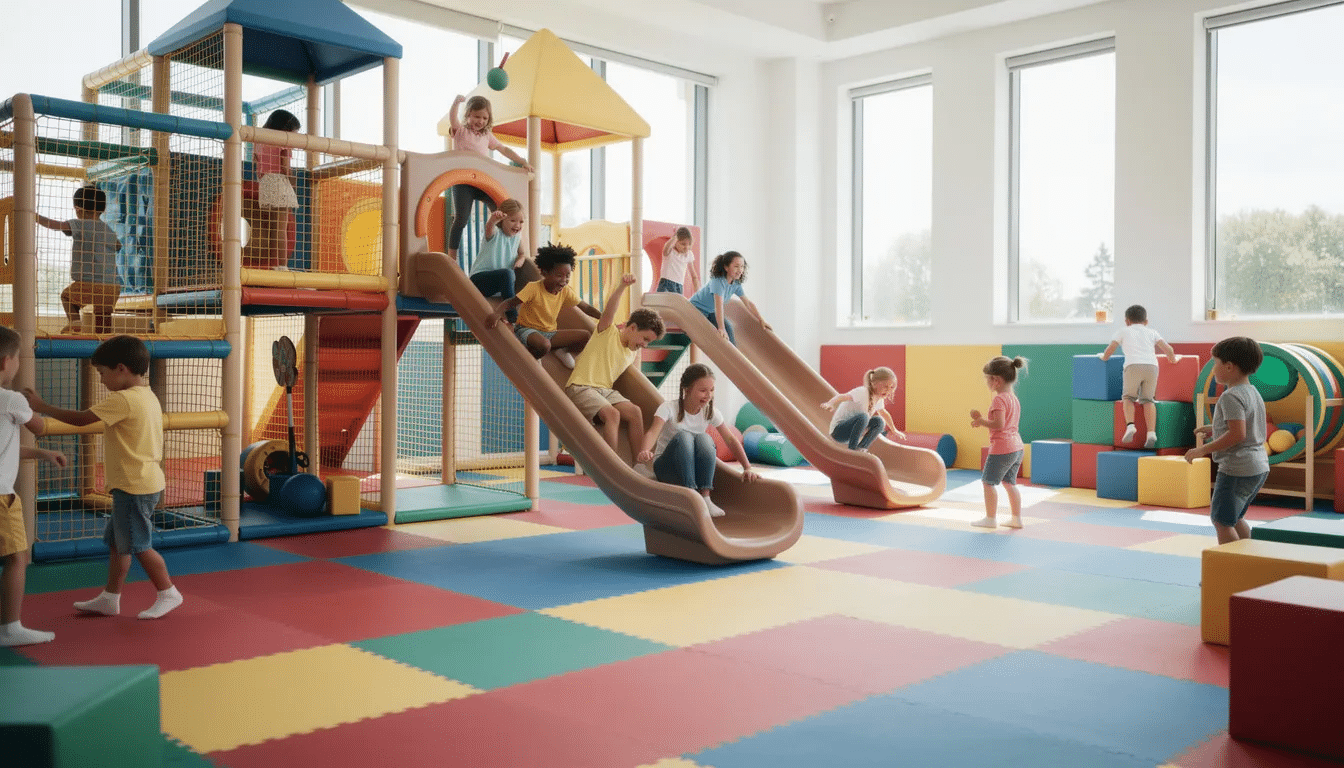
Key benefits of indoor play include:
- Physical activity: Disguised exercise that builds strength, balance, and coordination—research shows kids in equipped play spaces demonstrate 20-30% improvements in motor skill metrics with consistent use
- Social skills: Group settings teach cooperation, sharing, and turn-taking (waiting at the top of a slide teaches patience and awareness)
- Creativity and imagination: Open-ended play equipment and engaging activities for imagination to inspire creative thinking let children create their own games and scenarios
- Sensory regulation: Tactile surfaces, visual themes, and kinesthetic movement help children process sensory input
- Accessibility: Well-designed spaces accommodate kids with different needs through adaptive features and quieter zones
- Cognitive development: Building block towers supports early STEM thinking; navigating obstacle courses develops spatial awareness and problem-solving
Types of Indoor Play Spaces
When planning an outing, you’ll encounter a variety of indoor play spaces, each offering distinct experiences. From sprawling trampoline parks to intimate play cafes where mom or dad can grab a coffee, understanding your options helps you pick the perfect place for your family’s needs, schedule, and budget.
The indoor play world has expanded dramatically in recent years. What once meant a simple ball pit at a fast-food restaurant now includes multi-zone adventure facilities, sensory-focused gyms, and hybrid spaces that combine physical play with food, learning, and socialization.
Common types of indoor play spaces:
- Soft play playgrounds: Padded climbing structures, tunnels, slides, and ball pits designed primarily for ages 1–6. Safety is paramount with cushioned flooring throughout. Think three-story climbing structures with enclosed slides and foam-filled landing zones.
- Trampoline and bounce centers: High-energy venues featuring interconnected trampolines, foam pits, and dodgeball courts. Best suited for ages 5 and up, with weight restrictions often posted. These spaces deliver serious cardiovascular benefits but require stricter supervision.
- Sensory gyms: Specialized facilities offering swings, crash pads, weighted activities, and calming spaces. Ideal for children who benefit from occupational therapy-style equipment, including neurodivergent kids.
- Children’s museums: Hands on exhibits that blend play with learning—interactive science stations, water tables, and role-play areas like miniature cities. Suitable for a wide age range from toddlers through tweens.
- Play cafes: Smaller venues combining a dedicated play area with a cafe for adults. Parents can enjoy a meal or drink while children play nearby. Often cater to younger kids (under 6) with appropriately scaled equipment.
- Mall play areas: Free, compact zones typically featuring a mini climbing wall, toddler slide, and soft sculptures. Best for quick stops with younger children.
- Church and park-district playrooms: Community-based spaces often available at low or no cost. Equipment varies but usually includes basics like mats, tunnels, and ride-on toys.
- Home playrooms: Custom or DIY spaces that bring the indoor playground experience into your own space—more on this later.
When comparing options, soft play areas excel for toddlers and preschoolers who need maximum safety cushioning, while trampoline parks amp up the excitement for older kids craving adventure. If you’re planning a birthday party, dedicated party venues offer private rooms and staff support. For weekly routines, a neighborhood play cafe might provide the right balance of playtime for kids and a seating area for adults.
Indoor Play Activities by Age
Finding the right activity for your child’s developmental stage makes all the difference between engaged play and frustration. This section organizes ideas by age so you can quickly plan an outing or home play session that hits the sweet spot.
Babies and Toddlers (1–3 years):
- Soft block stacking and knocking down towers
- Ball pit exploration and simple throwing games
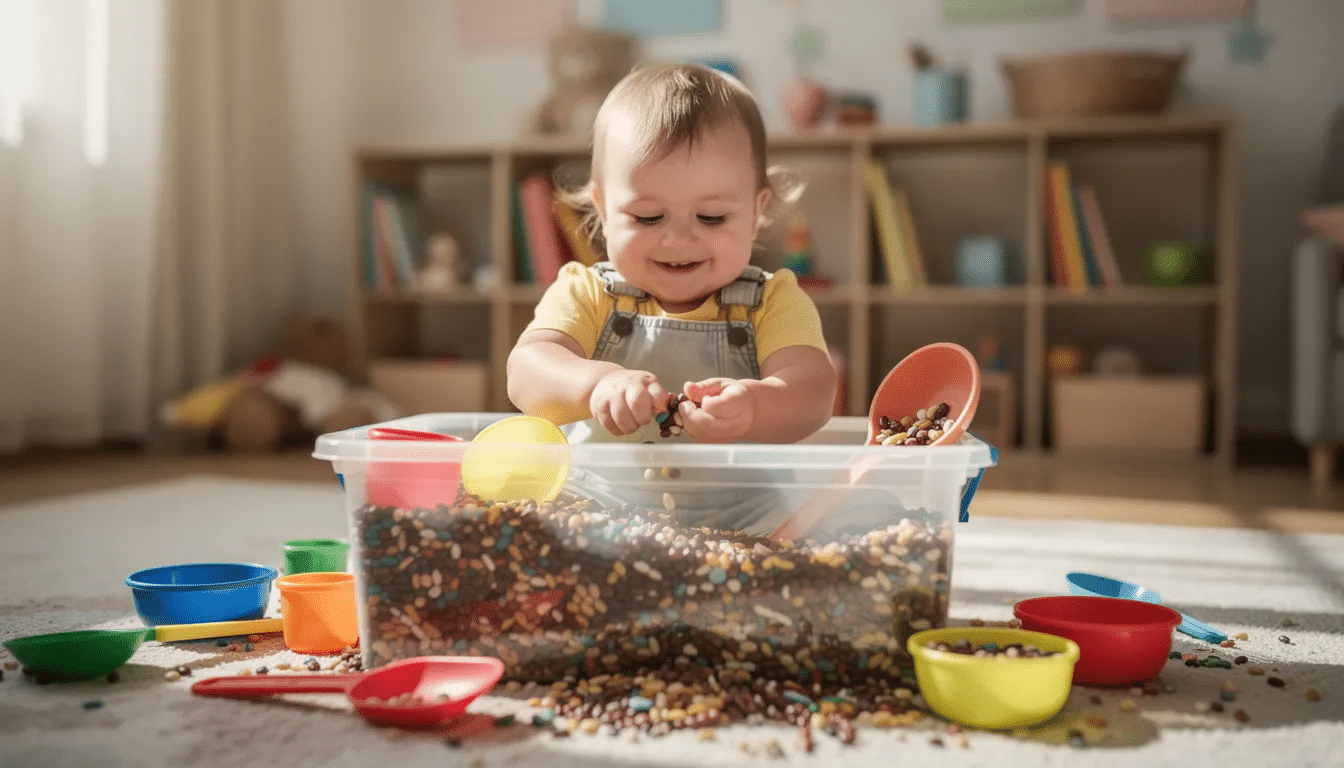
- Sensory bins with rice, water beads, or dried pasta
- Push-and-pull toys along padded walkways
- Tunnel crawling and low-height slides
- No-equipment idea: Pillow stepping stones across the living room floor
Preschoolers (3–5 years):
- Pretend grocery store or play kitchen scenarios
- Simple obstacle courses with tunnels, balance beams, and hoops
- Dress-up corner with costumes for imaginative role-play
- Arts and crafts stations with playdough, crayons, and stamps to build art fine motor skills in children
- Building challenges with magnetic tiles or large blocks
- No-equipment idea: Cardboard box fort construction or a DIY cardboard time machine craft using delivery boxes
Early Elementary (5–8 years):
- Multi-level climbing structures with slides and rope bridges
- Scavenger hunts with themed clues hidden around the venue or home
- Mini STEM stations (marble runs, simple circuits, building challenges)
- Beginner ninja courses with balance beams and cargo nets
- Cooperative games like parachute play or engaging group activities for 5 year olds such as relay races
- No-equipment idea: Hallway relay races with timed challenges
Tweens (9–12 years):
- Advanced ninja warrior courses testing agility and problem-solving
- Trampoline park zones with foam pits and dodgeball
- Escape-room-style puzzle challenges
- Team-building activities and friendly competitions
- Creative maker spaces with construction materials or curated DIY kits for creative projects
- No-equipment idea: Living room “floor is lava” challenges with furniture obstacles
For seasonal twists, consider a winter snow-day obstacle course in January–February using pillows, blankets, and masking tape for indoor sledding lanes. During July, set up an indoor camp-out with flashlights, sleeping bags, and shadow puppet story time. The key is mixing calm and high-energy activities—30 minutes of active climbing followed by quiet sensory play helps kids regulate their energy and prevents meltdowns.
Planning a Visit to an Indoor Play Center
A successful visit to an indoor play center starts before you leave the house. Whether you’re a parent planning a Saturday adventure, a teacher organizing field trips, or a daycare group looking for unlimited play time, preparation prevents headaches and maximizes fun.
Start by researching venues in your area. Check their website for open hours, admission pricing, and any special requirements. Many facilities offer weekday discounts that can save significant money compared to weekend rates.
Before you go, verify:
- Hours and capacity rules: Some venues limit session lengths or cap attendance for safety
- Age and height requirements: Certain attractions may have minimum heights or age restrictions
- Pricing structure: Look for deals like sibling discounts, punch cards, or membership passes
- Special needs accommodations: Quieter hours, sensory-friendly events, or adaptive equipment availability
- Food policies: Can you bring snacks, or must you purchase from the snack bar?
- Sock requirements: Most soft play areas and trampoline parks require grip socks—some sell them on-site
Pack these essentials:
- Labeled water bottles (hydration is key during active play)
- An extra pair of socks (in case of accidents or lost socks)
- Light layers for temperature changes between zones
- Hand wipes or sanitizer for quick cleanups
- A signed waiver if the venue allows pre-completion online
Timing your visit matters:
- 10 am–12 pm on weekdays: Ideal for toddlers and younger children; crowds are lighter
- 3 pm–6 pm on weekdays: After-school rush; expect more guests and higher energy
- Weekend mornings: Popular for parties—arrive early or late afternoon to avoid peak times
- Weekday evenings: Often quieter; good for kids who need less stimulation
For supervising multiple children, designate a meeting spot near a distinctive feature—the big yellow slide or the entrance to the foam pit works well. If you’re managing a group, assign color-coded shirts and establish check-in times. Keep younger children in age-appropriate zones and set clear expectations about staying within visible areas where adults can watch safely.
Creating an Indoor Playroom at Home
Not every day can be a trip out to a commercial venue. Whether you live in a small apartment or have a dedicated bonus room, creating a home play zone gives children a reliable outlet for energy and imagination right where they live.
The secret is defining zones within whatever space you have. Even a corner of a living room can transform into a meaningful play area when you’re intentional about the setup.
Zone your space:
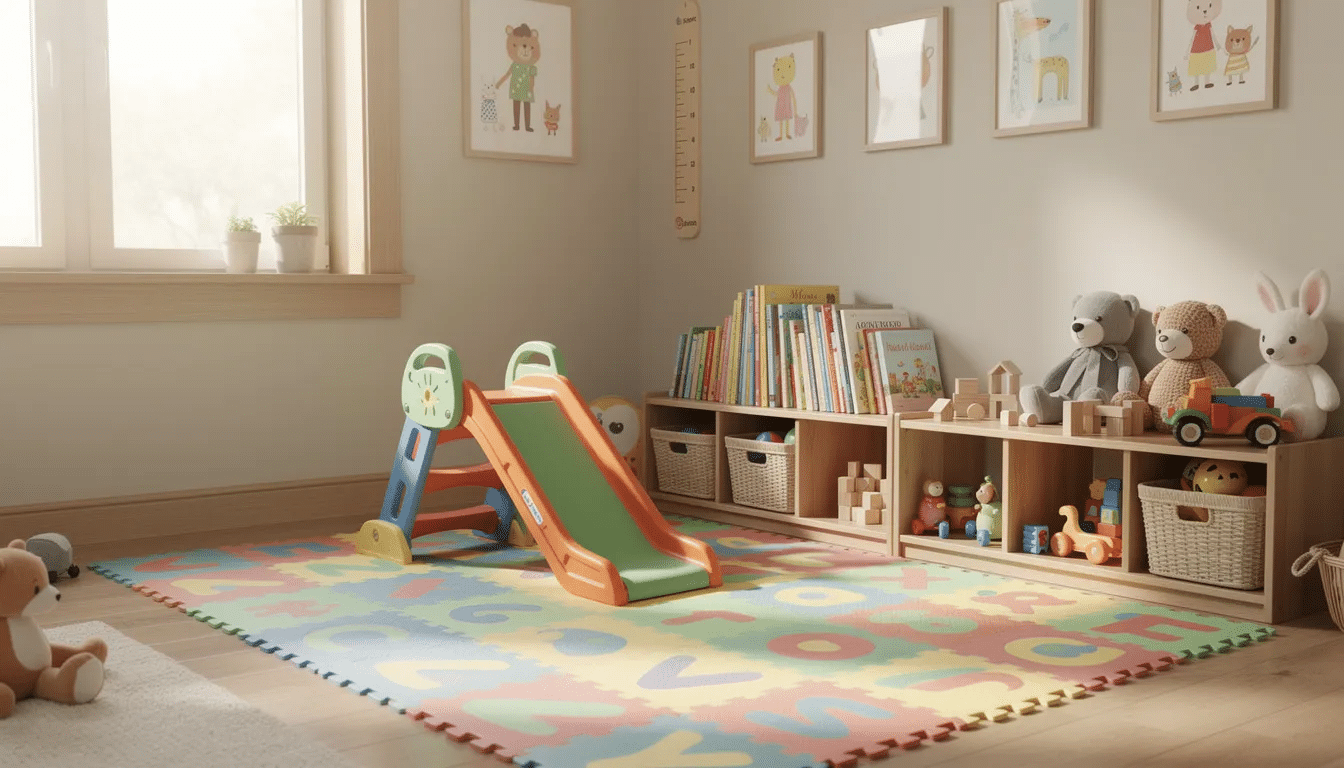
- Movement corner: Mini slide, crash pad or thick floor cushions, pop-up tunnel, and a small climbing structure if space allows
- Pretend-play area: Play kitchen, costumes, dolls, action figures, or a small table for tea parties and restaurant games
- Quiet corner: Bookshelf at child height, puzzles, sensory bins, and fidget toys for calm-down time
Budget-friendly play equipment ideas:
- Interlocking foam floor mats (available at most big-box stores for under $30)
- Second-hand play kitchens from thrift stores or online marketplaces
- IKEA shelving units for toy rotation and accessible storage
- Painter’s tape on hard floors to create hopscotch grids, roads for toy cars, or balance lines
- Doorway swing or hammock (check weight limits and installation requirements) plus no mess activities for 2 year olds like stickers or busy bags nearby for quieter play
- Cardboard boxes transformed into forts, cars, or rocket ships
Safety essentials:
- Anchor all shelving units and tall furniture to walls
- Avoid hard edges near active play zones
- Select climbing items appropriate for your child’s age and skill level
- Ensure adult visibility from common areas like the kitchen or living room
- Keep small parts in lidded boxes out of reach of toddlers
Storage strategies to prevent clutter:
- Use clear bins with photo labels so kids can find and return toys independently
- Rotate toys monthly to keep the space fresh and interesting
- Store inactive toys in closets or under beds
- Create a “donate” bin for outgrown items
A well-designed home playroom doesn’t require a massive budget or square footage. Start small, observe what your children gravitate toward, and build from there.
Indoor Play for Learning & Development
Indoor play isn’t just about burning off energy—it’s one of the most powerful learning tools available to children. Research shows that play drives school readiness, problem-solving abilities, and emotional regulation. When children climb, build, pretend, and create, they’re developing skills that translate directly to academic and social success.
Mapping play types to developmental skills:
- Building and construction: Magnetic tiles, blocks, and LEGO develop early engineering thinking, spatial reasoning, and fine motor control. Try this: Challenge kids to build a bridge that can hold a toy car.
- Pretend play: Play kitchens, grocery stores, and dress-up corners develop language skills, empathy, and social understanding—especially powerful in creative kindergarten class setups. Try this: Set up an indoor market with play money to practice math and negotiation.
- Movement games: Obstacle courses, climbing, and balance activities build coordination, core strength, and body awareness. Try this: Create a timed ninja course through the living room with cushion stepping stones.
- Sensory tables: Bins filled with dried beans, water, sand, or kinesthetic materials help with focus, calming, and tactile processing. Try this: Add measuring cups and funnels to a rice bin for early math exploration.
Scaffolding learning without lecturing:
The best play-based learning happens when adults guide gently rather than direct. Ask open-ended questions like “What do you think will happen if we make this ramp steeper?” or “How could we make the tower taller without it falling?” Let children discover solutions independently, stepping in only when frustration peaks.
Inclusive play for mixed-ability groups:
- Use visual schedules showing the sequence of activities
- Create quieter corners with dimmer lighting for sensory breaks
- Offer weighted lap pads for children who benefit from deep pressure
- Establish predictable routines that help neurodivergent children anticipate transitions
Every indoor play session—whether at a commercial center, school gym, or living room—is an opportunity to observe growth. Celebrate the small milestones: a child who finally reaches the top of the climbing wall, a toddler who shares a toy without prompting, or a preschooler who solves a puzzle independently.
Hosting Parties & Group Events Indoors
Indoor play venues have become go-to destinations for birthday parties, team celebrations, and school field trips—especially during colder months from November through March or during summer heatwaves when outdoor options are limited. These spaces deliver nonstop fun while removing the stress of weather-dependent planning.
Birthday party planning essentials: For at-home celebrations, consider creative birthday decorations with balloons to transform your space on a budget.
- Timing: Most venues offer 2-hour party packages; weekday slots are often cheaper and less crowded
- Age-appropriate zones: Choose venues with separate areas for toddlers versus brave adventurers tackling big slides and obstacle courses
- Guest count: Confirm capacity limits and pricing per person (many charge per additional child)
- Budget: Party packages typically range from $200–$500 depending on location, inclusions, and guest count
Coordinate with the venue in advance:
- Food and cake policies (some venues require you to use their snack bar or cafe; others allow outside food)
- Decoration rules (balloons, banners, table setup)
- Waiver requirements (often required for all guests—check if parents can sign online beforehand)
- Staff support (will employees supervise play or just handle food setup?)
- Add-ons like private party rooms, arcade credits, or extended playtime
Structuring a 2-3 hour party:
- 60–90 minutes: Open play across the facility
- 30 minutes: Food, cake, and presents in a designated seating area
- 20–30 minutes: Final free play or goodbyes

Group and field trip logistics:
- Maintain appropriate adult-to-child ratios (typically 1:5 for preschoolers, 1:10 for older kids)
- Assign children to color-coded groups with designated adult leaders
- Use printed name labels for easy identification
- Plan a calm activity before departure (story time or snack) to help children transition out of high-energy play
- Confirm group rates and any educational programming the venue might offer
Whether you’re hosting a first birthday party or organizing events for a scout troop, indoor play venues offer the space, equipment, and staff support to make group gatherings successful.
Indoor Play Safety & Cleanliness
Well-managed indoor play can be both exciting and safe when venues follow proper protocols and visitors practice basic awareness. The goal isn’t to eliminate all risk—children learn valuable lessons from minor challenges—but to ensure the environment supports healthy exploration.
Safety checks to look for at any venue:
- Padded flooring throughout play areas
- Clear sightlines so adults can watch from multiple angles
- Separate zones for toddlers and older kids
- Posted rules visible at entrances and throughout the facility
- Staff actively monitoring play areas (not just sitting at a desk)
- Age and height requirements clearly displayed for each attraction
Cleanliness expectations:
- Visible hand-sanitizer stations at entrances and throughout the space
- Regular cleaning schedules for surfaces, equipment, and ball pits
- Clear policies encouraging families to stay home when sick
- Clean restrooms with child-appropriate fixtures
Safety rules to teach children before arrival:
- Slide feet-first, not headfirst
- No climbing up the slide while others are coming down
- Wait turns at the top of structures
- Keep socks on where required
- Use equipment as designed (no standing on handrails)
Handling minor bumps and scrapes:
- Locate first-aid stations when you arrive
- Alert staff immediately if an injury occurs
- Take a brief calm break in a quieter area before returning to play
- Expect minor bumps as normal—they’re part of learning physical limits
Most well-maintained facilities prioritize visitor safety through regular equipment inspections, proper maintenance, and trained staff. Parents and caregivers can complement these efforts by actively supervising their children and reinforcing simple safety guidelines. The result is an environment where kids can explore freely while adults feel confident about risk management.
Key Takeaways
- Indoor play provides essential physical, social, and cognitive benefits for children of all ages—especially in regions with extreme weather
- Different venue types serve different needs: soft play areas for younger children, trampoline parks for high-energy older kids, play cafes for parent convenience
- Home playrooms can be created on any budget with foam mats, second-hand equipment, and creative zone planning
- Successful visits start with preparation: checking hours, packing essentials, and timing arrival to avoid peak crowds
- Every play session is a learning opportunity when adults ask open-ended questions and celebrate small milestones
Whether you’re planning a weekend visit to your local facility, hosting a group event, or setting up a play corner at home, indoor play transforms unpredictable weather days into opportunities for growth, connection, and discovery. Start small this week—bring your family to explore a new venue or fill a bin with dried beans for sensory play—and watch the benefits unfold.