Knitting is a craft that transforms a single strand of yarn into flexible, wearable fabric using nothing more than two needles and your hands. Whether you’re drawn to the meditative rhythm of the stitches or the satisfaction of creating something tangible, knitting offers both relaxation and creative expression. Yarn itself is simply fiber that’s been spun and twisted into a continuous strand, available in countless weights, textures, and materials.
This guide will help you navigate the world of knitting and yarns, from selecting the perfect fiber for your next project to finding the tools and resources you need—whether you’re casting on your first garter-stitch scarf, tracking a 2025 temperature blanket, or tackling a colorwork Fair Isle hat.
What you’ll learn in this guide:
- How different yarn fibers affect the feel, warmth, and care of your finished projects
- Understanding yarn weights from lace to super bulky and how much yarn you’ll need
- Essential tools and notions every knitter should have in their toolkit
- Where to learn knitting skills through classes, tutorials, and pattern resources
- How to plan projects and choose patterns that match your experience level
- Ways to connect with the knitting community through events and online spaces
Types of Yarn Fibers
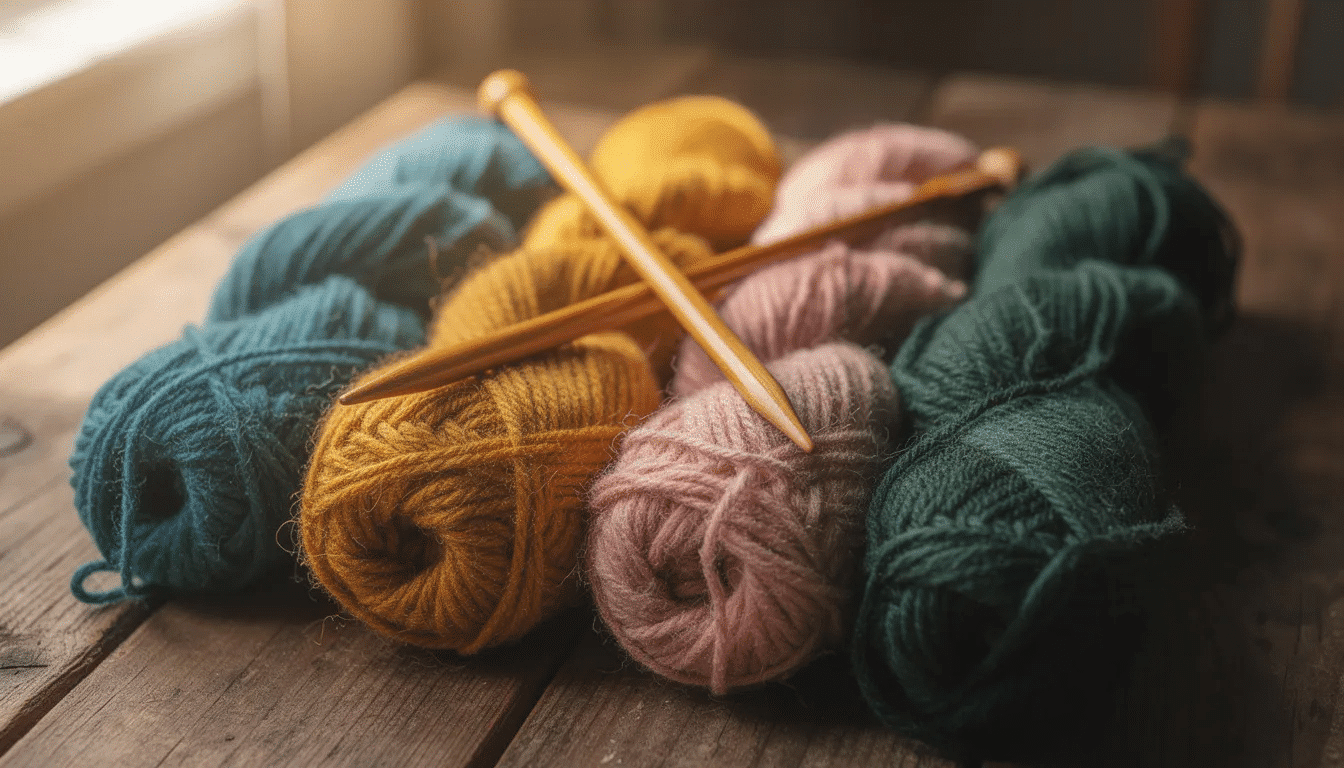
The fiber content of your yarn directly affects how your finished piece will feel against the skin, how warm it will keep you, how long it will last, and what it costs. Every skein of yarn sold at your local yarn shop or online store includes a label listing exactly what fibers are inside—learning to read these labels is your first step toward choosing yarn with confidence.
Natural Animal Fibers:
- Wool remains the most popular fiber for knitters, prized for its warmth, elasticity, and ability to trap air (wool holds about 80% air compared to cotton’s 40%). Merino wool, with its fine diameter of 17-19.5 microns, feels soft enough for next-to-skin wear. Shetland wool works beautifully for traditional colorwork, while Rambouillet offers similar softness to Merino at a lower price point.
- Alpaca provides exceptional warmth without the weight, making it perfect for cozy sweaters and wraps. It has less memory than wool, so garments may stretch over time.
- Cashmere delivers unmatched softness and luxury, ideal for scarves and accessories where that quality feel matters most.
- Mohair adds a distinctive halo and drape, often blended with other fibers to create lofty, lightweight fabrics for shawls and cardigans.
Plant-Based Fibers:
- Cotton, linen, and bamboo yarns are popular for warm-weather knits like summer tops and market bags. These fibers breathe well and work beautifully for anyone sensitive to animal fibers, though they lack the stretch and bounce of wool.
Synthetic Fibers:
- Acrylic, nylon, and polyester yarns are budget-friendly and machine-washable, making them practical for baby items and everyday accessories. The trade-off: they’re less breathable than natural fibers and may pill with wear.
Blended Yarns:
- Many yarns combine fibers to get the best of both worlds. A classic 75% wool / 25% nylon sock yarn, for example, provides wool’s warmth and comfort with nylon’s durability—essential for high-wear items like socks and mittens.
Understanding Yarn Weights & How Much You Need
When knitters talk about yarn “weight,” they’re referring to the thickness of the strand, not how heavy it is. Yarn weight directly determines which needle size you’ll use, how your fabric drapes, and how many yards you’ll need to complete a project. Getting this right means your finished piece will match the pattern’s intentions.
The main yarn weights from thinnest to thickest:
- Lace – Delicate shawls and fine accessories; uses tiny needles (US 000–1)
- Fingering/Sock – Classic for socks, lightweight shawls, and intricate colorwork; typically uses US 1–3 needles
- Sport – Light sweaters and baby garments; uses US 3–5 needles
- DK (Double Knit) – Versatile for baby sweaters, lighter adult garments, and accessories; uses US 5–7 needles
- Worsted – The most common weight for afghans, hats, and sweaters; typically uses US 7–9 (4.5–5.5 mm) needles
- Aran – Slightly heavier than worsted, perfect for cabled sweaters; uses US 8–10 needles
- Bulky – Quick-knitting hats, cowls, and blankets; uses US 10–11 needles
- Super Bulky/Jumbo – Ultra-fast projects like chunky throws; uses US 13 and larger
Calculating how much yarn you need:
- Check your pattern for total yardage requirements, not just the number of skeins. Different yarn brands pack different amounts into each skein.
- Use a yardage calculator or consult the pattern notes to estimate needs based on your size and any modifications you’re planning.
- Always purchase an extra skein in the same dye lot. Running out mid-project with no matching yarn available is a frustration you can easily avoid.
Essential Knitting Tools & Notions
While yarn and needles form the heart of knitting, a handful of simple tools make your work smoother, more accurate, and more enjoyable. Building a basic toolkit doesn’t require a large investment—quality basics will serve you for years.
Types of Needles:
- Straight needles are the classic choice for flat pieces like scarves and dishcloths. They come in pairs and work well for beginners learning the basics.
- Circular needles connect two needle tips with a flexible cable, perfect for sweaters knit in the round, large blankets, and magic loop techniques for socks. Many knitters use circulars for flat knitting too, as they distribute weight more comfortably.
- Double-pointed needles (DPNs) come in sets of four or five and handle small circumferences like sock cuffs, hat crowns, and mittens.
Needle Materials:
- Wood and bamboo needles offer a slightly grippy surface that helps prevent stitches from sliding off—many beginners find these easier to control.
- Metal needles (aluminum, stainless steel, or nickel-plated) provide speed and smooth glide, preferred by experienced knitters working with sticky yarns.
- Carbon fiber combines lightweight feel with slick surfaces for fast knitting without hand fatigue.
Must-Have Notions:
- Stitch markers – Clip onto your work to mark pattern repeats, beginning of rounds, or increase/decrease points
- Tapestry needles – Blunt-tipped needles used to weave in yarn ends and seam pieces together
- Small scissors – For cutting yarn cleanly
- Tape measure – Essential for checking gauge and measuring your work
- Row counter – Helps you keep track of where you are in a pattern
- Point protectors/stitch stoppers – Cap your needle tips to prevent stitches from falling off when you set your project aside
A simple beginner toolkit fits easily in a small zippered pouch. Keep needles organized by size, notions in labeled compartments, and you’ll always find what you need quickly.
Learning to Knit: Classes, Tutorials & Skill Building
From 2024 onward, there are more ways than ever to learn knitting—whether you prefer hands-on instruction or learning at your own pace from home. The key is finding resources that match your learning style and committing to regular practice.
- Explore in-person classes at your local yarn shop or community center. Beginner workshops typically cover casting on, the knit and purl stitches, binding off, and fixing simple mistakes like dropped stitches. The advantage of in-person learning is immediate feedback when something goes wrong.
- Online video tutorials and structured courses let you learn on your own schedule. Look for clear close-up videos that show hand positioning—especially helpful for tricky techniques like continental knitting, cables, and lace patterns.
- Learn to read patterns, charts, and standard abbreviations early. Most patterns use the same shorthand (k for knit, p for purl, yo for yarn over), and understanding charts opens up colorwork and lace possibilities. When instructions confuse you, search for tutorial videos specific to that technique.
- Follow a skill-building path that keeps you excited without overwhelming you. Start with dishcloths and simple scarves to master gauge and tension. Progress to hats and cowls to learn knitting in the round. After a few months of regular practice, you’ll be ready for sweaters and colorwork.
Patterns, Projects & Planning Your Next Knit
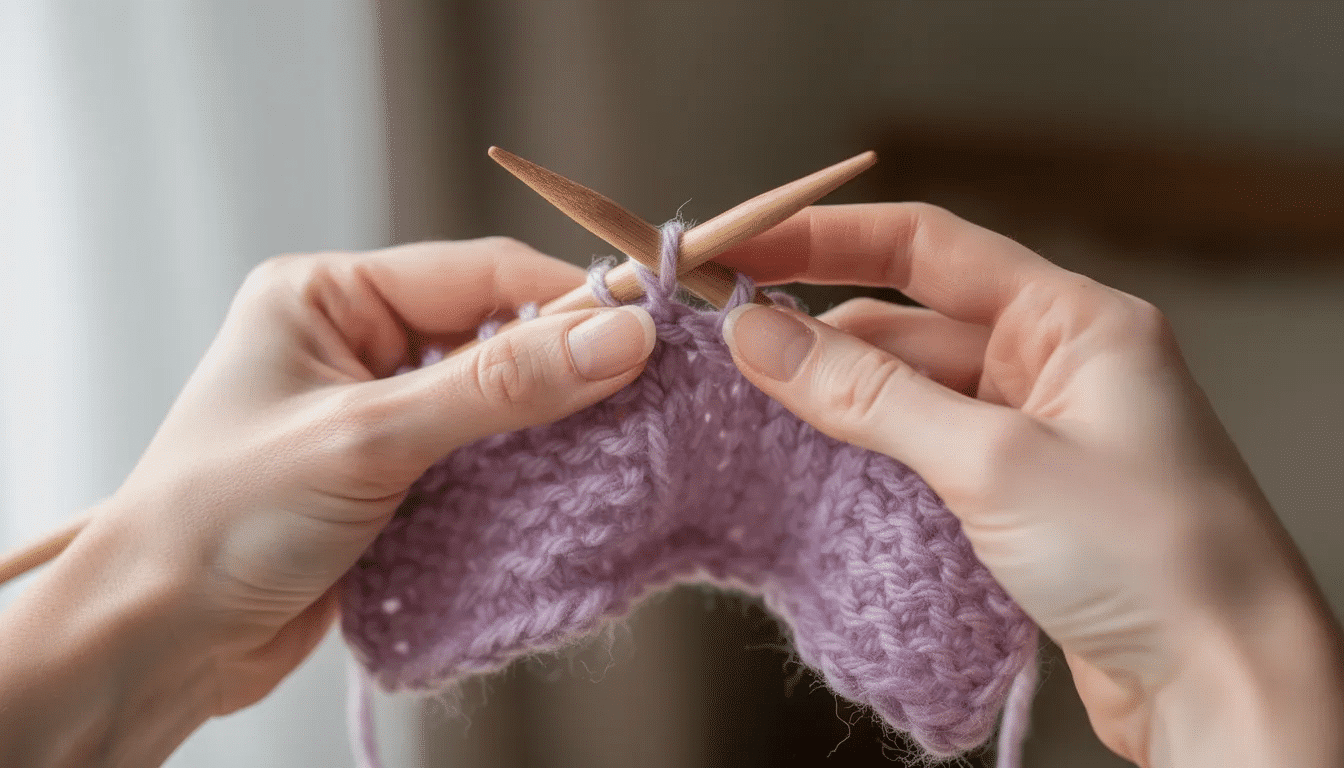
Patterns are your roadmaps—they tell you what yarn to buy, which needles to use, and exactly how to create each stitch. You’ll find patterns in books, magazines, downloadable PDFs, and free online collections like Ravelry’s database of over one million designs.
- What makes a pattern beginner-friendly: Clear gauge information, limited sizing math, basic stitch patterns (stockinette, garter, simple ribbing), and detailed written instructions or diagrams. Avoid patterns that assume you already know advanced techniques.
- Project ideas by experience level:
- New knitters: A ribbed hat for late 2025 holiday gift knitting, a simple cowl in chunky yarn, or a classic garter-stitch scarf
- Intermediate knitters: A baby blanket for a spring 2026 arrival, a cabled headband, or your first top-down raglan sweater
- Adventurous knitters: A colorwork cowl as your first stranded project, Fair Isle mittens, or a lace shawl
- Match yarn to pattern carefully: Check the pattern’s recommended fiber content, yarn weight, gauge, and total yardage. Substituting yarn is absolutely fine, but make sure your choice achieves the same gauge—otherwise your finished piece will be the wrong size.
- Keep a project notebook (physical or digital) where you record yarn brand, colorway, dye lot, needle size, start and end dates, and any modifications you made. This reference proves invaluable when you want to recreate a project or remember what worked.
Knitting Community, Events & Staying Inspired
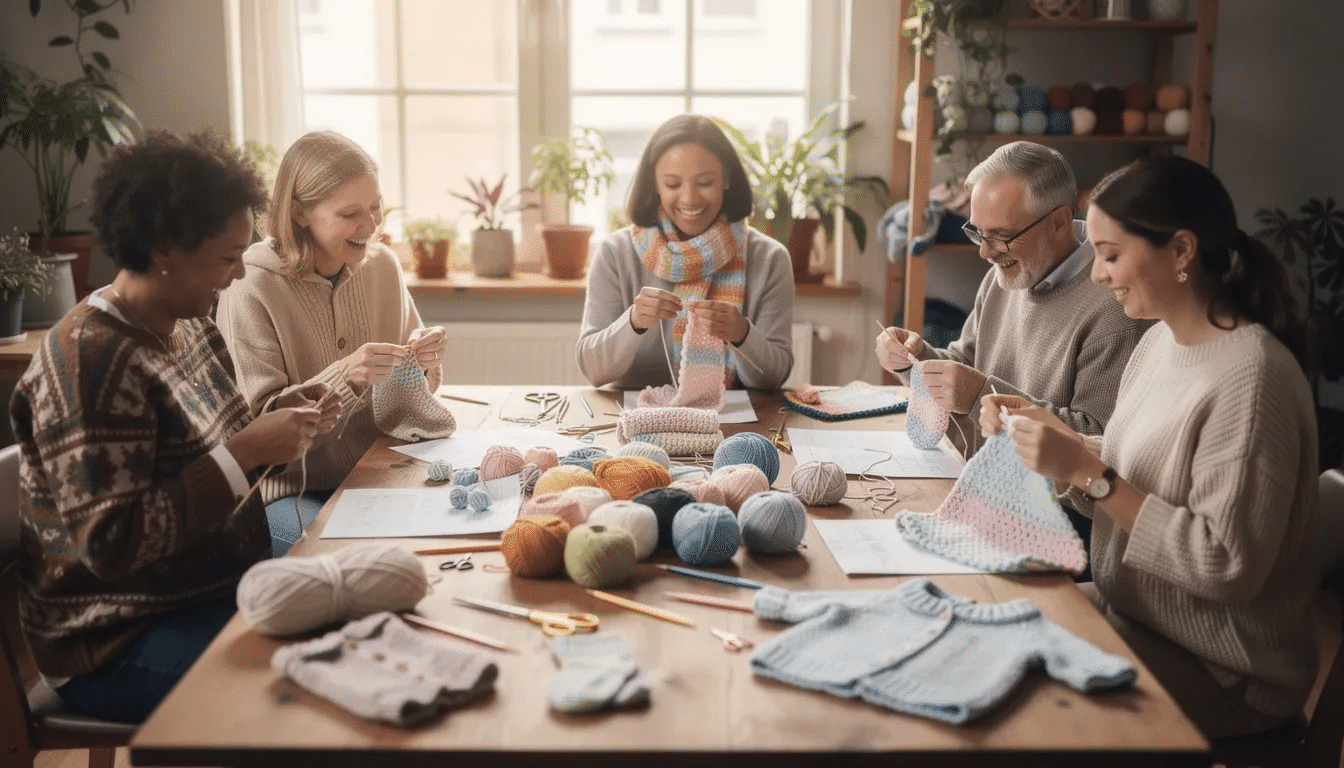
Knitting is both a solitary pleasure and a social craft. While the quiet rhythm of stitching offers meditative calm, connecting with fellow knitters keeps you inspired, helps you solve problems, and introduces you to techniques and yarns you might never discover on your own. With an estimated 100 million knitters worldwide, you’re never far from community.
- Local events: Knit nights at yarn shops or cafes bring knitters together weekly for casual stitching and conversation. Workshops with guest teachers cover everything from sock construction to colorwork mastery. Look for seasonal knit-alongs (KALs) where groups work on the same pattern together.
- Fiber festivals: Regional yarn and fiber events—fall festivals, spring fiber fairs—offer the chance to meet indie dyers, touch breed-specific wool you won’t find in stores, attend technique classes, and feel the energy of the broader knitting world.
- Online communities: Platforms like Ravelry connect you to millions of patterns, project galleries, and discussion forums. Subscribe to newsletters from your favorite yarn shop or indie dyer for pattern ideas, early notice of new arrivals, and invitations to special events or challenges. Many knitters share their stories on social media, where hashtags like #KnitTok have generated billions of views.
The craft you’re holding in your hands has roots stretching back centuries—from 11th-century Egyptian socks worked at incredibly fine gauges to medieval guilds that professionalized the trade to today’s vibrant community of makers. You’re joining a tradition that spans the world.
Whether you’re ready to sign up for your first class, explore patterns for a gift-worthy project, or simply want to feel the perfect skein in your hands, the path forward is simple: pick up your needles, choose a yarn that excites you, and cast on. Your local yarn shop is a place to find quality materials, ask questions, and connect with people who share your love of the craft. The online knitting community welcomes you with free resources, endless inspiration, and the kind of support that helps you care for your skills year after year.
Start where you are. Use what you have. Knit something wonderful.