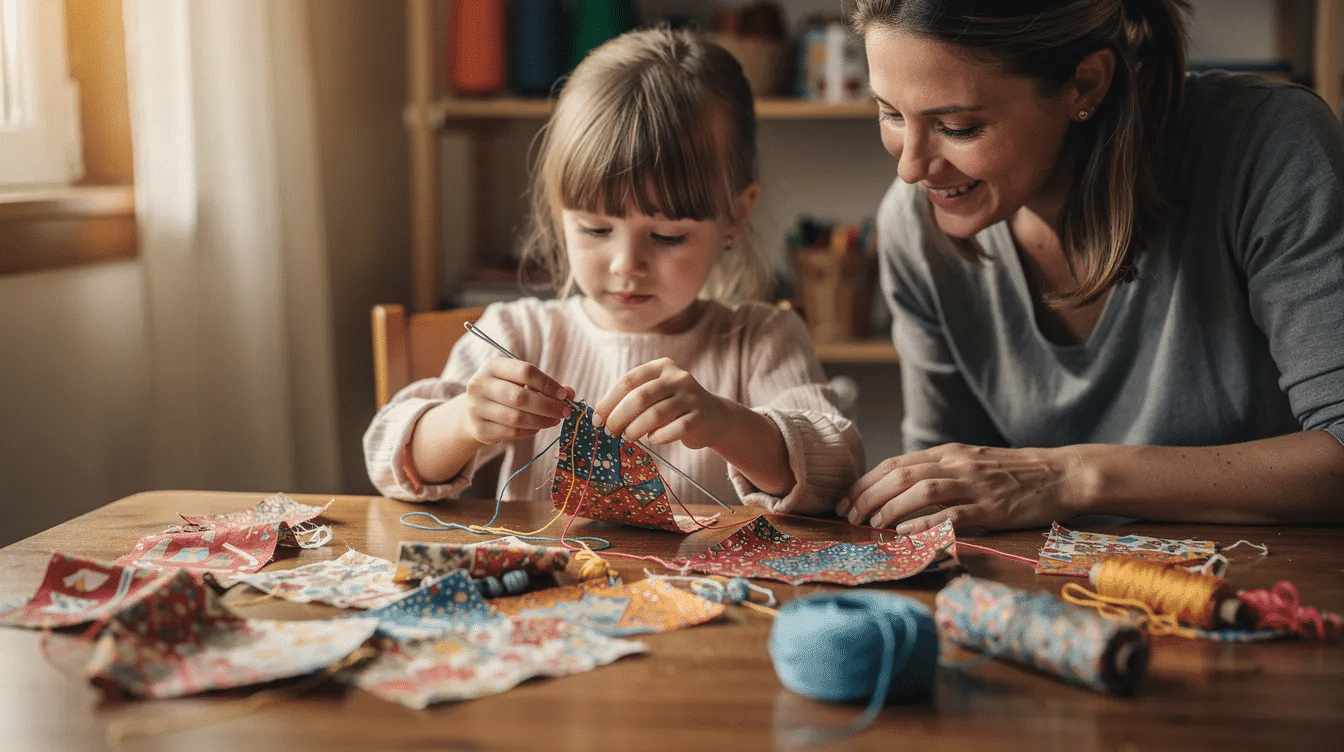
If you are looking for easy sewing projects for beginners kids, start with projects that are safe, short, and satisfying. Beginner sewing projects for kids focus on straight lines and simple shapes to build confidence, not perfection. The best choices use easy-to-handle fabric, basic tools, and a finished item kids can actually use, wear, or gift.
Teaching kids to sew early builds sewing skills, patience, coordination, and creativity. One classroom study found that sewing practice improved fine motor mastery over repeated instruction cycles, which makes sewing more than a craft activity. Thoughtfully chosen art supplies for young artists support the same kind of creative confidence and skill-building at the craft table. In this post, you’ll find the best beginner projects selected for safety, simplicity, cost, and fun.
- How We Chose the Best Beginner Sewing Projects
- Top 7 Easy Sewing Projects for Beginner Kids
- 1. Simple Tote Bag
- Why It Stands Out
- Best For
- Key Strengths
- Possible Limitations
- 2. Hair Scrunchie
- Why It Stands Out
- Best For
- Key Strengths
- Possible Limitations
- 3. Simple Stuffed Animal
- Why It Stands Out
- Best For
- Key Strengths
- Possible Limitations
- 4. Fabric Bookmark
- Why It Stands Out
- Best For
- Key Strengths
- Possible Limitations
- 5. Simple Pillow Cover
- Why It Stands Out
- Best For
- Key Strengths
- Possible Limitations
- 6. Simple Zipper Pouch
- Why It Stands Out
- Best For
- Key Strengths
- Possible Limitations
- 7. Doll Clothes
- Why It Stands Out
- Best For
- Key Strengths
- Possible Limitations
- Quick Comparison of the Best Beginner Sewing Projects
- How to Choose the Right Sewing Project
- Which Sewing Project Is Best for You?
- Final Thoughts
How We Chose the Best Beginner Sewing Projects
First things first: a good sewing project for ages 6–12 should match the child, not the other way around. We looked for beginner projects that use simple techniques, minimal sharp tools, low-cost material, and clear results in under 2 hours.
Here are the main criteria:
- Safety: younger kids should use a blunt needle when possible, child-safe scissors, clips instead of too many pins, and adult help with any sewing machine, iron, rotary cutter, or zipper.
- Time: easy projects that take 15–60 minutes are ideal for younger kids; older kids can manage a bit longer.
- Skill progression: start with straight stitches and straight lines, then move to curves, corners, casing, lining, and closures.
- Materials: 100% cotton fabric is the most forgiving fabric to work with for beginner sewing. Felt is also excellent because the edge does not fray and can be used for simple projects like a fuzzy felt activity board.
- Practice: kids should practice sewing on scraps of fabric or old clothes to get accustomed to the machine or needle before starting their actual projects, and upcycling garments into new pieces like a little girl’s dress from a shirt can be a satisfying next step.
- Control: using practice sheets, such as mazes or dot to dot patterns, can help children learn to control the sewing machine and improve their stitching accuracy in a low-pressure environment.
- Interest: encouraging kids to choose their own fabrics and colors can increase their engagement and excitement about sewing projects, making the learning process more enjoyable; playful clothing projects such as DIY bunny dresses for toddlers are especially motivating for young sewists.
Excellent beginner sewing project ideas include making a felt bookmark, a simple throw pillow, a fabric headband/scrunchie, or a basic stuffed animal. Best starter sewing items for kids include basic pillows, scrunchies, drawstring pouches, and felt plushies.
Top 7 Easy Sewing Projects for Beginner Kids
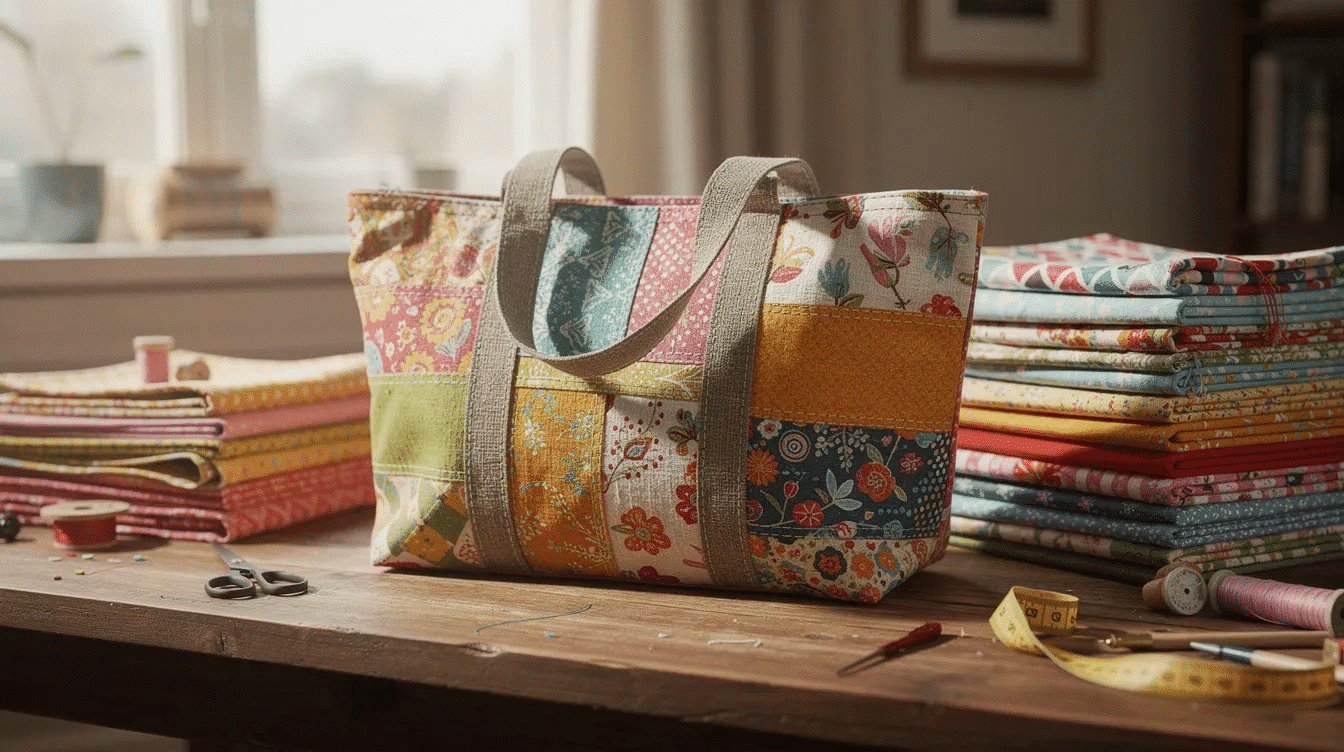
1. Simple Tote Bag
A tote bag is a rectangular bag with two handles. Kids can create practical items like tote bags, which are easy to sew and serve a useful purpose, making them a great project for beginners.
Why It Stands Out
It uses rectangles and straight stitches. Projects like pajama pants and simple tote bags are recommended for beginners as they primarily involve straight lines and basic sewing techniques.
Best For
Kids aged 8–12 who want a useful bag for school, library books, activities, or gifts.
Key Strengths
- Only requires basic straight seams.
- Forgiving if the stitch line is not perfect.
- Teaches measuring, seam allowance, turning corners, and handle placement.
- Finished product is useful for daily life.
Possible Limitations
Cutting large fabric pieces accurately can be hard. Handle attachment may need a mom, dad, mother, or teacher to help reinforce the seam.
2. Hair Scrunchie
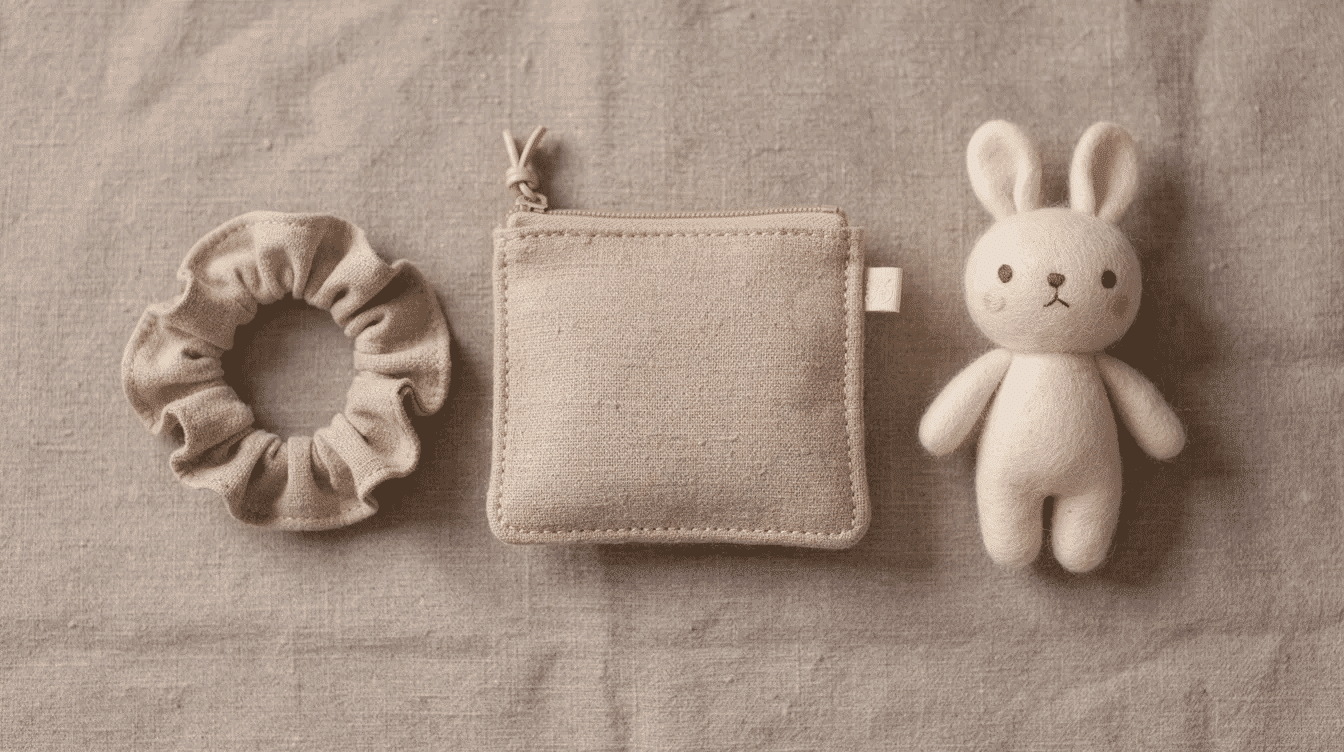
A hair scrunchie is made from a small fabric tube with elastic inside. Making hair scrunchies is a popular beginner sewing project for kids, as they are quick to sew and require only basic materials.
Why It Stands Out
It can be finished in under 30 minutes, and the result is wearable right away.
Best For
Kids aged 6–10 who want quick success, especially a daughter or child who enjoys hair accessories and clothes.
Key Strengths
- Uses small pieces of fabric.
- Great for using scraps from the shop or an old shirt.
- Kids can make a bunch for friends, christmas gifts, or party gift ideas.
- Builds confidence for the first time on a small project.
Possible Limitations
Threading elastic through the tube can be tricky. A safety pin or bodkin helps, and a strip of tape can keep the elastic from slipping inside.
3. Simple Stuffed Animal
A simple stuffed animal can be a flat bear, rabbit, alien, or felt monster. Simple sewing projects for kids include making plush toys, such as flat stuffies like bears or rabbits, which help practice curves and turning corners.
Why It Stands Out
It combines sewing with creativity and ends as a toy. Felt monsters are a fun sewing project for kids, allowing them to use their creativity while learning basic sewing techniques.
Best For
Kids aged 7–11 who like toys, drawing a shape, and hand work.
Key Strengths
- Can be done entirely by hand sewing.
- Felt material does not fray.
- Kids can design eyes, ears, spots, and silly features.
- Starting with simple projects like pillows or flat stuffed animals can help children practice basic sewing skills such as straight lines and curves.
Possible Limitations
Stuffing evenly takes patience, and hand sewing takes longer than machine sewing. Keep the shape simple and do not wait until the child is tired to finish.
4. Fabric Bookmark
A fabric bookmark is a small decorated strip made from felt or cotton.
Why It Stands Out
It is a perfect first machine project because it is small, flat, and mostly straight stitching.
Best For
Kids aged 6–9 making their first machine-sewn item.
Key Strengths
- Tiny size reduces overwhelm.
- Only straight stitching is needed.
- A great way to practice guiding fabric under the presser foot.
- Works well with free patterns from a trusted craft site or printable resources page.
Possible Limitations
The narrow seams require steady hands. Add ribbon, applique, or simple embroidery if the child wants more creative ideas.
5. Simple Pillow Cover
A simple envelope-style pillow cover teaches hemming and corners without a zipper.
Why It Stands Out
It creates useful room decor. Kids can sew custom cushions to teach them how to sew perfect 90-degree angles without requiring fitting.
Best For
Kids aged 9–12 who want to decorate their room with pillows.
Key Strengths
- No zipper required.
- Teaches hemming, measuring, folding, and pressing.
- Removable and washable.
- A simple throw pillow is one of the great ideas for useful beginner sewing.
Possible Limitations
Accurate measuring matters. The envelope back can be confusing at first, so fold a paper model in half before cutting fabric.
6. Simple Zipper Pouch
A zipper pouch is a little bag that can become a pencil case, travel pouch, or mini cosmetic bag.
Why It Stands Out
It introduces zipper installation in a manageable size.
Best For
Kids aged 10–12 with a higher skill level and some machine basics.
Key Strengths
- Teaches zipper placement.
- Useful for school supplies.
- Can include lining for a cleaner finish.
- Looks awesome when completed.
Possible Limitations
A zipper is harder to fix than a plain seam. Adult guidance is important, especially near the presser foot.
7. Doll Clothes
Doll clothes can be a simple skirt, dress, cape, or top for an 18-inch doll.
Why It Stands Out
Small scale makes the sewing manageable, while the finished piece becomes part of play.
Best For
Kids aged 7–12 who love sewing for dolls and want custom outfits.
Key Strengths
- Small fabric pieces are easy to handle.
- Seams do not need to be perfect.
- Encourages design, color matching, and imagination.
- Creates memories kids can share with friends.
Possible Limitations
Tiny seam allowances require precision. Fitting can be tricky, so choose simple shapes before fitted clothes.
Quick Comparison of the Best Beginner Sewing Projects
Project | Best For | Age Range | Main Skills |
|---|---|---|---|
Hair Scrunchie | Quick wins | 6–8+ | Straight seam, elastic, turning |
Fabric Bookmark | First machine sewing | 6–9 | Straight lines, edge stitching |
Simple Stuffed Animal | Hand sewing practice | 7–11 | Curves, stuffing, decoration |
Tote Bag | Practical skills | 8–12 | Rectangles, handles, seams |
Pillow Cover | Room decor | 9–12 | Hemming, corners, measuring |
Zipper Pouch | Intermediate skills | 10–12 | Zipper, lining, precision |
Doll Clothes | Doll lovers | 7–12 | Small seams, fitting, creativity |
A simple drawstring bag is a great beginner sewing project that requires minimal materials and skills, making it perfect for kids. If your child wants a bag but is not ready for a zipper pouch, a drawstring pouch is a smart step in between. Outdoorsy kids might also enjoy sewing and decorating a fabric kite for kids as another simple fabric project. |
How to Choose the Right Sewing Project
Choose Based on Child’s Age and Attention Span
Simple sewing projects are the best way to get kids excited about sewing. For some families, curated DIY kits for creative projects can also make it easier to get started without hunting for every single supply. For ages 6–8, choose a bookmark, scrunchie, felt plushie, or simple flat softie. For ages 9–12, try a tote bag, pillows, drawstring pouch, or zipper pouch.
The goal is to encourage progress. If a project feels too hard, pause and practice on scraps. There is no need to rush the course of learning.
Choose Based on Available Sewing Equipment
If you only have hand-sewing tools, start with felt bookmarks, felt monsters, and flat stuffed animals. You need a needle, thread, scissors, and maybe a few clips.
If you have a sewing machine, teach the basics slowly: how to start, stop, raise the presser foot, guide fabric, and keep fingers away from the needle. Seasonal projects, such as polar bear craft ideas for winter, are a fun way to keep kids engaged while they practice. Adult supervision is crucial any time kids use a machine, iron, sharp scissors, or pin near moving parts.
Choose Based on Child’s Interests
A busy child may prefer a 20-minute scrunchie. A practical child may prefer a tote bag. A creative child may prefer a monster plushie or themed projects like easy owl crafts for kids. A child who likes school supplies may love a pencil case.
Let kids choose fabric and colors. That one choice often turns a basic project into something they are glad to finish and proud to share, just like bright colorful craft ideas for a fun weekend can turn an ordinary afternoon into a creative highlight.
Which Sewing Project Is Best for You?
Choose the hair scrunchie if your child needs quick success and confidence building.
Choose the stuffed animal if your child prefers hand work, soft toys, and creative expression.
Choose the tote bag if your child wants something practical they will actually use.
Choose the zipper pouch if your child is ready for more advanced techniques and can follow careful steps.
Choose a pillow cover if your child wants room decor and needs practice sewing 90-degree corners.
Choose doll clothes if imaginative play is the main inspiration.
Final Thoughts
The best beginner projects are not the fanciest ones. They are the ones that match the child’s current skills, attention span, and interests. Start with straight lines, simple shapes, and forgiving fabric, then build toward curves, casing, lining, and zippers.
I hope this post gives you enough ideas to create your first sewing plan with confidence. Pick one project, gather the resources, sign up for free patterns if your favorite site offers them, and sew one small thing this week. If you try one of these easy sewing projects, leave a comment, share what worked, and keep the fun going.