Key Takeaways
- Kids can make a no sew fleece blanket in about 45–60 minutes with adult supervision, simple tools, and clear step instructions.
- For a baby blanket, you will need 1 yard of each fabric, totaling 2 yards. A child’s blanket typically requires 1.5 yards of each fabric, which amounts to 3 yards total. For a teen or adult blanket, you should purchase 2 yards of fleece in each color, totaling 4 yards.
- Fleece fabric does not fray, so you do not need sewing skills or a machine to sew blanket edges; balloon knots, a tied edge, or a braided edge can secure the two fabric pieces.
- Using a piece of cardboard can help ensure consistent fringe size when making fleece blankets, especially when kids are helping cut even strips.
- No-sew fleece blankets make great gifts because they are easy to personalize with prints that match the recipient’s interests.
Introduction: A Kid‑Friendly No Sew Fleece Blanket
A no sew fleece blanket is a soft, warm blanket made by cutting and tying fleece instead of sewing. This no sew fleece blanket kids tutorial is designed for kids and adults crafting together on a rainy afternoon, school break, weekend, or christmas craft day in 2026 and beyond, and it fits perfectly alongside other festive holiday craft ideas you can make together.
The project uses two layers of fleece blanket fabric: one top piece and one bottom piece. You lay the fabric pieces together, trim the edges, cut fringe, and tie knots or make a braided edge to finish the blanket.
If you searched for “sew fleece blanket,” “sew fleece,” or “sew blankets,” this is the easier version. You will learn how many yards to buy, how to make two pieces the same size, and how to choose between a classic tie blanket and a no-knot finish.
- Supplies: What You Need to Make a No Sew Fleece Blanket
- Choosing and Buying Fleece for Kids
- Step‑by‑Step: How to Make a No Sew Fleece Blanket with Kids
- Optional Braided Edge: Make a No Sew Blanket Without Knots
- Size Guide: How Many Yards of Fleece Do Kids’ Blankets Need?
- Fun Ways Kids Can Personalize Their Fleece Blankets
- FAQ: Kids’ No Sew Fleece Blanket Questions Answered
- Do I need to pre‑wash fleece before kids start this project?
- How can I make this project easier for younger kids (ages 5–7)?
- Can I make a single‑layer no sew fleece blanket for kids instead of double‑layer?
- What’s the best way for kids to wash and care for their new blanket?
- Can we fix mistakes if a strip is cut too short or a knot comes undone?
Supplies: What You Need to Make a No Sew Fleece Blanket
This is a simple shopping list parents and kids can take to a fabric store or use when ordering online, similar to what you might find in all‑in‑one DIY craft kits for kids and adults.
You will need:
- Two coordinating fleece fabrics, such as one cute pattern and one solid color
- Fabric scissors or a rotary cutter
- A cutting mat or large mat if using a rotary cutter
- Long ruler, yardstick, or measuring tape
- Masking tape for visual cutting guides
- Large flat surface, such as a clean floor or table
- Optional fabric clips to hold layers in place
- Optional fabric marker or tailor’s chalk
- Cardboard cutting template made from a cereal box or shipping box
For the standard kids version, to make a no sew fleece blanket, you will need two pieces of fleece fabric, each measuring at least 1.5 to 2 yards, depending on the desired size of the blanket. For smaller toddler lap blankets, 1 yard of each fabric is usually enough.
Anti-Pill Fleece is recommended for no-sew blankets because it is soft, cuddly, and does not pill over time, making it ideal for long-term use. If the tag says anti pill fleece, it is a great choice for kids who will use and wash their finished blanket often.
Avoid very heavy luxe fleece for a double layer blanket. Luxe Fleece is a heavier option that is visually appealing but is generally not recommended for double-layer no-sew blankets due to its weight.
Choosing and Buying Fleece for Kids
Picking colors is the fun part. Child-friendly designs for fleece blankets often include bright colors, popular themes, or favorite characters, such as dinosaurs, unicorns, sports, space, pets, or cartoons.
A popular theme for no-sew fleece blankets is to choose fabrics that reflect the hobbies or favorite colors of the person receiving the gift, making it a thoughtful and customized present. When gifting no-sew fleece blankets, consider using two layers of fleece with a fun pattern on top and a coordinating solid color on the bottom for a cozy and stylish look.
Here are the main fleece options:
- Anti-Pill Fleece: best for long-term use because it stays smoother.
- Blizzard Fleece: Blizzard Fleece is a more affordable option for no-sew blankets, available in many prints, but it is not as soft as Anti-Pill Fleece and may pill with use.
- Luxe Fleece: pretty and plush, but bulky for knots.
- Minky fabric: very soft, but it can be slippery and is not the easiest fabric for a first no sew fleece blanket with kids.
Fleece fabric typically comes in widths of 60 inches, and the finished blanket will be about 4-10 inches smaller in each direction than the fabric used. Ask the store to cut both fabric pieces to the same amount of yardage, whether you shop online or buy fleece at joann fabric or another local shop.
Quick tip: Check the stretch direction and keep both fabric pieces oriented the same way. This helps reduce distortion when you tie knots around the edges.
For more general fleece selection guidance, craft tutorials such as It’s Always Autumn’s fleece blanket guide also recommend avoiding overly bulky fleece for tied blankets.
Step‑by‑Step: How to Make a No Sew Fleece Blanket with Kids
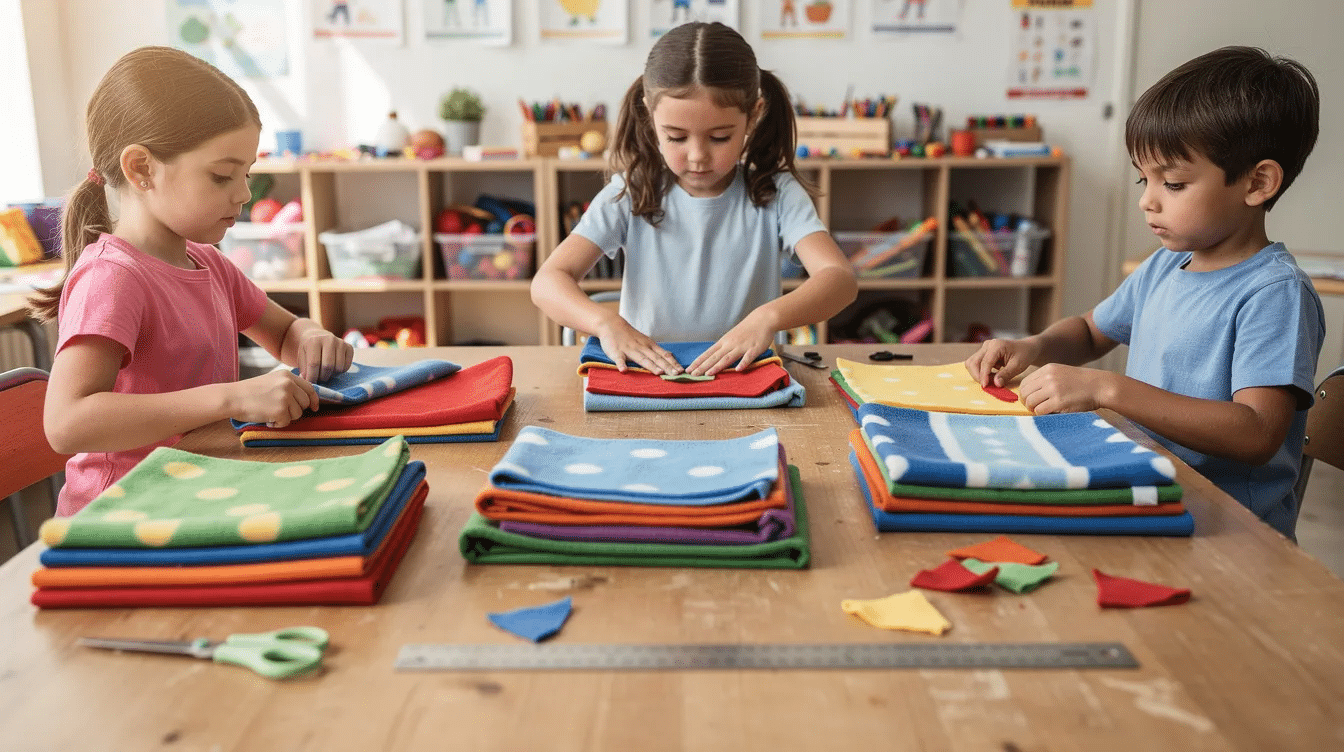
This is the core of the tutorial: simple steps from trimming the fabric to tying the last knot. The process involves layering the two pieces of fleece, trimming the edges to ensure they are straight, cutting out squares from each corner, and then cutting fringe strips along the edges.
Safety comes first. Adults should handle the rotary cutter, cutting mat, and any tricky trim work, while kids can help line up fabric pieces, smooth wrinkles, count strips, and practice knots.
Step 1: Layer and Trim Fabric Pieces to the Same Size
Lay both fleece fabric pieces on a clean floor or large table. Put the wrong sides together so the right sides face outward; if one piece has a print, the brighter printed side should face out.
Smooth the fabric gently. Kids can pat out wrinkles, check the pattern direction, and make sure the corner points line up.
Trim around all four sides so the two fabric pieces are the same size. Remove uneven store-cut areas and selvedge edges, since they can be stiff or printed with manufacturing marks.
A rotary cutter and mat can create cleaner cuts through two layers of fleece compared to using scissors. If kids need a visual guide, place masking tape along the cutting line to help create straight edges.
Careful trimming now makes the finished product look neater and prevents lopsided fringe lengths later.
Step 2: Measure and Cut Corner Squares
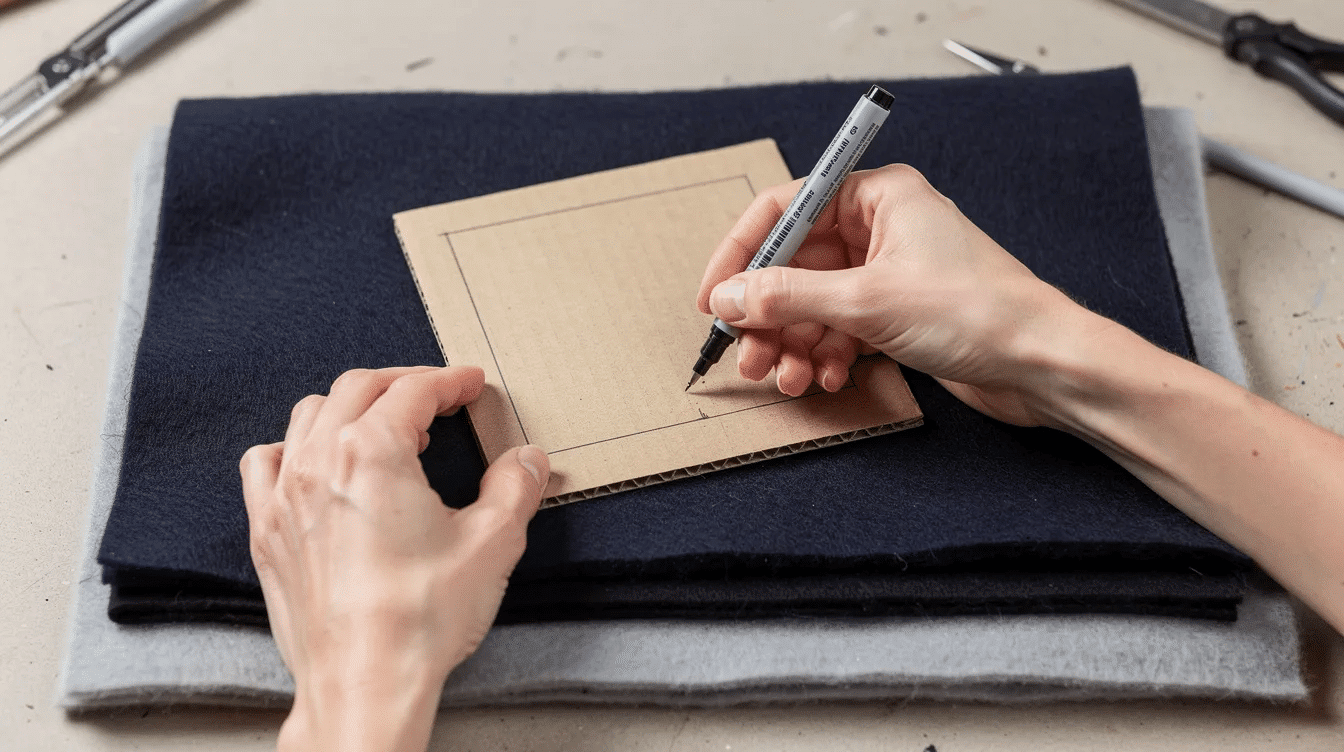
Corner squares are removed so the fringe and knots can lay flat without bulky bunching. Measure a 5 inch by 5 inch square at each corner.
Use a ruler or a cutting template made from cardboard. A cereal box is a brilliant idea for this because it is thin, easy to cut, and sturdy enough for kids to trace, and leftover pieces are perfect for other projects like a DIY cardboard sword craft.
Cut the square through both layers at once. Kids can trace the square with a fabric marker, then an adult can do the cutting.
Before each corner cut, double-check that the layers have not shifted. Save the scrap squares so kids can practice a balloon knot, square knot, simple braid, or overhand knot before working on the actual blanket.
Step 3: Cut Even Fringe Strips Around the Edges
Fringe means the long strips cut around the edges of the fleece blanket. Each fringe piece from the top layer will be tied to the matching fringe piece from the bottom layer.
Cut 1 inch wide and 5 inches long strips along each side, between the removed corner squares. These even strips create the classic fringed edge.
A cardboard cutting template keeps the strips consistent. Adults can do the cutting while kids count each strip, move the ruler, or check the pattern.
Cut straight in from the edge and stop at the 5 inch mark. Keep scissors perpendicular to the edge so the tied edge looks clean.
Step 4: Tie Balloon Knots to Finish the Edge
A balloon knot is similar to how you would tie off a balloon. It tends to lay flat better than a bulky square knot, which makes the blanket more comfortable against skin.
After cutting the fringe, you tie the strips together using a balloon knot, which is similar to how you would tie off a balloon, to secure the layers of fleece together. Pick up one strip from the top and the matching strip from the bottom, then tie them snugly.
Start in one corner and work clockwise or counterclockwise. This keeps kids from losing track of which knots are finished.
For smaller hands, simple overhand knots or double knots are fine. Kids with fine motor challenges can tie the first loose knot, then an adult can tighten it.
Once every pair of strips is tied, the double layer no sew fleece blanket is secure, warm, and ready for its first wash.
Optional Braided Edge: Make a No Sew Blanket Without Knots
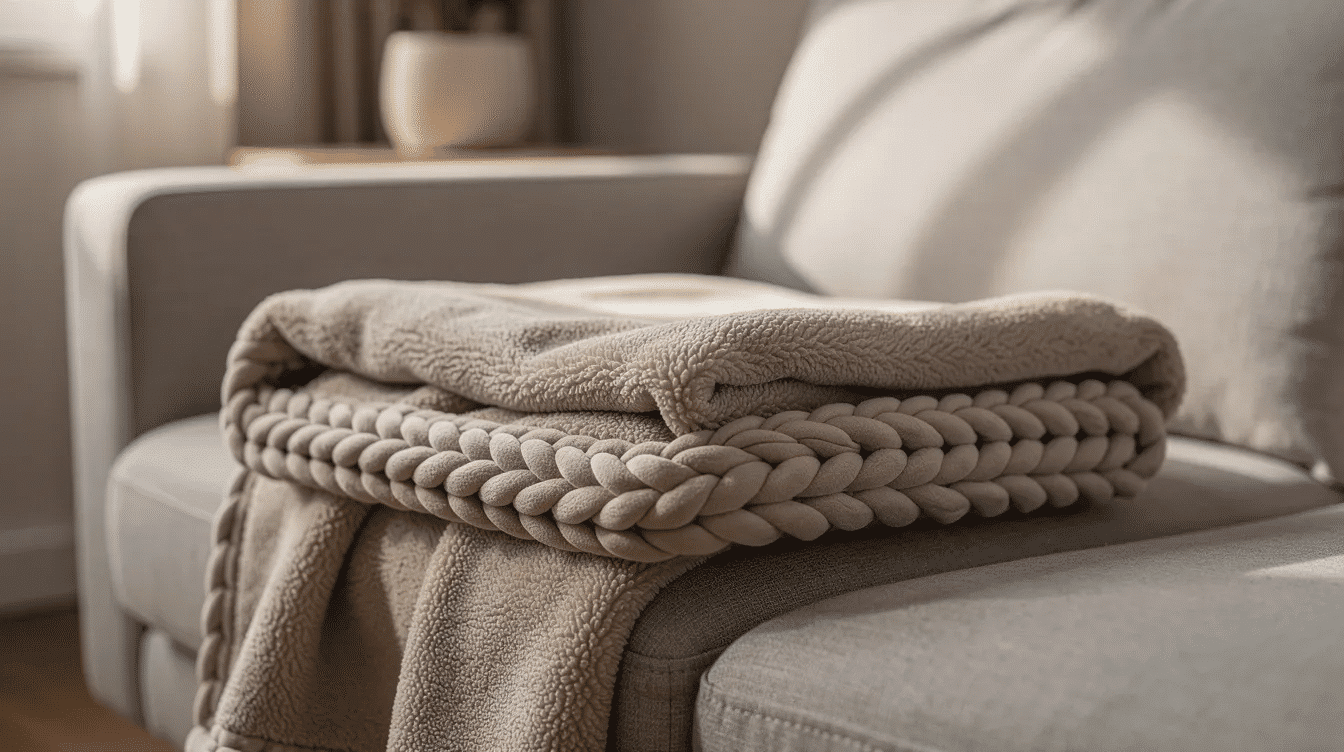
Older kids may enjoy a braided edge, which uses slits and looping instead of bulky knots. A braided edge can give a more polished finish than simple knots when making a fleece blanket.
The no-knot technique involves cutting a small slit in each fringe strip and pulling the strip through to form a braid. In most versions, you cut shorter 2 inch fringe, make a small center slit in each strip, then pull each strip through the next all the way around.
This method takes longer, but it creates a flatter border for kids who dislike the feel of knots along the edges. Adults should cut the narrow slits, while kids help feed the strips through and smooth the braid.
The braided technique treats both layers as one unit. At the end, tuck the final strip inside and secure it with a hidden tie.
For more no-knot ideas, Fleece Fun’s no-sew blanket guide shows several edge styles that work well for a great diy gift.
Size Guide: How Many Yards of Fleece Do Kids’ Blankets Need?
Use this quick guide before you buy fleece. It answers how many yards you need for each size blanket.
Blanket type | Fabric needed per piece | Yards total |
|---|---|---|
Baby blanket or toddler lap blanket | 1 yard each | 2 yards total |
Child’s blanket, up to about age 10 | 1.5 yards each | 3 yards total |
Teen or adult blanket | 2 yards each | 4 yards total |
For a baby blanket, you will need 1 yard of each fabric, totaling 2 yards. A child’s blanket typically requires 1.5 yards of each fabric, which amounts to 3 yards total. For a teen or adult blanket, you should purchase 2 yards of fleece in each color, totaling 4 yards. |
Remember that the finished blanket will be smaller than the original fabric because you cut 5 inch corner squares and fringe. A blanket can lose about 4-10 inches in each direction after trimming and tying.
If you are unsure, lay a favorite blanket on the floor and measure it. Then choose the nearest yardage at the fabric store.
Charity groups often use similar sizing for kids’ fleece blankets; for example, Project Linus Oregon lists kid and teen yardage for group blanket-making.
Fun Ways Kids Can Personalize Their Fleece Blankets
Personalization keeps kids engaged and turns simple fleece blankets into keepsakes. It also makes each finished blanket feel like a great gift instead of a generic craft, just like many heart‑themed DIY crafts and decorations.
Try these ideas, or pair this project with another hands‑on activity like a fuzzy felt activity board for kids:
- Choose character prints, animals, sports, space, rainbows, or holiday fabric, or coordinate with winter themes inspired by polar bear winter crafts for kids.
- Pair a busy pattern with a solid color for contrast.
- Add initials using leftover fabric pieces and fabric glue.
- Use fabric paint pens to write a name and year.
- Add iron-on letters with adult help.
- Make a matching pillow by tying only three sides of a smaller fleece rectangle, stuffing it, then tying the last side.
No sew fleece blankets make a great diy gift for birthdays, sleepovers, christmas, classroom exchanges, and family movie nights. They are also useful for charity drives, children’s hospitals, or a local animal shelter that accepts washable fleece donations, and they pair nicely with family‑themed preschool crafts for service or classroom projects.
This is a pretty easy craft, but it still feels special because kids choose the fabric, pattern, colors, and final style. If you want an awesome tutorial for a group, pre-cut the pieces before kids arrive so the activity stays calm and fun.
FAQ: Kids’ No Sew Fleece Blanket Questions Answered
Do I need to pre‑wash fleece before kids start this project?
No. Fleece does not shrink like cotton, so pre-washing is not required and can make the edges curl, which makes cutting harder.
Most crafters cut and tie first, then wash the finished blanket in cold water on a gentle cycle. Check the care label if the fleece has glitter, foil, or special finishes.
How can I make this project easier for younger kids (ages 5–7)?
Pre-cut the corner squares and fringe strips before inviting younger kids to help. Then they can focus on tying simple knots, counting strips, and choosing which side to work on next.
Short sessions work best. Complete one side, take a break, and come back to the next side later, or switch to a simple project like a crab paper plate craft for kids to keep little hands busy without frustration.
Can I make a single‑layer no sew fleece blanket for kids instead of double‑layer?
Yes. A single layer fleece blanket is lighter, less bulky, and good for warmer climates or kids who overheat.
Use one piece of fleece, cut fringe around the edges, and use a loop-through or flip-through method to finish each strip. A single layer version uses less fabric, often only 1-2 yards total and leaves extra time for outdoor makes like a DIY fabric kite craft.
What’s the best way for kids to wash and care for their new blanket?
Wash fleece blankets in cold water on a gentle cycle with mild detergent. Avoid fabric softeners because they can reduce softness over time, and consider reserving them for other projects like tissue paper stained glass window crafts where fabric texture doesn’t matter.
Dry on low heat or air-dry. With careful washing, a no sew fleece blanket stays colorful, warm, and cuddly for years.
Can we fix mistakes if a strip is cut too short or a knot comes undone?
Yes. Most mistakes are fixable.
If one strip is too short, tie it to its neighbor or trim nearby strips slightly so the edge looks intentional. If a balloon knot comes undone, retie it tighter. For torn strips, use fabric glue or a small bit of sewing on the back side as an adult-only repair.
Now grab two pieces of fleece, make a no sew plan, and let kids create a blanket they will actually use.