Key Takeaways
- Kids can finger knit with just yarn, fingers, and scissors; no knitting needles or crochet hook needed.
- Many children can begin finger knitting around ages 4–6, while a 6 year old often works more independently.
- A slip knot is the only knot beginners need before they start.
- The basic process is super simple: make a loop, wrap, lift the bottom loop over the top, and repeat.
- This post covers tying off, easy first projects, and quick fixes for common mistakes.
Introduction to Finger Knitting for Kids
Finger knitting turns a child’s hands into a simple knitting tool. Instead of needles, kids use their fingers to create a knitted cord from yarn. It is often easier than traditional knitting, regular knitting, or crochet because there are fewer tools to manage.
If you are searching for “finger knitting for kids how to start,” the best first step is a short, relaxed practice chain. Finger knitting is a screen-free craft for kids that builds art fine motor skills in children, focus, and confidence while they create real items like bracelets, necklaces, and a cute scarf.
- What You Need to Begin Finger Knitting
- Before You Start: Setting Up for Success with Young Kids
- How to Make a Slip Knot Before You Begin Finger Knitting
- How to Finger Knit with One Finger (Best for Beginners)
- How to Finger Knit with Multiple Fingers (3 or 4-Finger Method)
- How to Tie Off and Finish Your Finger Knitting
- Easy First Projects Kids Can Make with Finger Knitting
- Helping Different Age Groups: 3, 4, 5, and 6-Year-Old Kids
- Tips, Troubleshooting, and Safety for Finger Knitting with Kids
- More Yarn Craft Ideas Once Kids Love Finger Knitting
- FAQ
What You Need to Begin Finger Knitting
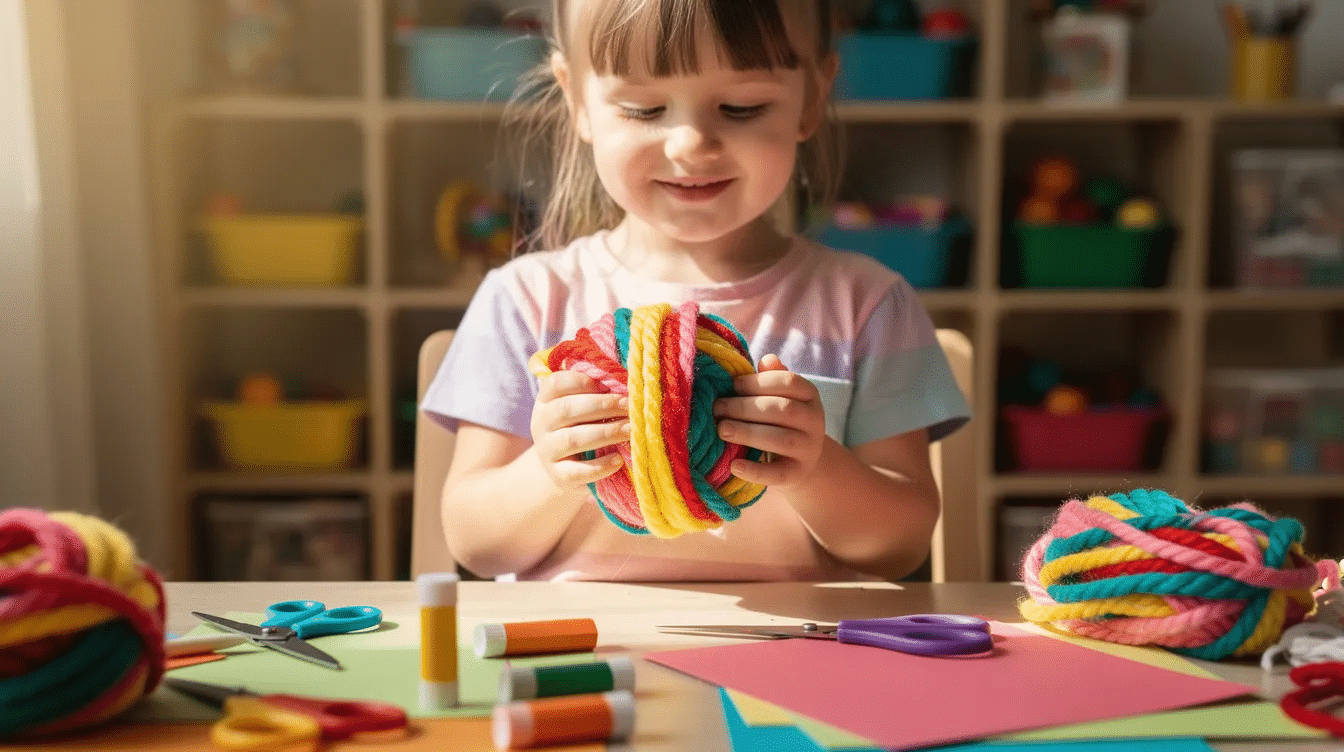
You only need a few supplies:
- Smooth, bulky or super-bulky yarn is recommended for finger knitting; fluffy yarns should be avoided.
- Any type of yarn can be used for finger knitting, but chunky or bulky yarn is preferred for faster results and easier handling by children.
- Using chunky or super bulky yarn makes stitches visible and prevents tangling.
- Bulky yarn types, such as 8ply and up, are recommended for finger knitting as they are easier to handle and create thicker pieces.
- You will need scissors and your fingers to complete finger knitting projects.
- A ruler or tape measure helps with lengths, such as 10–18 inches for friendship bracelets.
Bright colors help young kids see each stitch. Clean, dry hands also make the yarn easier to grip. A small basket keeps the ball from rolling away.
Before You Start: Setting Up for Success with Young Kids
Choose a quiet time when your child is not tired or hungry. Sit side by side, so you can mirror the instructions and let them watch your hands.
For a 3–4 year old, let them wrap the string while you help with lifting. Starting with just two fingers helps younger children build muscle memory while finger knitting. Older kids can try the full process. Begin with a tiny 6–8 inch chain before a bigger project.
How to Make a Slip Knot Before You Begin Finger Knitting
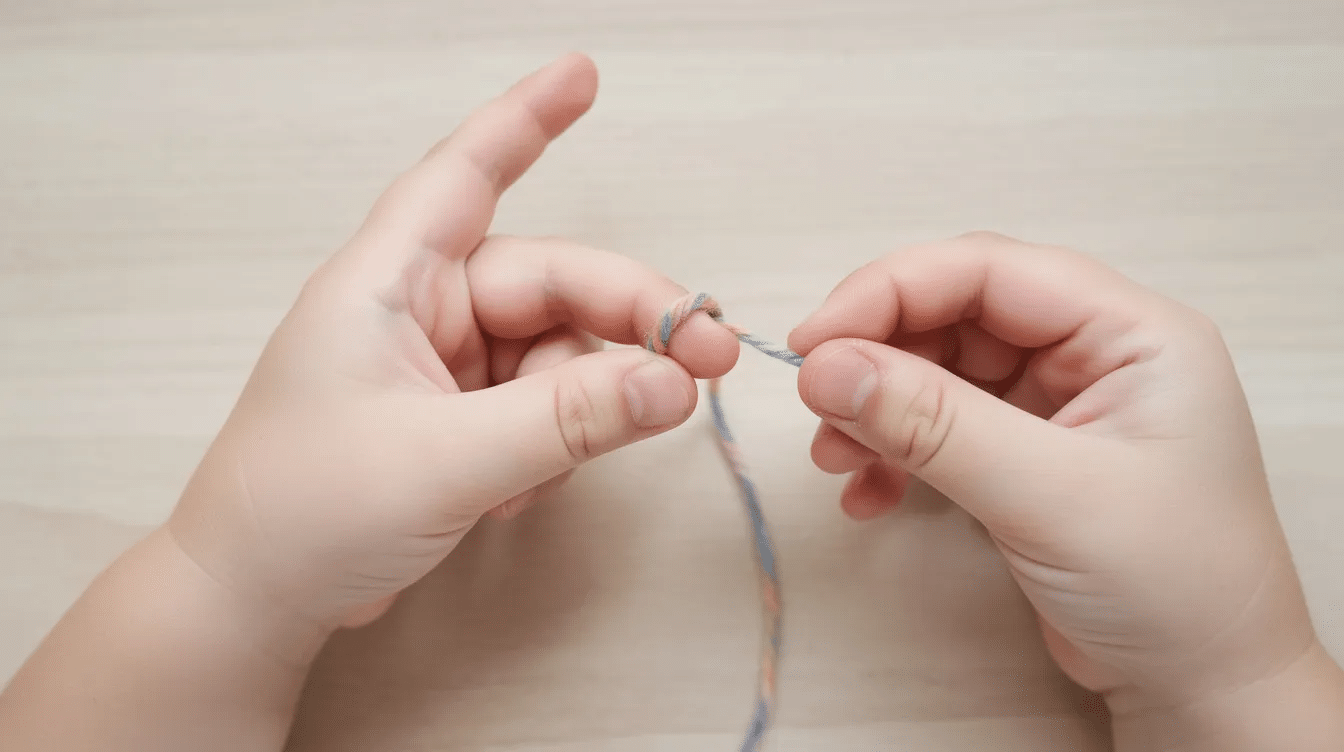
To start finger knitting, create a slip knot about 4-6 inches from the cut end of your yarn and place it on your pointer finger.
Make a loop with the yarn crossing over itself. Pinch the crossing point, then pull a small loop of yarn through to form an adjustable knot. Pull the working yarn, the part attached to the ball, to tighten it gently. It should fit comfortably, not squeeze the finger.
For very young kids, an adult can make the slip knot first. Later, teach them to do it themselves.
How to Finger Knit with One Finger (Best for Beginners)
The one-finger method is ideal for beginners.
- Place the slip knot on the pointer finger or index finger.
- Let the short tail hang down.
- Wrap the yarn from the ball around the finger to make a second loop.
- Lift the bottom loop over the top loop and off the fingertip.
- Keep one loop on the finger.
- Repeat: “loop around, jump over the rope.”
Keep the loops snug but not tight. Every few rows, give the growing chain a gentle tug from the back of the finger. Kids love to watch the rope grow; it keeps the process fun.
How to Finger Knit with Multiple Fingers (3 or 4-Finger Method)
When kids are ready, they can finger knit with one, two, three, or four fingers, with the technique adapting to the number of fingers used. Using all four fingers on the non-dominant hand is a popular method for finger knitting.
Hold the hand up with fingers close together. Anchor the yarn with the thumb or a slip knot on the index finger. Weave behind the index finger, in front of the middle finger, behind the ring finger, and in front of the pinky. Then wrap back the opposite way until each finger has two loops.
The basic technique involves wrapping the yarn around your fingers in a specific pattern, then pulling the bottom loop over the top loop on each finger to create stitches. Start lifting from the pinky and move back across the middle and index fingers to finish one row.
How to Tie Off and Finish Your Finger Knitting
Tying off stops the finger knit chain from unraveling.
Cut the yarn 6–8 inches from the last loop. Slip the remaining loop off the finger. Thread the cut end through that loop and pull to tighten into a small knot. To make bracelets or necklaces, tie the starting tail and ending tail together.
To prevent unraveling while storing, active loops can be secured by threading a pencil, chopstick, or straw through them. An adult can trim extra ends after the final tie.
Easy First Projects Kids Can Make with Finger Knitting
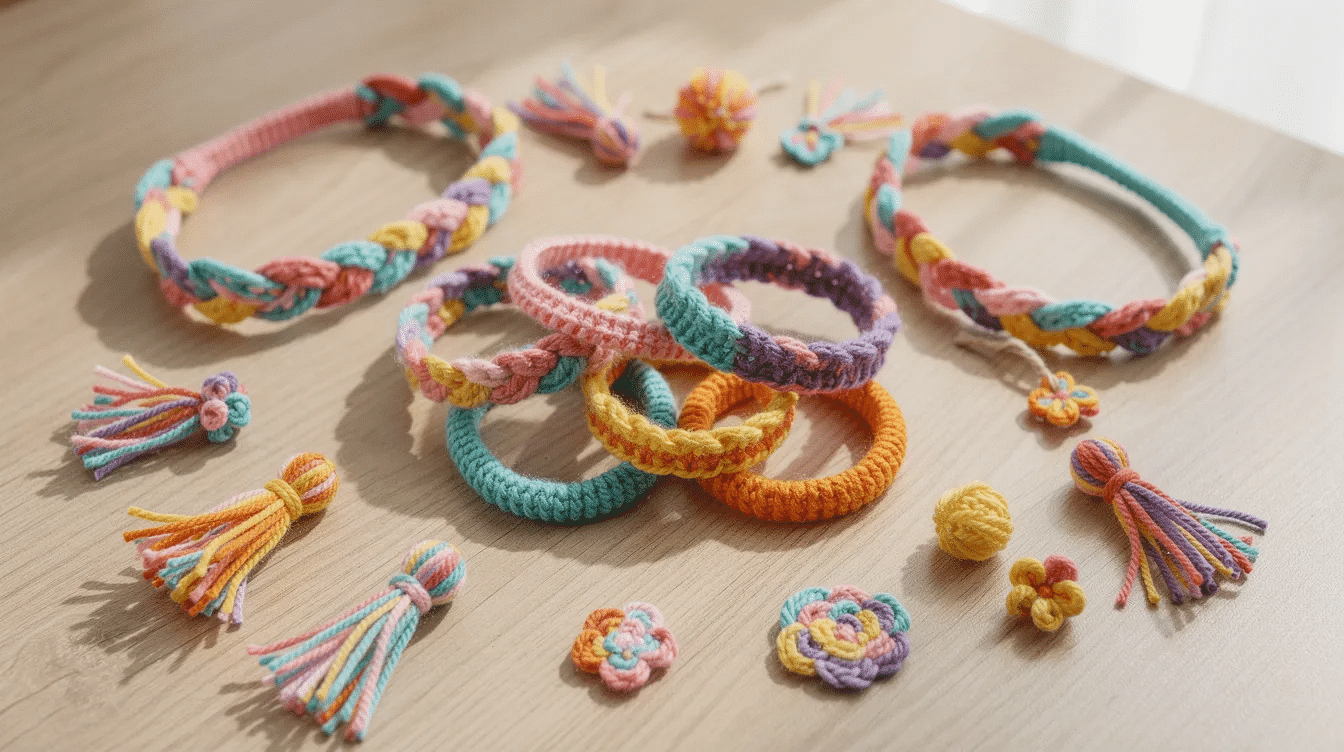
Finger knitting can be turned into various creative projects such as friendship bracelets, necklaces, and headbands, making it a fun and easy craft for kids, especially when paired with other rainbow crafts for kids.
Try these fabulous first projects:
Project | Best method | Quick guide |
|---|---|---|
Friendship bracelets | 1 finger | 10–18 inches; twist two strands together |
Necklaces | 1–2 fingers | 20–24 inches; leave yarn to tie |
Headbands | 3–4 fingers | 18–20 inches around the head |
Belts or bag straps | four fingers | Measure first |
Decor | any method | Coil and glue strands into flowers or mini rugs |
Finger knitting produces a long, tubular piece of knitted wool, which can be used to make items like scarves, rugs, and even toys for pets. You can create adorable finger knitted items like butterflies, bunnies, and even seasonal decorations such as pumpkins and Santa hats, or pair your yarn projects with festive holiday craft ideas, owl crafts for kids, and polar bear winter crafts. |
Helping Different Age Groups: 3, 4, 5, and 6-Year-Old Kids
Kids need different support:
- 3-year-old children: focus on yarn play, texture, and pulling loops with help.
- 4-year-old kids: let them wrap while you do the jump-over step.
- 5-year-old beginners: many can handle one-finger knitting with guidance.
- 6-year-old and older kids: many can follow picture instructions, measure, and try four fingers.
Keep sessions to 10–15 minutes. If your daughter or son is interested, you may find that after one week they have figured out the rhythm. If they sat for an hour, great-but do not forget that short practice is enough.
Tips, Troubleshooting, and Safety for Finger Knitting with Kids
If loops are too tight, loosen the grip or use thicker wool. If loops are too loose, ask the child to pinch closer to the finger while they wrap.
If a loop drops, place it back on the finger and pull gently. If the chain twists, hold it straight and give it a gentle tug. Supervise scissors, store long strands safely, and keep yarn away from babies’ necks.
A pin, pencil, or connector pen can hold loops during a break. A video can also help visual learners, but hands-on practice matters most, and you can switch things up with an outdoor project like a simple fabric kite craft for kids.
More Yarn Craft Ideas Once Kids Love Finger Knitting
Finger knitting is a great activity that can lead to more craft projects. Use leftover strands as doll hair, belts, bookmarks, jar ties, or gift wrap.
Kids can also try cardboard weaving, pom poms, beads, or mixed-media art, or explore themed ideas like dragonfly crafts for kids and creative nature stick crafts. One lovely idea is to make tiny hats for toys, trim socks into soft doll clothes, or decorate cards with a finger-knit border, or combine them with simple heart crafts for all ages using DIY craft kits for creative projects. The fun making is often as valuable as the finished piece.
FAQ
What age can kids start finger knitting?
Many kids can begin finger knitting around 4–6 years old. A 3-year-old can explore yarn play, but most need help with the full process.
How long does it take for a child to learn to finger knit?
Some kids learn the basic loop in 10–20 minutes. Others need a few short sessions across several days.
What is the best yarn for kids who are just starting?
Choose soft, smooth, chunky yarn that does not split. Avoid thin or fluffy yarn because small loop shapes are harder to see.
How long should our first finger knitting project be?
Start with 10–12 inches for a small bracelet, 18–20 inches for a headband, or 30+ inches for a scarf-style strand.
Can finger knitting help my child get ready for regular knitting or crochet?
Yes. Finger knitting teaches loops, tension, rows, and stitch order, which helps kids later move toward loom work, needles, or crochet.