

Five is a busy age. Kids are cutting, drawing, hopping, negotiating, pretending, asking bigger questions, and getting ready for more structured school routines. The best screen free activities for 5 year olds support that growth through movement, conversation, creativity, and hands-on exploration.
There is nothing inherently wrong with screens, but too much screen time can crowd out the real-world practice young kids need. Reducing screen time can foster creativity and resourcefulness in children, allowing them to explore nature, social connections, and hands-on activities. Children who spend less time on screens are also more likely to engage in physical activities, which can improve their overall health and well-being.
A good activity for this age should be safe, engaging, easy enough to start, and flexible enough to last longer than five minutes. We selected these screen free activities based on developmental value, setup effort, mess level, materials, and how well they hold a 5-year-old’s attention.
- How We Chose the Best Screen-Free Activities
- Top 6 Screen-Free Activities for 5 Year Olds
- 1. Arts and Crafts Projects
- Why It Stands Out
- Best For
- Key Strengths
- Possible Limitations
- 2. Building and Construction Play
- Why It Stands Out
- Best For
- Key Strengths
- Possible Limitations
- 3. Outdoor Physical Activities
- Why It Stands Out
- Best For
- Key Strengths
- Possible Limitations
- 4. Imaginative and Pretend Play
- Why It Stands Out
- Best For
- Key Strengths
- Possible Limitations
- 5. Hands-On Learning Games
- Why It Stands Out
- Best For
- Key Strengths
- Possible Limitations
- 6. Sensory Exploration Activities
- Why It Stands Out
- Best For
- Key Strengths
- Possible Limitations
- Quick Comparison of the Best Screen-Free Activities
- How to Choose the Right Screen-Free Activity
- Which Activity Is Best for You?
- Final Thoughts
How We Chose the Best Screen-Free Activities
We looked for activities that match a typical child’s age around 5: using kid scissors, drawing recognizable shapes, building with small pieces, hopping, balancing, taking turns, and creating pretend stories.
The best options support at least one major developmental area:
- Fine motor skills, such as cutting, pinching, drawing, scooping, and using glue sticks
- Gross motor skills, such as running, jumping jacks, climbing, balancing, and throwing
- Social skills, such as turn-taking, sharing, and explaining ideas
- Creativity, including art projects, storytelling, and pretend worlds
- Independence, so kids can practice making choices without constant direction
We also considered practical guidance for parents. Some families have yards and a local park nearby. Others rely on indoor play places, kid gyms, local recreation centers, other local recreation centers, book stores, craft stores, thrift stores, grocery stores, pet stores, hardware stores, vintage stores, odds and ends stores, outdoor stores, or even bass pro shops for low-cost outings and supplies.
Safety matters too. Use non-toxic art supplies, supervise water and small objects, set ground rules before rough play, and choose materials that fit the child’s age. Research has also found that outdoor play may help reduce some negative developmental associations linked with early screen exposure, especially in communication and socialization, according to JAMA Pediatrics.
Top 6 Screen-Free Activities for 5 Year Olds
1. Arts and Crafts Projects
Arts and crafts include drawing, painting, collage, clay, puppets, cutting, pasting, and other crafting projects. These kinds of arts and crafts activities support broad child development. Nature collages can be made by collecting natural items such as leaves and flowers during nature walks, or you can try creative nature stick crafts for kids using branches and twigs you find outside.
For a simple starter kit, keep a few useful items in one box: paper, markers, popsicle sticks, pipe cleaners, rubber bands, tissue boxes, cardboard boxes, glue sticks, food coloring, kid scissors, and a few items from recycling, or consult a guide to the best art supplies for young artists when you are ready to expand. Crafts studios, arts and crafts studios, and community classes can also help when you want less cleanup at home.
Why It Stands Out
Crafting builds hand strength, hand-eye coordination, planning, and self-expression, and many art projects are perfect for developing fine motor skills in children. Engaging, screen-free activities for 5-year-olds foster creativity, motor skills, and learning through hands-on exploration, and art projects are one of the easiest ways to do all three.
Best For
Choose arts and crafts for creative kids, rainy days, quiet afternoons, or a cozy reading session followed by drawing a favorite scene, especially if you keep a few creative art activities for boredom ready to pull out. It is also useful when kids dislike loud play or need a calmer activity.
Key Strengths
- Develops creativity and self-expression
- Improves fine motor skills and hand-eye coordination
- Can be done independently with minimal supervision
- Works well with indoor and outdoor versions, such as painting indoors or making leaf art outside
Possible Limitations
Crafts can create mess and require cleanup time. They also require art supplies, though many materials can come from cardboard boxes, tissue boxes, and other stuff you already own, or from all-in-one DIY craft kits for creative projects that come with materials included.
2. Building and Construction Play
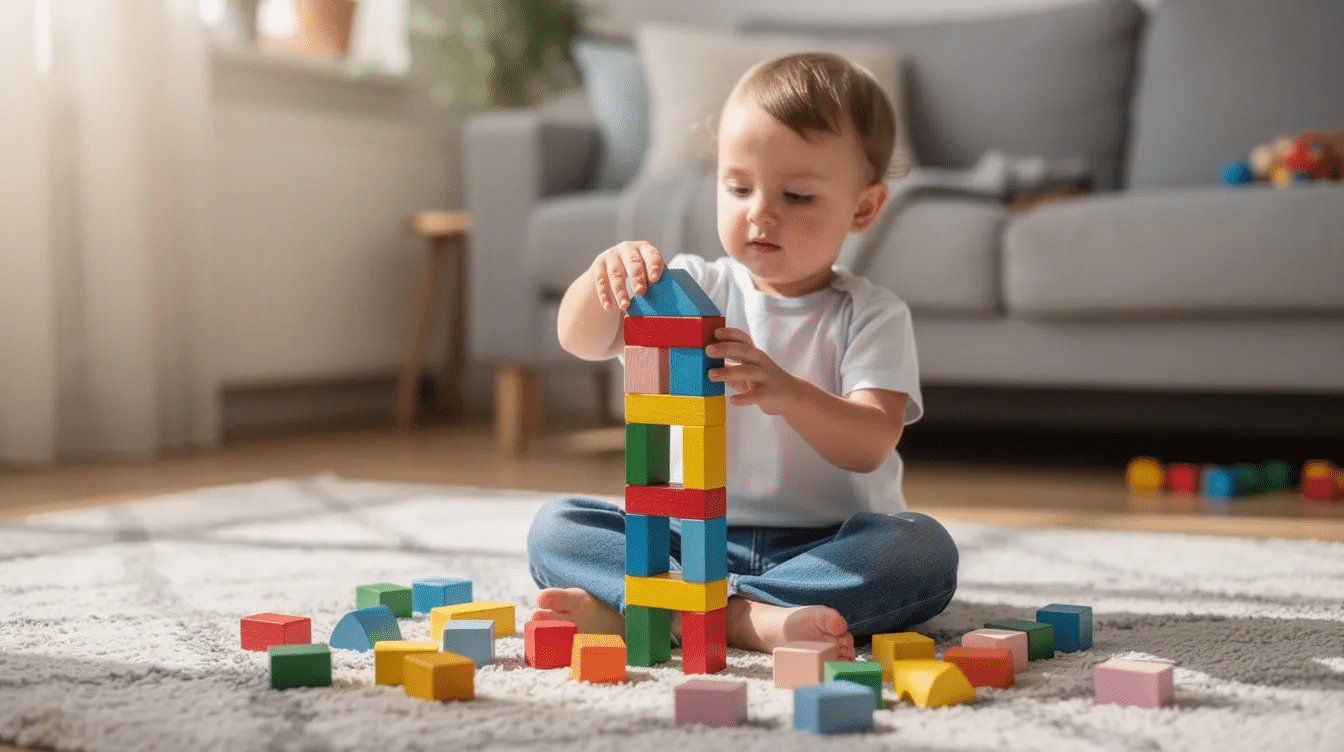
Building play includes wooden blocks, magnetic tiles, LEGO, couch forts, and loose parts. Building with LEGOs is a versatile screen-free activity that helps children develop engineering skills, problem-solving abilities, and storytelling. Building with LEGO can help children develop engineering skills, problem-solving abilities, and storytelling skills, making it a versatile and creative activity.
Building forts can involve using blankets, chairs, and couch cushions to create cozy spaces. Add stuffed animals, a flashlight, and books to turn the fort into a pretend cabin.
Why It Stands Out
Construction play strengthens spatial reasoning, early math, persistence, and planning. Kids learn why towers fall, how bridges balance, and how to revise a design without feeling like they failed.
Best For
This is ideal for kids who love puzzles, gear toys, patterns, vehicles, or engineering challenges.
Key Strengths
- Enhances spatial reasoning and math concepts
- Encourages problem-solving and persistence
- Long-lasting engagement with open-ended possibilities
- Can use blankets, chairs, couch cushions, or an extra crib mattress for soft fort-building
Possible Limitations
Some building sets require an initial investment. Cleanup can also be time-consuming, especially when plastic balls, blocks, and small pieces spread across the play area.
3. Outdoor Physical Activities
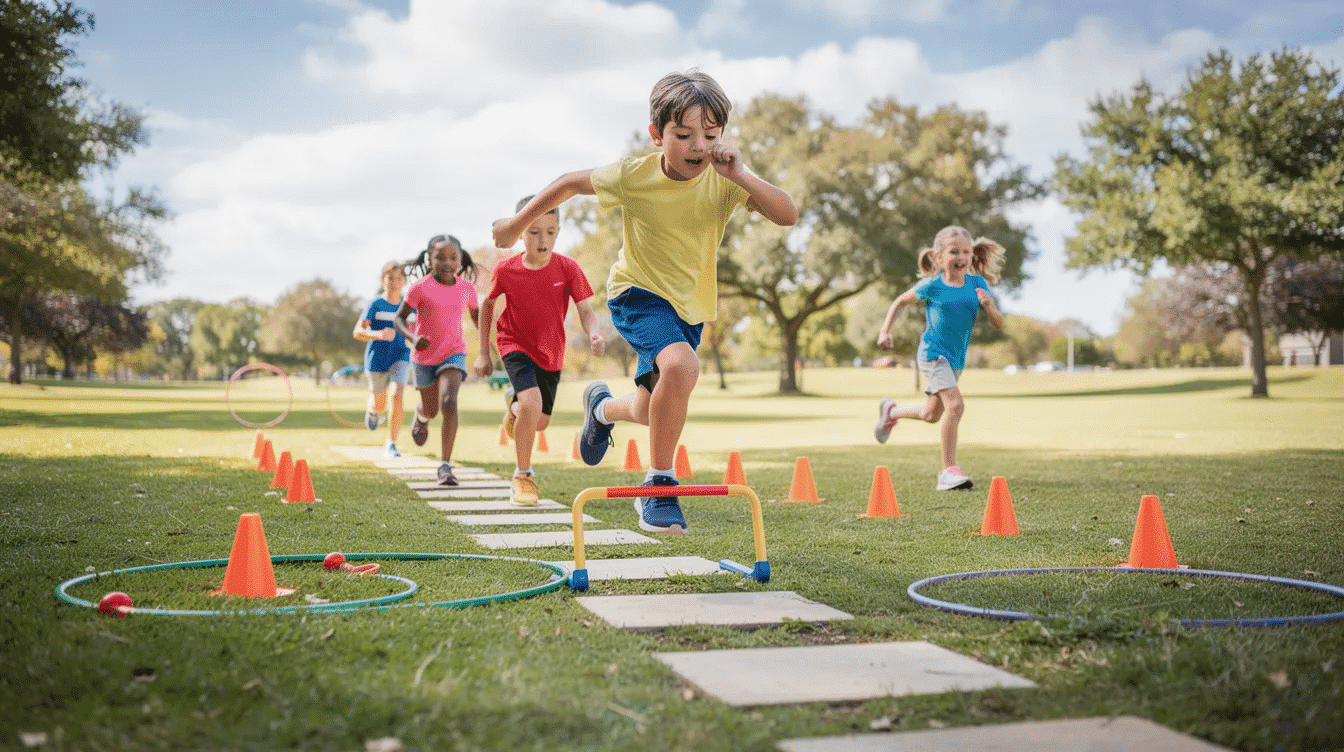
Outdoor activities include playground games, ball play, sidewalk chalk, nature walks, bike practice, obstacle course challenges, and running games. At home, using pillows and cushions can create safe paths for activities like ‘The Floor is Lava’.
Dance parties can be a great way for kids to burn off energy and have fun; turning off the lights and using glow sticks can enhance the experience. You can also make indoor and outdoor versions of the same idea: a backyard dance party, hallway balance path, or living-room obstacle course with an exercise mat.
Why It Stands Out
Physical play builds strength, balance, coordination, fitness, and mood regulation. The Healthy Beginnings Trial found that average screen time rose from about 1.37 hours per day at age 2 to about 2.25 hours per day at age 5, while outdoor play increased only slightly, according to longitudinal research. That makes active play worth protecting.
Best For
Choose outdoor physical play for high-energy kids, fresh-air lovers, or children who need movement before focused tasks.
Key Strengths
- Builds gross motor skills and physical fitness
- Provides fresh air and vitamin D exposure
- Burns energy and improves mood
- Can happen at a local park, empty parking lot with supervision, trampoline parks, ropes courses, ice skating rinks, or indoor rock climbing gyms
Indoor rock climbing is a popular screen-free activity that can be a surprise hit for young children, providing both physical exercise and fun. If winter sports are common near you, ice hockey exists as a future option, but ice hockey for 5-year-olds should be introduced slowly with warm clothes, helmets, and proper instruction.
Possible Limitations
Outdoor play can be weather dependent and may require safe outdoor space or playground access. Indoor play equipment, indoor play places, kid gyms, and local gymnastics can help when the weather is poor. If you want classes, check local gymnastics schedules before buying equipment.
4. Imaginative and Pretend Play
Pretend play includes dress-up, puppets, doctor kits, restaurants, animal rescues, space missions, and kid charades. Many of these are engaging activities for imagination that inspire creative thinking and storytelling. DIY puppets can be created using old socks, buttons, and markers. Halloween costumes, scarves, hats, and old bags can become a prop bin without much spending.
Why It Stands Out
Limiting screen time can enhance children’s social skills by encouraging them to interact more with peers and family members in real-life settings. Pretend play gives kids a safe way to practice emotions, empathy, problem-solving, and communication.
Best For
This is best for social children, storytellers, children processing new experiences, and kids who enjoy role-playing with siblings or parents.
Key Strengths
- Develops social and emotional intelligence
- Enhances language and communication skills
- Encourages empathy through role-playing
- Uses low-cost props like stuffed animals, halloween costumes, and cardboard boxes
Possible Limitations
Some children need encouragement to engage. Start by modeling one simple role: “I’m the customer, and you run the pet store.” Then let your child take over. Props help, but they do not need to be expensive.
5. Hands-On Learning Games
Hands-on games include puzzles, matching, sorting, cooking, measuring, experiments, a board game, a card game, and memory challenges. Many of these work well as engaging group activities for 5 year olds that build teamwork and communication. Playing board games and card games helps children practice turn-taking skills.
Sorting games help build math skills by organizing items by color, size, or type. Simple science experiments can include making slime and planting seeds. For fizzy science, baking soda, vinegar, and food coloring can create a quick reaction experiment with supervision.
Creating a scavenger hunt can be a fun screen-free activity where kids find items around the house or neighborhood, and older kids can even create the hunt for younger siblings. Creating a scavenger hunt can be a fun way for kids to explore their surroundings, whether at home or in the neighborhood, and can be tailored to different age groups.
Why It Stands Out
Learning games prepare kids for school without turning play into worksheets. They build focus, memory, vocabulary, counting, and patience.
Best For
Choose this for school preparation, quiet focused play, or when you have 10 to 20 minutes to play together.
Key Strengths
- Prepares for kindergarten academic skills
- Builds concentration and focus abilities
- Combines learning with entertaining play
- Works with store-bought games or homemade materials
Possible Limitations
Some games may feel too much like “work.” If your only concern is academic progress, it is easy to overdo it. Keep it playful, short, and matched to your child’s frustration level. common sense media can be useful for evaluating kids podcasts for car rides, but for this section, hands-on play should stay screen free.
6. Sensory Exploration Activities
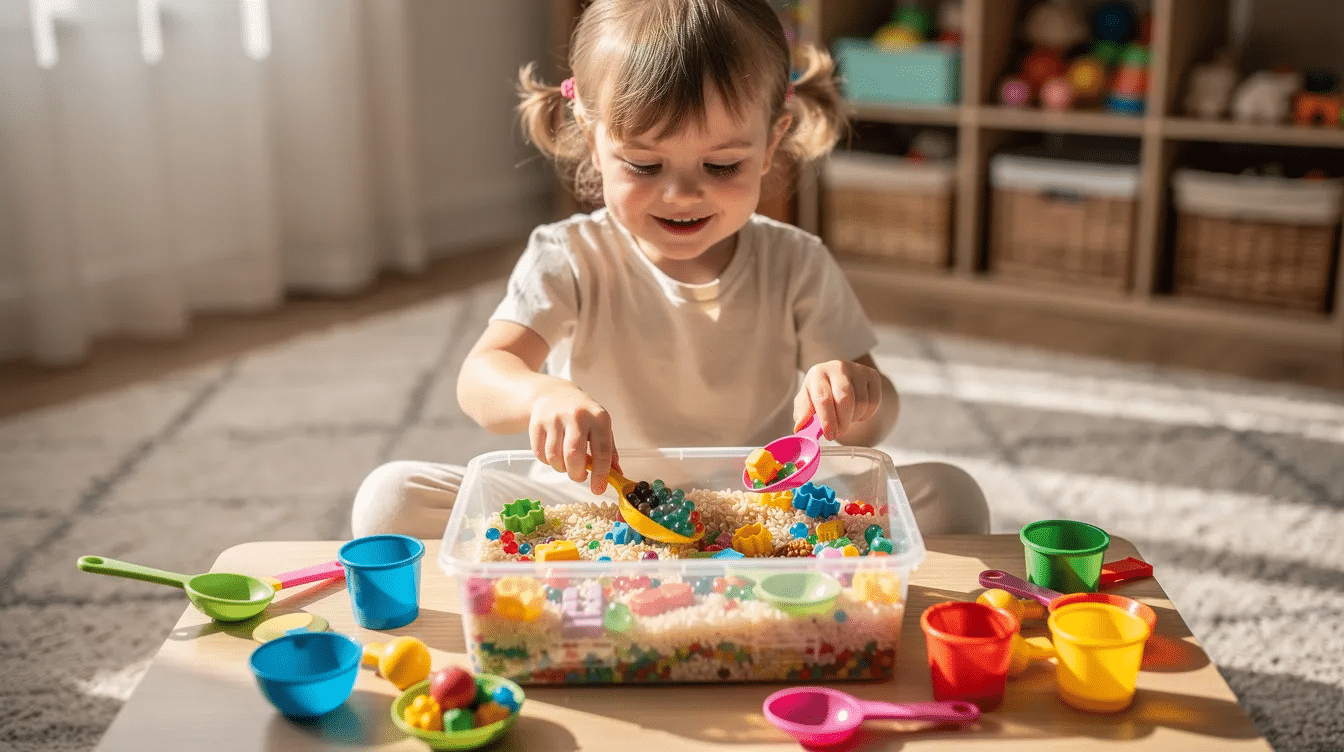
Sensory play includes Play-Doh, water play, finger painting, scooping bins, clay, and texture trays. Sensory play activities can include using Play-Doh, Kinetic Sand made with simple ingredients, or creating sensory bins filled with materials like dried rice or sand.
A bin with scoops, cups, plastic animals, or plastic balls covering the bottom can hold attention for a few hours across a week if you rotate tools.
Why It Stands Out
Sensory play is calming and concrete. It gives children texture, movement, resistance, and sound in a way screens cannot. It also supports fine motor strength through squeezing, pouring, pinching, and scooping.
Best For
This is best for sensory seekers, tactile learners, and children who need help settling after busy days.
Key Strengths
- Provides calming sensory input
- Develops tactile awareness and fine motor skills
- Helps with emotional regulation
- Uses a few items you may already own, such as rice, bowls, spoons, and cups
Possible Limitations
Sensory play can create significant mess and may require supervision. Avoid small choking hazards for children who still mouth objects, and use a tray or washable mat to limit cleanup.
Quick Comparison of the Best Screen-Free Activities
Activity type | Best for | Main benefit | Watch for |
|---|---|---|---|
Arts and Crafts | Creativity and self-expression | Fine motor skills | Mess and supplies |
Building Play | Spatial reasoning and problem-solving | STEM thinking | Cleanup |
Outdoor Activities | Physical development and energy release | Gross motor growth | Weather and safety |
Social-emotional development | Language and empathy | Some kids need prompts | |
Academic skill preparation | Focus and turn-taking | Can feel like work | |
Sensory Activities | Calming and tactile development | Regulation and fine motor skills | Spills and supervision |
Also remember bowling, a good science museum, escape rooms designed for families, and seasonal community events. Some are better for older kids, but many offer younger-child sessions. |
How to Choose the Right Screen-Free Activity
The best choice depends on your child, your space, and your day. Kids love variety, so rotate quiet, active, social, and sensory options instead of relying on one category, whether that means seasonal projects like fun and easy owl crafts for kids or simple everyday games.
Choose Based on Your Child’s Energy Level
If your child is bouncing off the couch, start with movement: an obstacle course, dance party, playground visit, jumping jacks, or climbing session. If your child is overstimulated, try Play-Doh, a cozy reading session, or drawing.
Choose Based on Available Time
For 10 minutes, use a card game, sorting game, or scavenger hunt. For 30 minutes, try LEGO, crafts, sensory bins, or pretend play. For a few hours, plan a local park visit, museum trip, or playdate.
Choose Based on Space and Materials
Small apartments can still support screen free fun with puzzles, puppets, forts, and sensory trays. Larger spaces make outdoor versions easier. If you need supplies, craft stores, grocery stores, hardware stores, thrift stores, book stores, and odds and ends stores often have affordable options.
Which Activity Is Best for You?
Choose Arts and Crafts if you want to develop creativity and fine motor skills.
Choose Building Play if your child loves puzzles, LEGO, forts, and spatial challenges.
Choose Outdoor Activities if you need to burn energy and develop gross motor skills.
Choose Imaginative Play if you want to enhance social-emotional development, empathy, and language.
Choose Hands-On Learning Games if you want school readiness without worksheets.
Choose Sensory Exploration if your child needs calming input, tactile play, or a reset after a busy day.
Final Thoughts
Screen-free activities do not need to be complicated, expensive, or perfectly planned. The goal is to give 5-year-olds more chances to move, build, talk, imagine, test ideas, and connect with real people.
Mix screen free activities throughout the week: one craft, one outdoor adventure, one board game, one pretend-play setup, and one sensory bin. That steady variety supports healthy development, family bonding, and the kind of resourcefulness kids carry into school and beyond.