A simple crochet amigurumi beginner pattern should help you finish something cute without fighting the instructions. Amigurumi is the Japanese art of crocheting small, stuffed toys, which can include animals, dolls, and food items. The term amigurumi combines the Japanese words ami, meaning crocheted or knitted, and nuigurumi, meaning stuffed doll.
Amigurumi gained popularity in Japan during the 1980s and has since spread worldwide, becoming especially popular in the early 2000s. Its appeal lies in its versatility: you can create unique, customizable plush toys with minimal skills and materials.
- How We Chose the Best Beginner Amigurumi Patterns
- Top 7 Simple Crochet Amigurumi Beginner Patterns
- 1. Basic Amigurumi Heart
- Why It Stands Out
- Best For
- Key Strengths
- Possible Limitations
- 2. Mini Amigurumi Octopus
- Why It Stands Out
- Best For
- Key Strengths
- Possible Limitations
- 3. Beginner Amigurumi Apple
- Why It Stands Out
- Best For
- Key Strengths
- Possible Limitations
- 4. No-Sew Amigurumi Whale
- Why It Stands Out
- Best For
- Key Strengths
- Possible Limitations
- 5. Simple Amigurumi Cat
- Why It Stands Out
- Best For
- Key Strengths
- Possible Limitations
- 6. Amigurumi Donut
- Why It Stands Out
- Best For
- Key Strengths
- Possible Limitations
- 7. Mini Amigurumi Duck
- Why It Stands Out
- Best For
- Key Strengths
- Possible Limitations
- Quick Comparison of the Best Beginner Amigurumi Patterns
- How to Choose the Right Beginner Amigurumi Pattern
- Which Pattern Is Best for You?
- Final Thoughts
How We Chose the Best Beginner Amigurumi Patterns
The best amigurumi patterns for beginners are simple shapes that often feature no-sew designs and use basic stitches. We looked for each beginner friendly pattern to use mostly single crochet, single crochet stitches, increases, decreases, and the invisible decrease where helpful.
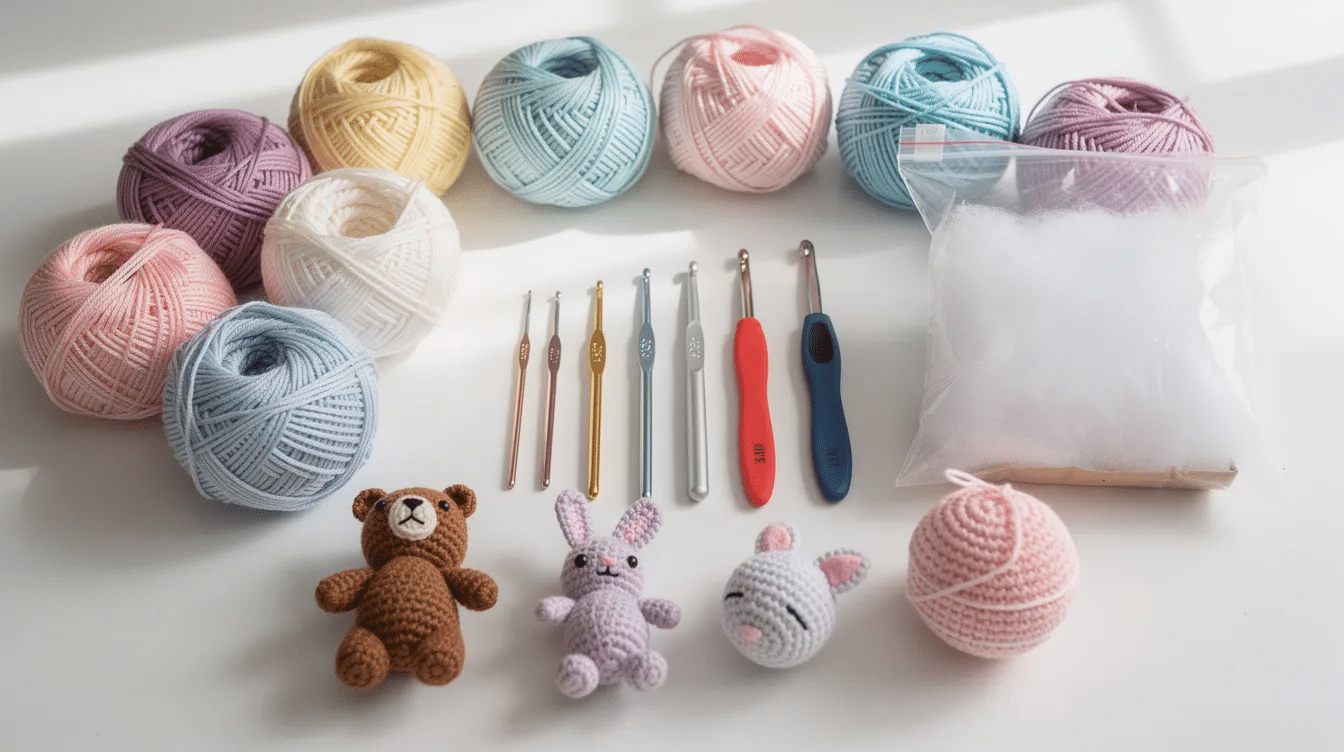
For most amigurumi projects, you’ll need basic supplies such as yarn, a crochet hook, stuffing, and safety eyes. A tapestry needle is useful for weaving ends, joining pieces, and sewing details. Embroidery floss is a safer option than safety eyes if the toy is for a baby.
Yarn choice matters. The best types of yarn for beginners crocheting amigurumi are acrylic, cotton, and cotton blends. Acrylic yarn is often recommended for beginners due to its affordability and ease of use, while cotton yarn is preferred for its stitch definition. Medium-weight yarns, such as DK or worsted weight, are ideal for learning amigurumi techniques. Worsted weight acrylic yarn is especially forgiving for a first project.
Thick yarn, such as aran or bulky weight yarn, helps beginners see stitches clearly. However, avoid fuzzy or stretchy yarns when starting out with amigurumi, as they can make it difficult to see and count stitches. Save chenille yarn, plush yarn, and sport weight yarn for later unless the written pattern names a specific yarn.
Using crochet hooks one size smaller than recommended for the yarn helps create tight stitches, preventing polyester fiberfill from showing through. Hook sizes vary, but most projects use a smaller hook than standard crochet patterns.
We also favored clear instructions, photo tutorials, a video tutorial when available, and designer support through comments, a facebook group, or maker photos on ravelry. Sites like Lilleliis explain beginner amigurumi crochet basics clearly, while LoveCrafts and Hobbii offer useful collections of free amigurumi patterns.
Before you start crocheting, use a stitch marker. Amigurumi is typically worked in continuous rounds, and stitch markers help keep track of the first stitch in each round.
The magic ring, also known as the magic circle, is a fundamental technique in amigurumi because it creates a tightly closed center and prevents gaps at the start of your work. Single crochet is the primary stitch used in amigurumi, and increasing, or working two stitches into one, expands the circumference of your piece. Decreasing, which combines two stitches into one, is crucial for shaping amigurumi, allowing rounded bodies, heads, and limbs.
Top 7 Simple Crochet Amigurumi Beginner Patterns
1. Basic Amigurumi Heart
A heart is often the safest first amigurumi project because it is small, fast, and not dependent on perfect proportions. It uses a round base, gentle shaping, and very little finishing.
Why It Stands Out
The main advantage is its simple oval shape. You practice the magic circle, increases, decreases, and tight stitches without worrying about limbs, faces, or assembly.
Best For
Complete beginners, a first timer, or anyone who wants a low-pressure first project before trying animals or dolls.
Key Strengths
- Requires only single crochet and basic increase/decrease stitches
- Works up quickly, often in under 30 minutes
- No sewing or assembly required
- Perfect for practicing the magic ring technique
Possible Limitations
- Very simple design may not feel like traditional amigurumi
- Limited color variation opportunities
2. Mini Amigurumi Octopus
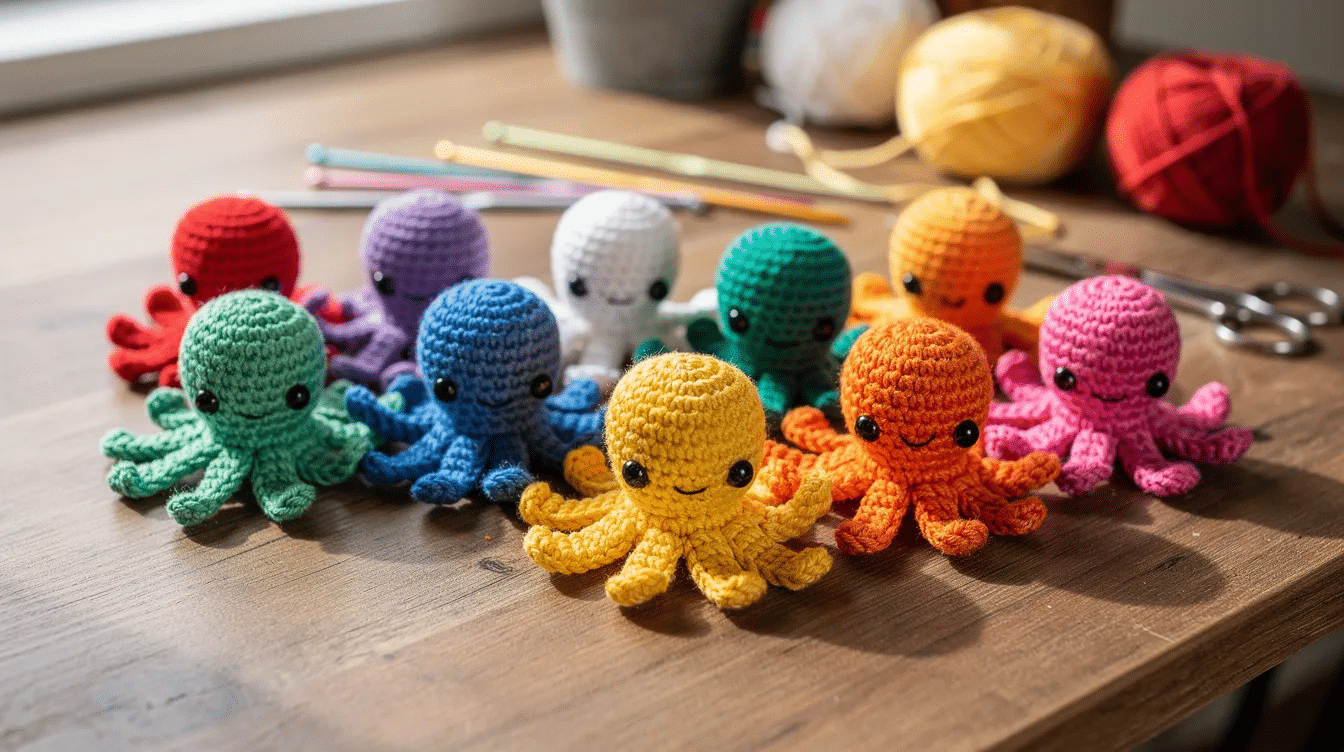
A mini octopus has a dome-shaped head and eight tentacles. It is still beginner friendly, but it feels more like a real stuffed toy than a practice shape.
Why It Stands Out
It introduces repetition. Making eight similar tentacles helps beginner crocheters build consistency in size, tension, and shaping.
Best For
Beginners ready to try their first animal-like amigurumi project with minimal sewing.
Key Strengths
- Head is a simple dome shape using basic techniques
- Tentacles teach consistent shaping and length
- Quick project completion builds confidence
- Cute result despite simple construction
Possible Limitations
- Requires making eight identical tentacles, which can feel repetitive
- Some light sewing may be needed to attach tentacles
3. Beginner Amigurumi Apple
An apple is a great food-themed amigurumi pattern. The body is a basic sphere, while the stem and leaf add personality without making the project too complex.
Why It Stands Out
It is a perfect introduction to color changes and basic embellishment. You can also use scrap yarn and different colors to make red, green, or yellow apples.
Best For
Beginners who know the basic stitches and want to learn simple details.
Key Strengths
- Round fruit body uses standard amigurumi sphere shaping
- Simple color change for the stem teaches a new technique
- Realistic result from basic skills
- Can be made in multiple colors for variety
Possible Limitations
- Requires yarn in two colors
- Color change technique may challenge absolute beginners
4. No-Sew Amigurumi Whale
The no sew whale is one of the best beginner friendly amigurumi options because it avoids the part many beginners fear most: assembly. No-sew patterns help avoid the need for assembly, and projects featuring no-sew designs usually take under an hour to complete.
Why It Stands Out
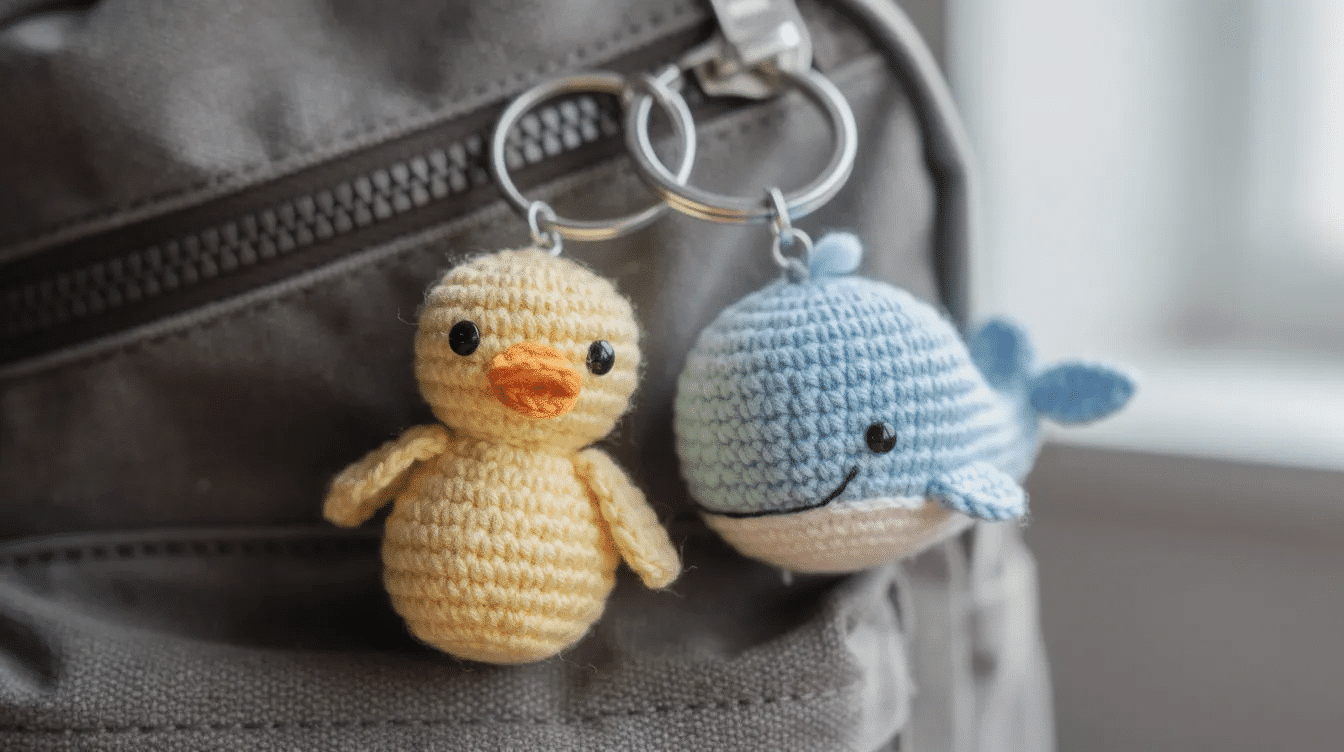
It creates the full whale in one piece, usually with fins and tail shaped as you go. The no-sew whale pattern is a beginner-friendly option that can be made quickly and is suitable for use as a keychain or backpack charm.
Best For
Beginners intimidated by sewing who want instant gratification.
Key Strengths
- Zero sewing or assembly required
- One continuous piece construction
- Teaches front and back loop techniques
- Quick completion for immediate success
Possible Limitations
- Less detailed than multi-piece patterns
- Limited shaping options in one-piece construction
5. Simple Amigurumi Cat
A simple cat is a classic step up from hearts and food items. It usually has a head, body, ears, tail, and face, making it a good bridge into traditional animal crochet.
Why It Stands Out
It teaches essential construction principles: proportion, eye placement, stuffing firmness, and clean assembly. Simple animal patterns, such as the Itty Bitty Penguin and Mini Crochet Kittens, are great starter projects for beginners due to their minimal seaming and small size.
Best For
Beginners ready for their first traditional animal amigurumi.
Key Strengths
- Teaches proper head and body proportions
- Simple ear and tail construction
- Introduction to safety eye placement
- Recognizable result builds confidence
Possible Limitations
- Requires basic sewing skills for assembly
- Multiple pieces can feel overwhelming initially
6. Amigurumi Donut
A donut is a playful food amigurumi design with a ring shape and optional frosting. It is simple, adorable, and so much fun if you enjoy decorative details.
Why It Stands Out
It teaches a different construction method than the usual sphere or oval. Optional sprinkles can be added with embroidery floss.
Best For
Beginners wanting to explore food amigurumi with simple geometric shapes.
Key Strengths
- Ring shape is different from typical amigurumi forms
- Optional sprinkle details allow creativity
- Quick project with immediate cute results
- Can make multiple donuts in various colors
Possible Limitations
- Ring shaping technique may be unfamiliar
- Requires understanding of working in continuous rounds differently
7. Mini Amigurumi Duck
A mini duck is small, cheerful, and practical. It can become a bag charm, desk decoration, or great gift.
Why It Stands Out
It offers classic animal structure in a tiny format: body, beak, eyes, and sometimes wings or feet.
Best For
Beginners wanting a portable project that makes practical gifts or accessories.
Key Strengths
- Small size means quick completion
- Classic animal construction principles
- Perfect for keychain or decoration
- Simple beak teaches basic embellishment attachment
Possible Limitations
- Small size can be harder to handle for some beginners
- Tiny details may challenge those with dexterity issues
Quick Comparison of the Best Beginner Amigurumi Patterns
- Basic Amigurumi Heart – Best for absolute beginners learning fundamental techniques
- Mini Amigurumi Octopus – Best for practicing consistent shaping across multiple pieces
- Beginner Amigurumi Apple – Best for learning color changes and realistic results
- No-Sew Amigurumi Whale – Best for beginners avoiding sewing and assembly
- Simple Amigurumi Cat – Best for first traditional animal amigurumi experience
- Amigurumi Donut – Best for exploring food themes and unique shapes
- Mini Amigurumi Duck – Best for portable projects and practical gifts
You can find both free pattern options and paid amigurumi patterns for these categories. Free amigurumi patterns are helpful for testing the craft, while paid designs often include better tutorials, step photos, and support.
How to Choose the Right Beginner Amigurumi Pattern
Choose Based on Your Crochet Experience Level
If you are one of the complete beginners, start with a heart, apple, or whale. These use simple shapes and reduce frustration. If you already understand basic crochet, a cat, duck, or octopus is a reasonable advanced beginner pattern.
The appeal of amigurumi is that every small project teaches transferable skills. Even sweet softies-style minis use the same foundations: counting, shaping, stuffing, and finishing.
Choose Based on Time Available
If you want a fast win, choose a no-sew design. Projects featuring no-sew designs usually take under an hour to complete. The Tiny-Rex the Pocket Dino can be crocheted in under 30 minutes, making it a quick project for beginners.
For weekend crafting, choose a cat, octopus, or donut. These give you more practice without turning into a long commitment.
Choose Based on Assembly Comfort
If joining pieces sounds stressful, choose a whale or heart. If you are ready to learn sewing, try a cat or duck with minimal sewing.
Video tutorials, such as those on YouTube, can assist visual learners in learning amigurumi techniques. A good written pattern plus a video tutorial is often the easiest combination for beginner crocheters.
Which Pattern Is Best for You?
Choose Basic Amigurumi Heart if you’ve never made amigurumi and want the simplest possible start.
Choose No-Sew Amigurumi Whale if you want a complete amigurumi without any sewing.
Choose Simple Amigurumi Cat if you’re ready for your first traditional animal amigurumi.
Choose Mini Amigurumi Duck if you want practical projects that make great gifts.
Final Thoughts
The best simple crochet amigurumi beginner pattern depends on your skill level, time, and comfort with assembly. Start with a simple pattern, use the best yarn you can see clearly, keep a stitch marker in every round, and do not rush the stuffing stage.
Once you finish one tiny toy, the next project feels easier. Pick from this collection, grab your worsted yarn, and enjoy making something cute, useful, and fun. Happy crocheting!