

You can make soft, stretchy homemade playdough without cream of tartar using pantry staples you probably already have: flour, salt, oil, and lemon juice or vinegar. In this post, you’ll get a fast stovetop recipe, storage tips, fun play ideas, and fixes if your dough turns out a bit sticky or dry.
Key Takeaways
- This homemade playdough recipe uses 1 cup flour, ½ cup fine salt, 1 tablespoon vegetable oil, 1 tablespoon lemon juice or white vinegar, and ¾ cup water.
- Lemon juice or vinegar replaces cream of tartar, adding acidity that helps the play dough stay soft and stretchy.
- Cook the mixture over low heat to medium heat for about 2–3 minutes, then knead until smooth.
- This playdough is safe for kids’ hands and great for sensory play, but it is not a snack because it is high in salt.
- You’ll also find color ideas, essential oils, themed activities, storage tips, and troubleshooting for the perfect consistency.
- What You Need for Homemade Playdough Without Cream of Tartar
- Quick 5-Minute Play Dough Recipe (Without Cream of Tartar)
- How Kids Can Play With This Homemade Playdough
- How to Store Homemade Playdough Without Cream of Tartar
- Variations: No-Cook and Allergy-Friendly Play Dough Options
- Troubleshooting Your Play Dough Recipe
- FAQ
What You Need for Homemade Playdough Without Cream of Tartar
This classic playdough recipe without cream of tartar is simple, inexpensive, and easy to scale.
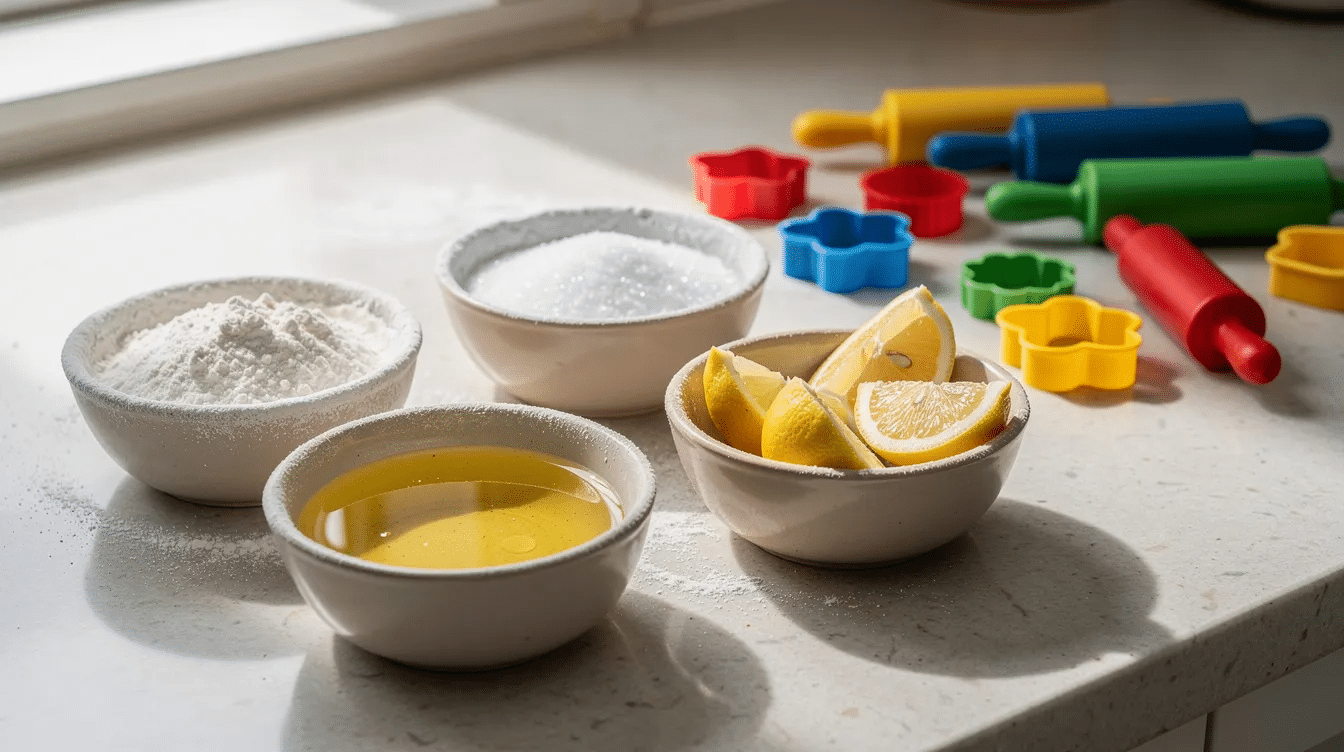
For one batch:
Ingredient | Amount |
|---|---|
All-purpose flour | 1 cup |
Fine table salt | ½ cup |
Vegetable oil or canola cooking oil | 1 tablespoon |
Lemon juice or white vinegar | 1 tablespoon |
Warm water | ¾ cup |
Food coloring | optional, a few drops |
Lemon juice and vinegar provide the acidity that cream of tartar normally would. You can substitute lemon juice or vinegar for cream of tartar in homemade playdough recipes to achieve a similar texture and flavor. | |
Helpful optional add-ins include kid-safe essential oils like lavender or orange, vanilla extract, biodegradable glitter, turmeric, cocoa powder, or paprika. For vivid colors, use gel food coloring or several drops of food coloring. |
You’ll also need a small saucepan or medium non-stick pot, a wooden spoon, measuring cups, a bowl if pre-mixing, and parchment paper, wax paper, or a silicone mat for easy cleanup.
This play doh uses food-based ingredients, but the high salt content means toddlers and pets should not eat it.
Quick 5-Minute Play Dough Recipe (Without Cream of Tartar)
This fast stovetop play dough recipe makes a soft, smooth dough in about 5 minutes.
- Add the dry ingredients to a small saucepan: 1 cup flour and ½ cup salt. Stir well before adding anything wet.
- In a cup, make the water mixture: ¾ cup warm water, 1 tablespoon vegetable oil, 1 tablespoon lemon juice or vinegar, and food coloring.
- Slowly add the wet mixture to the pot while mixing with a spoon.
- Cook over low heat to medium heat, stirring constantly, until the mixture thickens, pulls away from the sides, and forms a ball. This usually takes 2–3 minutes.
- Move the dough onto parchment paper or wax paper. Let it cool for a bit, then knead for 1–2 minutes.
If the play dough is sticky, knead in 1–2 tablespoons more flour. If it feels dry or crumbly, add a few drops of warm water or oil and knead again.
A simple homemade playdough recipe can also be made using 1 cup of water, 5 tablespoons of salt, 1 tablespoon of canola oil, 1 tablespoon of white vinegar, and 1 cup of flour, which can be mixed over medium heat until it forms a dough.
The brief cook step matters. It helps the flour hydrate, dissolves the salt better, and creates smoother playdough without cream or tartar than most no-cook versions.
How Kids Can Play With This Homemade Playdough
This recipe is ideal for screen-free play at home, preschool, or a classroom table.
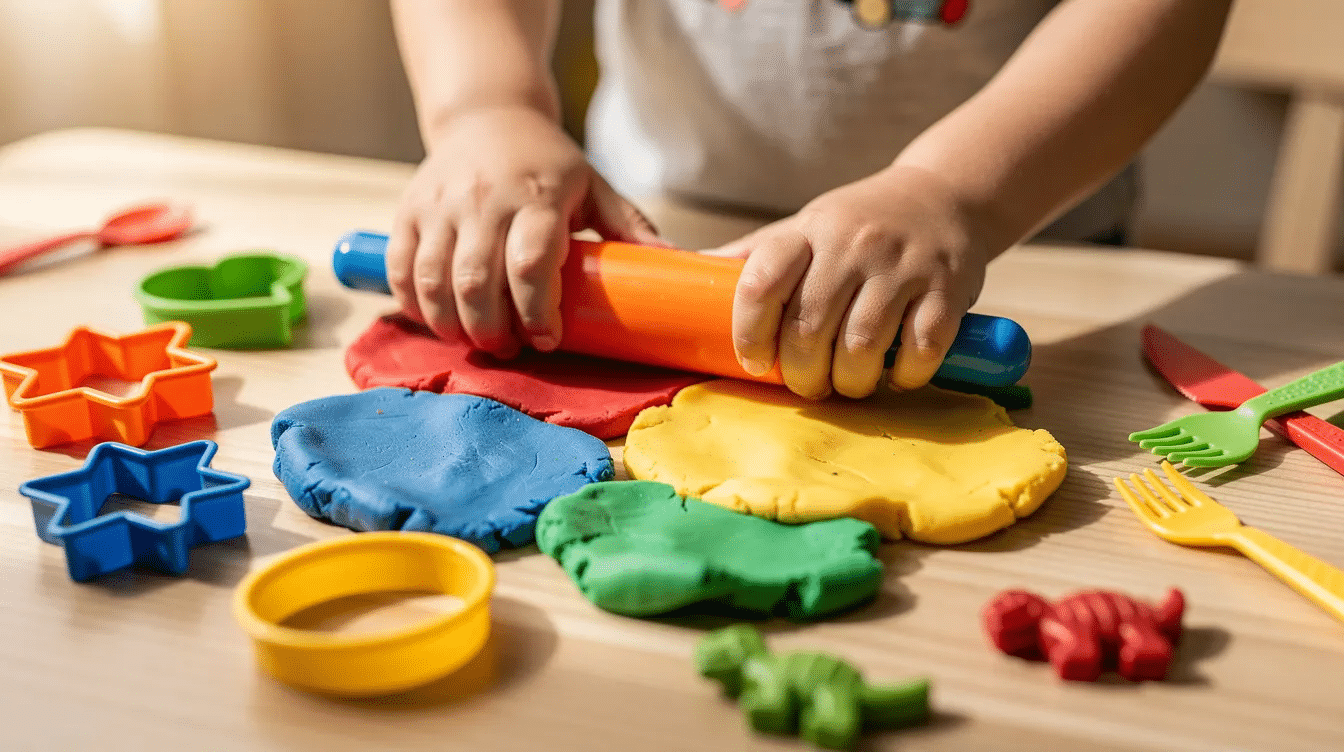
Kids can roll snakes, make balls, flatten pancakes, cut pretend cookies, and create animals with cookie cutters. They can also form letters, numbers 0–20, sight words, circles, squares, and triangles.
Playdough is beneficial for developing fine motor skills in children, as it encourages them to manipulate and shape the dough, which strengthens their hand muscles. Pinching, rolling, and squeezing support early writing, scissor use, and utensil control.
For imaginative play, set up a pretend bakery, restaurant, ice cream shop, or clay studio with muffin tins, toy utensils, and plastic plates. Engaging with playdough can enhance children’s creativity and imaginative play, allowing them to sculpt various characters and objects.
Sit nearby and ask, “What are you making?” or “How does the dough feel?” The kids loved this in our house when we decided to make “lemon cookie” play dough with yellow color.
Get Creative With Colors, Scents, and Textures
The same base recipe can be customized for holidays, seasons, and favorite themes.
Try these ideas for colorful craft projects:
- Rainbow batches: divide one batch and tint each bit with different food coloring.
- Scented dough: add cinnamon and nutmeg for fall, peppermint for winter, lemon extract for spring, or lavender for quiet play.
- Texture play: press buttons, smooth stones, gems, or glitter into the surface.
- Kool-Aid color: kool aid packets can add scent and color; packets kool aid may stain hands or surfaces, so test first.
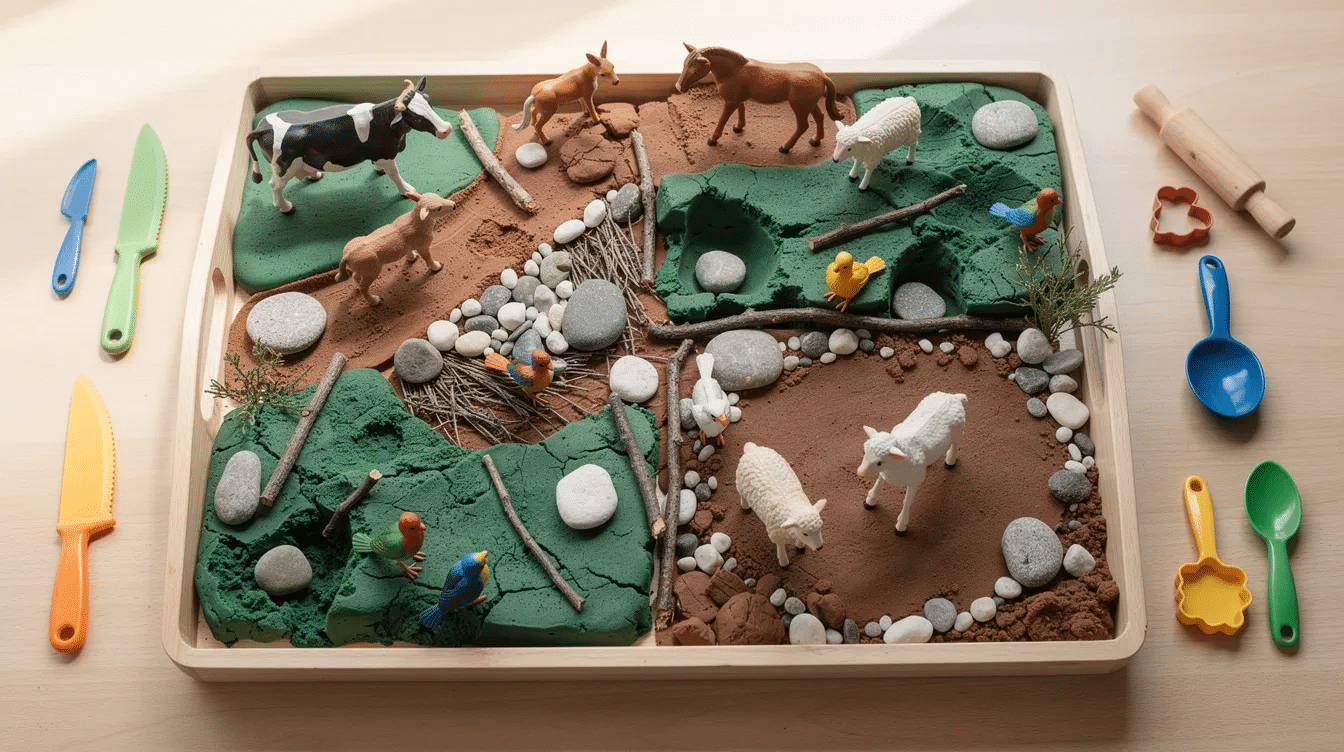
For a farm tray, use green and brown playdough, toy animals, fence pieces, small stones, and leaves. It is simple stuff, but it keeps kids busy and makes making play dough feel new each time.
Playdough for Sensory and Fine Motor Development
Homemade playdough without cream of tartar still offers strong sensory benefits. Using playdough can provide sensory experiences for children, which can be calming and help with emotional regulation.
The soft texture gives steady hand input. Slightly firmer dough adds resistance for squeezing, poking, cutting, and pulling. Add plastic scissors, rolling pins, stamps, and letter cutters to build coordination.
If your child is sensitive to smells, skip essential oils and extracts. If your child enjoys scent, a few drops of lavender or vanilla can make the activity more soothing.
How to Store Homemade Playdough Without Cream of Tartar
Proper storage keeps homemade playdough soft and usable longer. To store homemade playdough effectively, place it in an airtight container or a Ziploc bag to keep it fresh and prevent it from drying out. You can also use a ziploc bag with the air pressed out.
Let the dough cool completely first. Store each color separately so the colors stay clean.
Room-temperature storage in a cool cupboard can work, but without cream of tartar, playdough is best used within 7 days, especially in humid climates. It is recommended to store homemade playdough in the refrigerator to extend its shelf life, especially if it contains perishable ingredients. Use the fridge or refrigerator if your kitchen is warm, wet, or humid.
If your homemade playdough hardens slightly, you can revive it by adding a couple of droplets of water and kneading it until it becomes soft again. If moisture forms inside the container, blot it with a paper towel and let the dough air dry for a few minutes.
Discard the batch if it smells off, shows mold, or has been heavily mouthed.
Variations: No-Cook and Allergy-Friendly Play Dough Options
If you do not want to cook, try this simple no-cook play dough recipe: To make a no-cook playdough, mix 1 cup of flour, 1/4 cup of salt, and 1/2 cup of water, adding food coloring and essential oils for scent, then knead until smooth.
You can also use boiling water in a heatproof bowl for a softer no-cook version. Stir carefully, cool, then knead.
No-cook dough is convenient for quick fun, but it may not last as long as the cooked recipe. For another sensory option, you can also try making fluffy slime without shaving cream or explore homemade kinetic sand for sensory play. For gluten-free play, try a gluten-free flour blend or certified oat flour. Texture may be less elastic, so start with a small batch before scaling.
For fragrance-free playdough, skip lemon scent, vanilla, and essential oils. Use clean, unscented tools and containers.
Troubleshooting Your Play Dough Recipe
Even an easy playdough recipe can turn out sticky, dry, or lumpy.
- Too sticky: If playdough becomes too sticky, extra flour can be kneaded in to improve its consistency. Add 1 tablespoon at a time.
- Too dry: Add a few drops of warm water or a bit of oil, then knead well.
- Lumpy: Mash while warm. Next time, mix dry ingredients fully before adding liquids.
- Dull color: Use gel color, or add color during kneading for a marbled effect.
- Too wet after storage: Air it out briefly before play.
A simple, stretchy playdough can be made using common pantry staples and an acidic substitute such as lemon juice or vinegar. Once you understand the feel of the mixture, you’ll be able to adjust every batch quickly.
FAQ
How long does homemade playdough without cream of tartar really last?
With lemon juice or vinegar, clean hands, and airtight storage, some batches last several weeks. However, without cream of tartar, playdough is best used within 7 days, especially in humid climates. If you want to extend freshness, store it in the refrigerator.
Can I make this play dough recipe without salt?
Salt helps with texture and preservation. If you remove it, the dough can become sticky and spoil much faster. You can reduce it slightly, but expect a shorter shelf life.
Is this homemade playdough safe if my toddler puts it in their mouth?
The ingredients are common kitchen staples, but this dough is not meant to be eaten because it contains a lot of salt. Supervise toddlers closely and contact a healthcare professional if a large amount is swallowed.
Can I freeze or refrigerate homemade playdough?
Refrigeration can help extend shelf life, especially in warm or humid homes. Freezing is not ideal because thawing can change the texture. An airtight container or Ziploc bag is usually the best first choice.
Why use lemon juice or vinegar instead of cream of tartar?
Cream of tartar is an acid, not cream. It helps playdough stay elastic. Lemon juice and vinegar add similar acidity, making homemade playdough without cream of tartar more accessible and budget-friendly.