Key Takeaways
- You can turn a 2-liter plastic bottle into a bird feeder in under 30 minutes with scissors, twine, sticks, and bird seed.
- These step by step instructions show how to add drainage holes, perches, and feeding holes so seeds stay dry and easy for birds to reach.
- This diy bird feeder reuses plastic bottles, saves money, and helps local birds find food year-round.
- You’ll also learn where to hang your plastic bottle bird feeder, what bird food to use, and how to keep it clean.
- The FAQ covers safety, durability, and ways to attract different birds.
Why Make a Bird Feeder from a Plastic Bottle?
A single empty 2-liter soda bottle can become a practical feeder instead of landfill trash. Using plastic bottles for bird feeders helps reduce plastic waste by repurposing items that would otherwise end up in landfills.
Creating bird feeders from plastic bottles is a cost-effective way to provide food for birds while also promoting recycling and sustainability. Compared with shop-bought metal or wooden feeders, a diy bird feeder from plastic bottle is quick, cheap, and easy to rebuild.
It is also a fun weekend project for kids, especially in spring and autumn when birds are active, and pairs well with other easy nature-themed crafts like dragonflies. Plastic bottle bird feeders can attract a wide variety of bird species, contributing to local biodiversity and enhancing the ecosystem in your garden. Expect visits from sparrows, finches, chickadees, robins, and other wild birds.
Tools and Materials You Will Need
Grab everything before you begin so the build goes smoothly.
Craft materials:
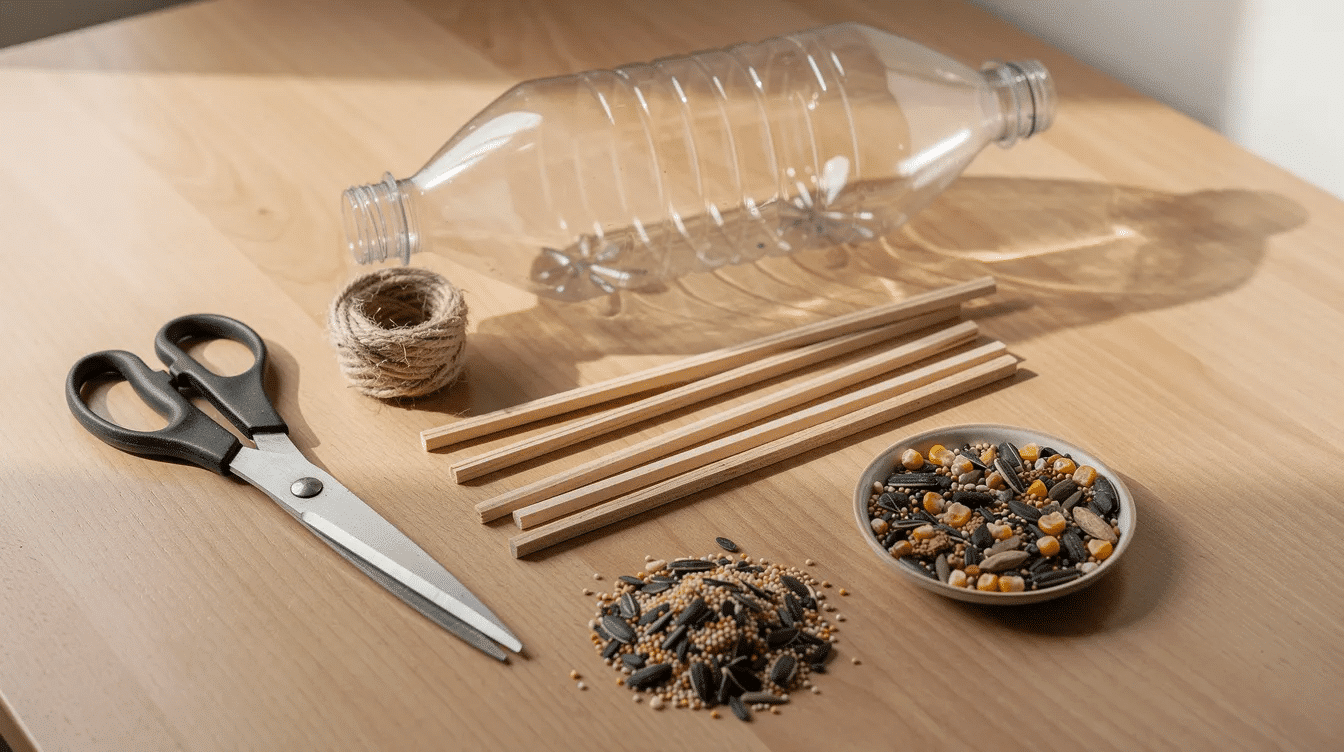
- One clean 1–2 liter plastic bottle with cap, bottle cap, or lid
- About 45 cm of twine, string, or thin wire
- Two straight sticks, dowels, or a bamboo skewer cut in half for perches
- Bird seed mix or a small bag of birdseed
- Optional non-toxic paint or markers to decorate
Tools:
- Scissors
- Craft knife, for adults only
- Pin, skewer, or thick needle
- Funnel or rolled paper cone
- Marker pen
- Optional drill for cleaner holes
Use gloves, supervise kids, and work on cardboard or a cutting board. Clear plastic is best because you can watch seed levels and birds can see the food, and you can even combine this with creative nature stick crafts for kids if you collect twigs and branches outdoors.
Step-by-Step Instructions: Classic Hanging Plastic Bottle Bird Feeder
These instructions assume a 2-liter bottle, which provides more space and stability for a bird feeder than a smaller bottle. You can adapt them for 500 ml or 1 liter bottles. Adults should carefully cut the plastic; children can mark, fill, and decorate.
Step 1: Prepare and Mark the Bottle
Wash the bottle well to remove sticky drink residue, then let it dry completely so seeds stay fresh. Remove all labels so you can see the seed level later.
Mark a line 5–7 cm above the bottom of the bottle for the perch. Mark another line 3–4 cm higher for the feeding holes. Neat marks help birds sit safely and feed without stretching.
Step 2: Make Drainage Holes in the Base
To keep birdseed fresh and prevent water buildup, it is recommended to poke drainage holes in the bottom of the feeder. Start by making drainage holes at the bottom of the bottle using a pin and then widening them with scissors to prevent water buildup.
Make 4–6 small holes in the bottom of the bottle, only a few millimetres wide. Smooth sharp plastic with scissors, or have an adult briefly warm a skewer tip and re-melt rough edges. Good drainage holes help stop rotting food and mold.
Step 3: Add Hanging Twine Near the Neck
Make two small holes on opposite sides just below the neck, about 1–2 cm under the screw ring. Poke each hole with a pin, then widen it until twine can pass through.
Push the twine through, pull it out the other side, and tie a strong knot to create a loop. Test the hang by lifting the empty bottle with one finger. The feeder should balance, and the plastic should not tear near the top edge.
Step 4: Install the Perches
Two crossing perches let several small birds stand and feed. After creating the drainage holes, make two holes on opposite sides of the bottle for the perches, and then cut feeding holes above each perch for the birds to access the seeds.
Poke one hole on the perch line, then a second hole directly across it. Slide a stick through. Make two more holes rotated 90 degrees around the sides of the bottle, then add the second stick. Each hole should be slightly smaller than the stick so the perch stays tight. Leave 5–7 cm sticking out on each side.
Step 5: Cut the Feeding Holes Above Each Perch
Feeding holes in a bird feeder should be slightly above the perch and roughly the size of a 5p coin. Small rectangles or half-moons about 1–1.5 cm wide and 1–2 cm high work well.
Pierce the plastic with a craft knife, then enlarge with scissors. Do not cut openings too large, or wind will spill bird seed. Smooth corners so birds do not snag feathers or skin while they eat.
Step 6: Fill with Bird Seed and Test the Feeder
Place a funnel in the neck and pour birdseed slowly until the bottle is three-quarters full. Cover holes with your hand while filling, then screw on the cap.
Gently shake the new feeder. Seed should settle near the feeding holes without pouring out. If too much escapes, tape part of the opening and cut a smaller access point.
Step 7: Hang Your Plastic Bottle Bird Feeder
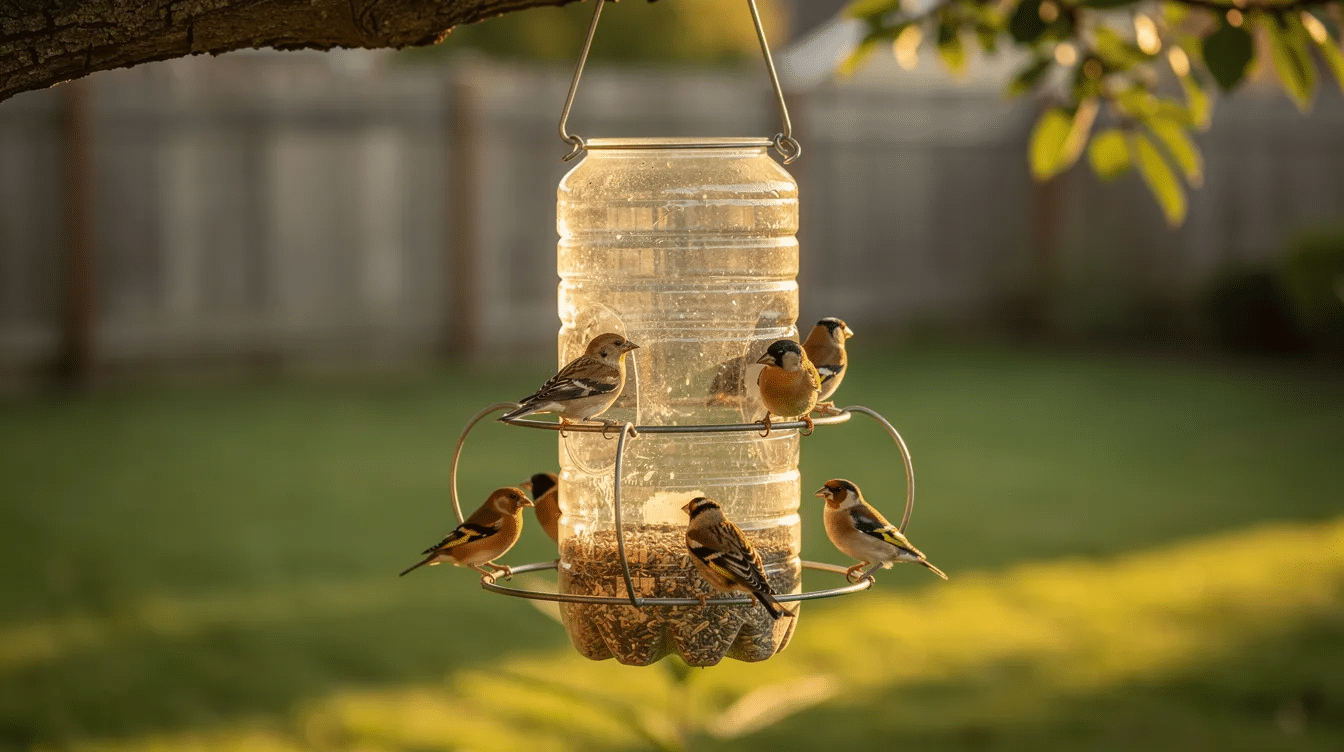
A bird feeder should be hung in a sheltered location with easy access for birds and good visibility for enjoyment. Choose a tree branch, metal hook, or balcony rail at least 1.5–2 m above ground.
Hang it a few metres from dense bushes to reduce cat ambushes, but close enough to shelter. Place it where you can watch from a window, and avoid very windy or rain-soaked corners. Local birds may need one or two weeks to trust any new feeder, so do not forget to keep it stocked.
Decoration Ideas and Variations
Decoration is optional, but it makes this diy bird project more fun. Paint the outside with non-toxic acrylics while leaving clear windows for seed levels, or explore DIY craft kits for creative projects if you prefer ready-made sets of materials.
You can wrap twine around the bottle for a rustic look, keeping drainage holes and feeding holes clear. For rain protection, cut the top from a second plastic bottle and slide it over the feeder like a roof.
What to Put in Your Plastic Bottle Bird Feeder
Seed choice affects which different birds visit. Mixed bird seed is a good all-round food. Sunflower hearts are popular with a wide variety of garden birds, making them a great choice for bird feeders.
In winter, add high-energy options. Suet balls and blocks are high-energy foods that can contain a variety of seeds, cereals, and sometimes mealworms, appealing to many bird species. Mealworms are a good purchase for insect-eating birds such as robins and sparrows, providing them with essential protein.
Avoid salted snacks, flavored nuts, moldy seed, and bread as a main snack. Watch what disappears fastest and adjust the blend for your backyard.
Maintenance, Cleaning, and Bird Safety Tips
Bird feeders should be cleaned regularly with warm, soapy water to prevent the build-up of rotting food and bacteria that could harm the birds. Empty old seed, wash every 1–2 weeks, rinse well, and dry completely before refilling.
Plastic bottle feeders should be replaced periodically as they do not last forever and can become weak or cracked over time. Check perches, feeding holes, twine, and plastic for sharp edges. Rake spilled seeds below the feeder to reduce rodents.
For more safe feeding guidance, Project FeederWatch recommends regular cleaning and dry seed storage in a safe feeding environment.
Fun Ideas: Bird-Watching and Learning with Your DIY Bird Feeder
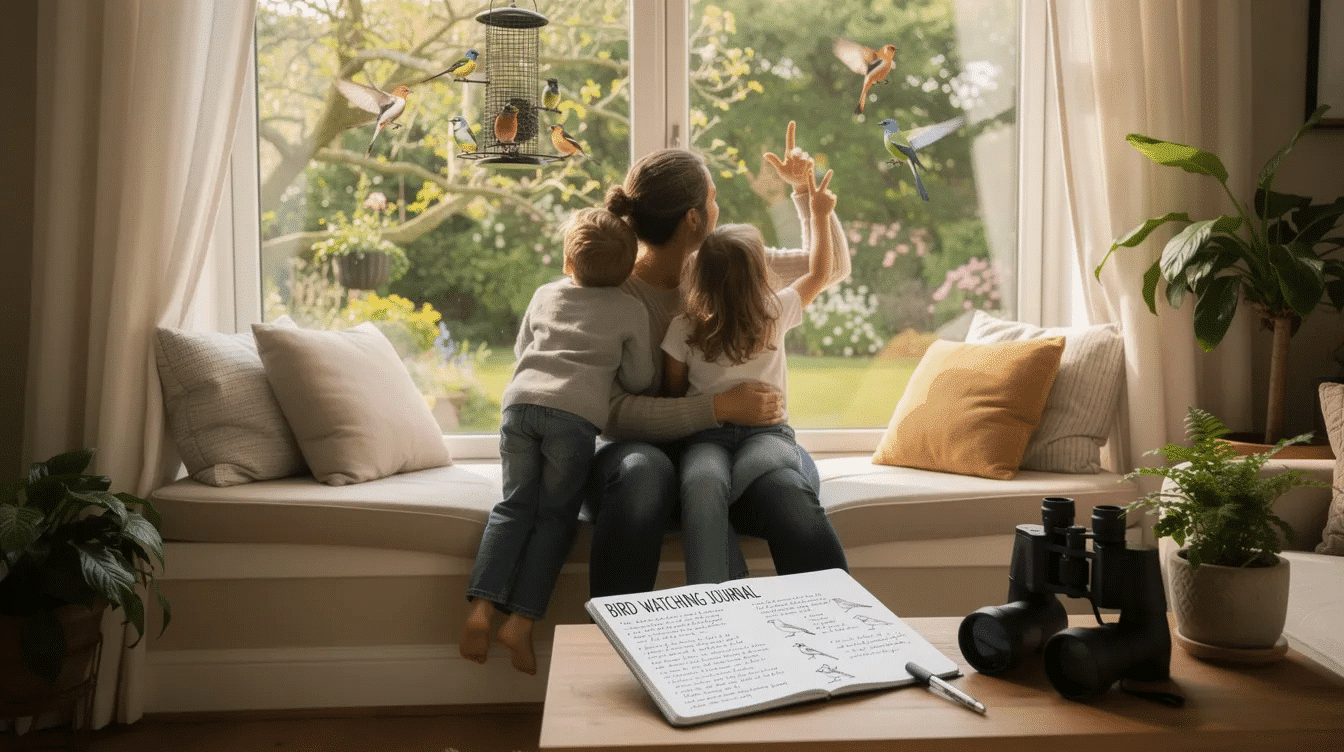
Turn the feeder into a simple science project. Keep a notebook by the window and record which birds visit, when they appear, and what they feed on, or add themed activities like fun and easy owl crafts for kids to keep children engaged on days when fewer birds appear.
Use a bird guide or app to identify species. Try spotting five species in one week, then compare photos across seasons.
FAQ
How long will a plastic bottle bird feeder last outdoors?
Usually a few months to one season, depending on sun, frost, and handling. Check it every few weeks, then recycle and replace the bottle when it fades, cracks, or feels brittle.
Can I use any size plastic bottle for this diy bird feeder?
Yes, but 1–2 liter bottles work best because they hold more bird seed and leave room for perches. A 500 ml bottle works on a balcony but needs refilling more often.
Is it safe to leave the feeder out in winter and heavy rain?
Yes, if there are holes in the bottom for drainage and you check after storms. Throw away clumped or moldy seed and refill with fresh bird food.
How can I stop large birds or squirrels from emptying the feeder?
Use short perches, small feeding holes, and hang the feeder 2–3 m from fences, walls, or branches squirrels can jump from. A smooth metal hook or pole also helps.
What if birds are not using my new plastic bottle feeder?
Wait one to two weeks. If nothing visits, move it slightly to a quieter sheltered spot, try sunflower hearts, and avoid moving it again too soon.