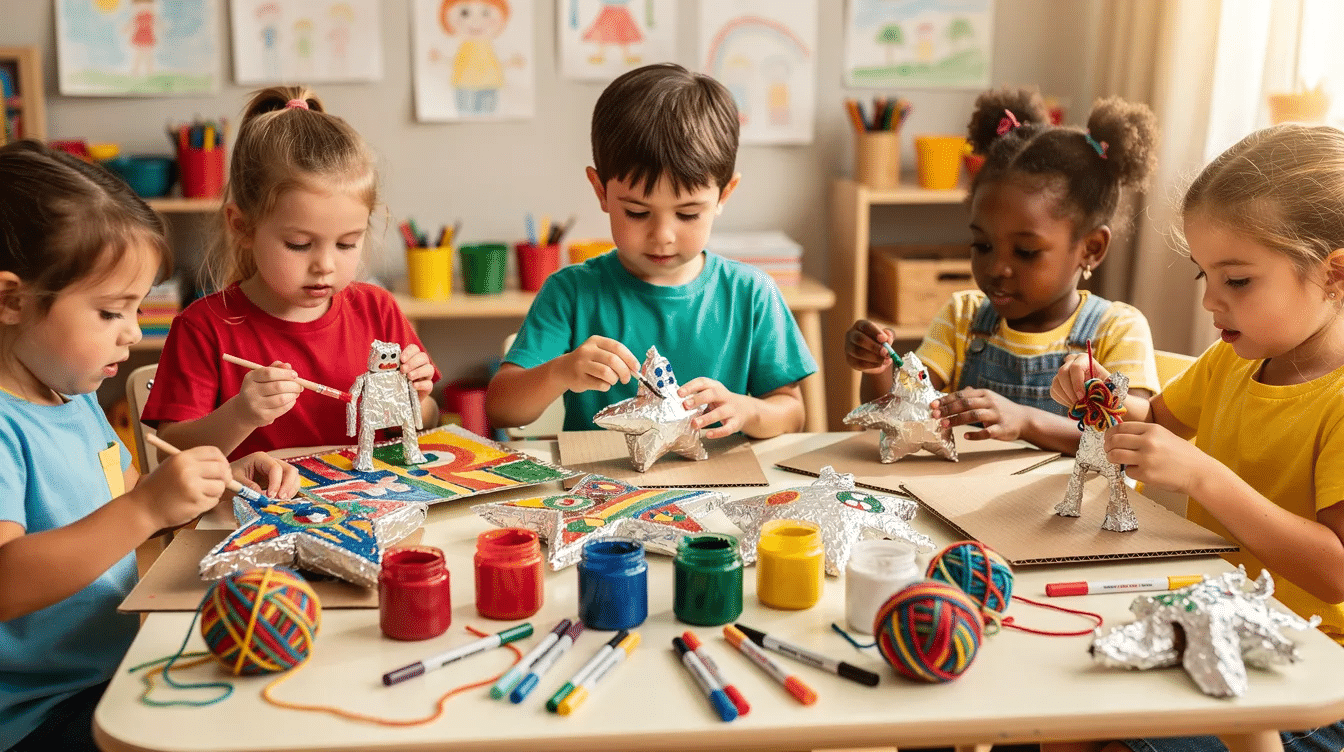
If you’re searching for tin foil art projects children can enjoy at home or in the classroom, start with this simple idea: tin foil is shiny, thin, flexible, inexpensive, and surprisingly versatile. Modern aluminum foil can be painted, crumpled, wrapped, folded, embossed, stamped, and shaped, which makes tin foil art useful for creativity, sensory play, and fine motor skills. Tin foil is a versatile art medium that is inexpensive and mess-free, especially when compared with many paint-heavy crafts.
Aluminum foil works well because it catches light, holds texture, and reacts differently than paper or cardboard. Children can mold and crumple aluminum foil into shapes such as stick figures, animals, and jewelry. Foil can be painted directly, allowing for vibrant color application and interesting light reflections. For safety, use non-toxic supplies labeled ASTM D4236, fold sharp edges, supervise scissors and any hot glue gun, and remind kids not to eat small pieces of foil; Poison Control notes that small swallowed pieces are usually less concerning than sharp or choking-size pieces.
How We Chose the Best Tin Foil Art Projects
We chose these art projects using practical criteria: ages, safety, cost, time, cleanup, engagement, and educational value. A good project should fit little hands, hold attention, and use supplies needed that most families already own, such as a piece of cardboard, a cereal box, tape, glue, yarn, tissue paper, markers, acrylic paint, glitter glue, permanent markers, and aluminum foil.
We also looked for projects that help children explore creativity while building skills. Projects with aluminum foil can help develop fine motor skills and encourage 3D thinking. Some crafts are quick 15-minute kids activities blog favorites, while others take 30–60 minutes because glue lines must dry before children add color or cover the surface.
Top 6 Tin Foil Art Projects for Children
1. Embossed Foil Art with Hot Glue Designs
Foil art projects can include creating designs with hot glue, covering them with aluminum foil, and then coloring the raised areas with permanent markers for a unique effect. Foil embossed relief art involves drawing on glue over cardboard and wrapping it in foil. To make it, draw a picture on cardboard with hot glue or thick glue, let it dry, wrap foil over it, press with fingers, then color the raised shape.
Why It Stands Out: It creates a professional foil canvas with texture, sparkle, and a metallic “stained glass” effect in craft projects.
Best For: Ages 8+ with adult supervision, especially an artist who likes detailed drawing.
Key Strengths:
- Creates bright, frame-worthy pictures for a wall or gift
- Teaches patience, pressure control, and precision
- Lets kids mix things: embossing, coloring, and design
Possible Limitations:
- A hot glue gun is hot and needs adult help
- Foil may tear if children press too hard
2. Foil Painting on Wrapped Canvas
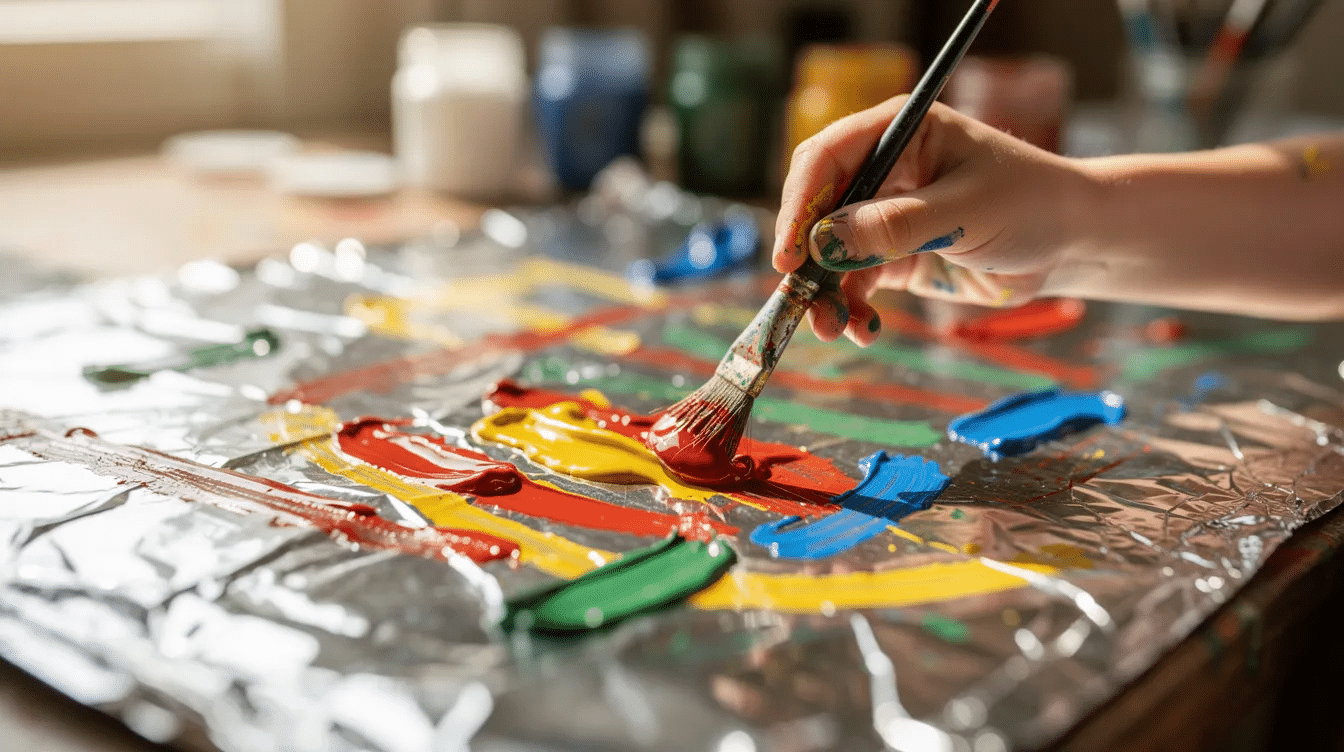
Foil painting is an easy diy project: wrap a piece of cardboard or cereal box with foil, tape the back, and paint directly on the shiny surface. To make aluminum foil paintings, you can create a canvas by wrapping cardboard with foil and then using paint to fill in the sections created by yarn lines. Add a bit of dish soap to tempera or use acrylic paint for better grip.
Why It Stands Out: Paint slides, blends, and reflects light in a way that paper cannot.
Best For: Toddlers through elementary children; kids love the immediate color.
Key Strengths:
- Fast setup and so much fun for kids today
- Great for brush control and fine motor skills
- Can become a christmas tree, rainbow, robot, or abstract art
Possible Limitations:
- Wet paint can smear
- Rough brushwork can puncture the thin foil
3. Textured Foil Collage Art
Creating a tin foil collage is a simple craft that allows even the youngest artists to get involved and produce colorful results. Children can glue foil, paper, tissue paper, yarn, sticks, glitter, and cardboard shapes together to create layered pictures with crinkled texture.
Why It Stands Out: Collage invites new creative explorations because every piece can be smooth, crumpled, torn, folded, or shiny.
Best For: Elementary and middle school kids who enjoy creative explorations and mixed materials.
Key Strengths:
- Encourages problem-solving and spatial thinking
- Uses recycled materials
- Works for abstract art, animals, landscapes, or ornaments
Possible Limitations:
- Glue can get messy
- Layers need drying time before children hang or frame the art
4. Foil Sculpture and 3D Creations
Foil sculpting includes shaping foil into figures and animals. Children can roll foil into arms, twist legs, press a head into shape, and create robots, stick figures, animals, masks, or fantasy creatures.
Why It Stands Out: Aluminum foil is malleable, so kids can build without clay, wire, or expensive materials.
Best For: Ages 6–12 who enjoy hands-on building and imaginative play.
Key Strengths:
- Builds 3D thinking and construction skills
- Minimal supplies: mostly foil and creativity
- Finished pieces can stand, wear as props, or become decorations
Possible Limitations:
- Edges can become sharp
- Sculptures may crush if handled roughly
5. Foil Printmaking and Stamping
Foil printing involves coloring foil with markers, spraying with water, and stamping. Children can also roll paint on foil, press paper on top, and lift a monoprint. Museums such as MASS MoCA use this kind of technique to introduce printmaking through experimentation.
Why It Stands Out: It teaches children that one surface can transfer color to another.
Best For: Elementary school children who like patterns, surprise results, and process art.
Key Strengths:
- Introduces stamping, reverse images, and texture
- Creates multiple prints for cards or gifts
- Combines with markers, glitter, and paper collage
Possible Limitations:
- Results are unpredictable
- Children may need help understanding mirror images
6. Foil Jewelry and Wearable Art
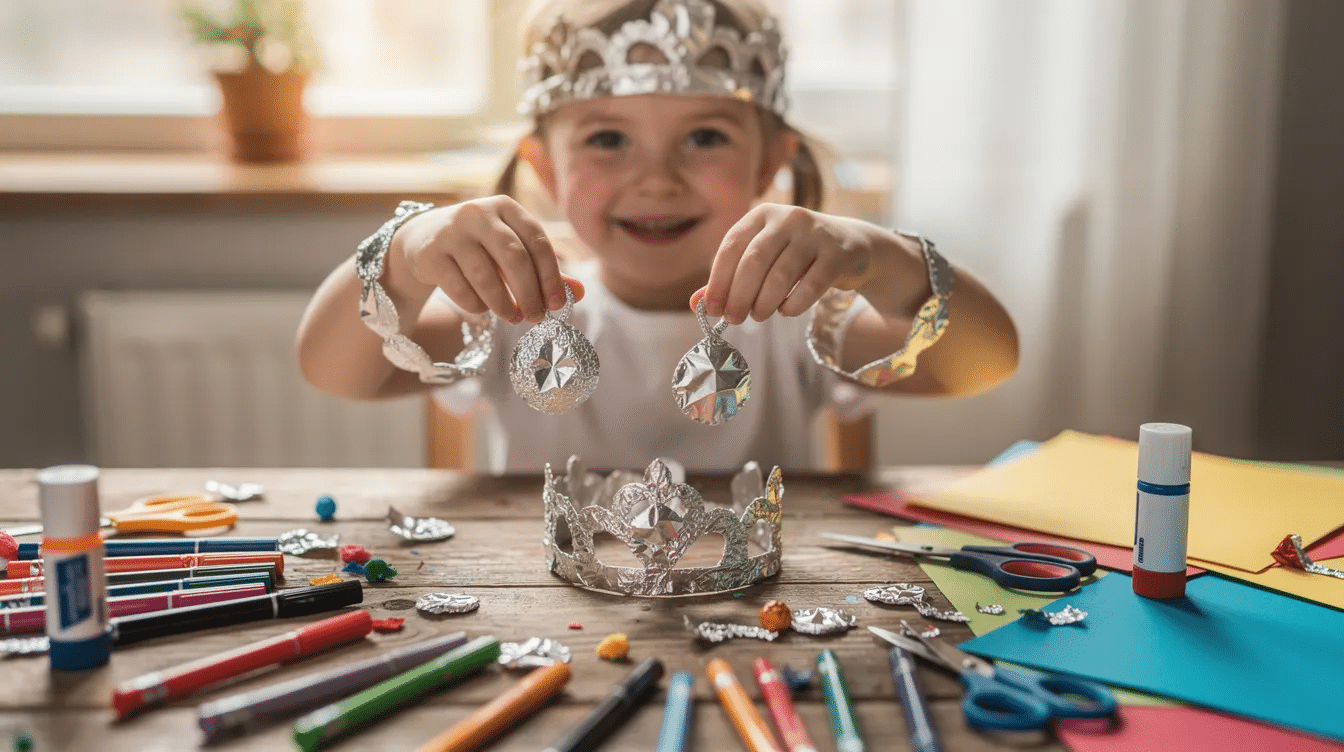
Aluminum foil can be used to create various types of jewelry, including bracelets, bangles, pendants, and crowns, making it a versatile material for kids’ crafts. Creating jewelry with aluminum foil is a fun and engaging activity for children, allowing them to explore their creativity while making wearable art. Foil jewelry crafts can be a great way to teach children about design and construction, as they can manipulate the foil into different shapes and forms to create unique pieces.
Why It Stands Out: Kids get immediate satisfaction because they can wear what they create.
Best For: Ages 7+ who enjoy fashion, accessories, and personal expression.
Key Strengths:
- Makes a cool keepsake or handmade gift
- Builds confidence through functional art
- Works with glitter glue, beads, tape, and markers
Possible Limitations:
- Not durable for everyday wear
- Crowns and bangles need folded edges for comfort
Quick Comparison of the Best Tin Foil Art Projects
Project | Best Use | Main Benefit |
|---|---|---|
Embossed Foil Art | Older children | Detailed, frame-worthy foil art |
Foil Painting | Toddlers and preschoolers | Quick color and sensory fun |
Textured Collage | Experimental artists | Layering, texture, and mixed media |
Foil Sculpture | Hands-on builders | 3D thinking and shape creation |
Foil Printmaking | Pattern makers | Traditional art technique |
Foil Jewelry | Fashion-minded kids | Wearable art and design practice |
Homemade foil ornaments can be created using aluminum foil, which can be shaped and decorated to hang from various surfaces like ceilings, walls, or trees. Creating foil ornaments is a fun activity that allows kids to explore their creativity while making decorative items that can be used for various occasions. Foil ornaments can be made by shaping aluminum foil into different forms, such as stars or hearts, and can be enhanced with colors or additional decorations.
How to Choose the Right Tin Foil Art Project
Choose Based on Your Child’s Age and Development
For toddlers, choose foil painting, collage, or crumpling activities with large materials. For ages 5–8, try stamping, simple embossing, and sculpture. For ages 8+, add hot glue designs, jewelry construction, and detailed permanent markers. The more a project uses scissors, hot glue, or small pieces, the more supervision it needs.
Choose Based on Available Time and Space
If you have 15 minutes, choose painting, stamping, or a quick ornament. If you have more time, decided on embossed foil art, textured collage, or a large sculpture. Use trays, cover the table, and keep a scrap bowl nearby so cleanup stays manageable.
Choose Based on Learning Objectives
Choose painting for sensory play and color. Choose embossing for fine motor skills and patience. Choose sculpture for 3D thinking. Choose printmaking for cause and effect. Choose jewelry when children want to create something personal, bright, and wearable.
Which Tin Foil Art Project Is Best for You?
Choose Embossed Foil Art if you want a challenging project with gallery-style results. Choose Foil Painting if you need an immediate, mess-friendly activity for young children. Choose Textured Collage if your child likes to experiment with materials. Choose Foil Sculpture if you want building, play, and imagination. Choose Foil Printmaking if you want to teach stamping and pattern-making. Choose Foil Jewelry if your child wants art they can wear.
Final Thoughts
Tin foil art for kids works because a simple roll of foil can become a canvas, sculpture, print, ornament, crown, or gift. Start with the project that matches your child’s age, time, and interests, then explore another technique next time. With a few basic supplies, children can create shiny, textured, meaningful crafts that feel special without requiring a big budget.