
Art and craft benefits are far-reaching, impacting people of all ages and backgrounds. This guide explores the wide-ranging benefits of arts and crafts for children, adults, and seniors. Whether you’re a parent, educator, or simply interested in creative development, you’ll discover how engaging in art and craft activities can support well-being, learning, and personal growth at every stage of life. Understanding these benefits matters because creative activities not only foster essential life skills and cognitive development but also promote emotional health and a sense of fulfillment.
- What Are Arts and Crafts?
- Introduction to Creative Arts
- How Arts and Crafts Help Kids Learn and Grow
- Building Motor Skills with Arts and Crafts
- Boosting Creativity and Imagination
- Emotional and Social Benefits of Making Art
- The Importance of Communication Skills
- Therapeutic Benefits of Arts and Crafts
- How Arts and Crafts Support Learning in School
- Creating a Creative Space
- Types of Crafts Activities
- Fun Ways to Encourage Arts and Crafts at Home
- The Importance of Parental Involvement
- Arts and Crafts for Different Age Groups
- The Lasting Impact of Arts and Crafts
What Are Arts and Crafts?
Arts and crafts refer to creative activities such as painting, drawing, sculpting, and crafting with various materials. These activities have always been an important aspect of early childhood education, helping children develop important life skills, practice fine motor skills, and enhance problem-solving abilities. Arts and crafts provide a fun and interactive way for children to experiment, be resourceful, and build confidence and emotional well-being.
Introduction to Creative Arts
Creative arts are a brilliant way to bring a bit of colour and excitement into everyday life, whether you’re a child, teen, or adult. Getting stuck into creative activities like painting, drawing, or sculpting isn’t just about making something nice to look at—it’s about giving your brain and body a proper workout. When you join arts and crafts classes or simply have a go at home, you’re building fine motor skills, boosting your creativity, and sharpening your cognitive function all at once.
The creative process can be exciting and full of surprises, letting you explore new ideas and express yourself in ways words sometimes can’t manage. Arts and crafts offer a nurturing environment where you can develop problem-solving skills, improve your mental health, and support your emotional well-being. Creating art is a powerful tool for building self-esteem, reducing stress levels, and finding a sense of fulfillment in everyday life.
By making creative expression a regular part of your routine—whether through crafts classes, solo projects, or family art sessions—you’re giving yourself the chance to grow, relax, and enjoy the simple joys of creating. It’s a cracking way to support your well-being and keep life interesting, no matter your age or skill level.
How Arts and Crafts Help Kids Learn and Grow
Key Developmental Benefits
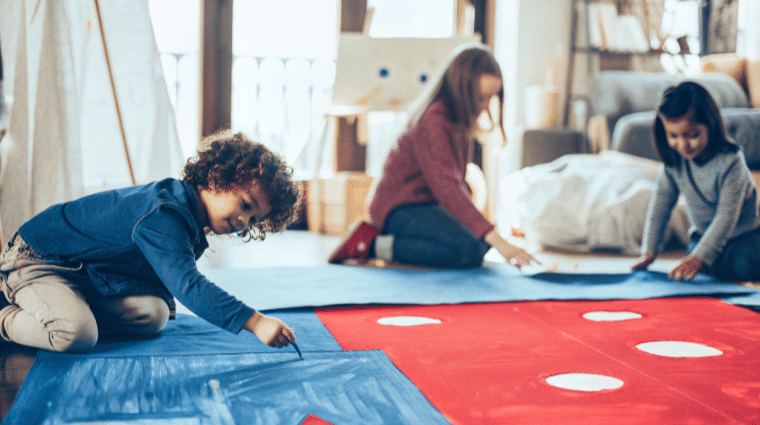
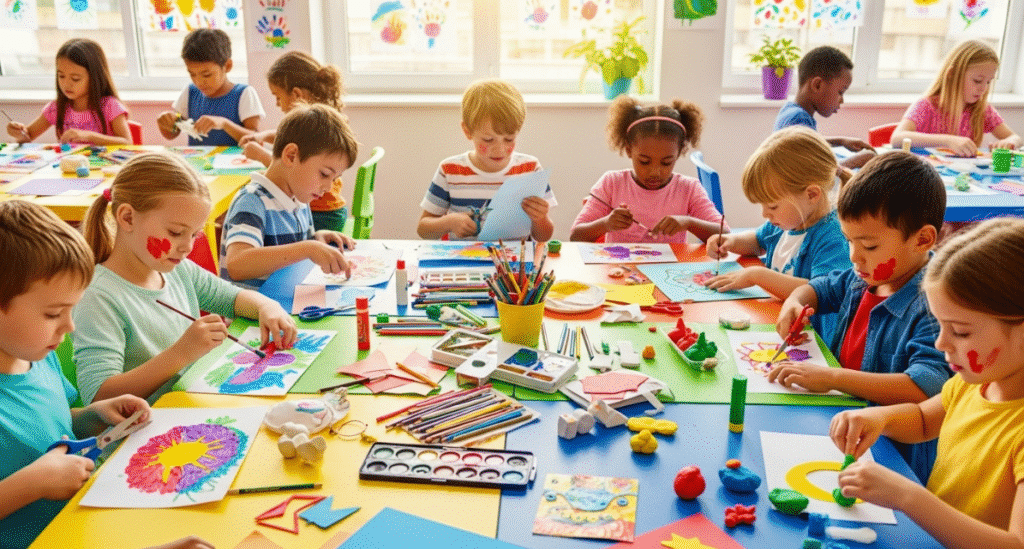
When kids get cracking on creative and artistic activities such as window painting, they’re practicing tons of important skills, including:
- Improving fine motor skills: Holding a paintbrush, cutting with scissors, or molding clay all need good control of those tiny muscles in their hands and fingers.
- Enhancing hand-eye coordination: Activities like window painting help develop coordination needed for writing, tying shoes, and buttoning shirts.
- Boosting problem-solving skills: Figuring out how to put together a project or fix a mistake encourages critical thinking and cognitive development.
- Fostering creativity: Kids get to try out new ideas and explore different ways of doing things.
- Supporting emotional well-being: Art provides a therapeutic outlet for feelings and helps build confidence.
- Acquiring new skills: Hands-on experiences help children learn through doing.
Matching Activities to Developmental Stages
To maximize learning, it’s important to choose activities that match each child’s developmental stage and needs.
Building Motor Skills with Arts and Crafts
Developing Coordination and Dexterity
Getting hands-on with different materials helps kids develop coordination and dexterity. Activities such as:
- Holding a paintbrush
- Cutting with scissors
- Molding clay
all require good control of small muscles in the hands and fingers. These activities help develop fine motor skills and improve concentration.
Enhancing Focus and Patience
- Colouring inside the lines or cutting shapes improves hand-eye coordination.
- Using playdough or clay strengthens hand muscles and supports dexterity.
- Working on art projects teaches patience and focus, as kids learn to stick with a task until it’s done.
Boosting Creativity and Imagination
Encouraging Exploration and Experimentation
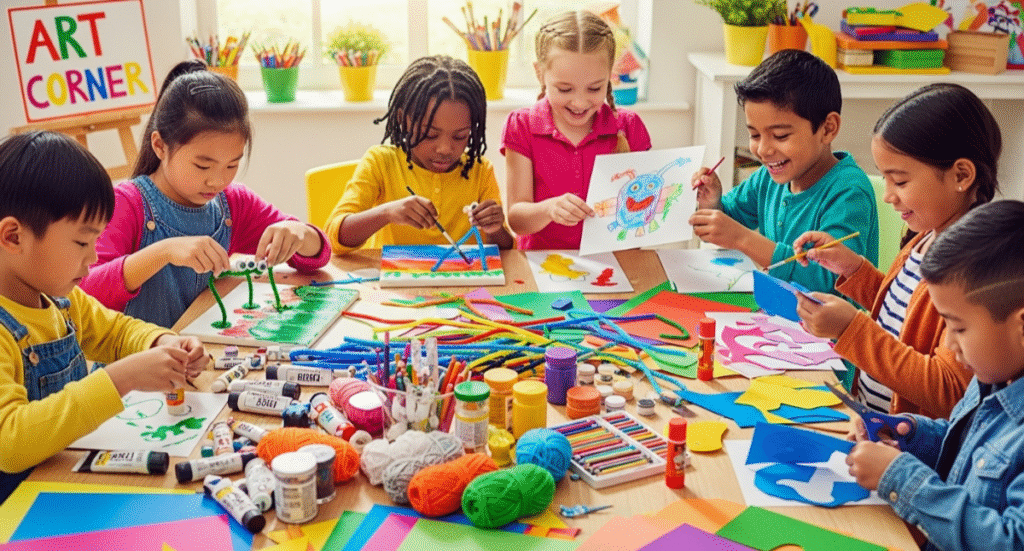
Arts and crafts are a proper playground for imagination. When kids create, they get to:
- Try out new ideas and explore different ways of doing things
- Experiment with new techniques and materials
- Learn that mistakes can lead to brilliant new ideas
Building Perspective and Cultural Awareness
- Engaging in creative arts helps children develop a deeper understanding of themselves and the world around them.
- Art can act as a universal language, allowing people to reflect and engage with complex social and cultural issues.
Emotional and Social Benefits of Making Art
Expressing Emotions
Getting stuck into art projects can help kids express feelings they might not be able to say out loud. This can be dead calming and help reduce stress or frustration.
Building Self-Esteem and Confidence
- Sharing creations with others boosts self-esteem and gives a sense of pride.
- Completing projects builds self-confidence.
Developing Social Skills
- Working on group projects teaches cooperation and communication.
- Sharing supplies, taking turns, and helping each other build social skills important for making friends and working with others.
- Participating in group classes or workshops can combat loneliness by building social connection and community.
The Importance of Communication Skills
Enhancing Verbal and Non-Verbal Communication
Being able to communicate well is a proper life skill, and arts and crafts can help you get there in more ways than one. When you take part in group art projects or crafts activities, you’re not just making something together—you’re learning how to:
- Share ideas
- Listen to others
- Work as a team
Building Self-Awareness
Creative expression through art projects also gives you a chance to show what you’re feeling or thinking, even if you find it tricky to put those emotions into words. This is especially helpful for kids or anyone who struggles to articulate verbally.
Therapeutic Benefits of Arts and Crafts
Emotional Expression
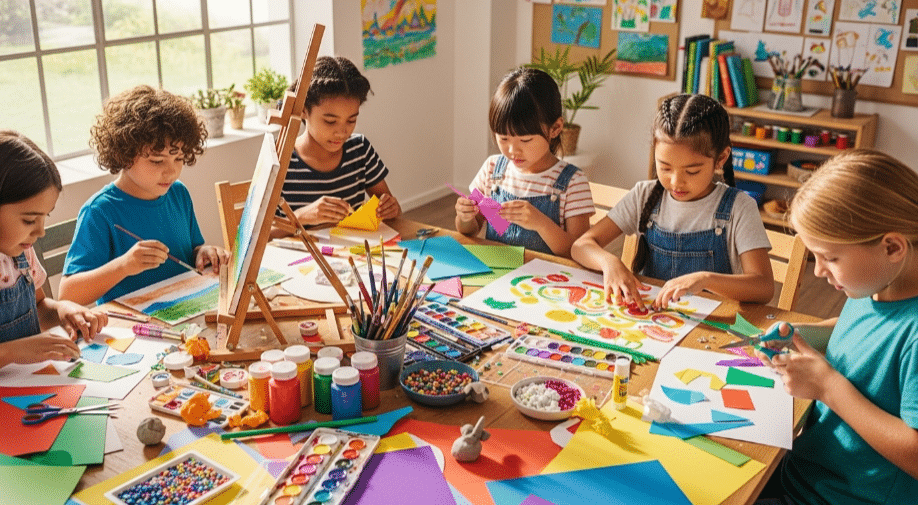
- Arts and crafts provide a non-verbal outlet for complex emotions, making it effective for managing trauma, PTSD, and grief.
- Kids can share what’s going on in their heads in a safe and fun way.
Stress Relief
- Creative activities can act as a form of meditation, lowering cortisol levels and providing a mental break from daily pressures.
- Studies show that just 45 minutes of art-making can significantly lower cortisol levels in 75% of participants.
- Participating in creative activities stimulates the release of dopamine and serotonin, enhancing pleasure and satisfaction.
Building Confidence
- Watching ideas come to life boosts confidence and self-worth.
- Completing projects provides a sense of achievement and resilience.
Additional Benefits
- Regular crafting is a stronger predictor of life satisfaction than employment or living in an affluent area.
- Arts and crafts can serve as a form of therapy for emotional regulation and trauma recovery.
- Creating art can also serve as a visual journal, documenting one’s emotional journey and providing a tangible reflection of personal growth.
How Arts and Crafts Support Learning in School
Academic and Cognitive Benefits
Loads of skills kids practice with art show up in the classroom, such as:
- Fine motor skills for writing and handling tools
- Hand-eye coordination and spatial awareness
- Problem-solving and critical thinking skills
- Building new vocabulary and concepts through discussion
Reinforcing Learning
- Discussing colours, shapes, and materials helps build language skills.
- Explaining their work encourages communication and storytelling.
- Craft activities like creating a weather chart can reinforce learning about seasons and weather patterns.
Creating a Creative Space
Setting Up a Nurturing Environment
Having a dedicated creative space can make all the difference when it comes to fostering creativity and making arts and crafts a regular part of your life. This doesn’t have to be anything fancy—a corner of the kitchen table, a spot in the garden, or a cosy nook in your bedroom can all work wonders.
Stocking Your Space
- Fill your creative space with different tools and materials, from paints and brushes to paper, clay, or even recycled odds and ends.
- A well-organised, well-lit area encourages you to explore, experiment, and enjoy the therapeutic benefits of creating art.
By setting up a creative space that’s just for you (or the whole family), you’re giving yourself permission to play, relax, and let your imagination run wild.
Types of Crafts Activities
There’s a whole world of crafts activities out there, so you’re bound to find something that suits your interests and skill level. Classic options like painting, drawing, and sculpting are always popular, but don’t forget about:
- Pottery
- Knitting
- Sewing
- Digital art
Each type of art activity helps you build fine motor skills, improve hand-eye coordination, and boost your emotional well-being.
Trying your hand at rock painting or watercolor painting can be a calming way to unwind, while digital art lets you explore creativity with new technology. Every craft requires problem-solving skills and a bit of creative thinking, which is great for cognitive function and keeping your brain sharp. Plus, experimenting with different crafts activities helps you discover new skills and develop your creative side.
No matter what you choose, getting involved in arts and crafts is a brilliant way to reduce stress levels, support your well-being, and enjoy the satisfaction of creating something with your own hands.
Fun Ways to Encourage Arts and Crafts at Home
You don’t need fancy supplies to get going. Try these steps to spark creativity at home:
- Gather simple art supplies such as paper, crayons, glue, and recycled materials.
- Encourage experimentation with different mediums—like watercolours, pastels, or fabric—to keep creative pursuits engaging.
- Try activities such as:
- Painting with fingers
- Making collages from magazine cutouts
- Building sculptures with clay or playdough
- Set aside regular time for art activities—just 30 to 60 minutes once a week can lead to noticeable improvements in well-being.
- Get involved! Kids love when parents join in, making it a great chance to spend quality time together and show you value their creative side.
The Importance of Parental Involvement
Supporting Learning and Emotional Development
When it comes to arts and crafts, a bit of parental involvement goes a long way. By joining in with your child’s creative activities, you’re not just helping them learn new skills—you’re also building their self-esteem and supporting their emotional development.
Building Family Bonds
- Arts and crafts activities offer a chance for real social interaction and bonding, giving families a reason to spend quality time together.
- Encouraging your child’s creative efforts helps them develop critical thinking, problem-solving, and communication skills.
- Seeing their work valued and praised boosts their confidence and sense of achievement.
Incorporating arts and crafts into family life isn’t just about making things—it’s about creating memories, supporting well-being, and fostering a sense of life satisfaction for everyone involved. So grab some supplies, get stuck in, and enjoy the simple joys of creating together.
Arts and Crafts for Different Age Groups
Activities for All Ages
Art activities can be sorted to fit kids of all ages:
- Toddlers: Finger painting and simple shapes
- Older kids: More detailed projects like sewing or model building
Choosing activities that match their skill levels keeps things fun and challenging. Accommodating all skill levels ensures inclusivity, and engaging in manual work through crafts benefits both children and adults by promoting physical coordination, cognitive engagement, and therapeutic well-being.
Benefits for Adults and Seniors
- Many senior wellness programs now incorporate arts into daily routines to promote engagement, cognitive health, and social interaction.
- These activities help keep adults and older adults engaged, supporting not only mental and emotional health but also physical well-being by improving fine motor skills and encouraging movement.
- For older adults, regular creative participation is linked to a reduced risk of cognitive decline and improved memory.
- Engaging in arts and crafts supports brain function by requiring problem-solving skills, decision-making, and memory recall.
- Arts and crafts can offer a sense of accomplishment and boost self-esteem for older adults.
As kids grow, arts and crafts can help them discover new interests and talents. Whether it’s drawing, sculpting, or crafting, these activities provide a way to explore and develop.
The Lasting Impact of Arts and Crafts
The benefits of arts and crafts go way beyond childhood. Skills like creativity, problem solving, and self-expression stay with people throughout life. Encouraging kids to get involved in these activities helps build a solid foundation for personal growth and learning. Arts and crafts also provide a refuge from modern life and daily stress, helping to manage negative thoughts and improve mental health.
Participating in craft activities can improve health and lead to decreased anxiety throughout life. Arts and crafts also foster a sense of community and contribute to life satisfaction and a fulfilling life for people of all ages.
So, next time you see a child happily making art, remember they’re not just having a ball—they’re also building skills that’ll help them in school and beyond. Arts and crafts are a dead-simple and joyful way to support kids as they grow. As of 2026, research increasingly identifies “creative health” as an evidence-based strategy for public wellness.