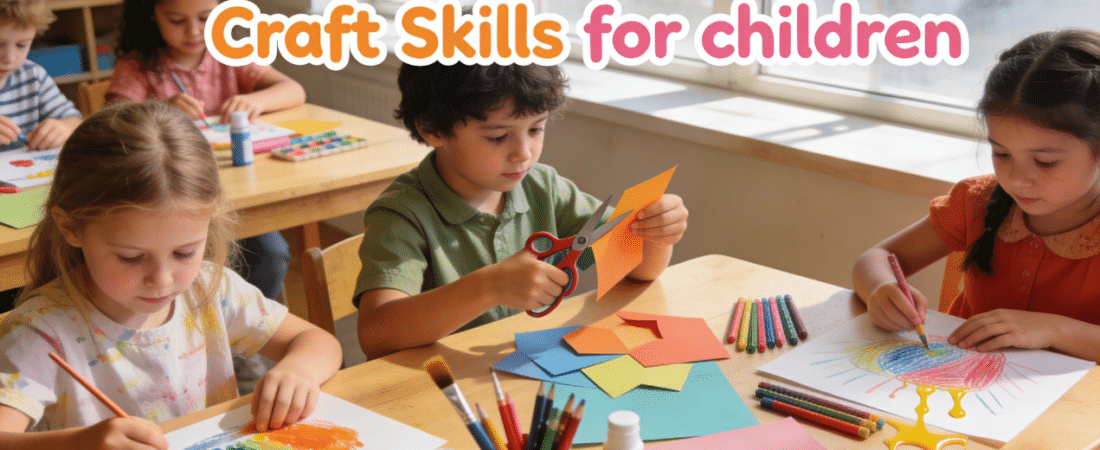

From the first time a toddler grips a chunky crayon to the moment a primary school student finishes their first woven bracelet, art and craft skills quietly shape how children grow. These hands-on activities—painting with tempera paints, cutting colored paper, threading beads, and modeling air-dry clay—do far more than fill an afternoon. They build the foundation for writing, strengthen problem-solving abilities, and give children a safe space for emotional expression. For parents and educators searching for practical, at-home or classroom ideas in 2024, understanding how these creative experiences support development can transform simple crafting sessions into powerful learning opportunities.
This guide is designed for parents and educators who want to understand the developmental benefits of art and craft skills for children ages 2–10.
Art and craft skills refer to the abilities children develop through hands-on creative activities such as drawing, cutting, gluing, folding, and assembling materials. These skills provide opportunities to practice fine-motor skills, foster creativity and critical thinking, and offer a practical way for students to engage with their education and develop essential life skills. Arts and crafts also provide an opportunity for children to express their likes and preferences.
- Introduction to Art and Craft Skills in Child Development
- How Art & Craft Skills Differ from Sensory Play
- Art and Craft Skills Reveal Children’s Interests and Preferences
- Developing Fine Motor Skills Through Art and Craft
- Building Literacy and Early Math Through Art and Craft Activities
- Social and Emotional Skills Gained Through Art and Craft
- Cognitive and Creative Thinking Skills in Art and Craft
- Confidence, Independence, and a Lifelong Love of Making
- Summary: The Main Developmental Benefits of Art and Craft Skills
- Getting Started: Practical Tips and Project Ideas
Introduction to Art and Craft Skills in Child Development
When many children sit down with a box of crayons or a lump of playdough, they’re doing more than keeping busy. They’re developing fine motor skills that will later help them button coats and write their names. They’re practicing patience as they wait for glue to dry. They’re learning to make choices about colors, shapes, and materials—early exercises in decision-making that carry into every area of life.
Research suggests that regular engagement in creative activities can improve hand-eye coordination and fine motor control by 20-30%. Beyond the physical benefits, creating art offers children a language for expressing ideas and emotions they may not yet have words for. A child who draws a stormy sky after a difficult day is processing feelings. A child who carefully arranges leaves into a collage is learning about composition, balance, and the natural world.
The importance of these experiences extends across ages, from toddlers exploring finger paints to nine-year-olds mastering origami folds.
How Art & Craft Skills Differ from Sensory Play
Parents and teachers often wonder where sensory play ends and art and craft skills begin. While both are valuable for development, they serve different purposes and engage children in distinct ways.
Art and craft activities are typically goal-oriented. A child sets out to make something specific—a paper flower, a cardboard robot, a painted butterfly. The focus is on learning techniques like cutting, gluing, folding, and arranging. These projects have a beginning and an end, and children develop the ability to follow steps and complete a creation.
Sensory play, by contrast, is open-ended exploration. Rice bins, water tables, and kinetic sand invite children to touch, pour, and discover without any expected outcome. The process itself is the point.
Here are some clear examples of each:
- Watercolor painting (craft) vs. playing with kinetic sand (sensory play)
- Making a cardboard robot (craft) vs. scooping dry beans between containers (sensory play)
- Creating a paper mosaic (craft) vs. squishing and stretching slime (sensory play)
- Folding origami animals (craft) vs. exploring shaving cream textures (sensory play)
- Assembling a collage from magazine cutouts (craft) vs. finger painting without a planned image (sensory play)
- Weaving paper strips (craft) vs. playing with water beads (sensory play)
The good news? These activities can happen side by side. Using scented playdough to sculpt fruits, for instance, combines sensory and craft elements beautifully.
Choosing the Right Activity for Each Child
Not every child thrives with the same project. Matching activities to a child’s temperament and developmental stage makes the difference between a frustrating experience and an engaging one.
Ages 2–3: At this stage, children benefit from simple, sensory-rich experiences. A sensory-seeking toddler might love finger painting or stamping with sponges. Keep sessions short—10 to 15 minutes is plenty. Large materials like chunky crayons and big paper sheets reduce frustration.
Ages 4–6: Preschoolers can handle slightly more structured projects. A child who enjoys detail might like threading large wooden beads or creating simple collages. Those who prefer movement might gravitate toward painting at an easel or stamping with homemade stamps.
Ages 7–9+: Older children can tackle multi-step projects that require mastering specific techniques. A detail-oriented seven-year-old might love origami or basic embroidery. A child drawn to building might prefer constructing cardboard structures or weaving on a simple loom.
The key is observation. Does the child relax and focus during the activity, or become frustrated? Adjust complexity accordingly. A child who tears paper in frustration during a complicated fold might thrive with a simpler tearing-and-gluing collage instead.
Art and Craft Skills Reveal Children’s Interests and Preferences
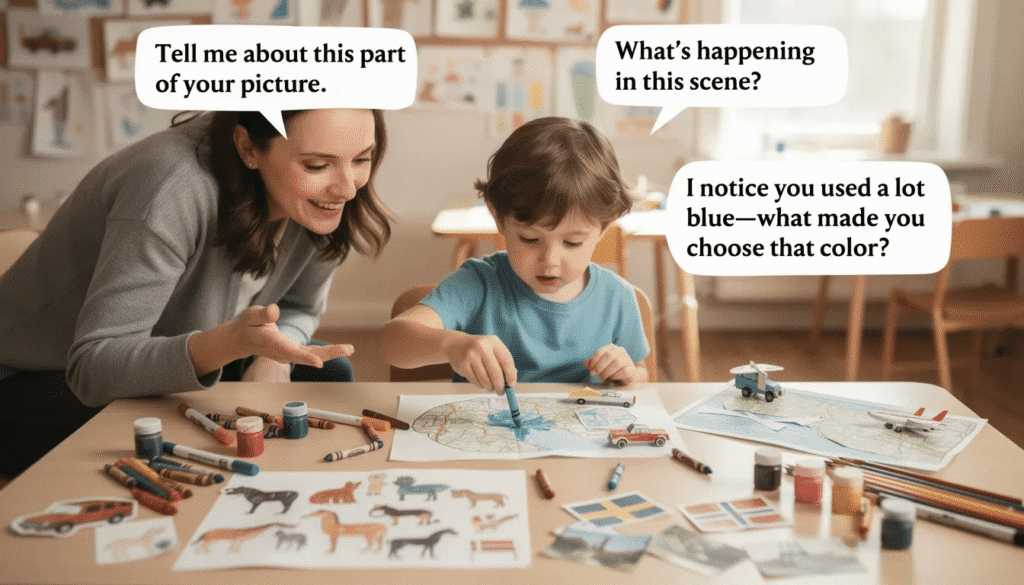
Pay attention to what children choose to create, and you’ll gain a window into their developing minds.
The colors a child reaches for, the subjects they draw repeatedly, and the materials that capture their imagination all offer clues about their interests and preferences. A child who draws animals in every picture may be developing a fascination with biology or dreaming of a pet. A child who collages maps, flags, and vehicles might be curious about geography and travel. These patterns, observed over time, help adults understand what excites each child.
Rather than correcting or “fixing” artwork, adults can encourage conversation. Try open-ended questions like:
- “Tell me about this part of your picture.”
- “I notice you used a lot of blue—what made you choose that color?”
- “What’s happening in this scene?”
These questions teach children that their ideas matter while building vocabulary and communication skills. Displaying children’s favorite pieces—whether on a “gallery” wall in the kitchen or a dedicated bulletin board in the classroom—affirms their choices and builds confidence in their creative expression.
Supporting Self-Expression Through Project Choices
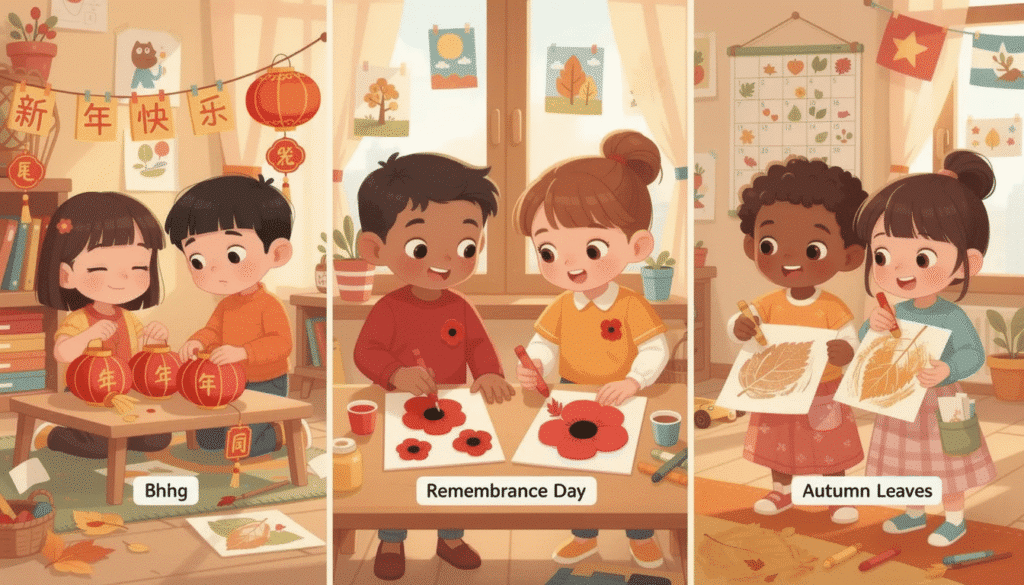
One practical way to support self-expression is offering a small menu of project options rather than dictating a single activity. When children choose between mask making, cardboard vehicles, or nature collages, they’re exercising decision-making and gravitating toward what resonates with their imagination.
Themed crafts connected to real events help children link art to their cultural world. Making paper lanterns for Lunar New Year, poppy crafts for Remembrance Day, or leaf rubbings in autumn connects the craft to something meaningful beyond the table.
Adults should resist the urge to over-direct. If a child wants to paint a blue sun or a polka-dot tree, let them. This freedom to experiment—even to break conventional “rules”—is where genuine creativity flourishes. These artistic choices can also open conversations about emotions, interests, and daily experiences in ways that direct questioning often cannot.
Developing Fine Motor Skills Through Art and Craft
Craft Actions That Build Fine Motor Skills
Fine motor skills involve the small, precise movements of hands and fingers that children need for writing, tying shoelaces, buttoning clothes, and using utensils. Art and craft activities are among the most effective—and enjoyable—ways to develop these abilities.
Every snip of scissors, every bead threaded onto a string, and every clay coil rolled between palms strengthens the small muscles of the hand and builds the neural pathways needed for precision and control.
- Snipping with child-safe scissors
- Peeling and placing stickers
- Threading large wooden beads onto cord
- Folding origami shapes
- Rolling and pinching clay or playdough
- Tearing paper for collages
- Using glue sticks and spreading paste
Age-Appropriate Tools Matter
Explore our guide to art supplies for every stage of your young artist’s development:
- Toddlers (2–3): Chunky crayons, jumbo paintbrushes, playdough
- Preschoolers (4–5): Triangular pencils, child-safe scissors, large beads
- Early primary (6–7): Standard crayons and markers, small paintbrushes
- Older children (8+): Fine-tip markers, safety needles for sewing, small beads
Regular practice—just 10 to 20 minutes of crafting a few times a week across a school term—can noticeably improve pencil grip and hand control. The key is consistency and gradual progression in difficulty.
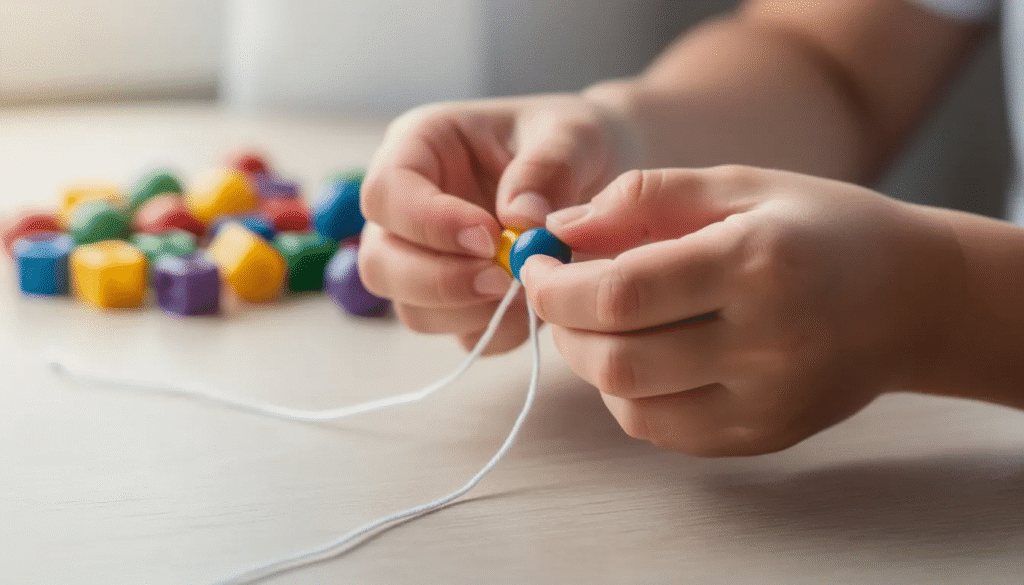
Project Ideas that Strengthen Hand-Eye Coordination
Hand-eye coordination develops when children’s hands learn to work in sync with what their eyes see. These projects offer clear training for this essential skill:
Bead Bracelets
Materials: Large pony beads, elastic cord
Children pick up beads one at a time and thread them onto cord, coordinating visual focus with finger movements. Start with large beads for ages 3–4 and progress to smaller seed beads for ages 8–10.
Simple Weaving on Cardboard Looms
Materials: Cardboard rectangle with notches, yarn
Children weave yarn over and under threads stretched across a cardboard loom. The repetitive over-under motion trains hands to follow a visual pattern precisely.
Paper Weaving Mats
Materials: Colored construction paper strips, base paper with slits
Weaving paper strips through pre-cut slits requires tracking position while manipulating thin materials—excellent for ages 5–7.
Lacing Cards
Materials: Cardboard shapes with punched holes, shoelaces or yarn
Threading laces through holes around the edge of a shape builds the same coordination needed for tying shoes. Wide plastic needles make this easier for younger children.
Dot-to-Dot Drawing Pages
Materials: Printed dot-to-dot pages, pencils
Connecting numbered dots requires visual tracking and pencil control, making this a low-prep activity that reinforces number recognition alongside coordination.
A parent could set up any of these activities within 10 minutes using supplies from around the house.
Building Literacy and Early Math Through Art and Craft Activities
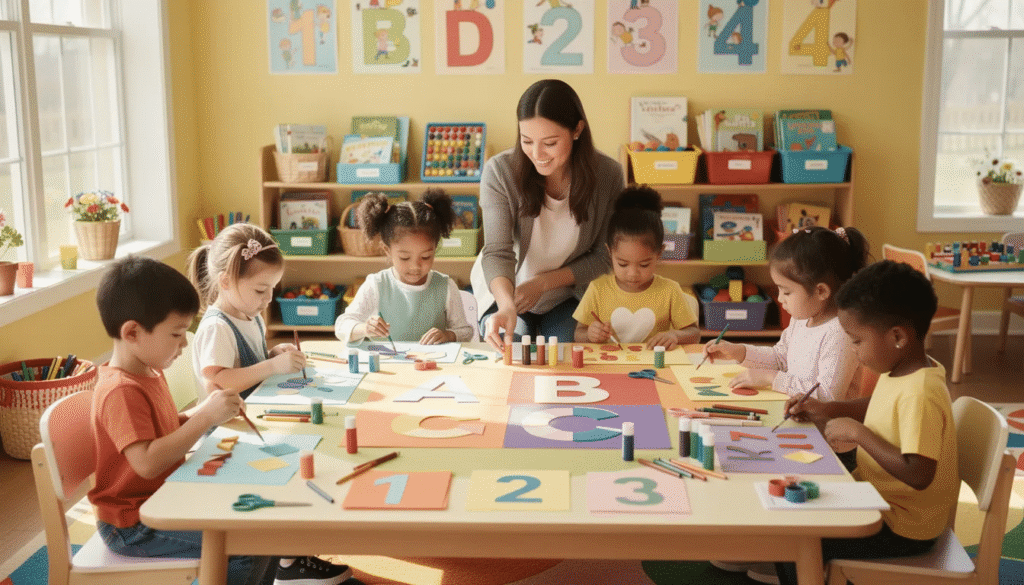
Vocabulary Development During Crafting
Creative projects naturally incorporate language and math concepts without feeling like formal lessons. When a child follows picture instructions to make a paper kite, they’re practicing sequencing—understanding that step one comes before step two, and that order matters.
- Shape names: triangle, hexagon, oval, rectangle
- Texture words: smooth, bumpy, rough, soft, fuzzy
- Action verbs: fold, trace, outline, tear, layer, overlap
- Position words: above, below, beside, through, around
Math Concepts Embedded in Art and Craft
Math concepts embedded in art and craft:
Activity | Math Skill Practiced |
|---|---|
Counting pom-poms for a caterpillar | One-to-one correspondence |
Measuring ribbon with a ruler | Linear measurement |
Comparing craft stick lengths | Greater than/less than |
Creating repeating color patterns in a paper chain | Pattern recognition |
Dividing clay into equal pieces | Fractions and fair sharing |
Sorting buttons by size or color | Classification |
Teachers can easily integrate these concepts into a weekly art center. A simple prompt like “Use exactly five triangles in your collage” or “Make a pattern with three colors” turns open-ended art into focused learning without losing the joy of creation.
Using Story-Based Crafts to Support Reading Skills
Pairing picture books with related craft projects deepens comprehension and recall in ways that discussion alone cannot achieve.
After reading a story, children can create something that connects to the narrative:
- Paper crowns after reading “The Paper Bag Princess”
- Ocean collages after a book about sea animals
- Puppet characters from a favorite fairy tale
- Story stones painted with key objects or characters
- Dioramas recreating a memorable scene
Having children retell the story while decorating their puppets or masks reinforces narrative structure—beginning, middle, and end. Adults can write down children’s dictated sentences and attach them to artwork, supporting emergent writing and print awareness.
When selecting books, include titles published within the last five to ten years alongside classics. Contemporary picture books often feature diverse characters and perspectives that help all children see themselves reflected in stories—and in the art they create in response.
Social and Emotional Skills Gained Through Art and Craft
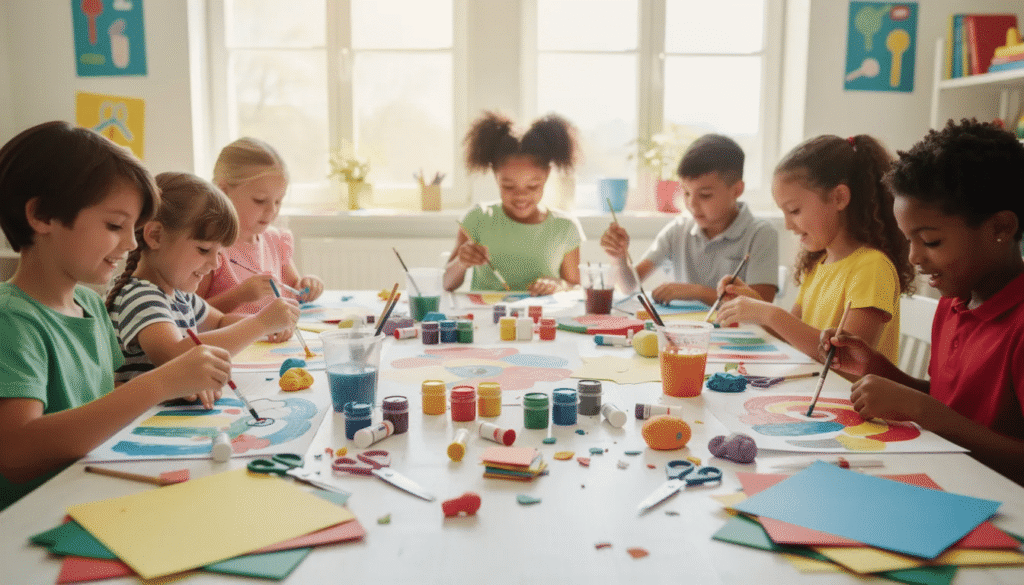
Group crafts in homes, preschools, and early primary classrooms foster communication, sharing, and empathy in concrete, observable ways.
Picture children gathered around a table, passing glue sticks, asking for the blue marker, negotiating who uses the sparkly paper first. These small interactions build social skills that transfer to the playground and beyond. Children learn to wait, to ask politely, and to compromise—all within the low-stakes context of a creative project.
Art also serves as a safe outlet for big feelings. A child might draw a stormy sky when upset, use bold red crayon strokes when angry, or choose calming blues and greens during quiet time. The creative process gives form to emotions that might otherwise be difficult to express or understand.
Teachers and parents can use children’s drawings or collages as springboards for conversation:
- “I see lots of dark colors here. How were you feeling when you made this?”
- “This person looks happy—tell me about them.”
- “What’s happening in this picture?”
The goal is focusing on the process and relationship rather than the perfection of the final product. A “messy” painting created with joy and focus holds more developmental value than a Pinterest-perfect craft that frustrated the child.
Cooperative Projects That Build Teamwork
Collaborative projects teach skills that individual crafts cannot. When children work together toward a shared creation, they practice turn-taking, compromise, and respect for others’ contributions.
Effective group project types:
- Class quilts: Each child decorates a paper or fabric square; adults assemble them into a unified display
- Shared nature collages: Groups create one large artwork from leaves, twigs, and flowers collected on a park walk
- Large cardboard cities: Small groups build connected buildings that form a neighborhood
- Seasonal bulletin board displays: Children contribute individual elements (snowflakes, leaves, flowers) to a shared scene
Age-appropriate group sizes:
- Ages 4–5: Pairs work best to minimize conflict
- Ages 6–9: Small groups of 3–5 children allow more complex collaboration
Assigning simple roles—material helper, cutter, arranger—teaches responsibility and leadership in a low-pressure way. These roles can rotate across different projects, giving every child a chance to practice different types of contribution.
Cognitive and Creative Thinking Skills in Art and Craft
Art and craft activities build cognitive muscles that extend far beyond the art table. Planning, problem solving, and flexible thinking all come into play when a child creates something from raw materials.
Watch a child decide to make a rocket. They must imagine the finished product, choose appropriate materials, figure out how pieces fit together, and adjust their plan when something doesn’t work as expected. This mirrors the critical thinking skills needed throughout education and life.
Problem-solving moments in crafting:
- Figuring out how to make paper stand up in a 3D model
- Deciding what to do when glue doesn’t hold cardboard pieces
- Adapting when there isn’t enough of a preferred color
- Finding creative solutions when a material runs out
One of the most valuable lessons craft teaches is embracing “happy accidents.” When paint splatters unexpectedly or paper tears in the wrong place, children learn to incorporate mistakes into their design rather than starting over. This models resilience and adaptability—skills that serve them throughout learning and life.
The focus should always be on the thinking process, not the perfection of the finished artwork.
From Simple Projects to Multi-Step Creations
Children’s projects naturally progress in complexity as their skills develop.
Toddlers and young preschoolers thrive with single-step crafts: sticker collages, stamp printing, or tearing paper and gluing it down. These activities offer immediate satisfaction and match short attention spans.
Older preschoolers and early primary students can handle multi-step projects completed in one sitting: paper plate masks, simple origami, or painted handprint animals.
Children ages 7–10 are ready for multi-day projects that require sustained focus:
- Designing and sewing a simple felt pillow
- Assembling and painting a shoebox diorama
- Creating a 4-page comic book
- Building and decorating a cardboard dollhouse
- Completing a woven wall hanging
Adults can break tasks into clear segments across days—planning, gathering materials, construction, then decorating. This mirrors real-world project management and teaches children to work toward goals that aren’t immediately achievable.
Celebrating each stage of completion reinforces perseverance and long-term focus. A child who finishes the planning sketch deserves recognition just as much as one who completes the final painted piece.
Confidence, Independence, and a Lifelong Love of Making
Every completed craft project—a finished clay animal, a painted canvas, a woven bracelet—builds a visible sense of achievement. Children can point to something they made with their own hands and say, “I did that.” This tangible proof of capability strengthens self esteem in ways that verbal praise alone cannot match.
Beyond the finished products, the entire process builds independence. Children can take ownership of setup and cleanup: laying down newspaper to protect surfaces, returning brushes to jars, washing paint palettes. These responsibilities teach practical life skills alongside creative ones.
Ways to honor children’s work:
- Date pieces and save them in a portfolio binder
- Photograph large 3D projects before recycling materials
- Create a rotating gallery wall at home or in the classroom
- Let children choose which pieces to display and which to give as gifts
- Compile favorite works into an end-of-year art book
Exposure to a wide variety of art and craft skills between ages 3 and 10 can spark hobbies that last a lifetime—and even inspire future creative careers in fields from fashion to architecture, illustration to sculpture. The child who learns to sew a simple pillow today might become tomorrow’s fashion designer. The one who builds cardboard cities might pursue a career in engineering.
Regular creative time at home or school builds more than just artistic ability. It shapes how children approach challenges, express themselves, and view their own capabilities throughout life.
Summary: The Main Developmental Benefits of Art and Craft Skills
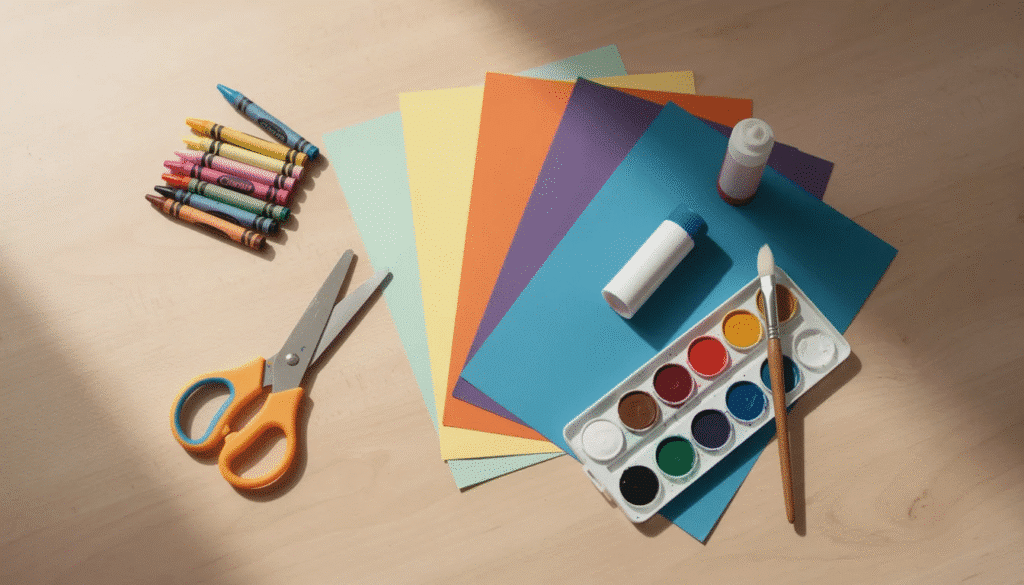
In summary, art and craft skills help children develop fine-motor skills, foster creativity and critical thinking, build essential life skills, enhance focus and concentration, encourage problem-solving, contribute to a balanced education, boost self-esteem and confidence, promote well-being, and support self-expression, literacy, and math. These activities also teach children to follow directions, practice patience, develop early problem-solving skills, and experience a sense of accomplishment. By nurturing these abilities, art and craft skills provide a strong foundation for lifelong learning and personal growth.
Getting Started: Practical Tips and Project Ideas
Ready to begin? Building a creative practice doesn’t require expensive supplies or expert training. Start with these basics for 2024–2025 families:
Starter supply list:
Supply | Notes |
|---|---|
Washable markers | Choose broad tips for younger children |
Crayons | Chunky for toddlers, standard for ages 4+ |
Child-safe scissors | Spring-loaded versions reduce fatigue |
Glue sticks | Less messy than liquid glue for beginners |
Colored construction paper | Assorted colors, various sizes |
Watercolor paint set | Look for sets with large wells |
Masking tape | Useful for holding projects and taping paper to surfaces |
Recyclables | Cardboard boxes, tubes, egg cartons, bottle caps |
Five low-prep project ideas for beginners:
- Paper plate masks: Decorate plates with markers, add yarn hair, and cut eye holes. No special supplies needed beyond what’s in most homes.
- Nature collages: Collect leaves, twigs, and flowers on a weekend walk, then glue them onto cardboard. Children explore both nature and composition.
- Handprint art: Paint hands and press onto paper to create animals, flowers, or family trees. Simple, sensory, and creates meaningful keepsakes.
- DIY greeting cards: Fold paper, draw or collage a design, and write (or dictate) a message inside. Teaches purpose and audience for creating.
- Simple paper mobiles: Cut shapes from colored paper, punch holes, and hang from a stick or hanger with yarn. Introduces balance and spatial thinking. For another colorful craft, try making tissue paper stained glass crafts.
Tips for success:
- Begin with short sessions—10 to 20 minutes—and gradually increase time as children show interest
- Accept messes as part of the process; lay down newspaper or use a washable tablecloth
- Resist the urge to “help” too much; let children struggle productively
- Focus on effort and exploration rather than the finished product
- Keep supplies accessible so children can initiate creative time independently
Choose one small project this week and observe what happens. Watch which skills surface—patience, focus, problem-solving, imagination—and which interests emerge. That child concentrating on cutting paper today might be the artist, architect, or designer of tomorrow. Your role is simply to create the space, provide the materials, and let the creative process unfold.