
Finding the best sewing machine under $300 doesn’t have to be a guessing game. Whether you’re a complete beginner learning to sew your first straight stitch or an intermediate sewist ready to tackle garments and quilting, there’s a machine in this price range that fits your needs perfectly.
This guide breaks down the top picks for 2026, explains what features actually matter, and helps you avoid wasting money on machines that won’t last.
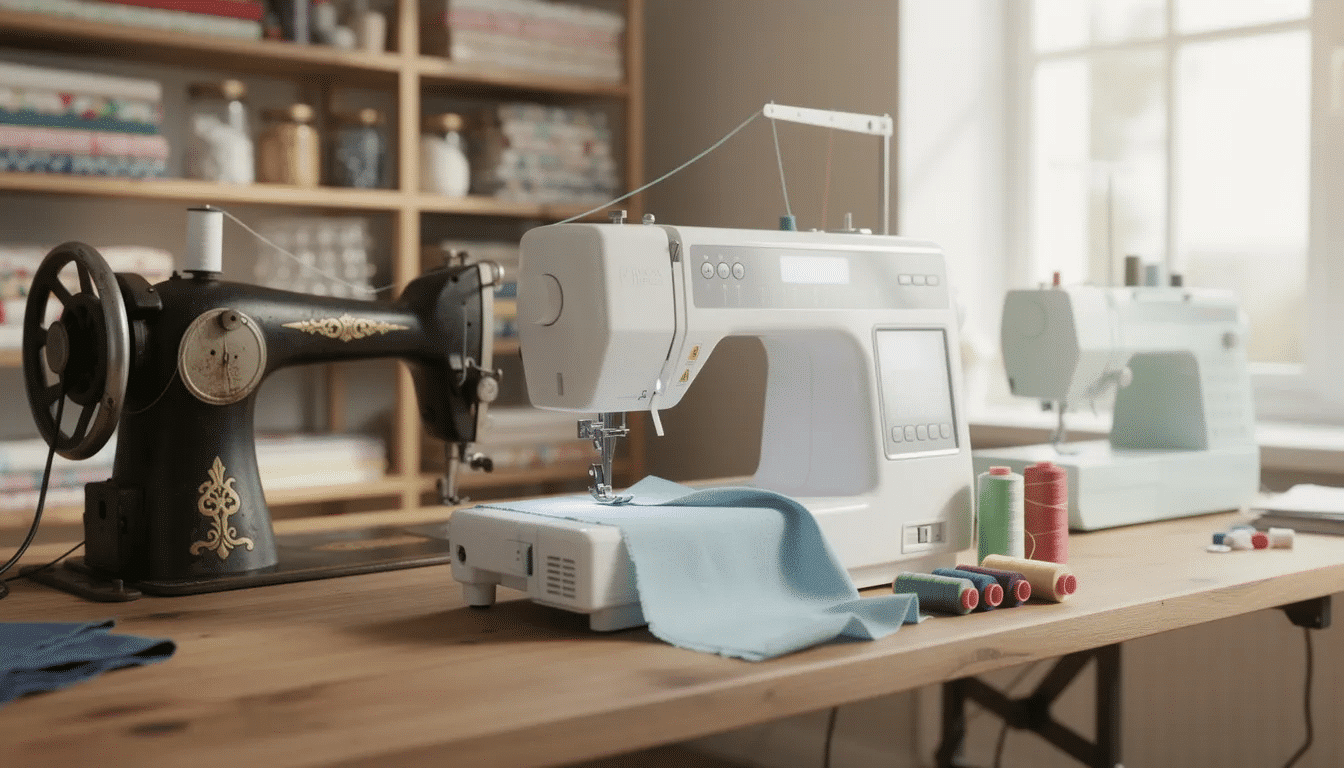
Quick Summary: Top Picks Under $300
These are the best sewing machines under $300 updated for 2026, carefully selected for beginners through intermediate sewists who want reliability without breaking the bank.
- Brother CS7000X – Best overall; 70 stitches, LCD screen, excellent value for versatile projects
- Singer Heavy Duty 4452 – Best for thick fabrics; strong motor handles denim and canvas with ease
- Brother XR9550 – Best for beginners; 165 stitches, lightweight, extremely user-friendly
- Brother ST371HD – Best value mechanical; durable build, simple dial controls, handles heavier sewing
- Janome MOD-30 – Best build quality; reliable stitching, fewer features but rock-solid performance
- Singer Fashion Mate 5560 – Best budget computerized; 100 stitches, simple interface, affordable
- Janome HD-1000 Black Edition – Best for durability (when on sale under $300); metal frame, powerful motor
Quick reference:
- Best overall: Brother CS7000X
- Best for thick fabrics: Singer Heavy Duty 4452
- Best for beginners: Brother XR9550
- Best for quilting: Brother CS7000X (with extension table)
- Best for portability: Brother XR9550
- How We Chose the Best Sewing Machines Under $300
- Best Overall: Brother CS7000X (Usually Around $230–$270)
- Best for Thick Fabrics: Singer Heavy Duty 4452
- Best for Beginners: Brother XR9550
- Best Value Mechanical: Brother ST371HD
- Other Good Sewing Machines Under $300
- Computerized vs Mechanical Machines Under $300
- Key Features to Look For Under $300
- What You Can Sew With a Sub-$300 Machine
- Tips for Getting the Most From a Budget Sewing Machine
- Why You Can Trust This Buying Guide
How We Chose the Best Sewing Machines Under $300
Machines were selected by comparing current 2025–2026 models under $300 across brand websites, major retailers like Amazon and Joann, and hundreds of verified user reviews.
Selection criteria included:
- Price cap of $300 at standard retail (not counting rare sales)
- Reliability with low jam rates and consistent stitch quality
- Ease of use for new sewers and beginner sewists
- Ability to handle common fabrics including cotton, knits, and light denim
- Quality included accessories like presser feet and bobbins
- Warranty coverage and accessible service options
Both mechanical sewing machines and computerized sewing machines made the list, but very basic “toy” machines were excluded—they create more frustration than value.
Priority went to models that have been on the market at least 1–2 years with stable reviews. Brand-new launches without track records didn’t make the cut.
Best Overall: Brother CS7000X (Usually Around $230–$270)
The Brother CS7000X earns the top spot because it delivers exceptional value, handles diverse projects, and won’t intimidate new sewists. It’s the most versatile machine you can buy under $300 in 2026.
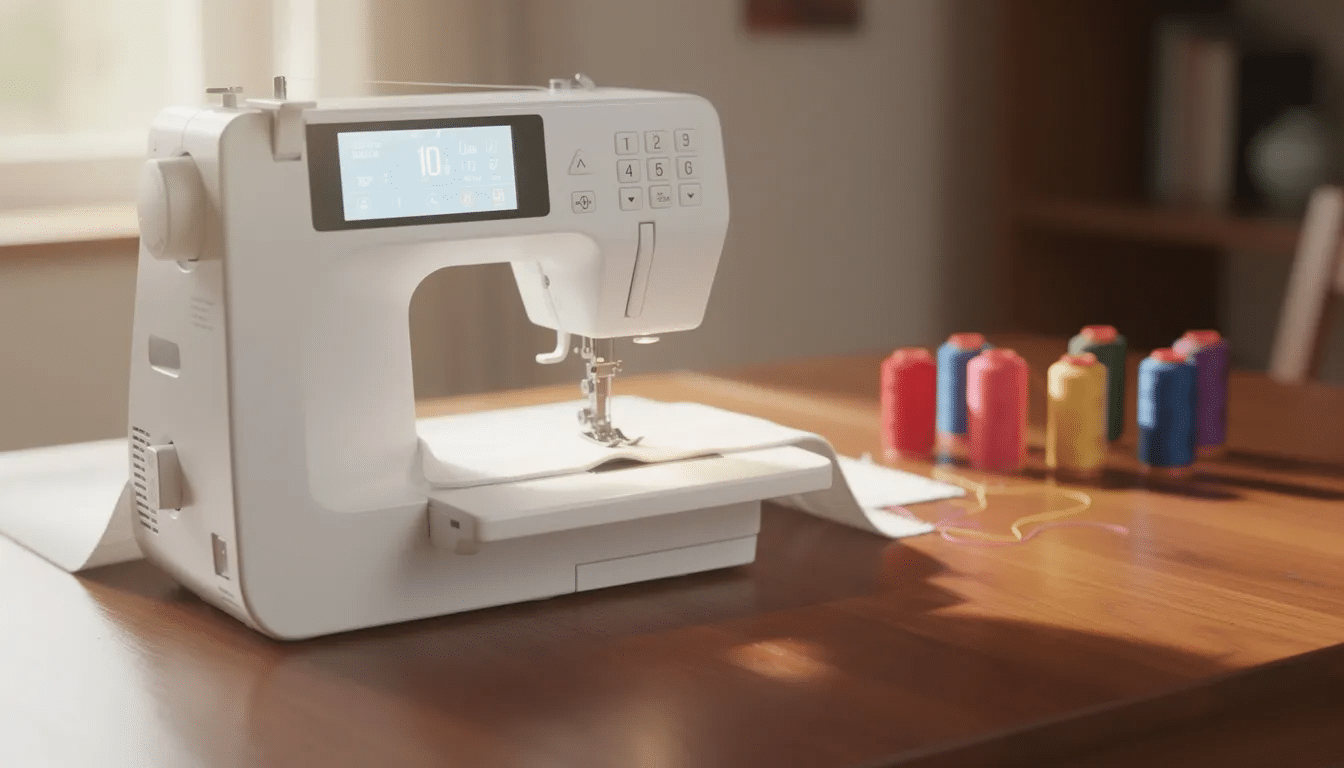
Key specifications:
- 70 built-in stitches including utility and decorative options
- 7 one-step automatic buttonhole styles
- Top drop in bobbin with clear cover for easy monitoring
- Automatic needle threader to reduce setup frustration
- Adjustable speed control slider
- LCD screen for stitch selection
- Included wide extension table for quilting projects
- Free arm capability for sleeves and cuffs
What it handles well:
This versatile machine tackles garment making, basic quilting, home decor projects like pillows and curtains, and light bag-making without complaint. The extension table makes it particularly useful for quilting where you need extra workspace.
Usability highlights:
Stitches are clearly labeled on the machine body, so you’re not flipping through manuals constantly. The start/stop button lets you sew without a foot pedal—great for gaining confidence at slower speeds. Bright LED lighting illuminates your needle plate and work area.
Limitations:
The plastic body keeps costs down but won’t feel as solid as metal-frame machines. It’s not ideal for multiple layers of thick canvas or leather. There’s no advanced embroidery capability—decorative stitches are what you see on the dial.
Flaws but Not Dealbreakers (CS7000X)
- Off-center default needle position – Takes some adjustment if you’re used to centered needles, but most users adapt quickly
- No adjustable presser foot pressure – Limits fine-tuning for delicate fabrics, though standard settings work for most projects
- Somewhat noisy at top speed – Noticeable but not disruptive for home use
- Mostly plastic construction – Standard for this price point; internal components are still well-made
- Limited heavy fabric capability – Handles light denim fine, but don’t expect it to power through upholstery leather
For beginner sewists staying under $300, these issues rarely cause problems in actual use.
Best for Thick Fabrics: Singer Heavy Duty 4452
The Singer Heavy Duty 4452 is the machine to buy if you plan to sew denim, canvas, and upholstery projects regularly. Its stronger motor and metal internals handle heavy fabrics that would stall lighter machines.
Key specifications:
- 32 built-in stitches focused on utility rather than decoration
- One-step buttonhole function
- Up to 1,100 stitches per minute—matching mid-range machine speeds
- Powerful motor designed for thick materials
- Stainless steel bedplate for smooth fabric feeding
- Heavy-duty metal frame construction
What it excels at:
Hemming pants made from denim, sewing canvas tote bags, basic upholstery repairs, and garment work with heavier fabrics. The fast motor and metal construction mean you’re not fighting the machine when sewing through multiple layers.
Why mechanical works here:
This mechanical model uses dial controls that make settings visible and easy to adjust. No LCD screen to navigate—just turn the dial to your stitch and go. For users who find computerized machines intimidating, this straightforward approach builds confidence faster.
Included accessories:
Most machines ship with extra heavy-duty needles, multiple presser feet including a zipper foot and buttonhole foot, and a soft dust cover for storage.
Best for:
Users who expect to sew denim seams, craft heavy bags, or handle upholstery repairs more often than delicate silks or lightweight knits.
Flaws but Not Dealbreakers (Singer 4452)
- Higher vibration and noise at full speed – The powerful motor creates more vibration than lighter computerized machines; a sewing table or stable surface helps
- Limited decorative stitch variety – 32 stitches covers essentials but won’t satisfy users wanting elaborate embellishment options
- Manual tension adjustment needed – Switching between very different fabric weights requires fine-tuning; practice helps
- Still a home machine – Despite “heavy duty” marketing, it’s not built for industrial-level leather or production sewing; thick fabrics yes, industrial use no
Best for Beginners: Brother XR9550
The Brother XR9550 is designed specifically for new sewists who want a forgiving, feature-rich machine without complexity. Priced between $220–$260, it removes common frustrations that make beginners quit.
Key specifications:
- 165 built-in stitches including stretch stitches for knits
- 8 one-step buttonhole styles
- 8 presser feet included (zigzag, zipper foot, buttonhole foot, blind hem, and more)
- Sewing speed up to approximately 850 stitches per minute
- Lightweight at about 10–11 pounds
- Top drop in bobbin with clear cover
Beginner-friendly features:
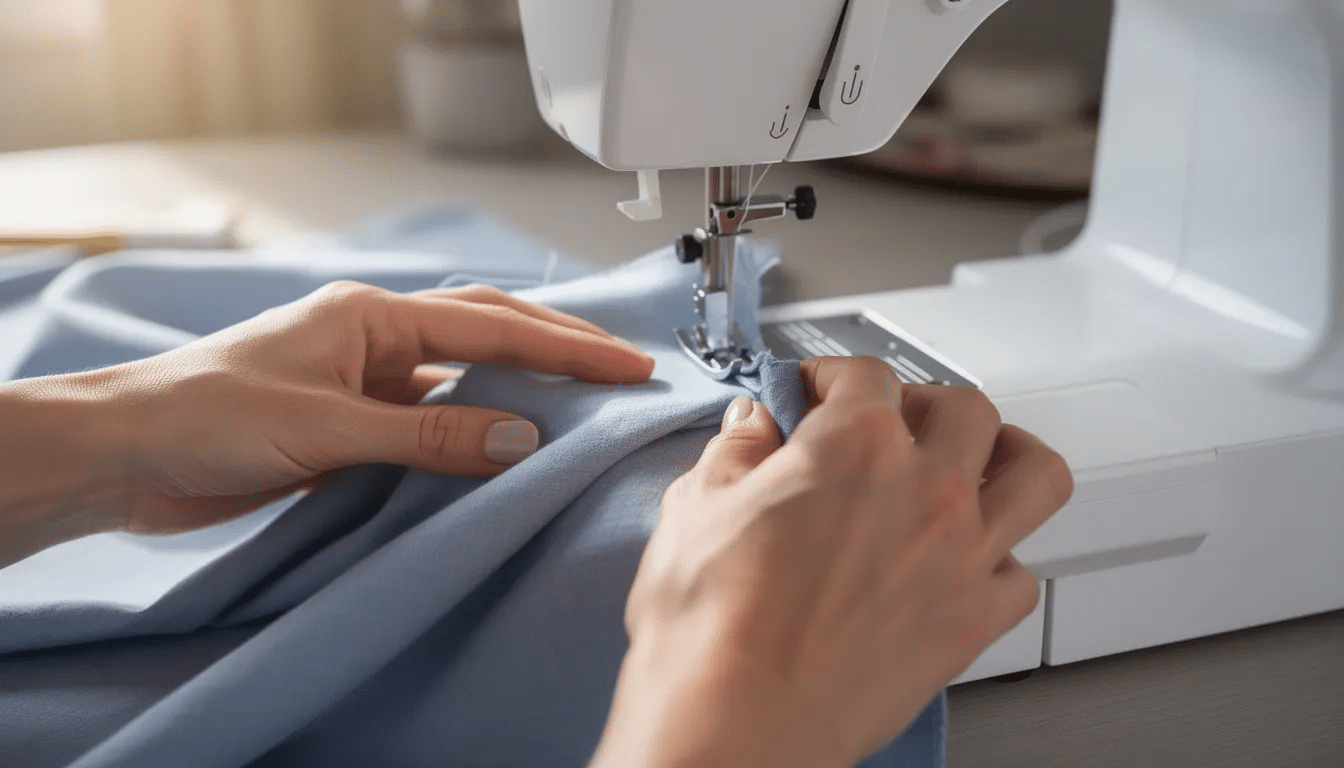
The automatic needle threader eliminates one of sewing’s most frustrating tasks. Stitch selection buttons sit right next to the LCD screen, so you’re not hunting for hidden menus. The speed slider lets you start slow and gain confidence before increasing pace. An on-machine stitch chart shows exactly what each stitch looks like.
Ideal starter projects:
Masks, pillowcases, simple dresses, pajama pants, and basic quilts. The included straight stitch and zigzag stitch handle most beginner needs, while decorative options let skills grow over time.
Portability advantage:
At roughly 10 pounds, it’s easy to carry to classes, workshops, or different rooms. Apartment sewists and students appreciate not needing a permanent sewing table setup.
Growth potential:
The included extension table supports small quilting projects. Optional walking foot compatibility and quilting feet accessories let you expand capabilities as your sewing experience develops.
What It’s Not Great At (XR9550)
- Not an embroidery machine – Despite 165 stitches, decorative options are pre-programmed patterns only; no custom designs
- Less suited for frequent heavy fabric work – Light denim is fine, but regular thick canvas or leather is better handled by heavy duty models
- Lightweight plastic frame – Can feel less solid at top speed compared to heavier metal-frame machines; stability improves on a solid surface
- Basic machine limitations – Won’t replace professional equipment, but that’s not the point for most machines in this price range
Best Value Mechanical: Brother ST371HD
The Brother ST371HD bridges everyday sewing and heavier projects at a price point around $200–$230. It’s a tough mechanical machine that appeals to users who prefer simplicity over screens.
Key specifications:
- 37 built-in stitches covering utility and basic decorative needs
- One-step automatic buttonhole
- Metal needle plate for durability
- Heavier build at approximately 18–19 pounds
- Top drop in bobbin system
- Built-in carrying handle
Strengths:
Handles denim seams and canvas better than basic computerized models. Simple dial stitch selection means no menus or buttons—just turn and sew. The heavier weight provides stability, and fewer electronics mean less that can malfunction.
Recommended for:
Beginners who want to learn on a mechanical model, and crafters focused on bags, basic home decor, and repair work. The straightforward operation builds foundational skills without technology distractions.
Included accessories:
Multiple presser feet including zigzag, zipper foot, buttonhole foot, and blind hem foot. A set of heavier needles and the free arm capability for sewing sleeves and cuffs round out the package.
Trade-Offs to Know (ST371HD)
- Limited stitch selection – 37 stitches versus 70+ on computerized models; fewer decorative options
- No LCD screen – Rely on printed diagrams and dial positions; requires learning the machine’s layout
- Tension adjustment takes practice – Very thin fabrics may need fine-tuning that computerized machines handle automatically
- Manual over automatic – If you prefer “plug and sew” convenience with intuitive controls and automated features, a computerized model may suit you better
Other Good Sewing Machines Under $300
Several additional models deserve consideration depending on your priorities and what sales are running.
- Singer Fashion Mate 5560 – Affordable computerized machine with around 100 built-in stitches and a simple LCD interface. Good for basic clothes, simple projects, and craft work. Best for users wanting computerized features at the lowest price point.
- Janome MOD-30 – 30 built-in stitches with strong build quality and consistent stitch results. Fewer features than Brother models but rock-solid reliability. Best for users who prioritize durability over high stitch counts.
- Janome HD-1000 Black Edition – Metal internal frame and strong motor for heavier fabrics. Limited stitch variety but extremely robust construction. Best if you value long-term durability and find it discounted under $300.
- Brother GX37 – Lightweight mechanical option for very tight budgets around $120–$150. Basic but significantly better than toy-level mini machines. Best for absolute beginners testing whether sewing is for them.
Important note: Pricing fluctuates, especially during sales. Always confirm current prices before purchasing to ensure models remain under $300.
Computerized vs Mechanical Machines Under $300
Both mechanical machines and computerized machines are available under $300, each with distinct advantages depending on your preferences and projects.
Computerized sewing machines:
- Easier stitch selection through buttons and LCD screen displays
- More features including higher stitch counts and buttonhole styles
- Speed control, memory functions, and automated settings
- More electronics that can potentially fail
- May have a steeper learning curve for technology-averse users
Mechanical sewing machines:
- Dial controls that are simple to understand and adjust
- Easier to repair and maintain long-term
- Often stronger feel when sewing heavy fabrics
- Fewer decorative stitches and no on-screen guidance
- More “hands-on” sewing experience
Mapping picks to types:
- Computerized models: Brother CS7000X, Brother XR9550
- Mechanical model options: Singer Heavy Duty 4452, Brother ST371HD
Recommendation: Absolute beginners who feel nervous about technology may prefer starting with a simple mechanical machine. Those comfortable with gadgets and who want more features will appreciate a computerized machine’s convenience.
Key Features to Look For Under $300
Under $300, you can still get essential features that make sewing dramatically easier. Prioritize function over sheer stitch count—you’ll use 7-10 stitches regularly, not 165.
Must-have features:
- Top drop in bobbin system – Easier loading than front loading bobbin designs, plus clear covers let you monitor thread levels visually
- Automatic needle threader – Reduces eye strain and setup time; especially valuable for new sewers who find threading intimidating
- One-step buttonhole function – Essential if you plan to sew garments; four step buttonhole alternatives work but take longer and require more skill
- Adjustable stitch length and stitch width – Better control for seams, topstitching, and stretch stitches on knits; without adjustment, you’re limited in what fabrics work well
- Free arm capability – Necessary for sewing sleeves, cuffs, and narrow tubes like pant legs; most machines have this but verify before buying
Build quality considerations:
- Heavier frames (15+ pounds) offer more stability for quilting and thick seams
- Ultralight machines (under 12 pounds) are more portable but vibrate more at speed
- Metal needle plates and internal frames last longer than all-plastic construction
Presser foot essentials:
Look for included eight presser feet or at least these basics: zigzag/all-purpose foot, zipper foot, buttonhole foot, and blind hem foot. A walking foot for quilting and tricky fabrics is an excellent early upgrade.
Each feature matters in real-world projects—the automatic needle threader saves frustration on every project, while adjustable stitch length lets you properly hem jeans with a longer stitch or sew knits with appropriate stretch stitches.
What You Can Sew With a Sub-$300 Machine
A well-chosen new machine under $300 can handle most home projects for years, supporting your growth from beginner through intermediate skill levels.
Common project types:
- Everyday repairs – Hemming pants, fixing split seams, replacing zippers, patching worn areas
- Home decor – Pillow covers, simple curtains, table runners, cloth napkins, basic slipcovers
- Beginner garments – Skirts, pajama pants, simple dresses, knit tops (using zigzag stitch or stretch stitches)
- Craft projects – Tote bags, zipper pouches, fabric baskets, gift items
- Simple quilting – Piecing quilt tops, straight-line quilting on small to medium quilts (extension table helps significantly), plus creative techniques like turning a photo into an appliqué for personalized quilt blocks and wall hangings
Honest limitations:
Thick leather, multiple layers of heavy canvas, and high-volume production work are better suited to industrial or higher-end machines. A sub-$300 machine handles light to medium denim well, but upholstery-weight leather requires more power.
Progression tip: Start with cotton projects like pillowcases or simple tote bags to master straight seams and gain confidence. Then progress to zippers, buttonholes, and garments as skills grow.
Tips for Getting the Most From a Budget Sewing Machine
These practical habits keep a sub-$300 machine running smoothly and producing neat stitches for years.
Before your first project:
- Read the manual thoroughly and follow threading and bobbin-winding diagrams exactly—most jams come from incorrect threading
- Practice threading several times until it becomes automatic
- Test stitch on scrap fabric before your main project
Ongoing maintenance:
- Always use the correct needle type and size for your fabric (ballpoint for knits, denim needles for jeans, universal for wovens)
- Clean the bobbin area regularly—lint buildup causes most machines to misbehave
- Oil the machine as recommended by the manufacturer (check manual; some machines don’t need oiling)
- Change needles frequently; dull needles cause skipped stitches and fabric damage
Smart upgrades:
- Add a walking foot for quilting and slippery fabrics—it’s the single most useful accessory upgrade
- Stock extra bobbins so you’re not constantly rewinding mid-project
- Consider a basic machine online purchase for accessories from the manufacturer
Long-term care:
- Schedule professional servicing every 1–2 years for regular users
- Check for local authorized repair centers for brands like Brother, Singer, Janome, and Baby Lock
- Store the machine covered to prevent dust accumulation in mechanisms
Practice habit: Use a storage compartment or bag to keep scissors, seam rippers, and included accessories organized near your machine so everything is ready when inspiration strikes.
Why You Can Trust This Buying Guide
These recommendations are based on widely available data: long-term user reviews across major retailers, brand reliability records, and consensus from sewing educators and experienced hobbyists.
Our approach:
- Only current production models available from major retailers in 2025–2026 were included
- Discontinued or hard-to-service machines were excluded
- Focus remained specifically on value at or below $300, rather than pushing higher-end machines
- Both computerized models and mechanical machines were evaluated fairly based on their intended use cases
What we prioritized:
Real-world usability over marketing claims. A machine might advertise 200 stitches, but if users report constant jamming or poor stitch quality, it didn’t make the list. Conversely, a basic machine with 30 reliable stitches beats a fancy machine with 150 inconsistent ones.
Final thought:
Consider your specific projects, the fabric types you’ll sew most often, and your comfort level with technology when choosing among these models. Someone sewing mostly denim and canvas needs the Singer 4452’s power. Someone wanting maximum helpful features for garments and crafts will love the Brother CS7000X.
Starting with a solid budget machine is absolutely enough to learn core sewing skills and complete a wide range of satisfying projects. You don’t need to spend $800 to make clothes that fit, quilts you’re proud of, or home decor that transforms a room. The best sewing machine is the one you’ll actually use—and any machine on this list will serve you well as you gain confidence and watch your skills grow.