
Crafting doesn’t have to drain your bank account. Whether you’re a parent looking for affordable weekend activities, a teacher seeking classroom projects, or a hobbyist who wants to explore new creative outlets, cheap crafting opens doors that expensive supplies often close. This guide walks you through everything you need to know—from building a budget-friendly supply kit to finding the best deals and executing projects that cost less than your morning coffee.
- Quick Answer: How to Start Cheap Crafting Today
- Essential Cheap Craft Supplies to Keep on Hand
- Where to Find the Cheapest Craft Supplies
- Budget-Friendly Craft Kits and Group Projects
- Cheap Crafting by Age Group
- How Cheap Crafting Supports Learning and Skill Building
- Project Ideas: High-Impact Crafts on a Tiny Budget
- How to Stretch Your Craft Budget Even Further
- Online Resources and Inspiration for Cheap Crafting
- Conclusion: Creativity Over Cost
Quick Answer: How to Start Cheap Crafting Today
You can begin cheap crafting right now by shopping dollar stores, checking clearance aisles at big-box retailers, and looking around your own home for recyclable materials. The key insight that experienced crafters understand is that creativity matters more than cost—some of the most impressive projects come from the simplest, most affordable supplies.
Here’s how to get started this week:
- Visit Dollar Tree this weekend to grab $1.25 basics like glue sticks, crayons, foam shapes, and yarn
- Check the clearance section at big-box stores every Sunday evening when staff typically marks down items
- Save cereal boxes, glass jars, paper bags, and cardboard tubes for future projects instead of recycling them
- Collect old magazines and newspapers for collage materials
- Ask friends and family to save their recyclables for you—toilet paper rolls, tin cans, and egg cartons are crafting gold
- Download free printable templates from crafting websites to skip buying pattern books
- Set aside a small box or bin as your “craft stash” to collect materials over time
Two projects you can make for under $5:
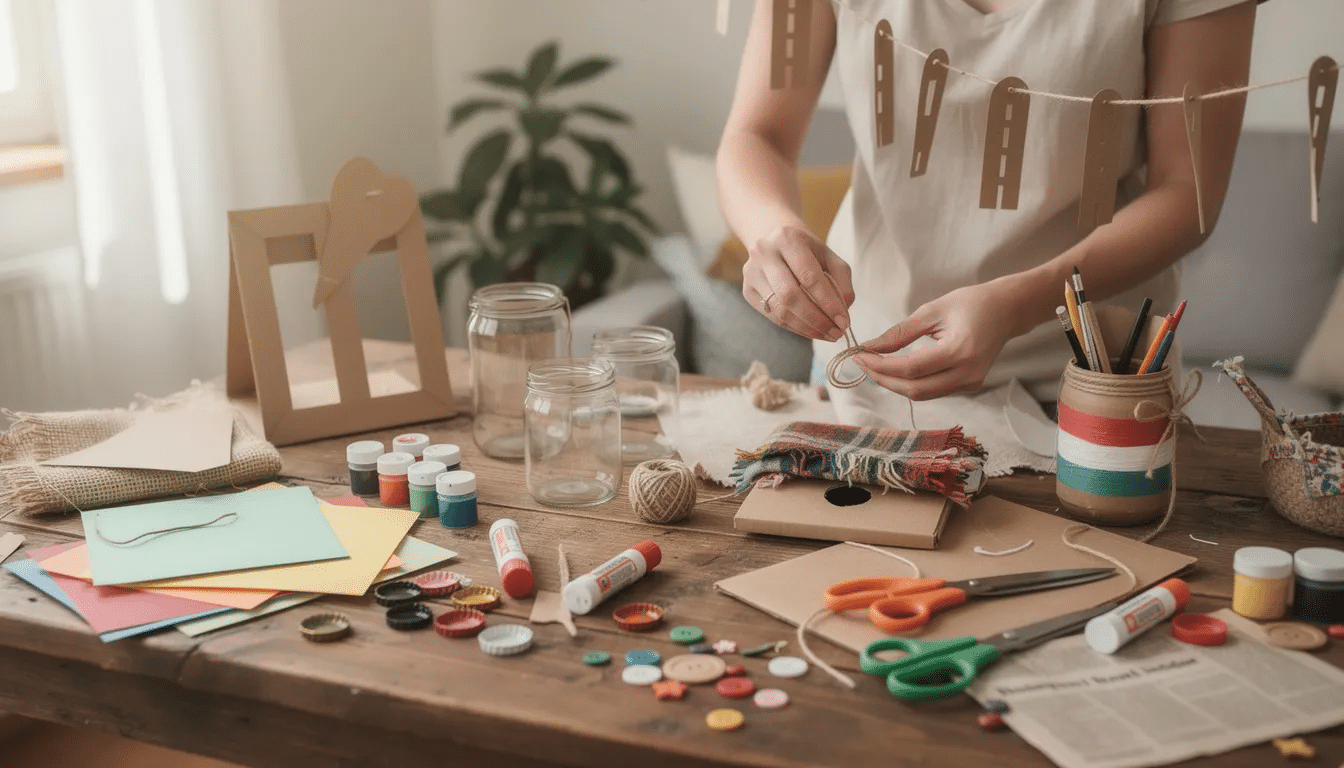
A paper garland requires only printer paper (or construction paper), scissors, string, and tape. Cut shapes, punch holes, thread them on string, and you have instant party décor or classroom decoration.
A painted mason jar pencil holder uses a jar you’d normally recycle, leftover house paint or $1 acrylic paint, and maybe some twine or ribbon. Total cost: under $3, and you get a functional piece of home décor.
The heart of cheap crafting is this: expensive tools don’t guarantee better results. Beginners especially benefit from using affordable materials because it removes the pressure of “wasting” expensive supplies while learning.
Essential Cheap Craft Supplies to Keep on Hand
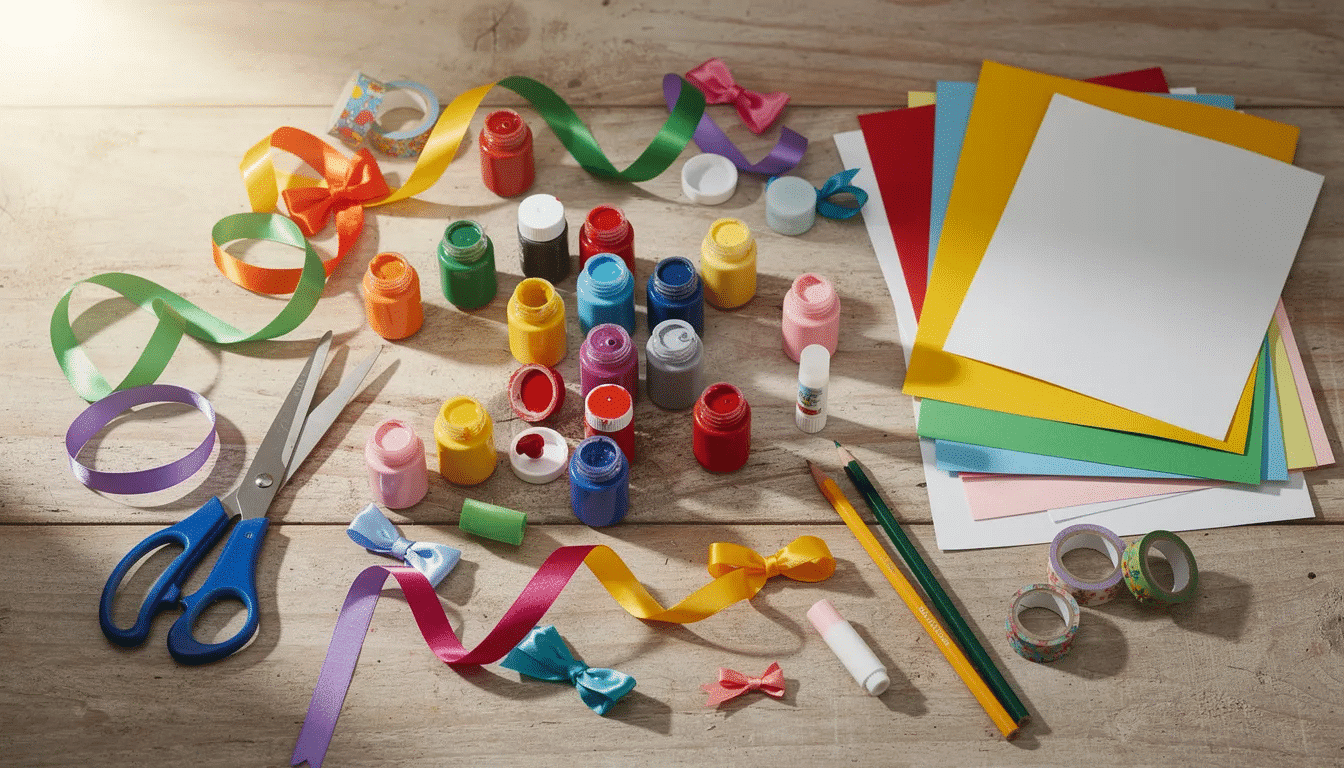
Building a “core kit” of low-cost supplies doesn’t happen overnight, but it doesn’t have to be expensive either. Here’s what to stock gradually, with typical 2024 US prices to help you budget:
Paper
- Construction paper packs (50-100 sheets): $3–$6
- Printer paper (500 sheets): $5–$8
- 12×12 scrapbook paper from clearance bins: $0.25–$0.50 per sheet
- Cardstock multipacks: $4–$7
Adhesives
- White school glue (4 oz bottle): $1–$3
- Glue sticks (multipacks): $2–$5
- Low-temp mini hot glue gun: $5–$10
- Generic hot glue sticks (30-pack): $3–$5
- Double-sided tape: $2–$4
Color
- Student-grade acrylic paint sets: $5–$10
- Washable tempera paint for kids: $4–$8
- Cheap watercolor pans: $2–$5
- Bulk markers (24-pack): $5–$8
- Crayons (large box): $2–$4
For children especially, choosing the best art supplies for young artists means prioritizing non-toxic, age-appropriate materials while still sticking to a reasonable budget.
Tools
- Basic scissors: $1–$3
- Hole punch: $1–$3
- Craft knife with replacement blades: $3–$5
- 12” ruler: $1–$2
- Self-healing cutting mat (optional but helpful): $5–$10
Embellishments
- $1 bead mixes from dollar stores
- Loose glitter containers: $1–$2
- Sequin packs: $1–$3
- Assorted ribbon spools: $1–$3
- Button bags: $2–$4
- Pom poms and pipe cleaners: $1–$3
Recyclables (Free)
- Toilet paper and paper towel rolls
- Cardboard boxes of various sizes
- Glass jars (spaghetti sauce, pickle jars)
- Tin cans (edges filed smooth)
- Magazines and catalogs
- Fabric scraps from old clothing
Where to find each category cheap: Dollar Tree stocks most basics. Walmart end-caps and clearance sections offer seasonal discounts. Online clearance pages on craft retailer websites feature deep discounts on overstocked items. When quality is sufficient for your project, always buy off-brand—the $2 acrylic paint works just as well for kids’ crafts as the $6 version.
Where to Find the Cheapest Craft Supplies
Knowing where to shop often matters more than what you buy. Smart crafters combine multiple sources to build their stash at the lowest possible cost.
Dollar Stores (Dollar Tree, Dollar General, 99 Cents Only)
- Foam sheets, stickers, poster boards, kid-safe scissors
- Basic paints, brushes, and canvases
- Seasonal craft kits and decorations
- Pipe cleaners, pom poms, and fun shapes
Big-Box Retailers (Walmart, Target)
- Check clearance aisles for seasonal décor, ribbons, and discounted craft kits
- After-holiday sales offer 70–90% off (December 26 for Christmas items, November Black Friday weekends)
- End-cap displays often feature marked-down essentials
- Arts and crafts sections have store-brand alternatives at lower prices
Online Discount Sections
- Major craft retailer websites have dedicated “Clearance” pages with fabric, glitter, yarn, and deco mesh at reduced prices
- Sign up for email lists to receive coupon codes (often 20–40% off single items)
- Check for free shipping thresholds to save on delivery costs
Thrift Stores and Charity Shops
- Picture frames (remove old art, use for new projects)
- Vases and containers for upcycling
- Old books for paper crafts and decoupage
- Textiles, buttons, and trims from outdated clothing
- Baskets for storage or wreath-making
These finds are perfect for trying colorful craft ideas for a fun weekend that turn secondhand materials into eye-catching décor and gifts.
Community Re-Use Centers
- Some cities have “creative reuse” stores where businesses donate surplus materials
- Find cardboard tubes, fabric offcuts, foam pieces, and packaging materials
- Schools and libraries sometimes host supply swaps
Timing Strategies That Save Money:
- Shop off-season for seasonal items (buy Christmas supplies in January, Halloween in November) to stock up for holiday craft projects and handmade decorations
- Check weekly store ads every Wednesday when new sales cycle in
- Sign up for store emails and apps for exclusive coupons
- Visit clearance sections regularly—stock changes weekly
Budget-Friendly Craft Kits and Group Projects
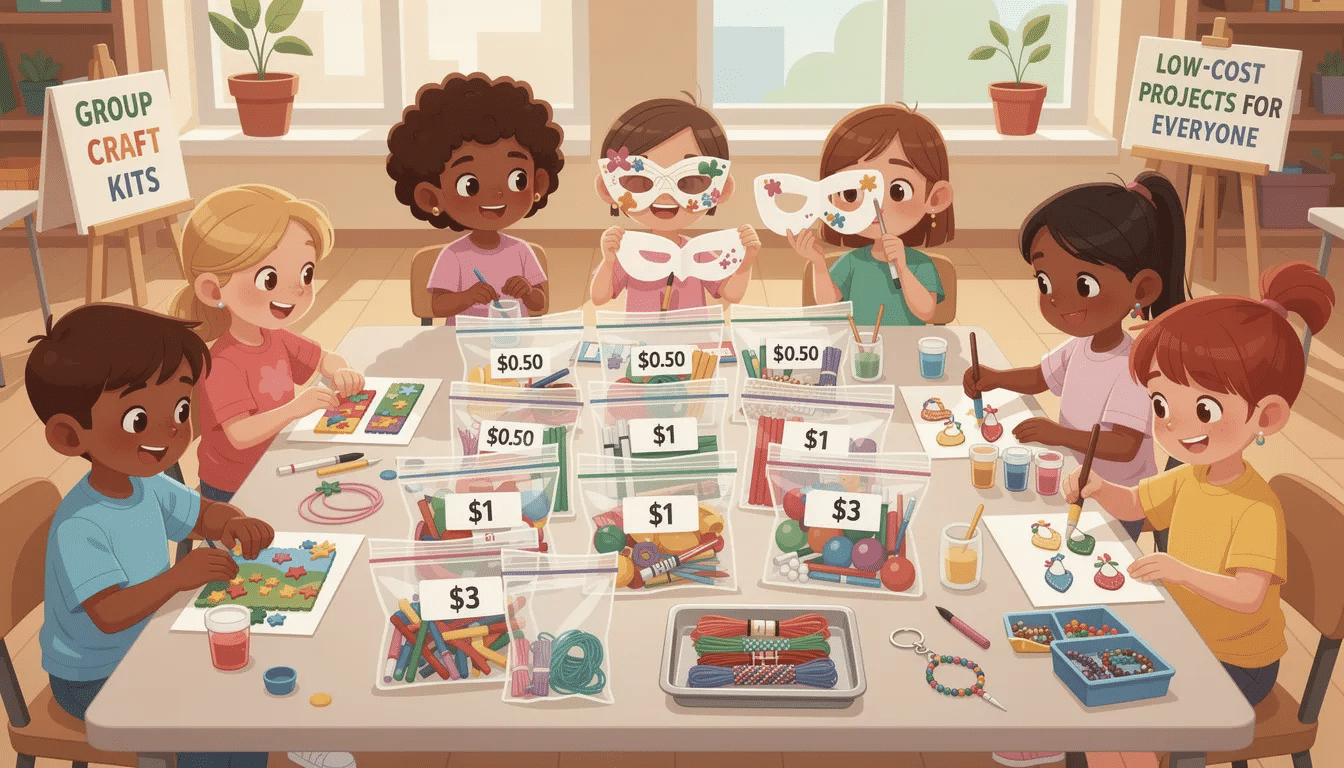
When you need to engage multiple children at once—whether in a classroom, after-school program, scouting group, or family gathering—bulk kits and multipacks become your best friend.
Why Bulk Kits Make Financial Sense:
- A 24-pack bracelet kit might cost $12, bringing the per-child cost to $0.50
- Classroom-size slime kits serve 25+ kids for under $15 total
- Pre-packaged materials reduce prep time and ensure all supplies are included, much like DIY kits for creative projects and learning that bundle everything into one box
Low-Cost Kits Suitable for Ages 5–12:
- Foam sticker scene kits: $1–$3 each
- Paper mask decorating kits: $0.50–$2 per mask
- Wooden ornament painting sets: $1–$3 per ornament
- Friendship bracelet string packs: $3–$5 for enough material for 10+ bracelets
- Beaded keychain kits: $5–$10 for class-size packs
DIY Your Own Kits: Using zip-top bags, divide bulk supplies into individual project bags for parties or clubs. Purchase one large bag of beads, one spool of elastic cord, and sandwich bags—create 15 bracelet kits for about $8 total.
Group Projects Under $1 Per Person:
- Paper crowns using construction paper and stickers
- Bookmark-making with cardstock, markers, and laminating sheets
- Friendship bracelets using embroidery floss ($3 for enough floss to serve 10+ kids)
- Paper bag puppets with googly eyes and markers
- Collage cards using magazine cutouts and cardstock
The math is simple: buying more units almost always lowers the per-project cost. A 100-sheet construction paper pack costs roughly the same as buying 20 individual sheets.
Cheap Crafting by Age Group
Different ages need different materials, supervision levels, and project complexity—but every age group can create on a budget.
Preschool (Ages 3–5)
Focus on safety, sensory exploration, and big motor movements. Tiny pieces are choking hazards; washable everything is essential.
Best Materials:
- Big crayons and chunky markers
- Washable finger paints and tempera
- Large wooden or plastic beads
- Foam shapes with adhesive backing
- Paper plates for animal faces
Project Ideas:
- Paper plate animals (lion with yarn mane, fish with tissue paper scales): ~$0.50 per project, 15–20 minutes
- Handprint art using washable paint: ~$0.25 per project, 10 minutes
- Foam sticker scenes on cardstock: ~$1 per project, 15 minutes
Preschoolers also love themed paper plate projects like a fun and easy crab paper plate craft, which fit perfectly into ocean units without adding much cost.
Elementary (Ages 6–10)
Kids in this range can follow multi-step directions, use scissors safely, and create more detailed projects.
Best Materials:
- Construction paper and cardstock
- Pipe cleaners for bendable structures
- Simple sewing cards with plastic needles
- Cardboard for dioramas
Project Ideas:
- Cardboard dioramas tied to school subjects (history scenes, science ecosystems): ~$2, 30–45 minutes
- Paper weaving placemats: ~$0.50, 20 minutes
- Pipe cleaner creatures: ~$1, 15 minutes
- Decorated pencil holders from tin cans: ~$1, 20 minutes
Tweens and Teens (Ages 11–16)
This age group wants projects that look “real” and can be displayed or given as gifts.
Best Materials:
- Acrylic paint on canvas boards
- Jewelry-making supplies (beads, wire, findings)
- Fabric and basic sewing supplies
- Mod Podge for decoupage
Project Ideas:
- Room décor photo collages: ~$3–$5, 45 minutes
- Painted canvas quotes or abstract art: ~$3, 30 minutes
- Beaded jewelry: ~$2–$4, 30–60 minutes
- Notebook customization with washi tape and stickers: ~$2, 20 minutes
Adults
Budget crafting for adults focuses on home décor, gifts, and stress relief.
Best Materials:
- Wire wreath forms
- Acrylic paint and brushes
- Wood blanks and stencils
- Upcycled jars and containers
Project Ideas:
- Wreaths using wire forms and ribbon scraps: ~$5, 45 minutes
- Upcycled glass jars with acrylic paint: ~$2, 20 minutes
- Wall art using wood blanks and stencils: ~$4, 30 minutes
- Decoupage trays from thrift store finds: ~$3, 45 minutes
How Cheap Crafting Supports Learning and Skill Building
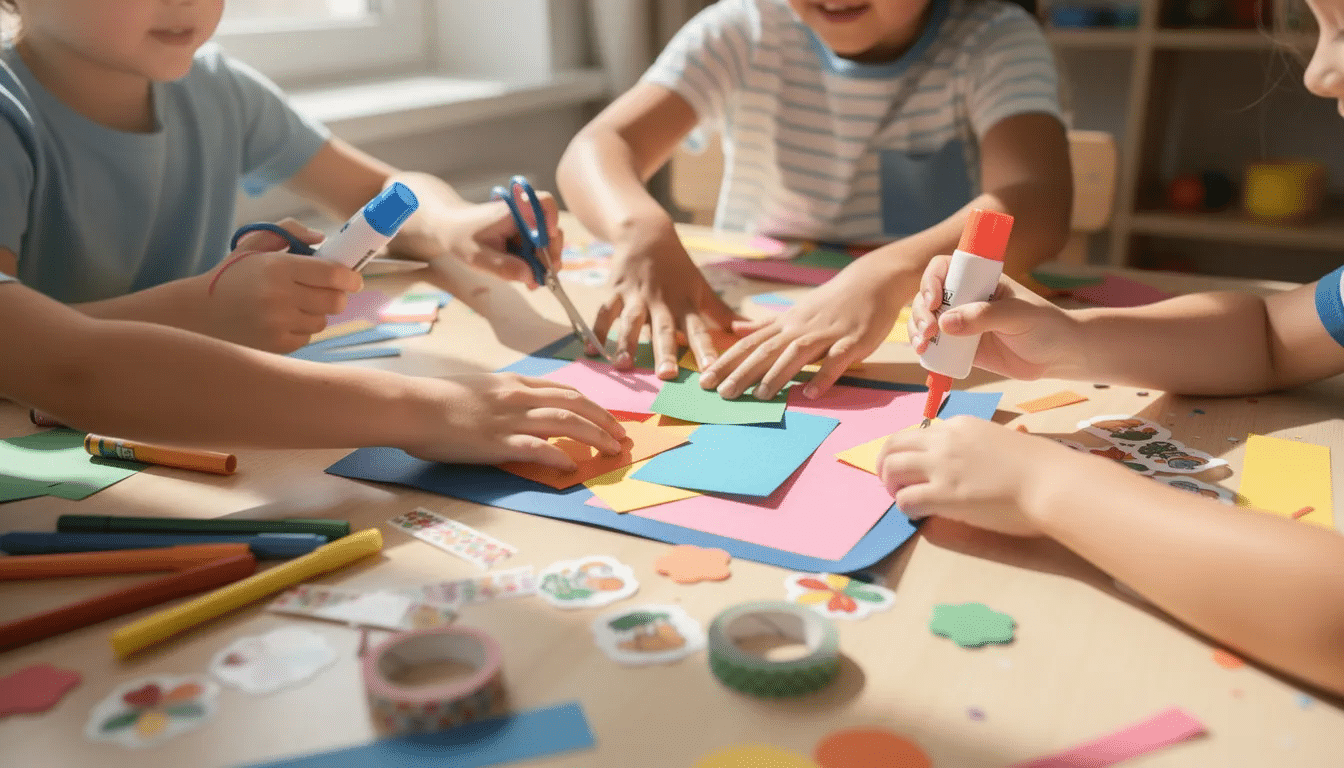
Low-cost crafts deliver genuine educational and developmental benefits—whether at home, in classrooms, or through community programs. The research confirms that frugal experimentation can produce sophisticated results without significant financial investment.
Fine Motor Skills Cutting with scissors, threading beads onto string, and folding paper all strengthen the small muscles in hands and fingers. For children in preschool and elementary, these activities build the foundation for handwriting and other precise movements, and targeted projects that focus on art activities to enhance fine motor skills can make this practice even more effective.
Cognitive Skills Crafting requires following multi-step directions, measuring materials, counting beads, and experimenting with color mixing. A simple bracelet project teaches pattern recognition. Building a diorama requires planning and spatial reasoning.
Creativity and Self-Expression When kids design unique projects instead of copying exactly from instructions, they develop creative problem-solving skills. Imagination flourishes when there’s no “wrong” answer—just different approaches.
Social Skills and Teamwork Collaborative projects like group murals, shared collages, and event centerpieces teach communication and cooperation. Children learn to share materials, take turns, and appreciate others’ contributions.
Emotional Regulation and Stress Relief Simple repetitive crafts—knitting, coloring, collaging—provide calming benefits for teens and adults. The rhythmic nature of these activities can reduce anxiety and improve focus, adding to the many art and craft benefits for child development and growth that extend into emotional health for all ages.
Practical Applications:
- History lessons: Create dioramas of historical scenes using cardboard and craft supplies
- Math: Make pattern bracelets that demonstrate sequences and counting
- Science: Build model ecosystems with cardboard, clay, and paint
- Language arts: Illustrate storybooks using paper and markers
Parents and teachers can inspire creativity without expensive materials. The process of making something matters more than the cost of what goes into it.
Project Ideas: High-Impact Crafts on a Tiny Budget
These projects typically cost between $1 and $5 each, using supplies you probably already have or can find at dollar stores.
Paper-Based Projects
Project | Materials Needed | Estimated Cost | Time |
|---|---|---|---|
Homemade greeting cards | Cardstock, markers, stickers | $0.50–$1 | 15 min |
Paper garlands | Construction paper, string, scissors | $1 | 20 min |
Origami decorations | Origami paper or cut printer paper | $0.25–$1 | 15–30 min |
Kid storybooks | Printer paper, stapler, markers | $0.50 | 30+ min |
Recycled Crafts
- Tin can pencil holders: Wrap cleaned cans in twine, fabric, or paint. Cost: ~$1
- Magazine collages: Cut images and words from old magazines to create vision boards or art. Cost: Free
- Cereal box organizers: Cover boxes with paper or fabric for desk storage. Cost: ~$1
- Toilet paper roll animals: Paint and decorate cardboard tubes into creatures. Cost: ~$0.50
Larger boxes can become imaginative play structures, like a cardboard time machine DIY craft that kids can decorate and climb into for pretend adventures.
Seasonal Décor
- DIY holiday ornaments: Cut shapes from cardboard, paint, add ribbon hangers. Cost: ~$1
- Paper snowflakes: Fold and cut printer paper for window decorations. Cost: Free
- Fall leaf garlands: Cut leaf shapes from construction paper in autumn colors. Cost: ~$1–$2
- Spring flower bouquets: Tissue paper flowers on pipe cleaner stems. Cost: ~$2
Winter units are a great time to mix in polar bear craft ideas for a fun winter activity that use similar low-cost materials.
Kid-Focused Crafts
- Paper bag puppets: Brown bags, googly eyes, markers, and imagination. Cost: ~$1
- Shoe box dioramas: Repurpose boxes into story scenes or habitats. Cost: ~$1–$2
- Sticker scenes: Cardstock backgrounds with dollar store sticker assortments. Cost: ~$1
- Paper crowns: Construction paper strips decorated with markers and stickers. Cost: ~$0.50
Home Décor
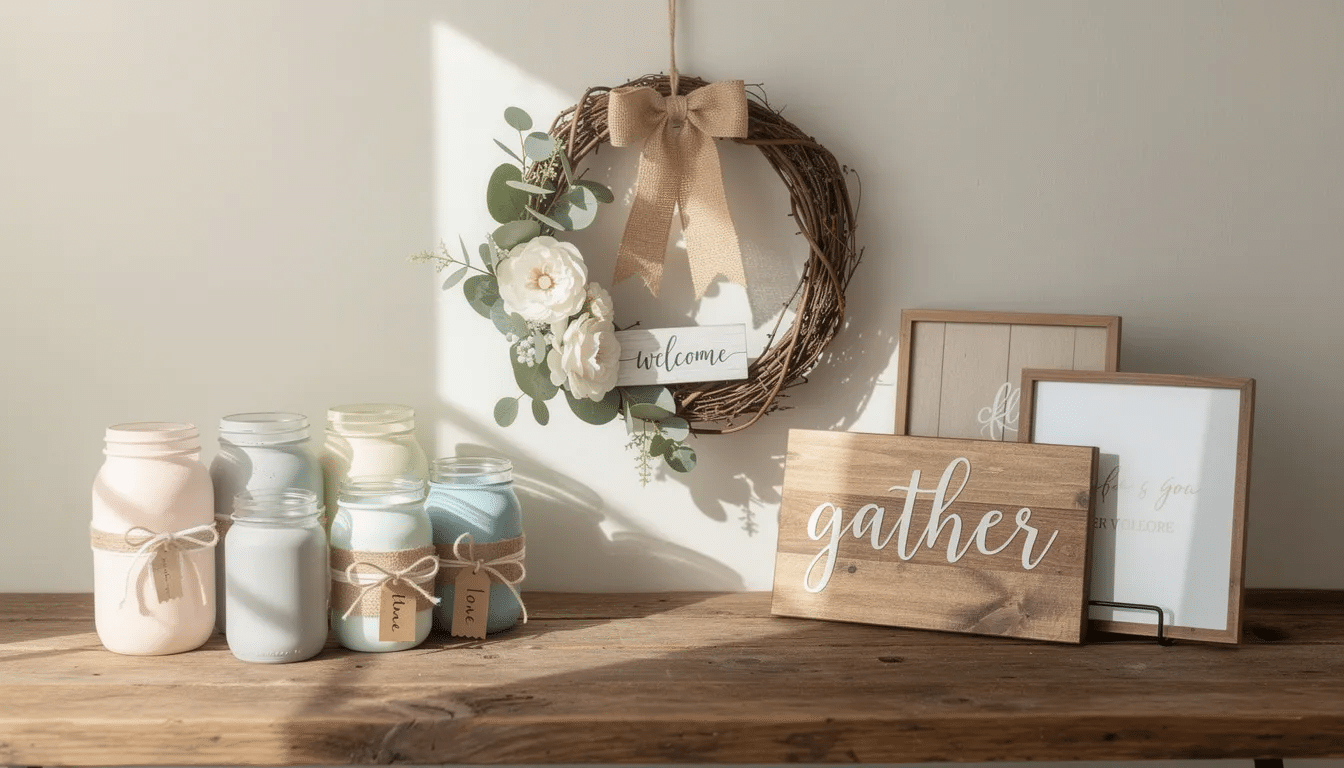
- Painted wood signs: Wood plaques from dollar stores, acrylic paint, stencils. Cost: ~$3–$4
- Mason jar centerpieces: Painted jars with battery candles or flowers. Cost: ~$2–$3
- Simple wreaths: Wire forms wrapped with ribbon scraps or fabric strips. Cost: ~$4–$5
- Photo display boards: Cork or cardboard covered in fabric, used to display photos with pushpins. Cost: ~$3
Colorful window clings or faux suncatchers made from tissue and contact paper offer another budget décor option, similar to tissue paper stained glass crafts for all ages.
Spotlight Projects with Material Lists:
Tin Can Pencil Holder (Individual)
- 1 cleaned tin can (free)
- Twine or yarn ($1 at dollar store)
- Hot glue or white glue (from stash)
- Optional: buttons or ribbon for decoration
Paper Garland (Group Project for 10+ kids)
- 1 pack construction paper ($3)
- 1 ball of string ($1)
- Scissors (from stash)
- Tape or hole punch (from stash)
- Total: ~$0.40 per child
Shoe Box Diorama (Individual)
- 1 shoe box (free)
- Construction paper scraps
- Markers and crayons
- Small figurines or paper cutouts
- Total: ~$1–$2
How to Stretch Your Craft Budget Even Further
Smart planning and habit changes can cut crafting costs dramatically over the course of a year. The research shows that the machine or primary tool is often the smallest single cost—it’s the ongoing consumables that add up.
Plan Projects Around What You Already Have Before shopping, inventory your current stash. Design projects using materials you’ve already collected rather than buying new supplies for every idea.
Set a Monthly Craft Budget A $20 monthly budget provides plenty for most casual crafters. Track spending in a simple note on your phone or computer. This creates accountability and prevents impulse purchases.
Use Coupons, Rewards, and Off-Brand Equivalents
- Sign up for craft store emails to receive 40–50% off coupons
- Use store apps for digital coupons and reward points
- Buy store-brand supplies when quality is comparable
- Stack coupons with clearance items for maximum savings
Swap Supplies with Others Organize “stash swap” events with friends, schools, or community groups. One crafter’s excess ribbon becomes another’s perfect project material. This builds community while reducing waste.
Maintain and Reuse Tools The research emphasizes tool maintenance as a critical cost-control mechanism:
- Clean brushes immediately after use to extend their life
- Sharpen rotary blades monthly rather than replacing them
- Label scissors for specific uses (fabric vs. paper) to prevent damage
- Store supplies properly to prevent drying, breaking, or deterioration
Real-World Savings Example: A gallon of white glue costs approximately $8–$12 and contains 128 ounces. Small 4-ounce bottles typically cost $2–$3 each. Buying the gallon and refilling small bottles saves roughly $40–$80 over the equivalent volume purchased in small containers.
Additional Money-Saving Measures:
- Buy seasonal items after the holiday (90% off is common)
- Request craft supplies as birthday or holiday gifts
- Check library book sales for craft idea books at $0.25–$1 each
- Explore free resources like Pinterest boards and YouTube tutorials before purchasing pattern books
Online Resources and Inspiration for Cheap Crafting
Creativity combined with the right online resources makes cheap crafting sustainable long-term. You don’t need expensive books or subscriptions to find project ideas.
Free Blogs and Tutorial Websites Search for blogs that specialize in budget crafting, dollar store DIYs, and recycled material projects. Many include complete tutorials with supply lists and step-by-step photos. Bookmark your favorites for easy access.
Video Platforms YouTube offers thousands of free tutorials. Search keywords like:
- “$5 crafts”
- “Dollar store DIY”
- “Recycled crafts for kids”
- “Budget home décor”
- “Classroom craft ideas”
Many creators demonstrate projects using only supplies from specific stores, making shopping lists easy to follow.
Free Printable Templates Numerous websites offer free downloadable patterns, coloring pages, papercraft models, and cut-and-fold projects. These eliminate the need for purchased pattern books and provide instant project ideas. Common file types include PDF for easy printing from any computer.
Online Communities and Social Groups Join Facebook groups, Reddit communities, or Discord servers focused on budget crafting. Members share thrifty project ideas, supply sources, and creative substitutions. These communities welcome crafters of all skill levels and often feature beginners asking questions alongside experienced makers sharing tips.
Search Strategies That Work:
- Add “budget” or “cheap” to any craft search to filter results
- Include specific store names like “Dollar Tree” to find relevant projects
- Search by age group: “toddler crafts under $5” or “teen DIY room décor cheap”
- Look for “classroom crafts” to find projects designed for multiple children
Note that many resources require you to sign up with a valid email and verify your account to access downloads. Most are genuinely free—just submit your email, log in, and explore the collection.
Conclusion: Creativity Over Cost
Cheap crafting proves that resourcefulness beats expensive supplies every time. Throughout this guide, we’ve seen that anyone—parents, teachers, group leaders, or hobbyists—can create impressive projects without breaking the bank. The history of crafting is filled with makers who used what they had, and that tradition continues today.
Re-using household materials like cardboard boxes, glass jars, and fabric scraps transforms “waste” into a complete assortment of crafting supplies. Combining discount store finds with imagination produces results that rival expensive alternatives. The range of projects possible with just construction paper, glue, and paint is essentially unlimited.
The lasting benefits of crafting extend far beyond the finished project. Children develop fine motor skills and cognitive abilities. Adults find stress relief and creative satisfaction. Classrooms and community programs engage kids with hands-on learning that textbooks can’t match. These benefits don’t require premium prices—they require effort, time, and imagination.
Your challenge: Pick one small, low-cost project from this article and complete it within the next week. Use supplies you already own plus $5–$10 in additions from your local dollar store or clearance aisle. Don’t wait for the perfect conditions or the perfect supplies. Start now, experiment freely, and discover that cheap crafting is actually about becoming rich in creativity.