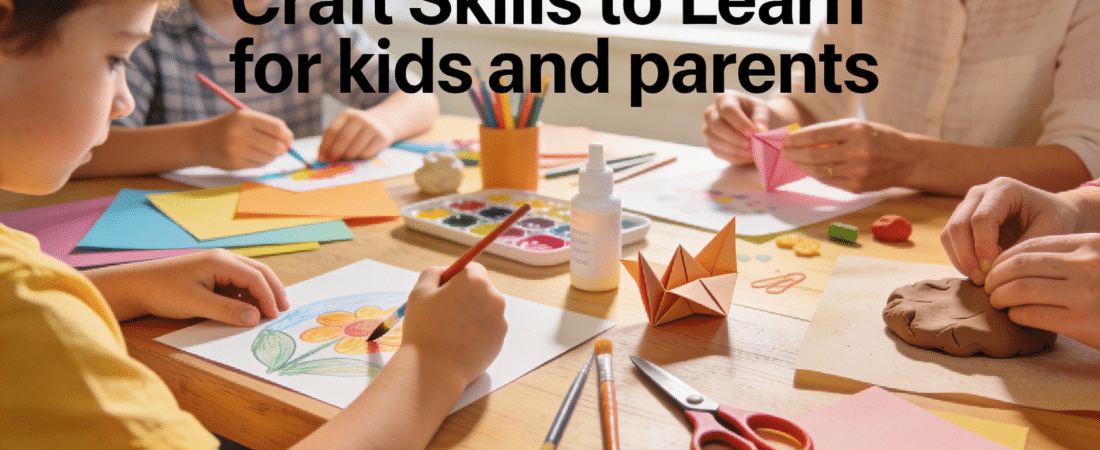

There’s something deeply satisfying about making something with your hands. In a world of screens and notifications, crafting skills offer a tangible escape—and practical results you can actually use. Whether you’re looking to create wall hangings for your room, make personalized gifts for friends, or simply find a calming evening activity, the right craft project can transform how you spend your free time.
This guide covers the best crafts to learn in 2026, from quick wins you can finish tonight to skills that’ll grow with you for years. No gatekeeping, no expensive equipment lists—just honest advice on what to try first and how to get started.
- Start Here: How to Pick Your First Craft Skill in 2026
- Textile Craft Skills to Learn
- Paper & Drawing Craft Skills to Learn
- Home & Decor Craft Skills to Learn
- Jewellery & Wearable Craft Skills to Learn
- Metal, Glass & “Heavier” Craft Skills to Learn
- Educational & Family-Friendly Craft Skills to Learn with Kids
- Turning Craft Skills into a Long-Term Hobby or Side Income
- Your Creative Journey Starts Now
Start Here: How to Pick Your First Craft Skill in 2026
Before diving into techniques and tools, let’s figure out which craft actually fits your life right now. The goal isn’t to find the “best” skill—it’s to find the one you’ll actually do.
Quick decision guide:
- Do you want something you can do on the sofa in 30 minutes, or are you willing to set up a dedicated space?
- Are you drawn to useful home items or purely decorative art?
- Do you prefer working alone for meditation, or want something to do with kids or friends?
- What’s your realistic budget this month—under £20, or can you invest in some specific tools?
- Do you want instant results, or are you patient enough for skills that take practice?
If you’re a student with a small budget and no space: Start with paper crafts, sketching, or origami. You need almost nothing to begin, and everything fits in a drawer.
If you’re a busy parent with evenings only: Crochet, hand embroidery, or hand lettering work brilliantly. These are portable, pausable, and don’t require setup time.
If you’re a home improver in a rented flat: Furniture upcycling, macramé, or air dry clay let you personalize your space without permanent changes—and you’ll save money compared to buying new decor.
Pick one skill from the sections below and commit to trying a 30–60 minute project this weekend. That’s it. One craft, one attempt, one small finished piece.
Textile Craft Skills to Learn
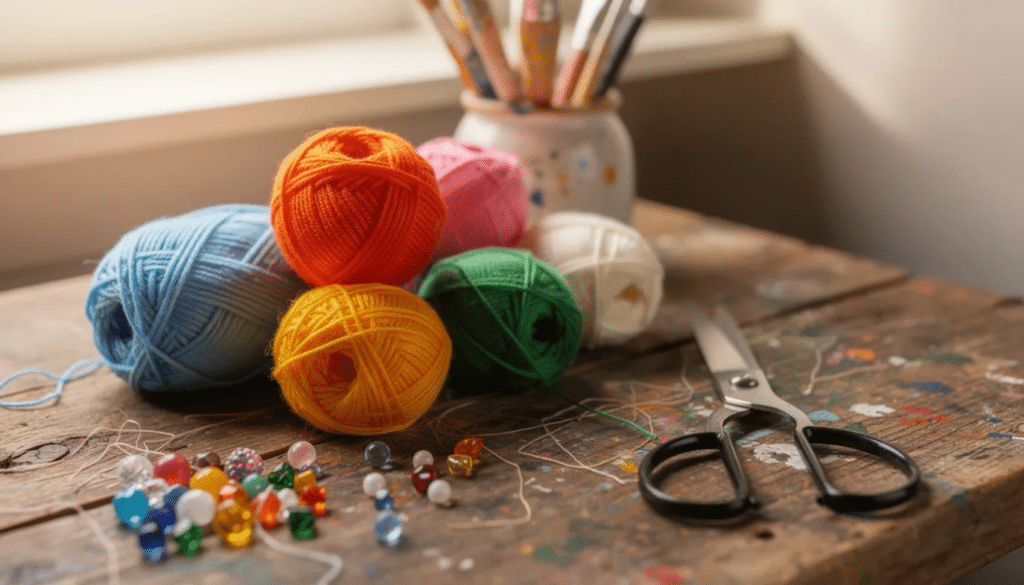
Textile crafts have experienced a massive resurgence in the last few years. What was once your grandmother’s hobby is now all over social media, with modern makers creating everything from chunky cardigans to minimalist home decor.
The beauty of textile skills is their portability—you can crochet on a train, embroider while watching television, or hand-sew in a coffee shop. Most materials are relatively cheap, and there’s an endless supply of free video tutorials to guide you through every stitch.
Crochet: From Simple Scarves to 2026-Style Home Decor
Crochet uses a single hook to pull yarn through loops, creating fabric from scratch. Unlike knitting’s two needles, there’s only one tool to manage, which many beginners find less intimidating. The current aesthetic leans toward chunky textures, ribbed beanies, oversized cardigans, and textured pillow covers.
Ideal beginner projects:
- A basic scarf using one stitch repeated (finish in 3–5 evenings)
- A granny-square cushion cover (weekend project)
- A simple dishcloth to practice tension (one evening)
- Phone pouches or small bags using a crochet hook and cotton yarn
The four stitches that build everything:
- Chain stitch – the foundation row that starts most projects
- Single crochet – a short, tight stitch for dense fabric
- Double crochet – taller and faster, great for blankets
- Slip stitch – used to join pieces or move across your work
Starting kit (under £15/$18):
- One 5 mm or 5.5 mm aluminium or bamboo hook
- One ball of mid-weight acrylic or cotton yarn (DK or worsted weight)
- Sharp scissors
Find free patterns on community pattern libraries and follow along with free video platforms. Most patterns include easy to follow instructions with photos or video for every step. You can realistically make a finished scarf or dishcloth within 7–10 days of picking up a hook for the first time.
Hand Embroidery: Small, Portable and Mindful
Hand embroidery transforms plain fabric into art using simple stitches and colored thread. It’s an excellent way to personalize clothes, create framed hoops for your house, or add a lovely detail to tote bags and gifts.
Four essential beginner stitches:
- Backstitch – creates solid lines, perfect for outlines and lettering
- Satin stitch – fills shapes with smooth, parallel threads
- French knots – tiny textured dots for flower centers or eyes
- Running stitch – simple dashed lines for borders or texture
Your first project: A 10 cm wooden hoop with a simple floral design or minimal line-art portrait. Current trends favor botanical motifs, abstract faces, or small quotes—all achievable with just backstitch and satin stitch.
Beginner materials (under £12/$15):
- 15–20 cm wooden embroidery hoop
- Embroidery floss in 4–6 colors
- Fabric scrap or old cotton shirt
- Pack of embroidery needles
- Water-erasable fabric pen
Transferring your design: Tape your pattern to a sunny window, place fabric over it, and trace with the water-erasable pen. Alternatively, use free printable patterns or tracing apps on your phone.
Embroidery is wonderfully meditative. Many makers use it as an evening wind-down practice, working on a few stitches while listening to podcasts or audiobooks. There’s no pressure to finish quickly—the process itself is the point.
Machine Sewing: Practical Skills for Clothes & Home
A sewing machine opens up an entire world of possibilities, from reusable shopping bags to custom cushion covers to simple clothing alterations. Many people are intimidated by machines, but the truth is you only need three skills to start: threading, winding a bobbin, and sewing a straight line.
Beginner projects with estimated times:
- Scrunchie: 30–45 minutes
- Simple unlined tote bag: 1–2 hours
- Envelope cushion cover: 1–2 hours
- Basic drawstring bag: 1 hour
- Pyjama shorts from a simple pattern: 2–3 hours
Getting a machine in 2026: You don’t need to buy new. Second-hand machines from Facebook Marketplace, charity shops, or local selling groups often cost £30–60 and work perfectly. Even 10–20-year-old models from brands like Singer or Brother handle beginner projects with ease. Have it serviced for £20–30 if it’s been sitting unused.
Practice fabric: Old bedsheets, duvet covers, and tablecloths from charity shops provide metres of affordable practice material. In 2026’s cost-conscious climate, there’s no need to buy expensive fabric until you’re confident with your stitching.
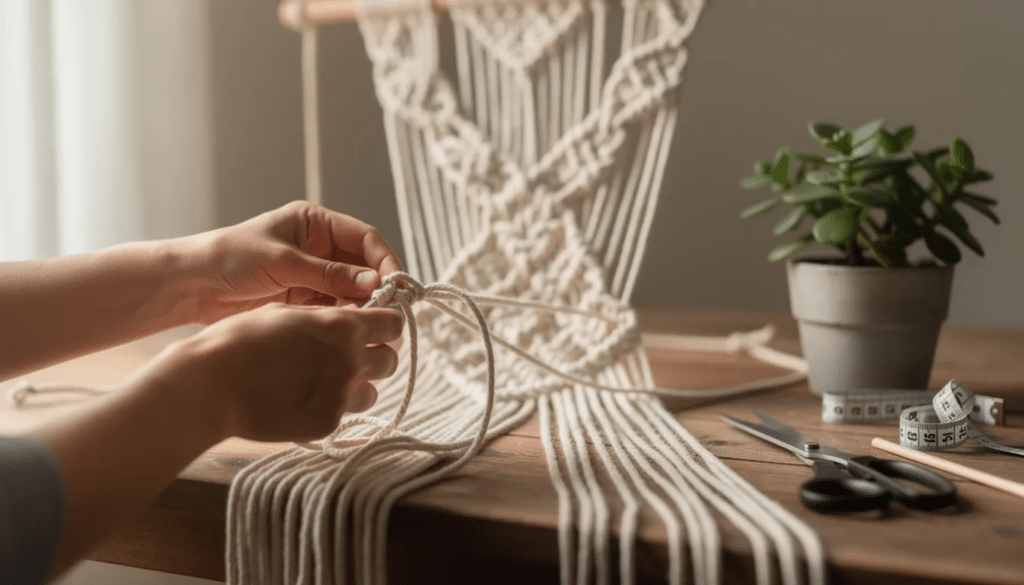
Macramé: Boho Knots for Plants and Walls
Macramé is the art of knotting cord into decorative patterns—no hooks, needles, or machines required. It’s having a major moment in home decor, with plant hangers, wall hangings, and accessories fitting perfectly into current interior trends.
Three essential knots that build most designs:
- Lark’s head – attaches cord to a dowel or ring to start
- Square knot – the workhorse knot for most patterns
- Double half hitch – creates diagonal lines and shapes
Your first project: A simple plant hanger for a 12–15 cm pot takes 2–3 hours and uses only square knots and basic knots. Alternatively, try a narrow wall hanging (30 cm wide) for a small space.
Simple supplies (under £15/$18):
- 3–5 mm cotton macramé cord (50m is plenty to start)
- Wooden dowel or metal ring
- Measuring tape
- Sharp scissors
Practice tip: Before committing to a full project, practice your knots with cheap kitchen string or leftover cord scraps. Get the muscle memory down, then move to your nice materials.
Paper & Drawing Craft Skills to Learn
Paper crafts and drawing offer the most accessible entry point into making. The tools are minimal, storage takes almost no space, and you can create in a tiny apartment or student room without any special setup.
These skills tie directly to real uses: handmade greeting cards, custom wall prints, decorated planners, school projects, and thoughtful gifts that cost almost nothing but feel deeply personal.
Sketching, Doodling & Watercolour: Art Skills for Any Level
“I can’t draw” is the most common barrier people cite—and it’s almost never true. Sketching and watercolour are low-pressure ways to build visual skills while relaxing. Nobody starts as an expert; the whole point is practice.
Basic materials (under £20/$25):
- HB pencil and eraser
- Black fineliner pen (0.3–0.5 mm)
- A5 or A4 sketchbook with smooth paper
- Small student-grade watercolour set (12 pans is plenty)
- Round brush, size 4–8
Starter exercises:
- 10-minute daily doodles of objects around your room
- Timed contour drawing (draw without looking at your paper)
- Simple 4-step watercolour painting: a loose floral bouquet or sunset sky
Digital alternatives: Free drawing apps on tablets and phones let you explore without using raw materials. Skills transfer between digital and traditional media, so experimentation in either format builds your abilities.
First “finished” pieces: Mini prints to frame, birthday cards for friends, a one-page monthly habit tracker with simple illustrations, or custom bookmarks. The goal is completing something small, not creating masterpieces.
Origami & Papercraft: Folding and Cutting for Quick Wins
Origami—the Japanese art of paper folding—produces beautiful projects from a single sheet with no cutting or glue. Broader papercraft includes card-making, paper cutting, and 3D constructions.
Three beginner origami models:
- Paper crane – the classic, takes 15–25 minutes after practice
- Jumping frog – fun and functional, 10–15 minutes
- Gift box – actually useful, 20 minutes
If you’re interested in fabric crafts, learn how to turn a photo into an appliqué with this simple beginner’s guide.
Papercraft ideas:
- Birthday cards with layered paper elements
- 3D paper stars for New Year’s Eve decorations
- Simple layered paper landscapes for framing
- Paper folding flowers that last forever
Minimal supplies:
- Printer paper or colored origami squares
- Basic scissors
- Glue stick
- Cutting mat and craft knife (for advanced projects)
Seasonal decor for 2026: Paper garlands for Halloween, intricate paper snowflakes for December, or spring flowers for Easter. These crafts create gorgeous results from materials that cost almost nothing.
Hand Lettering & Modern Calligraphy
Hand lettering isn’t just neat handwriting—it’s the art of drawing letters, treating each word as a design. This skill appears everywhere: motivational posters, bullet journals, wedding signs, and digital graphics.
Starting exercise: Begin with “fake calligraphy” using an ordinary pen. Write a word in cursive, then thicken all the downstrokes by adding a second line. This teaches thick-and-thin principles before you invest in brush pens.
Starter tools (under £10/$12):
- Smooth paper or dot grid notebook
- One or two brush pens (Tombow-style or budget alternatives)
- Pencil and ruler for guidelines
First projects:
- Motivational quote print for your bedroom or office
- Custom name tags for a party or event
- Simple calendar headers for your planner
- Gift tags and envelope addressing
Cross-craft potential: Hand lettering pairs wonderfully with other crafts. Add text to watercolor backgrounds, create patterns for embroidered quotes, or letter painted signs on upcycled furniture. Building this skill set opens doors across multiple creative areas.
Home & Decor Craft Skills to Learn
These crafts let you give your house personality without spending heavily on new furniture or decor. The emphasis is on sustainability—using what you already have, transforming charity shop finds, and working with leftovers.
Each skill below includes a “beginner weekend” project and a “level-up” option for when you get hooked.
Furniture Upcycling: Transform Old Pieces on a Budget
Old furniture from 2010s flat-pack eras or charity shops often has solid bones but tired finishes. With some paint and creativity, these pieces become unique, personalized items that cost a fraction of buying new.
Classic beginner projects:
- Repainting a small side table with chalk paint (one weekend)
- Updating a wooden kitchen table with fresh color and sealed finish
- Turning an old chest of drawers into a statement piece with new hardware
Basic kit (under £40/$50):
| Item | Purpose | Notes |
|---|---|---|
| Sandpaper or sanding block | Surface prep | 120–180 grit for most jobs |
| Primer | Adhesion | Essential for glossy surfaces |
| Furniture paint | Color | Chalk paint or acrylic |
| Brushes or foam rollers | Application | 2-inch brush for details |
| Painter’s tape | Clean edges | Remove while paint is tacky |
| Clear varnish or wax | Protection | Optional but recommended |
Prep steps that matter: Clean thoroughly with sugar soap, sand lightly to create “tooth” for paint adhesion, do a test patch in a hidden area, and allow proper curing time between coats (usually 24 hours).
Creative upgrades: Stenciled patterns on drawer fronts, simple geometric colour-blocking with painter’s tape, or replacing cheap knobs with interesting vintage hardware from architectural salvage shops.
Upholstery Lite: Simple Refreshes Before the Big Projects
Full upholstery involving springs and webbing requires serious tools and knowledge. But beginner-friendly projects like drop-in seat pads and footstools need only basic supplies and deliver immediate results.
First project: Re-covering a dining chair seat. Most dining chairs have seats that pop out with just four screws. Remove the old fabric, use it as a pattern, pull new fabric evenly, and staple underneath. Total time: 1–2 hours per chair.
Key materials:
- Staple gun and staples (manual is fine for beginners)
- Upholstery fabric (half a metre per dining chair seat)
- Foam and batting/wadding if the cushion needs refreshing
- Screwdriver to remove seats
Safety notes: Wear eye protection when using a staple gun, and work on a stable surface. Pull fabric firmly but evenly to avoid puckering.
Level-up projects: After mastering small seats, move to making a basic foam-topped bench for a hallway, then eventually tackle armchairs or headboards.
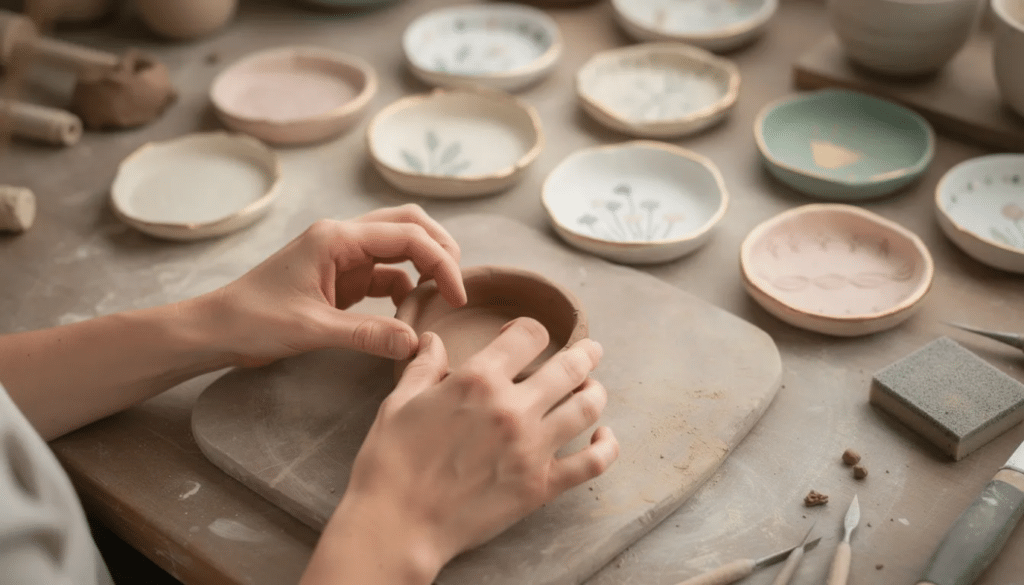
Air-Dry Clay: Ceramics Look Without a Kiln
Air dry clay offers the joy of ceramics without needing a kiln, special oven, or studio access. It dries at room temperature over 24–72 hours and can be painted, sealed, and used in your home.
Concrete beginner projects:
- Ring dishes and trinket trays (30–45 minutes to make)
- Incense holders
- Plant pot sleeves
- Simple ornaments or gift tags
- Decorative bowls with different shapes and textures
Tools and materials:
- Air-dry clay block (available at craft stores)
- Rolling pin or wine bottle
- Craft knife
- Cup or cookie cutter for cutting circles
- Water cup for smoothing joins
- Acrylic paints for decoration
Timeline expectations: Pieces need 24–72 hours to fully dry, depending on thickness. Thin pieces (under 1 cm) dry faster but are more fragile. After drying, seal with clear acrylic sealer to protect against moisture.
Pro tip: Sand edges with fine sandpaper after drying for a more professional, smooth finish that looks almost kiln-fired.
Jewellery & Wearable Craft Skills to Learn
Jewellery-making offers fast, giftable projects perfect for birthdays, graduations, and holidays. Everything happens at desk-scale—on your kitchen table, in your lap, or on a small tray. These crafts require minimal space and produce results you can wear, gift, or potentially sell.
Beading & Simple Jewellery Making
Beading is one of the fastest ways to make polished-looking accessories with minimal experience. Within an hour, you can have a finished bracelet or pair of earrings.
Starter projects:
- Stretchy bead bracelets (15–30 minutes)
- Basic drop earrings with glass or gemstone beads
- Simple pendant necklaces using pre-made chains
- Phone charms—hugely popular in 2024–2026
Affordable starter kit (under £15/$18):
- Mixed bead box (glass, acrylic, or crystal)
- Elastic cord for bracelets
- Basic pliers set: round-nose, chain-nose, and cutters
- Findings bag: jump rings, clasps, earring hooks
For more craft projects, check out this festive round-up.
Two essential skills:
- Opening jump rings: Use two pliers, twist sideways (not apart), close the same way
- Secure elastic knots: Tie a surgeon’s knot, add a dab of clear nail polish, trim close
Presentation matters: Even simple pieces look special on small backing cards in organza bags. This touches on life skills beyond crafting—presentation transforms a homemade item into a thoughtful gift.
Macramé & Yarn Jewellery (Bracelets, Earrings, Keychains)
The same knots used for wall hangings scale down beautifully into wearable pieces. Friendship bracelets, boho earrings, and keychains use techniques you may already know.
Starter projects:
- Chevron friendship bracelets (1–2 hours)
- Simple knot earrings on metal hooks
- Keychains using leftover macramé cord
- Wrap bracelets with different techniques
Materials:
- Embroidery floss or thin cord
- Basic jewellery findings (earring hooks, keychain rings)
- Tape or clipboard to hold work steady
- Sharp scissors
Unisex gift ideas: Neutral-colour bracelets in natural tones, leather-cord key fobs, or minimalist single-strand designs work for everyone.
Cross-over skills: The knots you learn here transfer directly to larger macramé wall hangings, bag straps, or even dog leashes. Starting small builds confidence before tackling bigger diy projects.
Metal, Glass & “Heavier” Craft Skills to Learn
Some traditional craft skills require workshops or specialist tools, but they’re absolutely worth exploring once you’ve tried smaller home-based crafts. Think of these as “aspirational” skills for 2026–2027—experiences to book as weekend courses, retreats, or one-day workshops rather than daily hobbies.
Safety matters here. High-heat and sharp-tool crafts are best learned in supervised environments before attempting anything at home.
Blacksmithing: Forged Tools and Art Pieces
There’s something primal about heating metal until it glows and shaping it with hammer blows. Blacksmithing produces functional objects—fire pokers, coat hooks, bottle openers, small knives—alongside purely decorative pieces.
Starting point: Book a one-day beginner workshop at a local forge. Heritage Skills USA and similar organizations offer classes taught by experts like Dave Canterbury, with world-renowned bushcraft and metalworking knowledge. UK folk schools and community forges run regular introductory days.
Typical first projects in 1-day classes:
- Ram’s head fire poker
- Decorative coat hooks
- Small forged leaves or bottle openers
- S-hooks for hanging pots or plants
What you’ll learn: Understanding heat colours (black to cherry to orange to yellow), basic hammer control, and fundamental shaping techniques like drawing out and twisting.
Later applications: Hand-forged handles for upcycled furniture, custom brackets for shelving, or decorative hardware that adds a wonderful handmade touch to your home.
Glass Art & Glass Fusing
Glass crafts include stained glass (cutting and leading pieces), glass fusing (layering and melting in a kiln), and blown glass (molten glass on a blowpipe). Most beginners start with workshops since equipment is expensive and requires space.
A typical half-day glass fusing class: Design a small panel, coaster set, or suncatcher using pre-cut glass pieces and frits (glass granules). The studio fires your work in their kiln—you pick up the finished piece a few days later.
What’s provided: Studios supply all tools, materials, and kilns. You’ll wear safety goggles and gloves but don’t need to invest in anything.
Finished pieces that work at home:
- Suncatchers for windows in a rented flat
- Coaster sets as gifts
- Small framed panels for walls
- Decorative glass flowers or leaves
Ongoing practice: These skills suit short courses or holiday workshops rather than daily hobby time. Book one class per season to gradually build knowledge and take home beautiful projects.
Jewellery Silversmithing Basics
Silversmithing involves shaping and soldering metal to create rings, pendants, earrings, and small objects. It’s more technical than beading but produces truly professional results. If you’re looking for a simple, kid-friendly project, you might enjoy making a fun fabric kite for kids.
First experience: A one-day ring-making or stacking-ring workshop teaches sawing, filing, soldering, and polishing. You’ll leave with a wearable piece you made entirely yourself.
Typical workshop tools (provided):
- Jeweller’s saw and blades
- Files in various shapes
- Soldering torch and flux
- Ring mandrel for sizing
- Polishing tools and compounds
Metal options for beginners:
- Fine silver (99.9%) – very soft, easy to work, tarnish-resistant
- Sterling silver (92.5%) – harder, more durable, industry standard
- Base metals (copper, brass) – cheap for practice, different working properties
Future possibilities: With practice, silversmithing becomes a serious side business. Custom wedding rings, personalized pendants, and one-of-a-kind pieces command premium prices—some handmade items sell for £100–500 depending on complexity and materials.
Educational & Family-Friendly Craft Skills to Learn with Kids
Crafting with kids isn’t just about keeping them busy—it’s genuine education. Fine motor control, spatial reasoning, patience, and the ability to follow instructions all develop through hands-on making.
This section focuses on ages roughly 5–12, with low-mess options for small spaces and realistic time slots (15–45 minutes) for after school or weekends.
STEM-Linked Paper, Clay & Origami Projects
Position crafts as “hands-on learning” and suddenly they connect to math, science, and geography. Kids who struggle with abstract concepts often thrive when they can touch and build.
Project ideas with educational links:
| Project | Subject Link | Time |
|---|---|---|
| Origami animals | Habitats and biology | 15–25 min |
| Paper rockets/gliders | Forces and flight | 20–30 min |
| Clay solar system models | Astronomy | 1–2 hours over days |
| Pop-up cards of historical events | History and storytelling | 30–45 min |
| Symmetrical paper cutting | Geometry and math | 15 min |
Skills built: Following instructions in sequence, measuring and folding precisely, predicting outcomes, and perseverance when things don’t work the first time.
Practical adult advice:
- Set up a dedicated tray or box for supplies
- Cover tables with newspaper or a plastic tablecloth
- Keep baby wipes or a damp cloth nearby
- Use recycled materials (cardboard packaging, scrap paper) to keep costs down and link to sustainability discussions
Kid-Friendly Textile Crafts
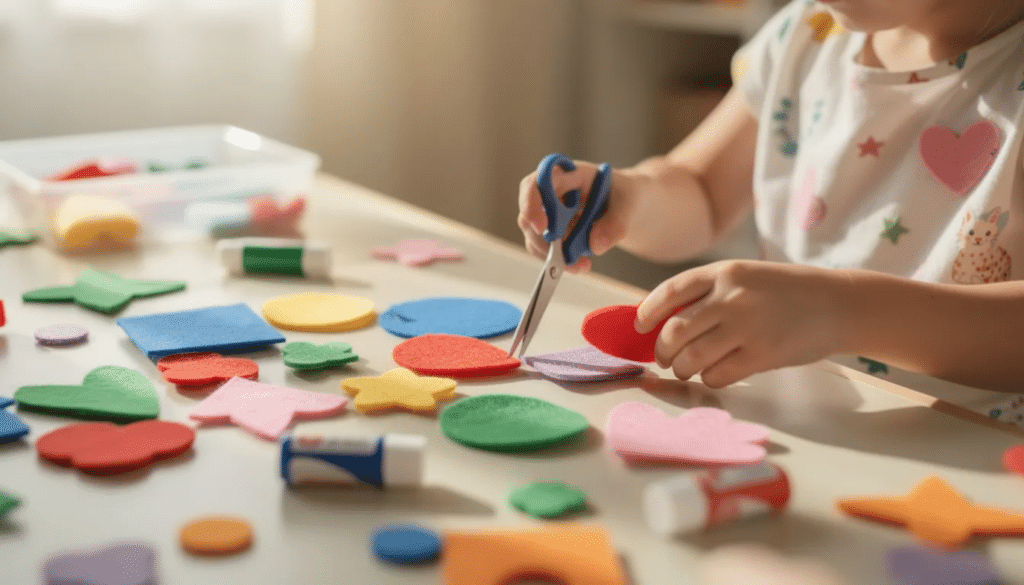
Textile crafts become safe and age-appropriate with plastic needles, chunky yarn, and pre-cut felt pieces. These projects build focus, fine motor skills, and confidence when a child sees something they made with their own hands.
Projects by age:
| Age | Projects | Materials |
|---|---|---|
| 5–7 | Felt shapes glued and lightly stitched, finger-knitting scarves | Felt sheets, chunky yarn, fabric glue |
| 8–10 | Cross stitch bookmarks, simple embroidery on pre-printed canvas | Blunt needles, embroidery hoops, printed patterns |
| 10–12 | Basic sewing of small felt toys, simple crochet with large hook | Safety scissors, yarn, stuffing |
Safe tools: Blunt plastic needles, safety scissors with rounded tips, felt sheets, chunky yarn, fabric glue, and kid-sized embroidery hoops.
Making it fun:
- Theme projects around birthdays or holidays
- Let kids design their own monsters, badges, or characters
- Host craft nights with siblings or friends
- Display finished work proudly—inspiration for next time
The pride a child feels wearing a bracelet they made or giving a hand-stitched bookmark to a grandparent builds confidence that extends far beyond crafting.
Turning Craft Skills into a Long-Term Hobby or Side Income
Many people in 2026 want both enjoyment and potential extra income from their skills. The good news: crafting skills scale from pure relaxation to genuine side business, depending on your goals.
Keep learning and improving:
- Local evening classes at community colleges or craft studios
- Online courses (many free or low-cost)
- Join craft communities, forums, or local groups
- Attend workshops at folk schools—enrollment has risen 30–50% since the pandemic as people seek hands-on skills
Share your work:
- Instagram and TikTok for process videos and finished pieces
- Local craft fairs and community markets
- School fetes and charity events
- Small online shops once you have consistent inventory
Build confidence before selling: Start by making gifts for birthdays, Christmas 2026, and other occasions. You’ll practice your craft, receive honest feedback, and learn what people actually want. This exploration phase is invaluable before pricing anything for sale.
Basic business considerations:
- Price to cover materials, time, and a small profit margin
- Take clear, well-lit photos of finished work
- Choose 2–3 signature products rather than making everything—focus builds expertise
- Track expenses and income from the start, even informally
Your Creative Journey Starts Now
You now have a map of dozens of crafting skills, from 30-minute paper projects to weekend furniture transformations to aspirational blacksmithing workshops. The possibilities are genuinely endless—so many types of crafts, so many ways to express creativity.
But here’s the thing: reading about crafts isn’t the same as doing them. Knowledge without action is just entertainment.
Your action plan for this week:
- Pick one craft from this article that sparked something in you
- Schedule 30–60 minutes this weekend—put it in your calendar like a meeting
- Gather minimal supplies—most starting kits cost under £20
- Commit to finishing one small project within 7 days
The world doesn’t need another person who “always wanted to try” embroidery or “someday” will learn to crochet. It needs more people who actually make things, however imperfect.
Your first project will probably be rough. Your tenth will be better. By your hundredth, you’ll have a new skill for life—and probably a house full of handmade items, a stack of gifts ready for any occasion, and maybe even a quiet side income doing something you genuinely enjoy.
The best time to start was years ago. The second best time is this weekend. Choose your craft, gather your materials, and teach yourself something wonderful.