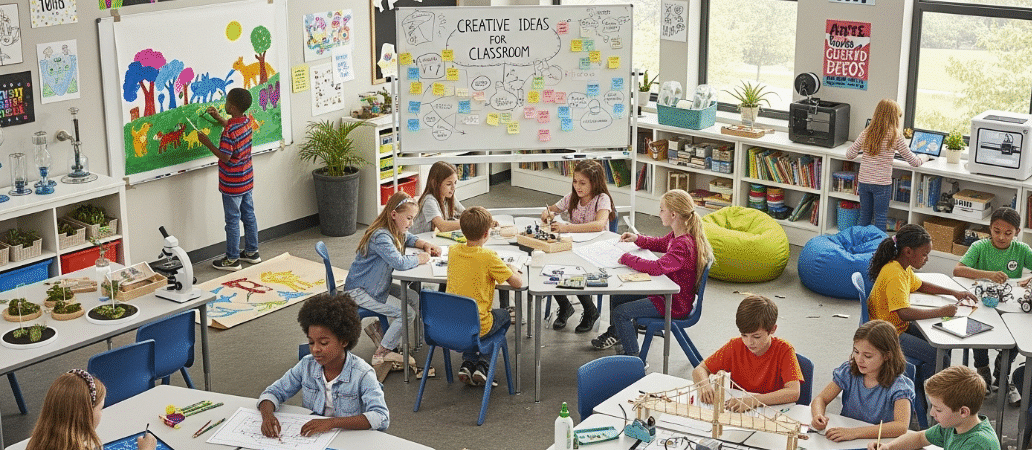

Creative ideas for classroom environments can make a big difference in how students connect with what they’re learning. For teachers looking to boost engagement, this guide offers 20 practical ideas for K-12 classrooms that foster creativity, collaboration, and deeper learning. Whether you’re a new teacher or a seasoned educator, these innovative classroom ideas will help you transform your space and teaching approach.
What are innovative classroom ideas? Innovative classroom ideas emphasize student-led, active, and collaborative learning through project-based tasks, interactive technology, peer teaching, role-playing, and simulations. These strategies are designed to make learning more meaningful, memorable, and fun for every student.
- Introduction to Creative Classroom Ideas
- Classroom Setup
- Creative Classroom
- Let Kids Think Outside the Box
- Get Art and Presentations into the Mix
- Show Off Student Work
- Games and Fun Activities
- Let the Kids Take the Lead
- Gallery Walks
- Project-Based Learning (PBL)
- Invention Education
- Microlearning
- Educational Robotics
- 3D Printing
- Wearable Technology
- Team-Building Exercises
- Creative Journaling
- Interactive Word Walls
- Growth Mindset Corner
- Celebrating Class Wins
- Classroom Library
- Classroom Decor and Organization
- Interactive Learning Activities
- Collaborative Learning Strategies
- Personalized Learning Experiences
- Other Classrooms and Global Connections
- Efficient Time Management and Productivity
- Creating a Quiet Space
- Conclusion and Final Thoughts
Introduction to Creative Classroom Ideas
If you’re a teacher aiming to create an inspiring and interactive learning space, you’re in the right place. Innovative classroom ideas are dead-simple yet absolutely cracking for building an environment that gets students buzzing. Effective classroom design plays a crucial role in creating an engaging learning environment that supports student comfort, collaboration, and motivation.
When teachers put a bit of thought into classroom decor and setup, they’re creating a spot where students feel properly excited to learn and get stuck in. Classroom decor and activities can serve as sources of inspiration, fostering creativity and encouraging students to think outside the box. A creative classroom isn’t just about making things look pretty—it’s about designing lessons and activities that’ll keep the little ones engaged and eager to explore fresh ideas.
By using some innovative classroom ideas, teachers can transform their spaces into places where students can collaborate, share stories, and grow together like a proper team. Whether it’s through colourful displays, flexible seating that lets them move about, or interactive projects that get their hands dirty, a well-planned learning environment can truly boost learning and inspire both students and teachers to give it their best shot every single day. Educators play a key role in building a strong classroom community and supporting innovative classroom ideas that help every student thrive.
Classroom Setup
Setting up your classroom is the foundation for all the learning and creativity that follows. A well-organized, flexible space encourages collaboration, comfort, and active participation. Here are some key principles and specific ideas to get your classroom ready for engagement.
Flexible Spaces to Stir Things Up
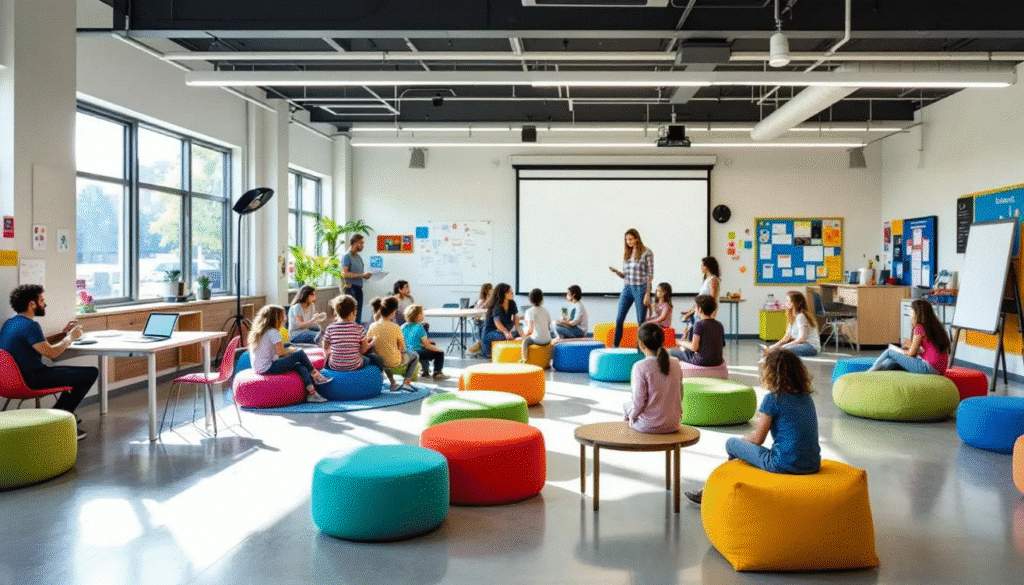
Flexible spaces encourage spontaneous interaction and group work with movable furniture. Instead of traditional rows, try clusters or circles to make it easy for students to chat and collaborate.
- Use movable desks and chairs to allow for quick reconfiguration.
- Create zones for group work, independent study, and whole-class discussions.
- Flexible seating zones can accommodate diverse learning preferences and promote student choice.
Quick Check-Ins with Index Cards
Keep a stash of index cards on hand so students can track their progress or share their thoughts. Here’s how to use them:
- At the start of class, write a question on the board.
- Have each student write their answer on an index card as an “entry ticket.”
- Collect the cards to gauge readiness and understanding.
- At the end of class, use “exit tickets” to see what stuck or needs more explanation.
Try IQ Cards: Each student writes an Insight and a Question on an index card to share with peers. This encourages deeper understanding and collaborative learning.
Make Your Room a Happy Place

Decorate with bright colors and student work to create a welcoming, visually appealing vibe. Incorporate nature-inspired decorations for a calming atmosphere. Let students help pick decorations or add their own art—this builds a sense of community and ownership.
- Display finished projects as points of pride.
- Use inspirational quote posters to spark conversation and critical thinking.
- Try a minimalistic approach to decor to reduce distractions and improve focus.
Bring in the Tech
Integrate technology to make lessons more interactive and accessible. Here are some tools and ideas:
- Tablets and computers for research and presentations.
- Interactive whiteboards for dynamic lessons.
- Augmented Reality (AR) and Virtual Reality (VR) for immersive learning experiences.
- Educational robotics to develop computational thinking skills.
- 3D printing for hands-on model creation.
- Wearable technology to collect learning data and encourage self-analysis.
Mix tech with hands-on activities to keep lessons balanced and engaging.
Once your classroom is set up for collaboration and comfort, you can focus on creative activities that keep students engaged.
Creative Classroom
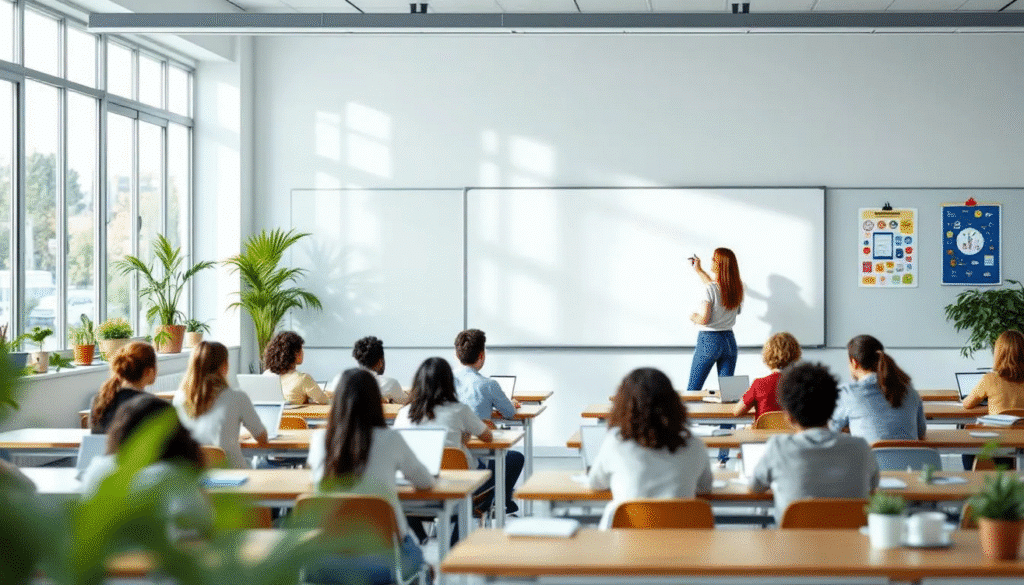
A creative classroom is more than just colorful walls—it’s a space where students are encouraged to think differently, take risks, and express themselves in new ways. Here’s how to foster creativity and innovation in your classroom.
Let Kids Think Outside the Box
Give students opportunities to explore topics in ways that suit them:
- Allow writing, drawing, acting, or building as ways to demonstrate understanding.
- Encourage outside-the-box assignment formats so students can choose how to present their ideas.
- Reflective activities help students absorb information more deeply and enhance creative understanding.
Get Art and Presentations into the Mix
Incorporate art projects and presentations into lessons:
- After studying a topic, have students create posters, models, or dress up and present as historical figures.
- Use role-playing and simulations to let students act out scenarios or experience concepts firsthand.
- Collaborative storytelling: Groups build a narrative one word at a time, fostering creativity and teamwork.
Show Off Student Work
Create a display area for student projects:
- Rotate displays regularly to keep things fresh and celebrate achievements.
- Empower students to help design and update displays, enhancing engagement.
Games and Fun Activities
Add fun, interactive activities to keep energy high:
- Use quizzes, puzzles, or role-play games to reinforce learning.
- Gamification: Turn lessons into games or challenges to make learning exciting and encourage ownership.
- Game shows for review sessions make learning an exciting challenge.
Let the Kids Take the Lead
Encourage student-led learning:
- Let students teach a part of the lesson or lead a review.
- Assign students to lead discussions or activities, building confidence and deeper engagement.
- Peer teaching pairs students to teach each other, solidifying understanding.
Gallery Walks
Set up stations around the room with different problems or prompts:
- Small groups rotate between stations, solving problems and building on each other’s work.
- This approach encourages movement, collaboration, and critical thinking.
Project-Based Learning (PBL)
Engage students in extended, complex tasks that connect to real-world problems:
- Use case studies and simulations to make learning relevant.
- Community-based projects partner with local businesses or organizations for authentic problem-solving.
Invention Education
Challenge students to design and prototype solutions for daily problems:
- Use simple tools or coding to create inventions.
- Encourage creativity and problem-solving skills.
Microlearning
Break down content into small, focused lessons:
- Short, targeted activities keep students engaged and help them retain information.
Educational Robotics
Introduce robotics kits to develop computational thinking and STEM skills:
- Hands-on building and programming activities make learning tangible and fun.
3D Printing
Allow students to create hands-on models:
- Students can design and print objects to investigate and interact with, enhancing understanding.
Wearable Technology
Use wearable devices to collect learning data:
- Help students analyze their performance and take a more active role in their education.
Team-Building Exercises
Incorporate activities that require students to think, communicate, and create together:
- These exercises foster collaboration and build a strong classroom community.
Creative Journaling
Encourage students to keep journals:
- Record their learning journey, reflect on experiences, and express creativity.
Interactive Word Walls
Create a word wall where students can manipulate and rearrange word cards:
- Enhance vocabulary exploration and make language learning interactive.
Growth Mindset Corner
Designate a space that promotes resilience and encourages students to overcome challenges:
- Display growth mindset quotes, student reflections, and resources for self-improvement.
Celebrating Class Wins
Hold ceremonies or celebrations for class achievements:
- Recognize innovation, teamwork, and effort to encourage a positive, fun learning environment.
Classroom Library
Set up a classroom library with interesting, grade-appropriate books:
- Encourage reading and provide easy access to a variety of genres.
Once you’ve established a creative classroom, it’s time to focus on organization and decor to support ongoing engagement.
Classroom Decor and Organization
A well-organized classroom supports learning by reducing distractions and making resources easy to access. Here’s how to keep your space tidy, inviting, and efficient.
Keep it Looking Nice
- Use calm colors and textures to create a welcoming atmosphere.
- Avoid clutter by organizing supplies in labeled bins and shelves.
- Try minimalistic decor to help students focus.
Make Supplies Easy to Grab
- Arrange materials so students can access what they need independently.
- Use labeled bins, shelves, and caddies for organization.
Create Zones for Different Stuff
- Designate areas for reading, art, group work, and quiet time.
- Themed learning centers support hands-on exploration and inquiry-based learning.
Add Some Personality
- Personalize the space with photos, quotes, or plants.
- Let students contribute their own decorations to build a sense of belonging.
Organize Your Space for Efficiency
- Keep your desk and materials organized for quick access.
- Organize lesson plans to ensure smooth classroom management and efficient transitions.
With your classroom organized and inviting, you’re ready to dive into interactive learning activities that keep students involved.
Interactive Learning Activities
Interactive activities are key to keeping students engaged and making learning stick. Here are some strategies to get students actively involved.
Get the Kids Involved with Hands-On Stuff
Plan activities where students can touch, build, or create:
- Art, music, drama, puzzles, and experiments make learning tangible and fun.
- Hands-on learning provides an arena for students to express new ideas and think critically.
Use Real-World Examples
Connect lessons to students’ daily lives or favorite shows:
- Relate concepts to familiar experiences for better understanding.
Use Tech to Get Them Involved
Leverage interactive platforms for real-time engagement:
- Kahoot, Quizlet, Socrative, and Google Forms for quizzes and polls.
- Apps for collaborative projects and instant feedback.
Encourage Group Collaboration
Set up projects that require teamwork:
- Group collaboration activities help students develop communication and social-emotional skills.
- Use digital collaboration tools like shared documents and discussion forums for online group work.
Bring in Guest Speakers or Virtual Visits
Invite experts or connect with other classrooms via video calls:
- Adds new perspectives and makes learning feel real.
- Have students research the guest or topic beforehand to deepen understanding.
Once students are actively engaged in learning activities, collaborative strategies can further enhance their experience.
Collaborative Learning Strategies
Collaboration helps students build trust, communication skills, and a sense of community. Here’s how to make it a core part of your classroom.
Group Projects That Mean Something
- Choose projects that require students to rely on each other’s strengths.
- Involve students in decision-making, such as voting on topics or roles.
Peer Review and Feedback
- Encourage students to review each other’s work kindly and constructively.
- Create a safe space for sharing thoughts without fear of judgment.
Use Tech to Connect
- Set up online forums or shared documents for group work outside class.
Celebrate the Good Stuff
- Recognize and celebrate effective teamwork to reinforce the value of collaboration.
With strong collaborative strategies in place, you can personalize learning to meet every student’s needs.
Personalized Learning Experiences
Every student is unique, and personalized learning helps each one thrive. Here’s how to tailor instruction and support for every learner.
- Use AI tools for lesson planning, differentiating instruction, and providing personalized feedback.
- Set up learning centers, technology tools, and project-based learning for student choice.
- Encourage students to create their own review guides, flashcards, or practice tests.
- Offer a variety of activities to foster ownership and motivation.
- Personalized learning builds confidence and a lifelong love of learning.
Personalized learning sets the stage for connecting with other classrooms and the wider world.
Other Classrooms and Global Connections
Connecting with other classrooms and global communities opens new horizons for students.
- Use video chats, online projects, and digital pen pals to share ideas and learn about different cultures.
- These experiences make lessons more relevant and exciting, helping students become open-minded learners.
Building global connections leads to better time management and productivity in the classroom.
Efficient Time Management and Productivity
A well-run classroom maximizes learning time and minimizes distractions.
- Use visual schedules, clear expectations, and manageable tasks to keep students on track.
- Tools like timers, checklists, and digital reminders boost productivity.
- Smooth routines and transitions help everyone stay focused and ready for learning.
Efficient time management supports a calm, focused environment—perfect for quiet spaces and reflection.
Creating a Quiet Space
Quiet spaces help students focus, reflect, and recharge. Here’s how to create one:
Cozy Little Nooks for Focus
- Set up a quiet spot with comfy chairs and good lighting for reading or independent work.
Let Kids Chase Their Interests
- Allow students to pick books or topics that interest them to foster a love of reading.
Make it a Peaceful Place
- Use soft colors, warm fabrics, and calming touches to create a snug, inviting atmosphere.
Stock the Shelves
- Provide plenty of books, magazines, and digital resources to keep students engaged.
Give Them Time to Chill
- Schedule downtime each day for students to relax and reflect on their learning.
Turning your classroom into a fun learning space isn’t rocket science. With a few little tweaks here and there, you can create a place that’s actually somewhere kids want to be. Whether you’re trying out flexible seating, adding some fun activities, or setting up a quiet space, these ideas will keep them engaged and motivated. Try a couple out, see what works for you, and watch your classroom just come alive.
Conclusion and Final Thoughts
Creating a brilliant, engaging classroom is actually dead-simple when you get down to it. With a few cracking classroom ideas and a proper focus on student-centered learning, teachers can knock up an environment where students are absolutely buzzing to learn and get stuck in. From personalized learning experiences to global connections and getting your routines sorted, these strategies help students feel right at home, inspired, and ready to tackle whatever you throw at them. Give some of these classroom ideas a go in your own space, and sit back and watch as your classroom transforms into a place where creativity, collaboration, and learning come alive every single day. Remember, the best teacher is one who gets students absolutely mad about learning—and with these tips, you’re well on your way to creating one of the most brilliant classrooms for the new school year.