
Creative workshops for youth do more than fill an afternoon—they build the confidence, resilience, and future-ready skills that teens desperately need in 2024 and beyond. When young people ages 11 to 18 step into a well-designed workshop, they gain hands-on experience with teamwork, problem solving, communication, and emotional expression that traditional classrooms often can’t provide.
Whether you’re running sessions in schools, youth clubs, libraries, summer camps, or community centers, this guide delivers concrete, ready-to-run workshop ideas. The guide includes a variety of fun ideas such as decorating time capsules, writing letters, creating memory collages, and storytelling to inspire creativity and self-reflection. You’ll find everything from drama exercises to STEM challenges, plus practical tips on making each session safe, inclusive, and genuinely fun.
Key benefits of creative activities for youth:
- Boosted self esteem and sense of personal agency
- Enhanced critical thinking skills through hands-on challenges
- Improved collaboration and communication with group members
- Safe outlets for emotional expression and stress relief
- Development of new skills transferable to education and careers
- Introduction: Why Creative Workshops Matter for Youth
- Drama & Theatre Workshop
- Hands-On Art & Craft Workshops
- STEM & Maker Workshops with a Creative Twist
- Storytelling, Writing & Digital Media Workshops
- Movement, Music & Wellness Workshops
- Creative Workshop Settings
- Planning & Running a Successful Youth Workshop
- Key Takeaways
- Happy Crafting: Your Next Steps
Introduction: Why Creative Workshops Matter for Youth
The research is clear: participation in creative activities correlates with a 20-30% improvement in problem solving skills according to studies on arts education. But beyond statistics, creative workshops transform how young people see themselves and their ability to shape the world around them.
Modern youth face unique pressures—social media comparison, climate anxiety, academic stress, and post-pandemic social skill gaps. Well-designed workshops address these challenges by turning participants from passive learners into active creators. The creative process itself teaches resilience, as teens experiment with ideas, face failure, and iterate toward solutions.
The best ideas for youth programming combine structure with freedom. Facilitators provide the framework—materials, timing, techniques—while youth bring imagination and personal perspective. This balance creates what researchers call “agency through creation,” where feelings of powerlessness transform into confidence.
Drama & Theatre Workshop
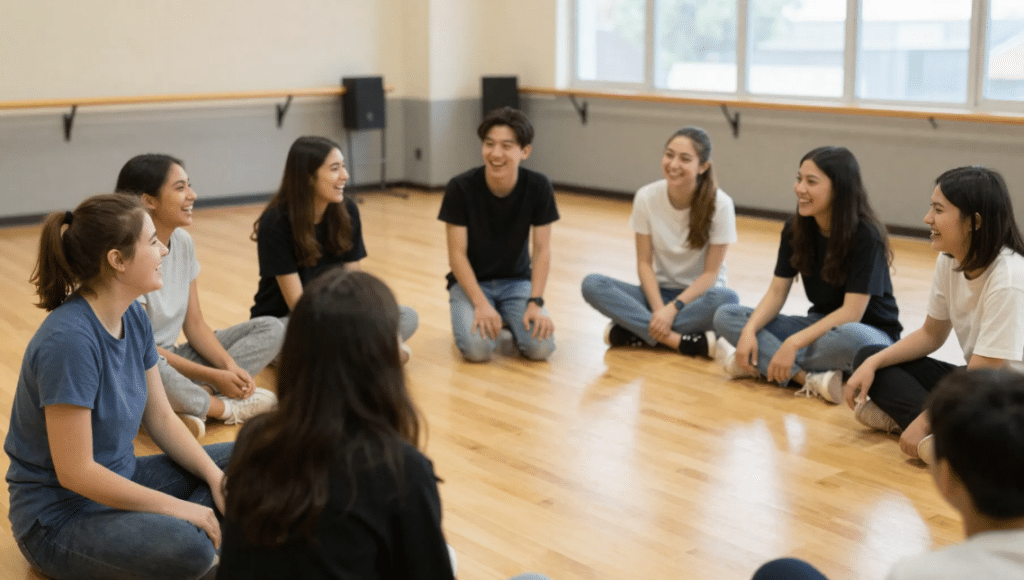
Theatre workshops offer one of the fastest routes to building youth confidence. In just 60-90 minutes, participants practice public speaking, develop empathy by stepping into others’ shoes, and learn to collaborate under pressure. The form demands presence and vulnerability, making it powerful for personal growth.
Start every session with warm-ups to break the ice and get bodies moving. Quick name games where participants attach a movement to their name work well, followed by improv games like “Yes, And” (where each person builds on the previous statement) or “One-Word Story” (the group creates a tale one word at a time around a circle).
A simple structure keeps sessions focused:
- Warm-up (10-15 minutes): Physical and vocal exercises, name games
- Script work or devised scene (30-40 minutes): Short scripted pieces or create original scenes
- Mini performance (15-20 minutes): Share work with peers in a supportive environment
Keep themes relevant to 2020s youth life: social media dynamics, climate change action, friendship conflicts at school, or family pressures. These topics generate authentic engagement because participants draw from real experience.
Optional elements elevate sessions without requiring budget:
- A “props box” with scarves, hats, and random objects
- Basic costume pieces participants can choose
- Simple music for transitions between activities
For younger children (11-13), lean heavily on games and improv with shorter scene work. Older kids (14-18) can handle deeper character development, monologue writing, and more complex ensemble pieces.
Improv & Confidence-Building Games
These quick, high-energy activities need almost no equipment and deliver immediate results. Plan 5-10 minutes per game with clear explanations and brief reflection afterward.
Zip Zap Zop: Standing in a circle, participants pass energy by pointing at someone and saying “Zip,” then “Zap,” then “Zop” in sequence. Speed increases until the pattern breaks, generating laughter and focus.
Status Switch: Pairs interact while consciously playing high or low social status through body language only. Mid-scene, the facilitator calls “switch” and roles reverse. This exercise develops spatial awareness and non-verbal communication.
Gibberish Interview: One person interviews another, but the interviewee responds only in made-up sounds. A third person “translates” what they’re saying. This removes pressure around finding “correct” words and sparks creativity.
Creating a “no wrong answers” atmosphere is essential. Emphasize that improv rewards bold choices, not perfect ones. Shy teens often flourish when they realize mistakes generate the biggest laughs.
Close with a 5-minute debrief: What felt most fun? What was challenging? What surprised you about yourself?
Hands-On Art & Craft Workshops
Visual arts workshops are low-barrier, high-impact sessions that work even with limited budgets. You can run them as one-off 60-120 minute sessions or build a 4-6 week after-school series where craft projects develop over time.
Finger painting is a creative art activity suitable for various ages. It helps develop fine motor skills through engaging art activities, encourages creative expression, and provides an engaging, relaxing art experience for youth.
The key to successful craft workshop ideas is using concrete, affordable materials: poster paints, recycled cardboard boxes, old magazines, markers, and basic craft supplies. Choosing the best art supplies for young artists helps ensure materials are safe, inspiring, and age-appropriate. Making collages allows children to experiment with textures and layers, expressing their creativity through various materials. Participants should always take something home—a zine, poster, sculpture, or customized item. This tangible outcome creates achievement and pride.
Each sub-workshop works as a stand-alone session with a short introduction and guided steps. Drawing and painting workshops contribute to the development of children’s fine motor skills and creative expression. Vary offerings based on participant interests and available materials.
Core materials to stock:
Category | Items |
|---|---|
Paper goods | Cardstock, magazines, newspapers, construction paper |
Drawing | Markers, colored pencils, gel pens, fineliners |
Adhesives | Glue sticks, tape, washi tape, fabric glue |
Craft items | Scissors, fabric scraps, popsicle sticks, string |
3D materials | Air-dry clay, cardboard, small pieces of wire |
Craft workshops can take numerous forms and cater to all ages, allowing participants to create unique 3D artwork based on a chosen theme, from simple builds to preschool 3D art projects that introduce younger children to sculptural thinking. |
Painting allows children to experiment with colors and create expressive works of art.
Upcycled Fashion & Tote Bag Customization
This workshop transforms old t shirts, denim jackets, or plain canvas totes into personalized statement pieces. Teens connect deeply with fashion as self-expression, and you can draw inspiration from colorful craft ideas for a fun weekend, making this a consistently popular crafts choice.
Materials needed:
- Blank totes or participant-brought items
- Fabric markers and fabric paint
- Iron-on patches
- Embroidery thread and needles
- Stencils and masking tape
- Safety pins for punk-style decoration
Session flow:
- Design sketching (15 minutes): Draw ideas on paper first
- Planning placement (10 minutes): Position elements before committing
- Decorating in stages (40-60 minutes): Base colors first, details last
Encourage themes that matter to participants: positive affirmations, climate action slogans, favorite lyrics, or school club logos. These personal connections increase investment in the creative process.
For safety, demonstrate proper needle handling and supervise iron use if heat-transfer elements are included. Offer no-sew alternatives like fabric tape and safety pin attachments for those uncomfortable with needles.
Zine-Making & Collage Journals
Zines are DIY mini-magazines created from folded A4 or A3 paper—perfect for self-expression without requiring drawing skills. They’ve seen a resurgence among teens as a counter to polished social media aesthetics.
Structure for a 90-minute session:
- Choose a theme (10 minutes): Music, identity, mental health, school life, dreams
- Gather images and words (20 minutes): Flip through magazines, select pieces
- Design page layouts (40 minutes): Arrange, glue, add hand-drawn elements
- Reflection page (10 minutes): Include “What I’m proud of” or “A message to my future self”
- Optional sharing (10 minutes): Zine swap or quiet viewing circle
Materials: old magazines, newspapers, stickers, washi tape, scissors, glue sticks, and colored pens. Pre-cutting magazines into theme piles (nature, people, words, textures) speeds up the selection process.
End with an optional “zine swap” where participants exchange or show pages they’re comfortable sharing. Emphasize that zines don’t need to be perfect—rough edges and collaged imperfections are part of their charm.
Clay & 3D Sculpture (No Kiln Needed)
Air-dry clay or polymer clay allows youth to create 3D pieces without specialized equipment. Working with clay develops fine motor skills, spatial awareness, and patience, illustrating many of the broader art and craft benefits for child development.
Project ideas:
- Tiny plant pots for succulents
- Phone or tablet stands
- Keychains or charms
- Small character figurines inspired by favorite media
- Simple animals like cats, dogs, or fantasy creatures
Session structure:
- Demo (10 minutes): Basic clay handling, joining pieces, smoothing
- Practice shapes (10 minutes): Spheres, coils, slabs
- Guided project time (45-60 minutes): Work on chosen project with facilitator support
Set up tables with protective coverings, water bowls for smoothing, and clearly labeled drying areas for each person’s work. If running multiple sessions, schedule a follow-up for sanding and painting dried pieces with acrylic paint.
Jewellery Making and Design
Jewellery making and design is a timeless craft workshop idea that sparks creativity and excitement in participants of all ages. This hands-on activity invites youth to explore their imagination and bring their ideas to life by creating wearable art from a variety of materials—think colorful beads, shimmering wires, strings, and even recycled elements, or even adapting techniques from tissue paper stained glass crafts for bold, translucent accents. Whether you’re working with younger children or older kids, jewellery making is a fun activity that develops fine motor skills, hand-eye coordination, and critical thinking skills as participants plan, assemble, and troubleshoot their designs.
A jewellery making workshop can introduce a range of techniques, from simple beading and stringing to more advanced wire wrapping and metal stamping. Each technique offers a new way for participants to express their personal style and experiment with different forms and patterns. The process of selecting materials, sketching ideas, and assembling pieces encourages creative thinking and problem solving, as youth figure out how to turn their vision into a finished product.
What makes jewellery making especially rewarding is the sense of accomplishment that comes from wearing or gifting a piece you created yourself. It’s a craft workshop that not only teaches practical skills but also boosts self-esteem and inspires participants to keep exploring new ideas. Plus, jewellery making is easily adaptable for different group sizes and skill levels, making it a versatile addition to any creative workshop lineup. With a table full of materials and a little inspiration, participants can develop new skills, experiment with techniques, and leave with a unique piece that reflects their creativity and sense of style.
STEM & Maker Workshops with a Creative Twist
STEAM workshops (adding Arts to STEM) appeal to youth who might not identify as “creative” in traditional arts contexts. These sessions blend science, technology, engineering, and math with design thinking and hands-on making.
Choose simple, safe activities appropriate for ages 11-18, using everyday materials plus basic electronics where possible. Each activity should include a short, age-appropriate explanation of the underlying science—this transforms fun activity into genuine learning.
Teamwork opportunities abound: small groups tackle design challenges together, then share results with the larger group. Incorporating DIY kits for creative projects can simplify prep while still allowing personalization. This structure builds collaboration skills while maintaining individual accountability.
Facilitator tip: Prep materials in kits per group (batteries, LEDs, cardboard, scissors) before participants arrive. This saves time and prevents the chaos of everyone hunting for supplies simultaneously.
DIY Light-Up Projects (Circuits & Creativity)
Youth design light-up greeting cards, bookmarks, posters, or artwork using simple LED circuits. The combination of art and electronics engages different learning styles.
Materials per participant:
- Copper tape
- 3mm LEDs (various colors)
- CR2032 coin cell batteries
- Cardstock or heavy paper
- Washi tape for decoration
- Markers and colored pencils
Session structure:
- Basic circuit demo (10 minutes): Show how copper tape connects LED to battery
- Safety briefing (5 minutes): Handle batteries carefully, LEDs can be fragile
- Design first (15 minutes): Sketch where lights will go
- Wire second (30-40 minutes): Build circuits, troubleshoot connections
- Decorate (15 minutes): Add artistic elements around circuits
Creative themes work well: constellations with LED stars, city skylines with glowing windows, or neon-style lettering. Provide a simple worksheet diagram showing a basic circuit so participants can recreate projects at home.
Simple Robotics & Coding Challenges
Use accessible platforms that many schools and libraries already own: micro:bit, LEGO robotics kits, or simple programmable bots like Ozobots or Spheros.
Activity examples:
- Program a robot to navigate a taped maze on the floor
- Create light patterns synchronized to music
- Build a simple machine that completes a task
Time breakdown:
Phase | Duration |
|---|---|
Introduction and platform overview | 15 minutes |
Hands-on building/coding | 30-40 minutes |
Testing and showcasing | 15 minutes |
Pair or trio work reduces equipment needs and builds collaboration. Keep sessions inclusive for beginners by providing pre-written starter code and visual step-by-step guides. Advanced participants can experiment with modifications while others master basics. |
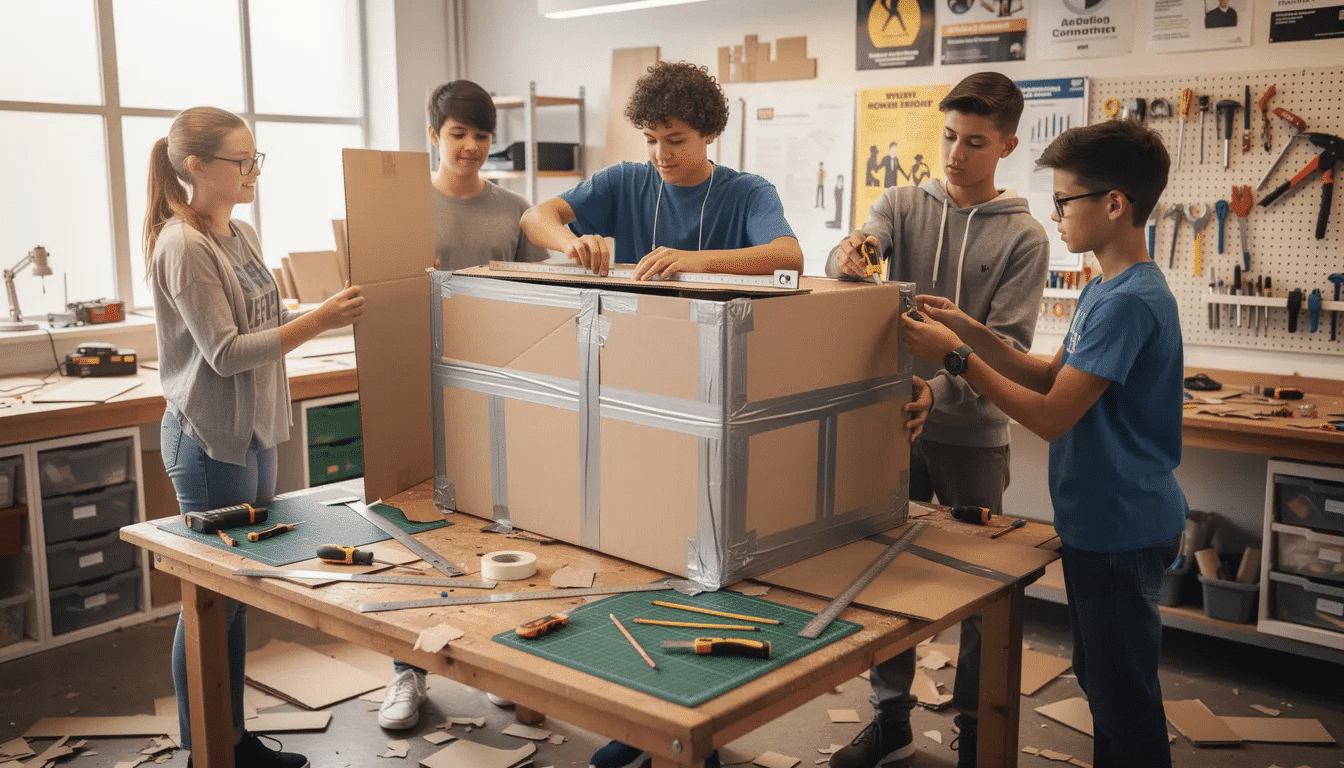
Everyday Engineering Challenges
Design challenges using recycled and low-cost materials teach engineering thinking without expensive equipment. These develop critical thinking skills and tolerance for failure, and can even incorporate experimental mediums like creative glue paint craft projects to add a sensory art dimension.
Challenge ideas:
- Bridge building: Paper and tape bridge that holds maximum weight (stack of books)
- Tallest tower: Freestanding structure from newspaper and masking tape
- Slowest parachute: Design for maximum air time with a small weight attached
- Marble run: Create a track along a wall using cardboard tubes and tape
Structure sessions with timeboxed build phases (25-30 minutes) followed by “testing moments” where each team tries their design. Encourage youth to sketch their ideas before building, then compare sketches to final builds during reflection.
The debrief matters: discuss how failure led to improvement, how redesigning is central to real engineering, and what participants would do differently with more time. This reframing turns “my bridge collapsed” into valuable learning.
Storytelling, Writing & Digital Media Workshops
Not all creative people love performing—many prefer writing, drawing comics, or creating digital content. Storytelling workshops meet these participants where they are while developing skills valuable for schoolwork, future careers, and personal expression.
Sessions can run with minimal tech (paper and pens) or scale up with laptops, tablets, or smartphones. The key is creating a supportive atmosphere where all stories and backgrounds are respected.
Facilitators should offer prompts but also allow open-topic projects for advanced participants who arrive with specific ideas they want to explore. This flexibility keeps both beginners and experienced writers engaged.
Creative Writing & Spoken Word
Focus on short pieces that can be drafted in 45-60 minutes: poems, micro-fiction (under 500 words), or monologues. These accessible forms feel less intimidating than “write a story.”
Prompt examples:
- Write a letter to your future self in 2035
- Describe your city from a bird’s-eye view
- If fear was a person, what would they look like?
- The last text message I’ll ever send says…
- A secret I’ve never told anyone (real or invented)
Start with a 3-minute freewriting warm-up where participants write continuously without stopping to edit. This exercise loosens perfectionism and generates raw material.
End with an optional open-mic style share. Establish clear ground rules: snapping instead of clapping, no comments on personal content, and absolute freedom to pass. Provide printed examples of youth-friendly poems to inspire style and structure for those who feel stuck.
Comic & Graphic Storytelling
Guide youth in turning short stories or memories into 1-4 page comics or graphic narratives. Drawing skills matter less than storytelling—stick figures work fine.
Materials:
- Blank comic templates (pre-printed grids)
- Fineliners and pencils
- Erasers
- Colored markers
Teach basic concepts: panels control time, speech bubbles contain dialogue, thought bubbles show inner monologue, and sound effects (CRASH! WHOOSH!) add energy. Simple character design focuses on distinguishing features: hairstyles, accessories, height differences.
A fun exercise: participants redraw a well-known story (fairy tale, school day, movie scene) in a modern or humorous style. This removes pressure to invent everything while practicing comic techniques.
End with a “gallery walk” where comics are laid out on tables. Participants view each other’s work and leave positive sticky-note comments. This builds community and provides encouraging feedback.
Podcasting & Short-Form Video for Teens
Teens consume massive amounts of audio and video content—creating it themselves develops new skills and media literacy. Plan, record, and edit 3-5 minute podcasts or vertical videos on topics participants care about.
Basic equipment:
- Smartphones with free recording apps (Voice Memos, Anchor)
- Simple clip-on microphones (optional but helpful)
- Headphones for monitoring
- Quiet recording space
Session steps:
- Brainstorm episode ideas (15 minutes): What topics do you care about?
- Write loose outline (10 minutes): Opening hook, 2-3 main points, closing
- Practice and record (20-30 minutes): Multiple takes are normal
- Basic editing (15 minutes): Trim dead air, adjust volume
Include a segment on responsible digital citizenship: get consent before recording others, avoid sharing personal data, and practice kind online communication. For workshop sharing, play clips within the group only—don’t post publicly without proper permissions and parental consent.
Movement, Music & Wellness Workshops
The link between creative movement, music, and youth wellbeing is well-established. These workshops help with stress reduction, emotional regulation, and physical health—all while developing creativity.
Sessions should feel relaxed and non-competitive. Focus on enjoyment and expression rather than perfect performance. Use varied music choices reflecting diverse cultures and participant preferences.
Practical needs:
- Open floor space cleared of obstacles
- Basic sound system or Bluetooth speaker
- Flexible clothing (notify participants in advance)
- Water bottles accessible
Include warm-ups before any physical activity and hydration breaks during longer sessions.
Street Dance & Choreography Basics
Beginner-friendly workshops teaching basic hip-hop or street dance moves attract youth who might skip “traditional” arts programming. Short, repeatable sequences build confidence quickly.
Session structure:
- Warm-up (10 minutes): Light cardio, stretching
- Learn moves (25-30 minutes): 4-8 counts at a time, layered gradually
- Small-group choreography (15 minutes): Groups invent 8-counts to contribute
- Run-through (10 minutes): Full routine together
Use popular, clean tracks from recent years that participants recognize. This immediate connection increases energy and engagement.
The final run-through celebrates effort, not perfection. Groups perform for each other with cheering encouraged. Frame mistakes as part of learning—professional dancers mess up constantly during rehearsals.
Rhythm, Percussion & Found Instruments
No prior music training needed for these accessible sessions using hand drums, shakers, and everyday objects: buckets, sticks, chairs, pens on tables.
Activities:
- Call-and-response: Leader claps a rhythm, group echoes
- Layering: Add different rhythms one section at a time
- Soundscape creation: Build audio backdrop for a story using only percussion
Include short guided improvisation where individuals lead a rhythm and the group follows. This builds confidence and listening skills.
Close with reflection connecting rhythm exercises to teamwork: “What did you notice about listening to each other? What happened when someone went off-beat?”
Mindfulness, Art & Journaling
This calmer workshop blends guided breathing or short meditations with drawing, coloring, or journaling. It’s particularly valuable for stressed teens or those who find high-energy activities overwhelming.
Materials:
- Sketchbooks or plain notebooks
- Colored pencils and gel pens
- Printed prompts on cards
Prompts that work:
- Draw your safe place
- Write about a time you surprised yourself
- Sketch how stress feels vs. how calm feels
- Create a “future self” portrait
- Design a symbol that represents your year
Play quiet background music and implement a no-phones rule during main activities. This creates space for genuine focus—a rare experience for many teens.
End with optional small-group sharing of artwork or written insights, emphasizing confidentiality and respect for what others share.

Creative Workshop Settings
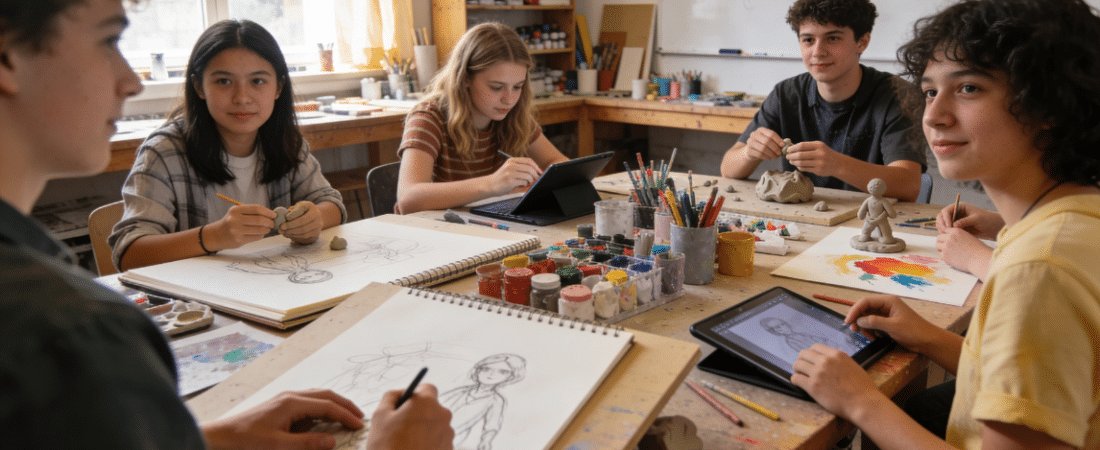
The setting of a creative workshop can make all the difference in unlocking participants’ imagination and fostering a sense of community. A thoughtfully planned environment supports creative thinking, encourages collaboration, and helps everyone feel comfortable enough to share new ideas and experiment with materials. When planning a creative workshop, consider how the space, lighting, and layout will support the specific activities and objectives of your session.
For example, a jewellery making workshop benefits from a well-lit room with sturdy tables and plenty of seating, so participants can spread out their materials and focus on the intricate details of their craft. In contrast, a painting or movement-based workshop might need open space, easels, or floor mats. No matter the activity, having easy access to craft supplies and clear organization helps participants stay inspired and engaged throughout the creative process.
Incorporating elements like natural light, colorful decorations, and comfortable seating can transform an ordinary room into a hub of creativity. Displaying examples of finished projects or inspirational quotes can spark new ideas and motivate participants to try new techniques. Creating designated areas for group work and quiet reflection allows everyone to find their own rhythm within the workshop, and family-focused crafts like preschool crafts about family work especially well in cozy, conversational corners.
A successful creative workshop setting also fosters a sense of belonging and community. Arrange seating to encourage conversation and teamwork, and make sure materials are accessible to all participants, regardless of age or ability, whether you’re planning teen sessions or engaging group activities for 5 year olds. By planning your space with intention, you create an environment where creativity flourishes, solutions emerge, and participants leave feeling inspired and accomplished. Whether your workshop is large or small, the right setting helps every person feel welcome, valued, and ready to create.
Planning & Running a Successful Youth Workshop
Great ideas need thoughtful planning to succeed with teens. The difference between a memorable workshop and a chaotic hour often comes down to preparation.
Essential elements:
- Clear objectives: What will participants learn or create?
- Realistic timing: Build in buffer for setup and transitions
- Age-appropriate activities and language: Avoid talking down to teens or assuming too much prior knowledge
Safeguarding comes first: have consent forms signed, maintain emergency contact lists, and follow appropriate adult-to-youth ratios (typically 1:8 for active workshops, 1:10 for calmer sessions).
Build in short breaks every 45-60 minutes. Mix high-energy activities with quieter segments to maintain engagement without exhaustion.
Inclusivity considerations:
- Accessible spaces for mobility needs
- Activities adaptable for varied learning styles
- Roles beyond “performer” (tech support, documentation, setup crew)
- Pre-cut materials available for those who struggle with fine motor skills
Materials, Setup & Session Flow
Advance preparation prevents session-day stress. Create a checklist specific to each workshop type and complete it at least 24 hours before.
Pre-session checklist:
- [ ] All materials ordered and arrived
- [ ] Kits prepared per participant or group
- [ ] Workstations set up with necessary supplies
- [ ] Example projects or visual aids ready
- [ ] Technology tested (speakers, projectors, devices)
Standard session template:
Phase | Duration | Purpose |
|---|---|---|
Welcome | 5 minutes | Orient participants, set expectations |
Icebreaker | 5-10 minutes | Build energy, learn names |
Main activity | 40-60 minutes | Core workshop content |
Reflection/sharing | 10-15 minutes | Process experience, celebrate work |
Clear wrap-up | 5 minutes | Next steps, pack up, goodbye |
Create simple visual aids—posters with steps, example projects on display—to support different learning preferences. Some teens absorb verbal instruction; others need to see it. |
Have a backup mini-activity ready: a quick drawing prompt, partner challenge, or discussion question. If main elements finish early (it happens), you won’t scramble.
Evaluation, Feedback & Next Steps
Gathering feedback helps you improve and demonstrates you value participant voices.
Simple feedback methods:
- Anonymous sticky notes answering “What worked? What could be better?”
- Quick online forms (3-5 questions maximum)
- “Thumbs up / sideways / down” check-in before leaving
- Verbal circle share for smaller groups
Use feedback to adjust future workshop topics, pacing, and difficulty levels. Track attendance and engagement to identify which ideas are most popular for ongoing programming.
Celebrate outcomes publicly within your organization—displays, showcases, end-of-term events—with appropriate permissions from participants and guardians. This recognition matters to youth and builds program visibility.
The most successful programs co-create future workshop themes with participants. Invite teens to pitch ideas and even co-facilitate sessions. This ownership transforms attendees into invested community members.
Key Takeaways
- Creative workshop ideas work best when they combine clear structure with room for personal expression
- Match activities to age groups: more games for younger children, deeper projects for older kids
- Stock versatile craft supplies that work across multiple workshop types
- Include reflection and sharing time—the creative process includes talking about what you made
- Gather feedback and iterate, involving youth in planning future sessions
Happy Crafting: Your Next Steps
The workshop ideas in this guide are starting points, not rigid scripts. The best facilitators adapt activities based on who’s in the room, what materials are available, and what sparks genuine engagement.
Start with one idea that excites you. Run it. Gather feedback. Make it better. Then try another.
Youth workshops aren’t about producing perfect outcomes—they’re about giving young people space to experiment, fail safely, and discover capabilities they didn’t know they had. When a teen leaves your session with something they created and new ideas forming in their mind, you’ve done the work that matters.
The world needs more creative people who know how to collaborate, solve problems, and express themselves. Your workshop could be where that starts.