
Structured crochet lesson plans have become essential for educators in 2024, whether you’re running an after-school club, leading a community education course, or teaching private workshops. Without a clear roadmap, classes can quickly become chaotic, students lose motivation, and the learning process stalls. A well-designed lesson plan transforms “crafting time” into meaningful skill-building that students can measure and celebrate.
This guide will help you build crochet lessons from the first chain stitch to complete beginner projects. We’ll cover concrete contexts including junior and senior high school enrichment programs, adult education evening classes, and small-group private workshops. Crochet supports fine motor skills, focus, and creativity—all of which tie directly to classroom learning objectives across age groups.
What this article covers:
- Setting measurable goals for different age levels and skill backgrounds
- Planning course schedules from single workshops to multi-week curricula
- Teaching the basics: core stitches and first projects
- Ready-to-use lesson plan templates
- Managing class logistics, pricing, and classroom setup
- Assessing progress and keeping students motivated
- Expanding beyond basics for returning students
Setting Goals for Your Crochet Lesson Plans
Aligning your crochet lessons with clear, measurable learning outcomes elevates them beyond “just crafting time.” When students know exactly what they’re working toward, they stay engaged and feel a sense of accomplishment. Vague goals like “learn to crochet” don’t provide the structure beginners need.
Concrete goal examples using the SMART framework (Specific, Measurable, Achievable, Relevant, Time-bound):
- By the end of Week 2 (e.g., by October 15, 2026), students will complete a 6” x 6” single crochet swatch with consistent tension
- By Lesson 4, students can identify and use sc, hdc, and dc stitches without visual aids
- Students will finish one complete project (dishcloth, headband, or sampler) by the final class
Goal sets by age group:
- Middle school: Master chain and single crochet; complete a simple project like a friendship bracelet or narrow scarf
- High school: Create a beanie, phone pouch, or stitch sampler demonstrating three basic stitches
- Adult beginners: Produce two finished dishcloths in a 4-week course, demonstrating pattern reading skills
When you decided on your goals, write them down and share them with students on day one. This transparency helps everyone understand the process and provides inspiration to push through difficult moments.
Planning a Crochet Class: Structure and Schedule
This section guides you through planning a full course, whether you’re running a compact workshop or a semester-long unit. The key is matching your schedule to realistic skill progression—beginners need repetition and practice time, not rushed demos.
Model Schedule A: 4-Week Beginner Course (90 minutes per session)
Perfect for community education or adult evening classes (e.g., every Tuesday in April 2026):
Week | Focus | Project Progress |
|---|---|---|
1 | Yarn types, hook sizes, holding the hook, slip knot, chain stitch | Practice chains |
2 | Single crochet in rows; tension control | Start dishcloth |
3 | Half double crochet and double crochet; turning chains | Continue dishcloth with stitch sections |
4 | Finishing techniques, weaving in ends, simple edging | Complete and display projects |
Model Schedule B: 6-Lesson School Unit (45 minutes per lesson) |
Designed for junior high or high school enrichment during a spring semester:
- Lesson 1: Introduction to materials, holding the crochet hook, making a slip knot, starting chains
- Lesson 2: Single crochet in rows; making a simple bookmark
- Lesson 3: Half double crochet and double crochet; starting a stitch sampler square
- Lesson 4: Working in rounds; beginning a granny square
- Lesson 5: Reading patterns and basic charts; pattern abbreviations and symbols
- Lesson 6: Finishing techniques, weaving in ends, simple border
Build in 5-10 minutes of review at the start of each lesson—have students pick up their work and crochet a few stitches while you check progress. Reserve 10-15 minutes at the end for questions, cleanup, and note-taking.
Homework between lessons: Assign realistic practice, such as 15 minutes daily on a small swatch or bringing one in-progress square to the next class. This keeps skills fresh without overwhelming beginners.
Teach the Crochet Basics: Core Skills and First Projects
Beginner crochet lesson plans should revolve around a limited set of core stitches and very simple projects. Trying to teach too many techniques at once leads to confusion and frustration.
Essential skills to include:
- Slip knot and foundation chain (practice 20+ chains for tension proficiency)
- Single crochet in rows (the shortest basic stitch, perfect for building confidence)
- Half double crochet and double crochet once sc is comfortable
- Turning chains: 1 for sc, 2 for hdc, 3 for dc
- Counting stitches and maintaining straight edges
Introduce working in rows before working in rounds. Rows offer easier tension control, and students can see their stitches more clearly. This approach helps beginners avoid the common mistake of accidentally adding or dropping stitches.
First project ideas (2-3 lesson span):
- Cotton dishcloth: Using worsted weight cotton and a 5.5mm (I/9) hook, students create a practical item while mastering basic stitches
- Simple headband or ear warmer: Start in flat rows and seam closed at the end
- Stitch sampler washcloth: Defined sections using sc, hdc, and dc—students can compare the differences in texture and height
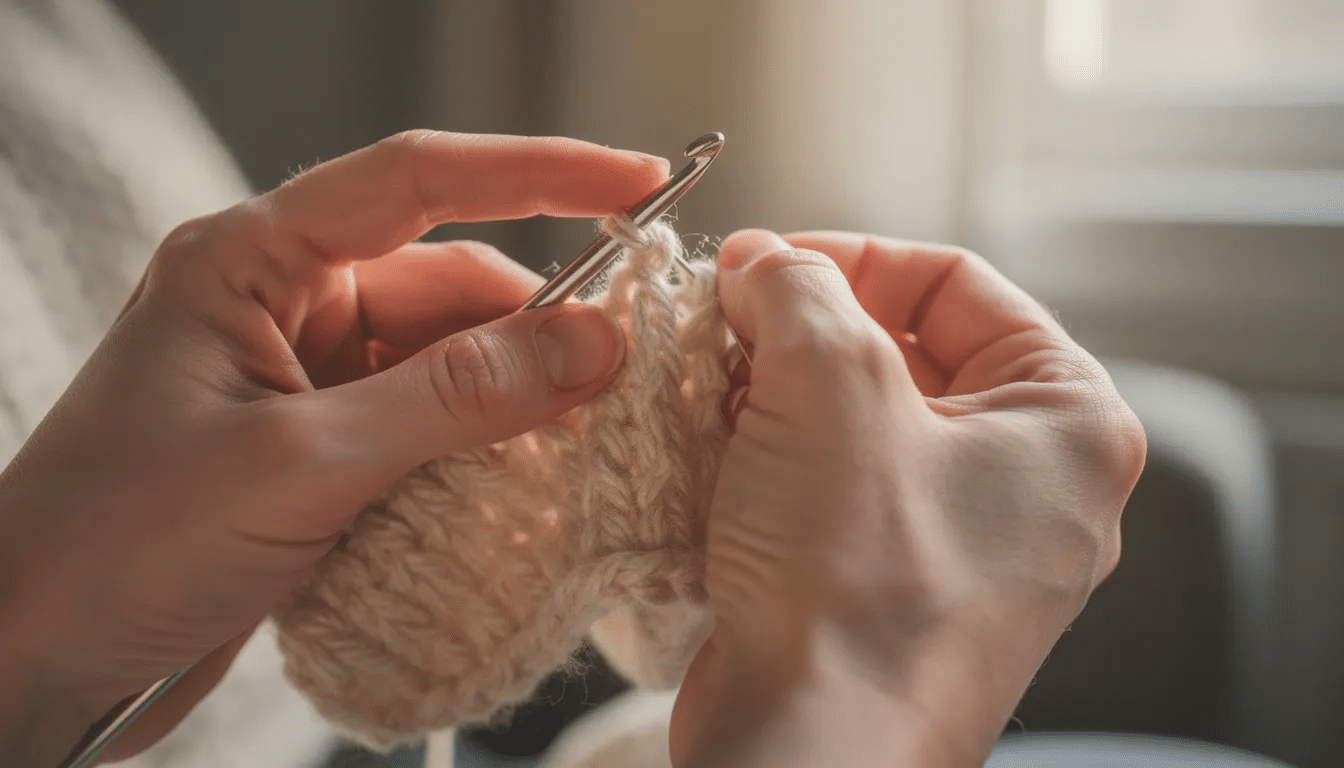
How lessons should look: Start with a brief demo from the teacher, sitting beside students rather than facing them (this makes it easier for students to follow your hand movements). Then move to step-by-step practice together, followed by independent work time while you circulate and provide one-on-one help.
Successes, Challenges, and Adjusting Your Plans
Reflecting after each crochet lesson helps you improve future classes. Even experienced instructors discover things that didn’t work as expected.
Success indicators to look for:
- Students finishing at least one swatch per class
- Fewer dropped stitches or skipped chains by Week 3
- Students starting to help each other with simple issues
- Happy comments about progress and increased confidence
Common challenges:
- Mixed ability levels in the same room
- Left-handed vs. right-handed learners (left-handed crocheters work left-to-right, mirroring right-handed techniques)
- Students frustrated by frogging (ripping out stitches to fix an error)
- Hand fatigue after 6+ rows, requiring a break
Recommended adjustments:
- Prepare an extra simplified pattern for those struggling quickly
- Bring large demo hooks and super bulky yarn so demonstrations are easy to see from across the room
- Offer optional “office hours” 10-15 minutes before or after class for students who need extra help
- Remind students that making a mistake and starting over is part of learning—not failure
This section is about thinking like a flexible teacher. Your lesson plans are a guide, not a rigid script.
Sample Crochet Lesson Plan Templates
These ready-to-adapt outlines give you starting points for real crochet lesson plans, not just theory.
Template 1: One-Session 2-Hour “Introduction to Crochet” Workshop
Time | Activity |
|---|---|
0:00-0:15 | Introductions, materials overview, course description |
0:15-0:45 | Slip knot and chain stitch practice (aim for 25+ chains) |
0:45-1:30 | Single crochet in rows (10 sc per row, 6 rows minimum) |
1:30-1:50 | Troubleshooting common issues, individual help |
1:50-2:00 | Wrap-up, questions, take-home practice tips |
Skills covered: Slip knot, chain, single crochet Project: Practice swatch (students keep for continued practice) Checkpoint: By 1:30, every student has at least 4 completed rows |
Template 2: Two-Session Beginner Course (Two 90-minute evenings)
Session 1:
- Review materials, make slip knot and foundation chain
- Introduce single crochet; begin “Weekend Starter Dishcloth”
- Homework: Complete 10 additional rows at home
Session 2:
- Review sc technique; troubleshoot issues from home practice
- Add half double crochet and double crochet sections to dishcloth
- Finish edges, weave in ends, celebrate completed projects
Project: Weekend Starter Dishcloth (approximately 7” x 7”) Checkpoint: By end of Session 1, students have 10+ rows; by end of Session 2, dishcloth is complete
Template 3: School-Friendly 45-Minute Class (4-6 week unit)
Designed for junior high students with limited class time:
- Week 1: Supplies, slip knot, chains (send home with yarn and hook for practice)
- Week 2: Single crochet rows; start bookmark project
- Week 3: Continue bookmark; introduce counting and edge maintenance
- Week 4: Half double crochet; add texture section to bookmark
- Week 5: Double crochet section; discuss free patterns and YouTube videos for continued learning
- Week 6: Finish, fasten off, weave ends; show and share
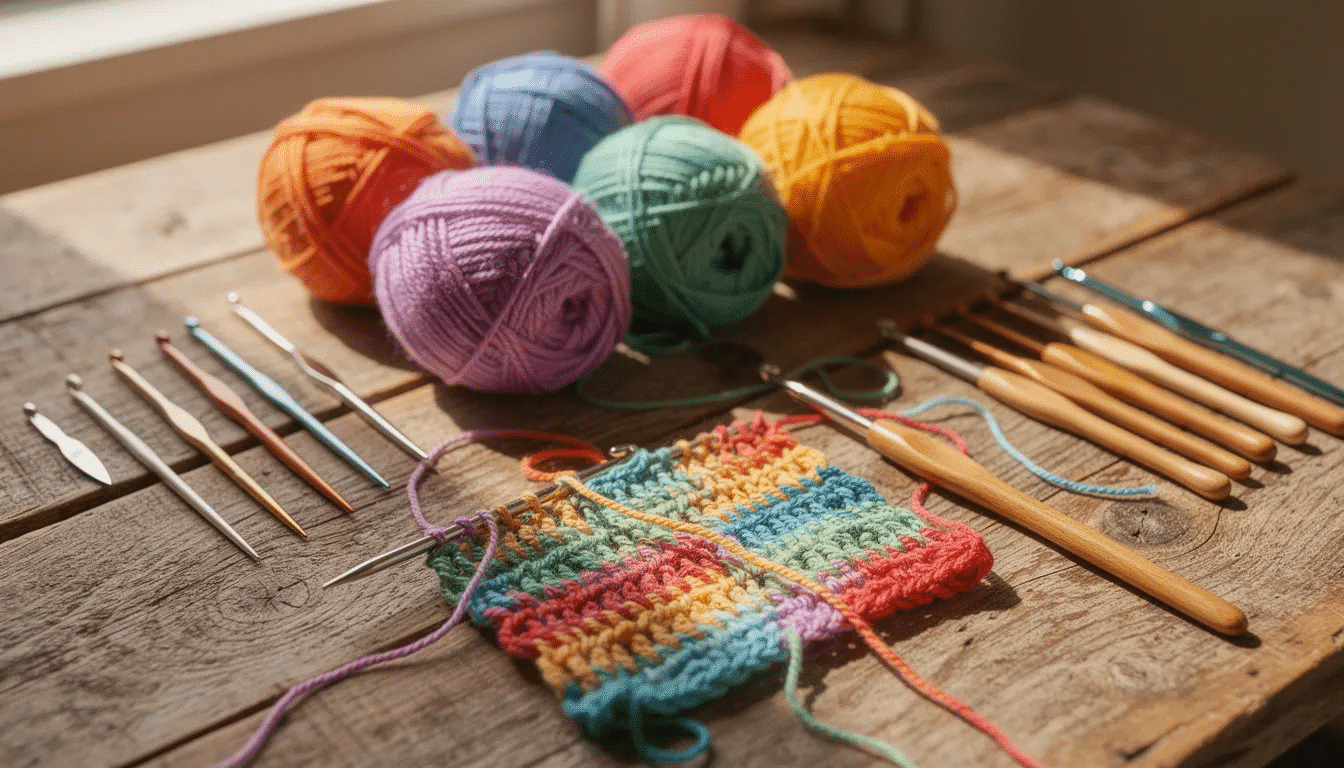
Course Description, Handouts, and Class Materials
Strong course descriptions and clear handouts help fill classes and keep students on track.
Sample course description:
Crochet Basics: Stitch Sampler Dishcloths Learn to crochet from scratch in this fun, hands-on workshop. You’ll master the chain, single crochet, half double crochet, and double crochet stitches while creating a useful cotton dishcloth. All supplies provided. No experience necessary. Perfect for ages 12 and up.
What to include in handouts:
- Stitch abbreviation chart (ch, sc, hdc, dc, sl st, yo)
- Simple step-by-step instructions with large diagrams
- Basic pattern reading guide using US crochet terminology
- Checkboxes for each skill mastered
- Space for notes
Design handouts with large fonts, plenty of white space, and clear illustrations. Avoid cramped text—beginners reference these repeatedly and need to find information quickly.
Materials card (print separately):
- Crochet hook: 5.5mm (US I/9)
- Yarn: Worsted weight cotton, light color (provided or bring your own)
- Scissors
- Yarn needle for weaving ends
- Optional: Stitch markers
Specify whether materials will be supplied or if students should shop for their own supplies before class.
Managing Crochet Class Logistics and Pricing
Lesson plans must fit practical constraints like time, space, budget, and pricing.
Common class formats:
- After-school club meeting every Wednesday from 3:30-4:30 pm
- Community education course through a local school district (often 2-4 sessions)
- Private small-group workshop run independently by the instructor
How pricing typically works:
- Organization-run classes: The school or community center sets course fees (commonly $25-$40 for a two-session class), and you receive an hourly teaching rate
- Private classes: Factor in materials, prep time (1-2 hours per class hour is reasonable), and direct teaching hours when setting rates; many instructors charge $30-$60 per hour for small groups
Class size management tips:
- Ideal beginner class size: 6-10 students per instructor
- If enrollment exceeds 10, bring an assistant or experienced volunteer (perhaps a friend who crochets)
- For online teaching, smaller groups (4-6) work better for individual attention
Handle registration logistics clearly: set enrollment deadlines, maintain waitlists for popular sessions, and establish cancellation policies (e.g., “Full refund if cancelled 48 hours before the start date”).
Classroom Setup and Visual Aids
The physical or virtual classroom environment directly affects crochet learning. Students need to see your hands clearly and have comfortable workspace.
In-person setup tips:
- Arrange chairs in a U-shape or semi-circle so everyone can see your hands
- Provide strong, even lighting (natural light or bright overhead fixtures)
- Use a document camera or overhead mirror for live demonstrations
- Keep a large table accessible for laying out materials and supplies
Visual aids:
- Crochet posters showing hook sizes, yarn weights, and basic stitch diagrams on walls
- A large-print, step-by-step poster for the current class project
- Sample swatches at each skill level so students can see what they’re working toward
- Hangtag squares labeling stitches for quick reference
Online teaching adaptations:
- Use a close-up camera angle focused on your hands (phone on a tripod works well)
- Screen-share stitch charts and pattern instructions
- Send downloadable PDFs before the session so students can follow along
- Record key demos for students to rewatch (post to YouTube or a private link)
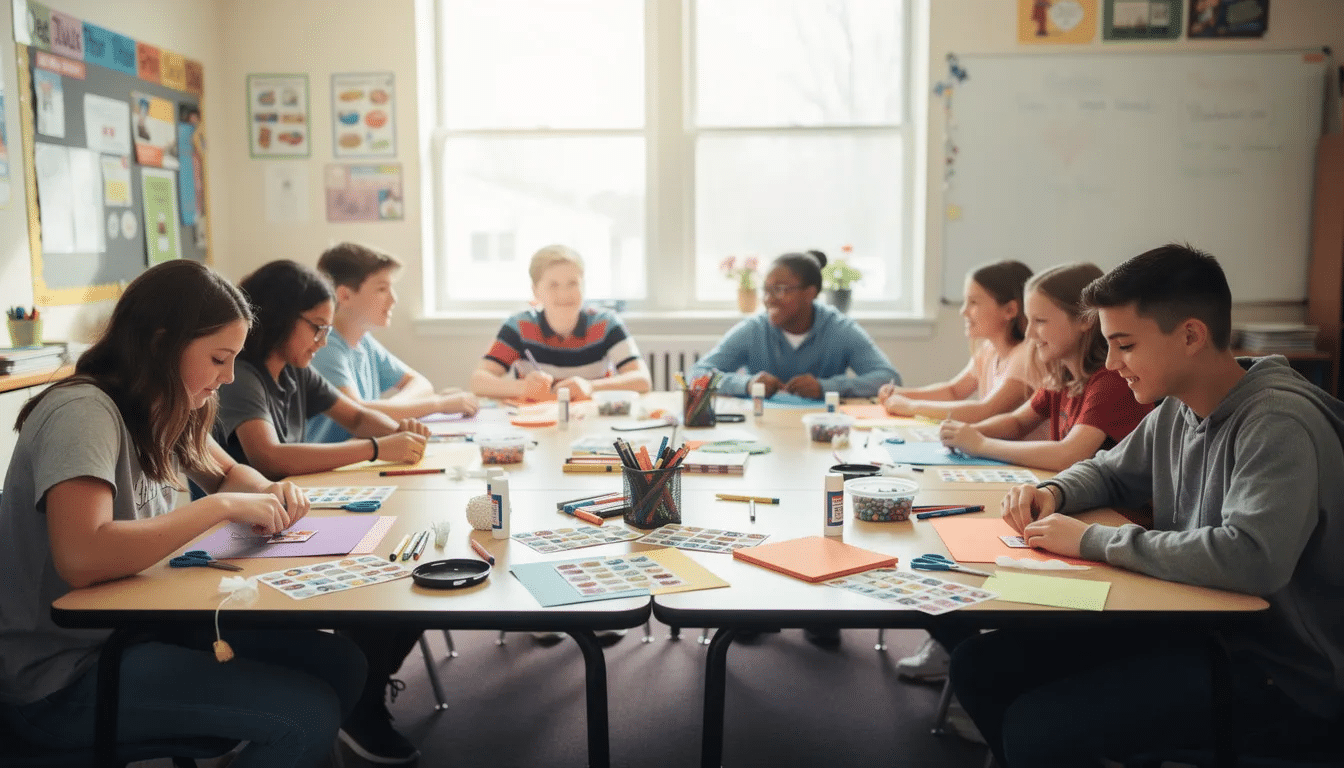
Picture a well-organized crochet learning space: clear sightlines, labeled materials, inspiring finished samples on display, and enough room for students to spread out their work that supports creative classroom engagement and active learning.
Assessing Progress and Keeping Students Motivated
Assessment in crochet is informal but still important for effective lesson planning.
Practical assessment ideas:
- Quick skill checks at the start of class: have students crochet 3 rows of 10 stitches while you observe tension and technique
- End-of-unit mini “show and tell” where students display finished or in-progress projects
- Informal one-on-one check-ins during independent work time
- Self-assessment checklists: “I can make a slip knot without help” / “I can count my stitches accurately”
Motivational strategies:
- Choose projects that finish within 1-2 weeks so students see quick wins
- Offer small milestone certificates (e.g., “Completed First Finished Project – May 2026”)
- Display a “project gallery” of student work
- Celebrate progress, not just perfect results—acknowledge students who keep trying after frogging multiple times
Peer support:
Pair faster learners with those who need more help during practice time. This benefits both: advanced students reinforce their skills by teaching, and struggling students get additional attention without waiting for the instructor.
Motivation ties directly back to thoughtful lesson planning and project selection. When students hold a finished scarf or dishcloth they made themselves, that pride carries them into the next class.
Expanding Beyond the Basics: Next-Level Crochet Lesson Ideas
Once your students have mastered chains, sc, hdc, and dc, you can introduce more advanced techniques to keep them engaged.
Next-step topics for future lesson plans:
- Back loop only (BLO) crochet to add ribbed texture
- Simple increases and decreases for shaping hats and amigurumi
- Treble crochet for taller stitches and lacier fabrics
- Reading symbol charts for basic granny squares
- Working in continuous rounds versus joined rounds
Seasonal class ideas:
- February: Valentine’s heart-shaped coasters or small gift bags
- March/April: Spring or Easter-themed egg cozies or flower appliqués
- October: Pumpkin amigurumi or harvest-colored dishcloths
- December: Simple holiday ornaments or gift card holders
These advanced lessons should remain project-based. Each unit should have a clear, achievable finished item by the end of a short series—students stay motivated when they have something tangible to show for their time.
Build multi-level crochet curricula that keep crocheters returning for new classes. A beginning crochet course leads to an intermediate series, which leads to specialized workshops (amigurumi, wearables, home décor). This progression benefits both your students and your teaching practice.
Building effective crochet lesson plans takes thoughtful preparation, but the rewards are lasting. Your students gain skills they’ll use for years, and you create a learning environment where creativity thrives. Start with one beginner class, refine your approach based on what works, and expand your curriculum as your confidence grows.
Today is the perfect day to outline your first lesson plan. Pick a simple project, gather your materials, and invite your first group of students to share in the love of crochet.