
A crochet motifs book is more than just another addition to your craft shelf—it’s a creative toolkit that opens up endless possibilities for your projects. Whether you’re wanting to create blankets, garments, or decorative items for your home, understanding what these specialized pattern collections offer can transform how you approach your crochet work.
- Quick Answer: What Is a Crochet Motifs Book?
- What You’ll Find Inside a Crochet Motifs Book
- Types of Crochet Motif Books (From Thread to Micro)
- Features That Make a Great Crochet Motifs Book
- How to Use Motifs from a Crochet Motifs Book
- Choosing the Right Crochet Motifs Book for Your Skill Level
- Digital vs. Print Crochet Motif Collections
- Recommended Crochet Motifs Books to Explore
- Final Thoughts: Building Your Motif Library
Quick Answer: What Is a Crochet Motifs Book?
A crochet motifs book is a specialized pattern collection focused on small, repeatable shapes—squares, circles, flowers, hexagons, triangles, and other geometric or organic forms—that serve as modular building blocks for larger projects. Unlike general crochet books that might cover everything from amigurumi animals to sweaters, motif books concentrate specifically on these individual units that you can join together to create blankets, garments, home décor, and accessories.
Many popular titles in this category have become favorites among crocheters worldwide. Edie Eckman’s “Beyond the Square: Crochet Motifs” from 2008 offers 144 designs with both charts and step by step instructions, while newer releases like “100 Micro Crochet Motifs” from 2020 cater to crafters interested in working on a miniature scale. These books typically include everything you need in one reference volume: written instructions, symbol charts, photo inspiration, and joining ideas.
This article will help you understand what to expect inside a crochet motifs book, how to choose one that matches your skill level, and how to use motifs creatively in your own projects. By the time you finish reading, you’ll have a clear idea of which type of book belongs on your shelf.
What You’ll Find Inside a Crochet Motifs Book
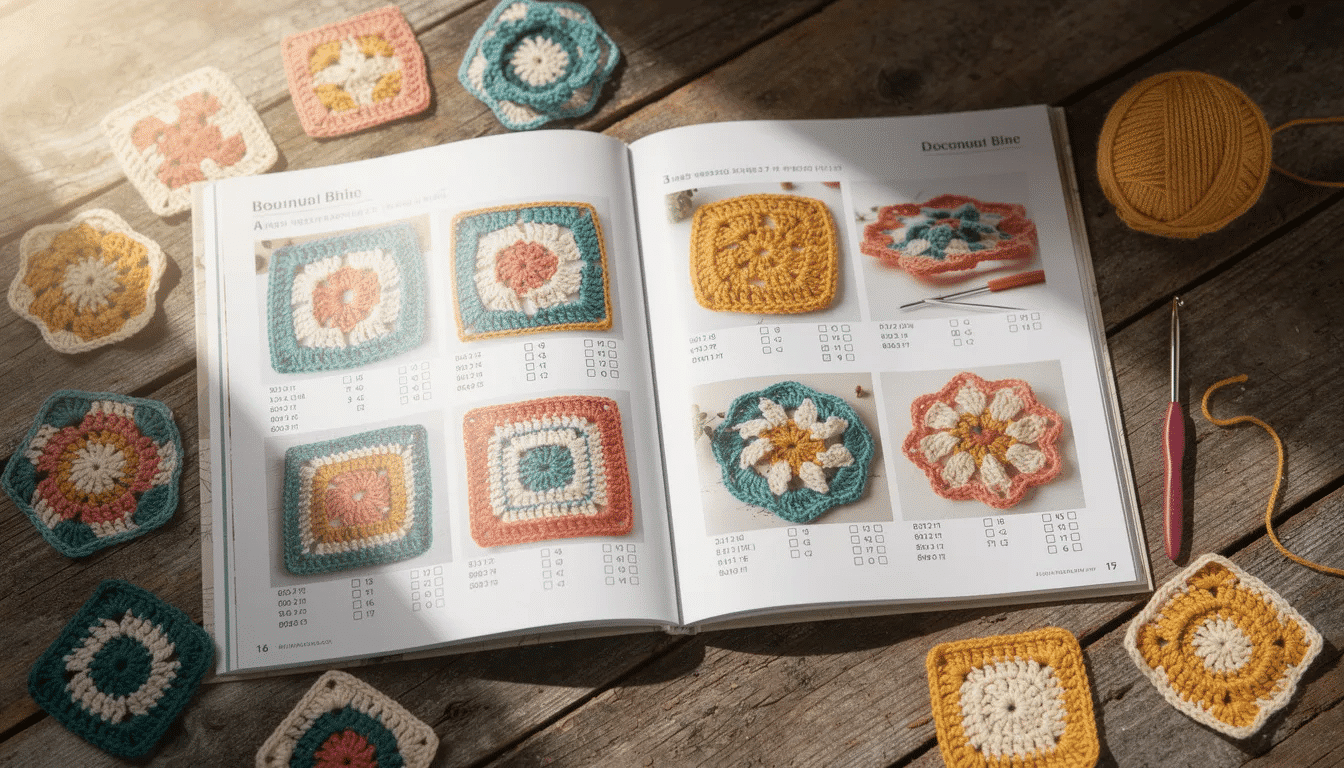
Most motif books organize their designs by shape, theme, or difficulty level, making it easy to find exactly what you’re looking for. Many also include a mini stitch guide at the front or back to help you understand any unfamiliar techniques before you get started.
Here’s what you can typically expect to find inside:
- Written instructions worked round-by-round or row-by-row using standard abbreviations
- Stitch symbol charts using international notation for visual learners
- Full-color photos of each finished project displayed on neutral backgrounds
- Yarn and thread recommendations with suggested hook sizes and finished measurements
- Motif types including classic granny squares, floral rounds, stars, hearts, fans, geometric hexagons, snowflakes, and lace medallions
Books like Edie Eckman’s 144-motif collection go beyond basic patterns to include sections on edging techniques, methods for putting motifs together, arrangement layouts, and creating borders. Some modern releases add complete project sections featuring bags, cushions, shawls, and wall hangings designed around their motifs, so you can immediately put the patterns to work.
A typical page spread might show a beautiful photo of the motif on the left, with the corresponding chart beside it, key abbreviations listed below, and the blocked finished size noted for reference. This consistent layout makes it easy to flip through and choose your next design.
Types of Crochet Motif Books (From Thread to Micro)
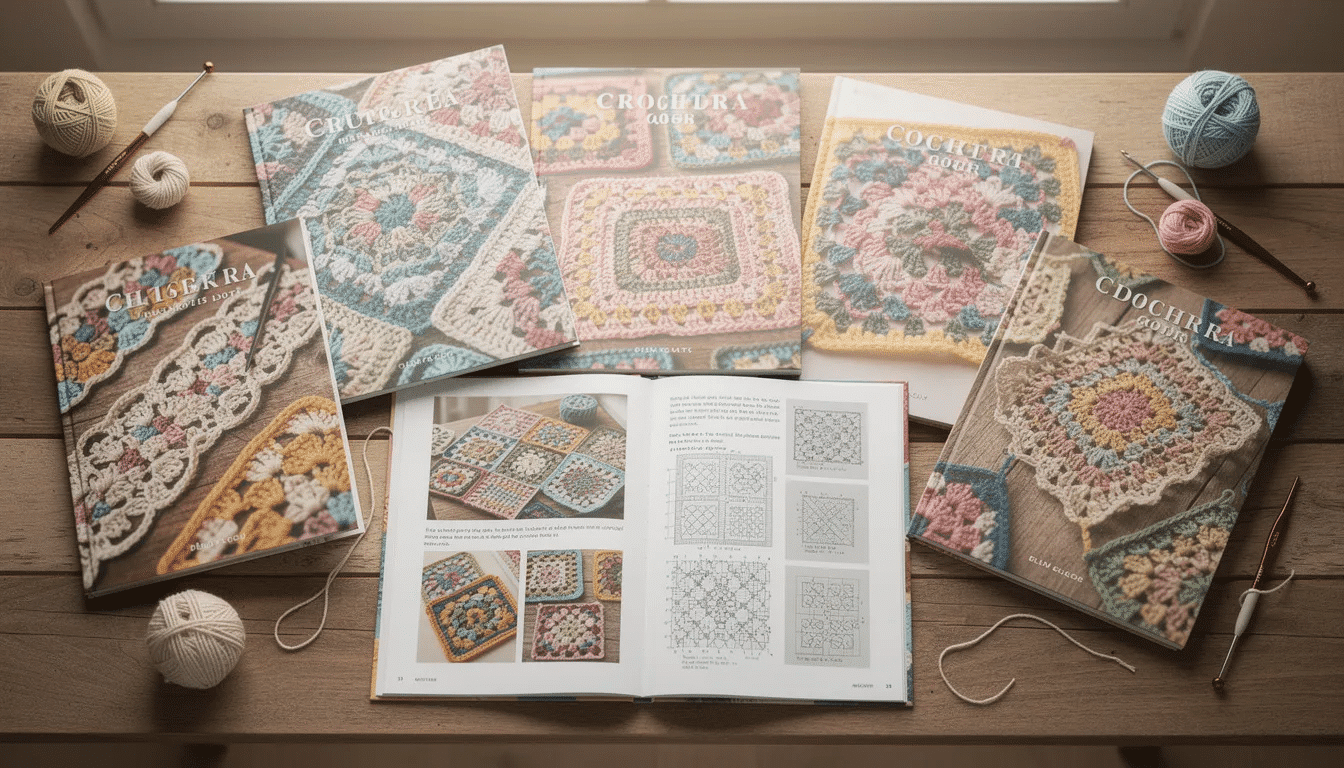
Motif books vary widely in their approach, from traditional crochet thread designs popular in the 1990s to ultra-modern micro crochet collections released in the 2020s. Understanding these different types helps you find the right fit for your preferred yarn weight and project style.
Classic thread motif books use size 10 cotton thread and steel hooks, focusing on doilies, coasters, crosses, snowflakes, and lacy medallions. These designs create delicate, heirloom-quality pieces perfect for table décor and special occasions. If you love the look of vintage lace, this category offers a lot of timeless inspiration.
Modern worsted- or DK-weight motif books show motifs worked in thicker yarn, typically with a 4.0–5.5 mm hook. These are ideal for blankets, pillows, and garments where you want visible stitch definition and faster progress. The quantity of projects you can complete increases significantly when working at this scale.
Micro crochet motif books represent the newest trend in the crochet world. Books like Steffi Glaves’ “100 Micro Crochet Motifs” use very fine thread and tiny hooks (0.75–1.25 mm) to create miniature flowers, animals, and bunting. These designs work beautifully as jewelry components, embellishments, and unique gifts.
Some books focus exclusively on specific shapes—only hexagons or only granny squares—and these often include detailed join-as-you-go techniques and colorwork suggestions that help you create cohesive designs without the guesswork.
Features That Make a Great Crochet Motifs Book
Not all motif collections are equally easy to use. Before clicking “add to cart” or picking up a copy at your local craft store, knowing what features to look for can save you from disappointment.
Visual clarity matters enormously. The best books feature sharp, close-up photos of each motif laid flat, consistent background colors throughout, and at least one photo showing the reverse side for textured designs. You should be able to see individual stitches clearly.
Instructional completeness separates good books from great ones. Look for:
- Patterns written in both standard US abbreviations and chart form
- A comprehensive symbol key explaining all notation
- A basic stitch glossary covering chains, single crochet, double crochet, and specialty stitches
- Clear notes on gauge and finished dimensions
Logical organization helps you find what you need quickly. Quality books number motifs consistently, group them by shape (squares, circles, hexagons) or theme (floral, geometric, seasonal), and include an index so you can locate a specific size or stitch type without flipping through every page.
Skill-level labeling prevents frustration. The best crochet books include clear beginner, intermediate, and advanced tags, with notes explaining special stitches like popcorns, clusters, or surface crochet before you encounter them in a pattern.
Standout books also offer helpful extras: suggestions for color combinations, tips for blocking and measuring motifs, tables showing finished sizes across different yarn weights, and thorough joining and edging tutorials.
How to Use Motifs from a Crochet Motifs Book
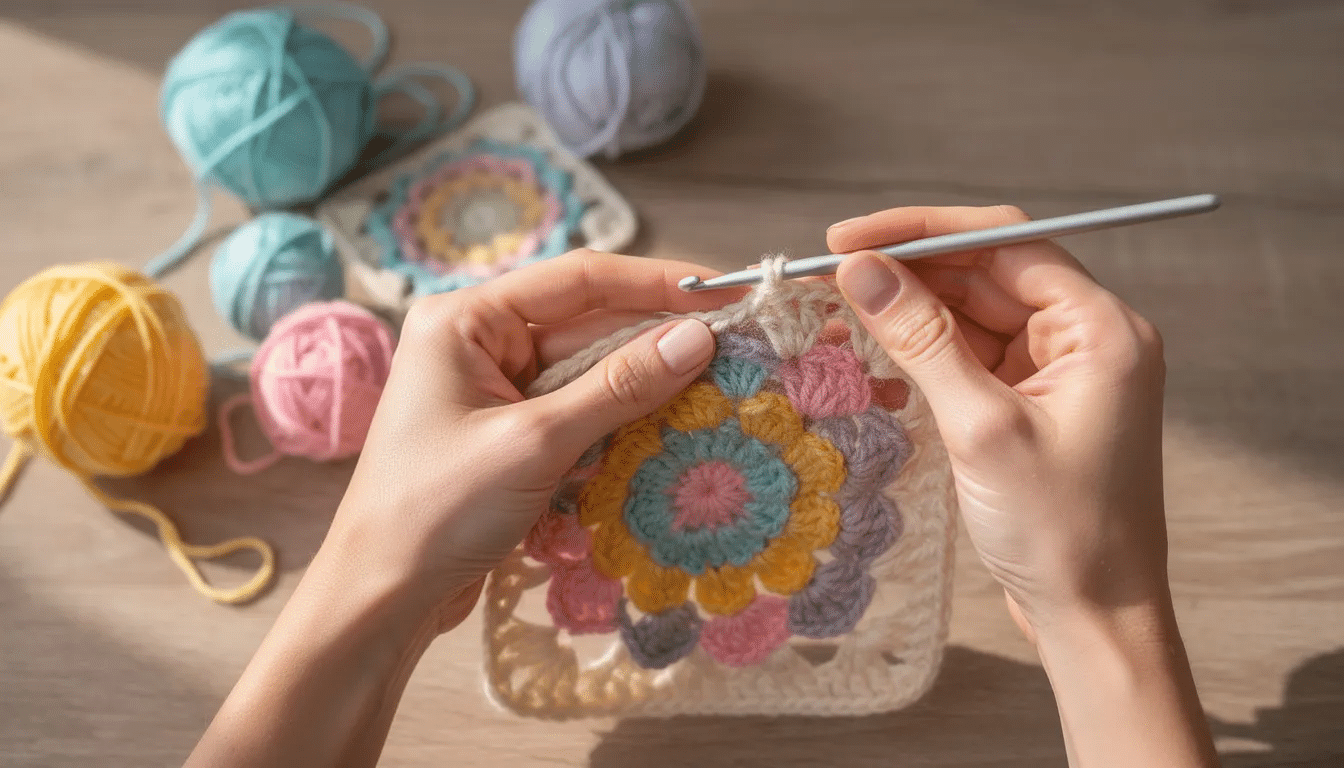
Motif books are more than libraries of swatches to admire—they’re toolkits for creating custom projects, from baby blankets to wearable garments. Understanding how to apply these patterns transforms a book from a pretty reference into a practical resource you’ll return to time and again.
Planning a project starts with a few simple steps:
- Choose a motif from your book that catches your eye
- Work a swatch in your intended yarn to check gauge
- Block the swatch and measure the finished size
- Calculate how many motifs you need based on your desired dimensions
Practical applications for single motifs include coasters, appliqués, patches for denim jackets, or framed wall art. If you enjoy personalizing your makes, you can even turn a favorite photo into an appliqué to pair with your crochet motifs on bags, blankets, or clothing. Combine several motifs to create table runners, cushion covers, and throws. The same 10 cm square motif that makes a coaster can become a stunning blanket when you work 30 or 40 of them.
Garment construction using motifs requires a bit more planning. Some books provide diagrams showing how to arrange blocks across fronts, backs, and sleeves for cardigans, ponchos, and shrugs. If your book doesn’t include this guidance, look for online tutorials that complement the motifs you’ve chosen.
Micro motif applications open up an entirely different world of possibilities: earrings, pendants, bookmarks, zipper pulls, stitch markers, and embellishments for hats and bags. These tiny designs work up quickly and make perfect gifts.
Here’s a concrete example: if you select a 10 cm square motif and work it in aran-weight yarn, a 5 × 6 layout creates a baby blanket approximately 50 × 60 cm. Add a simple border, and you have a complete finished project from a single pattern in your book.
Choosing the Right Crochet Motifs Book for Your Skill Level
There are motif books suitable for absolute beginners and others best reserved for experienced crocheters who already read charts confidently. Knowing what to look for at your current skill level helps you avoid frustration and find designs you can actually complete.
For beginners, look for books that:
- Start with a clear “how to crochet” section covering basic stitches
- Use medium-weight yarn in photos so stitches are easy to see
- Limit special stitches in early motifs
- Provide both written and charted instructions
- Include plenty of photos showing each step
Intermediate crocheters should seek books featuring a mix of stitch techniques like shells, clusters, picots, post stitches, and simple lace patterns. Joining and border instructions become more important at this level, as you’ll want guidance on putting your motifs together professionally.
Advanced crocheters often hope to find books emphasizing complex shapes—irregular polygons, 3D motifs, overlay crochet—with extensive charting and design notes for modifying motifs. Books featuring Irish crochet styles or intricate Japanese designs fit this category well.
Before you buy, check the book’s sample pages online to ensure you’re familiar with the notation style. Some books use US terms exclusively, others include UK equivalents, and Japanese-influenced publications may rely heavily on symbol charts with minimal written text. Choose a format that matches how you prefer to follow patterns.
Digital vs. Print Crochet Motif Collections
Crochet motifs are available both as traditional print books (paperback or hardback) and as digital PDFs or eBooks from publishers and independent designers. Each format has distinct advantages worth considering.
Advantages of print books:
- Easy to flip between motifs while working
- Lay flat beside your yarn without a device
- Bookmark favorites with sticky notes
- Display on a shelf for ongoing inspiration
- No battery or screen glare to worry about
Advantages of digital books:
- Instant download after purchase—no wait time
- Searchable by keyword or motif number
- View on tablets or print individual pages for your project bag
- Often cost less than print editions
- Take your entire collection traveling without extra weight
Many modern motif collections released after 2015 offer both formats, sometimes with bonus digital charts or printable motif planners included with the print version. Crocheters who travel frequently may prefer digital copies, while those who love to annotate and physically mark their favorites often lean toward print.
Recommended Crochet Motifs Books to Explore
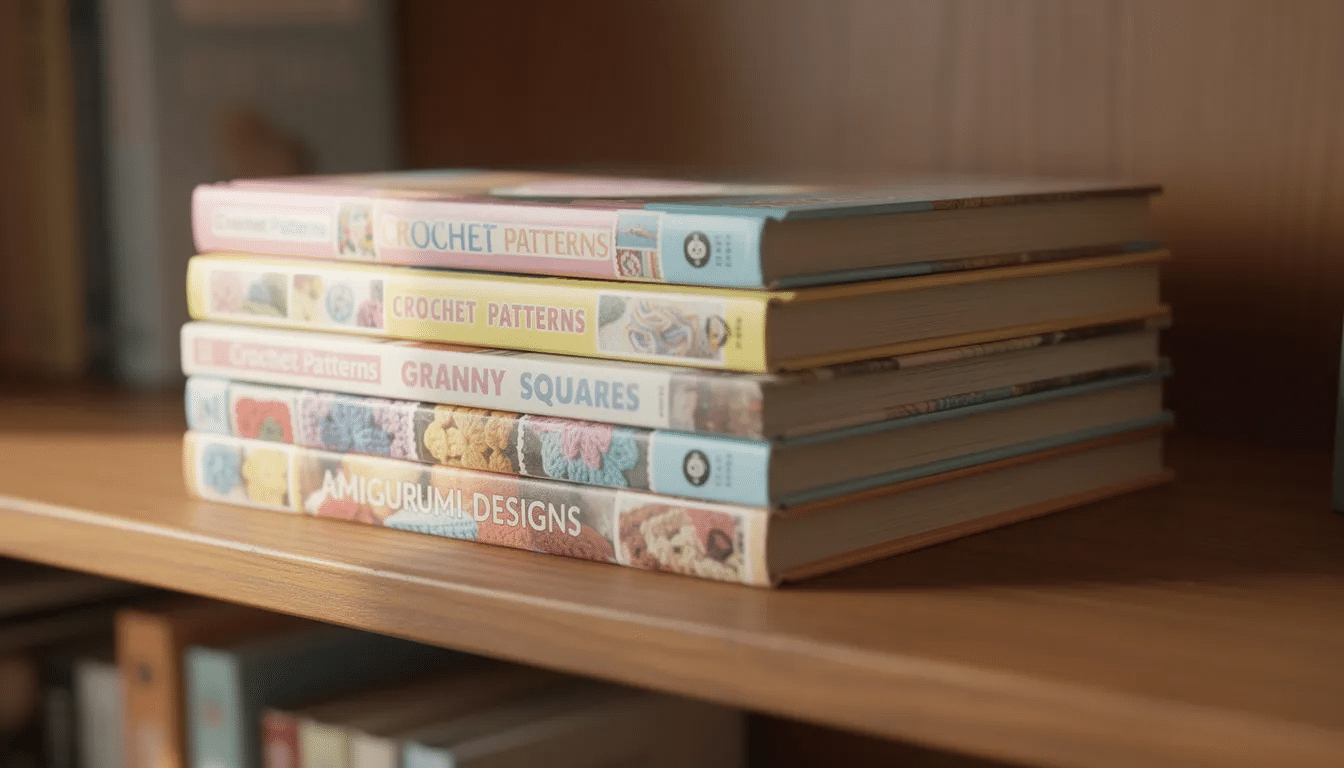
This section highlights a handful of well-known motif-focused titles and what makes each one distinct. These recommendations span different eras, skill levels, and project types to help you find your starting point.
“Beyond the Square: Crochet Motifs” by Edie Eckman (2008) remains a cornerstone of many crocheters’ libraries. With 144 motifs covering circles, hexagons, triangles, squares, and unusual shapes, it breaks away from traditional granny square limits. Each design includes full-color photos, modern written instructions using US abbreviations, and Japanese-style charts. The workshop section on starting techniques, multi-color work, and joining methods makes this book invaluable for anyone wanting to understand motifs deeply.
“100 Micro Crochet Motifs” by Steffi Glaves (circa 2020) caters to crafters fascinated by miniature work. The book features tiny flowers, animals, and decorative elements worked with fine thread and hooks as small as 0.75 mm. Scale comparison photos with hooks and thread spools help you understand just how small these designs are. Projects include jewelry, ornaments, and delicate décor items perfect for adding personality to your home.
Hexagon and granny-square-specific books from the 2010s focus on modern aesthetics with contemporary color palettes and fresh arrangements. These often include extensive join-as-you-go tutorials and suggestions for creating blankets, cushions, and accessories with cohesive color stories.
Classic crochet thread motif collections from the early 2000s center on lace motifs, snowflakes, crosses, and medallions designed for heirloom linens and decorative table pieces. If you love the elegance of fine thread work, these books provide hundreds of designs that never go out of style.
Final Thoughts: Building Your Motif Library
Investing in one or two solid crochet motifs books can provide years of pattern inspiration across blankets, garments, and decorative items. Unlike individual online patterns that may disappear when websites change or designers move on, a good motifs book functions as a long-term reference that stays reliably on your shelf.
Start with a beginner-friendly collection that matches your current skills and preferred yarn weight. As your abilities grow, gradually add more specialized motif books—micro crochet for jewelry making, advanced lace for heirloom projects, or shape-specific guides for complex joining techniques. Your library will evolve alongside your crafting journey.
Now it’s time to pull out your hooks, choose a motif from a book, and experiment with yarn weights, colors, and combinations to create something uniquely yours. The beautiful thing about motifs is their flexibility—what starts as a simple square can become a blanket, a bag, or a piece of wearable art. Happy crocheting!