
Starting a new craft can feel overwhelming when you’re not sure what supplies you actually need. The good news? Crocheting stands out as one of the most accessible hobbies you can pick up, requiring minimal equipment to create beautiful handmade items. This guide walks you through everything from the absolute basics to specialized accessories, helping you build your ideal toolkit at your own pace, similar to how curated DIY craft kits for creative projects bundle tools and materials for stress-free making.
Quick Start: The Two Core Crochet Tools
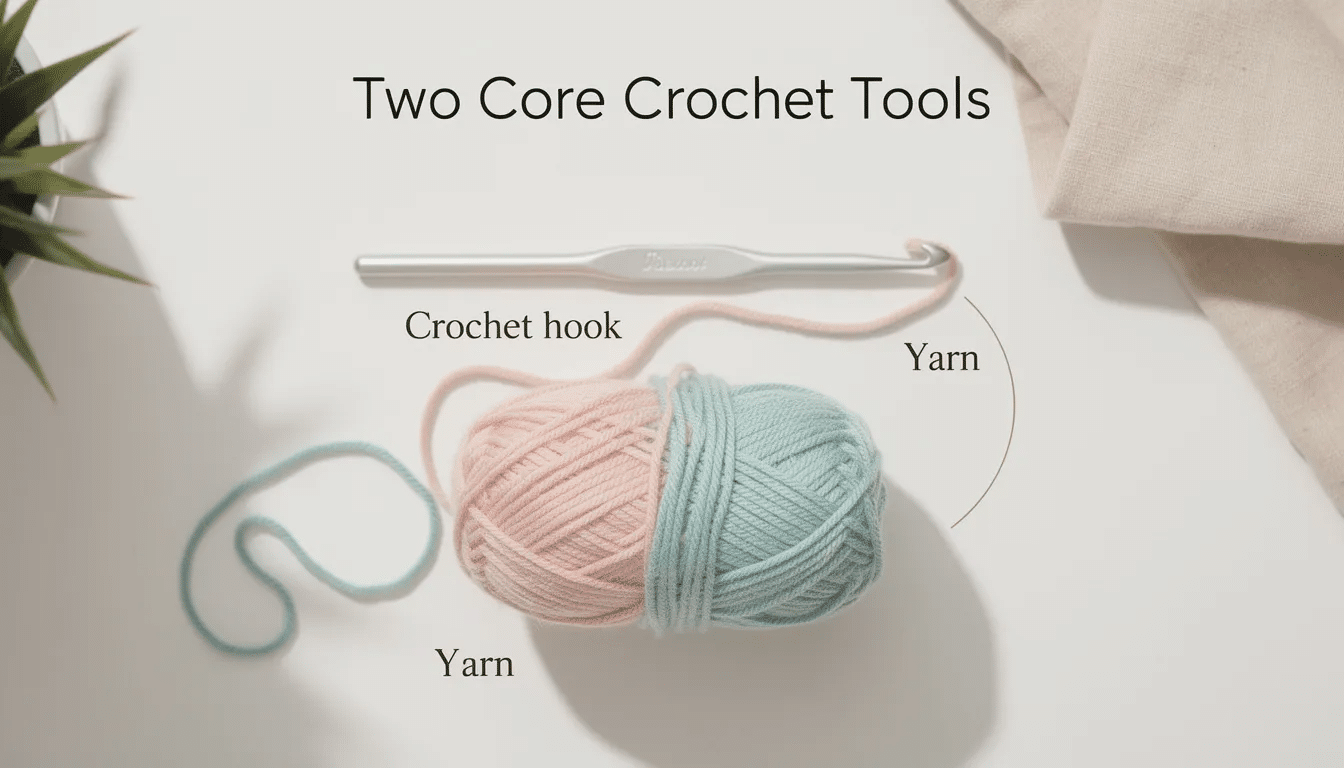
Anyone can start crocheting today with just two items: a hook and a ball of yarn. This minimal setup costs less than $15 in 2026, making crochet one of the most budget-friendly creative hobbies available. Unlike knitting needles that come in pairs or sewing machines that require electricity, crochet tools are wonderfully portable and simple.
The absolute minimum tools required:
- Crochet hook – the single implement that creates every stitch
- Yarn – your working material in any color or fiber you prefer
All other tools in this article build on these two essentials, improving your comfort, speed, and the polished finish of your projects. Think of additional crochet supplies as upgrades you add when they solve a real problem in your work, not requirements for getting started.
Crochet Hook
A crochet hook is a specialized tool featuring a curved end designed to grab yarn and pull it through existing loops to form stitches. The basic parts work together seamlessly: the handle provides grip, the shaft determines stitch size, and the hook catches the yarn.
For your first projects like scarves or basic squares, grab an aluminum or ergonomic hook in the 4.0mm to 5.0mm range (US sizes G-6 to H-8). This mid-size range works with common worsted weight yarns and creates stitches large enough to see clearly while learning.
Expect to pay around $2 to $8 per hook in 2026, with price variations based on materials and comfort features. A single mid-size hook is genuinely enough for your first few weeks of practice—resist the urge to buy a full set before you know if this hobby suits you.
Yarn
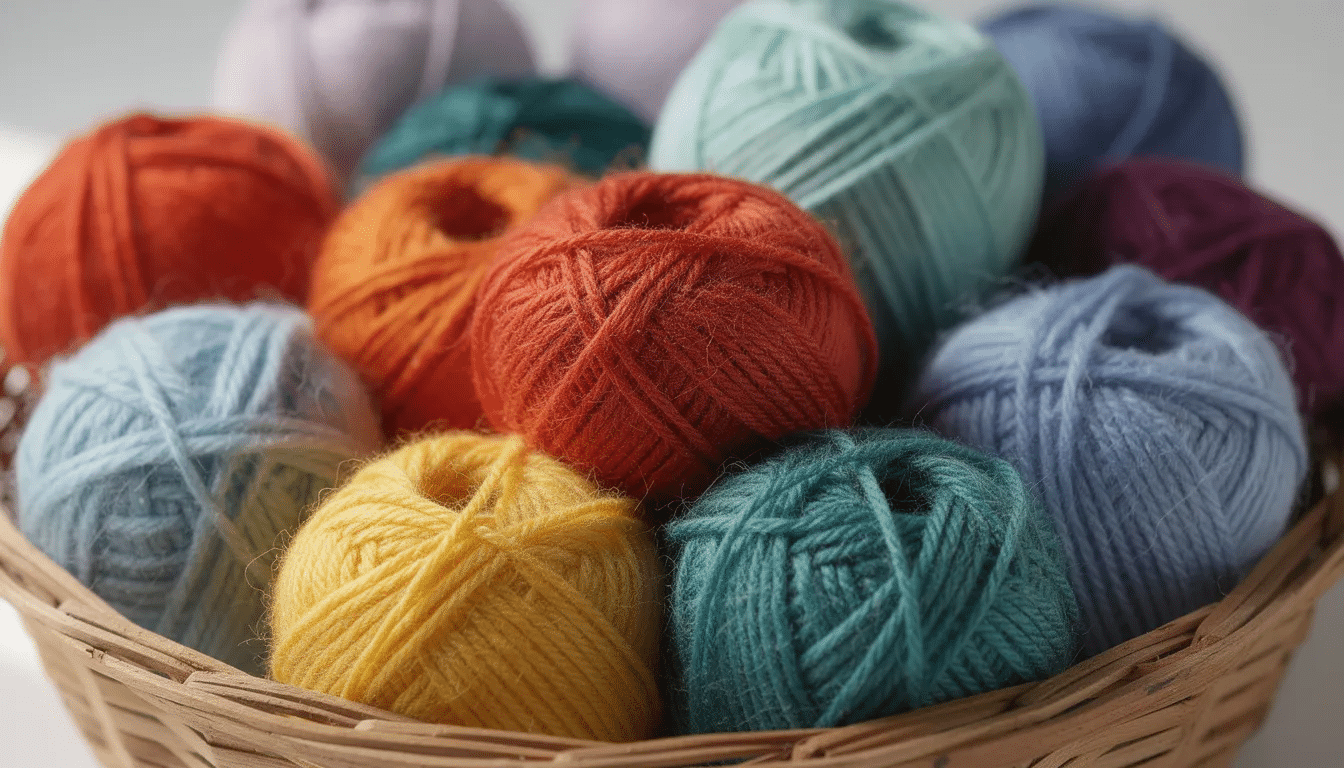
Yarn serves as the main working material in crochet, and understanding two key properties will guide your choices: thickness (called weight) and fiber content. These factors affect how your finished project looks, feels, and performs.
For clear stitch visibility while learning, start with:
- Light-colored, smooth yarn (avoid black or dark navy)
- Worsted or aran weight (category 4 on the yarn label)
- Acrylic or cotton fiber for easy care and affordability
One 100g skein is typically enough to practice basic stitches and complete a simple starter project like a dishcloth or small scarf. Resist the temptation to overbuy—two or three balls in coordinating colours provide plenty of material without creating an overwhelming stash before you’ve finished your first piece.
Essential Crocheting Tools and Equipment
Beyond your hook and yarn, a small collection of crochet tools forms the basic toolkit most crocheters rely on for every project. These essentials include items for working (hooks in various sizes) and items for finishing (needles, scissors, markers).
Each tool earns its place by solving a specific problem or making a common task easier. The following subsections describe each essential crochet tool with practical tips and beginner-friendly recommendations.
Range of Crochet Hooks
Hook sizes range from approximately 1.8mm to 10mm and beyond, with each size corresponding to different yarn weights and project types. The relationship is straightforward: thinner hooks create smaller, tighter stitches ideal for delicate work, while bulky hooks produce quick, textured fabrics.
Material | Best For | Notes |
|---|---|---|
Aluminum | Most projects, especially acrylics | Smooth yarn glide, affordable |
Plastic hooks | Budget practice, beginners | Lightweight, very inexpensive |
Bamboo/Wood | Wool and slippery yarns | Warm grip, prevents sliding |
Steel | Lace and thread crochet | Very small sizes (0.6mm–1.75mm) |
Ergonomic (soft-grip) | Extended sessions | Reduces wrist pain and fatigue |
Once your hobby “sticks,” consider buying an inexpensive hook set covering 2.5mm to 8mm rather than purchasing one hook at a time. The Clover Amour series consistently earns recommendations for its brushed aluminum tips and comfortable grip, while Susan Bates Bamboo Handle Hooks offer excellent value for beginners who prefer an inline-style shaft that minimizes split stitches. |
Scissors or Crafting Snips
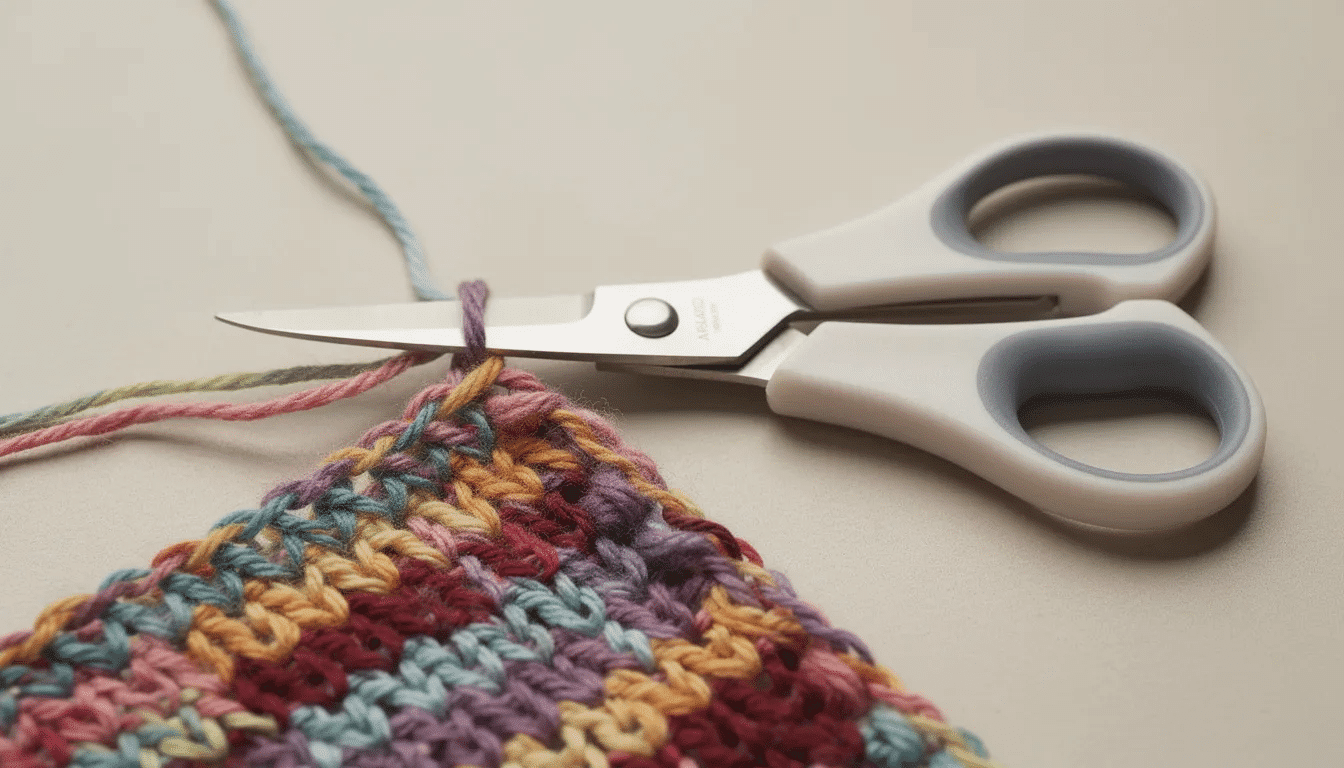
Dedicated small, sharp scissors outperform kitchen scissors for yarn work in every way. A fine tip allows trimming close to stitches without accidentally cutting your fabric, while a comfortable grip reduces hand strain during projects with frequent color changes.
Features to look for:
- Stainless steel blades for durability
- Compact size for project bags
- Fine pointed tips for precision cuts
- Comfortable finger holes
Many crocheters keep a pair of embroidery scissors or folding travel scissors in their project bag for portability. Budget Amazon embroidery sets under $10 consistently receive praise for quality and convenience.
Darning / Tapestry Needles
Darning or tapestry needles differ from standard sewing needles in two important ways: they have large eyes to accommodate thick yarn, and their tips are blunt to avoid splitting existing stitches.
Main uses for tapestry needles:
- Weaving in loose ends securely
- Joining seams on garments and blankets
- Closing amigurumi pieces after stuffing
- Repairing small gaps or mistakes
A small set of different sizes covers most needs—plastic needles work well for bulky yarn, while metal needles with varied eye sizes offer flexibility across project types. Multi-packs typically cost under $5 and prove indispensable for achieving professional-looking finished work.
Stitch Markers
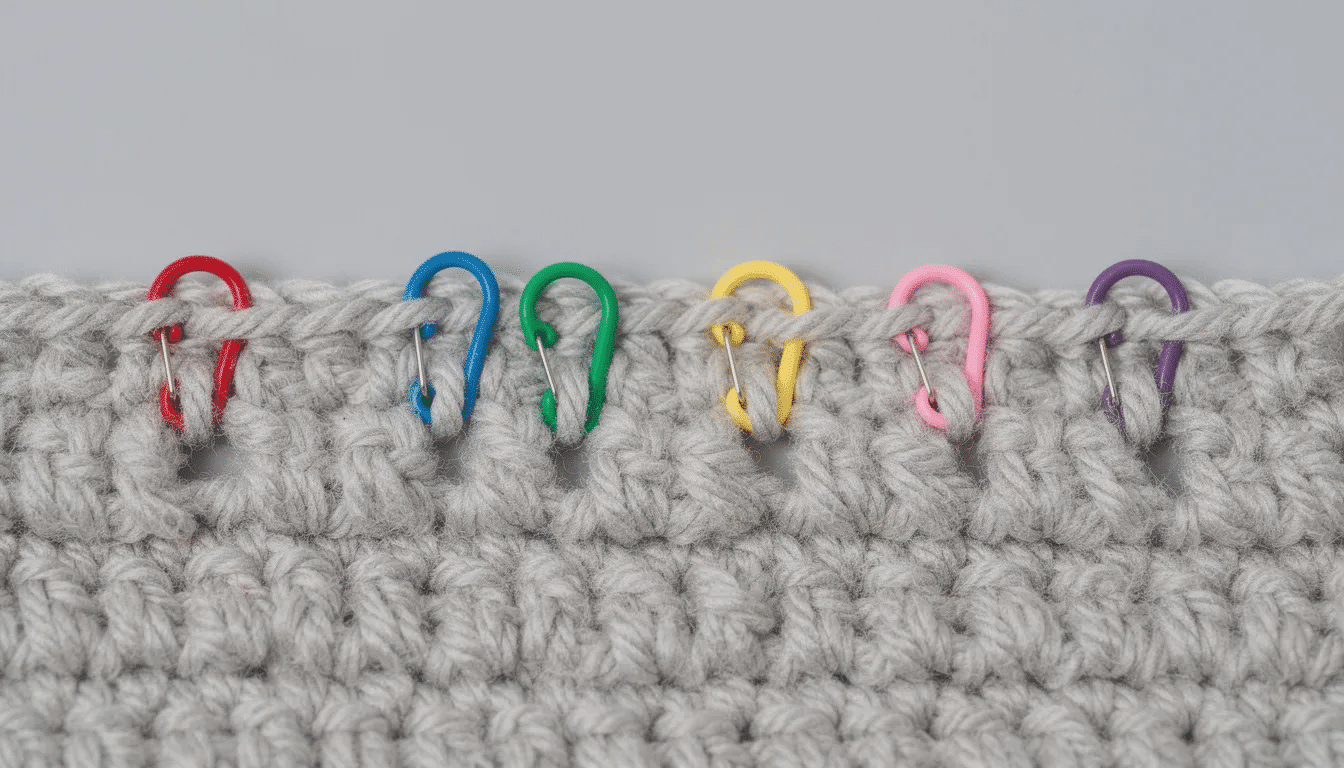
Stitch markers act as bookmarks in crochet, marking round starts, pattern repeats, increases, and decreases. Unlike closed knitting rings, crochet uses locking or open markers (similar to tiny safety pins) that can be attached and removed from stitches mid-row.
Start with a small pack of plastic locking markers in different colors for easy visual organization. Color-coding helps you distinguish between different types of markers—for example, red for round starts and blue for increase locations.
In a pinch, scrap yarn loops or bobby pins can substitute, but proper markers are more reliable and less prone to snagging your work. A pack of 50 costs just a few dollars and lasts for years.
Measuring Tape
A flexible tape measure is vital for checking gauge, verifying garment sizing, and measuring finished project dimensions. Gauge—the number of stitches and rows per 4-inch square—determines whether your sweater will fit or your blanket will reach the correct size.
Recommended specifications:
- Retractable design for portability
- Both metric (cm) and imperial (inches) scales
- At least 150cm / 60 inches in length
- Durable case that won’t crack in your project bag
Combo swatch rulers that double as needle gauges allow precise counting of stitches and rows in a standard 4-inch area, a practice experienced crafters consider essential for matching pattern specifications.
Yarn Types, Tools, and Accessories
Not all yarns behave the same way, and a few extra tools help manage them better. This section covers choosing the right yarn for different projects and using helpful equipment like winders, bowls, and storage solutions to keep your materials tidy.
You don’t need everything at once—consider these as upgrades to add as your projects grow in size and complexity.
Choosing Yarn Fibers and Weights
Understanding fiber types helps you match yarn to project requirements:
Fiber | Best Uses | Care Notes |
|---|---|---|
Acrylic | Blankets, budget projects, kids’ items | Machine washable, durable |
Cotton | Amigurumi, summer hats, dishcloths | Crisp stitches, less stretch |
Merino wool | Scarves, garments, accessories | Warm, elastic, needs gentle washing |
Blends | Versatile everyday projects | Combines fiber benefits |
Bamboo/Linen | Summer garments, lightweight items | Smooth drape, breathable |
Yarn weight categories range from lace (thinner) to jumbo (super bulky), with worsted and aran weights offering the most versatile starting point for beginners. When reading a pattern, check the yarn label for weight category and recommended hook size to achieve proper gauge. |
For early projects, avoid dark colors (hard to see stitches) and novelty yarns like eyelash or boucle (tricky to work with and difficult to fix mistakes).
Yarn Swifts and Ball Winders
A yarn swift and ball winder work together to transform hanks or skeins into neat, center-pull cakes that feed smoothly during crocheting. The swift holds the yarn loop expanded while the winder creates a stable cake that won’t roll away.
These tools prove especially useful for:
- Hand-dyed yarn from indie dyers
- Large purchases from local yarn shops
- Preventing knots and tangles in loose hanks
Most swifts and winders are made from wood or sturdy plastic. While not essential for beginners working with pre-wound skeins, they become significant time-savers for frequent crocheters tackling large projects.
Yarn Bowls and Yarn Holders
Yarn bowls are weighted containers with a cut-out or swirl slot that guides yarn smoothly while you work. They solve several common frustrations: balls rolling across the floor, curious pets attacking your yarn, and projects collecting dust and crumbs.
For colorwork or stripe patterns, using two bowls or holders manages multiple colors simultaneously and reduces tangling. The Wool Jeanie, a battery-free stand that secures skeins of varying sizes, has earned thousands of positive reviews for maintaining perfect tension without rolling or tugging.
Bowls come in ceramic, wood, and resin, often doubling as decorative pieces in your crafting space.
Project Bags and Storage Solutions
Project bags keep your work-in-progress, hook, pattern, and small tools together and portable. Good bags feature inner pockets for notions, yarn feeder holes to prevent tangling, and zippered sections for scissors and markers, just as organized art supplies for young artists benefit from dedicated storage to keep creative tools easy to find.
Budget-friendly alternatives include:
- Repurposed makeup pouches
- Clear pencil cases
- Zip-top bags for visibility
- Drawstring fabric bags
For long-term storage of finished amigurumi and garments, clear plastic boxes with tight lids protect items from dust and pests. Adding lavender sachets or cedar blocks deters moths from wool projects.
Finishing and Shaping Equipment
Finishing tools transform a pile of stitches into a polished piece with clean edges and stable shape. This section focuses on blocking, washing, and other final touches that make crochet projects look professional.
Blocking Mats and Pins
Blocking is the process of gently shaping and setting crochet pieces after completion. Wet or steam the item, pin it to the desired dimensions, and let it dry completely. This step evens out stitch tension and transforms amateur efforts into heirloom-quality items.
Standard equipment includes:
- Foam puzzle-style mats – interlocking squares with grid markings for accurate measurements
- Rust-proof T-pins – hold edges in place without leaving marks
- Blocking wires – create perfectly straight edges on shawls and blankets
Amigurumi typically doesn’t need blocking, but garments, doilies, and blankets benefit greatly from this finishing step.
Wool Wash and Fabric Care Products
Wool wash is a gentle, often no-rinse detergent designed for handwashing wool and delicate crochet items. It helps relax fibers during blocking and keeps projects smelling fresh without harsh chemicals that could damage natural materials.
Different fibers require different approaches:
- Superwash wool – machine washable on gentle cycle
- Regular wool – handwash only to prevent felting
- Cotton and acrylic – generally machine safe
- Delicate blends – follow the most restrictive fiber’s requirements
When gifting crochet items, include a care tag so recipients know how to wash and dry them properly.
Lint Rollers and Fabric Shavers
Finished crochet items, especially garments, can pill or collect lint with regular wear. Sticky lint rollers remove surface debris quickly, while battery-operated fabric shavers trim away pills to refresh the appearance.
These tools prove particularly useful for high-friction items like sweaters, mittens, and cushion covers. A quick maintenance session every few wears extends the life of your handmade projects significantly.
Specialized Tools for Amigurumi and 3D Projects
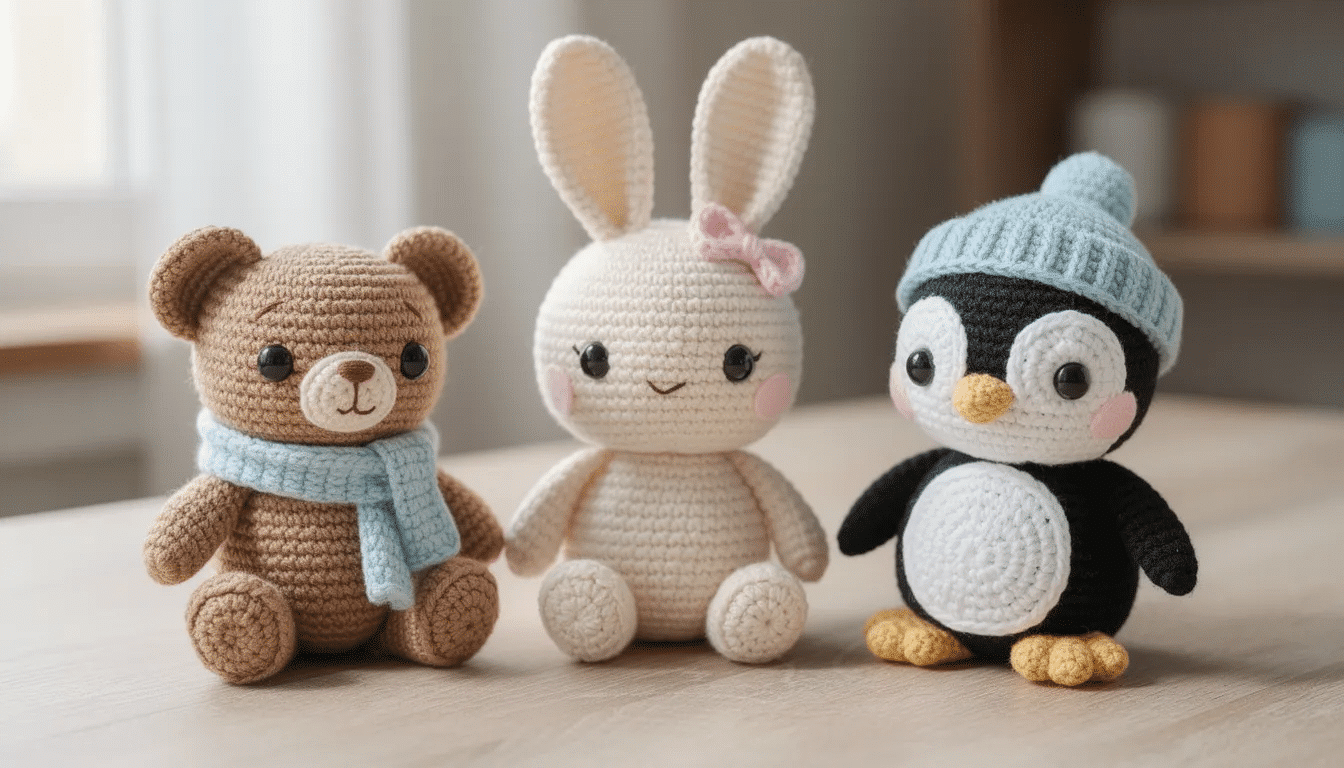
Amigurumi—crocheted stuffed toys and figures—gained global popularity in the 2000s and remains a major trend in 2026. These projects use standard crochet tools plus some specialized equipment for creating three-dimensional shapes.
Stuffing Materials
Common stuffing types include:
- Polyester fiberfill – lightweight, washable, most popular choice
- Cotton stuffing – heavier, natural feel
- Yarn scraps – budget-friendly, uses leftover materials
- Recycled fiber fill – eco-friendly option
The amount and distribution of stuffing affect firmness, shape, and durability. Small tools like chopsticks or the blunt end of a hook help push stuffing into narrow parts like arms and ears.
Safety Eyes and Noses
Safety eyes are plastic eyes with washers that lock on from the inside of the fabric, making them secure for toys. They come in various sizes—3mm to 8mm work well for most small figures—with size proportional to head dimensions.
Alternatives for baby-safe or pet-safe toys include:
- Embroidered eyes using yarn
- Felt appliqués glued or stitched in place
- Crocheted eye patches
Always test the washer lock firmly before closing up the toy’s head. If you can pull the eye out with moderate force, the washer needs repositioning.
Wire, Pipe Cleaners, and Armatures
Craft wire or pipe cleaners create poseable limbs, tails, and accessories in amigurumi. Examples include wired dragon wings that can be adjusted, bendable doll arms, and flower stems that maintain their curve.
Safety considerations are essential: always cover wire ends with tape or additional yarn wrapping so they cannot poke through the fabric. Wired pieces are best reserved for display items rather than toys for very young children.
Decorative Elements: Beads, Rhinestones, and Felt
Small embellishments add personality to amigurumi faces, clothing, and props:
- Rhinestones or charms for eyes, armor, or jewelry
- Tiny buttons on miniature cardigans
- Felt shapes for rosy cheeks, patches, or accessories
- Small beads for necklaces or decorative details
Secure all embellishments with strong fabric glue or careful stitching, especially for items that will be handled frequently. A great gift becomes even more special with thoughtful decorative touches.
Digital and Optional Crochet Accessories
Modern crocheters often combine physical tools with apps and optional gadgets to simplify counting and pattern management. These accessories are nice-to-have rather than mandatory—add them gradually as you identify specific needs in your workflow.
Row Counters and Tracking Apps
Row and round counters help track progress in lengthy projects, saving time and reducing mental load. Options include:
- Mechanical clickers – manual push-button counters
- Ring counters – wear on your finger while working
- Digital counters – battery-powered with reset buttons
- Smartphone apps – track rows, hook sizes, and notes (available free on iOS and Android)
For a no-tech alternative, simple paper tally marks or a bullet journal page work perfectly well.
Needle Threaders and Hook Aids
Needle threaders help pull thicker or fuzzy yarns through small needle eyes. While smooth, non-splitting yarns often don’t require one, textured yarns and small-eye needles definitely benefit from this simple tool.
Ergonomic hook grips and thumb rests serve as optional add-ons that improve comfort and reduce hand strain. If you experience wrist pain after extended sessions, these accessories become worth the investment.
Crochet Pattern Books and Journals
Printed pattern books cover themes like toys, garments, and blankets, with beginner-friendly collections widely available. Keeping a crochet journal or planner helps you track yarn used, hook sizes, modifications, and future project ideas.
Consider combining digital crochet patterns downloads with a physical notebook for swatch notes and sketches. This hybrid approach offers the convenience of searchable digital files with the tactile satisfaction of handwritten progress notes.
Lighting and Magnifiers
Good lighting prevents eye strain, especially when working with dark yarn or crocheting at night. Helpful options include:
- Adjustable LED desk lamps with daylight bulbs
- Clip-on lights that attach directly to your hook
- Wearable neck lights for portable projects
Magnifying lenses or reading glasses assist with seeing stitches clearly in lace or tiny amigurumi work. Investing in proper lighting protects your eyesight and makes crocheting more enjoyable.
Organizing and Caring for Your Crochet Toolkit
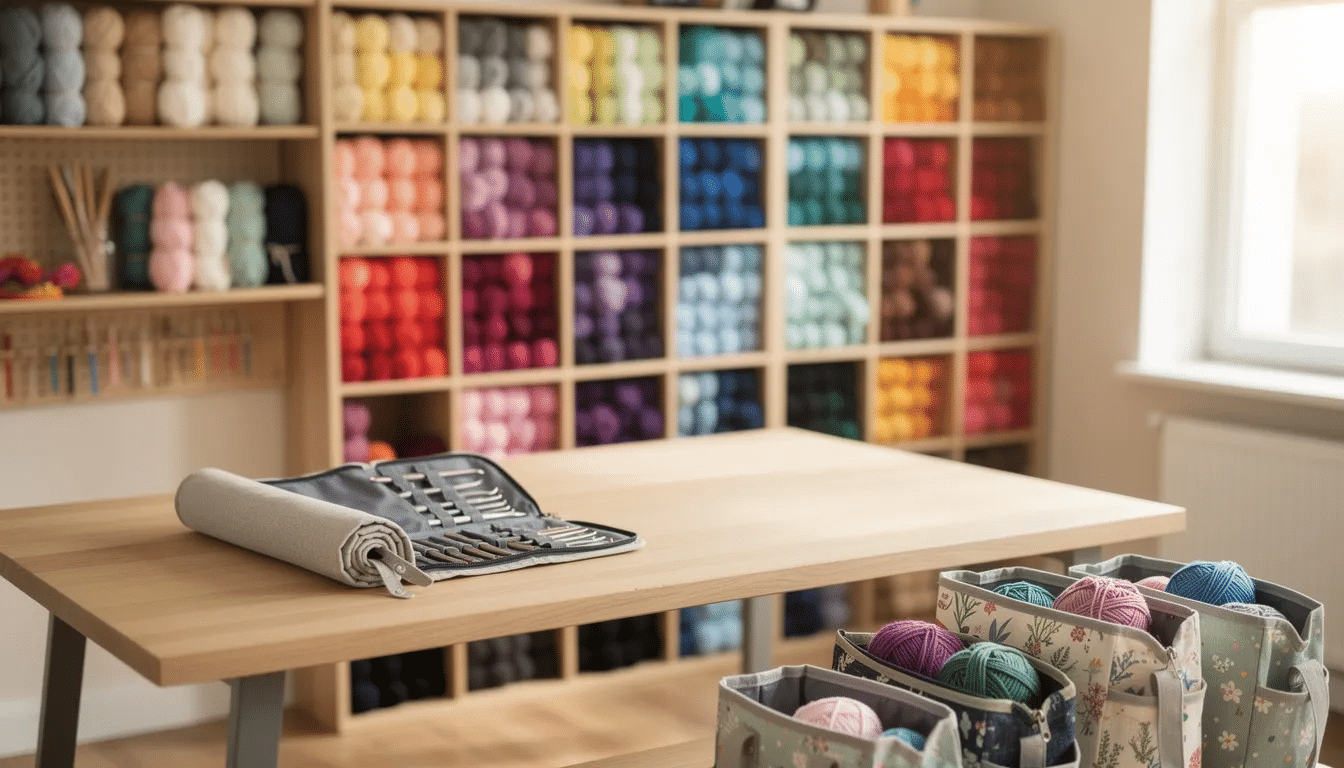
As your collection grows past the basics, organizing your crochet accessories and keeping them in good shape saves time and frustration. Simple systems for storing hooks, managing yarn, and transporting works-in-progress make a real difference.
Storing Hooks and Small Tools
Effective storage solutions for hooks and notions:
- Hook rolls – fabric or leather cases with individual slots
- Zippered pencil cases – affordable and portable
- Crocheted hook sleeves – make your own organizer as a project
- Small tins or divided boxes – perfect for stitch markers, needles, and safety eyes
Labeling containers or using clear cases helps you find tools at a glance. Wondering where that 4mm hook went becomes a thing of the past with proper organization.
Managing Yarn Stashes
Group yarn by weight, fiber, or color families to simplify pattern planning. Protection methods include:
- Clear plastic bins for visibility
- Vacuum bags for long-term storage
- Shelving units away from direct sunlight
- Cedar blocks or lavender to deter pests
Add notes or labels with yardage, brand, and fiber content for partial balls and leftovers. Periodic “stash reviews” inspire new projects from existing yarn rather than constant new purchases.
Storing Works in Progress
Keep each active project in its own container to prevent tangling and lost pieces. Include:
- A copy of the pattern (printed or on a tablet)
- The correct hook for that project
- Relevant small notions (markers, needles)
- A note about the last row or round completed
Avoid wooden boxes in humid environments—sealed plastic or zippered fabric bags protect better against moisture and pests. Good storage habits reduce the chance of abandoned unfinished objects.
Conclusion: Building Your Ideal Crochet Toolkit Over Time
Your crochet journey starts with just a hook and a ball of yarn, then naturally expands as you tackle more ambitious projects. The progression from minimal setup to a well-equipped toolkit happens organically—each new tool addresses a specific need you’ve discovered through experience.
Prioritize comfort and enjoyment when deciding which tools to add next. An ergonomic hook that reduces hand fatigue matters more than a fancy yarn bowl if you’re experiencing discomfort during long sessions. A good set of stitch markers becomes essential once you start crocheting in rounds.
No one needs every accessory at once. The best toolkit is built gradually around real projects rather than purchased all at once based on a shopping list. Your collection of crochet supplies will reflect your personal style, preferred project types, and practical requirements.
Choose one beginner project today—perhaps a simple scarf or a set of coasters—and gather only the tools required to start. Everything else can wait until you need it.
Frequently Asked Questions
What are the basic tools for crochet?
The absolute essentials are a crochet hook, yarn, scissors, a tapestry needle, and a measuring tape. For your first project, you can start with just a hook and yarn, adding other tools as needed.
Which hook size should I buy first?
A 5mm (US H-8) hook works well for most beginners because it pairs with common worsted weight yarn and creates stitches large enough to see clearly. This versatile size handles scarves, blankets, and basic accessories.
Do I need expensive tools to start crocheting?
Not at all. A basic aluminum hook costs $2-4, and a skein of acrylic yarn runs about $4-6. Your entire starter kit can cost under $15. Premium ergonomic hooks and specialty fibers are upgrades to consider once you know you enjoy the craft.
What’s the difference between crochet hooks and knitting needles?
Crochet hooks have a single hooked end for pulling yarn through loops, while knitting needles come in pairs and hold multiple live stitches. The techniques are fundamentally different, though both create fabric from yarn.
How do I know which yarn to use for a project?
Check the pattern for recommended yarn weight (usually category 1-7) and suggested hook size. The yarn label displays this information clearly. When in doubt, worsted weight (category 4) acrylic or cotton in a light color works for most beginner patterns.