Cute thank you cards help young children express gratitude in a way that feels fun rather than forced. Whether your little one is thanking friends after a birthday party or sending appreciation to grandparents for holiday gifts, the right card – with charming animals, bright colors, or playful designs – turns a simple gesture of kindness into a creative moment you can share together. Cute thank-you cards feel extra special when they reflect both the occasion and the recipient, and choosing cards that match your child’s interests makes the whole experience something they actually want to do.
Thank you notes are important for acknowledging kindness, and starting this habit early matters. Children begin grasping simple gratitude around age two, and by ages three to five they progressively understand that thankfulness is a response to intentional giving. Making or writing cards together moves beyond rote manners into authentic expression – building vocabulary, fine motor skills, and genuine empathy along the way.
Types of Cute Thank You Cards
Cute thank you cards come in a wonderful variety of styles, each suited to different ages, interests, and occasions. Here’s how the main types break down.
Animal-Themed Thank You Cards
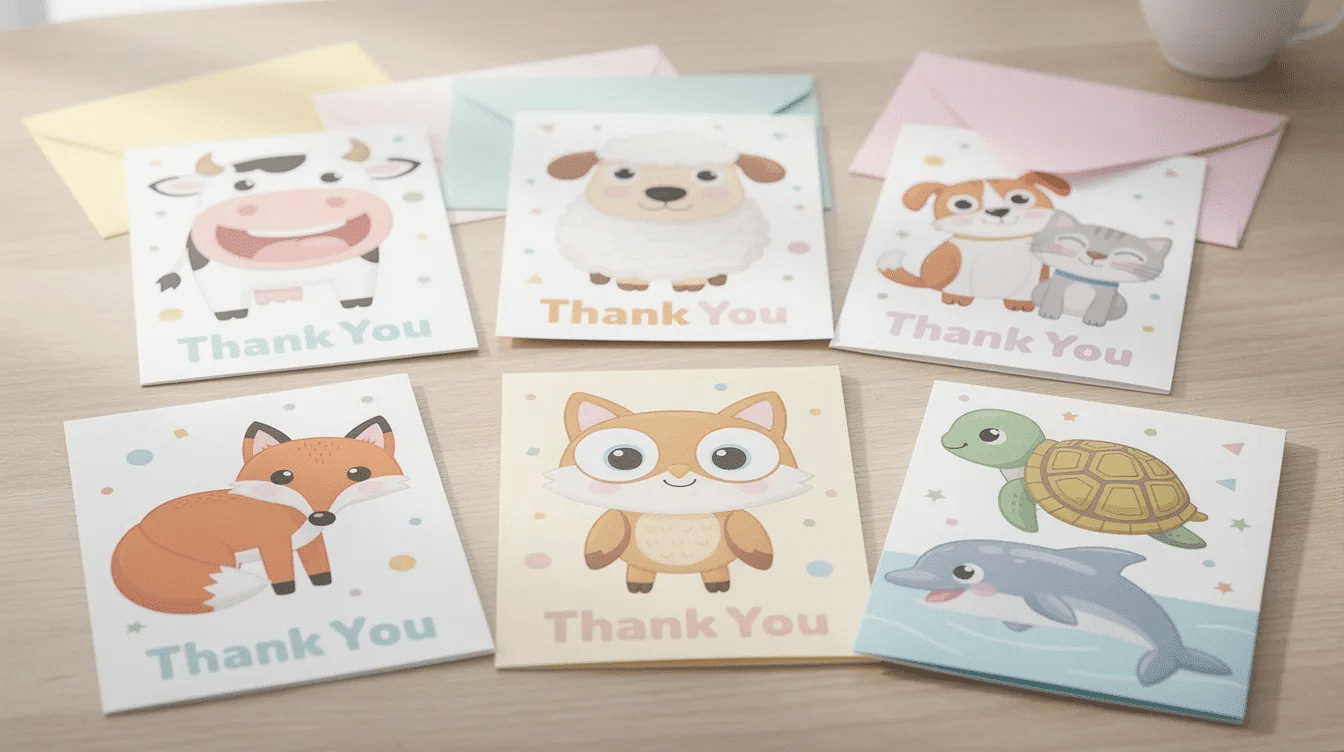
Animal-themed cards feature friendly illustrations of farm animals, woodland creatures, or sea life – exactly the kind of imagery toddlers and preschoolers love to name and play with. Popular themes for thank you cards include cute animals, and these designs work beautifully for younger children who aren’t yet reading but respond to big, cheerful faces and vivid colors. They’re perfect after a zoo-themed birthday or simply for a child who adores puppies and kittens.
Cartoon Character Thank You Cards
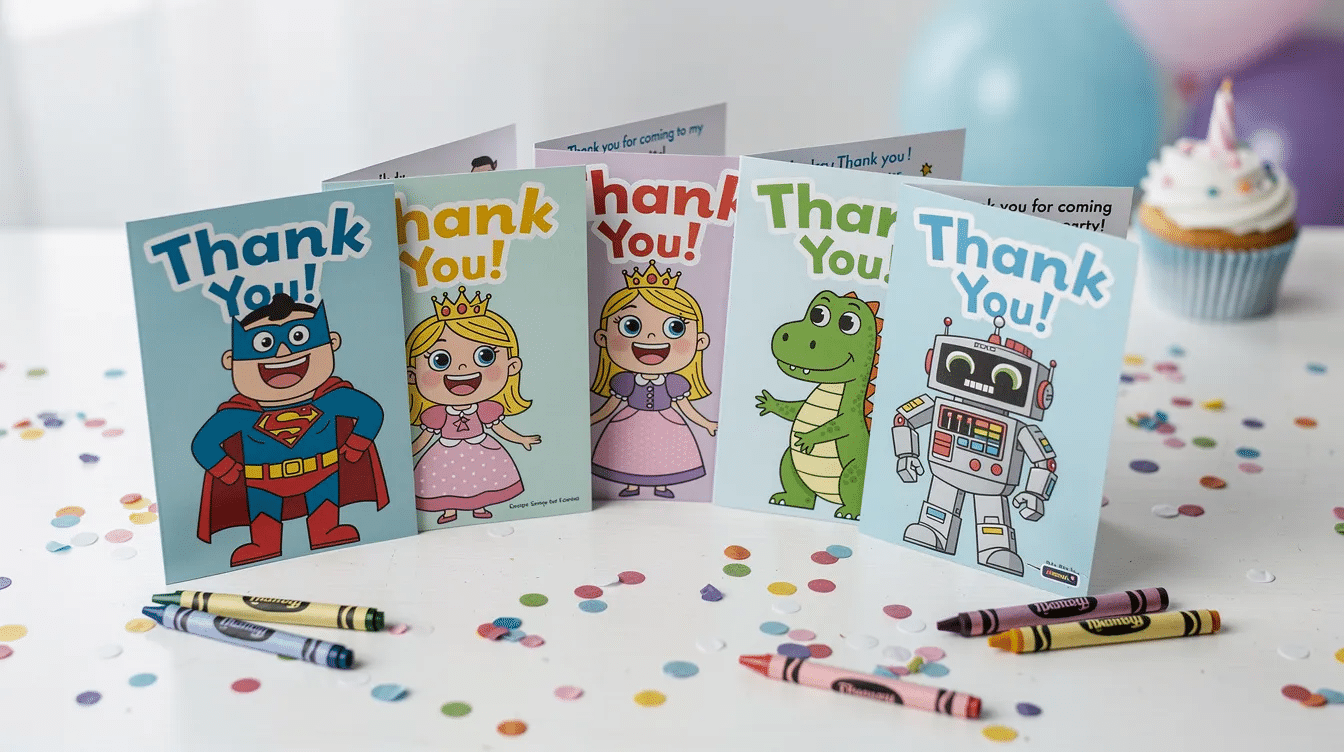
For kids who light up at their favorite animated characters, cartoon character cards add extra excitement. A thank you card featuring a beloved character becomes something the child is eager to sign and send. Licensed designs can cost a bit more, but the motivation they create – getting your child to sit down and actually write – is often worth it. These work well for a big event like a themed birthday party.
Handmade-Style Cute Cards
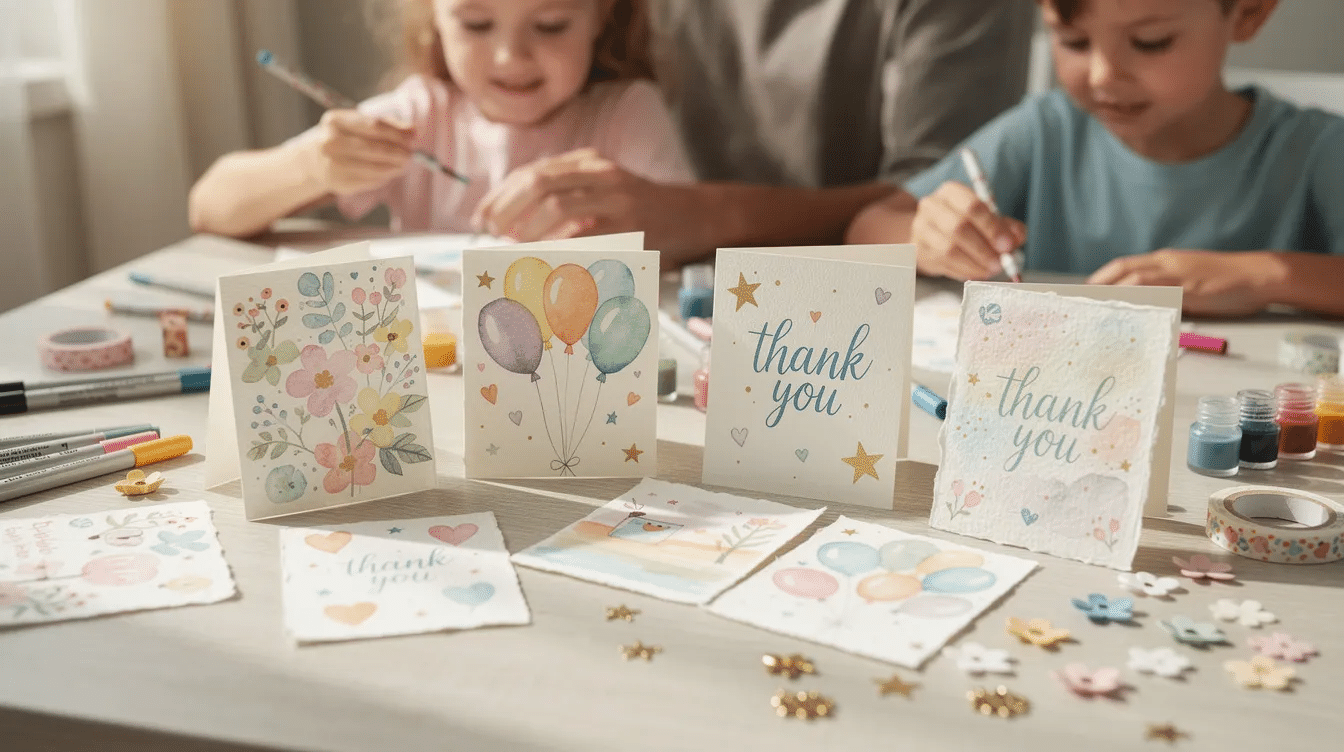
Handmade-style cards – whether truly DIY or boutique designs that mimic a crafted look with watercolors, hand-lettering, or textured paper – are perfect for families who love a personal, creative touch. Creative thank you cards can be simple, fun, and easy to make for any event. If you enjoy craft activities with your kids, making thank you cards together becomes both an art project and a gratitude lesson. Papyrus offers handmade thank-you cards in various styles for those who want the artisanal look without the crafting time.
Floral and Nature-Themed Cards
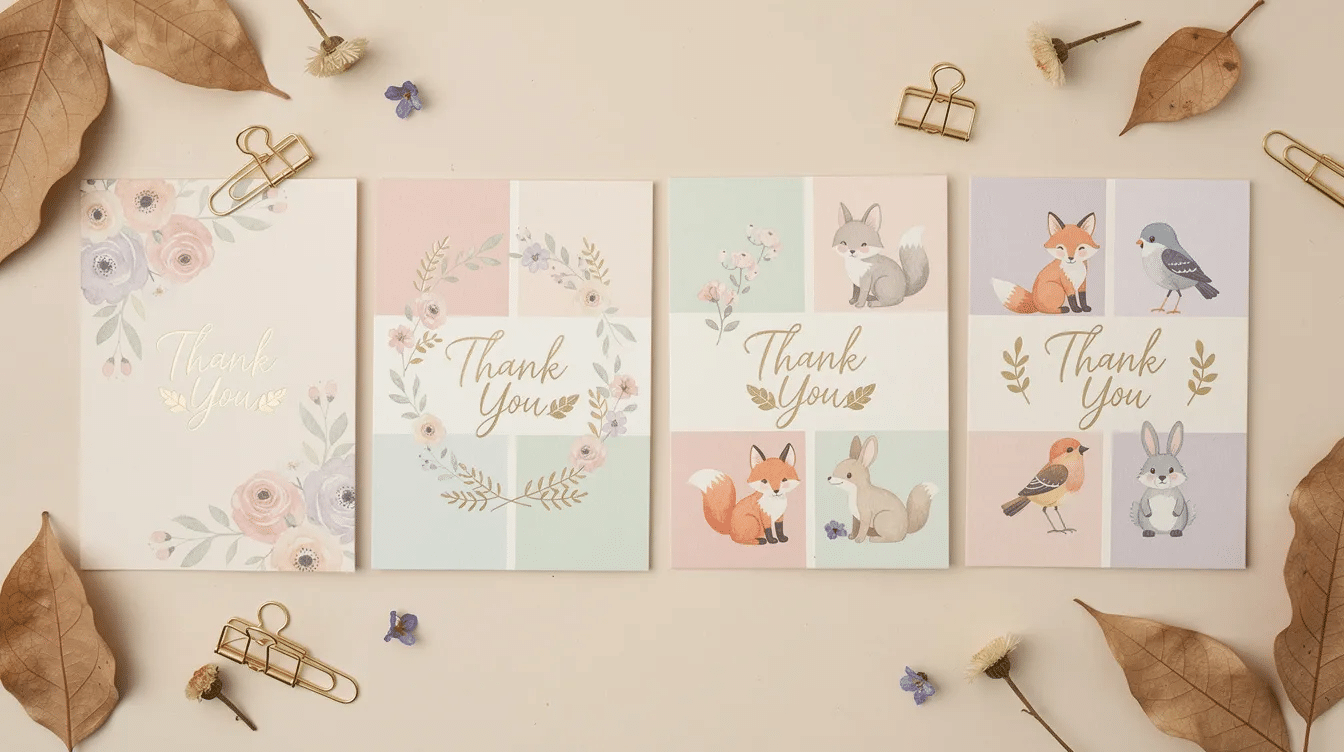
Soft florals, leaf motifs, and botanical patterns create gentle, beautiful sentiments that work across ages. Popular designs for cute thank you cards include floral and botanical, playful animals, and minimalist pastel patterns. A mix of cute animals, soft florals, minimalist typography, and pastel colors appeals to a broad audience. Thank you cards can feature floral designs and gold foiled text, and brands like Rifle Paper Co. provide thank you cards with foil stamping – ideal for a wedding, graduation, or more formal occasion. These also pair nicely with nature-inspired crafts when you want a cohesive theme.
What to Look For in Cute Thank You Cards
The best cute cards combine charming visuals with practical features that actually work for families. Combining charming visuals with timeless styles appeals to a broad audience – here are the key attributes to consider.
Age-Appropriate Design Elements
For toddlers (ages two to three), look for large, simple shapes, high contrast, and friendly animal faces with durable stickers. Preschoolers (four to five) enjoy more detail – fill-in-the-blank prompts, pop-ups, and interactive elements that make the card feel like play. School-age children (six and up) can handle more text and complex graphics. The design should engage without overwhelming: too much visual clutter makes it harder for young children to focus on their personal message.
Card Size and Durability
High-quality textured cardstock and rounded corners increase the appeal of cards – and their survival rate in small hands. Thicker paper (200+ gsm) resists tearing, wrinkling, and marker bleed-through. Standard sizes range from 4×5.5″ to 5×7″, and most card sets come with matching envelopes. Thank you card sets typically come in boxes of 8 or 10, making them practical for post-party thank yous. If you’re ordering in bulk for a larger celebration, lighter card weights keep costs down but sacrifice durability – something worth weighing against your child’s enthusiasm with glue and markers.
Space for Personal Messages
Adequate writing space is essential. Blank thank you cards give children room to draw, scribble, or write freely, while fill-in-the-blank styles (“Dear _, thank you for… I like it because…”) provide helpful scaffolding for younger kids still developing their fine motor skills. Handwritten notes add a personal touch to thank you cards, and even a toddler’s scribbled signature makes the card heartfelt. Look for spacious margins that leave room for both a message and a drawing – this encourages authentic expression rather than cramped, generic text.
How to Choose the Right Cute Thank You Cards
Selecting the right cards comes down to a few practical decisions:
- Child’s age and interests – A two-year-old needs big visuals and sticker features; a five-year-old can handle guided prompts. Match the design to what your child loves – favorite animals, colors, or characters – and they’ll be far more motivated to participate. Including personalized event photos makes cards feel much more special for older children who can help add them.
- Occasion type – A birthday party with twenty guests calls for affordable multi-design card sets (you can shop assorted packs of 20–50 cards for great value). A personalized thank you card for a special friend or family member deserves a more thoughtful, individual design. Postable provides personalized thank you cards for any occasion, and even offers to mail them for you – rated 4.7 out of 5 stars from 5,988 reviews. Rifle Paper Co. offers thank you cards for weddings and graduations if you need something for a more formal event.
- Learning goals – If your goal is handwriting practice, choose blank cards with plenty of space. If you want to help your child express specific gratitude, guided fill-in styles are ideal. A thank you message should express specific gratitude – and the right card format makes that easier to teach.
- Budget and quantity needed – Thank you card sets often come in boxes of 8 or 10, and prices typically range from $4–$12 depending on design quality. DIY cards using basic supplies like cardstock, stamps, and crayons are the most budget-friendly option – browse cute easy crafts for inspiration on making your own.
Frequently Asked Questions
What age should kids start writing thank you cards?
Children can start contributing to thank you cards as soon as they can hold a crayon – roughly age two. At this stage, they might add a drawing or a scribble while you write their dictated words. By ages three to five, children understand gratitude more meaningfully and can participate with fill-in prompts, stickers, and signing their name. By six or seven, many kids can write simple notes independently. The key is to start early and keep it enjoyable rather than treating it as homework.
How can I help my preschooler write thank you messages?
Short friendly phrases tend to have the widest appeal in thank you messages, so keep expectations realistic. Brainstorm together: ask your child what they liked about the gift or what they want to say to the recipient. Let them choose or decorate the card – this investment of creative energy makes the message feel genuine. Handwritten specific memories or gratitude enhance the personal touch of a card. For very young children, you write while they dictate, then they sign and add a drawing. Compliments or personal messages enhance the thank you note, so encourage your child to add a kind word about the giver. Ending a thank you card can include heartfelt phrases like “I love you” or “You’re the best” – let your child find their own words.
What makes thank you cards appealing to young children?
Cute imagery (animals, bright colors, favorite characters), interactive features (stickers, pop-ups, textured paper), and the chance to personalize the card through drawing or choosing designs all help. Simplicity matters – an easy-to-understand layout with minimal clutter lets children focus on what they want to express. Cards that feel like a creative DIY activity rather than a chore will always get a better response from little ones.
Making Thank You Cards Special for Little Ones
Cute thank you cards are more than stationery – they’re a reason to sit together, talk about kindness, and help your child find the words to express what a gift or gesture meant to them. Whether you shop for beautifully designed card sets or explore making your own with simple craft ideas, the time spent creating and sending these notes builds habits of gratitude and appreciation that last well beyond childhood. Start with designs your child finds irresistible, keep the process playful, and let their personality shine through every card they send.