

Recycling has become a household term, yet many people remain unclear about what it truly involves. Before you toss that aluminum can into the recycling bin, it helps to understand exactly what happens next and why definitions matter for effective waste management.
This guide breaks down the definition of recycling from multiple angles—practical, legal, environmental, and economic—so you can participate more effectively and understand why recycling programs work the way they do.
- Quick definition of recycling
- What is the definition of recycling in practice?
- Key elements of the recycling process
- Recycling within the 3Rs: reduce, reuse, recycle
- Environmental and health dimensions of recycling
- Recycling of consumer and industrial waste
- Economic and social perspectives on recycling
- Key takeaways
Quick definition of recycling
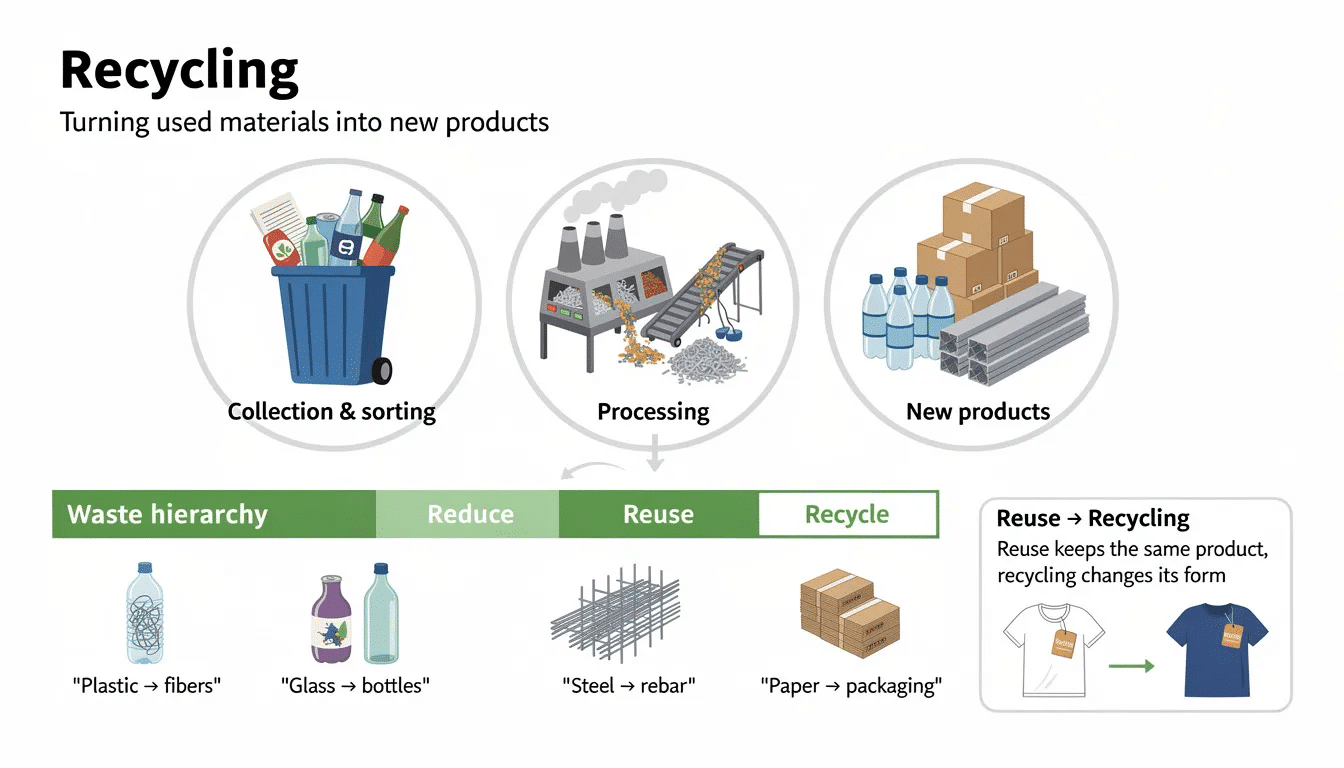
Recycling is the process of collecting, sorting, and processing used waste materials so they can be remanufactured into new products. Unlike simply throwing items in the trash, recycling transforms discarded materials like paper, glass, metals, and certain plastics into secondary raw materials that manufacturers can use instead of virgin resources.
The key distinction is that recycling changes the form or composition of the original product. For example, an aluminum can from your morning beverage gets melted down and turned into a new can, car part, or building material. A stack of old newspapers becomes pulp that manufacturers transform into cardboard or insulation. This process is fundamentally different from reuse, where an item keeps its original form.
Recycling sits within a broader waste hierarchy that prioritizes reducing consumption first, then reusing items, and finally recycling what remains. Many official policies—including those from the European Union and the U.S. Environmental Protection Agency—define recycling specifically as processes where materials undergo reprocessing into new materials. Simply donating a shirt to charity counts as reuse, not recycling, because the shirt remains a shirt.
Here are concrete examples of what qualifies as recycling:
- Plastic bottles shredded into flakes and extruded into synthetic fibers for clothing
- Glass bottles melted and reformed into new containers or fiberglass insulation
- Steel from demolished buildings reprocessed into rebar for construction projects
- Paper pulped and manufactured into packaging or tissue products
What is the definition of recycling in practice?
Textbook definitions become clearer when you follow an item from trash back into the economy. In practice, recycling functions as a material loop: products are discarded, collected, sorted, processed, and returned to factories as secondary raw materials that can replace virgin materials in production.
Consider a glass bottle placed in curbside collection in 2025. That bottle travels to a materials recovery facility, gets sorted by color, and ships to a glass furnace where workers melt it at over 1,500 degrees Celsius. The molten glass forms into a new food jar that appears on store shelves weeks later. Similarly, a steel beam from a demolished building in Chicago might be reprocessed into rebar that ends up in a new construction project across the country.
This material loop distinguishes recycling from energy recovery. Waste-to-energy incineration burns materials to generate heat or electricity—a legitimate waste management strategy, but one that destroys the material rather than returning it to manufacturing. The distinction matters because:
- Recycling preserves material value and reduces demand for extracting new resources
- Energy recovery captures some energy but creates ash and emissions without material preservation
- Landfilling loses both material and energy value entirely
Modern legal definitions reinforce this distinction. The EU Waste Framework Directive specifically requires that recycling outputs must be capable of replacing virgin materials in manufacturing. Collecting and processing materials that ultimately get landfilled or burned doesn’t count as recycling under most regulatory frameworks.
Key elements of the recycling process
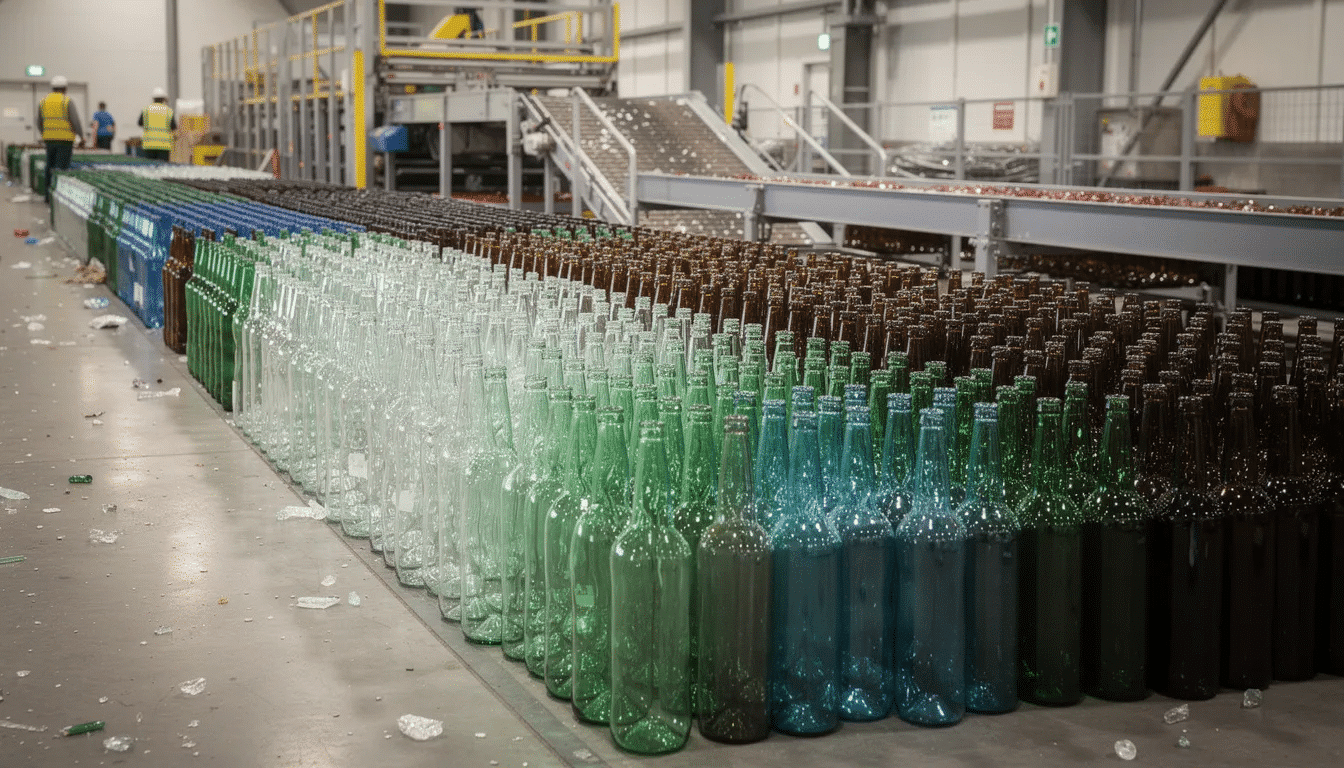
Most definitions of recycling share the same core steps, often symbolized by the three chasing arrows you see on recyclable materials. Understanding these steps helps explain why some materials get recycled successfully while others end up in landfills despite good intentions.
Collection
The recycling process begins when households and businesses place recyclables in designated containers. Collection methods vary significantly:
- Curbside collection: Residents place bins at the curb for regular pickup, the most convenient option for consumers
- Drop off centers: Community sites where people bring recyclables, common in rural areas
- Deposit-refund systems: Programs like bottle bills in Germany or Oregon where consumers receive money back for returning containers
Each collection method involves trade-offs between convenience, cost, and contamination rates. Deposit-refund systems typically yield the cleanest recyclable materials because consumers have financial incentive to return items properly.
Sorting and processing
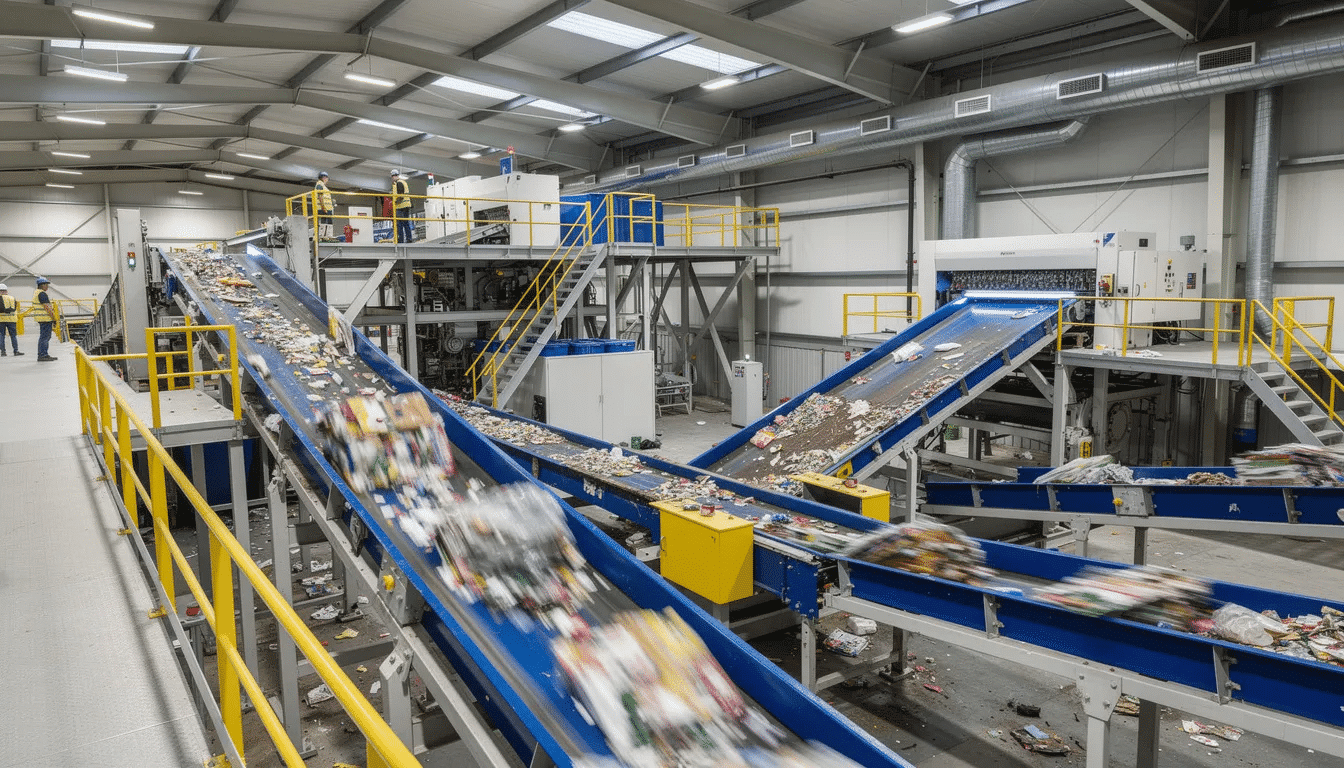
Once collected, recyclables travel to materials recovery facilities (MRFs) where equipment and workers separate different materials. Modern MRFs in cities like London or Los Angeles use sophisticated technology:
- Conveyor belts moving materials through the facility
- Magnets pulling out ferrous metals like steel cans
- Eddy current separators ejecting aluminum
- Optical sorters using infrared to identify different types of plastic
- Manual picking by workers to remove contamination and correct sorting errors
This sorting stage is critical. Mixed plastic creates problems because different plastic types require different processing. A single PVC bottle mixed with PET bottles can contaminate an entire batch, potentially sending the whole load to landfills instead of manufacturers.
Remanufacturing
Sorted materials undergo processing into forms manufacturers can use:
Material | Processing Method | End Products |
|---|---|---|
Plastic bottles | Shredded into flakes, melted into pellets | Textiles, new packaging, containers |
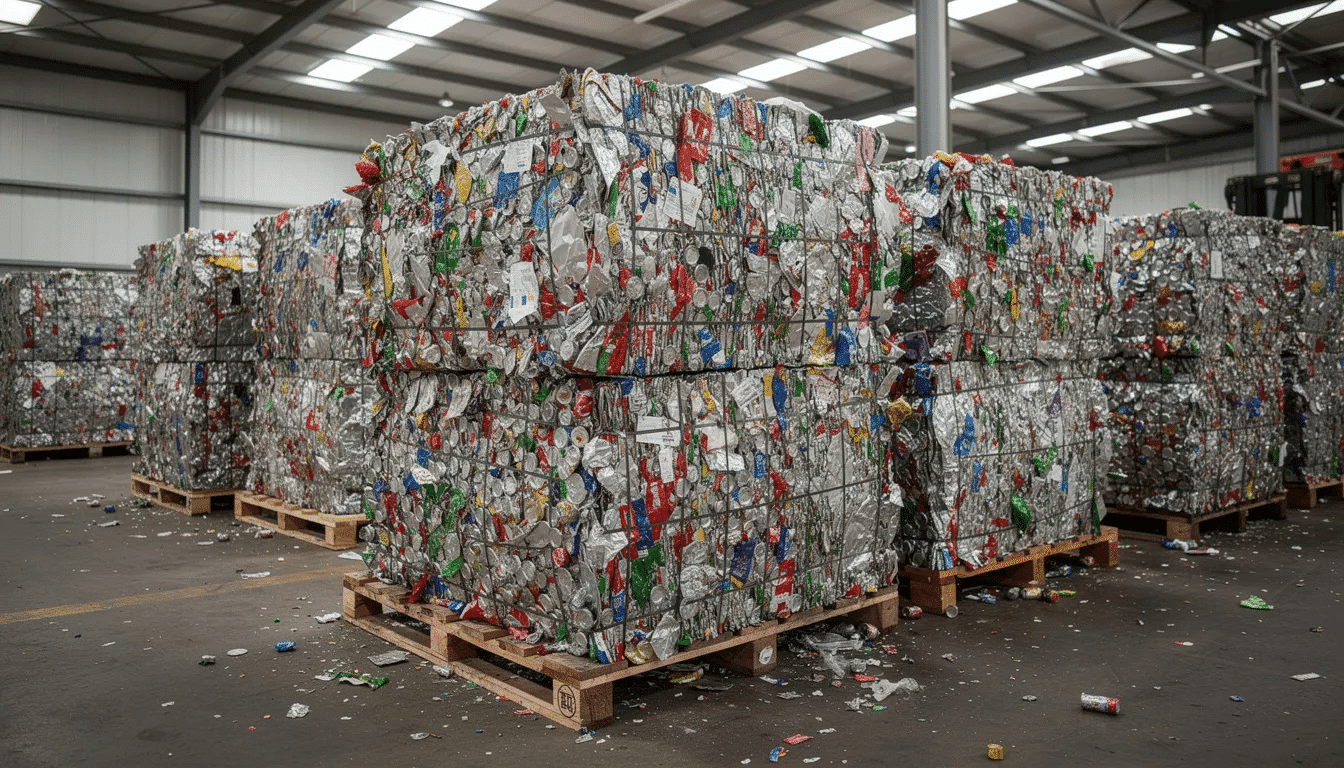
Aluminum cans | Melted into ingots | New cans, automotive parts, building materials |
Paper and cardboard | Pulped and reformed | Packaging, tissue, insulation |
Glass bottles | Melted and reformed | New containers, fiberglass, construction materials |
Steel cans | Melted and cast | Rebar, appliances, automotive parts |
The recycling process must be both technically and economically feasible to truly count as recycling. Materials that get collected but ultimately landfilled or burned due to contamination or lack of markets don’t fulfill the definition—they represent failed recycling attempts.
Recycling within the 3Rs: reduce, reuse, recycle
The 3Rs hierarchy—reduce, reuse, recycle—has guided waste management thinking since the 1970s and remains central to how agencies like the EPA frame sustainable consumption. Understanding this hierarchy explains why recycling, despite its importance, isn’t the first solution to reach for.
Reduce
Reduction prevents waste from being created in the first place. Practical examples include:
- Buying fewer single-use items like plastic bottles or disposable packaging
- Choosing products with minimal packaging
- Avoiding impulse purchases that become waste within months
- Selecting durable goods over disposable alternatives
Reduction delivers the greatest environmental benefit because it eliminates the energy and resources needed for both production and disposal.
Reuse
When you can’t reduce consumption, keeping items in use longer delays their entry into the waste stream. Reuse strategies include:
- Donating clothing to charity instead of discarding it
- Refilling containers at zero-waste shops
- Repairing electronics rather than replacing them
- Using glass jars for food storage instead of buying new containers
Reuse maintains items in their original form, requiring no energy-intensive reprocessing.
Recycle
When reduction and reuse are no longer options, recycling recovers value from materials that would otherwise become trash. Newspapers, aluminum cans, glass bottles, and clear plastics can be collected and reprocessed into new goods, extending their useful life through multiple production cycles.
Modern policies explicitly place recycling third in this hierarchy. The EU circular economy action plans and U.S. waste management frameworks recognize that recycling, while valuable, consumes more energy and resources than preventing waste or extending product life. This positioning doesn’t diminish recycling’s importance—it simply acknowledges that the most sustainable material is one that never needed to be recycled in the first place.
Environmental and health dimensions of recycling
The definition of recycling connects directly to measurable impacts on climate, ecosystems, and human health. When done properly, recycling delivers significant environmental benefits. When handled carelessly, it can create serious problems.
Benefits of proper recycling
Properly managed recycling reduces the need to extract virgin resources—timber, iron ore, bauxite, petroleum—which cuts the environmental damage from deforestation, mining, and drilling. Key benefits include:
- Energy savings: Recycling aluminum saves approximately 95% of the energy required for primary aluminum production
- Emission reductions: Lower energy use translates directly to reduced greenhouse gas emissions
- Resource conservation: Recycling diverts waste from landfills while reducing demand for extracting renewable resources and finite materials
- Pollution prevention: Manufacturing from recyclates typically generates less air and water pollution than virgin production
Risks of improper recycling
Not all recycling delivers environmental benefits. When recycling operations lack proper controls, they can cause serious harm:
- Informal e-waste recycling: Operations in places like Guiyu, China or Agbogbloshie, Ghana have released lead, mercury, and dioxins into local environments, harming workers and surrounding communities
- Contaminated recyclate: Materials mixed with food scraps or hazardous substances may require special handling and often end up landfilled anyway
- Long-distance transport: Shipping low-value recyclables across oceans can generate more emissions than the recycling process saves
The definition of responsible recycling must include proper environmental and health protections, not just material recovery.
Environmental impact of recycling in detail
The environmental definition of successful recycling ties to net benefits across the full life cycle of materials. Raw tonnage recycled tells only part of the story—what matters is whether recycling delivers genuine environmental improvements compared to alternatives.
Concrete data illustrates the potential:
- Recycling municipal solid waste in the U.S. avoided over 190 million metric tons of CO2-equivalent emissions in 2018
- Recycling one ton of plastic saves approximately 7,200 kWh of energy and 16.3 barrels of oil
- Global recycling conserves an estimated 700 million tons of raw materials annually
However, common misconceptions deserve clarification. While recycling paper reduces demand for certain tree plantations, global deforestation is driven primarily by agriculture—land clearing for crops and livestock—rather than paper production. Recycling paper helps, but it won’t solve deforestation.
Waste-to-energy facilities occupy a contested position. Some policymakers count energy recovery separately from recycling, recognizing that burning waste captures energy but destroys materials rather than preserving them for future use. Definitions of “good” recycling increasingly consider:
- Contamination rates in collected materials
- Transportation distances from collection to processing
- Energy consumed during sorting and reprocessing
- Whether recyclate actually replaces virgin materials in real products
Simply placing something in a blue bin doesn’t guarantee environmental benefit. The entire system must function effectively for recycling to deliver on its promise.
Government-mandated demand and legal definitions
Official definitions of recycling connect closely to laws that create demand for recycled materials. Without markets for recyclate, collected materials have nowhere to go—a problem that became acute after China’s 2018 import ban disrupted global recycling flows.
Governments address this challenge through policies that mandate recycled content:
- Minimum recycled-content requirements: The EU requires PET bottles to contain specified percentages of recycled plastic by 2025, pushing manufacturers to purchase recyclate
- Public procurement policies: Many U.S. states and European countries prioritize paper, asphalt, and packaging containing verified recycled content for government purchases
- Extended producer responsibility: Laws in the EU and Japan make manufacturers responsible for end-of-life management, incentivizing design for recyclability
Labeling schemes like “made with 50% recycled plastic” shape consumer understanding of what recycling means, though actual recyclate content varies widely. In regulatory contexts, materials must typically be transformed into usable secondary raw materials—plastic pellets, steel billets, paper pulp—to legally qualify as “recycled.” Collection alone doesn’t satisfy most legal definitions.
Quality of recyclate and why it matters
The definition of effective recycling increasingly emphasizes quality—how pure and usable the recovered material actually is. Not all recycling creates equal value.
High-quality recyclate consists mostly of the target material, free from contamination:
- Clean PET from bottles, separated from PVC, paper, and food residues
- Aluminum ingots pure enough for aerospace or automotive applications
- Paper fiber clean enough for new printing paper rather than just cardboard
Metals stand out as prime recycling candidates because steel and aluminum can be recycled repeatedly with minimal quality loss. An aluminum can recycled today contains atoms that may have been through dozens of previous products. This closed-loop potential makes metals highly valuable recyclates.
Contamination degrades value significantly:
Contaminant | Impact |
|---|---|
Food residue on containers | Causes odors, attracts pests, ruins paper |
Mixed non-recyclable plastics | Weakens recycled plastic, limits applications |
Broken ceramics in glass | Creates defects in new glass products |
Laundry detergent bottles mixed with food containers | Requires additional cleaning, adds cost |
When contamination renders materials unsuitable for like-for-like recycling, they get downcycled into lower-value applications—shower curtains instead of new bottles, for example—or landfilled entirely.
Modern facilities combat contamination through advanced technology:
- Optical sorting using hyperspectral imaging
- AI-powered robotics for precise picking
- Deposit-return schemes that keep materials cleaner from collection onward
These investments help ensure that “recycled” in practice means both technically recovered and suitable to replace primary resources in real manufacturing.
Recycling of consumer and industrial waste
The definition of recycling applies across very different waste streams, from household trash to massive industrial byproducts. Understanding both contexts reveals why recycling rates vary so dramatically across materials and sectors.
Consumer (municipal) recycling
Household recycling is what most people picture when they hear the word. Common systems include:
- Curbside programs: Bins collected weekly or biweekly, often with single-stream collection where all recyclables go in one container
- Drop off centers: Community sites for items not accepted curbside, including electronics or hazardous materials
- Deposit-refund systems: Financial incentives for returning bottles and cans
Each approach involves trade-offs:
System | Advantages | Disadvantages |
|---|---|---|
Curbside collection | Convenient, high participation | Higher contamination, sorting costs |
Drop off centers | Lower contamination | Requires consumer effort, lower volumes |
Deposit-refund | Cleanest materials, high return rates | Requires infrastructure, consumer trips |
Consumer recycling programs handle the most visible waste—plastic bottles, glass bottles, aluminum cans, cardboard, paper—but represent only a fraction of total waste generated.
Industrial recycling
Industry generates the majority of waste by volume, and industrial recycling often operates more efficiently than consumer programs because:
- Economic incentives align: Recovering scrap metal, cardboard, or manufacturing byproducts saves money directly
- Materials are cleaner: Factory offcuts and packaging waste typically contain fewer contaminants than household recyclables
- Scale enables efficiency: High volumes justify dedicated collection and processing equipment
Examples of industrial recycling include:
- Steel scrap comprising 60-70% of input at some steel mills, dramatically reducing ore mining needs
- Cardboard and pallets recovered from logistics operations
- Manufacturing byproducts like copper tubing trimmings remelted within the same facility
- Construction lumber salvaged from demolition for new use
Some critical materials remain challenging. Old refrigerators contain refrigerants requiring special handling. Battery metals and rare earth elements still have low recycling rates despite their value, raising concerns about long-term supply for technologies like electric vehicles.
Economic and social perspectives on recycling
Definitions of recycling are shaped by economic viability and social impacts, not just technical feasibility. A recycling process that works perfectly in engineering terms may fail if it costs more than alternatives or harms the people involved.
Economic dimensions
Recycling and reuse industries create measurable economic value:
- The U.S. recycling economy generates approximately $65 billion annually
- The sector employs over 757,000 workers across collection, processing, and manufacturing
- Each thousand tons of material recycled creates more jobs than the same tonnage landfilled
However, economics don’t always favor recycling:
- When virgin material prices drop (often following oil price declines), recyclate becomes less competitive
- Contamination increases sorting costs, sometimes making recycling more expensive than landfilling
- Long transportation distances add cost, particularly after major recyclate importers like China restricted incoming materials
Municipalities face different calculations based on local conditions. Cities with high landfill tipping fees or long distances to disposal sites often save money by recycling. Others struggle when recyclate markets crash, leaving them paying to store or dispose of collected materials.
Social dimensions
Recycling involves people at every stage, and social considerations shape how systems function:
Formal sector workers at materials recovery facilities sort, maintain equipment, and manage operations. These jobs require training and offer stable employment, though workplace safety remains a concern given the varied materials passing through facilities.
Informal waste pickers in cities across Asia, Africa, and Latin America recover enormous quantities of recyclable materials—often more than formal systems. These workers:
- Provide essential recycling services where infrastructure is limited
- Face health and safety hazards from exposure to hazardous substances and working conditions
- Often lack legal protections, healthcare, or stable income
Economic analyses that focus only on direct costs frequently miss environmental and health externalities. A recycling system might appear “inefficient” while actually preventing significant pollution and providing livelihoods—benefits that don’t show up in simple cost accounting.
These economic and social factors help explain why some communities enthusiastically support recycling programs while others resist them. Policy can shift incentives through:
- Landfill taxes that make disposal more expensive
- Recycled content mandates that create guaranteed markets
- Extended producer responsibility requiring manufacturers to fund end-of-life management
- Formalization programs that bring informal workers into safer, regulated systems
Criticisms, limitations, and net benefits
While recycling is widely promoted, its definition and effectiveness face legitimate debate. Acknowledging limitations helps distinguish genuine recycling from wishful thinking.
Common criticisms include:
- Low actual recycling rates for some materials—only about 9% of plastic waste has ever been recycled globally
- Contamination rates that send collected materials to landfills
- Energy consumed collecting and transporting recyclables sometimes exceeding savings
- “Wishcycling”—placing non-recyclable items in bins hoping they’ll somehow be recycled
Life-cycle assessments typically show net benefits for:
- Aluminum: 95% energy savings compared to virgin production
- Steel: 58% lower greenhouse gas emissions
- Paper: Significant energy savings, though fiber shortening limits cycles to 5-7 repetitions
- Glass: Energy savings, though color contamination creates challenges
Thermodynamic limits constrain what’s possible. Not all materials can be recovered indefinitely. Dispersion (materials spread too thin to collect economically), contamination, and degradation during use and processing mean some losses are inevitable.
The balanced conclusion: recycling alone cannot solve resource depletion or waste problems. It remains a critical tool when combined with reduction, reuse, and better product design—but expecting recycling to handle everything we discard sets it up for failure.
Public participation and behavior
Even the best technical definition of recycling fails without active participation from households, businesses, and institutions. The final link in any recycling system is individual behavior.
Research on effective participation shows:
- Personal contact and local education (neighbors, community groups, schools) work better than distant advertising campaigns
- Clear, specific instructions about what’s accepted reduce contamination more than general encouragement
- Feedback on contamination rates helps communities improve over time
- Convenient collection increases participation dramatically
Recycling behavior is private and long-term, requiring sustained attention to:
- Learning local rules about what goes where
- Rinsing containers to prevent contamination
- Keeping separate paper, glass, and other materials when required
- Resisting the temptation to “wishcycle” items that don’t belong
Examples of effective engagement include:
- School recycling clubs teaching children who influence family behavior
- Community events like America Recycles Day each November
- Neighborhood-level feedback showing how local recycling rates compare
- Clear labeling on bins showing exactly which containers, cans, and other waste belong
Practical tips for effective participation:
- Learn your local rules: What’s accepted varies significantly between communities
- When in doubt, leave it out: Contamination causes more harm than a single item not recycled
- Rinse food containers: Residue contaminates entire batches
- Keep materials dry: Wet paper and cardboard become unrecyclable
- Check for local special collection: Many areas collect items like batteries and electronics separately
Understanding the definition of recycling is only the first step. The real impact comes from consistently applying that understanding in daily choices—reducing what you buy, reusing what you can, and recycling correctly when those options are exhausted.
Key takeaways
- Recycling transforms materials: It’s the process of collecting, sorting, and reprocessing waste materials into new products or raw materials for manufacturing
- Definitions exclude simple reuse: Policies typically require materials to undergo processing into new forms, not just collection or donation
- Quality matters: High-quality recyclate that can replace virgin materials delivers real benefits; contaminated materials often end up in landfills
- Context shapes feasibility: Economic conditions, local infrastructure, and market demand determine whether collected materials actually get recycled
- Participation is essential: Technical systems succeed only when households and businesses sort correctly and avoid contamination
Start by learning what your local recycling programs accept. Check whether your community requires separate collection of different materials or uses single-stream bins. When you understand both what recycling means and how your local system works, you can participate effectively and help ensure that materials actually complete the loop back to new products.