

The term “ecology friendly” gets tossed around a lot these days, but what does it actually mean to protect the ecosystems that keep our planet functioning? From the forests that regulate our climate to the wetlands that filter our water, every choice we make either supports or undermines these critical systems.
This guide breaks down the practical steps you can take at home, at work, during travel, and through your financial decisions to reduce your ecological impact. Whether you’re just starting out or looking to deepen your commitment, you’ll find concrete actions backed by real data.
- What Does “Ecology Friendly” Actually Mean?
- Ecology Friendly vs. Eco Friendly, Green, and Sustainable
- Global Standards, Labels, and the Problem of Greenwashing
- Ecology Friendly Energy and Pollution in Asia
- Global Ecology Friendly Programs and Initiatives
- Ecology Friendly Living at Home
- Ecology Friendly Travel and Tourism
- Ecology Friendly Choices at Work and School
- Financing an Ecology Friendly Future
- Conclusion: Making Ecology Friendly the Everyday Default
What Does “Ecology Friendly” Actually Mean?

Being ecology friendly goes beyond simply being “less bad” for the planet. It describes choices, products, and practices that actively protect ecosystems, biodiversity, soil, air, and water quality. When something is truly ecology friendly, it works with natural systems rather than against them.
The term ecology friendly is closely related to eco friendly and environmentally friendly, but it carries a specific emphasis: living within Earth’s ecological limits and respecting planetary boundaries. This means recognizing that our oceans, forests, and wetlands have finite capacities to absorb pollution, regenerate resources, and support life.
Truly ecology friendly products and lifestyles consider the whole life cycle of everything we use. This includes raw materials extraction, manufacturing, transport, daily use, and eventual disposal. A product made from recycled materials but shipped halfway around the world on heavy fuel oil might not be as ecology friendly as it first appears.
If any major part of a product’s lifecycle seriously harms ecosystems—through toxic mining, deforestation, unrecyclable waste, or harmful chemicals—it cannot honestly be described as fully ecology friendly. The bar is high, and that’s the point.
This article will help you address the key ecological crises of our time through concrete actions:
- Climate change: Reducing greenhouse gas emissions from energy, transport, and food
- Plastic pollution: Eliminating single-use plastics and choosing biodegradable materials
- Biodiversity loss: Supporting practices that protect habitats and species
- Freshwater scarcity: Conserving water and preventing water pollution
- Air pollution: Cutting emissions that harm human health and natural environment
Ecology Friendly vs. Eco Friendly, Green, and Sustainable
These terms appear everywhere—on product packaging, in corporate reports, and throughout media coverage of environmental issues. While they’re often used interchangeably, understanding the differences helps you make smarter choices and spot misleading claims.
Eco friendly serves as a general umbrella term for lower-impact products and behaviours. You’ll find it commonly used on packaging and in advertising to signal that a product causes less environmental harm than conventional alternatives. It’s a useful starting point but can be vague without supporting evidence.
Ecology friendly carries a more specific focus on protecting living systems: forests, oceans, wetlands, pollinators, coral reefs, and local habitats. Rather than just reducing carbon emissions, an ecology friendly approach considers impacts on biodiversity, soil health, and ecosystem resilience. It’s the same idea as eco friendly, but with sharper ecological criteria.
Green is an informal, often vague descriptor that can mean anything from energy efficient to organic to simply “better than before.” The risk with “green” claims is empty usage without evidence. A product labelled green might be marginally improved in one area while causing significant harm in others.
Sustainable has a more formal definition, rooted in meeting present needs without compromising future generations’ abilities to meet theirs. This concept connects to frameworks like the circular economy and the United Nations Sustainable Development Goals (SDGs). Sustainability typically encompasses social and economic dimensions alongside environmental ones.
Term | Typical Use | Main Focus | Common Misuse |
|---|---|---|---|
Eco friendly | Product labels, marketing | Lower overall environmental impact | Vague claims without lifecycle data |
Ecology friendly | Conservation, biodiversity contexts | Protecting living systems and habitats | Rarely misused (less common in marketing) |
Green | Informal marketing, media | Varies widely | Applied without any specific criteria |
Sustainable | Corporate reports, policy | Long-term balance across environment, society, economy | Overused for minor improvements |
For the rest of this article, we’ll use “ecology friendly” in its stricter sense: choices that protect ecosystems and their long-term health, verified through transparent evidence about production processes and environmental impacts.
Global Standards, Labels, and the Problem of Greenwashing
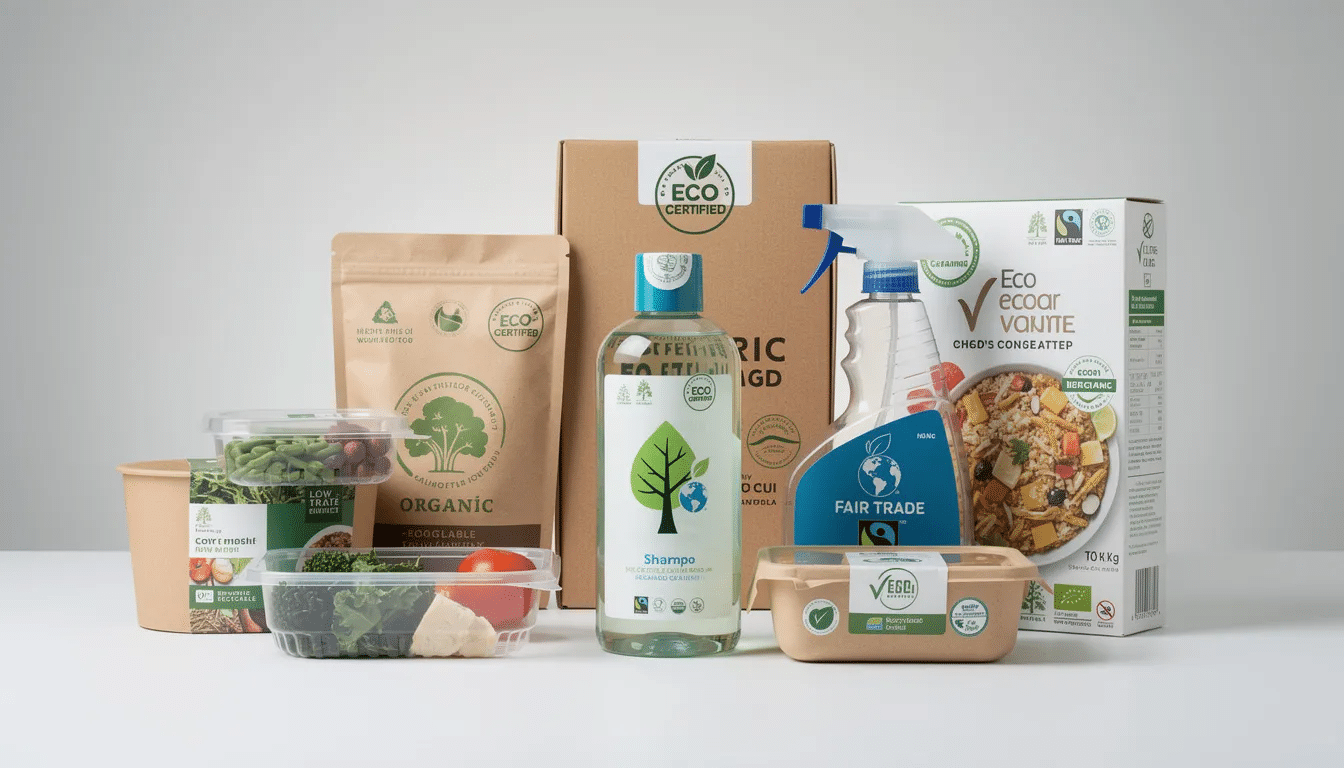
Official standards and eco-labels exist for a reason: they help distinguish genuinely ecology friendly products from marketing claims. Without third-party verification, any company can slap a leaf logo on their packaging and call it a day.
International labelling standards provide the foundation for credible environmental claims. ISO 14020 and ISO 14024 are key international standards for environmental labelling and declarations. They require transparency, credible scientific methods, and independent verification. Products meeting these standards have undergone rigorous assessment rather than self-declared claims.
Established eco-labels worth knowing include several that have operated for decades with consistent criteria:
- EU Ecolabel (launched 1992): Covers thousands of products across the European Union
- Germany’s Blue Angel (since 1978): One of the world’s oldest environmental labels
- Nordic Swan (since 1989): Covers products sold in Scandinavian countries
- EMAS (EU Eco-Management and Audit Scheme): Focuses on organizational environmental management
These labels typically evaluate resource use, energy consumption, toxicity to humans and ecosystems, recyclability, and impacts on aquatic and terrestrial environments. They require regular audits and updates.
Greenwashing describes the practice of exaggerating or faking environmental benefits to sell more products. Common tactics include meaningless slogans (“planet safe,” “eco choice”), generic leaf or globe logos without certification, or vague claims like “natural” without defined criteria.
Modern greenwashing examples reveal how sophisticated these tactics have become. Single-use plastic bottles get marketed as “eco” for being 10% lighter. Fast fashion collections carry “conscious” labels without supply chain transparency or evidence of reduced environmental harm. Airlines sell “carbon neutral” tickets via offset schemes that lack independent verification or may not actually reduce emissions.
Quick checks to spot reliable ecology friendly claims:
- Look for credible third-party labels (EU Ecolabel, Blue Angel, Energy Star)
- Check whether lifecycle data is publicly accessible
- Look for clear material breakdowns showing what the product contains
- Search for published environmental reports with specific numbers and dates
- Be sceptical of claims that seem too good or too vague
- Verify that offset schemes (if mentioned) use recognized standards
Ecology Friendly Energy and Pollution in Asia
Asia stands as the fastest-growing region for energy demand since the 1990s. The continent now accounts for a substantial share of global carbon emissions, yet it’s simultaneously emerging as a leader in renewable energy deployment. This dual reality shapes both the challenges and opportunities for ecology friendly progress.
Air pollution in major Asian cities remains a critical public health and ecological issue. Beijing and Delhi regularly experience hazardous air quality days with PM2.5 levels exceeding AQI 300 during winter months. Seoul deals with industrial haze blown from neighbouring regions. Bangkok faces persistent smog from traffic and construction. Karachi experiences dangerous heatwaves amplified by urban pollution trapping heat.
The region is shifting from coal and heavy fuel oil toward cleaner energy options. China has become the world’s largest installer of solar PV and wind capacity. India is rapidly expanding rooftop solar, particularly in states like Gujarat. Vietnam has seen explosive growth in solar installations. South Korea is investing heavily in offshore wind development in the Yellow Sea.
China launched its national emissions trading system in 2021, initially covering the power sector. Other Asian nations are exploring carbon pricing mechanisms, environmental taxes, and stricter pollution controls. These policy shifts create frameworks for ecology friendly business practices to become economically advantageous.
Interestingly, in several Asian cultures, blue rather than green serves as the primary colour for clean air and water campaigns. This reflects different cultural associations with environmental health and creates distinct visual identities for ecology friendly movements across the region.
Regional ecology friendly initiatives gaining momentum:
- Large-scale rooftop solar programs in Indian states
- South Korea’s offshore wind investments in the Yellow Sea
- Indonesia’s efforts to reduce plastic leakage into marine ecosystems
- Japan’s hydrogen fuel development for transport and industry
- China’s massive reforestation and afforestation programs
Global Ecology Friendly Programs and Initiatives
International programs provide frameworks and incentives for ecology friendly technology adoption, energy efficiency, and waste reduction across borders. Understanding these programs helps identify opportunities for both individual action and systemic change.
Energy Star began in 1992 in the United States as a voluntary labelling program for energy efficient electronics, appliances, and buildings. Today it operates across multiple regions including the US, with equivalent schemes in the EU, Australia, Canada, Japan, New Zealand, and Taiwan. Products carrying the Energy Star label meet strict energy consumption criteria, reducing electricity demand and the associated fossil fuels burned at power plants.
Energy Star certification indirectly protects ecosystems by cutting air pollution and greenhouse gas emissions from power generation. When millions of households choose energy efficient appliances, the cumulative reduction in energy demand translates to fewer coal plants running, less natural gas burned, and cleaner air in communities near power stations.
The United Nations Sustainable Development Goals, adopted in 2015, set global targets for 2030 across economic, social, and environmental dimensions. Several goals directly address ecology friendly objectives:
- SDG 6 (Clean Water and Sanitation): Protecting water ecosystems and ensuring clean water access
- SDG 7 (Affordable and Clean Energy): Expanding renewable energy sources and energy efficiency
- SDG 12 (Responsible Consumption and Production): Reducing waste and promoting sustainable products
- SDG 13 (Climate Action): Addressing climate change through emissions reductions
- SDG 14 (Life Below Water): Protecting marine ecosystems from pollution and overexploitation
- SDG 15 (Life on Land): Halting biodiversity loss and restoring terrestrial ecosystems
SDG 17 focuses on technology transfer and capacity building, aiming by 2030 to help developing countries access ecology friendly technologies. This includes solar mini-grids for rural electrification, efficient irrigation systems for agriculture, and waste treatment facilities for urban areas.
Regional initiatives adapt global frameworks to local contexts. The Secretariat of the Pacific Regional Environment Programme (SPREP) coordinates the “Cleaner Pacific 2025” framework among Pacific Island nations. This program addresses e-waste management, marine debris reduction, and sustainable resource use in some of the world’s most climate-vulnerable communities.
Extended producer responsibility (EPR) laws are spreading globally, requiring manufacturers to take responsibility for products throughout their lifecycle. The EU WEEE Directive covers electronic waste. Japan and South Korea have robust e-waste collection systems. Parts of North America operate paint and battery take-back schemes. Real challenges remain in enforcement, funding, and public participation, but the direction is clear.
Key program case studies to track:
- Energy Star’s documented electricity savings since 1992 (billions of kWh)
- EU Ecolabel’s expansion to thousands of certified products
- SDG progress reports showing renewable energy adoption rates
- SPREP’s measurable targets for plastic reduction in Pacific waters
Ecology Friendly Living at Home
The home is where most individuals can most easily shift habits to be more ecology friendly. Your daily choices about energy use, products, water consumption, and waste directly affect local and global ecosystems. The good news: small, realistic changes made by many households add up to significant ecological benefits.
This section covers practical approaches for home energy improvements, product choices, and daily routines that protect natural resources and reduce your carbon footprint.
Energy Use and Heating
Reducing home energy demand lowers emissions from power plants and heating fuels. This directly cuts air pollution, acid rain formation, and the climate impacts that damage forests, coral reefs, and agricultural land. Every kilowatt-hour you don’t use means fewer resources extracted and burned somewhere.
Solar PV panels have become increasingly affordable for homeowners. A typical 3 kW residential system can generate 2,500-3,500 kWh annually depending on location and orientation. In sunny regions, this covers a significant portion of household electricity needs. Where rooftop solar isn’t feasible, many utilities offer renewable energy tariffs sourced from wind or solar farms.
Smart thermostats prevent energy waste by learning your schedule and avoiding heating or cooling empty rooms. Studies in the UK and EU between 2018-2023 documented average heating energy savings of 10-15% from smart thermostat installation. That’s meaningful given that space heating often accounts for over half of residential energy consumption.
LED lighting throughout your home cuts lighting electricity use by approximately 75-80% compared with incandescent bulbs. LEDs also last 15-25 times longer, reducing waste from frequent bulb replacement. This single switch pays for itself quickly and requires minimal effort.
Energy efficient appliances—rated A or A++ in the EU, or Energy Star certified in the US—reduce electricity use and the ecological impacts from mining materials and burning fuels. When replacing aging refrigerators, washing machines, or dishwashers, prioritize efficiency ratings alongside other features.
High-impact energy actions for the next 12 months:
- Install LED bulbs in all fixtures (immediate, low cost)
- Add a smart thermostat to optimize heating schedules
- Research rooftop solar feasibility or switch to a green electricity tariff
- Replace the oldest major appliance with an energy efficient model
- Enable power-saving modes on all electronics

Insulation and Draught-Proofing
Good insulation and draught-proofing reduce heating energy by preventing heat loss through walls, roofs, windows, and gaps in floors and doors. These measures are among the most cost-effective ways to cut your home’s carbon emissions and energy bills simultaneously.
Key insulation measures include double or triple glazing, cavity wall insulation, loft insulation (one of the cheapest and most effective upgrades), sealing gaps between floorboards, using draught excluders on external doors, and replacing worn window seals every 5-10 years. Each measure contributes to keeping heated air inside during winter and cool air inside during summer.
Cutting heating demand directly reduces the need to burn gas, oil, or coal. This lowers emissions that harm forests through acid rain, contribute to ocean acidification, and affect human respiratory health. The ecological benefits extend far beyond your immediate neighbourhood.
Low-cost starter options include draught excluders (under £20), radiator reflector foils (around £10-15), and secondary glazing film for single-pane windows. Higher-investment options include full double glazing replacement (£3,000-10,000 depending on property size), external wall insulation, and deep retrofit programs that can reduce heating demand by 50-80%.
Top three measures for best cost-to-impact ratio:
- Loft insulation (if missing or thin): Typically pays back within 2-3 years
- Draught-proofing doors and windows: Very low cost, immediate comfort improvement
- Cavity wall insulation (if walls are unfilled): Significant heating savings
Ecology Friendly Materials and Household Products
Many common products—cleaners, plastics, textiles, personal care items—contain chemicals or materials that persist in the environment. These substances harm rivers, soil organisms, marine life, and eventually human health through the food chain. Choosing better alternatives protects ecosystems beyond your immediate surroundings.
Cleaning products deserve careful attention. Look for biodegradable, plant-based options with clear ingredient lists and credible eco-labels. Alternatively, simple DIY recipes work well for many household tasks: white vinegar for glass and surfaces, bicarbonate of soda for scrubbing, lemon for grease. These avoid the toxic chemicals found in many conventional cleaners.
Biodegradable and compostable household items include unbleached paper products, natural-fibre sponges and cloths, plastic-free personal care items like bar soap and shampoo bars, bamboo toothbrushes, and reusable cotton rounds. These products break down naturally rather than persisting in landfills or oceans for centuries.
Avoid unnecessary single-use plastics wherever practical. Cling film, single-use cutlery, microbead cosmetics, and excessive packaging all contribute to plastic pollution that harms marine life and enters food chains. A planet plastic free approach prioritizes durability and reusability over disposability.
Practical alternatives gaining availability:
- Refill stations for detergents, cleaning products, and personal care items
- Zero-waste shops selling package-free dry goods
- Subscription services for sustainable household essentials
- Local makers producing eco friendly products with transparent ingredients
Water, Food, and Everyday Habits
Water use, food choices, and daily habits affect ecosystems through water extraction, fertiliser runoff, pesticide contamination, and land-use change for agriculture. These connections may feel abstract, but your choices directly influence water systems, forests, and biodiversity worldwide.
Water-saving fixtures include aerated taps (reducing flow while maintaining pressure), low-flow showerheads, and dual-flush toilets. Fix leaks promptly—a dripping tap wastes thousands of litres annually. Where climate allows, water butts or rain barrels collect rainwater for garden irrigation, reducing demand on treated water supplies.
Dietary shifts offer significant ecological benefits. Eating less meat and dairy each week reduces pressure on forests cleared for livestock and feed crops. Prioritizing local, seasonal produce cuts transport emissions and supports regional food systems. You don’t need to become fully plant-based—even replacing a few meals weekly with legumes, vegetables, and grains makes measurable differences.
Food waste represents embedded energy, water, and land resources thrown away, plus methane emissions when organic matter decomposes in landfills. Planning meals, using leftovers creatively, freezing surplus food, and composting organic waste where facilities exist all reduce this unnecessary harm.
Daily habits that reduce ecological impact:
- Wash clothes at lower temperatures and less frequently (when not actually dirty)
- Line-dry instead of tumble-drying
- Use reusable containers, bags, and water bottles
- Choose fewer resources for packaging (bulk buying, refills)
- Turn off taps while brushing teeth or soaping hands
- Batch-cook to reduce cooking energy per meal
Ecology Friendly Travel and Tourism
Transport and tourism have grown rapidly since the 1990s, placing heavy pressure on climate systems, coastal ecosystems, and local communities. The aviation industry’s emissions roughly doubled between 2000 and 2019. Cruise ships burn some of the dirtiest fuels available. Even driving holidays concentrate pollution and strain infrastructure.
This section focuses on practical choices: reducing unnecessary flights, choosing lower-impact transport modes, and supporting tourism operators who genuinely protect the places they profit from.
Transport Choices: Planes, Cars, and Trains
Aviation carries a high climate and pollution impact. Beyond CO2 emissions, aircraft release nitrogen oxides and water vapour at altitude, amplifying warming effects. The rapid growth of global aviation emissions between 2000-2019 reversed efficiency gains from newer aircraft.
Limiting flights—especially short-haul routes where efficient rail or coach options exist—makes a significant difference. A London-Paris flight produces roughly 10 times the emissions per passenger compared with Eurostar. Combining trips rather than taking multiple separate journeys also reduces total flying.
Trains and modern coaches offer substantial ecological advantages for medium-distance travel, particularly in Europe and parts of Asia where rail networks are dense and electrified. Electric trains running on renewable energy produce minimal direct emissions. Night trains can replace short-haul flights while you sleep.
Electric vehicles and plug-in hybrids cut urban air pollution and running costs, though they’re not without environmental impact. Battery production involves mining lithium, cobalt, and other materials. The ecological benefit depends heavily on how electricity is generated—EVs charged on coal power offer limited advantages. For urban transport, public transit, cycling, and walking remain the lowest-impact options.
Simple tips for lower-impact travel:
- Choose direct flights when flying is unavoidable (takeoff and landing phases produce most emissions)
- Pack light (fuel consumption rises with aircraft weight)
- Use public transport, bicycles, or walking at your destination
- Consider train options for journeys under 800km in Europe
- Offset remaining emissions through verified schemes (as a last resort, not first choice)

Tourism’s Impact on Ecosystems and How to Travel Better
Over-tourism damages fragile ecosystems. Coral reefs suffer from sunscreen chemicals, anchor damage, and sewage from coastal resorts. Mountain trails erode under excessive foot traffic. Wetlands face strain from resort water extraction. Local waste and water systems collapse under peak-season visitor loads.
Large cruise ships present particular problems. Most burn heavy fuel oil, producing substantial air pollution and greenhouse gas emissions per passenger. Sewage and greywater discharge affects marine ecosystems. Shore excursions concentrate thousands of visitors in small areas for brief periods, benefiting few local businesses.
Sustainable tourism principles offer a better approach:
- Stay longer in fewer places rather than rushing between destinations
- Support locally owned accommodations, restaurants, and guides
- Respect wildlife and protected areas (maintain distance, follow marked trails)
- Follow “leave no trace” guidelines: pack out all waste, don’t remove natural souvenirs
- Visit outside peak seasons when possible
Ecolabels for accommodation such as Green Key and similar national schemes require energy, water, and waste management standards. They typically also include criteria for fair labour practices and community respect. Look for these labels when booking.
Some destinations are taking protective action. Venice has restricted large cruise ship access. Iceland’s popular sites have introduced visitor management systems. Costa Rica’s national parks cap daily entries. These measures protect ecosystems while maintaining tourism revenue.
Preparing Your Home and Habits Before Travelling
Being ecology friendly extends to how you manage your home when away on holiday or business trips. An empty house still consumes energy, wastes food, and accumulates environmental impact if left carelessly.
Electronics and appliances draw phantom power even when not actively used. Unplugging televisions, game consoles, coffee machines, and chargers—or using smart power strips—eliminates this waste. The power station doesn’t know your house is empty; it just keeps generating.
Food management before departure prevents waste from spoilage. Plan meals in the final days before travelling to use perishable items. Freeze what can’t be consumed. Donate excess non-perishables to food banks or neighbours.
Packing for reduced impact includes bringing reusable water bottles (many airports now have refill stations past security), food containers for snacks and meals, reusable shopping bags, and your own toiletries rather than relying on single-use hotel miniatures.
Pre-travel actions that reduce your trip’s ecological impact:
- Unplug or switch off non-essential electronics
- Use or donate perishable food
- Set heating to minimum frost protection (not off, to prevent pipe damage)
- Pack reusable containers, bottles, and bags
- Arrange for plants to be watered rather than over-watering before departure
- Consider house-sitters for longer trips to maintain passive climate control
Ecology Friendly Choices at Work and School
Offices, factories, warehouses, and schools are major contributors to resource use and waste. They’re also powerful places to model ecology friendly behaviour and create collective impact that far exceeds individual household changes. The systems you influence at work can shift entire supply chains.
This section covers practical measures for employees, employers, students, and parents—from investment decisions to commuting habits and everyday resource use.
Ecology Friendly Actions at Work
Workplace pensions and investments often receive little attention, yet they represent significant financial power. Many pension funds invest in fossil fuels, intensive agriculture, and polluting industries. Switching to more sustainable funds influences corporate behaviour across entire sectors. Ask your employer about responsible investment options or advocate for adding them.
Digital-first practices dramatically reduce paper consumption. Digital contracts and e-signatures eliminate printing and postage. Cloud filing systems replace physical archives. Internal communications move to messaging platforms rather than printed memos. Beyond paper savings, digital processes typically prove more efficient and searchable.
Sustainable commuting reduces daily traffic-related emissions and air pollution affecting urban ecosystems and human health. Options include public transport, cycling, car-sharing arrangements, and remote work where practical. Some employers offer incentives for low-carbon commuting: transit passes, bike storage, or flexible schedules avoiding peak congestion.
Energy-conscious office habits aggregate to significant savings:
- Turn off lights and equipment at end of day (not just standby)
- Enable power-saving modes on computers and monitors
- Use natural light where possible
- Monitor overall building energy through smart meters
- Report heating/cooling problems rather than compensating with personal heaters or fans
Waste and equipment management extends the lifecycle of office resources. Separate recycling streams for paper, plastic, metal, and glass. Reuse office furniture and IT equipment through internal transfers or donation. Send electronics to certified e-waste recyclers rather than general landfill. Refurbishment programs can extend computer lifespans by several years.
Ecology Friendly Habits in Schools
Schools influence not just current resource consumption but the long-term values of future generations. Ecology friendly initiatives in educational settings create ripple effects through families and communities while teaching practical environmental stewardship.
Active and public transport for school runs reduces local air pollution and traffic congestion. Walking buses (supervised group walks along set routes), cycling schemes with secure storage, and public transit passes all decrease the daily vehicle load around schools. Children also benefit from physical activity and independence.
Uniform and textbook reuse programs cut textile and paper waste significantly. Donation schemes collect outgrown uniforms. Swap events let families exchange sizes. School-run second-hand shops provide affordable options while keeping materials in circulation longer. Similar approaches work for sports equipment and musical instruments.
Lunch packaging generates substantial daily waste in most schools. Replacing disposable containers with durable, reusable lunchboxes and water bottles makes a visible difference. Canteens can minimize single-use plastics by serving on washable dishes and offering water refill stations.
Curriculum integration connects ecology topics to hands-on learning:
- School gardens teaching food production and biodiversity
- Student-led biodiversity surveys of school grounds
- Energy audits where students measure and track consumption
- Waste audits identifying reduction opportunities
- Partnerships with local environmental organizations
Financing an Ecology Friendly Future
Money flows shape what gets built, grown, extracted, and manufactured. Your investments, savings, pension, and loan choices can either support harmful activities or accelerate the transition to ecology friendly systems. Financial decisions may feel removed from daily environmental action, but they often have larger aggregate effects.
Green finance encompasses bonds, loans, and investment funds dedicated to renewable energy, energy efficiency, sustainable agriculture, nature restoration, and clean technology. These financial instruments direct capital toward projects that protect ecosystems rather than degrading them.
Green bonds emerged in the late 2000s and have grown rapidly since. Governments, development banks, and companies issue green bonds to fund specific ecology friendly projects: wind farms, electric transit systems, energy efficient building retrofits, reforestation programs. Investors receive returns while supporting measurable environmental outcomes.
Sustainability reporting and climate disclosures are becoming standard expectations. Frameworks like those based on Task Force on Climate-related Financial Disclosures (TCFD) recommendations push companies to reveal their environmental impacts, climate risks, and transition plans. This transparency helps investors and consumers identify genuinely ecology friendly businesses versus those engaged in creating marketing term impressions.
Transition finance supports high-impact sectors like steel, cement, shipping, and heavy industry in moving from polluting to lower-carbon technologies. These sectors can’t simply be abandoned—society needs their products—but they can be transformed. Transition finance recognizes that the path from harmful to ecology friendly isn’t instant.
You can influence these flows directly. Ask your bank about responsible investment options. Check whether your pension fund offers fossil-free or sustainable choices. Choose savings products that exclude harmful sectors. The demand you create shapes what financial institutions offer.
Green finance growth indicators:
- Global green bond issuance exceeded $500 billion annually by 2023
- Sustainable fund assets under management grew from under $1 trillion in 2015 to over $3 trillion by 2025
- Major banks increasingly offer green mortgages with better rates for energy efficient homes
- Corporate sustainability bonds now fund everything from electric vehicle fleets to water treatment facilities
Conclusion: Making Ecology Friendly the Everyday Default
Ecology friendly living isn’t about perfection. It’s about consistent, informed choices that respect the limits and needs of natural systems. The natural environment doesn’t require grand gestures—it requires millions of people making better decisions most of the time.
Meaningful action happens at multiple levels simultaneously. Personal habits at home reduce your direct footprint. Travel decisions affect distant ecosystems and communities. Workplace and school initiatives multiply your influence through institutional systems. Financial choices shape which projects receive funding and which industries thrive or decline. Each level reinforces the others.
Rather than attempting wholesale transformation, pick 2-3 concrete changes from this guide to implement within the next month. An insulation upgrade pays dividends for decades. Reducing meat consumption by half cuts significant emissions. Switching your commute to public transport improves air quality. Small investments in renewable energy funds contribute to the long run transition. Ecology friendly habits compound.
Looking ahead, widespread adoption of these practices can help restore degraded ecosystems, stabilize the climate, and improve quality of life. The sustainable products market reaching $217 billion in 2025 demonstrates that eco conscious choices are moving from niche to mainstream. Companies and governments respond to sustained demand. Your daily life decisions, multiplied across populations, create the positive impact that shapes the world beyond 2030.
Key takeaways:
- Ecology friendly means protecting living systems throughout a product’s or action’s full lifecycle
- Start with high-impact changes: energy efficiency, dietary shifts, transport choices, and where your money flows
- Verify claims using credible eco-labels and transparent data rather than trusting marketing slogans
- Individual actions combine with workplace, school, and financial decisions to create systemic change