Key Takeaways
- An egg carton caterpillar craft is an easy, low-mess project using recycled egg cartons, paint, pipe cleaners, and basic supplies.
- This project works especially well for toddlers and preschoolers, roughly ages 2–5, with adult help for cutting, holes, and small parts.
- Most families can finish the active crafting in about 20–30 minutes, plus extra dry time for paint and glue.
- Kids practice fine motor skills, color recognition, creativity, and early learning while turning an old carton into a playful caterpillar.
- You can pair the activity with a nature walk or a read-aloud of “The Very Hungry Caterpillar” for extra story, science, and imaginative play.
Introduction: Why Make an Egg Carton Caterpillar?
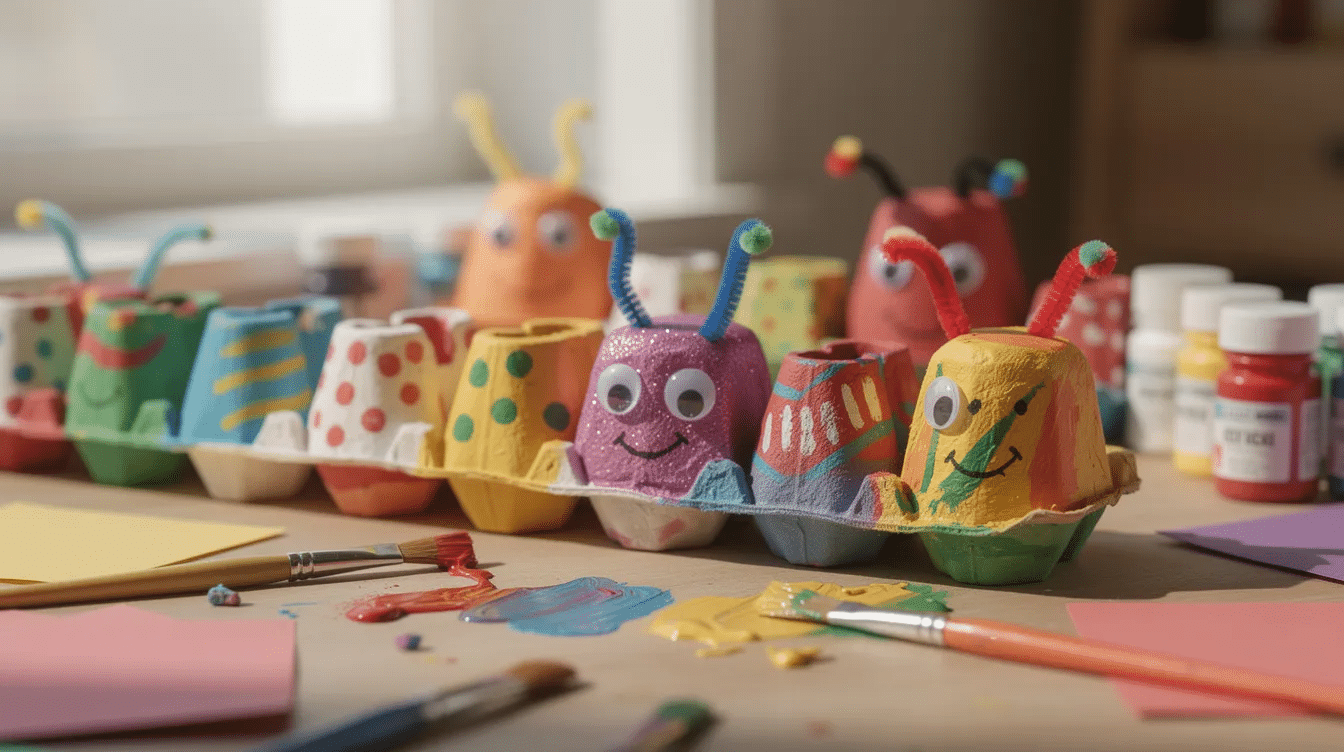
A plain egg carton can quickly become a bright, friendly caterpillar with a bit of paint, googly eyes, and pipe cleaners. It is the kind of simple craft that feels fun right away because kids can see the egg cups already look like a wiggly bug body.
This egg carton caterpillar craft is budget-friendly, uses items many families already have at home, and helps reduce waste by reusing egg cartons. Crafting with egg cartons can be a fun way to teach children about recycling and upcycling, as they can create new items from materials that would otherwise be discarded.
It is ideal for rainy afternoons, playdates, preschool activities, or quick weekend crafts in spring and summer 2026 and beyond. It also connects naturally to kids’ love of bugs, nature, colors, and pretend play, and can be paired with other themed projects like fun and easy owl crafts for kids.
Creating caterpillar crafts can be a fun and educational activity for young children, allowing them to explore creativity while learning about colors and shapes. And once your child has made one caterpillar, do not be surprised if they decided the next carton should become a turtle, butterfly, or whole bug family.
- Supplies You’ll Need for Your Egg Carton Caterpillars
- Prepare the Egg Cartons
- Step-by-Step: How to Make an Egg Carton Caterpillar
- Creative Variations on the Egg Carton Caterpillar Craft
- Learning and Play Ideas With Egg Carton Caterpillars
- Safety and Clean-Up Tips
- FAQ
- How old should kids be to make an egg carton caterpillar?
- Can I use foam egg cartons instead of cardboard?
- How long does the egg carton caterpillar craft take from start to finish?
- What if I don’t have googly eyes or pipe cleaners at home?
- How can I store or display egg carton caterpillars after we make them?
Supplies You’ll Need for Your Egg Carton Caterpillars
Most materials for egg carton caterpillars are common household or basic craft supplies. Start by setting everything in one place so little ones can focus on painting, decorating, and having fun.
Supply | Notes |
|---|---|
Cardboard egg carton | Cardboard egg cartons are easier to paint than plastic ones, and they are easier to cut and recycle. |
Child-safe acrylic or tempera paint | Acrylic or tempera paint can be used for decorating egg carton crafts. Tempera is usually more washable. |
Paintbrushes | Use chunky brushes for toddlers and smaller brushes for details. |
Cup of water | Helpful for rinsing brushes between colors. |
Paper towels | Keep nearby for drips and quick clean-up. |
Protective table covering | Newspaper, kraft paper, or a plastic cloth works well. |
Googly eyes | Use with supervision, especially around children under 3. |
Pipe cleaners | Great for antennae and optional legs. |
Markers or crayons | Use a marker to draw a face, patterns, or names. |
Stickers, pom-poms, glitter glue | Optional decorations for extra sparkle and texture. |
Tape or non-toxic glue | Use glue for eyes, paper shapes, and decorations. |
Adult-handled tools: |
- Child-safe scissors for cutting the carton.
- A hole punch, skewer, or pencil tip for making antennae holes.
- A hot glue gun only if an adult is using it. Adult supervision is recommended for cutting and using a hot glue gun when crafting with young children.
Optional extras:
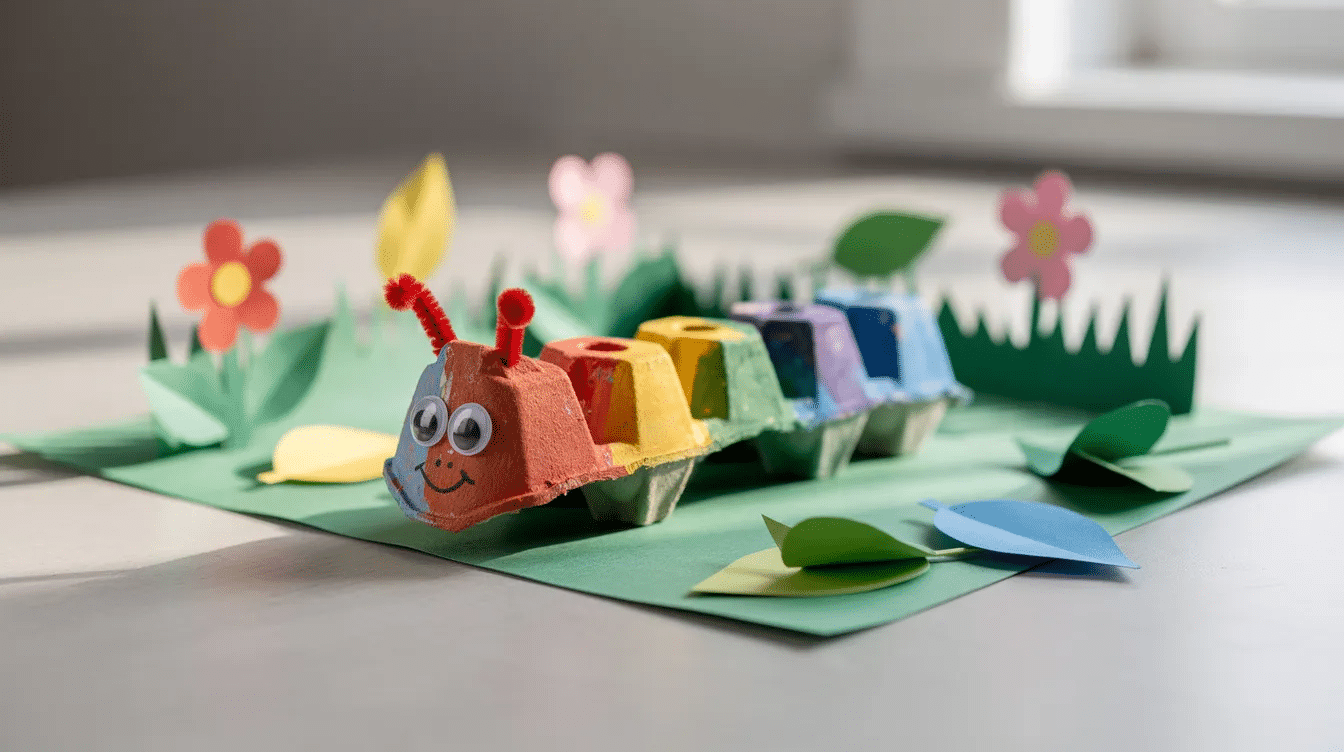
- Construction paper leaves or grass for a small nature scene.
- A printed name tag for each caterpillar.
- A shoebox “garden” display with green paper, flowers, and simple bug shapes.
Using materials like egg cartons, paint, and pipe cleaners, children can create their own caterpillar crafts that can be displayed or used for imaginative play. Choosing the best art supplies for young artists helps these simple materials become even more engaging, and the finished craft can bring a lot of personality to a shelf, windowsill, or play area.
Prepare the Egg Cartons
A little prep makes the craft smoother and keeps little hands safe. This is the adult part of the project, especially if you are making the craft with toddlers or preschoolers.
Here is the easiest way to prepare the carton:
- Choose a clean, dry cardboard egg carton.
- Remove any paper labels or stickers.
- Shake out crumbs or loose bits.
- Wipe the egg carton lightly if needed, then let it dry fully.
- Cut the carton into strips of 3–6 cups.
- Trimmed rough edges with scissors so the body is easy for kids to hold and paint.
You can cut one long strip for a classic caterpillar, or cut the carton in half to make two shorter caterpillars. A 3-cup piece is easier for a very young child to handle, while a 6-cup piece gives older kids more room for patterns, colors, and creative details.
If the egg carton recently held raw eggs, wash hands before and after handling it. The Egg Safety Center notes that reused egg packaging should be treated carefully because raw egg residue can carry bacteria.
Before inviting children to the table, check the edges and make sure all cutting is complete. Adults should also poke any holes needed for antennae or legs before kids begin decorating.
Step-by-Step: How to Make an Egg Carton Caterpillar
This egg carton caterpillar craft is simple when you break it into clear steps. The main process is paint, dry, decorate, and play.
1. Paint the caterpillar body
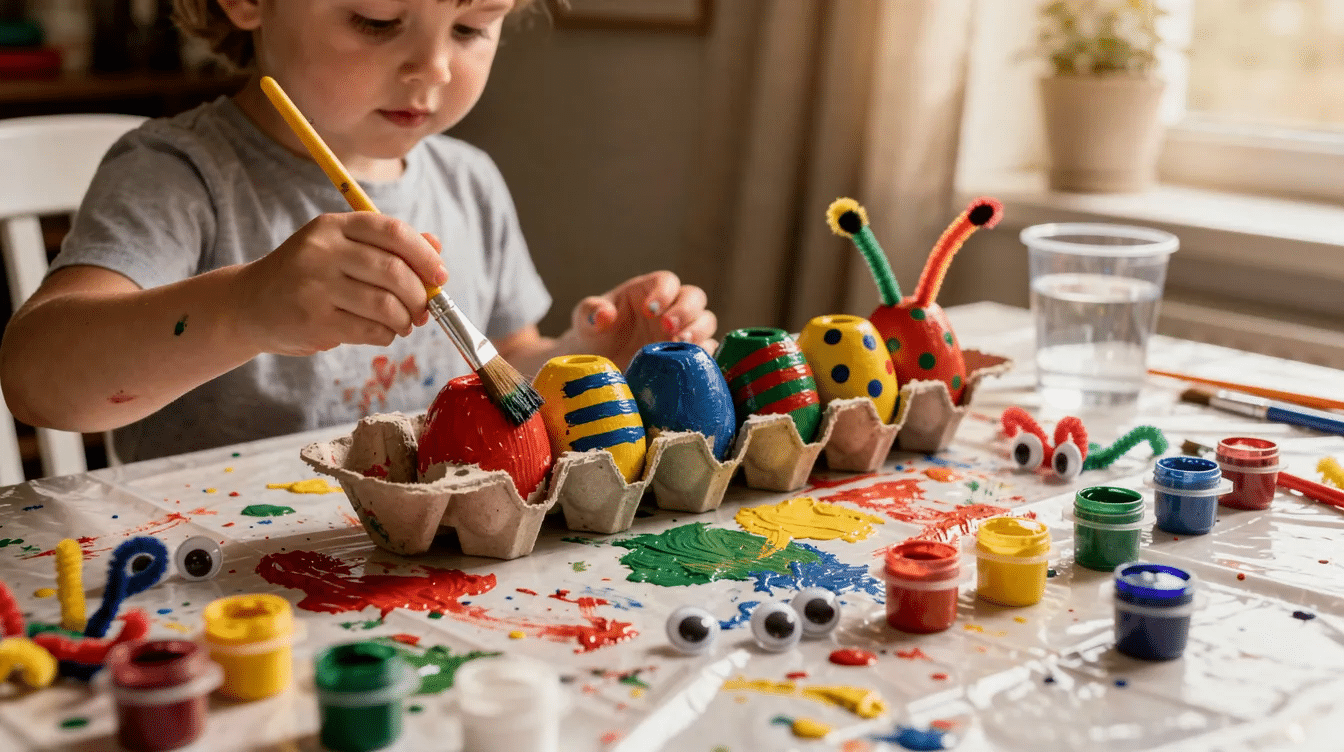
Place the egg carton strip upside down so the rounded cups face up. Invite kids to paint each cup a different color, create stripes, add polka dots, or make a rainbow pattern from head to end.
You can ask simple prompts as they work:
- “Which colors do you want next?”
- “Can you make a pattern?”
- “What shapes could we add?”
- “Should the head be red, green, blue, or another color?”
Using egg cartons for crafting encourages children to explore colors and shapes, enhancing their creativity and fine motor skills. Activities like this are similar to other engaging art projects that build fine motor skills, and painting small sections also helps kids practice brush control without needing a perfect result.
2. Let the paint dry
Set the painted egg cartons on newspaper, a tray, or a drying rack. Let them dry completely before adding eyes, antennae, or stickers.
Thin tempera paint may dry in about 30–60 minutes. Thicker acrylic paint or heavy glitter glue may need longer, even overnight.
3. Add antennae
Choose one cup as the head. An adult should poke two small holes on top of that cup.
Fold one pipe cleaner in half, then help the child thread the two ends through the holes. Bend the tips into curls, loops, or little heart shapes.
If you want extra detail, connect a tiny pom-pom to each antenna tip with glue. This is optional, but many kids love the bouncy look.
4. Make the face
Glue on googly eyes, then use a marker to draw a smile. If you do not have googly eyes, draw eyes directly on the carton or cut small paper circles and glue them to the head.
You can add cheeks, eyelashes, silly eyebrows, or a surprised expression. Let your child choose the face because that small choice often makes the caterpillar feel like a character.
5. Decorate the body
Add stickers, pom-poms, paper dots, glitter glue, or crayon patterns along the body. Kids can make spots, zigzags, stars, flowers, or any shapes they like.
Encouraging children to name their caterpillar creations can enhance their engagement and storytelling skills during the crafting process. Once the paint is dry, help them write the name on the side with a marker.
They might call it “Rainbow Wiggles,” “Leaf Muncher,” or “Mr. Hungry Caterpillar.” Thanks to that simple naming step, the craft can turn into a story starter.
Creative Variations on the Egg Carton Caterpillar Craft
Once you have made one caterpillar, use up extra egg cartons by trying new twists on the same idea. Egg cartons can be transformed into various crafts, such as turtles or easy treasure chest crafts for kids, by cutting and painting them, allowing children to engage in creative activities.
Here are a few variations to try.
Garden parade caterpillars
Make several egg carton caterpillars in different sizes and colors. Line them up on a windowsill, shelf, or classroom table like a garden parade.
This is a simple way to compare length:
- Which caterpillar is longest?
- Which one is shortest?
- How many cups does each one have?
- Which colors repeat?
Caterpillars with legs
To add legs, an adult can poke small holes near the base of each cup. Thread short pipe cleaner pieces through both sides, then bend each end downward.
This turns the craft into a more hands-on building activity. It also gives kids another chance to practice counting: two legs here, two legs there, and so on.
Chrysalis and butterfly version
Turn one end of the egg carton into a chrysalis by wrapping a cup with green or brown paper. Then create a butterfly by attaching paper wings to another egg carton piece.
Kids can decorate the wings with markers, stickers, or paint. This is a natural way to talk about the life cycle from caterpillar to chrysalis to butterfly.
Seasonal caterpillars
Try a seasonal version for holidays or classroom themes:
- Valentine’s Day: red and pink paint with heart stickers.
- Spring: pastel colors, paper flowers, and leaf shapes.
- Fall: orange, yellow, brown, and gold paint.
- Birthday party: glitter glue, pom-poms, and each child’s name.
These variations keep the craft fresh without needing many new supplies.
Learning and Play Ideas With Egg Carton Caterpillars
Egg carton caterpillars are not just cute. They are useful for early learning, creative thinking, and imaginative play, echoing many of the art and craft benefits for child development that educators and parents value.
One of the easiest ways to extend the activity is to read “The Very Hungry Caterpillar” by eric carle before or after crafting. If your child already knows the very hungry caterpillar story, ask them what their caterpillar would eat first, next, and last.
This kind of book-and-craft pairing helps children connect art to story sequence, nature, and simple life cycles. It also gives them a reason to use their finished caterpillar in play.
Try these learning activities:
- Counting: Count the egg cups on each caterpillar.
- Color recognition: Ask kids to point to blue, yellow, green, or red.
- Sorting: Sort caterpillars by length, color, or pattern.
- Shapes: Look for circles, stripes, dots, hearts, and leaf shapes.
- Storytelling: Invite children to make up a bug adventure with friends or expand the theme with creative snail crafts ideas for kids.
- Puppet play: Move the caterpillar across a paper leaf or shoebox garden.
Crafts like this also build fine motor practice. Children grip brushes, place small decorations, squeeze glue, and experiment with techniques like using glue paint in kids’ crafts, thread pipe cleaners, and draw details. According to the Child Mind Institute, arts and crafts can support important developmental skills, including planning, problem-solving, and fine motor control.
For parents and educators, the real value is that learning happens through play. The child is not just making a craft; the child is choosing colors, solving small design problems, sharing supplies, and building a story around something they created.
Safety and Clean-Up Tips
A few basic precautions make egg carton crafts safer and less messy, especially with very young kids.
Use clean, dry egg cartons and wash hands before and after crafting. This is especially important if the cartons recently held raw eggs. Avoid cartons that are wet, dirty, or came from cracked eggs.
Choose non-toxic, washable paints and glues that are clearly labeled as child-safe. The Crayola craft safety guidance recommends extra care with small parts for children under 3 and adult help with sharp tools for young children.
Keep these safety tips in mind:
- Adults should handle cutting.
- Adults should poke holes for antennae and legs.
- Keep googly eyes, pom-poms, and small decorations away from children who still mouth objects.
- Skip the hot glue gun unless an adult uses it away from little hands.
- Use washable paint if you want easier clean-up.
For clean-up, cover the table with newspaper or a plastic cloth before you begin. Keep a damp cloth nearby for spills, and use a tray as a drying place for finished caterpillars.
Store finished egg carton caterpillars on a shelf, windowsill, or in a shoebox garden away from moisture, or pair them with creative nature stick crafts for kids to build a larger outdoor-themed play scene. Cardboard crafts can warp if they get wet. When the caterpillars are worn out, recycle them if your local paper recycling accepts painted cardboard, or dispose of them responsibly.
FAQ
How old should kids be to make an egg carton caterpillar?
Toddlers around age 2 can participate with close adult help, especially with painting and choosing colors. Children ages 3–6 can often paint and decorate more independently.
Adults should always handle cutting, poking holes, and managing small items like googly eyes with very young children. If a child still puts small objects in their mouth, draw the eyes instead of gluing on loose pieces.
Can I use foam egg cartons instead of cardboard?
Cardboard egg cartons are usually better because they absorb paint nicely and are easier to cut and recycle. They also have a soft texture that works well with tempera or acrylic paint.
Foam egg cartons can be used if that is all that is available, but they may require different paints and extra drying time. Foam is also less eco-friendly and may be harder to recycle.
How long does the egg carton caterpillar craft take from start to finish?
Active crafting time is usually about 20–30 minutes for painting and decorating. You will also need additional drying time for the paint and glue.
Let painted egg cartons dry for at least an hour if possible. If the paint was applied thickly, or if you used a lot of glue, let the craft dry overnight.
What if I don’t have googly eyes or pipe cleaners at home?
The craft still works well with markers or crayons. Kids can draw eyes, a mouth, and antennae directly on the egg carton.
You can also cut antennae from thin strips of paper, use tiny paper circles for eyes, or make decorations from scraps of construction paper. The goal is to create a cheerful caterpillar, not to use perfect supplies.
How can I store or display egg carton caterpillars after we make them?
Place finished egg carton caterpillars on a bookshelf, windowsill, or a dedicated “bug garden” made from a shoebox and green paper. They also make fun props for storytime games and pretend play, especially alongside other bug projects like simple dragonfly crafts for kids.
Keep them dry and out of direct rain or outdoor moisture. Once they start to fall apart, recycle them in the paper bin if your local rules allow painted cardboard.