

Every home has that corner where clutter seems to multiply overnight—the toys scattered across the living room floor, the blankets piling up on the sofa, the accessories that never quite make it back to the closet. Fabric storage baskets offer a simple, stylish fix that works harder than you might expect. This guide walks you through everything you need to know about choosing, organizing, and maintaining fabric baskets that actually fit your life.
- Why Fabric Storage Baskets Belong in Every Home
- Key Benefits of Fabric Storage Baskets
- Popular Types of Fabric Storage Baskets
- How to Choose the Right Fabric Basket for Every Room
- Smart Ways to Organize with Fabric Storage Baskets
- Styling Fabric Baskets with Your Decor
- Caring for and Maintaining Fabric Storage Baskets
- Conclusion: Turning Everyday Clutter into Soft, Stylish Order
Why Fabric Storage Baskets Belong in Every Home
Fabric storage baskets instantly tame clutter in living rooms, nurseries, bedrooms, closets, and entryways without the clinical look of plastic bins or the bulk of wooden furniture. They bring warmth and texture to a space while keeping everyday chaos contained.
Modern fabric baskets—made from cotton rope, canvas, felt, jute, linen, and similar materials—combine soft, child-friendly construction with surprisingly sturdy builds. This makes them ideal for families, renters, and anyone who wants storage solutions that adapt to changing needs.
- Lightweight and quiet: No hard plastic clatter when kids drop toys inside, making evening tidying less disruptive
- Gentle on surfaces: Soft bottoms won’t scratch hardwood floors or scuff furniture
- Foldable and flexible: Most collapse flat for storage, unlike rigid bins that take up space year-round
- Renter-friendly: Easy to move, reposition, and take with you when you relocate
Compared to heavy wooden chests or stiff plastic containers, fabric baskets flex with your home. They tuck into tight corners, slide onto shelves, and disappear into closets when seasons change.
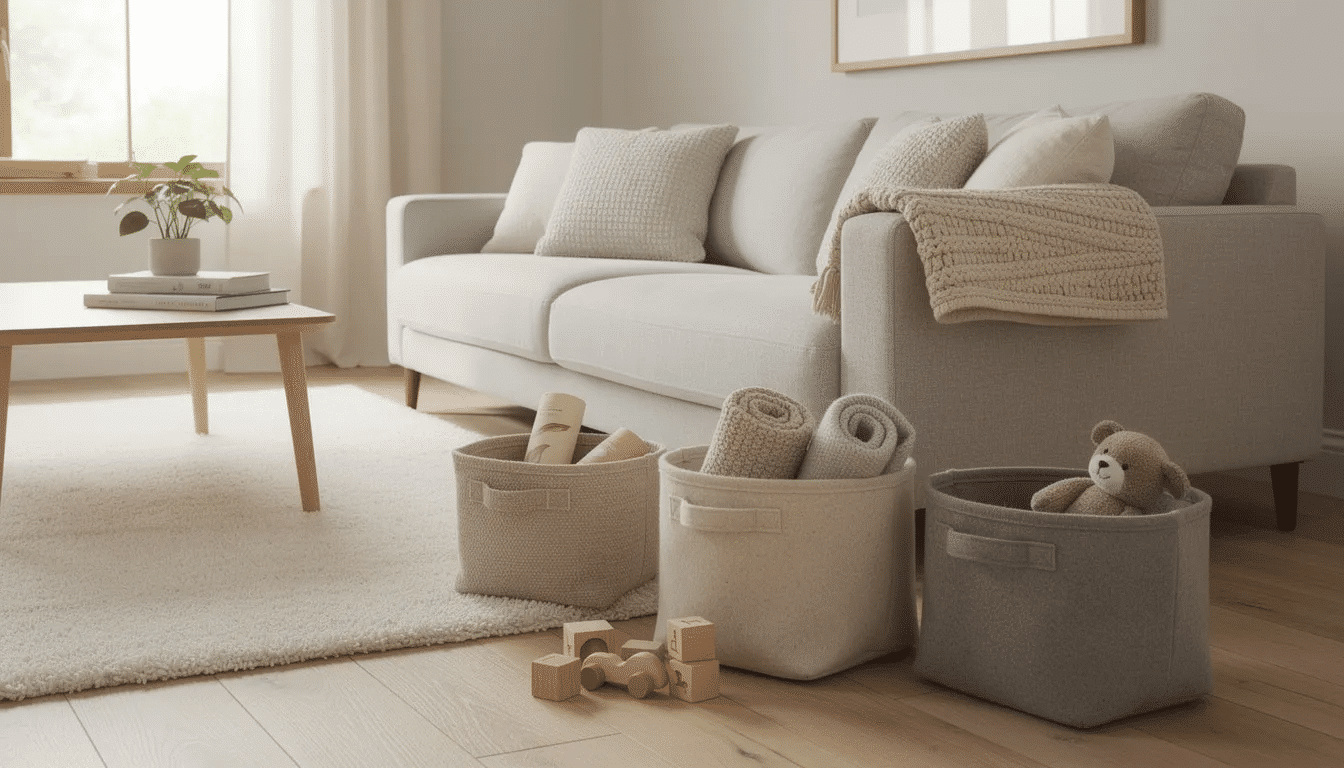
Key Benefits of Fabric Storage Baskets
Fabric baskets deliver three core advantages: they keep your home organized, they look good doing it, and they maximize space efficiency without permanent commitment.
- Softness and safety: Unlike hard-sided bins, fabric baskets have no sharp corners or pinch points. This makes them perfect for nurseries and play spaces where toddlers reach in and out multiple times a day.
- Noise reduction: Tidying up with fabric baskets is significantly quieter than wrestling with plastic bins. Parents doing evening cleanups near sleeping babies or in shared apartments will appreciate the difference immediately.
- Portability: Most designs include sewn or faux-leather handles. A well-constructed basket using 10-inch cotton webbing handles can support up to 30 pounds in heavier canvas constructions, making it easy to move a full collection of toys, laundry, or books between rooms.
- Versatility: The same basket can rotate between uses throughout the year—toys in winter, extra blankets in fall, seasonal accessories or scarves in spring.
- Collapsible storage: Many fabric baskets fold flat, so off-season storage takes up minimal closet or under-bed space. This flexibility is especially valuable in apartments and smaller homes.
Popular Types of Fabric Storage Baskets
The term “fabric” covers several distinct materials, each with its own aesthetic and practical strengths. Understanding the differences helps you choose baskets that match both your style and your storage needs.
Cotton rope baskets are coiled and typically come in cream or natural colors, sometimes with contrasting thread accents. Their sturdy structure holds shape well, making them great for blankets, larger toys, or as a decorative living-room catchall. Unlike traditional wicker baskets, cotton rope versions are soft to the touch and won’t snag fabrics.
Canvas bins often feature printed patterns—dots, stripes, animal motifs—that work beautifully in kids’ rooms, closets, and cubby systems. Canvas is durable; a 10-12 oz cotton duck canvas can handle everyday loads and support heavier items without sagging. These bins typically stand upright when filled but fold when empty for easy storage.
Felt baskets use thick, dense material that holds its shape while remaining lightweight. The soft texture works well for crafts, magazines, and small toys. Decorative stitching details can make felt baskets a visual feature rather than just a storage item.
Linen-covered cubes offer a sleek, tailored look. These often include cardboard or MDF inserts for added structure, making them ideal for offices, bedrooms, and bookshelves where a polished appearance matters.
Jute and jute-blend baskets bring a rustic, natural aesthetic that pairs well with neutral or boho decor. They’re excellent for holding shoes, extra pillows, or miscellaneous gear in an entryway where durability matters as much as style.
Rope-and-fabric hybrids combine rope bodies with fabric linings or contrasting handles. These designs offer extra durability while adding visual interest through mixed textures and materials.
How to Choose the Right Fabric Basket for Every Room
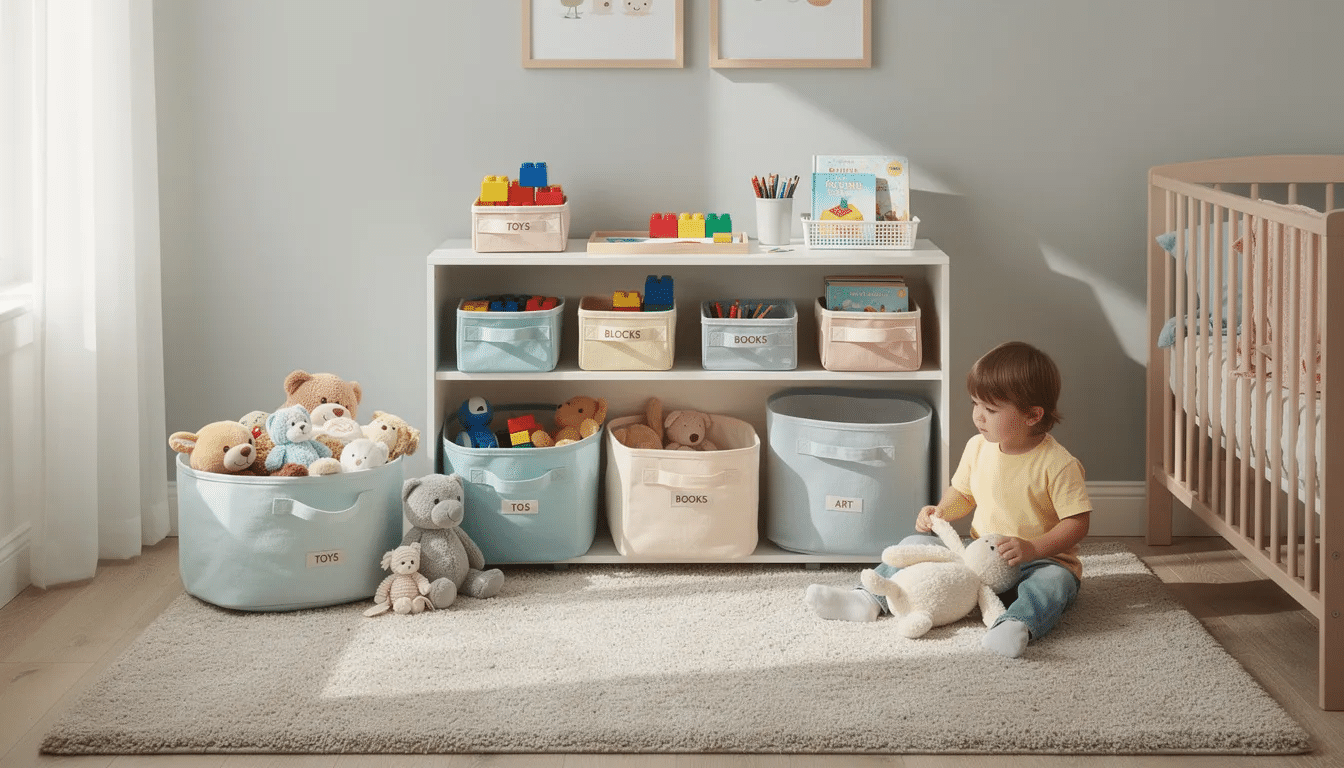
Selecting the right basket can feel overwhelming with so many sizes and styles available. The key is matching each basket to the specific room, the items you’ll store, and the furniture you already have.
Living room: Choose medium to large cotton rope or canvas baskets for throws, gaming accessories, board games, and toys that migrate into shared spaces. Neutral colors blend with sofas and rugs, keeping the space cohesive. A 10” x 10” x 12” basket fits perfectly into standard cubby systems while holding a substantial collection of items.
Nursery and kids’ rooms: Soft-sided, lightweight baskets with handles work best here. Mix a few large bins for plush toys with smaller cubes for blocks, books, and art supplies. Safety matters—choose baskets without small decorative elements that could become choking hazards.
Bedroom and closet: Linen or felt cubes sized to fit standard shelving (typically 11-13 inch cubes) organize folded clothes, accessories, and off-season items neatly. Matching sets create a streamlined look on open shelving.
Bathroom and laundry: Look for moisture-tolerant options like lined canvas or cotton blends. These work for towels, bath toys, and laundry sorting. Consider separate baskets for light and dark laundry to simplify wash day.
Entryway and mudroom: Sturdy jute or rope baskets handle shoes, hats, gloves, pet leashes, and reusable shopping bags. Low, wide shapes tuck easily under benches, keeping high-traffic areas clear.
Home office and craft room: Smaller felt or canvas bins corral cables, stationery, yarn, and project materials. Labeling these baskets creates a system where everything has a designated home.
For color and pattern choices, stick with neutrals for streamlined spaces, playful prints for children’s areas, and matching sets when you want a cohesive look throughout a room.
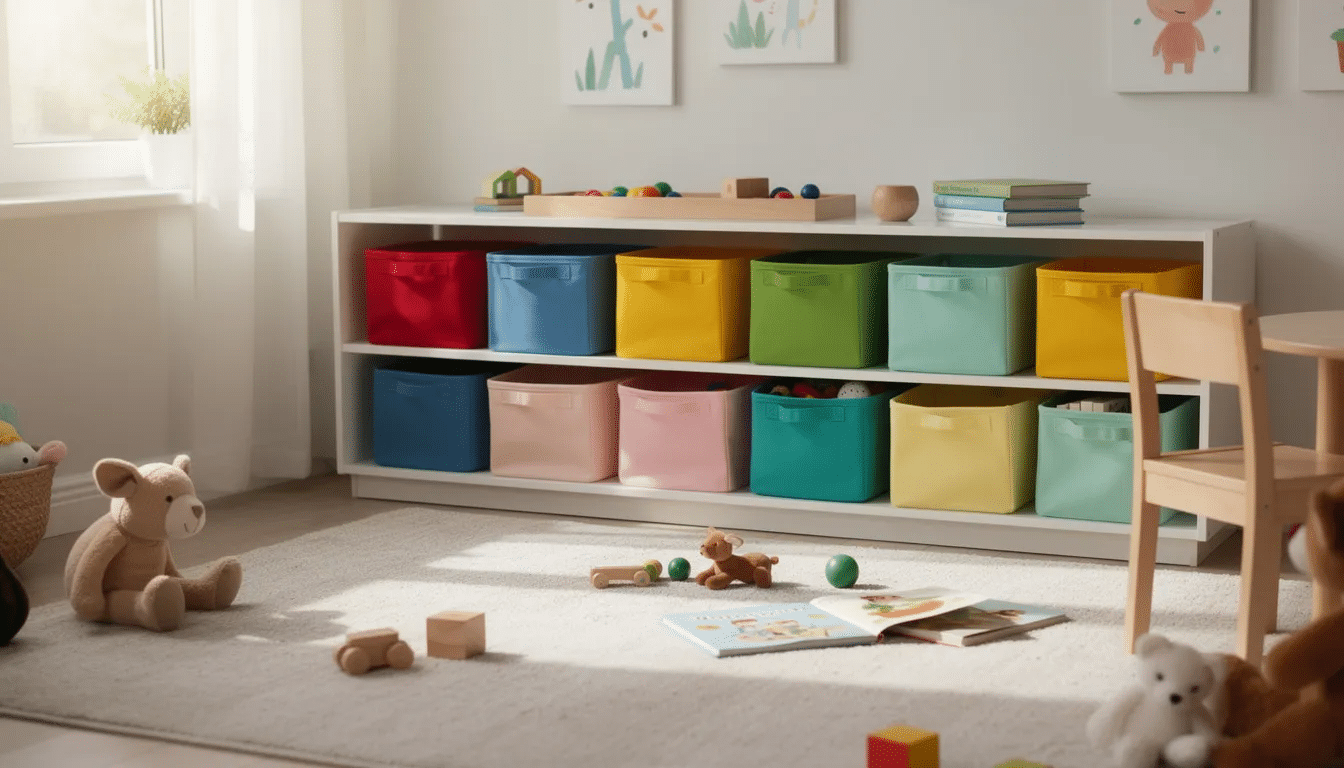
Large Basket vs. Several Small Baskets
Both approaches work—the right choice depends on what you’re storing and who will be using the baskets.
Large baskets are ideal for bulky items like stuffed animals, big trucks, and blankets. A single “dump spot” simplifies cleanup for toddlers and adults doing quick tidying. One oversized floor basket near the sofa can hold an entire day’s worth of scattered toys in minutes.
Multiple small baskets shine for older kids, crafters, and busy families where categories matter. Blocks go in one basket, dolls in another, art supplies in a third. This approach teaches organization habits and makes finding specific items faster.
The sweet spot for many homes is combining one oversized floor basket with several smaller shelf cubes. This balances the convenience of quick tidying with the benefits of detailed organization.
Consider that multiple small baskets are lighter to carry, which matters when children are expected to help clean up. They’re also easier to designate per person—one per child, one per hobby—reducing confusion about where things belong.
Before shopping, take stock of your available storage furniture. Cube units, bookcases, and under-bed space all influence which sizes will work best in your home.
Matching Basket Sizes to What You Store
Measure your shelves, cubbies, and closets before buying. A basket that’s even slightly too large won’t slide into a cubby, while one that’s too small wastes valuable shelf space.
Small fabric baskets (approximately 8-10 inches) work for remotes, skincare items, socks, cables, small toys, and pantry packets. These are your utility players for containing the little things that otherwise scatter.
Medium baskets (approximately 11-13 inches) align with standard cube organizers and are the most versatile size. They hold books, puzzles, clothing, and mixed toy collections without becoming too heavy to lift when full.
Large floor baskets (approximately 16-20+ inches in diameter or width) handle blankets, plush toys, laundry, and sports equipment. Position these at floor level or in corners where they’re easy to access.
Under-bed or low-profile fabric boxes are long, shallow containers perfect for out-of-season clothing, spare bedding, and children’s artwork. They maximize often-wasted space beneath beds and low furniture.
Leave a bit of breathing room in each basket so they’re not overstuffed. Baskets that are too full become difficult to use and tend to overflow, defeating the purpose of organization.
Smart Ways to Organize with Fabric Storage Baskets
Using baskets intentionally can transform daily routines—from toy cleanup to laundry day. The goal isn’t just containing clutter but creating systems that make maintaining order feel automatic.
Think in zones. Assign each shelf or corner a specific theme: reading nook, art corner, dress-up area, mail station. Once you decide on zones, choosing what each basket will hold becomes straightforward.
Use broad categories. Hyper-specific labels create more work than they save. Stick with general groupings: toys vs. crafts vs. books; everyday linens vs. guest linens; office supplies vs. tech accessories.
Try the one-basket-per-person rule. In shared areas like the living room, each family member gets a labeled basket for personal odds and ends. At the end of the day, everyone is responsible for returning their items to their basket.
Use baskets inside existing furniture. Slide cubes into open shelving, line up canvas bins in closets, tuck slim baskets on the top shelf for seasonal accessories. Fabric baskets work with your current setup, not against it.
Establish a daily reset routine. Spend 5-10 minutes each evening returning everything to its labeled basket. This prevents clutter from building up and keeps your home ready for the next day.
Grouping Similar Items Together
Grouping similar items makes it easier for everyone in the household to find things and put them away without thinking too hard about where each item belongs.
For children’s areas, keep soft toys in one basket, building blocks in another, storybooks in a third, and art and craft supplies in a labeled felt bin. This teaches kids early that everything has a home.
For adults, apply the same logic: one linen cube for workout gear, one for extra bedding, one for handbags, and one for winter accessories. The categories don’t need to be complicated to work.
Before assigning baskets, do a quick count of each item type. Make sure the basket has enough capacity and room to spare—overflow defeats the purpose.
Reassess your categories every three to six months. Kids’ interests change, seasonal needs shift, and what made sense in spring may not work by fall.
Labeling Fabric Baskets for Easy Access
Labels turn a collection of baskets into a system everyone can understand, including kids who can’t read yet and guests who are helping tidy up.
Label options that work well with fabric include clip-on metal tags, chalkboard labels, sewn-on fabric labels, and simple hanging tags tied to handles. Choose whatever matches your decor and is easy to update if categories change.
For baskets in kids’ rooms, use pictures or icons alongside words. A car icon for vehicles, a book icon for story time, a crayon for art supplies—pre-readers can identify where things belong without adult help.
Keep category names broad on labels. “Art Supplies” works better than listing every medium because it allows the basket’s contents to evolve over time without needing a new label.
Use a consistent label style throughout each room. Mismatched labels create visual clutter that undermines the organized look you’re working to achieve.
Styling Fabric Baskets with Your Decor
Storage doesn’t need to be hidden. Well-chosen fabric baskets can double as decor in living rooms, bedrooms, and hallways, adding texture and visual interest while keeping the space functional.
Choose a color palette that reflects the room. Calm neutrals—cream, gray, sand—work for minimalist or Scandinavian spaces. Bold hues like mustard, teal, or terracotta suit eclectic or boho rooms. Themed prints with animals or patterns bring energy to kids’ spaces.
Mix textures for depth. Combining rope, felt, canvas, and jute on the same shelving unit adds visual interest while keeping colors coordinated. The variety prevents storage from looking monotonous.
Balance open and lidded baskets. Use open baskets for aesthetically pleasing items like throws and books. Choose lidded baskets to hide visual clutter—cables, office supplies, miscellaneous gear that would otherwise look messy.
Arrange baskets thoughtfully on shelves. Place heavier and larger baskets on bottom shelves, lighter or more decorative ones higher up. Alternate basket rows with stacks of books or plants to create a curated look.
Use a statement basket as a focal point. A single large rope basket near a sofa, fireplace, or reading chair—filled with throws or magazines—anchors the space and serves as both storage and decor.
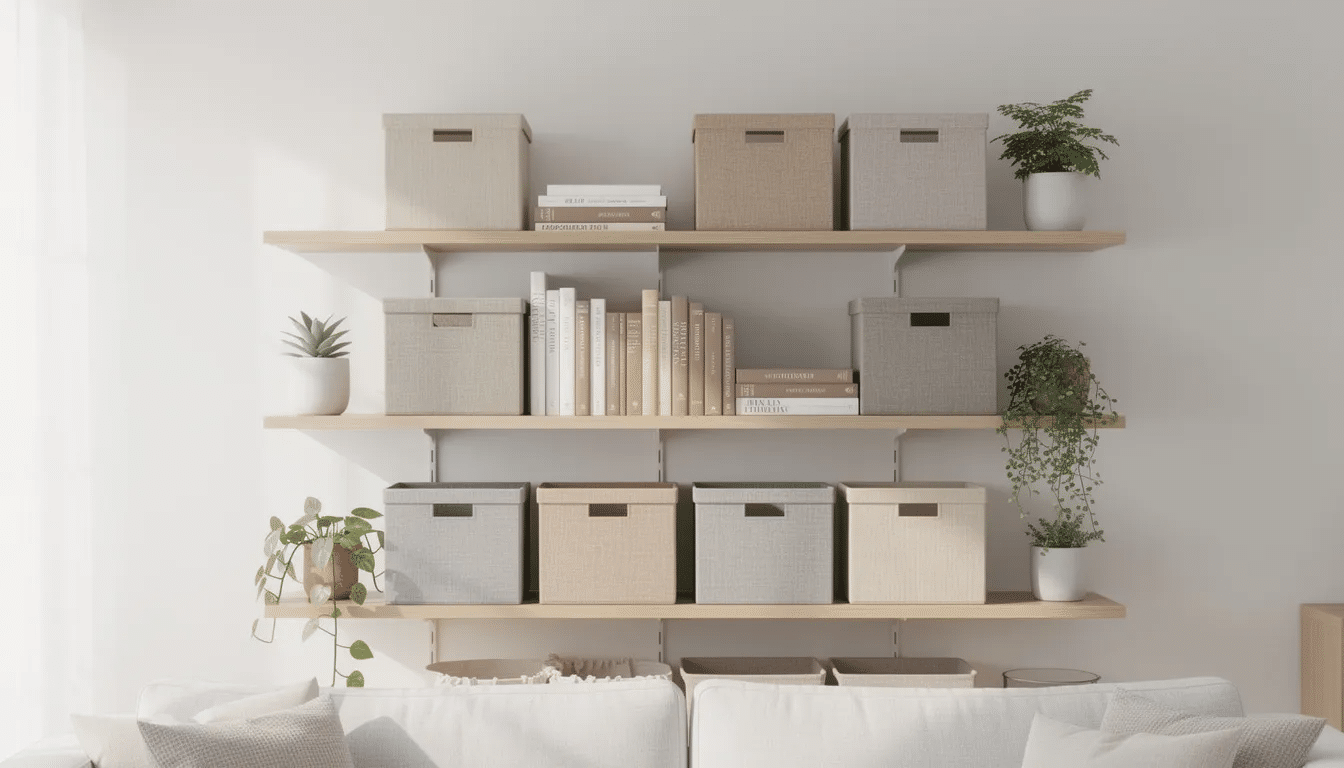
Fabric Baskets in Kids’ Rooms and Play Areas
Toys and children’s gear can easily spread across the entire home without a clear system. The key is making organization easy enough that kids can participate.
Use bright, patterned baskets at child height for everyday toys. Reserve simpler, neutral baskets on higher shelves for items requiring adult supervision—painting kits, small pieces, craft supplies with many components.
Create a dedicated reading basket next to a chair or floor cushion. Fill it with a rotating selection of picture books and easy readers. This makes reading time feel special and keeps favorites accessible.
Assign one large, clearly labeled floor basket as the “end-of-day toy catchall.” This single basket approach makes nightly cleanups faster and more realistic for tired parents and children alike. Kids storage bins don’t need to be complicated to be effective.
Involve children in choosing colors or patterns for their toy storage baskets. When kids feel ownership over their organization system, they’re more likely to use it consistently. Let them pick between two or three options that all work with your decor.
Using Fabric Baskets Seasonally
Rotating items throughout the year ensures your baskets always store what you actually use, not what you used three months ago.
Keep a fabric basket near the front door or in the coat closet for seasonal accessories. In colder months, fill it with winter hats and gloves. When summer arrives, swap in sun hats and swim gear. This simple rotation keeps the right items at hand.
Designate a few under-bed fabric boxes or closet cubes for holiday decor. Label them by season or holiday—“Autumn Decor,” “Winter Lights”—so you can find what you need without sorting through boxes.
Use a labeled basket in your laundry area or closet to collect outgrown children’s clothes or toys for donation. A “Donate” or “Pass Along” basket makes it easy to gather items throughout the year rather than doing one overwhelming purge.
Schedule a quick seasonal reset four times a year. Swap what lives in prominent baskets versus what gets stored away. This keeps your visible storage relevant and prevents seasonal items from cluttering everyday spaces.
Caring for and Maintaining Fabric Storage Baskets
A bit of simple maintenance keeps fabric baskets looking crisp and extends their useful life significantly. Most fabric storage requires minimal effort to stay in good condition.
Basic cleaning: Dust baskets regularly or vacuum them with a soft brush attachment. Spot clean spills immediately with mild soap and water. Always check the manufacturer’s care label before using any cleaning method.
Deep cleaning: Many canvas and some cotton rope baskets can be gently hand-washed. However, structured cubes with cardboard or MDF inserts should never be fully soaked—the internal structure will warp.
Reshaping: If baskets become wrinkled or lose their form, lightly steam the fabric, then stuff the basket fully with towels or blankets. Let it sit overnight to regain its shape.
Rotation: If heavily used baskets start showing wear, swap them with baskets from less visible areas. This keeps your main rooms looking fresh while extending the life of each basket.
Storage when not in use: Fold or nest baskets when they’re empty. Store them in a dry space and avoid stacking heavy items on top for extended periods, which can permanently flatten the fabric.
Safety and Durability Considerations
Well-made fabric baskets are safer for kids and more durable for busy households than many alternatives. A few simple checks ensure you’re getting quality.
Choose baskets with reinforced stitching at handles and seams, especially if you’ll store heavier loads like books or canned goods. Quality construction using heavier canvas (10-12 oz) can support up to 30 pounds without seam stress.
Soft, collapsible sides eliminate the risk of bumped heads or pinched fingers that come with hard chests and hinged lids. This makes fabric options ideal for nurseries and playrooms where safety is the priority.
Check for small decorative elements—buttons, beads, pom-poms—that could pose choking hazards in baskets used by toddlers. Simpler designs are safer for the youngest users.
Periodically inspect baskets for fraying, detached handles, or bent internal frames. Retire or repair any that show significant wear before they fail while holding heavy items.
Conclusion: Turning Everyday Clutter into Soft, Stylish Order
Fabric storage baskets transform messy rooms into calm, organized spaces while remaining gentle, flexible, and visually appealing. They work with your decor instead of against it, adapting to your needs as seasons and life stages change.
The key is choosing the right size, material, and number of baskets for each room, then grouping and labeling thoughtfully so everyone in the household knows where things belong. You don’t need to overhaul your entire home at once.
Start with one high-impact area—a living room toy corner, a cluttered entryway, or an overflowing kids’ room—and test a simple basket system before expanding. Once you see how much easier tidying becomes, you’ll find yourself ready to organize the next space. Storage can work as hard as your decor, and the right fabric baskets prove it.