
Getting your one-year-old outside doesn’t require a Pinterest-perfect setup or a trunk full of expensive toys. What it does require is a bit of creativity, constant supervision, and realistic expectations about those wonderfully short toddler attention spans. This guide covers everything from water play to first chalk marks—all designed specifically for the 12-24 month crowd.
- Quick-Start Ideas for Today’s Outdoor Play
- Simple Water Play for One-Year-Olds
- Backyard Sensory Play: Sand, Grass, and Simple Materials
- Movement Activities: Swings, Balls, and First Wheels
- Outdoor Practical Life Tasks for Little Helpers
- Easy Outdoor Outings: Parks, Walks, and Community Events
- Outdoor Creative Play: Bubbles, Chalk, and Music
- Key Takeaways
- Moving Forward with Outdoor Adventures
Quick-Start Ideas for Today’s Outdoor Play
These activities are specifically designed for 12-24 month olds and can be done in a small backyard, driveway, or local park with minimal preparation. You don’t need a sprawling yard or a closet full of outdoor toys to get started—most of what you need is already in your kitchen or garage.
Here are some do-today ideas to get you outside within the next ten minutes:
- Fill a plastic storage bin with an inch of water and some measuring cups
- Blow bubbles and let your little one chase them across the grass
- Spread a picnic blanket under a tree and enjoy a simple snack outdoors
- Take a slow stroller walk around the block, pointing out birds and flowers
- Offer a piece of sidewalk chalk and let them make their first marks
All of these ideas keep safety and short toddler attention spans (typically 5-10 minutes per activity) in mind. Most kids at this age won’t sit with one thing for long, and that’s completely normal.
The good news? You don’t need fancy gear. Plastic bowls, wooden spoons, soft balls, and contact paper work just as well as specialty toddler products. The goal is simple: fresh air, movement, and imaginative exploration that sparks creative thinking at their pace.
Simple Water Play for One-Year-Olds
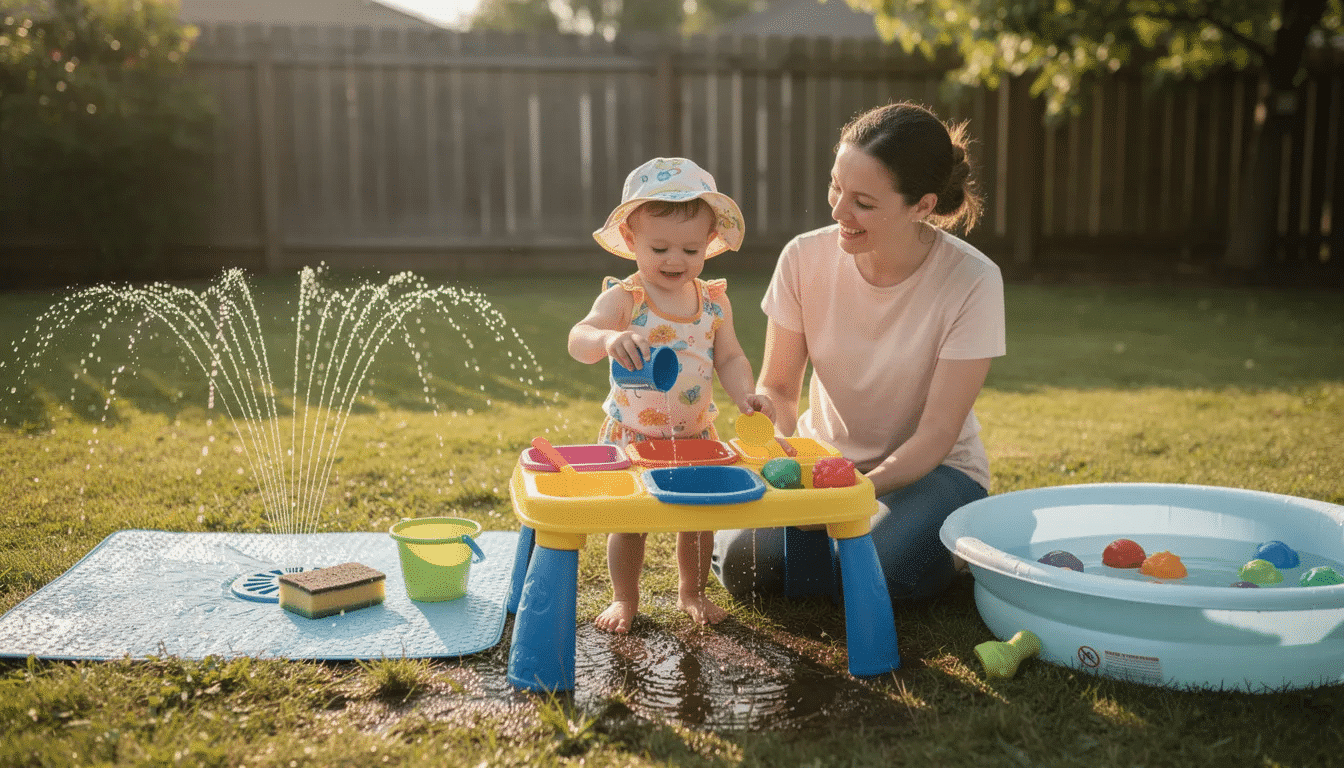
When warm weather arrives, water play becomes one of the most engaging outdoor activities for toddlers. There’s something about splashing, pouring, and feeling the coolness on their skin that captures a child’s imagination and holds their attention longer than almost anything else.
This section covers quick, low-prep ideas like water tables, sponge play, DIY splash pads, and kiddie pools suitable for ages 1-2. Each activity highlights both sensory benefits—temperature changes, visual ripples, the sound of splashing—and motor skills development like scooping, pouring, and walking on wet surfaces.
Important safety note: Never leave a 1-year-old unattended around any water, even just a few inches. Stay within arm’s reach at all times.
For the most comfortable experience, choose times when temperatures are mild—before 10 a.m. or after 4 p.m. during summer months works well. A hot day in July at noon might be too intense for young toddlers.
Backyard Water Table Fun
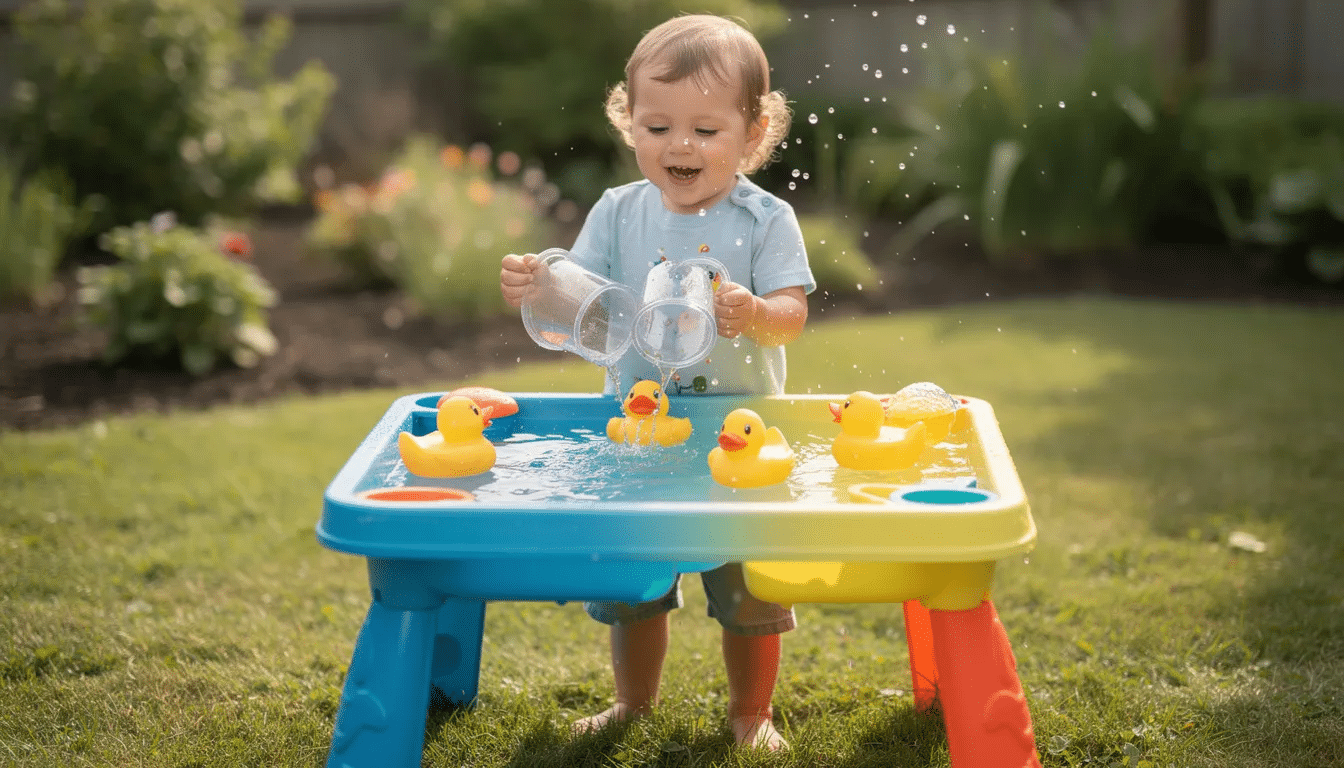
A water table is one of the favorite outdoor activities for many families with toddlers. If you don’t have a commercial water table, a shallow plastic storage bin placed on a low bench or step stool works perfectly well.
What to add to your water table:
Item | Why It Works |
|---|---|
Measuring cups | Scooping and pouring practice |
Plastic spoons | Stirring and transferring water |
Stacking cups | Nesting, stacking, dumping |
Small rubber ducks | Visual tracking as they float |
Colander | Watching water drain through holes |
The ideal height places the water at your toddler’s waist level—typically 18-24 inches off the ground—so they can stand comfortably and play without straining. |
Safety setup:
- Place a non-slip mat underneath to prevent slipping on wet grass or concrete
- Stay within arm’s reach the entire time
- Dump all water immediately after play
For an added bonus on a hot day, drop a few ice cubes into the water. Watching them float and slowly melt introduces early concepts about temperature changes while keeping little ones cool.
Sponge Soak and Squeeze
This simple activity gets your toddler moving their whole body while building hand strength and hand eye coordination. It’s so much fun that many children will repeat the same motion for 15-20 minutes straight.
Setup:
- Place two plastic buckets or dishpans on the ground, about 3-5 feet apart
- Fill one bucket halfway with water
- Leave the other bucket empty
- Provide 2-3 large household sponges (4-6 inches work best)
Show your toddler how to dunk the sponge, pick it up dripping wet, carry it to the empty bucket, and squeeze the water out. Then repeat.
This fun activity involves squatting, reaching, carrying, and squeezing—all movements that strengthen hip stabilizers and core muscles essential for confident walking. The transfer motion also encourages whole-body locomotion as they toddle or crawl between buckets.
Language building tip: Use colored sponges and name the colors aloud as you play. “You grabbed the yellow sponge! Now squeeze it into the blue bucket.” This supports early language development in a natural, playful way.
DIY Splash Mat or Sprinkler Pad
A splash pad brings the fun of a public water feature right into your own backyard. Simple inflatable splash mats that connect to a garden hose cost around $15-30 and provide hours of entertainment across an entire summer.
Setup tips:
- Place the mat on level grass rather than concrete to cushion falls
- Keep water depth very shallow and pressure on a low setting
- Run the hose for a minute first to warm the water before inviting your child to play
- Dress toddlers in swim diapers and sun hats
Young toddlers can crawl or toddle through the intermittent sprays, which helps develop spatial awareness as they learn to anticipate where water will appear next. The sensory experience of water hitting their skin from different angles provides vestibular and proprioceptive input that supports balance development.
If public splash pads concern you from a hygiene standpoint, home alternatives like sprinkler mats give you full control over cleanliness while still delivering water play benefits.
Shallow Kiddie Pool & Sit-and-Splash
A hard-sided or inflatable kiddie pool transforms into a perfect outdoor play station when filled with just a few inches of water—enough for sitting and splashing, but shallow enough to minimize risk.
Pool safety essentials:
- Fill with only 2-4 inches of water maximum
- Sit inside the pool with your child or remain right at the edge
- Never step away, even for a moment
- Empty the pool completely after each use
Add familiar bath toys like plastic boats, stacking cups, and rubber animals to build comfort with outdoor water play. Many children who happily splash in the bathtub feel uncertain outdoors at first—familiar toys help bridge that gap.
Place the pool in partial shade to prevent overheating and limit sessions to 10-15 minutes for young toddlers. Most kids enjoy playing in water, but they can become overstimulated or chilled more quickly than we expect.
Backyard Sensory Play: Sand, Grass, and Simple Materials
One-year-olds are in the thick of what developmental psychologists call the sensorimotor stage—they learn primarily through touching, mouthing, and manipulating everything they can get their hands on. During this period, their brains form approximately 1 million neural connections per second, making sensory play incredibly valuable for cognitive development.
This section covers sandbox play, grass exploration, and safe loose parts like large shells and pinecones. The key is supervising closely to prevent mouthing of unsafe small objects and choosing non-toxic, washed materials.
One important note: follow your child’s lead. Some toddlers dive right into new textures, while others prefer to watch or touch slowly at first. Both responses are completely normal.
First Sandbox Adventures
A small covered sandbox or a large plastic storage tub filled with play sand creates a contained sensory bin perfect for 1-year-olds, and older toddlers may also enjoy molding and building with kinetic sand. Ground level works best—toddlers can sit right in or beside the sand and explore freely.
Recommended sandbox tools:
- Sturdy plastic scoops (not flimsy)
- Small buckets with handles
- Chunky dump trucks or construction vehicles
- Large funnels
- Plastic cups for filling and dumping
Show your toddler simple actions to get them started: scooping sand, dumping it into a bucket, burying a toy and “finding” it again with excitement. These cause-and-effect activities support critical thinking development and begin laying the groundwork for art-based fine motor skill activities even at this young age.
Cleanup strategy: Keep a small brush or handheld vacuum nearby for sand that escapes the bin. Always wash hands thoroughly after sandbox play, especially for children who still mouth objects frequently.
Exploring Grass, Leaves, and Safe Nature Finds
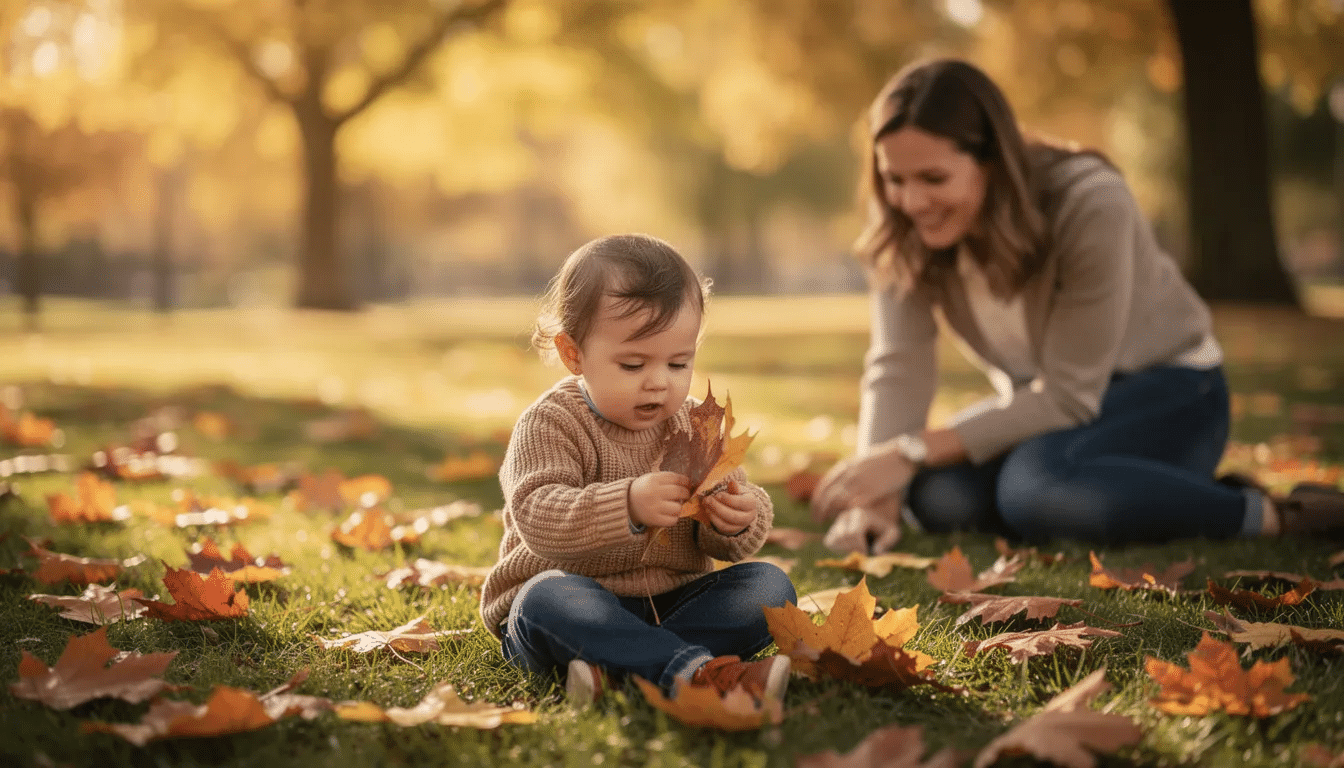
The natural world offers endless different textures for curious 1-year-olds to explore. Start by spreading a blanket on grass and gradually inviting your toddler to crawl or step onto the grass surface itself.
Safe nature items to explore together:
Item | Texture to Describe |
|---|---|
Large leaves | Smooth, crinkly, veiny |
Smooth sticks | Hard, rough bark |
Big pinecones | Bumpy, pokey scales |
Flower petals | Soft, silky, delicate |
Smooth river rocks | Cool, heavy, round |
As your child handles these items, use descriptive words: “soft grass,” “scratchy bark,” “crunchy leaf.” This builds vocabulary while creating a rich sensory experience. |
This exploration works in a backyard, apartment courtyard, or quiet corner of a local park and can easily lead into simple nature stick crafts for kids. The setting matters less than the quality of attention you bring to the experience.
Outdoor Ice and Cold Sensory Play
Ice cube play combines science exploration with sensory input in a fun way that’s perfect for a hot day and can transition nicely into seasonal polar bear craft ideas. Using an old muffin tin or ice cube tray, create large ice cubes and place them in a shallow tray or baking sheet outside.
Creative ice variations:
- Freeze berries or soft fruit pieces inside (supervised to prevent choking)
- Add food coloring to water before freezing for visual interest
- Freeze small waterproof toys inside for “excavation” play
- Layer different colored waters for striped cubes
Toddlers can slide the ice around, pick it up and drop it, and watch it slowly melt in the sun. The contrast between solid and liquid, cold and warm, creates a fascinating sensory experience that can hold attention for 10-15 minutes.
Talk aloud about what’s happening: “The ice is cold! It feels slippery. Look—it’s melting into water!” This introduces early science vocabulary and models descriptive language skills.
Movement Activities: Swings, Balls, and First Wheels
Around 12 months, most children are working on major gross motor skills milestones: standing independently, cruising along furniture, and taking those exciting first unassisted steps. Outdoor movement play supports balance, coordination, and the physical confidence they need to keep progressing.
This section focuses on simple activities like swings, balls, and toddler ride-ons. Think of these as short, joyous bursts of movement rather than long structured sessions that later pave the way for engaging group activities for 5 year olds. Five minutes of swinging or ball-rolling can be plenty for a 1-year-old before they’re ready to move on to something else.
Before using any playground equipment, check labels for age suitability and weight limits. Equipment designed for older children often lacks the support features that keep younger toddlers safe.
Toddler Swing Time
A bucket-style swing with a high back and safety harness provides the support 1-year-olds need to enjoy playing on swings safely. These are available at most local parks and can also be hung from a secure backyard frame.
Swinging delivers vestibular stimulation through gentle linear acceleration, which helps the balance organs in the inner ear calibrate to motion. This is vital for developing the balance and coordination your child needs for walking and eventually running.
Swing session tips:
- Use slow, gentle pushes—toddlers don’t need height or speed
- Stay within arm’s reach at all times
- Limit sessions to 5-10 minutes to prevent overstimulation
- About 30% of toddlers experience initial motion sensitivity, so watch for signs of discomfort
Add language play to make it more engaging: count pushes aloud, sing simple songs, and name things your child can see from the swing. “I see a bird! Can you see the bird?”
Rolling, Kicking, and Chasing Balls
Ball play is a classic for good reason—it combines movement, turn-taking, and the joy of cause-and-effect all in one simple activity. Most kids love chasing a rolling ball across the grass.
Recommended ball types:
- Lightweight 8-10 inch rubber playground balls
- Soft fabric balls for indoor/outdoor use
- Beach balls (great for tracking, tricky to grab)
Simple ball games for 1-year-olds:
- Sit facing each other on the grass and roll the ball back and forth
- Gently kick a ball and encourage your toddler to chase it
- Roll the ball slowly away and let them toddle after it
- Bounce a ball and watch their eyes track its movement
This supports balance and coordination while introducing early turn-taking concepts. Choose soft surfaces like grass for new walkers—falls are part of learning, but cushioned landings make them less discouraging.
First Ride-Ons and Balance Bikes
Stable ride-on toys and low-to-ground balance bikes designed for 12-24 month olds introduce early concepts of wheeled movement. These aren’t about speed or distance—they’re about the sensory experience of pushing with feet and exploring how wheels work.
Setup for success:
- Use a flat driveway, sidewalk, or patio with plenty of open space
- Ensure no street access—block off driveways if needed
- Walk alongside, ready to hold handlebars or support the child’s torso
- Keep first sessions very short (2-5 minutes)
The goal is simply to let your toddler sit, push their feet against the ground, and feel the toy move beneath them. This builds the foundation for future tricycle and bicycle riding while strengthening leg muscles and improving balance.
Outdoor Practical Life Tasks for Little Helpers
One-year-olds are naturally drawn to imitating adult activities. Practical life tasks tap into this drive while building independence, fine motor skills, and a sense of contribution to family life. These ideas come straight from Montessori principles, which emphasize prepared environments that allow independent discovery and align well with creative kindergarten classroom approaches.
This section covers ways for 1-year-olds to “help” outside with simple real-life tasks: watering plants, sweeping, washing outdoor toys, and filling bird feeders. The goal is participation and joy, not perfectly completed chores.
Keep all tools child-sized and lightweight—a small broom, a plastic watering can, a soft-bristled brush. Children this age can’t manage adult-sized equipment, but they thrive with properly scaled alternatives.
Watering Plants Together
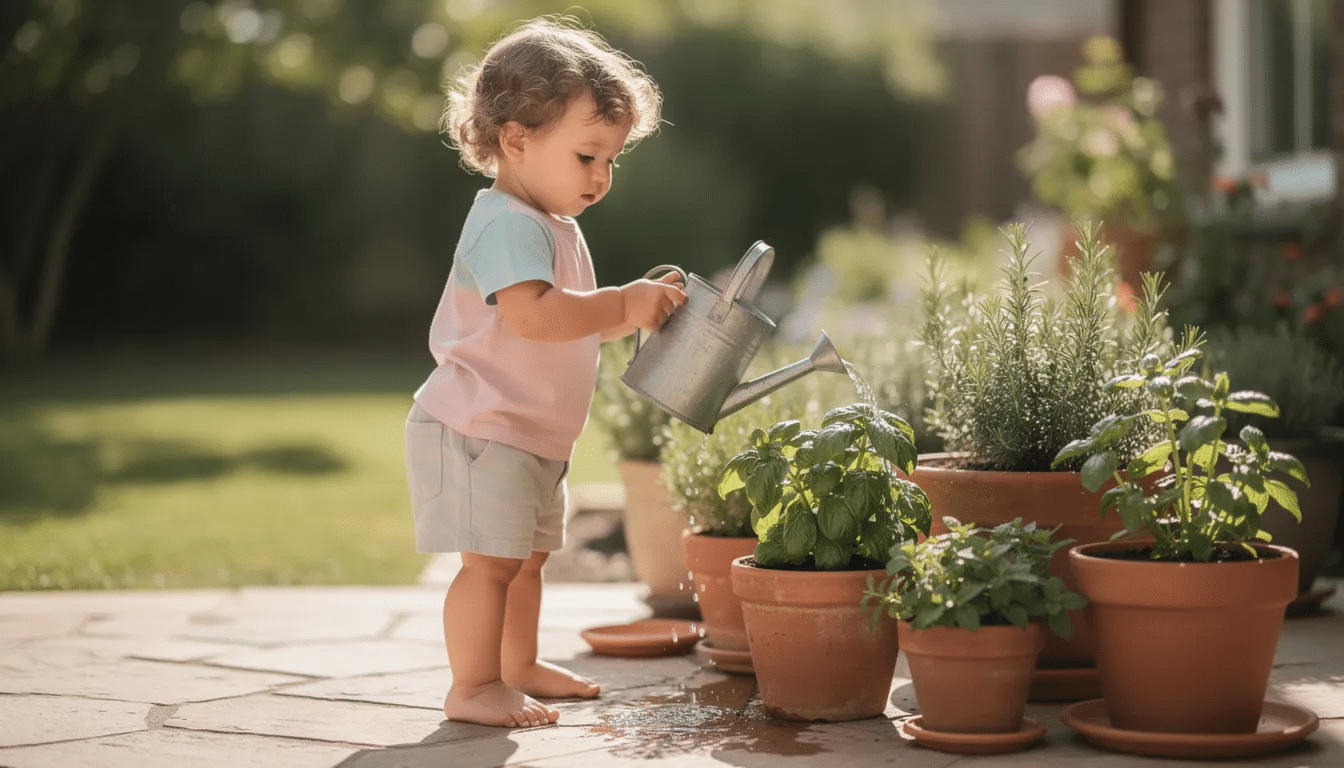
Watering plants is one of the most satisfying fun ideas for toddlers because the results are immediate and visible. They pour, the water goes in, the plants “drink”—cause and effect in action.
How to set it up:
- Fill a small plastic watering can halfway (full cans are too heavy)
- Choose a few potted plants on a patio, container flowers on a balcony, or a small backyard garden bed
- Demonstrate pouring water at the base of plants
- Hand over the can and let them try
Use simple language throughout: “The plant is thirsty. Pour the water. Good job—all done!” This builds vocabulary while encouraging creativity and independence.
Safety note: Avoid toxic plants entirely when gardening with young children. Always wash hands after touching soil or plants.
Sweeping the Patio or Walkway
Sweeping might seem beyond a 1-year-old’s abilities, but they’re fully capable of pushing a child-sized broom around and enjoying the process. The outcome matters far less than the participation.
Setup:
- Offer a lightweight child-sized broom
- Set a small “target area” like a section of patio or front step
- Scatter some leaves, sand, or chalk dust to sweep
- Model the sweeping motion, creating a visible pile
Your toddler will mostly push the broom back and forth without actually collecting debris—and that’s perfectly fine. They’re building coordination, imitating adult behavior, and enjoying playing alongside you. These are the real wins.
Keep sessions brief and celebrate effort with simple acknowledgment: “Thank you for helping sweep!” This creates positive associations with contributing to household tasks.
Washing Outdoor Toys or Furniture
This fun outdoor activity combines dish soap, water play, and practical cleaning into one engaging experience. It’s essentially a sensory bin with a purpose.
What you need:
- A low plastic tub with a few inches of soapy water
- A clean sponge or soft brush
- A stack of plastic outdoor toys, sandbox shovels, or small plastic chairs
- A cup of clean water for rinsing
Show your child how to dip the sponge, scrub the toy, and rinse with clean water. They’ll likely focus more on the splashing than the cleaning, which is exactly right for this age.
Do this on a warm afternoon so items can air dry in the sun afterward. It’s practical, sensory-rich, and endlessly repeatable across the summer months.
Filling a Backyard Bird Feeder
Bird feeders bring the natural world right into your own backyard while offering a great activity for building scooping skills and hand-over-hand coordination.
Setup:
- Place a wide tray or old towel under a hanging bird feeder to catch spills
- Give your toddler a small scoop and a container of birdseed
- Use hand-over-hand guidance to help them pour seed into the feeder opening
- Celebrate the accomplishment together
Spills are absolutely fine—they become part of the experience as birds eat from the ground later. Use large seed varieties for children who still mouth objects, and supervise closely throughout.
The added bonus comes later: return in an hour or the next day to watch birds visiting together. Name colors and types if you know them: “Look, a red bird! It’s eating our seeds.”
Easy Outdoor Outings: Parks, Walks, and Community Events
Taking 1-year-olds beyond the backyard opens up new outdoor experiences and outdoor adventures, even if the trips stay short and simple. Nearby parks, neighborhood walks, and seasonal events all offer valuable stimulation and variety.
These outings don’t need to be long—15-45 minutes can feel full and satisfying for toddlers. In fact, shorter outings often go better because you leave before anyone gets overtired or overstimulated, leaving more time at home for DIY kits and creative projects.
Preparation checklist:
- Check nap times and plan around them
- Pack snacks, water, and a change of clothes
- Bring sun protection and consider weather conditions
- Keep expectations flexible—some days just won’t go as planned
Visiting a Local Park or Playground
Choose parks with baby swings, open grassy areas, and toddler-friendly paths rather than those dominated by high climbing structures designed for older children.
Simple park activities for 1-year-olds:
- Walking along a paved path while holding hands
- Exploring benches, railings, and other structures
- Watching older kids play from a safe distance
- Sitting on a picnic blanket under a tree for a snack
- Feeling tree bark, picking up leaves, observing birds
Spread a blanket under a shady tree for an afternoon snack and some quiet sitting time. This simple ritual can become a weekly highlight during warm weather months.
Stay close to new walkers near steps, curbs, and playground edges. One-year-olds have no sense of edges or drops, so your proximity is their safety net.
Neighborhood Walks and Stroller Explorations
A 10-20 minute walk around the block provides surprisingly rich outdoor play opportunities for young toddlers. Use a stroller, push car, or baby carrier depending on your child’s mood and mobility.
What to point out during walks:
- Mailboxes, house numbers, and doors
- Dogs, cats, squirrels, and birds
- Trucks, buses, and cars
- Flowers, trees, and bushes
- Street signs and traffic lights
Stop occasionally to let your toddler touch safe surfaces: tree bark, fence posts, flower petals (non-toxic varieties), smooth rocks. These sensory breaks turn a simple walk into an explore adventure.
Choose quieter times of day when possible—early morning or early evening often works well and avoids the hottest part of summer days.
Simple Backyard or Park Picnic
A picnic blanket, some finger foods appropriate for 1-year-olds, and a few board books or soft toys create a lovely outdoor experience without any need to travel far.
Picnic setup:
- Lay out a large sheet or blanket on grass
- Pack simple finger foods your child can self-feed
- Bring a sippy cup of water
- Include one or two board books or a small world toy
Allow your child to practice standing, squatting, and cruising around the blanket and onto the grass. This supports gross motor development while providing sensory input from the grass texture.
Use this quiet time to talk about sounds (birds chirping, wind rustling, cars passing) and things seen in the sky (clouds, planes, butterflies). These conversations build language skills naturally.
Choose shady spots and pack sun hats, especially in late spring and summer when UV exposure is strongest.
Low-Key Community Events: Markets and Outdoor Music
Short visits to outdoor farmers’ markets, small town fairs, or early-evening concerts in the park introduce your 1-year-old to community life in manageable doses.
Keep expectations realistic:
- Plan for one loop through the market, not extensive browsing
- Listen to one or two songs at a concert, then head home
- Describe sights and sounds at the toddler’s level: “loud drum,” “red tent,” “big balloon”
- Watch for signs of overwhelm (rubbing eyes, turning away, fussiness)
Leave before your child becomes overtired or overstimulated. A successful outing is one that ends while everyone is still having fun—you can always come back another day.
These small world experiences help children learn about different environments and social situations while staying within their developmental capacity.
Outdoor Creative Play: Bubbles, Chalk, and Music
Creative outdoor play combines art, sound, and movement in ways that support development while being genuinely enjoyable for both children and caregivers. These activities use simple, inexpensive materials and can become part of a daily routine during the warmer months.
This section covers chasing bubbles, making first sidewalk chalk marks, and enjoying a dance party under the open sky. Each activity supports early mark-making, rhythm awareness, cause-and-effect understanding, and joint attention with caregivers.
The best part? All of these ideas require minimal setup and can be repeated day after day without losing their appeal.
Bubbles for Chasing and Popping
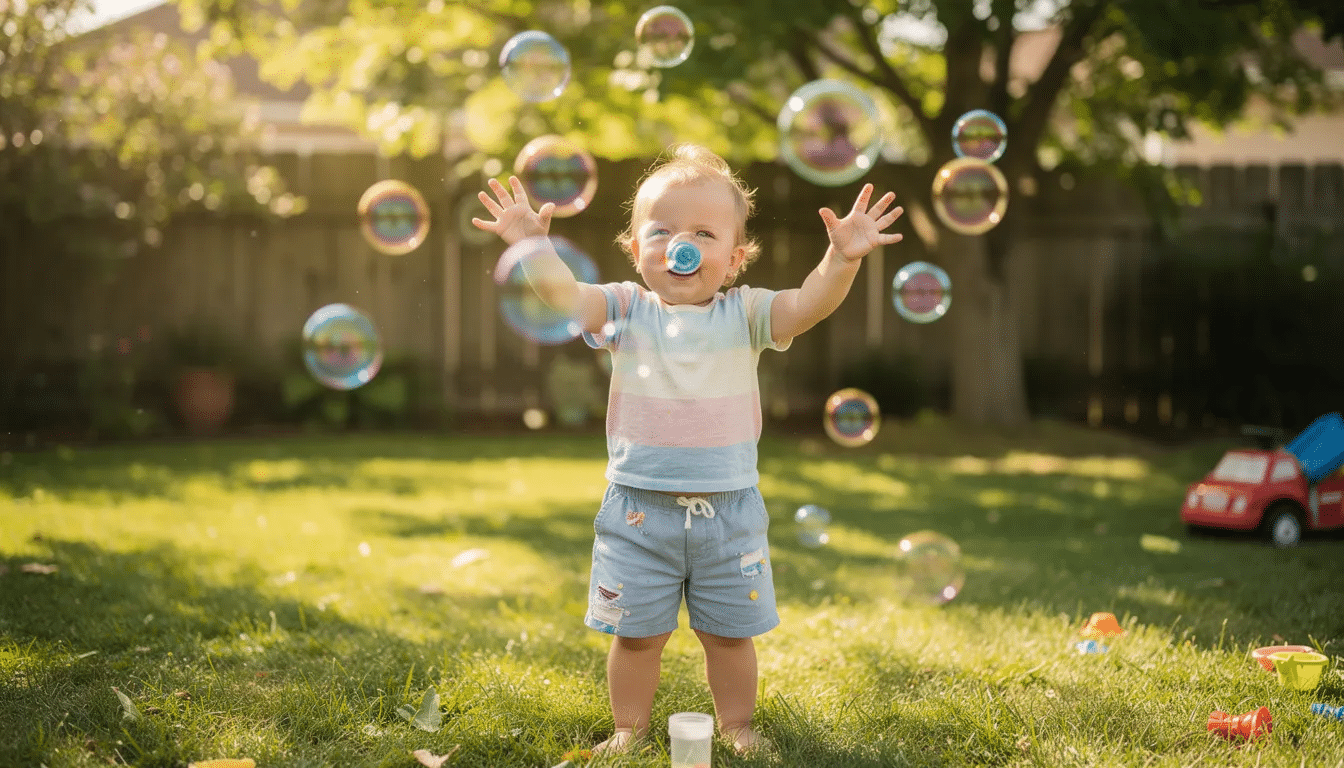
Kids love bubbles—there’s really no getting around it. The floating, iridescent spheres capture attention, encourage movement, and provide endless cause-and-effect learning as they pop.
Bubble options:
- Traditional bubble wands (you blow, they chase)
- Battery-powered bubble machine (continuous bubbles with no effort)
- Bubble wand attached to a dish soap bottle (self-dipping)
On a calm day in the yard or park, blow bubbles and encourage games like reaching up to pop them, clapping at them, or stomping them when they land on the ground while you talk about the different types of bubbles and how they form.
Narrate the action to build vocabulary: “Up, up, up goes the bubble! Pop! It’s gone!” This builds verbs and concepts while encouraging creativity and movement.
Cleanup tip: Keep bubble solution away from eyes. If it gets in, rinse gently with clean water. Some children’s bubble solutions are specifically designed to be tear-free.
First Sidewalk Chalk Marks
Around 12 months, many toddlers begin making intentional marks—a pre-writing milestone that occupational therapists watch for as a sign of fine motor development. Sidewalk chalk offers a perfect low-stakes medium for this exploration.
Getting started:
- Offer 3-4 thick pieces of sidewalk chalk in primary colors (easier to grip than thin sticks)
- Set up on a driveway, patio, or concrete walkway
- Show how to make simple lines and dots
- Use hand-over-hand help if your child wants guidance
Draw simple shapes like big circles on the ground and encourage your toddler to step in and out of them, combining mark-making with gross motor play.
Easy cleanup: Rain washes away chalk drawings naturally, or use a bucket of water and a brush. This makes sidewalk chalk an endlessly repeatable fun way to explore colors and marks.
Outdoor Dance and Music Time
A dance party doesn’t require any special equipment—just a phone or portable speaker playing gentle music while you move together outside on a blanket or patio.
Simple movements for 1-year-olds:
- Clapping hands to the beat
- Swaying side to side
- Bouncing while standing or sitting
- Marching in place with support
- Spinning slowly with help
Sing familiar songs, repeat fun motions, and follow your child’s movements. This isn’t about choreography—it’s about encouraging creativity, rhythm, and shared joy.
Consider making this a quick daily ritual during warm weather: “morning song outside” or “post-nap dance time.” Consistent outdoor experiences help children anticipate and enjoy routine.
Music suggestions: Simple nursery rhymes, gentle acoustic songs, and nature sounds all work well. Avoid overly stimulating or loud music for young toddlers who may become overwhelmed.
Key Takeaways
Here are more ideas distilled into practical reminders for your next outdoor play session:
Principle | Application |
|---|---|
Keep it simple | Plastic bowls, balls, and bubbles beat expensive specialty toys |
Follow their lead | 5-10 minutes of engagement is normal and healthy |
Prioritize safety | Constant supervision, especially around water |
Use descriptive language | Name colors, textures, and actions as you play |
Embrace the mess | Sand, water, and chalk wash off—the experiences stay |
Choose appropriate timing | Avoid midday heat in summer; watch for overtiredness |
Make it routine | Daily outdoor time builds comfort and confidence |
Moving Forward with Outdoor Adventures
The best fun outdoor activities for 1 year olds don’t require expensive gear, elaborate setups, or extensive planning. They require your presence, your attention, and a willingness to let your toddler explore at their own pace.
Start with one activity today—maybe fill a bowl with water and some measuring cups, or blow some bubbles on the patio. Notice what captures your child’s interest and build from there. Over time, you’ll develop a repertoire of great ideas that work for your family, your space, and your child’s unique personality.
Outdoor play in the first years of life supports everything from gross motor skills and fine motor skills to language development and social-emotional growth. But beyond the developmental benefits, there’s something simpler at stake: the joy of fresh air, the wonder of discovering a leaf or a puddle, and the connection that comes from exploring the world together.
Get outside today. Your one-year-old is ready.