
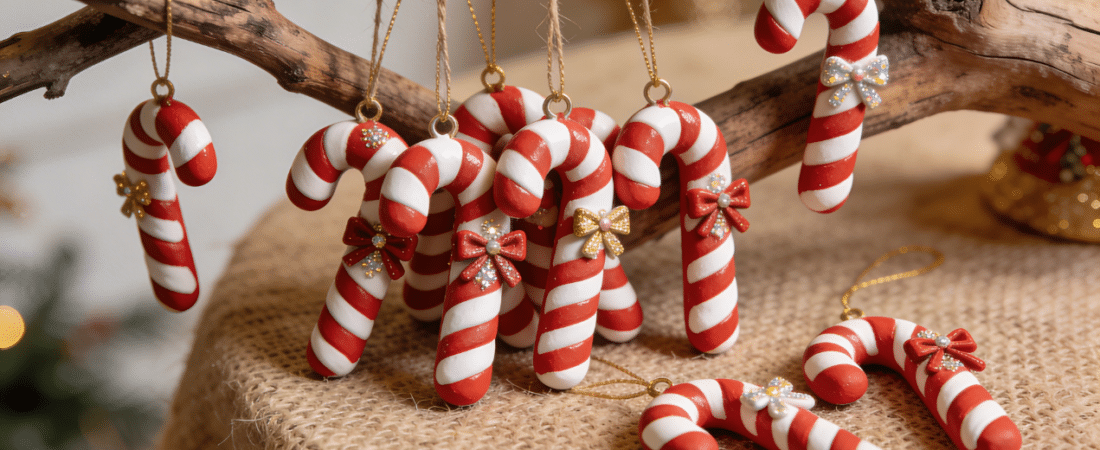

Making homemade candy cane ornaments is one of the most satisfying ways to add personal touches to your christmas tree each year. Candy canes have been a Christmas staple for centuries, symbolizing the spirit of the season. Whether you’re looking for diy christmas ornaments to craft with kids on a snowy December afternoon or elegant handmade pieces to gift to friends, these projects deliver results that look far more impressive than their simple supply lists suggest. Homemade ornaments carry sentimental value, making them a perfect personalized touch for holiday decor. Homemade candy cane ornaments can be a fun craft to do with kids or family members. Crafting candy cane ornaments can be a fun activity for kids and families during the holiday season. For even more festive project inspiration, explore this collection of holiday DIY crafts and handmade decorations.
In this guide, you’ll learn four distinct methods for creating candy cane ornaments that won’t melt, won’t be eaten by curious pets, and will hold up season after season. From rope-and-thread versions that skip the hot glue entirely to peppermint-scented clay ornaments that make your home smell like a candy shop, there’s a technique here for every skill level and aesthetic preference.
Quick overview: what you’ll learn in this guide
You’re about to discover how to make candy cane ornaments using four different approaches: classic rope and wire construction, scented polymer or air-dry clay, rustic twine-wrapped plastic canes, and old-fashioned salt dough. Each method produces durable ornaments designed to last for years without breaking, melting, or attracting pests.
These projects are beginner-friendly and kid-friendly with a bit of adult supervision. If you’re planning a full afternoon of winter crafting with little ones, you might also enjoy trying some polar bear craft ideas for kids. You’ll find all the supplies at any craft store or big-box retailer during November and December—no specialty shops required. Most materials cost just a few dollars, making these ornaments far more budget-friendly than store-bought alternatives. Once your ornaments are finished, you can keep the creativity going with other colorful craft ideas for a fun weekend.
The first full tutorial appears immediately below, so you can grab your supplies and start wrapping thread around rope within the hour. Feel free to mix and match techniques too—imagine twine-wrapped plastic canes paired with peppermint-scented clay tags hanging on the same tree for a layered, handmade look that your family will love.
- DIY rope & thread candy cane ornaments (no hot glue)
- Peppermint-scented clay candy cane ornaments
- Rustic twine-wrapped candy cane ornaments (using plastic canes)
- Old-fashioned salt dough candy cane ornaments
- Creative ways to display and gift your homemade candy cane ornaments
- Storage, safety, and long-term care
DIY rope & thread candy cane ornaments (no hot glue)
DIY candy cane ornaments can be made using rope and wire to create a candy cane shape. Wrapping thread around the rope is a key step in making DIY candy cane ornaments.
This method creates a durable, cozy-looking ornament from cotton rope, thin craft wire, and embroidery thread. The finished piece mimics the classic red-and-white candy cane pattern but with a soft, textile feel that’s perfect for farmhouse or traditional christmas decor.
What makes this technique particularly appealing is that it avoids hot glue entirely. Instead, you’ll rely on thread tension and needle-finishing to secure everything in place, making it safer around kids and pets. The finished ornaments measure approximately 6–7 inches tall, which works beautifully on both tabletop trees and full-sized family trees.
If you’d prefer to jump straight into crafting, check the printable instruction card at the end of this article for a quick reference you can keep at your workspace.
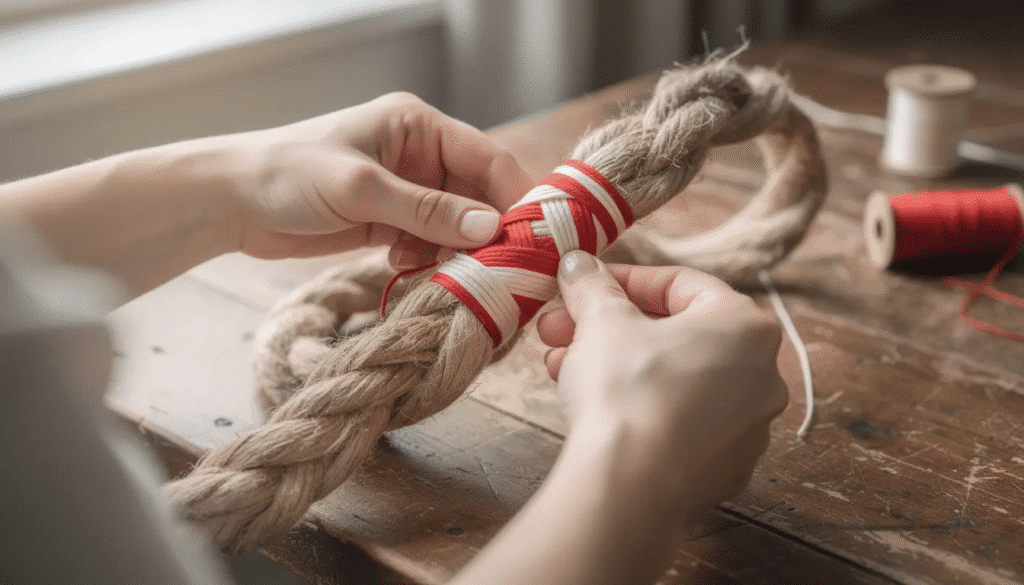
Supplies for rope & thread candy cane ornaments
Before you begin, gather the following materials. Having everything within reach makes the process smooth and enjoyable.
Supply | Specifications | Purpose |
|---|---|---|
Cotton rope | 1/4”–3/8” diameter, cut to 8” per ornament | Forms the ornament body |
Craft wire | 20–22 gauge, cut to 7.5” per ornament | Creates bendable structure |
Embroidery floss | Red and cream (or white) | Classic stripe colors |
Embroidery needle | Large-eye variety | Secures thread ends |
Craft scissors | Sharp, pointed tips | Clean cuts on thread and rope |
Wire cutters | Standard craft size | Cuts wire to length |
Measuring tape | Standard ruler works too | Ensures consistent sizing |
You can swap the red and cream for different color combinations if you’ve decided to match a specific theme. Blush and gold creates a modern, elegant look, while red and green channels a retro 1980s vibe. For the most traditional peppermint style, stick with red and cream. | ||
One quick tip: choose quality rope that doesn’t shed heavily. Tightly woven cotton rope makes wrapping easier and produces a neater final ornament. |
Step 1 – Insert the wire into the rope
This is the only slightly fiddly step in the entire process, but it’s what allows your candy cane to hold its curved shape permanently. Take your time here—rushing leads to frustration.
Confirm your measurements first. Each piece of cotton rope should be 8 inches long, and each wire piece should be 7.5 inches long. This half-inch difference ensures the metal stays hidden inside the rope ends once everything is assembled.
Begin by slightly bending the leading tip of your wire into a tiny hook or loop shape. This prevents the wire from snagging rope fibers as you push it through the center core.
Now push the wire slowly through the core of the rope. You’ll need to scrunch the rope along the wire like an accordion, then gently pull it straight again. Continue until the wire is centered inside with equal lengths of rope extending past each end.
Step 2 – Wrap the classic red and white stripes
Start at one end of the rope by laying the tail of your red thread parallel to the rope’s surface. Wrap over this tail 4–6 times to lock it securely in place—no knots needed.
Aim for stripes approximately 1/2 inch wide. Wrap the red thread tightly and evenly, keeping tension consistent but not so tight that you compress the rope dramatically. After completing your red section, stop and prepare to switch colors.
To transition to cream, lay the cream thread’s tail over the red wrapping, then continue wrapping with cream over both the rope and the red tail. This overlapping technique eliminates any need for knots or glue.
Rotate the rope as you work to ensure stripes wrap evenly all the way around. Check every few wraps to catch any gaps where rope might peek through. Continue alternating between red and cream down the entire 8-inch piece.
For a vintage look, make your cream stripes slightly wider than your red. For a bold, modern appearance, keep all stripes equal and narrow.
Step 3 – Finish the ends and hide the threads
Stop wrapping about 1/8 to 1/4 inch before each rope end. You’ll brush out these fibers later to create a soft, tassel-like finish that adds charm to the ornament.
Thread your large-eye embroidery needle with the final thread color you used. Slide the needle under several tight wraps near where you stopped, then pull the thread tail completely through. This locks the end in place without any visible knots.
Trim excess thread close to the wrapping surface so no tails show. Take a moment to double-check all your color transitions—they should look smooth and evenly spaced.
Patience here pays off. Neat finishing is what makes handmade ornaments look store-bought rather than hastily assembled.
Step 4 – Shape and hang your candy cane
Gently bend the wrapped, wired rope into the classic candy cane shape. Keep the curved hook at the top proportional—about 1.5 to 2 inches creates a pleasing curve that hangs nicely on tree branches.
Use your fingers or a small comb to brush out the rope fibers at the straight end. Trim these to an even length, creating a soft fringe that adds texture and visual interest.
For the hanging loop, thread a 6–8 inch piece of red embroidery floss under 2–3 wrapped strands near the top curve. Tie a firm knot against the ornament, then tie the two ends together to form a loop.
These finished canes look beautiful on the christmas tree, attached to gift bags, or woven into garland. Because there’s no glue to deteriorate, they’ll hold up for many christmas seasons to come.
Peppermint-scented clay candy cane ornaments
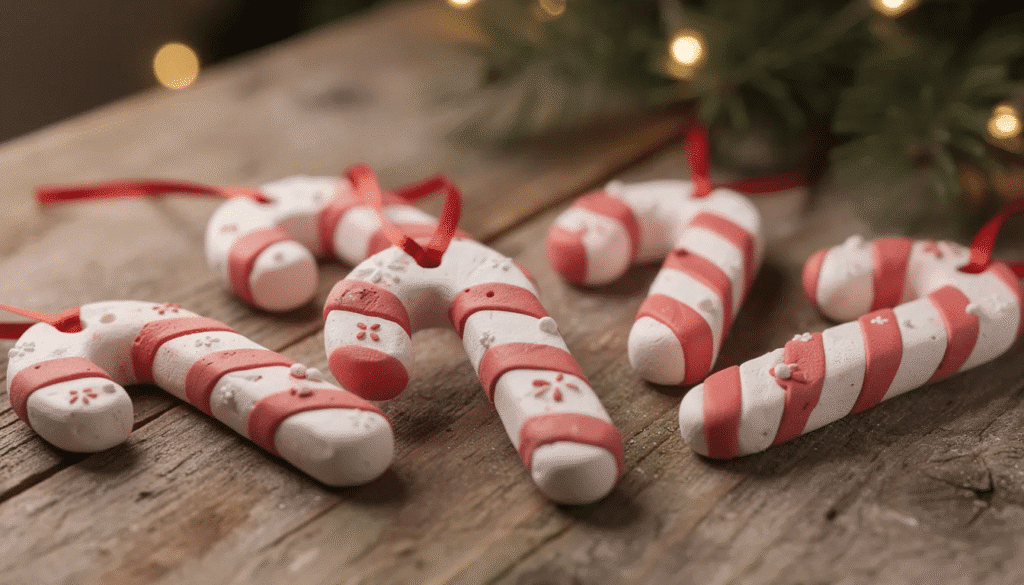
The scent of candy canes is a cherished part of holiday traditions. Incorporating the scent of candy canes into ornaments adds festive charm.
These ornaments combine the visual appeal of classic candy canes with a subtle peppermint scent that makes your entire tree smell like the holidays. They’re made from air-dry or oven-bake clay infused with peppermint essential oil, creating functional aromatherapy pieces that double as decorations.
To infuse ornaments with the scent of candy canes, drops of candy cane oil or a mixture of peppermint and vanilla scents can be added to the clay.
This method feels similar to making cookies—roll out the clay, cut shapes with cookie cutters, and bake or air-dry until firm. It’s a fun project for a December weekend afternoon, especially with kids who enjoy hands-on creativity.
Important note: these ornaments are not edible, even though they smell delicious. Label or store them separately from actual food items, and supervise young children who might be tempted to taste them.
Plan to make these in early December. They’ll fully cure and harden well before Christmas Eve, leaving plenty of time for painting and sealing.
Supplies for scented clay candy cane ornaments

Gather these materials before starting:
- White polymer clay or air-dry clay (1 lb block makes 15–20 medium ornaments)
- Red polymer clay or red acrylic paint for stripes
- Peppermint essential oil or extract (food-grade works fine)
- Small rolling pin or smooth glass
- Candy cane cookie cutter (or knife for freehand cutting)
- Circle or star cutters for variety
- Wooden skewer or drinking straw for hanging holes
- Baking sheet lined with parchment paper
- Thin baker’s twine for hanging loops
Safety guidance: peppermint oil is potent. Use only 2–3 drops per batch and wash hands thoroughly after handling scented clay. If working with children, add the oil yourself before letting them shape the clay.
For polymer clay, plan to bake at the manufacturer’s recommended temperature—typically 265–275°F for 15–30 minutes. Air-dry clay needs 24–48 hours to harden completely.
Step-by-step: roll, scent, cut, and bake
Begin by conditioning your clay. Knead it until soft and pliable, then flatten to approximately 1/4 inch thickness on parchment or a silicone mat. Use your rolling pin to achieve even thickness throughout.
Add 2–3 drops of peppermint essential oil to the flattened clay. Fold and knead until the scent distributes evenly. The aroma will intensify slightly as the clay cures.
Cut candy cane shapes using your cutter, pressing firmly and lifting straight up for clean edges. If you don’t have a cane-shaped cutter, roll two thin ropes of clay and twist them together, then bend into a cane shape by hand.
Poke a small hanging hole near the top of each shape using a skewer or drinking straw. Make the hole slightly larger than you think you need—clay can shrink during curing.
Place pieces on your parchment-lined baking sheet. For polymer clay, bake according to package instructions. For air-dry clay, leave flat on a tray in a cool, dry place for at least 24 hours before handling. Baking the shaped ornaments according to the clay instructions ensures they harden properly.
Painting and sealing the candy cane design
Once your ornaments have cooled or dried completely, it’s time to add the signature red stripes.
Using a fine brush and red acrylic paint, create diagonal stripes across each white candy cane shape. Follow the classic spiral pattern, keeping stripes evenly spaced. Two coats of paint usually provide the best coverage.
For added detail, consider painting tiny white dots on red circle ornaments, or outline edges with metallic gold paint for an elegant touch that pops against evergreen branches.
After paint dries completely (usually 1–2 hours), apply a clear matte or satin craft sealer. This protects the painted surface and helps lock in some of the peppermint scent so your ornaments stay fragrant through the holiday season.
Thread thin baker’s twine or ribbon through each hole and tie a secure knot to create your hanging loop. These ornaments are now ready to hang on your tree or share with friends.
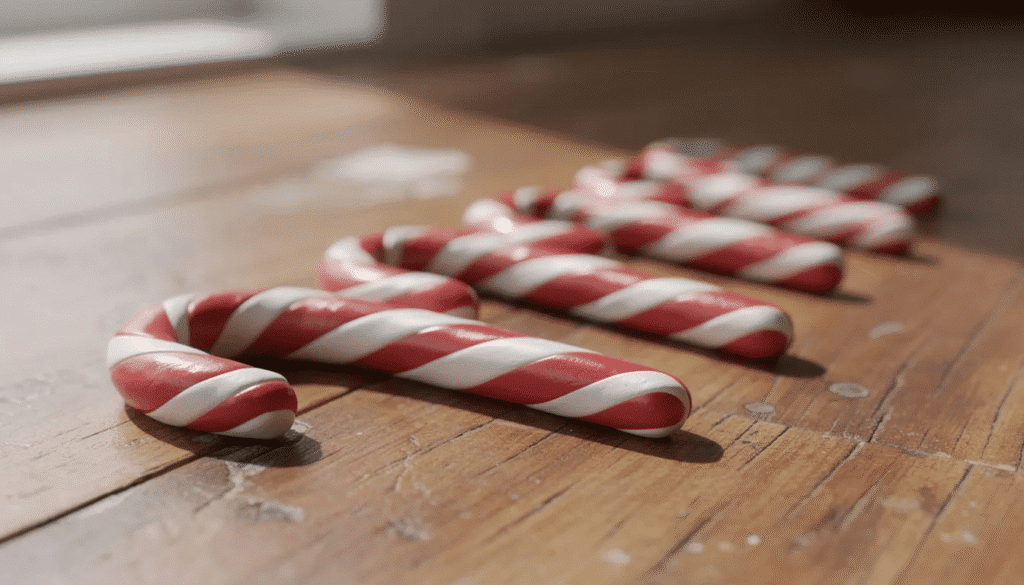
Rustic twine-wrapped candy cane ornaments (using plastic canes)
Using plastic candy canes instead of real ones is recommended for making durable ornaments. Using plastic candy canes for ornaments allows them to be reused from year to year.
This method transforms inexpensive plastic candy canes—the kind sold in multipacks at dollar stores—into rustic, farmhouse-style ornaments that look like they came from a boutique craft fair. It’s essentially a wrap and finish technique that anyone can master.
The beauty of this approach is durability. These ornaments are virtually unbreakable, making them perfect for homes with toddlers, curious pets, or outdoor porch trees that face wind and weather.
You can finish an entire set of ornaments in about an hour, which makes this method ideal for last-minute decorating when December’s busy schedule has gotten away from you. The final look pairs beautifully with natural decor like burlap, pinecones, and real evergreen branches.
Materials for twine-wrapped candy canes
Item | Notes |
|---|---|
Plastic candy canes | 5”–7” tall, sold in packs of 12+ |
Natural jute twine | One small roll covers 10+ canes |
White or red cotton string | For accent stripes |
Craft glue or tacky glue | Quick-grab formula recommended |
Ribbon scraps | Gingham or plaid, 1/4”–1/2” wide |
Scissors | Sharp craft scissors work best |
Choose lightweight plastic canes rather than real sugar candy canes. Plastic doesn’t attract ants, won’t break if dropped, and can be reused annually. Look for them at dollar stores starting in early November. | |
A fast-grab tacky glue keeps twine in place as you wrap around the tricky curved sections. Regular white glue works but requires more patience while it sets. |
Wrapping technique for a cozy, rustic look
Apply a thin line of glue along a small section of the plastic cane—about 1 to 2 inches at a time. Press the end of your twine into the glue and begin wrapping tightly.
Work in short segments to maintain tension. Overlap the twine slightly as you wrap so no plastic shows through, especially around the curved top of the cane where gaps tend to appear.
For a subtle striped effect, occasionally switch from jute to red or white cotton string. Three or four wraps of contrasting string creates visual interest without overwhelming the rustic aesthetic.
Tie small ribbon bows where the curved hook meets the straight stem. This covers any transition points and adds a finishing touch that makes each cane ornaments look intentional and polished.
If the original plastic hook isn’t secure enough for hanging on a tree branch, add an extra loop of string at the top. Simply tie a 4-inch piece of twine around the top curve before wrapping, leaving the ends free to form a hanging loop.
Old-fashioned salt dough candy cane ornaments
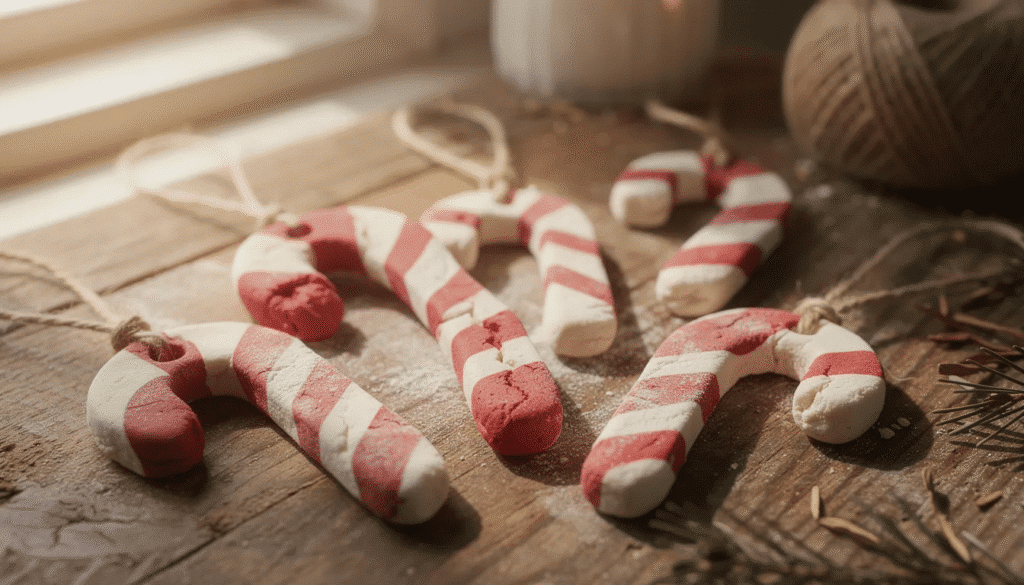
Salt dough can be used to create candy cane ornaments that are easy for toddlers to help make. Candy cane ornaments can be made by twisting two colored “snakes” of dough together.
There’s something nostalgic about making salt dough ornaments during the holiday season. This recipe creates candy canes that look charming hanging on the tree and serve as keepsakes your family can enjoy for years. The technique is simple enough for toddlers, preschoolers, and early elementary-aged kids to participate meaningfully.
These ornaments bake at a low temperature—around 200°F—for several hours. The result is a hardened, paintable surface that holds up surprisingly well when stored properly between seasons.
The dough uses simple pantry ingredients you likely already have: flour, salt, and water. Add optional peppermint extract for holiday scent that makes the kitchen smell amazing while you bake.
Plan for making and baking on a single December afternoon. The following day, once ornaments are completely dry, you can paint and seal them as a family activity.
Mixing and coloring the salt dough
The basic recipe is straightforward:
- 2 cups all-purpose flour
- 1 cup fine table salt
- 3/4 to 1 cup water (add gradually)
- 1–2 teaspoons peppermint extract (optional)
Combine flour and salt in a large bowl, then add water slowly while mixing. Knead by hand until smooth and pliable—not sticky. If the dough sticks to your fingers, add more flour in small amounts.
Split the dough into two equal portions. Leave one portion plain for white stripes. Add red food coloring to the other portion and knead until the color distributes evenly. Wear gloves or use a disposable surface to avoid staining your hands.
Let both portions rest for 10–15 minutes. This relaxes the gluten and makes rolling and shaping easier, especially for small hands that might struggle with stiff dough.
Shaping, baking, and finishing the candy canes
Roll the red and white dough into thin “snakes” about 1/4 inch thick and 6–7 inches long. Kids tend to enjoy this step the most—it’s like playing with modeling clay.
Take one red rope and one white rope, pinch the ends together, then twist them around each other to create the signature candy cane spiral. Older children can manage this independently, while younger kids may need guidance.
Curve each twisted rope into a candy cane shape on a parchment-lined baking sheet. Gently press the pinched ends to ensure they don’t separate during baking.
Bake at approximately 200°F for about 2 hours, flipping once halfway through. The ornaments should feel dry and firm when finished but shouldn’t brown. Every oven varies, so watch your first batch carefully.
Cool completely before finishing. Brush with clear acrylic sealer or craft varnish for protection, then add a dab of glue and a ribbon loop on the back for hanging.
Creative ways to display and gift your homemade candy cane ornaments
Your finished candy canes deserve more than just spots on the christmas tree. These handmade pieces work beautifully throughout your december decor.
Homemade ornaments carry sentimental value, making them a perfect personalized touch for holiday decor.
Try hanging canes along a staircase garland, spacing them every 12–18 inches for visual rhythm. Attach one to each place setting for christmas eve dinner as a festive touch that doubles as a take-home gift for guests.
Tie ornaments onto wrapped presents instead of store-bought bows. The personal touch elevates even simple kraft paper wrapping into something special. Recipients often keep the ornament long after they’ve forgotten what was inside the box.
For teacher or neighbor gifts, assemble sets of three or four ornaments in clear cellophane bags tied with ribbon, or place them in small kraft boxes with tissue paper. These bundles feel thoughtful without requiring significant expense.
Consider dating the back of one ornament each year. Over time, you’ll build a collection that chronicles your family’s crafting sessions across different christmas seasons.
Storage, safety, and long-term care
Proper storage ensures your handmade ornaments survive for years. Keep them in a cool, dry place after the holidays—a dedicated ornament box or plastic storage container works perfectly.
Wrap delicate clay and salt dough pieces individually in tissue paper or bubble wrap. This prevents chips and cracks during storage. Label boxes clearly so you can find them next November without digging through everything.
Scented and salt dough ornaments are particularly sensitive to moisture and heat. Store them away from attics that get hot in summer or basements that tend toward dampness. Mold and warping are the main enemies of these materials.
Rope, twine, and plastic-based canes are remarkably durable. They tolerate being tossed in a box with other ornaments and emerge ready for another season without damage.
This week, pick one method that appeals to you—whether that’s the no-glue rope technique, scented clay, rustic twine wrapping, or classic salt dough. Make a small batch of candy cane ornaments and start a new december crafting tradition that your whole family can enjoy year after year.