

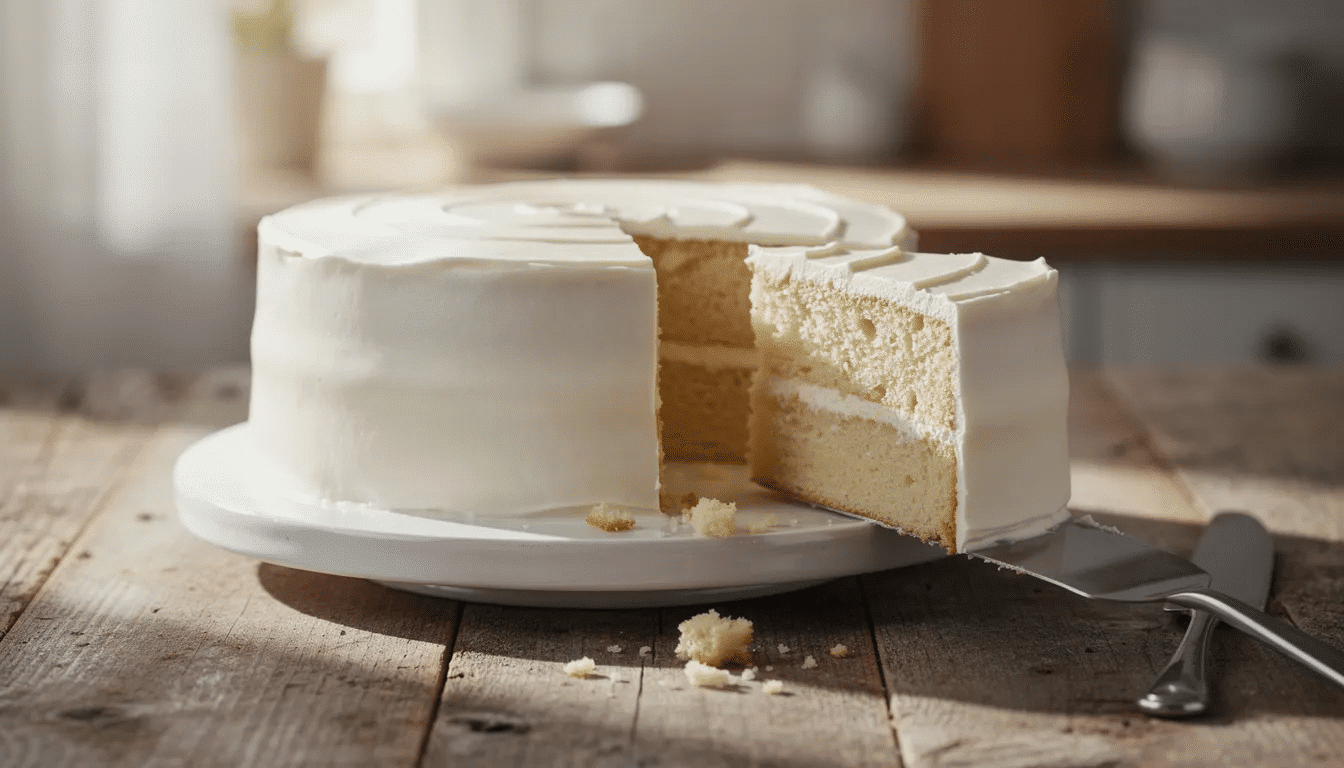
Baking a cake from scratch might seem intimidating, but with the right guidance, anyone can create a delicious homemade vanilla cake that tastes better than anything from a box. This beginner-friendly guide walks you through every step of making a classic vanilla butter cake, from measuring your first cup of flour to slicing into a perfectly moist, tender crumb.
Whether you’re preparing for birthday cakes or simply want to master one of the most essential baked goods in any home baker’s repertoire, this vanilla cake recipe will become your go-to foundation for years to come.
- Introduction to Cake Baking
- Quick Overview: Time, Tools, and What You’ll Learn
- Understanding Cake Recipes
- Essential Ingredients for a Basic Vanilla Cake
- The Importance of Room Temperature Ingredients
- Step 1: Prepare Your Pans and Preheat the Oven
- Step 2: Cream Butter and Sugar Until Light and Fluffy
- Step 3: Add Eggs and Vanilla
- Step 4: Combine Dry Ingredients and Alternate with Milk
- Adding Flavorings and Extras
- Step 5: Fill the Pans and Bake
- Step 6: Cool, Frost, and Serve
- Variations and Different Pan Sizes
- How to Tell When Your Cake Is Perfectly Baked
- Common Cake-Baking Mistakes and How to Avoid Them
- Storing, Freezing, and Making Ahead
- Recipe Notes
- Watching and Learning from Videos
- Key Takeaways
Introduction to Cake Baking
Cake baking is a delightful journey that anyone can embark on, whether you’re a complete beginner or looking to refine your skills. At its core, baking a perfect cake is about combining quality ingredients with the right baking techniques and a little bit of patience. Using fresh, high-quality ingredients—like real butter, pure vanilla extract, and the right type of flour—makes a noticeable difference in the flavor and texture of your finished cake.
Before you start, it’s important to read through the recipe instructions carefully. Understanding each step and preparing your ingredients and equipment ahead of time sets you up for success. Even if you’re new to cake baking, mastering the basics—like measuring accurately, mixing properly, and knowing when your cake is done—will help you achieve a perfect cake every time.
Remember, baking is as much about enjoying the process as it is about the final result. With a little practice and attention to detail, you’ll soon be creating cakes that not only look beautiful but taste delicious too.
Quick Overview: Time, Tools, and What You’ll Learn
This guide focuses on creating a simple, foolproof vanilla cake that requires no special skills or fancy equipment. You’ll be working with common pantry staples and basic kitchen tools to produce two beautiful 8-inch round cake layers or one 9 x 13-inch sheet cake. The entire process takes about an hour from start to finish, though you’ll want additional time for cooling before you frost.
Here’s what you’re looking at for timing: prep time runs about 20 minutes, bake time is 25–30 minutes at 350°F (175°C), and you should plan for at least 1 hour of cooling before you even think about frosting. This yields enough for a two-layer cake that serves 12–16 people generously.
The essential tools you’ll need include two mixing bowls (one large, one medium), a stand mixer or hand mixer, a whisk, a rubber spatula, two 8-inch round cake pans, parchment paper, a wire rack, measuring cups and spoons, and optionally a kitchen scale for precision. It’s important to measure flour accurately—use the spoon-and-level method or, for best results, a kitchen scale—to ensure your cake turns out light and consistent every time. By the end of this guide, you’ll understand how to choose and prepare your ingredients, mix your cake batter correctly without overworking it, bake evenly without doming or sinking, test for doneness using multiple methods, cool properly, and store your creation for maximum freshness.
Understanding Cake Recipes
Getting comfortable with cake recipes is the first step toward baking success. Each cake recipe is a roadmap, guiding you through the ingredients, proportions, and methods needed to create a specific cake. To get the best results, it’s important to familiarize yourself with common baking terms you’ll encounter, such as creaming (beating butter and sugar together until light and fluffy), whisking (using a whisk to combine or aerate ingredients), and folding (gently incorporating ingredients to avoid deflating the batter).
Accurate measuring is crucial—use a measuring cup for dry and liquid ingredients, or a digital scale for even greater precision. This ensures your cake batter has the right balance of flour, sugar, and liquids. Understanding the role of each ingredient helps too: baking powder gives your cake rise and a fluffy texture, cake flour creates a tender crumb, and vanilla extract adds depth of flavor. If you ever need to substitute or adjust ingredients, knowing their purpose in the recipe will help you make smart choices.
By taking the time to read through cake recipes and understand the instructions and ingredients, you’ll be well on your way to baking cakes that are both delicious and reliable.
Essential Ingredients for a Basic Vanilla Cake
This is a classic vanilla butter cake built on common pantry ingredients that deliver exceptional flavor and a moist, tender texture. The beauty of this recipe lies in its simplicity—no unusual ingredients, no complex techniques, just quality basics combined properly.
For two 8-inch round layers, you’ll need:
- 2 1/4 cups (270 g) all-purpose flour or plain flour
- 2 1/2 tsp baking powder
- 1/2 tsp fine salt
- 1 cup (226 g) unsalted butter, softened
- 1 3/4 cups (350 g) granulated sugar
- 4 large whole eggs
- 1 cup (240 ml) whole milk
- 2 1/2 tsp pure vanilla extract (use high quality vanilla for best results)
Each ingredient plays a crucial role. The unsalted butter provides rich flavor and creates structure, while also coating flour proteins to produce a tender cake rather than a tough cake. Sugar does more than add sweetness—it helps create a fluffy texture by trapping air during creaming and keeps the crumb moist. The eggs provide structure, moisture, and richness through both their proteins and fats. Whole milk softens the crumb and adds subtle dairy flavor, while baking powder serves as the leavening agent that makes the cake rise with its signature lightness. Finally, vanilla extract transforms a simple butter cake into something that tastes delicious with warm, aromatic depth.
A note on flour: All-purpose flour works perfectly here and produces a great cake with reliable results. However, if you want an even softer, more delicate crumb, you can substitute cake flour. Use 2 1/2 cups (285 g) cake flour in place of the all-purpose flour, as cake flour contains less protein and creates a more tender result. Some bakers also use self-raising flour, though you’ll need to omit the baking powder and salt if you go this route.
If you don’t have baking powder, baking soda can be used as an alternative leavening agent. However, baking soda requires an acid—such as buttermilk or lemon juice—to activate it and help the cake rise properly. Make sure to use the correct amount and pair it with an acid for best results.
All ingredients should be at room temperature before you begin. In practical terms, this means your softened butter should yield to gentle pressure but still hold its shape (not greasy or melting), and your eggs and milk should no longer feel cold to the touch. Set everything out about one hour before baking for best results. Using room temperature butter is essential for proper creaming—cold butter won’t incorporate air properly, and overly warm butter creates a flat, dense batter.
The Importance of Room Temperature Ingredients
One of the simplest secrets to baking a tender, fluffy cake is using room temperature ingredients. When unsalted butter, eggs, and milk are all at room temperature, they blend together smoothly, creating a cake batter that traps air and bakes up light and even. Cold ingredients can cause the butter to seize or the batter to curdle, leading to a tough cake with a dense texture.
To bring your ingredients to room temperature, set them out on the counter about 30 minutes to an hour before you start baking. Your butter should be soft enough to press with a finger but not melting, and your eggs and milk should lose their chill. This small step makes a big difference, ensuring your cake bakes up with a tender crumb and a fluffy cake texture that everyone will love.
Step 1: Prepare Your Pans and Preheat the Oven
Preparation happens before you even crack an egg. Getting your pans ready and your oven heated ensures that your cake batter goes straight into a properly preheated oven the moment it’s mixed, which is crucial because leavening agents like baking powder start working immediately upon contact with moisture.
Set your oven to 350°F (175°C) and allow it to preheat for at least 20 minutes before baking. Most ovens indicate when they’ve reached temperature, but the heating elements actually cycle on and off during this period, so giving extra time ensures stable, even heat.
To prepare your cake pans:
- Use your fingers or a paper towel to spread a thin, even layer of soft butter across the entire interior surface of two 8-inch (20 cm) round pans
- Cut circles of parchment paper to fit the pan bottoms and press them in place
- Lightly flour the buttered sides, tapping out any excess
A properly prepared cake pan should show a thin, even coating with no clumps of flour or bare spots. The parchment ensures your cake layers release cleanly, while the butter and flour combination prevents sticking on the sides.
If you prefer to make sheet cakes instead, use a 9 x 13-inch pan prepared the same way—just note that bake time increases slightly. For a 9-inch square cake tin, the same preparation applies. Position your oven rack in the center position before baking. Placing pans too high risks over-browning the tops, while too low can leave the bottom overdone and the center underbaked.
Step 2: Cream Butter and Sugar Until Light and Fluffy
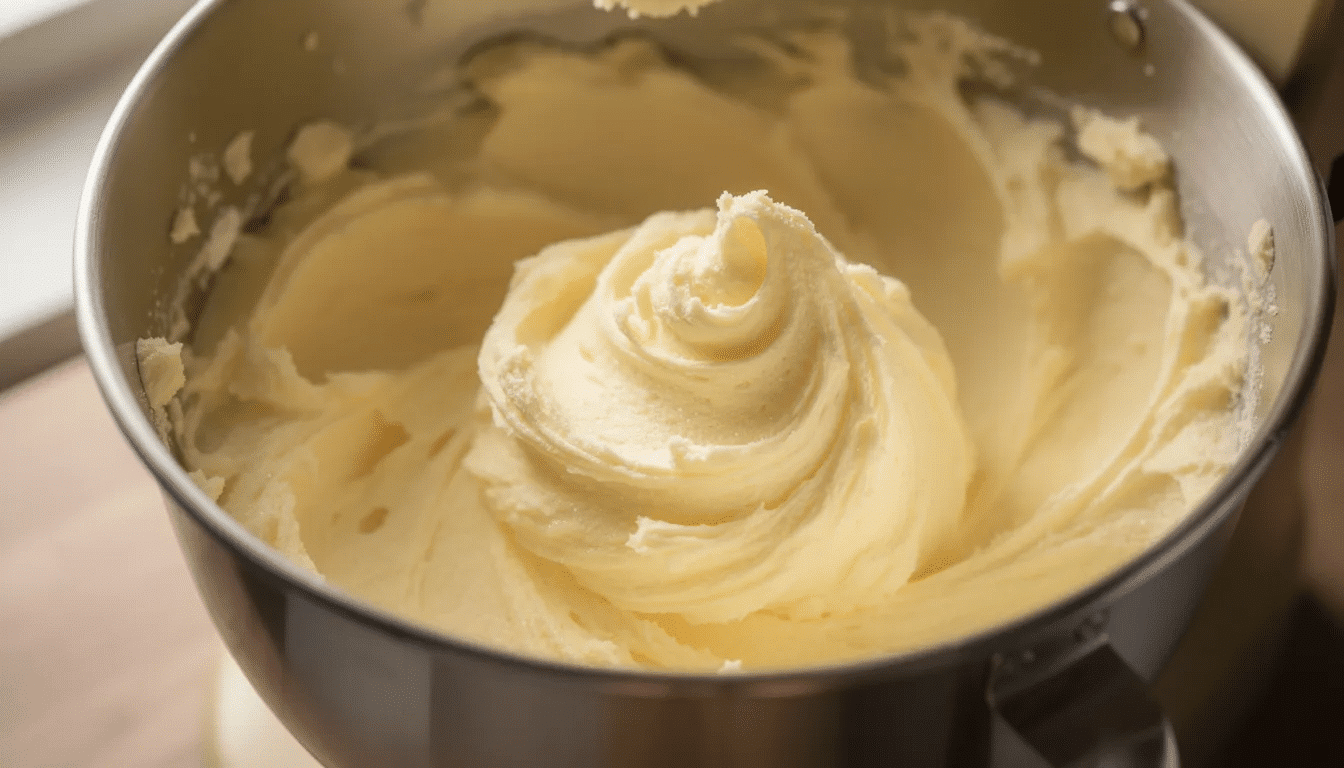
The creaming method is where your fluffy cake begins to take shape. When you beat butter and sugar together, you’re physically incorporating millions of tiny air bubbles into the fat. These air pockets expand during baking and create the light, tender crumb that distinguishes a perfect cake from a dense one.
Start by cutting your room temperature butter into roughly 1-inch pieces and placing them in a large mixing bowl or the bowl of your stand mixer fitted with the paddle attachment. Beat the butter alone on medium speed for about 30 seconds until it’s smooth and slightly lighter in color. This brief solo beating ensures even consistency before you add sugar.
Add the granulated sugar all at once, then beat the butter and sugar together on medium speed for 3–5 minutes. (Some mixers may require using medium-high speed to achieve a truly light and fluffy texture, especially when preparing frosting.) If using a hand mixer, you may need to go closer to 5–6 minutes to achieve the same results. Stop to scrape down the sides and bottom of the bowl at least twice during this process to ensure even mixing.
You’ll know the creaming is complete when the butter mixture has transformed dramatically. Look for these visual cues:
- The mixture becomes noticeably paler, shifting from yellow to almost white
- The volume increases significantly (research shows proper creaming can increase volume by 20–30%)
- The texture appears fluffy and light rather than sandy, dense, or greasy
- When you rub a bit between your fingers, it should feel smooth, not gritty
Watch out for temperature problems: If your butter was too cold, the mixture will stay dense and lumpy no matter how long you beat it. If this happens, let it sit for 10 minutes and try again. Conversely, if your butter was too warm, the mixture will look oily and flat, and you won’t achieve proper aeration. In this case, refrigerate the bowl for 10–15 minutes and continue.
Step 3: Add Eggs and Vanilla
Eggs should be added gradually to maintain the smooth, stable emulsion you’ve created. Adding them all at once can overwhelm the butter mixture and cause separation, which affects the final texture of your cake.
Add your 4 large room temperature eggs one at a time, beating on medium speed for about 30 seconds after each addition. Wait until each egg is fully incorporated before adding the next. The batter might look slightly thicker as you add eggs, but it should remain smooth and glossy throughout.
If the batter looks slightly curdled after adding eggs, don’t panic. This sometimes happens, especially if the eggs were slightly cooler than ideal. The mixture usually comes together once the dry ingredients are added. However, to prevent curdling, ensure your eggs are truly at room temperature—you can place them in a bowl of warm water for 5 minutes if needed.
After the final egg is incorporated, add vanilla extract to the mixing bowl and beat just until the mixture smells strongly of vanilla, about 15–20 seconds. Using high quality vanilla makes a noticeable difference here—the best vanilla cake recipe always starts with good extract.
Scrape down the bowl and beater at least once during this step. Butter tends to collect at the bottom of the bowl and can create heavy streaks in your finished cake if not properly incorporated.
Step 4: Combine Dry Ingredients and Alternate with Milk
The alternating method exists for good reason. Adding all the flour mixture at once would require extensive mixing to incorporate, which develops gluten and produces a tough, chewy crumb instead of the tender result you want. Adding all the liquid at once would create a broken, curdled mess. Alternating keeps the batter smooth and minimizes the mixing needed.
In a separate bowl, whisk flour, baking powder, and salt together until evenly combined. Whisking aerates the flour mixture slightly and ensures the leavening is distributed throughout. For an extra-light cake, you can sift these dry ingredients together, though whisking works well for most home bakers. Measure your flour carefully—the best method is to spoon flour into your measuring cup and level with a knife, rather than scooping directly from the bag, which compacts the flour and can add up to 30% more than intended.
With your mixer on low speed, add the dry ingredients and milk in this specific pattern:
- Add one-third of the flour mixture, mixing until just combined
- Add half of the whole milk, mixing until just combined
- Add another third of the flour mixture
- Add the remaining milk
- Finish with the last third of the flour mixture
Mix only until each addition is just incorporated—you should still see traces of flour disappearing as you add the next ingredient. Stop to scrape the sides and bottom of the bowl once or twice during this process to catch any unmixed pockets.
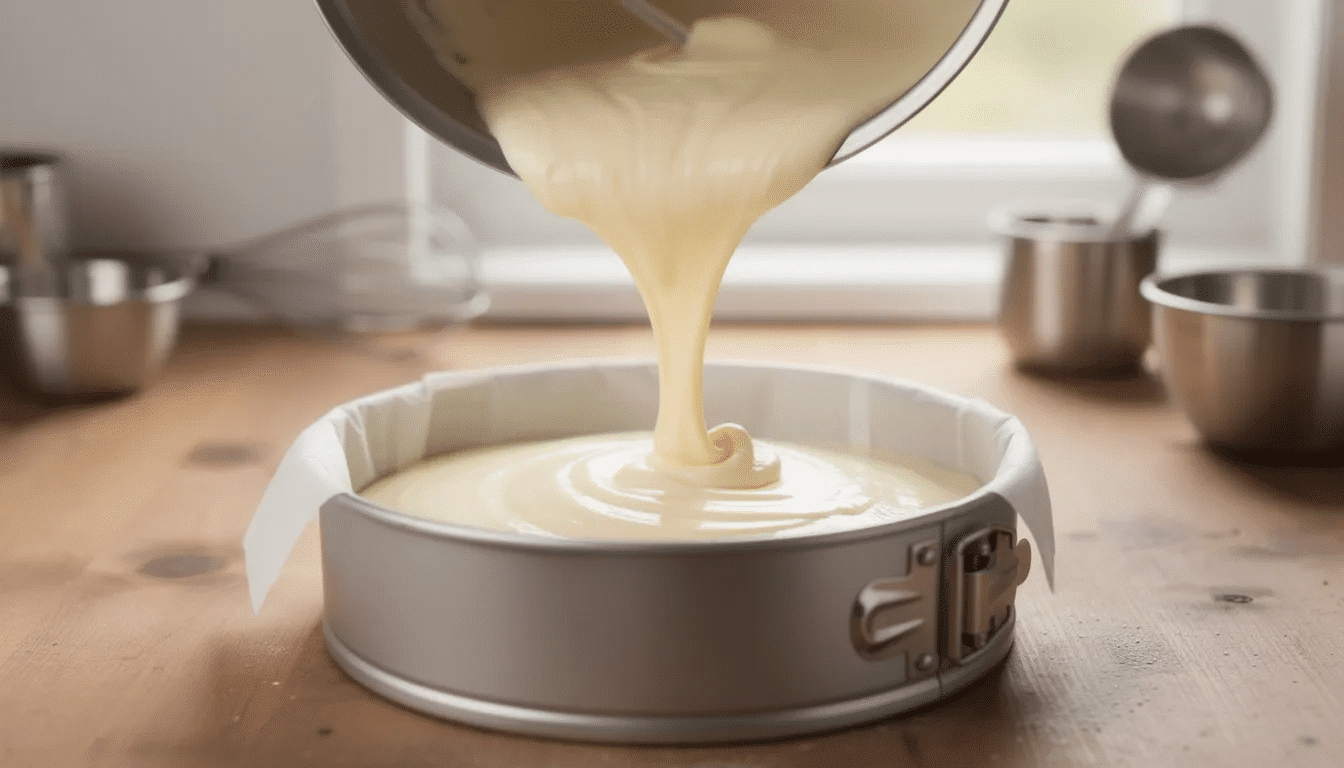
The finished cake batter should be thick but pourable, completely smooth with no visible pockets of dry flour or lumps of butter. It will have a satiny appearance and should ribbon slowly off your spatula when lifted. If you see streaks of white flour or yellow butter, use a spatula to fold gently by hand a few times rather than beating further.
Adding Flavorings and Extras
Personalizing your cake with flavorings and extras is a fun way to make each bake your own. Classic vanilla extract is a staple in many cake recipes, adding warmth and depth to the flavor. For a twist, try almond extract, lemon zest, or even a splash of orange extract to brighten up your cake. You can also mix in extras like chopped nuts, chocolate chips, or dried fruit for added texture and bursts of flavor.
When adding flavorings and extras, it’s important to follow the recipe instructions and measure carefully—too much can overpower the delicate balance of your cake. Start with the recommended amount of vanilla extract or other flavorings, and add mix-ins at the end to avoid overmixing the batter. With the right balance, your cake will be both delicious and uniquely yours.
Step 5: Fill the Pans and Bake
Even filling and correct bake time are what separate a domed, underbaked disappointment from a flat-topped, evenly cooked success. Taking an extra minute to divide properly pays dividends.
Divide the batter evenly between your two prepared pans. The most reliable method is to place each pan on a kitchen scale and add batter until they weigh the same. If you don’t have a scale, eyeball the amounts and then use a spatula to level each pan—the batter should reach about halfway up the sides.
Once filled, use an offset spatula to spread the cake batter evenly across each pan, smoothing the tops into flat surfaces. Then lift each pan about 4 inches off the counter and drop it flat 2–3 times. This releases large air bubbles trapped in the batter that could create holes in your finished cake.
Place the pans in the center of your preheated oven, leaving at least 2 inches between them and the oven walls for proper air circulation. Bake according to these guidelines:
Pan Size | Approximate Bake Time |
|---|---|
Two 8-inch round layers | 25–30 minutes |
Two 9-inch round layers | 22–27 minutes |
One 9-inch square | 30–35 minutes |
One 9 x 13-inch sheet | 30–35 minutes |
Start checking for doneness about 5 minutes before the minimum time listed. Every oven varies, and underbaking is easier to fix than overbaking.
Your cake layers are done when:
- The tops are evenly golden and spring back when lightly pressed in the center
- The edges have just begun to pull away from the sides of the pan
- A toothpick inserted in the center comes out with a few moist crumbs or a few dry crumbs attached, but no wet batter
If your toothpick shows wet batter, return the cake to the oven and check again in 3-minute intervals. Don’t over bake—a dry cake results from leaving it in too long, and this vanilla cake should be moist with moist crumbs, not bone-dry.
Step 6: Cool, Frost, and Serve
Patience at this stage makes or breaks your finished cake. Attempting to frost a warm cake results in melted frosting, torn crumbs, and frustration. The cooling period is not optional.
When your cakes test done, remove them from the oven and place the pans on a wire rack. Let them cool in the pans for 10–15 minutes—this allows the structure to set enough that the layers won’t break when turned out. After this initial rest, run a thin knife or offset spatula around the edges to loosen any spots that may have stuck.
Place the wire rack on top of a pan, then confidently flip both together. Lift the pan away, peel off the parchment paper, and allow the cake layers to cool completely on the rack. This takes at least 1 hour, often longer. Cooling completely is essential—even slightly warm layers will melt your frosting and make handling difficult.
Once fully cooled, you can wrap the layers in plastic wrap and refrigerate for up to an hour to make them even easier to handle. Slightly chilled cake layers are sturdier and less prone to crumbling during assembly.
For frosting, a simple vanilla buttercream works beautifully with this vanilla cake. A basic recipe combines 1 cup (226 g) softened butter with 4 cups (480 g) powdered sugar (also called confectioners sugar), 2 tbsp whole milk, and 2 tsp vanilla extract, beaten until fluffy. For chocolate lovers, fold in 1/2 cup cocoa powder to create a chocolate buttercream, or add melted chocolate for an even richer chocolate cake topping. Some prefer whipped cream frosting for a lighter option, though it requires refrigeration.
To assemble your layer cake:
- Place the first cooled layer on a cake plate or turntable, flat side up
- Spread about 1 cup of frosting evenly across the top using an offset spatula
- Add the second layer, flat side down (this creates the most level top)
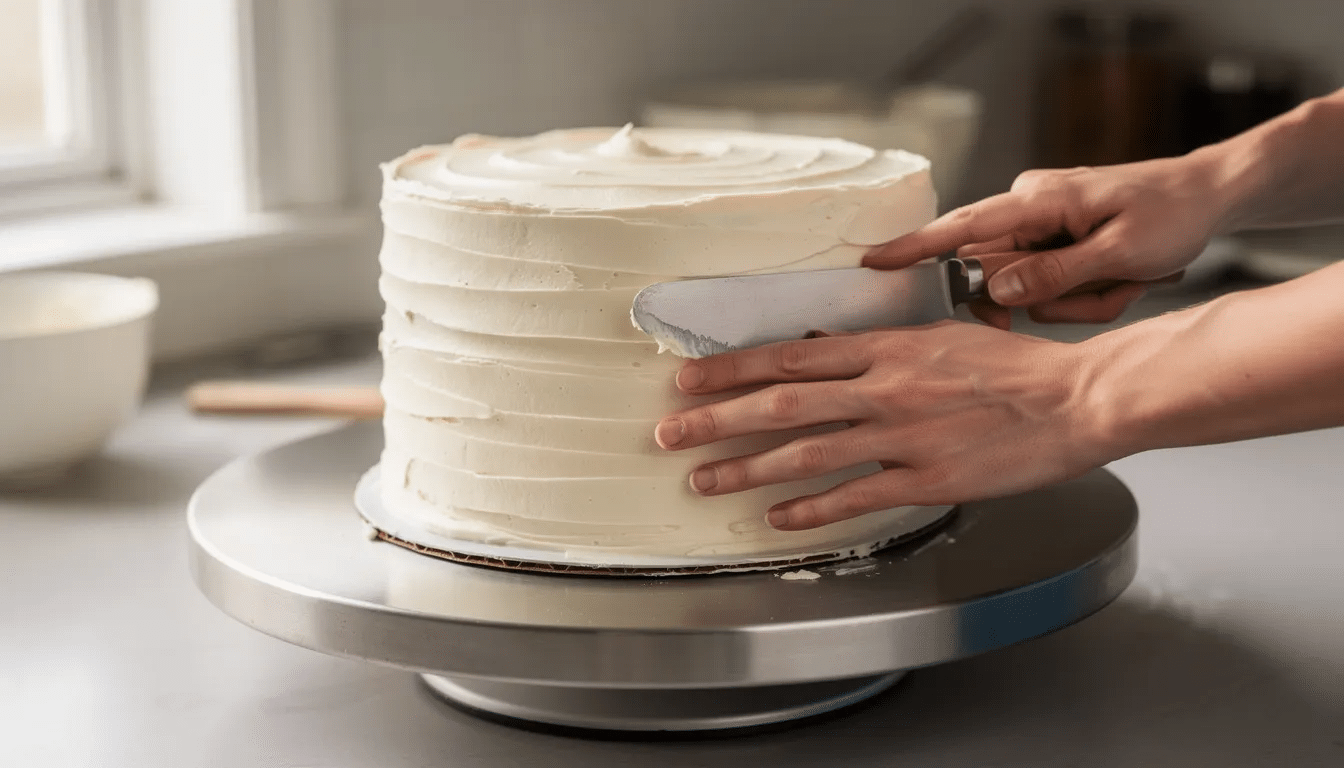
- Apply a thin crumb coat—a thin layer of frosting that seals in loose crumbs
- Chill for 15–20 minutes until the crumb coat feels firm
- Apply the final coat of frosting, smoothing the sides with a bench scraper and the top with your spatula
- Decorate with sprinkles, fresh berries, or additional piped borders
For an extra special presentation, you can create borders using a piping bag or simply add canola oil to thinned frosting for a drip effect down the sides.
Variations and Different Pan Sizes
This best vanilla cake recipe serves as a versatile foundation that adapts easily to different formats and flavor profiles. Once you’ve mastered the basic technique, experimentation becomes simple.
For cupcakes: Line a standard 12-cup muffin tin with paper liners. Fill each cavity about two-thirds full using a large cookie scoop or measuring cup for consistency. Bake at 350°F (175°C) for 18–22 minutes, checking at 15 minutes. This recipe yields approximately 24 standard cupcakes. Cupcakes are done when the tops spring back and a toothpick comes out clean.
For different layer configurations: If you prefer thinner layers for a taller cake, divide the batter among three 8-inch pans and reduce bake time to 18–22 minutes. For a two-layer cake using 9-inch rounds, bake for 22–27 minutes. Always watch the first batch carefully to establish timing for your specific oven.
Flavor variations to try:
- Lemon cake: Add the zest of 2 lemons to the butter mixture during creaming, and replace 2 tbsp of the milk with fresh lemon juice. The citrus adds brightness without making the cake overly sweet.
- Chocolate chip: Toss 1 cup mini chocolate chips in 1 tbsp flour mixture, then fold gently into the finished batter. The flour coating prevents chips from sinking.
- White cake: For a paler, more delicate cake, use 6 egg whites instead of 4 whole eggs, and increase milk by 2 tbsp. This creates the traditional white cake often used for weddings.
- Marble cake: Remove one-third of the batter to a separate bowl and fold in 3 tbsp cocoa powder and 1 tbsp milk. Dollop both batters alternately into the prepared pans and swirl with a knife.
When adding any mix-ins like fruit, chips, or sprinkles, always fold them in at the very end using a spatula rather than the mixer. Aggressive mixing at this stage deflates the careful aeration you’ve built and can result in a dense final product. Distribute the batter evenly between your prepared pans regardless of which variation you choose.
You can also experiment with sour cream in place of some of the milk for extra richness—replace half the milk with an equal amount of sour cream for a denser, more moist crumb.
How to Tell When Your Cake Is Perfectly Baked
Relying solely on the timer is a recipe for inconsistent results. Ovens vary significantly—some run hot, some run cool, and most have hot spots that affect baking. Learning to read your cake’s visual and tactile cues ensures perfect results regardless of your equipment.
Key signs of a perfectly baked cake:
- Golden color: The top should be evenly golden across the entire surface, not pale in the center or dark at the edges
- Edge separation: The cake just begins to pull away from the pan sides, creating a tiny gap all around
- Spring-back test: When you press the center lightly with your finger, the cake springs back and doesn’t leave an indentation
- Toothpick test: When a toothpick inserted in the center comes out mostly clean, showing only a few dry crumbs or moist crumbs clinging to it rather than wet batter
If the center of your cake jiggles visibly when you gently shake the pan, or if your toothpick comes out coated in wet batter, the cake needs more time. Return it to the oven and check again in 3-minute intervals.
Managing oven hot spots: If one side of your cake consistently bakes faster than the other, rotate the pans 180 degrees halfway through baking. However, avoid opening the oven door during the first 15 minutes of baking—the sudden temperature drop can cause the center to sink before the structure sets.
If your cakes consistently over-bake or under-bake despite following recipes precisely, invest in an inexpensive oven thermometer. Place it on the center rack and check whether your oven’s actual temperature matches the dial setting. Many ovens run 25°F or more off their indicated temperature, which significantly affects baking times and results.
Common Cake-Baking Mistakes and How to Avoid Them
Even experienced bakers occasionally produce a dry cake or dense disappointment. The good news is that most failures trace back to a handful of fixable issues. Understanding what went wrong means you can correct it next time.
Overmixing the batter: This is the most common cause of a tough cake. Once flour hits the wet ingredients, gluten development begins. The more you mix, the more gluten develops, and the chewier your cake becomes. The solution is simple: switch to low speed when adding flour, and stop mixing the moment the dry ingredients disappear. A few small lumps are preferable to overmixing. Use a spatula to fold gently if needed.
Cold ingredients: Using eggs or milk straight from the refrigerator can cause the butter mixture to seize and curdle, resulting in a grainy batter that doesn’t rise properly. Always bring eggs, milk, and butter to room temperature about one hour before baking. Room temperature ingredients emulsify smoothly and incorporate more air.
Inaccurate measuring: Too much flour creates a dry cake with a heavy texture. Too little makes the cake sink. The spoon flour method works best: use a spoon to fluff and transfer flour into your measuring cup, then level with a straight edge. Never scoop the measuring cup directly into the flour bag—this compacts the flour and can add 20–30% more than the recipe intends. Better yet, use a kitchen scale for precision.
Opening the oven door too early: When you open the oven door, you drop the internal temperature by 25–50°F instantly. If the cake structure hasn’t set (which happens around 15–20 minutes in), this temperature shock causes the center to collapse. Wait until at least 80% of the bake time has passed before checking.
Incorrect oven temperature: An oven that runs hot will brown the outside before the inside cooks through. One that runs cool will leave you with a pale, underdone cake. Use an oven thermometer to verify accuracy, and adjust your dial accordingly.
Storing, Freezing, and Making Ahead
A properly stored vanilla cake stays moist and delicious for several days, making it ideal for advance preparation when you’re planning birthday cakes or other celebrations.
Storing unfrosted layers: Once your cake layers have cooled completely, wrap each one tightly in plastic wrap, ensuring no air can reach the surface. For extra protection, wrap in aluminum foil over the plastic. Unfrosted layers keep at room temperature for up to 2 days, or in the refrigerator for up to 4 days. Bring refrigerated layers to room temperature before frosting for the best texture.
Freezing for longer storage: Tightly wrapped layers freeze beautifully for up to 3 months. Place the plastic-wrapped layers in a large freezer bag, pressing out excess air before sealing. To thaw, transfer to the refrigerator overnight, then bring to room temperature on the counter before unwrapping. Unwrapping while cold causes condensation to form on the cake surface.
Storing frosted cake: Keep a fully frosted cake in an airtight container or under a cake dome at cool room temperature for 1–2 days. If your frosting contains dairy (like buttercream), refrigeration extends the life to 4–5 days. Bring refrigerated slices to room temperature for 20–30 minutes before serving—cold cake tastes muted and has a denser mouthfeel.
Making ahead for events: For the best results with minimal stress, bake your cake layers 1–2 days before your event. Many bakers find that the flavor actually improves slightly by day two as the crumb settles and moisture distributes evenly. Frost the morning of the event, or up to one day ahead if you need to transport the cake.
Store any leftover slices in an airtight container. For cut cakes, press a piece of plastic wrap directly against the exposed crumb to prevent drying.
Recipe Notes
This best vanilla cake recipe produces consistent, delicious results when you follow the techniques outlined above. A few final reminders will set you up for success.
The creaming butter step genuinely matters—don’t rush it. Those 3–5 minutes of beating create the air cells that become your cake’s lift. Skipping or shortening this step produces a noticeably denser result.
Every oven is different. The times provided are guidelines, not absolutes. Trust the visual and physical tests over the timer, especially the first time you make this recipe.
Don’t skip the parchment paper. It costs pennies and guarantees clean release. Even the most perfectly greased pan occasionally sticks without it.
Finally, this recipe scales beautifully. Double it for a larger gathering, or halve it for a smaller treat. The ratios work regardless of quantity, though you may need to adjust baking times for larger or smaller amounts.
Watching and Learning from Videos
One of the best ways to improve your cake baking skills is by watching and learning from videos. Seeing techniques like creaming butter and sugar, whisking eggs, or folding ingredients demonstrated in real time can make the process much clearer than reading instructions alone. Many experienced bakers share step-by-step instructions, tips, and troubleshooting advice in their videos, covering everything from making a simple vanilla cake to assembling a multi-layer cake.
By following along with these videos, you can pick up valuable techniques—like how to achieve the perfect creaming butter stage or how to fold flour into your cake batter without deflating it. Whether you’re tackling your first cake or looking to master more advanced skills, watching videos is a practical and inspiring way to build your confidence and bake better cakes every time.
Key Takeaways
- Bring all ingredients to room temperature before starting for smooth, well-emulsified batter
- Cream the butter and sugar for a full 3–5 minutes until pale and fluffy
- Alternate dry ingredients and milk in three additions to prevent overmixing
- Test with a toothpick—look for a few moist crumbs, not wet batter
- Cool completely before frosting to prevent melting and crumbling
- Store properly for up to 4 days refrigerated or 3 months frozen
With this guide in hand, you’re ready to create a perfect cake that rivals anything from a professional bakery. Start with this vanilla foundation, then explore chocolate cake variations, different frostings, and creative decorations as your confidence grows. The best cake is the one you bake yourself—imperfections and all.