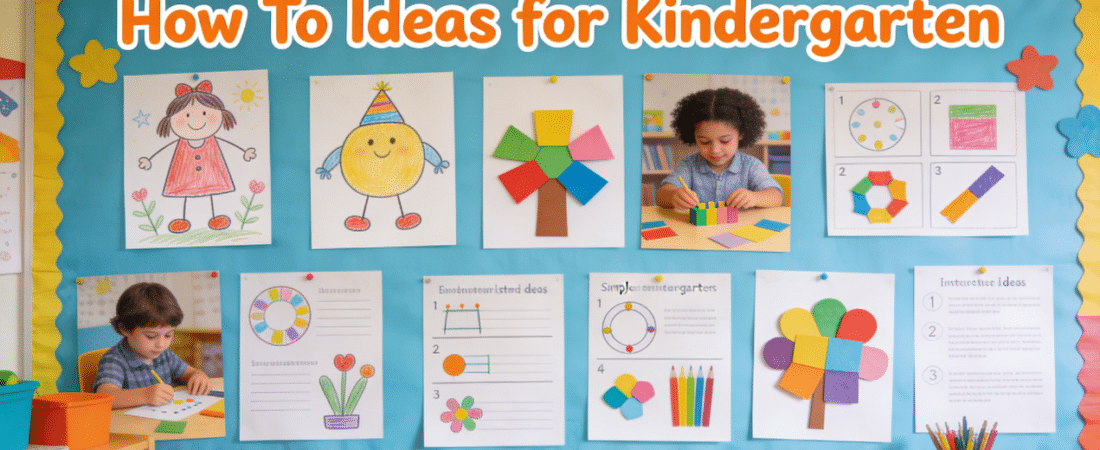

Teaching kindergarten is equal parts joyful and demanding. Whether you’re a first-year teacher setting up your room in August or a parent looking for meaningful activities at home, you need ideas that actually work—activities you can implement today without a trip to the craft store or hours of prep.
This article gathers practical, easy-to-use teaching ideas for kindergarten across literacy, math, science, social-emotional learning, and seasonal themes. Each activity is written as a step-by-step guide so teachers and parents can use them the very same week with children ages 4-6 in a typical kindergarten classroom or home setting. These activities are designed to be hands-on, low-prep, and aligned with common learning goals like letter recognition, counting to 20, and learning to take turns. Hands-on learning means children actively engage with materials and activities, which helps build foundational literacy, numeracy, and fine motor skills while encouraging curiosity.
Here’s what you’ll find in this guide:
- How to set up literacy centers that teach all the letters and sight words through play
- How to build early math skills with shapes, patterns, and counting games
- How to explore science through nature walks and simple experiments
- How to support emotions and build classroom community from day one
- How to plan seasonal units like apples and pumpkins that make learning fun
- How to use games and movement to reinforce skills without worksheets
- How to Set Up Engaging Kindergarten Literacy Centers
- How to Build Strong Early Math Skills Through Play
- How to Explore Science and Nature with Kindergarteners
- How to Support Social-Emotional Learning in Kindergarten
- How to Plan Seasonal & Thematic Kindergarten Units
- How to Use Games & Movement to Reinforce Learning
- Conclusion: How to Turn Ideas into a Year of Joyful Learning
How to Set Up Engaging Kindergarten Literacy Centers
The first three months of kindergarten (September through November) are critical for building the foundations of kindergarten literacy. During this time, many children are just beginning to recognize letters, connect sounds to symbols, and encounter their first sight words. Well-organized literacy centers give students the chance to practice these skills independently while you work with small groups.
How to Create an ABC Sensory Bin
Start with a shallow plastic bin (a dish tub works perfectly). Fill it with about two inches of dry rice—you can dye it with food coloring for extra appeal. Add a full set of magnetic letters and place a simple alphabet chart nearby.
Teach students to:
- Dig through the rice to find letters
- Name each letter they discover
- Match the letter to its spot on the alphabet chart
- Sort letters into “found” and “still looking” piles
This simple center builds letter recognition while giving young learners the sensory input they crave. Rotate the filler material weekly—try dry pasta, sand, or shredded paper to keep interest high.
How to Make an ABC Book
Give each child three sheets of construction paper. Fold the sheets together and staple along the spine to create a simple book with 12 pages. Assign one letter per page (start with A-L, then make a second book for M-Z as the year progresses).
For each page, students:
- Write the uppercase and lowercase letter at the top
- Draw pictures of items that begin with that letter
- Label their pictures with invented spelling
For example, the A page might show an apple, an ant, and an alligator. Encourage students to cut pictures from magazines if drawing feels overwhelming. These books become treasured reading materials for the classroom library.
How to Run a Letter Hunt
Choose a focus letter for the week. Hide 8-10 picture cards around the room showing items that start with that letter (for S week: sun, sock, sand, snake, star, strawberry, spoon, sandwich).
Give each child a simple checklist with small pictures of the hidden items. As they find each card, they check it off their list. This gets kids work moving around the room while reinforcing letter-sound connections.
Management Tips for Literacy Centers
- Use sand timers (3-5 minutes) to signal rotations
- Teach whisper voices during the first week of center use
- Model clean-up routines explicitly—show exactly where each material belongs
- Store materials in labeled bins with picture labels on drawers
- Rotate just one or two centers weekly to avoid overwhelming younger students
How to Teach Sight Words in Fun, Active Ways
By winter break, most kindergarten programs expect students to read common sight words like I, see, like, the, my, to, and go. These high-frequency words don’t always follow phonics rules, so children need repeated, engaging exposure to master them.
How to Create a Sight Word Story Book
Give students three sheets of paper stapled together. On each page, they write a simple sentence using target words:
- Page 1: “I go to the park.”
- Page 2: “I see a dog.”
- Page 3: “I like to play.”
After students write their sentences, they draw pictures to illustrate each page. Collect finished books for your reading corner—children love reading their classmates’ work.
How to Set Up Sight Word Hopscotch
Use masking tape to create a hopscotch grid on the floor (6-8 squares). Write one sight word on each index card and tape cards inside the squares. Students hop from square to square, reading each word aloud as they land.
Variations to try:
- Call out a word and have students hop to find it
- Have partners take turns—one hops while the other checks accuracy
- Change the words weekly as students master them
Sight Word of the Day Routine
During morning meeting, introduce one word with this quick routine:
- Say it: Read the word aloud together
- Spell it: Chant the letters as a class
- Skywrite it: Trace the word in the air with pointer fingers
- Use it: Each child says a sentence using the word
This five-minute routine, done daily, helps students internalize words quickly.
How to Help Emergent Writers Tell Their Stories
Kindergarteners move through predictable stages as writers: from drawing pictures, to labeling with single letters, to writing simple sentences by spring. The key is meeting each child where they are while gently pushing toward the next step.
Weekend News Writing Routine
Every Monday morning, give students a piece of paper divided into two sections—a large box for drawing and three lines below for writing.
The routine:
- Students draw a picture about their weekend (5 minutes)
- They label people and objects with beginning sounds (3 minutes)
- They write one simple sentence: “I went to Grandma’s house.” (5 minutes)
- Partners share their stories aloud
For students who struggle to begin writing, provide picture prompts—photos of a playground, a birthday cake, a rainy day—to spark ideas. This works especially well for English language learners who may have stories to tell but need visual support.
How to Confer with Young Writers
Move around the room during writing time for brief one-on-one conferences:
- Ask the child to tell their story out loud
- Help them stretch out words: “What sounds do you hear in ‘park’? /p/… /ar/… /k/“
- Celebrate attempts at phonetic spelling—“prc” for park shows excellent listening!
- Write the conventional spelling lightly underneath if you want them to see it
Monthly Publishing Celebrations
Once a month, let each child select their best piece to “publish”:
- Add a decorative border
- Read it aloud to the class
- Send a copy home to family members
This creates purpose for writing and helps parents see their child learn and grow as an author.
How to Build Strong Early Math Skills Through Play
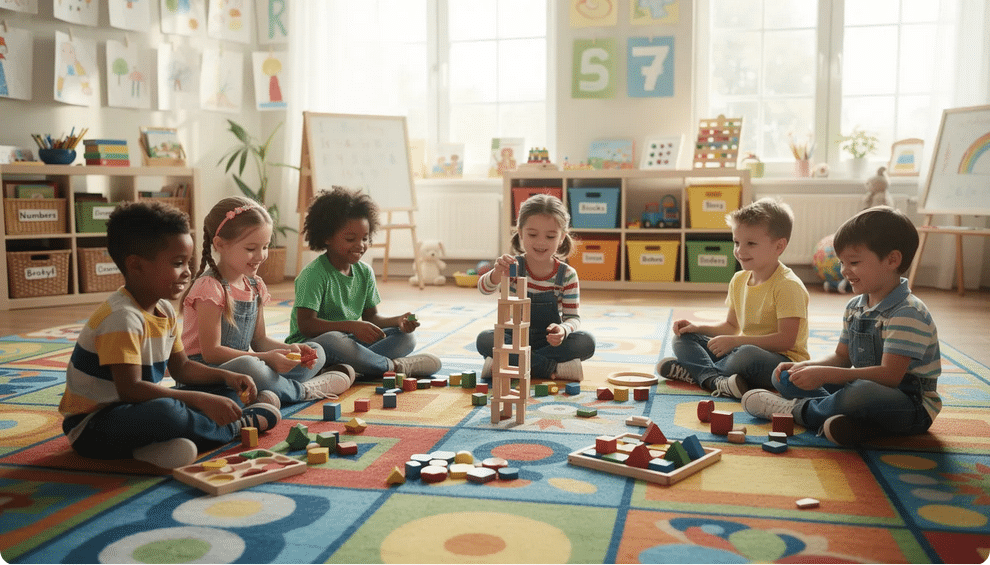
Kindergarten math focuses on foundational skills: counting to 20 by fall, recognizing basic shapes, creating patterns, and using five- and ten-frames by spring. The good news? Young learners master these concepts faster when they can touch, move, and play their way to understanding.
How to Run a Shape Hunt
Start by modeling: “I see a rectangle on our whiteboard. I notice a cylinder shape in this glue stick.” Then send pairs of students on a hunt with clipboards. They draw or tally the shapes they find around the room.
Make it more challenging by:
- Hunting for 3D shapes only (spheres, cubes, cones)
- Looking for shapes in unexpected places (hexagon floor tiles, oval mirrors)
- Comparing finds: “Who found the most circles?”
How to Build Patterns with Everyday Materials
Use whatever you have—colored cubes, buttons, snack crackers, or crayons. Teach patterns in this order:
| Pattern Type | Example | Difficulty |
|---|---|---|
| AB | red, blue, red, blue | Beginning |
| AAB | red, red, blue, red, red, blue | Intermediate |
| ABC | red, blue, green, red, blue, green | Advanced |
| Have students build patterns, then extend them. Ask: “What comes next? How do you know?” |
How to Use Five- and Ten-Frames
Print or draw a row of five boxes (five-frame) or two rows of five boxes (ten-frame). Give students counters like buttons or small erasers.
Practice activities:
- “Show me 4” (place four counters left-to-right)
- “How many more to make 5?” (count empty boxes)
- “Make 10, then remove 3. How many are left?”
These frames build number sense that supports addition and subtraction later.
Coin Caterpillar Activity
Give each child printed pictures of pennies (5-6 per caterpillar). Students cut out the coins and glue them in a row to create a caterpillar body. Add a drawn head with antennae. Write the total value underneath with teacher support: “My caterpillar is worth 5 cents.”
Integrating Math Talk Daily
- Line up by birth month number
- Count steps to the library
- Compare: “Who has more pencils—table 1 or table 2?”
- Notice patterns during calendar time
How to Use Games to Practice Numbers and Directions
Movement games help children remember number words and positional language like under, over, and behind. They’re especially helpful during the first week (and month) of school when students are still learning classroom vocabulary and routines.
Math-Focused Simon Says
Play Simon Says with math commands:
- “Simon says show me 5 fingers”
- “Simon says take 3 steps forward”
- “Simon says jump 2 times”
- “Touch your head” (no Simon says—they’re out!)
This reinforces number recognition, counting, and listening skills simultaneously.
How to Run an Obstacle Course
Set up a simple course in your gym or hallway:
| Station | Materials | Skill Focus |
|---|---|---|
| Crawl under | Two chairs with a blanket | Positional words |
| Balance on | Tape line on floor | Gross motor |
| Weave through | 4-5 cones | Left/right |
| Jump over | Pool noodle on ground | Counting jumps |
| Review safety rules before starting. Integrate learning by having students count their steps between stations or identify left and right as they move. |
Build the Tallest Tower Game
This quiet game works well for small groups:
- Each child rolls a die
- They add that many blocks to their tower
- After 5 rounds, compare towers
- Discuss: “Whose tower is taller? Whose has more blocks? Fewer?”
Use these games during the first month of school when students need practice following directions and learning classmates’ names.
How to Explore Science and Nature with Kindergarteners
Kindergarten science is about curiosity—asking questions, observing with all five senses, and recording simple findings. You don’t need fancy equipment. You need wonder.
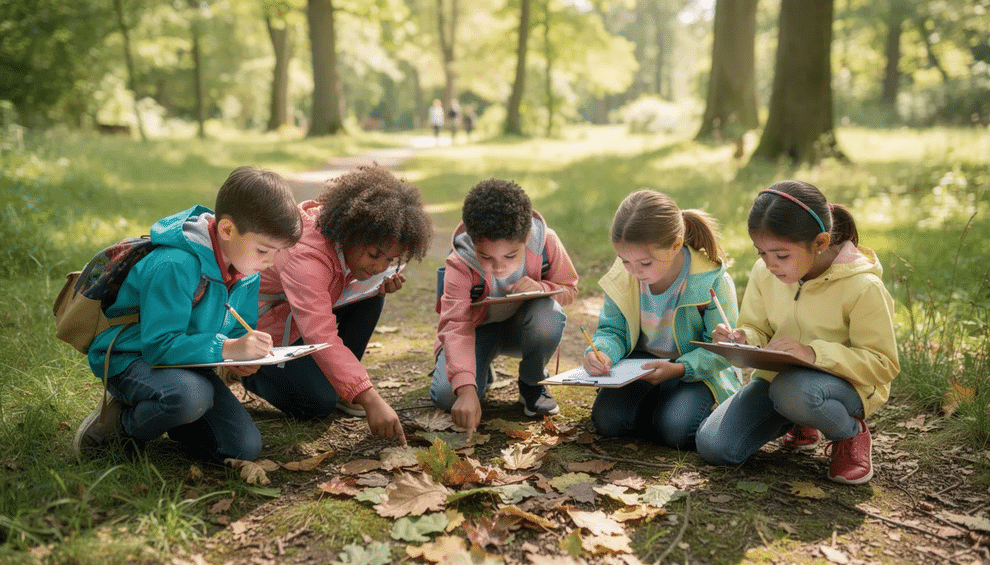
How to Plan a Nature Walk
Before heading outside, set clear expectations:
- Stay with your partner
- Use quiet observation voices
- Only collect items from the ground (no picking flowers)
Give each child a clipboard with a picture checklist: leaf, rock, insect, flower, stick. As they explore, students draw what they find or tape small specimens directly to their paper.
Back in the classroom, discuss observations: “What did you notice about the leaves? Were they all the same color?”
Sink or Float Experiment
Fill a clear tub with water. Gather classroom-safe objects:
- Crayon
- Plastic block
- Pencil
- Small rubber ball
- Paper clip
- Cork
Create a simple prediction chart with two columns: “I think it will sink” and “I think it will float.” Students record predictions, then test each item. Circle correct predictions and discuss: “Why do you think the cork floated?”
Weather Watching Routine
During morning meeting, check the weather together:
- Look out the window and describe what you see
- Post a weather symbol (sunny, cloudy, rainy, snowy)
- Record the temperature on a weekly chart
By Friday, analyze the week: “Which weather did we have most? Least?”
Winter Science: Snowstorm in a Jar
This mesmerizing activity introduces early concepts about mixtures:
- Fill a clear jar ¾ full with baby oil
- Mix white paint with water in a small cup
- Pour the paint mixture slowly into the jar
- Watch the “snow” sink and swirl
Discuss what students notice about how the liquids interact. Always supervise closely and manage the mess with a plastic tablecloth.
Building Scientific Thinking
Teach students to use these sentence starters:
- “I notice…”
- “I wonder…”
- “I think… because…”
When a child says, “I wonder why leaves change colors,” celebrate that curiosity—it’s the foundation of all scientific inquiry.
How to Connect Science to Seasons and Habitats
The changing seasons provide a natural curriculum from September to June. Pair real observations with picture books to deepen understanding.
Draw the Seasons Activity
Fold a large piece of paper into four boxes. Students draw and label:
- Fall: orange and red leaves, perhaps a pumpkin
- Winter: snowman, bare trees
- Spring: flowers, rain
- Summer: bright sun, green grass
Accept invented spelling for labels—“smer” for summer shows excellent phonemic awareness!
Habitat Collage Project
Choose one habitat to explore (forest, ocean, desert). Read a picture book about that habitat, then provide:
- Magazines with animal pictures
- Printed images of plants and animals
- A large poster for each small group
Students cut and glue animals onto their habitat poster, then share what they learned: “Fish live in the ocean because they need water.”
Watch the Seasons Display
Dedicate one bulletin board to seasonal observations. Each month, update it with:
- Student drawings of current weather and nature
- Vocabulary words (fall: pumpkin, leaves, harvest)
- Photos from your nature walks
This becomes a living record of the year and sparks rich conversations about how the world around us changes.
How to Support Social-Emotional Learning in Kindergarten
Many 5-year-olds are experiencing full-day school for the first time. They’re learning to share space with 20+ peers, follow new rules, and manage big emotions—all while also learning to read. Explicit teaching of feelings, turn-taking, and kindness isn’t optional. It’s essential.
Feelings Book and Emotion Collage
Read aloud a book that names emotions (look for stories that show characters feeling happy, sad, angry, scared, and surprised). After reading, create a class collage:
- Provide magazines and scissors
- Students find and cut faces showing different emotions
- Sort faces into columns labeled by feeling
- Display the collage as a reference: “Point to how you’re feeling today”
Breathing Exercises for Transitions
Before moving to a new activity, practice calming breaths:
- “Smell the flower” (breathe in slowly through nose)
- “Blow out the candle” (exhale slowly through mouth)
- Repeat three times together
This simple routine helps children reset and focus. Use it before tests, after recess, or whenever energy feels scattered.
Weekly Gratitude Circle
Once a week, gather on the carpet for gratitude sharing. Provide a sentence frame:
- “I am thankful for _ because _.”
Model first: “I am thankful for our classroom because we learn together here.” Then pass a talking stick or stuffed animal around the circle. Every child gets a turn—no one is skipped.
Classroom Jobs
Give every child a meaningful role in the room:
- Line leader
- Door holder
- Plant waterer
- Library helper
- Paper passer
- Light monitor
Rotate jobs weekly. When kids work together to care for their space, they develop responsibility and pride in their classroom community.
Partnering with Families
Send home a one-page feelings chart with simple suggestions:
- “Ask your child about their feelings at bedtime”
- “Name your own emotions: ‘I feel frustrated when…’”
- “Read books about feelings together”
When parents reinforce these skills, children learn faster.
How to Build Classroom Community from Day One
The first weeks of school (late August or early September) set the tone for the entire year. Invest time in building relationships and establishing rules, and everything else becomes easier.
Create a Class Promise Chart
Gather students on the carpet and ask: “What do we need to do to make our classroom a safe, happy place to learn?”
Record their ideas on chart paper:
- Be kind to friends
- Listen when someone is talking
- Take care of our things
- Try our best
Once you have 4-5 promises, read them together. Let each child sign the chart with their name or a thumbprint. Post it prominently and reference it often: “Remember, we promised to be kind. How can we show kindness right now?”
Share Your Family Activity – or get inspired by these engaging group activities for 5 year olds.
Give each child paper to draw pictures of their family members. They can dictate or write names below each person. Then students present one detail to the class: “This is my mom. She makes good pancakes.”
This simple activity builds connection, celebrates diversity, and helps children see that every family is special.
Kindness Tickets
Keep a stack of small paper tickets or stickers handy. When you notice helpful actions, give a ticket:
- “I saw you share your crayons—kindness ticket!”
- “You included a new friend at recess—kindness ticket!”
- “You cleaned up without being asked—kindness ticket!”
Decide as a class what happens when you fill a jar with tickets (extra recess, dance party, special read-aloud). This creates a culture where kindness is noticed and celebrated.
How to Plan Seasonal & Thematic Kindergarten Units
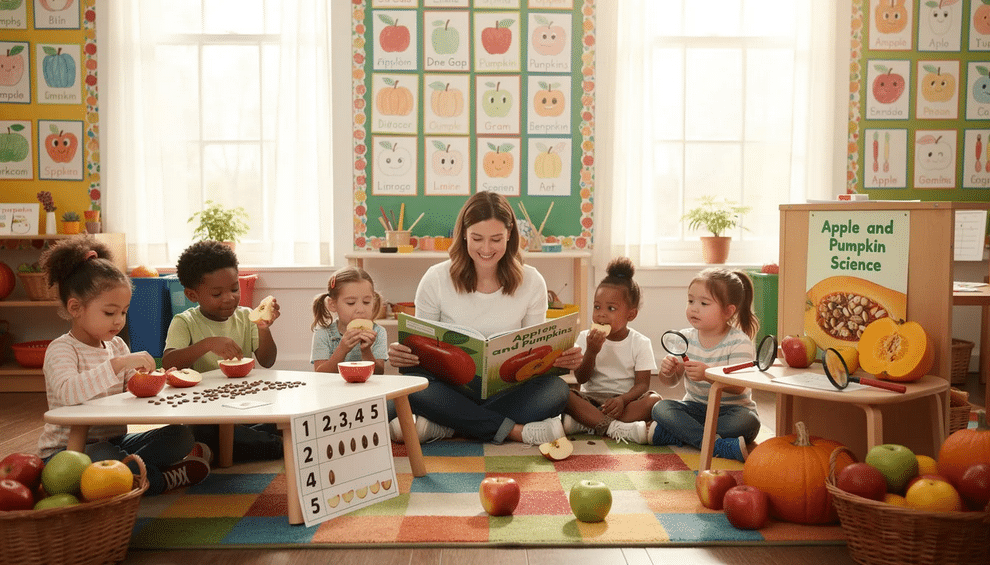
Teaching with monthly themes helps integrate literacy, math, and science into cohesive, memorable learning experiences. When you center a month around apples or pumpkins, children see connections between reading about apples, counting apple seeds, and tasting apple varieties.
Sample Month-by-Month Theme Outline
| Month | Theme | Anchor Book Suggestion |
|---|---|---|
| September | Apples | Ten Apples Up On Top |
| October | Pumpkins | From Seed to Pumpkin |
| November | Thankfulness & Family | Bear Says Thanks |
| December | Winter & Giving | The Snowy Day |
| January | Hibernation & Animals | Bear Snores On |
| February | Friendship | Enemy Pie |
| March | Weather & Wind | The Wind Blew |
| April | Plants & Growth | The Tiny Seed |
| May | Insects & Gardens | The Very Hungry Caterpillar |
| Keeping Units Inclusive and Curriculum-Focused |
When teaching about pumpkins, focus on life cycles and measurement rather than Halloween costumes. When exploring winter, emphasize weather and hibernation rather than specific holidays. This ensures every child feels included while keeping learning goals front and center.
Repeating Structures Within Each Unit
For each theme, plan:
- A themed literacy center (alphabet activities, writing prompts)
- A math station (counting, sorting, measuring with theme materials)
- One art or STEM activity (craft, experiment, building project)
This predictable structure saves planning time and helps students know what to expect.
Organizing Themed Materials
Store materials by month in labeled bins. At the end of October, pack up your pumpkin books, manipulatives, and center materials together. Next year, pull out the bin and you’re ready to teach. Build this system over time—each year gets easier.
How to Teach with an Apple Theme in Early Fall
Apples make a perfect September theme because they’re familiar, affordable, and packed with learning opportunities. Students can observe, count, compare, and taste their way to new knowledge.
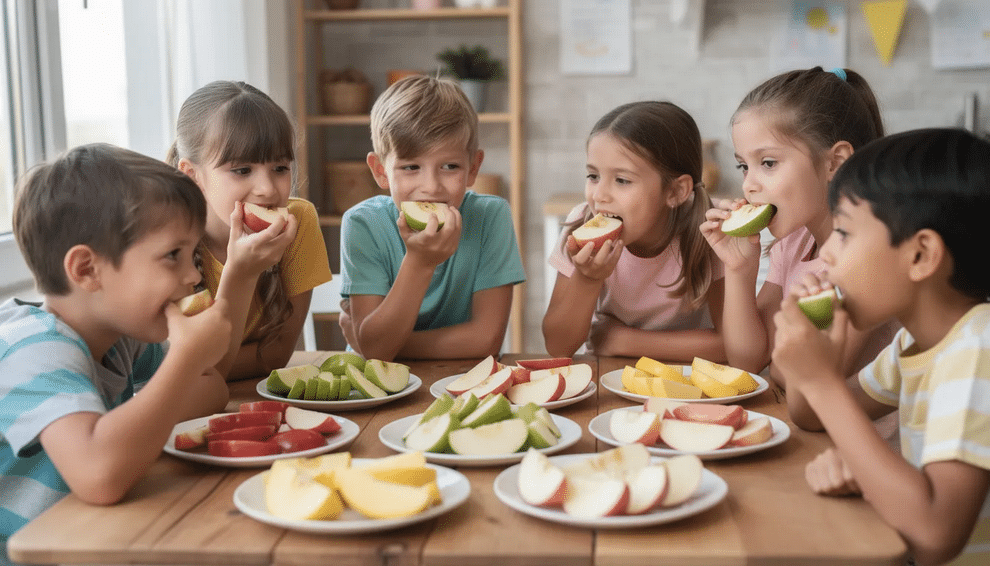
Apple Tasting Graph
Bring three apple varieties: red (like Fuji), green (Granny Smith), and yellow (Golden Delicious). Cut them into small slices for tasting.
After tasting, students vote for their favorite by placing a sticky note in the correct column on a class bar graph. Discuss the results:
- “Which apple got the most votes?”
- “Which got the fewest?”
- “How many more people liked red than green?”
Apple Science Investigation
Cut an apple in half horizontally to reveal the star pattern inside. Have students:
- Count the seeds
- Draw what they observe
- Predict what will happen if we leave the apple out
Check the apple the next day—browning provides a great introduction to oxidation, even at a basic level.
Always check for food allergies before any tasting activity.
Class Book: “We Like Apples”
Each child contributes one page:
- Draw a picture showing their favorite way to eat apples
- Dictate or write a sentence: “I like apple pie.” “I like apple juice.”
Bind the pages together for your class library. Children love reading books they helped create.
How to Teach with a Pumpkin Theme in October
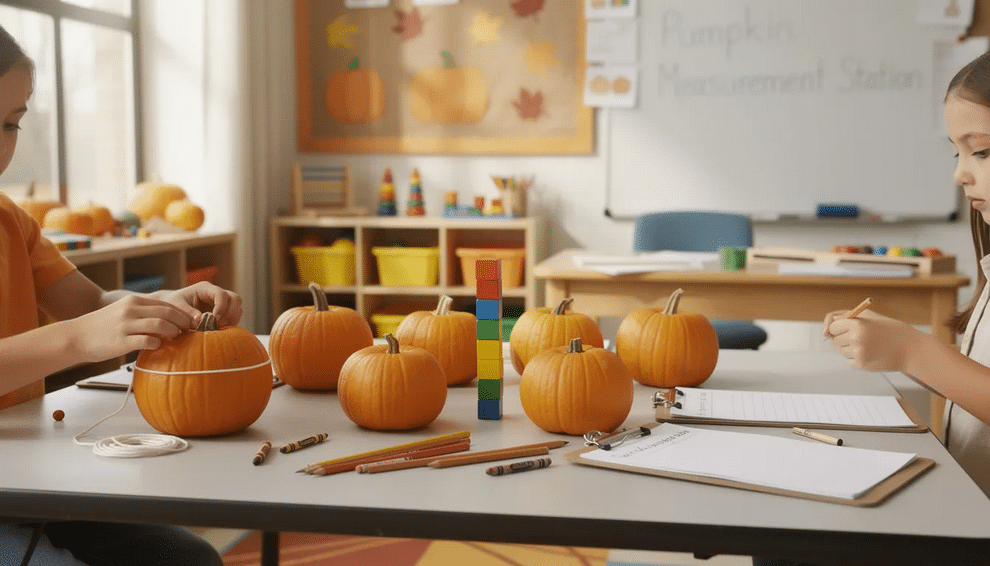
Pumpkins offer rich opportunities for fall math and science. You can explore this theme without any Halloween references, making it appropriate for all classrooms.
Pumpkin Measurement Station
Set up a center with small pumpkins and measuring tools:
- String to measure circumference
- Cubes to measure height
- Paper to record ribs (the lines running from top to bottom)
Students work in pairs to measure and record. Compare results: “Whose pumpkin was the tallest? Whose had the most ribs?”
Pumpkin Sink or Float
This experiment surprises everyone—pumpkins float!
- Show students a whole pumpkin
- Record predictions on a class chart
- Place the pumpkin in a large tub of water
- Discuss: “Why do you think it floated?”
Talk about the air inside the pumpkin that helps it float. This connects to life cycle knowledge—pumpkins can float to spread seeds through water!
Pumpkin Life Cycle Drawing
Give students paper divided into four sections. They draw and label:
- Seed
- Sprout
- Flower
- Pumpkin
Accept phonetic spelling: “sed,” “flor,” “pumkin” all show strong sound-letter connections.
How to Teach Community Helpers in Winter
A community helpers unit fits well in late fall or winter when students understand classroom routines and can engage in more complex role-play. This theme builds vocabulary, social skills, and understanding of the world beyond school.
Create a Community Map
On chart paper, draw a simple map of a neighborhood. Include:
- Fire station
- Grocery store
- Library
- School
- Hospital
- Post office
Label each building and draw roads connecting them. Discuss: “Who works at each place? How do they help our community?”
Community Helpers Role-Play Center
Set up bins with props:
- Doctor/Nurse: toy stethoscope, bandages, notepad
- Grocery Worker: play food, shopping bags, apron
- Mail Carrier: envelopes, stamps, shoulder bag
- Firefighter: hat, toy hose
Establish clear rotation rules and teach language prompts: “How can I help you today?” “What seems to be the problem?”
Community Helper Writing
Students draw one person who helps our community and write (or dictate) one sentence: “Nurses help people feel better.” “Mail carriers bring our letters.” Display these on a “Community Heroes” bulletin board.
How to Use Games & Movement to Reinforce Learning
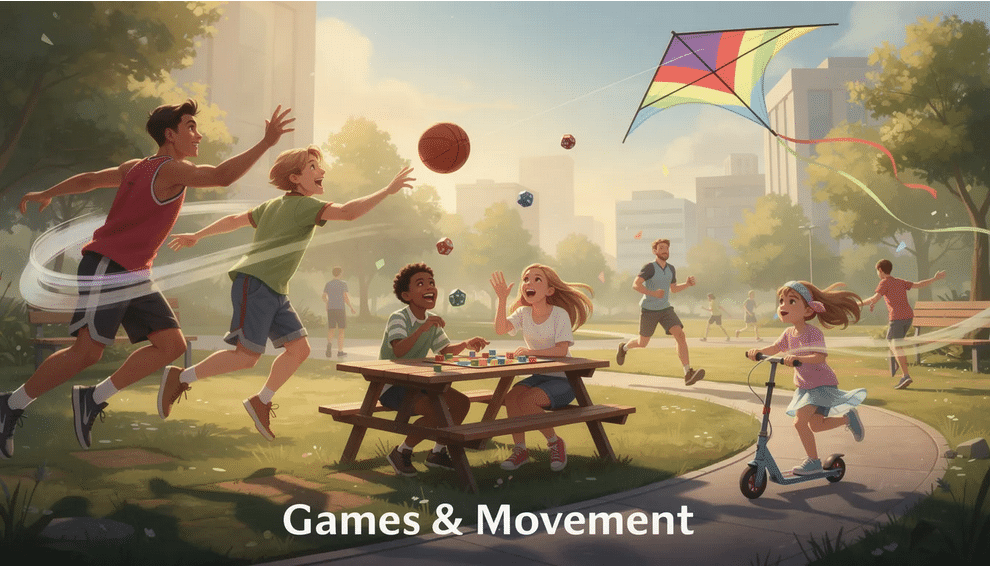
Research confirms what teachers observe daily: 4-6 year olds learn best when they can move, talk, and play while practicing new skills. Games transform drill into delight.
Three Indoor Movement Games
1. Letter-Sound Musical Chairs Place letter cards on chairs in a circle. Play the alphabet song, and students walk around the chairs. When the music stops, each child must name the letter on their chair and its sound.
2. Freeze Dance with Target Words Play music and let children dance. Call out a vocabulary word (from science, a read-aloud, or sight words). When students hear the target word, they freeze. Call out other words—they keep dancing. This builds listening skills and vocabulary recognition.
3. Ball Pass Questions Sit in a circle and pass a soft ball. When the music stops, the child holding the ball answers a quick question: “What number comes after 7?” “What letter does ‘sun’ start with?” This is low-pressure because every child will get a turn eventually.
Memory Game with Learning Cards
Create matching pairs:
- Sight word cards (two of each word)
- Numeral and dot cards (5 with a card showing 5 dots)
- Picture and word pairs (sun with “sun”)
Lay cards face down. One student turns over two cards. If they match, they keep the pair. This classic memory game builds concentration while reinforcing academic skills.
Adapted Telephone for Vocabulary
Play telephone with new vocabulary words instead of silly sentences. Pass along words like “chrysalis,” “community,” or “hibernate.” The fun of seeing how words change teaches careful listening and pronunciation.
Management Tips for Games
- Demonstrate games whole-group first before small group play
- Use clear start/stop signals (chimes, clapping patterns)
- Teach students what to do while waiting (quiet cheering, counting along)
- Keep games short—5-10 minutes maintains engagement
How to Design Simple Indoor & Outdoor Obstacle Courses
An obstacle course supports gross motor skills, listening, and positional words. It’s perfect for PE time, rainy day recess, or a brain break between lessons.
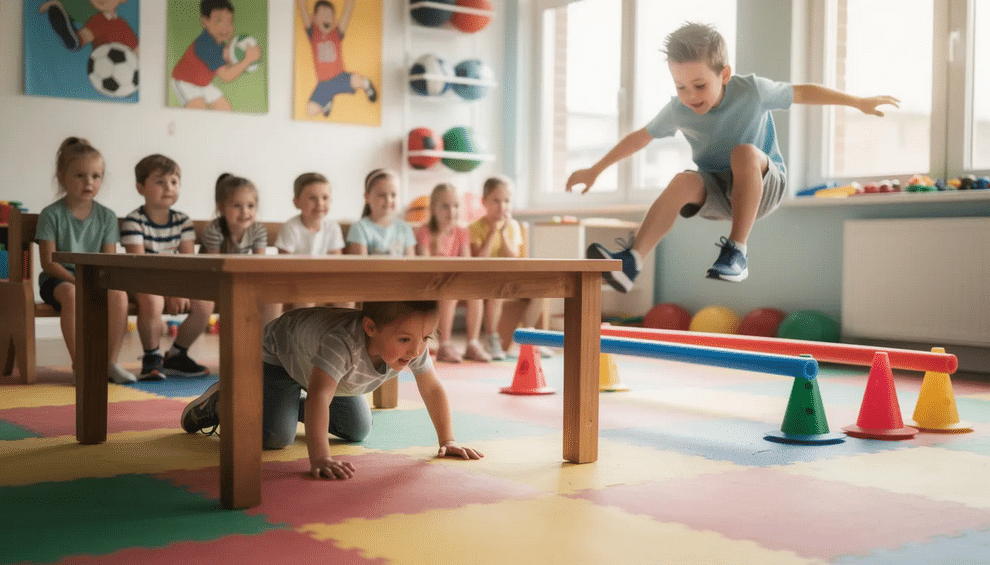
Indoor Course Setup
Use what you have:
- Chairs to crawl under
- Tape lines on the floor to balance on
- Cones to weave around
- A hula hoop to jump into and out of
- A pool noodle to step over
Set up takes about 10 minutes. Space stations at least 3 feet apart for safety. Walk through the course first, modeling each movement and reviewing rules: “One person at a time at each station.”
Add learning by having students:
- Count their steps between stations
- Name the direction: “Now crawl under the table”
- Clap a pattern before moving to the next spot
Outdoor Course Ideas
Use playground equipment plus chalk arrows on the ground to guide the path:
- Slide down the slide
- Walk across a balance beam
- Jump over chalk lines
- Weave through cones
- End with 10 jumping jacks
Student-Created Courses
Once students understand the concept, let them help design new courses. They might suggest “hop like a bunny” between stations or “spin three times.” Drawing a map of the route adds a literacy and planning component.
Conclusion: How to Turn Ideas into a Year of Joyful Learning
This guide has provided concrete ideas across every area that matters in kindergarten: literacy centers that teach letters and sight words, math activities that build number sense through play, science explorations that spark curiosity, social-emotional routines that create caring community, seasonal units that integrate learning, and movement games that make skills stick.
Here’s the most helpful advice for getting started: don’t try to do everything at once. Pick just one or two new ideas per week. Maybe try a nature walk on Friday and introduce sight word hopscotch on Monday. Add the apple tasting graph when September arrives. Save the community helpers unit for winter when students are ready for more ideas and complex role-play.
Keep a simple planning notebook or digital document to record which activities worked best. After your first apple unit, jot down notes: “Kids loved the tasting graph. Next year, bring more green apples—they were the favorite!” These records become invaluable. By year three, you’ll have a polished, teacher-tested curriculum you can pull out each month with confidence.
The research is clear: consistent, playful routines help kindergarteners feel safe, curious, and excited to learn every day. When children know what to expect—center time, morning meeting, a nature walk on Fridays—they can relax into learning. When teachers fill the day with hands-on exploration, creative expression, and joyful movement, kindergarten becomes exactly what it should be: a place where every child can thrive.
Start small. Stay consistent. Watch your young learners grow.