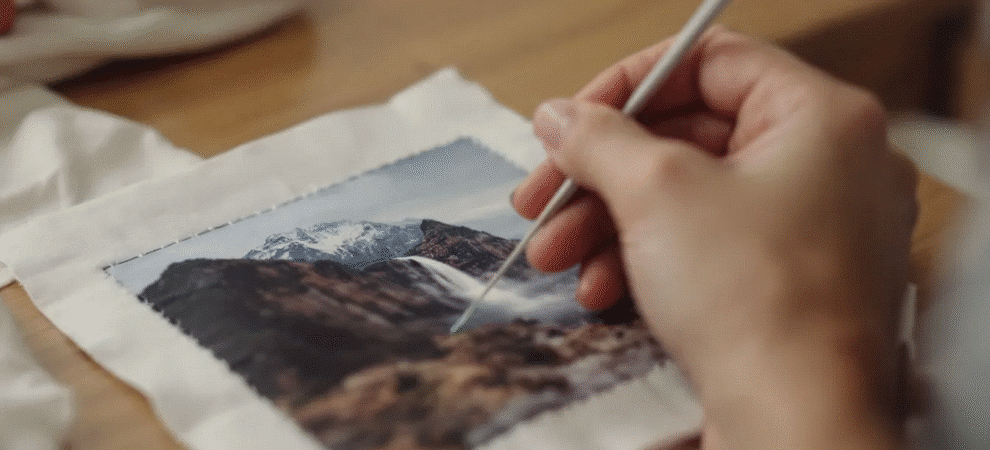

Are you wondering how to turn a photo into an appliqué? This guide is for beginners who want to create personalized fabric art from their favorite photos. Turning a photo into an appliqué involves converting an image into simplified shapes, transferring those shapes onto fabric, and securing them onto a base fabric, often using fusible web. Creating an appliqué from a photograph involves translating a 2D image into a layered textile artwork. This process allows you to preserve memories and transform cherished images into unique, tactile art pieces. Simplifying the image into distinct shapes and values is necessary to create a workable pattern for appliqué. If you’re new to fabric art, this step-by-step guide will help you get started and achieve beautiful results.
Key Takeaways
- Select a clear, high-contrast photo for your appliqué to ensure better fabric translation.
- Use proper stitching techniques and secure loose threads to maintain the durability and appearance of your appliqué.
- Incorporate embellishments like embroidery, beads, and sequins for added texture and visual interest.
- Step-by-Step Summary: How to Turn a Photo into an Appliqué
- Choosing the Right Photo
- Preparing Your Photo for Appliqué
- Selecting Fabrics and Materials
- Cutting and Assembling Pieces
- Stitching Techniques for Appliqué
- Adding Embellishments
- Finishing Touches
- Displaying Your Appliqué Art
- Summary
- Frequently Asked Questions
Step-by-Step Summary: How to Turn a Photo into an Appliqué
- Simplify the photo into shapes: Use photo editing software or apps to reduce your image to clear, distinct shapes and values.
- Trace shapes onto fusible web: Transfer the simplified shapes onto the paper side of fusible web.
- Iron onto fabric: Roughly cut out the traced shapes, then iron them onto the wrong side of your chosen fabrics.
- Arrange and fuse pieces: Peel away the paper backing, arrange the fabric pieces on your background fabric (starting with the bottom layer), and fuse them in place.
- Stitch and embellish: Secure the pieces with stitching and add any desired embellishments for texture and detail.
Choosing the Right Photo
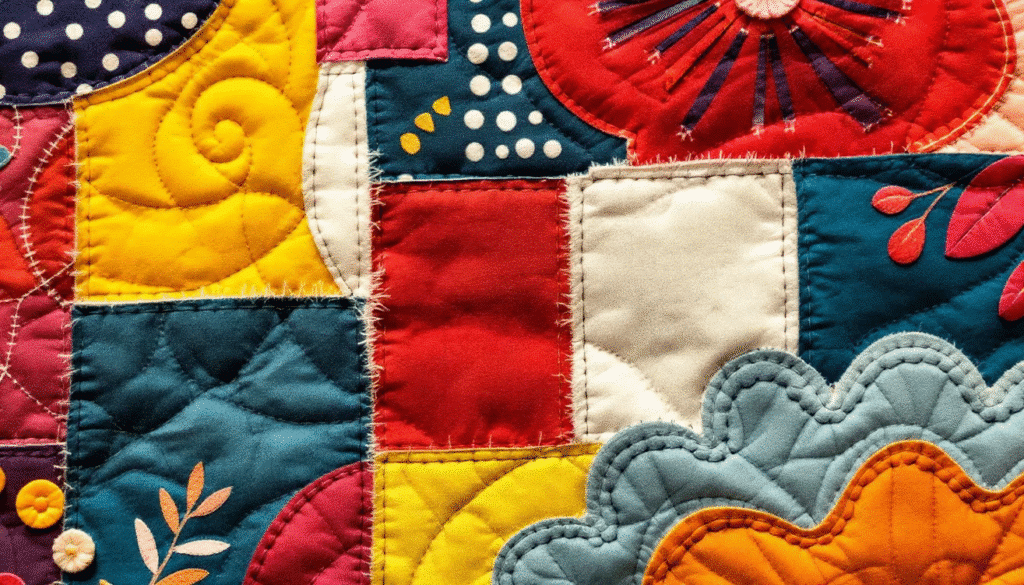
Selecting the right photo is the first crucial step in creating an appliqué masterpiece. Photographs taken with cell phones or digital cameras can be used for appliqué projects. Look for images that emphasize clear shapes and high contrast, as these elements will translate more effectively into fabric. A clean image with minimal background distractions will also make the process easier and the final product more visually appealing.
If you’re unsure, using a computer or mobile app can help transform photographs into line drawings, which is a good idea for beginners as it offers a clearer template for your project. If you’re unsure, use sophisticated smartphone apps to convert your photos into line drawings, offering a clearer template for your project.
To enlarge images for appliqué patterns, consider using a grid method for greater accuracy.
Once you’ve selected your photo, the next step is to prepare it for appliqué.
Preparing Your Photo for Appliqué
Once you have your photo, the next step is to prepare it for appliqué. Use photo editing software to convert the photo to black and white and adjust the contrast to define clear color levels. Applying a ‘posterize’ or ‘cutout’ filter can help reduce the image to 3-5 distinct shades, making it easier to work with. Print the edited photo at the desired size for tracing and use as a template.
To simplify complex images, break the image into manageable segments, which will make the appliqué process more straightforward. Using software to simplify the image into clear shapes and outlines can make the process smoother. This preparation is key to creating a manageable and visually striking appliqué pattern. Simplifying the image into distinct shapes and values is necessary to create a workable pattern for appliqué.
Next, we’ll explore creating an outline and simplifying details.
Creating an Outline
Creating a precise outline, or drawing, is essential for a successful appliqué. Start by:
- Tracing the main elements of your photo onto paper. You can use a light table or lightbox to trace images for appliqué patterns.
- Using tracing paper or a light box to help achieve precise lines. Apps like Prisma, Clip2Comic, BeFunky, and Photo Lab Editor can help turn photos into line drawings or sketches for appliqué.
- Using mobile apps that convert photos into line drawings, which can also be incredibly useful. Trace the distinct, simplified shapes from the photo onto the paper side of the fusible web.
Start with the topmost elements and ensure all lines connect smoothly for a cohesive design.
Simplifying Details
Simplifying the details of your picture is another critical step. When turning a photo into an appliqué, focus on the most important ‘words’ or main features of the image. Complex images can be overwhelming, so reduce them to key elements. Photo editing software can enhance contrast and simplify details, making your pattern clearer and easier to work with. Pictures can also help illustrate these concepts effectively.
GIMP (free), Photoshop (popular but can be expensive), and Posterizer (free) are software options for creating appliqué patterns from photographs. Most photo editing software offers a free trial period before requiring payment.
Apps like Photo Director can convert your photos into sketches, offering an excellent starting point for your appliqué.
Once your photo is prepared and simplified, you’re ready to select fabrics and materials for your project.
Selecting Fabrics and Materials
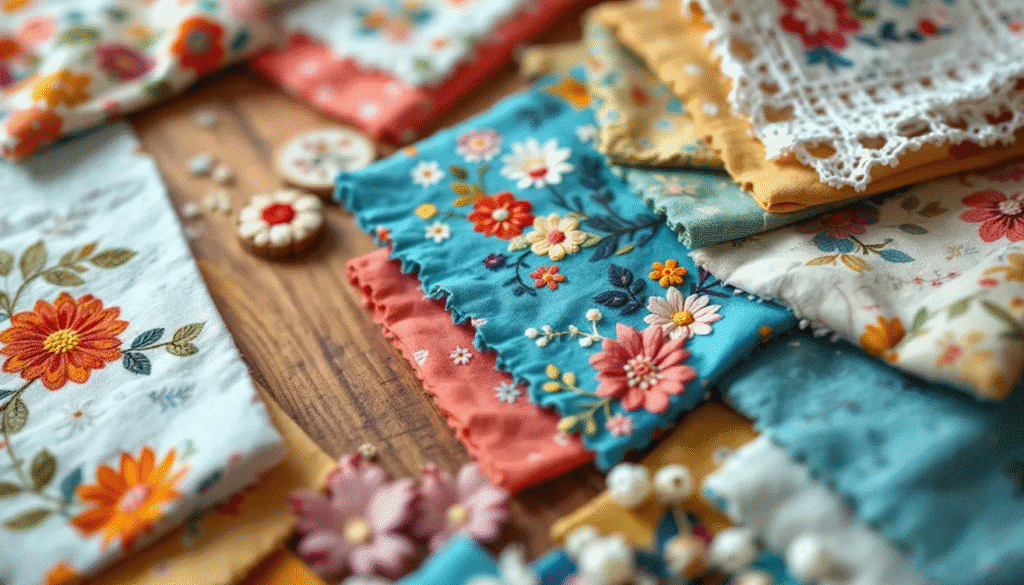
Choosing the right fabrics and materials will significantly impact the visual appeal and durability of your appliqué. The background fabric is particularly important; 100% cotton, especially quilting cotton, is highly recommended for its firm weave and durability. You can also use assorted fabric scraps for collages—selecting, cutting, and layering scraps is a creative way to build up your appliqué artwork. Printable inkjet fabric sheets are another option, allowing you to print your photo directly onto fabric and then transfer it to your project.
Next, we’ll explore how to match colour and choose textures to enhance your design, with special attention to selecting fabric based on value (lightness/darkness) for a realistic result.
Choosing Background Fabric
- 100% cotton or quilting cotton is ideal for its durability and firm weave.
- Choose a background color that complements your design and makes the appliqué stand out.
Using Fabric Scraps
- Layering and collaging fabric scraps can add depth and creativity to your appliqué.
- Select scraps in a range of colors and textures for visual interest.
Printable Fabric Sheets
- Printable inkjet fabric sheets allow you to print your photo directly onto fabric.
- This method is useful for highly detailed or photo-realistic appliqué projects.
Matching Colors
Color harmony is crucial for a cohesive appliqué. Select shades that complement the colors in your photo. Batiks are an excellent choice due to their tightly woven nature and rich, varied colors, which can effectively match and enhance your design.
Reducing intricate features into basic geometric shapes simplifies the sewing process and strengthens the overall visual impact.
For a seamless, professional finish, select matching thread that coordinates with your fabric pieces when sewing your appliqué.
Choosing Textures
Incorporating various textures can add depth and interest to your appliqué. Using different fabrics like felt, flannel, and faux leather can create a dynamic and visually appealing piece. The value of the fabric, referring to its lightness or darkness, also plays a crucial role in creating contrast and enhancing the overall design.
With your fabrics and materials selected, you’re ready to move on to cutting and assembling your appliqué pieces.
Cutting and Assembling Pieces
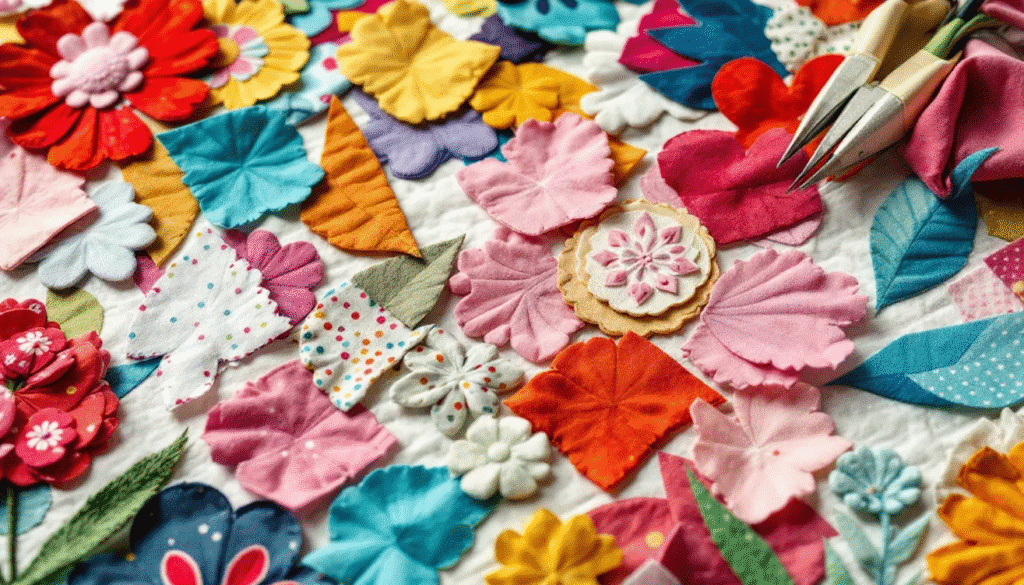
Precision is key when cutting and assembling the pieces of your appliqué. Follow these steps for best results:
Cutting Fabric Pieces
- Use sharp scissors to cut out fabric shapes accurately.
- Cut your fabric pieces slightly larger than the paper pattern pieces to allow for adjustments.
- Trace pattern pieces onto the fusible web, remembering to reverse them so the finished design matches your intended orientation.
Using Fusible Web
- Apply fusible web, such as HeatnBond Feather-Lite or Wonder Under, to the wrong side of the fabric to adhere fabric shapes and manage raw edges, which helps prevent fraying.
- Press the fusible web onto the wrong side of the fabric for proper adhesion.
- Attach iron-on interfacing to the background fabric for added stability.
Arranging Layout
- Arrange the appliqué pieces on the background fabric before sewing to plan your layout.
- Combine multiple shapes into one piece to simplify assembly.
- Use a fabric glue stick or basting glue to temporarily attach stabilizer pieces to the wrong side of the fabrics, ensuring precise placement before stitching.
- For extra stability, consider using a fusible water-soluble appliqué stabilizer for your project.
After sewing, snip away excess fabric close to the stitches for a clean finish, and use a zig-zag stitch to secure the appliqué pieces to the background fabric.
Next, we’ll discuss using appliqué templates and arranging your pieces for the best results.
Using Appliqué Templates
- Select a fusible web material to help adhere the fabric pieces, fusing the fabric together.
- Trace templates with a sharp pencil for precise lines, especially on darker materials.
- Transfer notch markings from templates to fabric to aid in accurate alignment during assembly.
- Using iron-on adhesive can temporarily hold pieces in place, making hand glue stitching easier.
Arranging Appliqué Pieces
- Before securing the cut pieces, lay them out on the background fabric to visualize the composition.
- Identify the middle of your design and use it as a reference point when aligning the pieces.
- After peeling away the paper backing, arrange the fabric pieces on your background fabric starting with the bottom layer, and fuse them in place.
- Temporarily securing pieces with pins helps in repositioning and ensures they cover any underlying transfer markings before stitching.
Once your pieces are arranged and fused, you’re ready to move on to stitching techniques.
Stitching Techniques for Appliqué
Stitching techniques are essential for both securing fabric pieces and enhancing the overall design of your appliqué. There are two main categories: hand stitching and machine stitching. Each offers distinct advantages and creative possibilities.
- Hand Stitching: Allows for meticulous and artistic fabric attachment. Popular methods include the blanket stitch and whip stitch, which provide both decorative and functional benefits. The blanket stitch creates a loop with the thread to secure the fabric edge, while the whip stitch wraps around the edges for a nearly invisible finish. These techniques enhance both the durability and aesthetic of your appliqué.
- Machine Stitching: Offers efficiency and versatility. When working with small appliqué pieces, use tiny dots of glue to hold them in place before stitching. Common stitch types include:
- Zigzag stitches: allow for secure attachment and decorative effects.
- Straight stitches: provide a clean, minimalistic finish but may lead to fraying if not applied carefully along the edges.
- Using a stabilizer: prevents distortion and ensures even stitching.
- In machine appliqué, the blanket stitch involves a straight stitch followed by a perpendicular bite into the appliqué shape.
For tiny, intricate details such as facial features, you can use decorative threads or fabric markers after the main fabric pieces are applied.
With your appliqué stitched in place, you can now add embellishments for extra flair.
Adding Embellishments
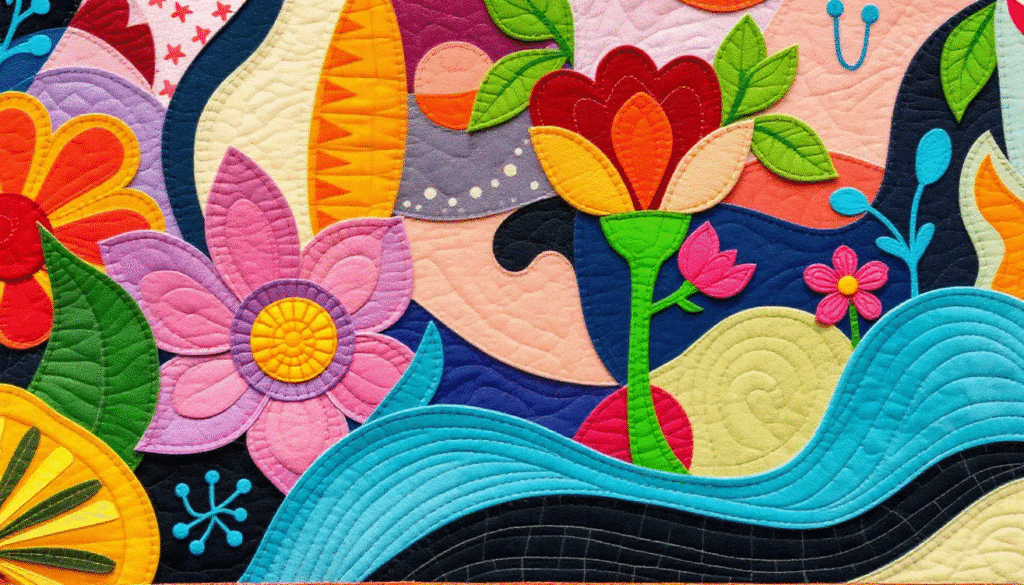
Embellishments can significantly enhance the visual appeal of your decoration appliqué. Incorporating elements like embroidery, beads, and sequins adds unique textures and dimensions.
Next, we’ll delve into embroidery details and the use of beads and sequins.
Embroidery Details
Embroidery techniques can transform a simple appliqué into a dynamic artwork. Adding intricate stitches and textures makes the appliqued image of flowers more lively and detailed.
Fine embroidery enhances the texture and depth of the design, complementing the chosen fabric.
Beads and Sequins
Adding beads and sequins introduces sparkle and dimension to your appliqué. These elements create a three-dimensional effect, making your design more eye-catching and dynamic.
Materials like glitter vinyl can also enhance your designs with sparkle and structure.
Once your embellishments are complete, it’s time to focus on the finishing touches for a polished result.
Finishing Touches
Finishing touches are crucial for an accomplished, polished final look. Paying attention to small differences in trimming and finishing can make a big difference in the final appearance of your appliqué. This includes trimming edges, securing threads with a needle, and caring for the finished appliqué patches that are attached. Before finalizing your appliqué, check your pattern for dead end lines in the drawing, as these can complicate the creation of appliqué patterns and may need to be adjusted or removed.
Trimming Edges
Neatly trimming the edges of your appliqué pieces is essential for a professional finish. Use sharp scissors to achieve clean, even cuts without fraying. Leave a small border when trimming to ensure a precise cut.
Specialized scissors can assist in achieving clean and precise edges with the right tools.
Securing Threads
Securing loose threads is important to prevent unraveling and ensure the longevity of your appliqué. Tie off or secure loose threads after finishing the stitching.
Techniques like back-stitching at the beginning and end of your sewing or using a fray check solution can prevent sewn threads from unraveling.
Washing and Care
Proper washing and care will maintain the quality and appearance of your appliqué. Use gentle washing methods like hand washing or professional dry cleaning. Avoid harsh washing methods and high temperatures to prevent damage to the fabrics and stitching.
Using cold water and a gentle wash cycle preserves the fabric’s integrity.
With your appliqué finished and cared for, you’re ready to display your art in creative ways.
Displaying Your Appliqué Art
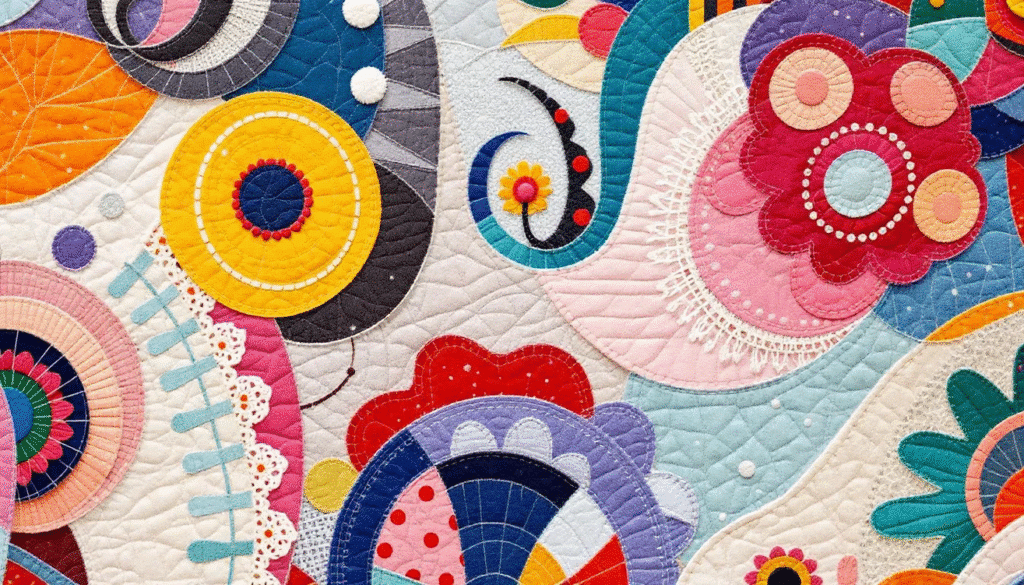
Displaying your appliqué art enhances its visual appeal and allows you to showcase your creative efforts. Appliqué can also be used to create unique quilt patterns that highlight your artistic vision. Consider framing, incorporating into quilts, or sewing onto clothing.
Next, we’ll explore these methods in more detail.
Framing
Choosing the right frame is crucial for showcasing your appliqué art effectively. Using deep frames ensures that multiple layers of fabric fit comfortably without distortion. Secure the appliqué within the frame to prevent any shifting, which could distort the design.
Consider how the framed appliqué will be hung or displayed on the wall to ensure it is easily visible and showcases the artwork effectively.
Quilting
Incorporating appliqué into quilts can elevate their design by adding layers of texture and intricate applique patterns that tell a story. You can create quilt patterns featuring real-life images, such as a dog, by turning photographs into appliqué pieces. Using a grid system can help you enlarge and transfer images accurately for quilt appliqué. Strategically placing appliqué pieces within the overall quilt design ensures they blend harmoniously and create a unique focal point.
This approach enhances the quilt’s artistic value, making it a more personalized and engaging piece.
Clothing
Adding appliqué to clothing is a fantastic way to create unique, personalized garments. Proper stitching techniques, such as using a stabilizer to prevent fabric distortion and securing edges with a straight or zigzag stitch, are essential for durability and a professional finish.
This method transforms everyday clothing into wearable art, adding a touch of creativity and fun, lol, to your dress wardrobe that was created through this unique cloth creation.
Now that you know how to display your appliqué, let’s recap the process and answer some common questions.
Summary
Turning a photo into an appliqué is a beautiful way to preserve memories and create unique art pieces. Following a step-by-step tutorial can help you master the process, from choosing the right photo and preparing it, to selecting fabrics, cutting, assembling, stitching, and adding embellishments. Practicing new techniques each week can help build your skills, so look out for more tips next week. Developing a relationship with a good print shop is useful for printing large patterns needed for your projects. Keeping handy tools and resources available will make your appliqué process smoother, especially when working with intricate designs. After the main pieces are sewn, you can further embellish your appliqué with additional elements to add depth and detail. The meticulous process of securing threads and caring for the finished piece ensures that your art will stand the test of time.
Whether framed, incorporated into quilts, or sewn onto clothing, your appliqué art can be showcased in various creative ways. This guide provides all the knowledge you need to embark on this rewarding journey. So, gather your photos, fabrics, and tools, and let your creativity soar as you transform cherished images into stunning appliqué masterpieces.
Frequently Asked Questions
What types of photos are best for appliqué?
Clear, high-contrast photos with simple shapes are ideal for appliqué, as they translate better to fabric. Steer clear of busy backgrounds to make your project easier!
How can I create an outline from my photo?
You can create an outline from your photo by tracing it with tracing paper or a light box. Alternatively, consider using mobile apps designed to convert photos into line drawings for a quick and easy option.
What fabrics are ideal for appliqué?
Quilting cotton is your best bet for appliqué because of its firm weave and durability, and batiks are fantastic for matching colors with their rich, varied hues.
What are some popular stitching techniques for appliqué?
Popular stitching techniques for appliqué include hand stitching methods like blanket and whip stitch, along with machine stitching options like zigzag and straight stitch. These techniques help create beautiful and lasting designs!
How should I care for my finished appliqué piece?
To care for your finished appliqué piece, stick to gentle washing methods like hand washing or professional dry cleaning, and steer clear of harsh methods and high temperatures. This will help maintain the integrity of your fabric and stitching!