
Rain or shine, snow or heat—indoor play equipment transforms living rooms, playrooms, schools, and commercial venues into active play zones all year long. From jungle gyms and wall bars to soft play sets and themed structures, this category covers everything designed to keep children moving, learning, and having fun without stepping outside.
The benefits of quality indoor play equipment are straightforward:
- Keeps kids engaged in active movement instead of screens
- Supports gross motor development, balance, and coordination
- Provides weather-proof fun for families and facilities
- Creates safe indoor play environments with proper cushioning and design
This guide covers equipment for ages 6 months through early teens, helping you choose the right setup whether you’re outfitting a home, school, or commercial facility.
- Indoor Play Equipment for Different Spaces
- Types of Indoor Play Equipment
- Soft Play Equipment for Younger Children
- Indoor Play Equipment for Toddlers and Older Kids
- Key Safety and Quality Considerations
- Designing Custom Indoor Playgrounds for Commercial Spaces
- How Indoor Play Equipment Supports Child Development
- Getting Started with Indoor Play Equipment
Indoor Play Equipment for Different Spaces
The best indoor play equipment depends entirely on the type and size of your space. What works in a dedicated playroom won’t fit in a studio apartment, and what suits a daycare classroom may be too small for a family entertainment center.
Small home spaces (apartments, bedrooms, living rooms):
- Foldable climbing triangles that store flat when not in use
- Compact wall bars mounted to studs for vertical play
- Doorway swings and sensory hammocks
- Low-profile soft play blocks that stack for storage
Dedicated home playrooms:
- Freestanding jungle gyms with platforms and slides
- Montessori climbing sets with arches and ramps
- Indoor slides (entry heights typically capped at 6 feet for toddlers)
- Ball pits (requiring approximately 1,000 balls per 100 square feet for proper depth)
- Playhouses and themed structures
Schools and daycares:
- Modular soft play kits that can be reconfigured
- Indoor climbers scaled for classroom ceiling heights
- Balance beams and gross-motor obstacle courses
- Sensory walls and interactive panels
Commercial and public spaces (malls, museums, family entertainment centers):
- Multi-level play structures spanning 500 to 5,000 square feet
- Themed zones (jungle, space, underwater) that match brand identity
- High-capacity soft play areas designed for 50-100 children per hour
- Adventure elements like ziplines and interconnected trampoline courts
For any installation, measure ceiling height (most indoor structures need 8-12 feet of clearance), plan for floor protection using foam tiles or impact-absorbing mats, and maintain adequate clearance zones—typically 6 feet around climbing equipment and 10-15 feet of padded runout at slide exits.
Types of Indoor Play Equipment
Understanding the main categories of indoor play equipment helps you match products to your specific needs, space, and the ages of the children who will use them.
Indoor Jungle Gyms and Climbing Frames
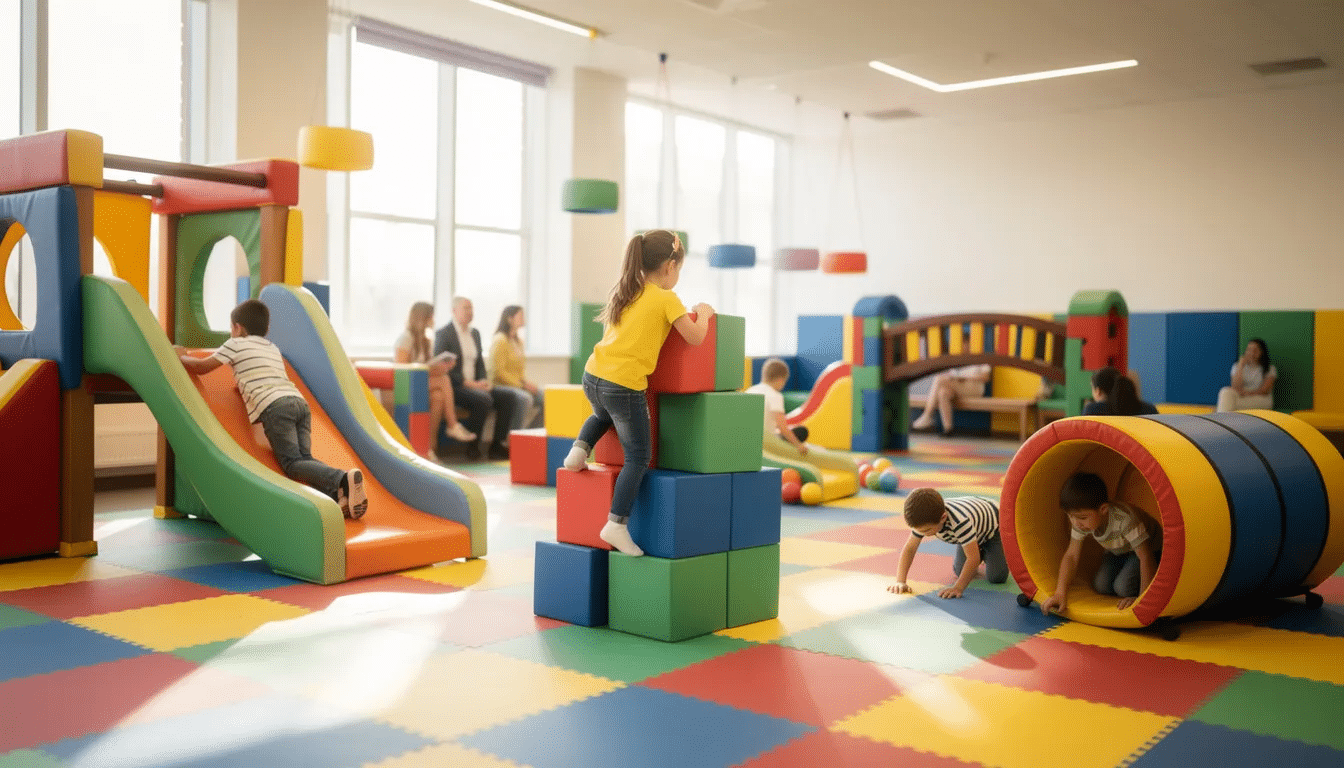
These are the workhorses of indoor play spaces. A typical indoor jungle gym combines bars, platforms, slides, and rope elements into one structure. Designed for preschool and elementary-age children, they encourage climbing, swinging, and exploration. Look for powder-coated steel or reinforced plastic construction rated for dynamic loads of 500 pounds or more. Entry heights for slides should stay under 6 feet for younger users.
Wall Bars and Climbing Walls
Wall-mounted equipment saves floor space while delivering serious physical challenges. Traditional wall bars (Swedish ladders) support climbing, hanging, and strength-building exercises. Indoor climbing walls use modular panels with textured holds—typically 3/8-inch grips mounted on foam-backed plywood—that can be rearranged to create new routes. Proper anchoring into wall studs or concrete is essential for safety and durability.
Montessori-Inspired Climbing Toys
Pikler triangles, arches, ramps, and wobble boards support self-directed motor development in toddlers and young children. These wooden structures let little ones explore at their own pace, building confidence, balance, and coordination. Most are designed for ages 6 months to 4 years and can be combined into simple obstacle courses that grow with the child.
Soft Play Equipment
Foam shapes, tunnels, wedges, and mats covered in wipeable vinyl are the safest option for infants and toddlers. Soft play equipment uses high-density foam (typically 2+ inches thick) to cushion falls and absorb impact. Ball pits fall into this category as well, filled with 6-8 inch polyethylene balls to depths of 2-4 feet.
Playhouses and Themed Structures
Indoor cottages, castles, ships, and tunnel mazes encourage imaginative play and social interaction. These structures work well for roleplay—children in grocery-store-themed play zones, for example, show 25% faster vocabulary growth according to observational studies. They’re popular in both home playrooms and commercial settings.
Sensory and Therapy-Focused Equipment
Swings, crash pads, sensory walls, and balance equipment support children with sensory processing needs. These elements are staples in sensory gyms and occupational therapy clinics but also enhance any indoor play space. Spinning equipment provides vestibular input, while climbing and hanging builds proprioceptive awareness.
Soft Play Equipment for Younger Children
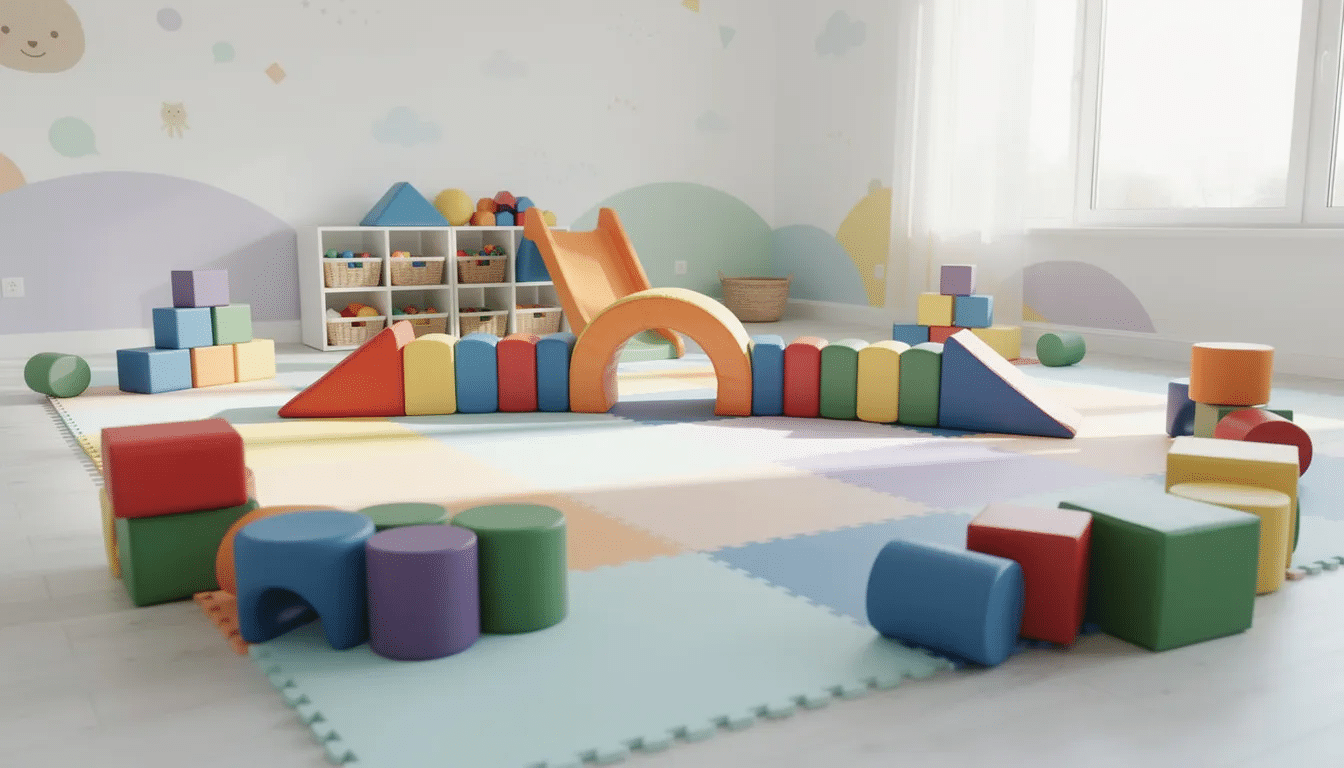
Soft play refers to cushioned, low-height equipment designed especially for infants, toddlers, and preschoolers. With foam cores and wipeable vinyl surfaces, these pieces minimize injury risk while supporting early developmental milestones.
Typical age ranges:
- 6-18 months: Tummy-time mats, crawling ramps, and low sensory blocks
- 1-3 years: Soft climbers, mini slides, and crawling tunnels
- 3-5 years: Larger soft play combinations, ball pits, and obstacle course setups
Common soft play components:
- Foam blocks in various shapes (wedges, cylinders, cubes)
- Steps and soft slides with reinforced bases
- Crawling tunnels and arches
- Balance cylinders and rockers
- Floor mats with non-slip backing
Key developmental benefits:
- Gross motor skills through climbing and crawling
- Body awareness and spatial understanding
- Balance and coordination practice
- Early social play and turn-taking
Soft play works well in classrooms, daycares, and home play corners. Rotate layouts regularly or create obstacle courses to keep kids engaged and challenge new movement patterns. Many facilities set up weekly “course changes” to maintain novelty.
Hygiene and maintenance expectations:
- Daily wipe-down with antimicrobial cleaners
- Weekly inspection for tears or worn seams
- Removable covers (where applicable) for periodic deep cleaning
- Ball pit sanitation—balls should be rotated and cleaned weekly to prevent bacterial buildup
Indoor Play Equipment for Toddlers and Older Kids
As children move beyond toddlerhood, they need more challenge while still staying safe indoors. The key is matching equipment complexity to age and ability.
Toddlers (ages 2-4): Low climbing frames with wide, stable bases and short slides keep active play manageable. Sensory panels with spinners, mirrors, and textures encourage exploration without height risks. Simple balance paths using foam beams or stepping stones build coordination safely. Equipment in this range typically limits platform heights to 2-3 feet.
Preschool and early elementary (ages 4-8): Taller climbing structures, monkey bars, and rope nets provide the physical challenges this age group craves. More complex obstacle courses—combining climbing, crawling, and balancing—develop fitness and problem-solving simultaneously. Net climbers using knotted nylon ropes (typically 1/2-inch diameter) support multiple children at angles from 30 to 90 degrees.
Older kids and preteens (ages 8-12+): Sturdier, fitness-focused setups become appropriate. Wall-mounted bars, indoor ninja courses, and interactive climbing walls with digital scoring appeal to this age group. Mini trampoline areas with foam pits (4-6 feet deep) accommodate aerial tricks safely. Adventure elements like ziplines (50-foot runs at 10-foot heights) draw this demographic to commercial indoor playgrounds.
The growing popularity of indoor playground businesses makes equipment selection critical for commercial operators. Birthday parties and holiday visits drive significant revenue—often $200-500 per event—and themed zones with age-appropriate challenges increase repeat visits by up to 40%.
Group ages appropriately to reduce collisions. Separate toddler zones from adventure areas, and post clear signage about age and height requirements for each section.
Key Safety and Quality Considerations
Safety is the top priority when selecting and installing indoor play equipment. The right choices protect children while also protecting facility operators from liability.
Start by choosing materials and designs that meet recognized safety standards. For commercial installations, look for equipment compliant with ASTM F1918 (standard safety specifications for soft contained play equipment). Verify load ratings and age recommendations provided by manufacturers. Indoor playground equipment typically maintains a 2.5 per 1,000 visit injury rate—90% lower than outdoor playgrounds—when properly designed and maintained.
Structural safety essentials:
- Stable bases or proper anchoring to walls and floors
- Rounded edges and corners on all components
- Adequate fall zones with impact-absorbing surfaces (foam tiles, rubber mats)
- Entry heights under 8 feet for soft play; 6 feet or less for toddler slides
- Exit runouts of 10-15 feet at slide bases
Material quality requirements:
- Durable, low-VOC finishes safe for children
- Non-toxic plastics and foams meeting safety certifications
- Fire-retardant coverings where required by local regulations
- Antimicrobial coatings to reduce bacterial buildup
Adult supervision remains essential in all settings. Post clear rules about capacity limits, appropriate use, and age restrictions. Commercial and school settings should maintain posted maximum occupancy—industry standards suggest no more than one child per 25-40 square feet.
Regular inspection checklist:
- Loose bolts, screws, or connectors
- Worn foam or compressed cushioning
- Torn vinyl covers or exposed seams
- Slippery surfaces or worn grip areas
- Missing caps on exposed hardware
- Frayed ropes or netting
Designing Custom Indoor Playgrounds for Commercial Spaces
For businesses, schools, and organizations planning larger installations, custom indoor playgrounds offer the chance to create something truly unique—a space that reflects brand identity, serves specific community needs, and stands out from competitors.
Custom indoor playgrounds can be themed to align with a museum exhibit (ocean exploration, outer space), a brand mascot, or a community identity (local landmarks, regional wildlife). Facilities report that themed zones drive 40% higher repeat visits compared to generic setups.
The basic process moves through several phases: initial concept development, space measurement and assessment, design drawings and renderings, safety and building code review, fabrication, delivery, and professional installation. From concept to completion, expect timelines of 8-16 weeks for larger projects.
Zone the play area intentionally by age and activity type. Separate toddler zones from climbing zones, slides from quiet sensory corners. This improves flow, reduces collisions, and ensures each age group has equipment scaled to their abilities.
High-traffic locations like malls and family entertainment centers demand extra consideration for durability and maintenance. Choose easy-clean surfaces, specify commercial-grade vinyl and foam, and ensure clear sightlines throughout for supervision. Minimum viable commercial installations typically require at least 2,000 square feet.
Collaborate early with designers, architects, and safety consultants. Local building and fire codes vary significantly, and addressing compliance during design is far easier than retrofitting after installation.
From Standard Designs to Tailored Solutions
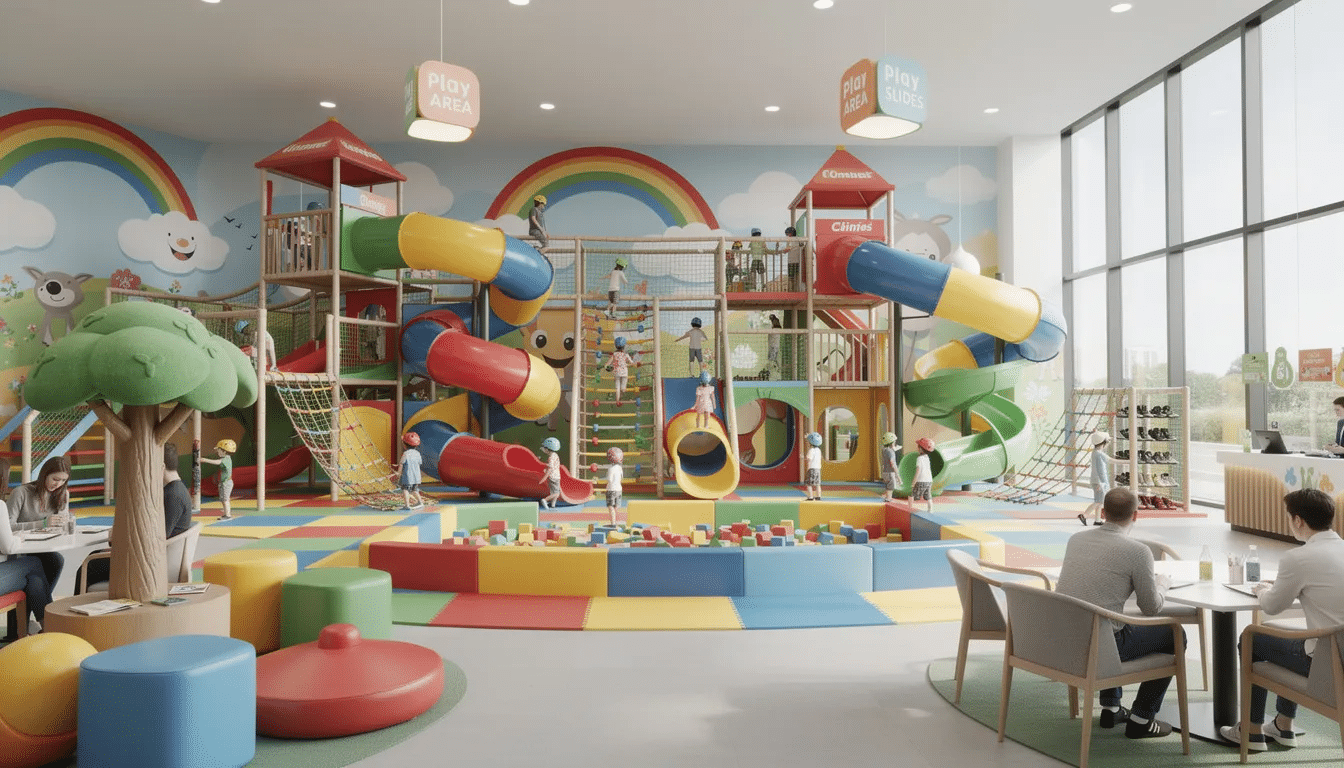
Many projects begin with a standard base model for a play structure, which can then be customized in size, color, and features. This approach balances cost efficiency with the benefits of personalization.
Customizable elements include:
- Slide types (straight, spiral, racing lanes)
- Tunnel configurations and crawl-through shapes
- Sensory panels and interactive elements
- Climbing challenges (rock walls, net climbers, rope bridges)
- Branding graphics, logos, and custom color palettes
Color schemes can match a school mascot, company logo, or regional theme. A museum might incorporate exhibit-related imagery; a fitness center might emphasize bright, energetic tones. This creates a cohesive environment that reinforces your vision.
Customization also allows spaces to maximize unusual architectural features—high ceilings, odd room shapes, support columns—turning constraints into design opportunities.
Professional Installation and Ongoing Support
Professional installation is strongly recommended for larger indoor play structures. Proper anchoring, electrical connections for interactive elements, and code compliance require expertise that DIY approaches typically can’t match.
Typical installation services include:
- Site preparation and flooring installation
- Equipment assembly and anchoring
- Electrical work for lighting and interactive features
- Final safety checks and testing
- Staff walkthrough and training
Ongoing support extends equipment life and maintains safety. Look for partners offering scheduled maintenance, replacement parts availability, and periodic safety inspections. Equipment audits every 6-12 months catch wear before it becomes hazardous.
For commercial or institutional projects, seek expert guidance early. The cost of redesign or compliance fixes after installation far exceeds upfront consultation fees.
How Indoor Play Equipment Supports Child Development
Indoor play equipment delivers developmental value far beyond simply “burning energy.” Understanding these benefits helps parents and educators choose equipment that supports specific goals.
Gross motor development: Climbing, hanging, sliding, and jumping build strength, balance, coordination, and endurance. Children using quality indoor play structures show approximately 30% gains in agility and measurable improvements in motor skills. Even 30 minutes of active play on climbing equipment provides meaningful fitness benefits.
Fine motor and motor planning: Gripping bars, navigating climbing holds, and planning routes through obstacle courses develop hand strength and motor planning—the ability to sequence movements to accomplish a goal. Geodesic domes and net climbers, for example, require children to plan multiple moves ahead while maintaining grip strength, while engaging art fine motor skill activities such as painting, cutting, and bead stringing build the dexterity needed for everyday tasks.
Cognitive and sensory benefits: Problem-solving, spatial awareness, and sensory integration all develop through play. Sensory walls and interactive panels enhance engagement for neurodiverse children, with some facilities reporting 30% higher engagement when sensory elements are included. Movement itself supports self-regulation and focus.
Social and emotional development: Turn-taking, sharing space, imaginative role play, and building confidence all happen naturally in play environments. Children learn to negotiate, cooperate, and manage frustration. Successfully conquering a physical challenge—reaching the top of a climber, crossing a balance beam—builds confidence that transfers to other areas of life.
Indoor play equipment can be intentionally chosen to support specific developmental goals: balance beams for coordination, climbing walls for strength, roleplay structures for creativity and language, sensory swings for vestibular regulation.
Getting Started with Indoor Play Equipment
Whether you’re setting up a corner of your living room or planning a full commercial installation, the path forward starts with a few clear decisions.
A simple decision sequence:
- Define your goals—fun, therapy, fitness, or a combination
- Measure your space, including ceiling height and clearance zones
- Set a realistic budget (home setups from $200-2,000; commercial installations from $50,000-300,000+)
- Determine the age ranges you need to serve
- Shortlist equipment types that match your goals, space, and budget
Tips for first-time buyers:
- Start with modular items that can be rearranged or expanded
- Prioritize safety certifications and reputable brands
- Read installation and maintenance instructions before purchasing
- Consider quality over quantity—one well-made piece outperforms several cheap ones
Keep long-term flexibility in mind. Montessori climbing sets grow with toddlers. Modular soft play reconfigures for new challenges. Wall bars serve children from preschool through preteen years. Choosing adaptable equipment means your investment continues delivering value as children develop.
Imagine your ideal indoor play space—the joy on children’s faces as they climb, slide, explore, and create. Whether it’s a cozy home play corner or a sprawling adventure zone for your community, the right indoor play equipment makes that world possible. Start planning your next steps today.