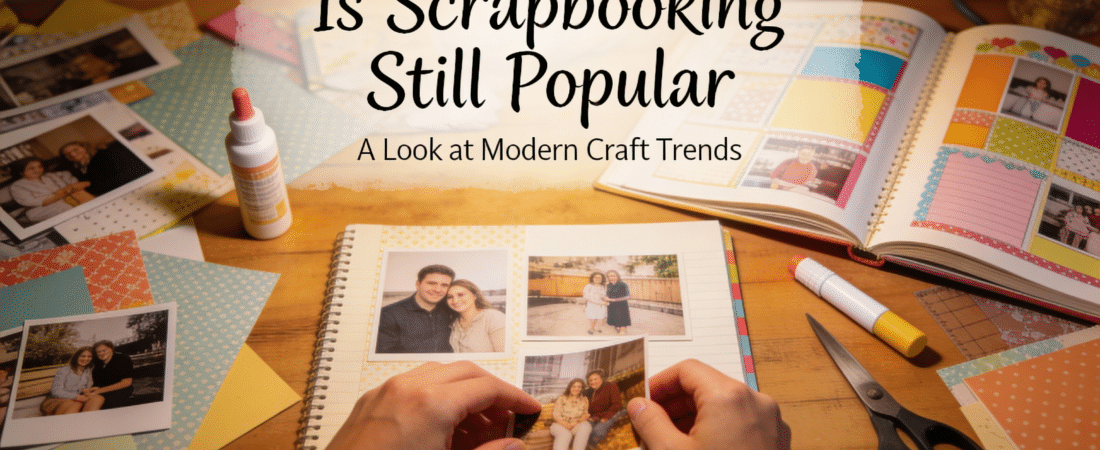

If you’ve stumbled across old patterned paper in your closet or watched someone on TikTok decorating a journal with stickers and printed photos, you might be wondering: is scrapbooking still popular, or did that hobby die sometime around 2012?
The answer isn’t a simple yes or no. It’s more like “it depends on what you mean by scrapbooking.”
Quick Answer: Is Scrapbooking Still Popular in 2024?
Here’s the honest truth: traditional 12×12 paper scrapbooking is not at its early-2000s peak. The golden age—roughly 2000 to 2010—is over. But scrapbooking as a whole is very much alive. Millions of people still scrapbook in some form, whether that’s classic paper albums, digital scrapbooking, hybrid approaches, junk journaling, project life systems, or memory planners.
The hobby has contracted in some visible ways. Your local scrapbook store probably closed years ago if it ever existed. Major publications like Creating Keepsakes have folded. In early 2024, Close To My Heart—a beloved direct-sales company—announced it was closing its doors. These losses sting for avid scrapbookers who remember the boom times.
But look elsewhere, and the hobby is thriving in ways that would have seemed impossible twenty years ago. The #scrapbook hashtag on TikTok has accumulated over 2.6 billion views. Online stores like Scrapbook.com generated $27 million in revenue in 2024. YouTube channels run 24-hour virtual crops. Annual online events like SBC Fest draw thousands of participants from around the world.
So is scrapbooking still popular? Here’s the summary:
- Traditional 12×12 scrapbooking has shrunk significantly from its peak but retains a dedicated community
- Digital scrapbooking continues growing, with projections suggesting a $7.5 billion global market by 2030
- Hybrid and alternative formats (pocket pages, junk journals, traveler’s notebooks) have absorbed many former traditional scrappers
- Social media engagement remains surprisingly robust, especially on TikTok and Pinterest
- Retail presence has shifted dramatically from brick and mortar stores to online retailers and Etsy shops
The hobby didn’t die. It evolved.
- The Rise, Peak, and “Decline” of Traditional Scrapbooking
- What Scrapbooking Looks Like Now: From 12×12 Albums to TikTok Trends
- Why Did Traditional Scrapbooking Lose Its Mass-Market Shine?
- Evidence That Scrapbooking Is Quietly Thriving
- How the Hobby Has Evolved: From Photo Storage to Creative Self-Care
- Is Scrapbooking Just for Older Generations Now?
- What Has Replaced Traditional Scrapbooking (and What Hasn’t)
- Is Scrapbooking Worth Starting Now If You’re New?
- How to Adapt Your Scrapbooking to 2024 (and Actually Keep Doing It)
- Is Scrapbooking Still Popular? Final Thoughts
The Rise, Peak, and “Decline” of Traditional Scrapbooking
To understand where scrapbooking is today, you need to understand where it came from.
The modern scrapbooking boom started in the late 1990s and exploded through the early 2000s. By around 2012, the industry was valued at approximately $3.5 billion. Brick and mortar stores dedicated entirely to scrapbook supplies seemed to appear overnight. Major retailers like Michaels and JOANN’s devoted massive floor sections to puffy stickers, washi tape, binders, and every shade of patterned paper imaginable.
The hobby attracted many women, particularly moms and grandmothers, drawn to the idea of preserving family memories for future generations. Magazine racks overflowed with titles like Creating Keepsakes and Simple Scrapbooks. QVC ran regular scrapbooking shows. CHA (Craft & Hobby Association) trade shows were major industry events where manufacturers unveiled new product lines to excited retailers.
Then came the contraction.
The 2008-2009 recession hit discretionary hobbies hard. Economic pressures made people think twice about spending on creative outlets. Around the same time, digital photography fundamentally changed how people handled pictures. Suddenly, most people stopped needing to print pictures at all—their photos lived on hard drives and phone screens.
Social media accelerated the shift. Facebook and Instagram feeds effectively became instant scrapbooks, offering the ability to share life moments without the hours of cropping and adhering. Why spend an afternoon on a single layout when you could post a photo and get likes within minutes?
By the mid-2010s, the retail landscape had transformed. Many cities went from having five or six sb stores in 2005 to zero by 2015. The closure of 2Peas in a Bucket—a beloved online message board and retailer—in 2014 felt to so many people like the end of an era. Local scrapbook store owners stopped stocking new inventory, eliminated community events like crops, and eventually shuttered entirely.
The bubble had burst. But that wasn’t the end of the story.
What Scrapbooking Looks Like Now: From 12×12 Albums to TikTok Trends
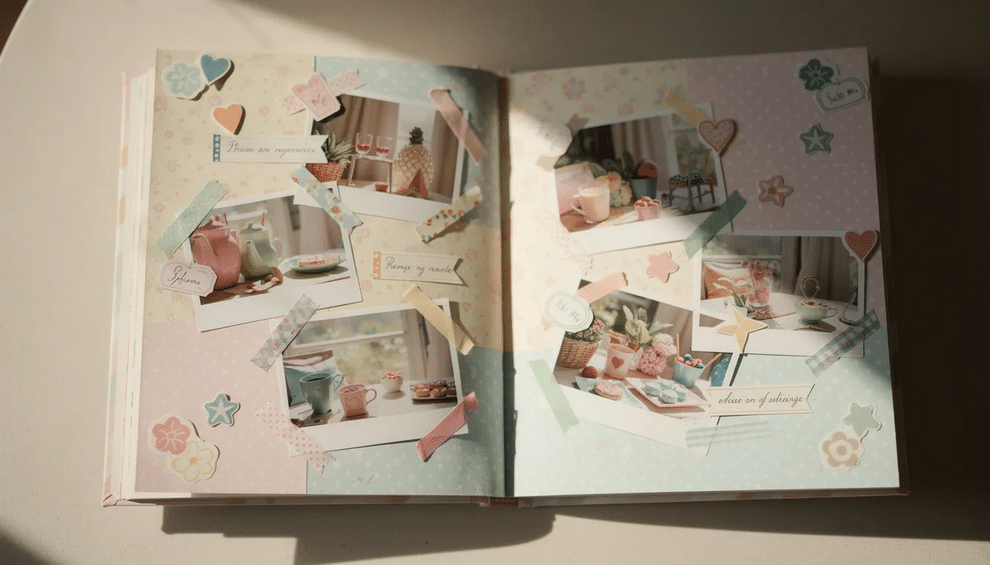
While classic 12×12 layout culture has shrunk, scrapbooking has diversified into multiple formats that would barely be recognizable to someone who last picked up an album in 2005. Here’s what memory keeping looks like in 2024:
- Traditional 12×12 and 8.5×11 albums: Still loved by long-time scrappers who enjoy the canvas size and established workflows. D-ring albums have gained preference over the post-bound albums that dominated earlier decades.
- Pocket scrapbooking and Project Life: A more photo-heavy, faster approach using pre-made pocket pages and journaling cards. Perfect for people who want to document life without elaborate layouts.
- Traveler’s notebooks and memory planners: Appeal to minimalists and people with limited space in their scrap room. Smaller formats that combine planning with memory keeping.
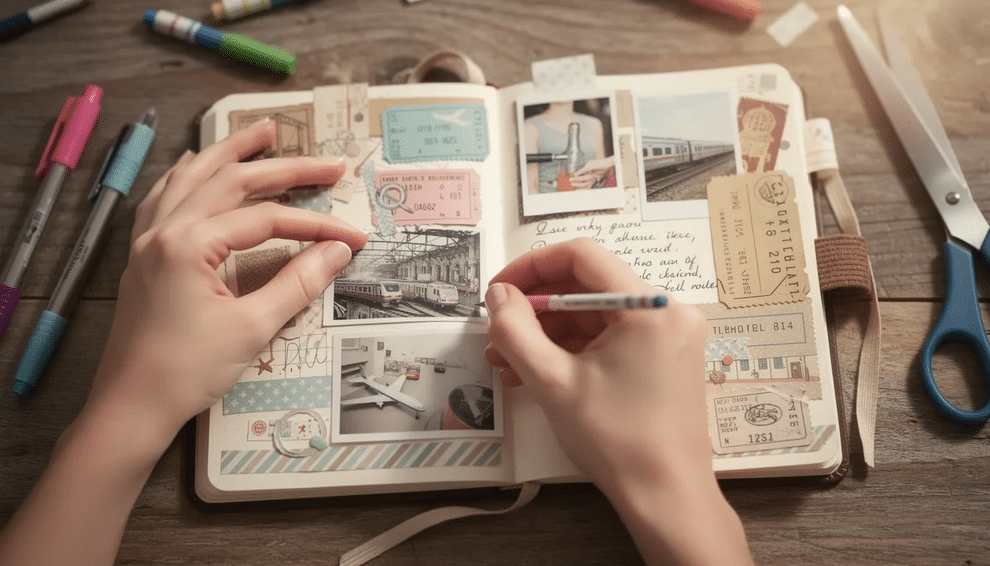
- Junk journals and mixed media art journals: Using ephemera, “found” paper, vintage elements, and collage techniques. Less about preserving perfect photos and more about creative expression.
- Digital and app-based scrapbooking: Platforms like Canva, the Project Life app, and digital scrapping software let people create layouts on screens. Some never print them; others create photo books through services like Shutterfly or Mixbook.
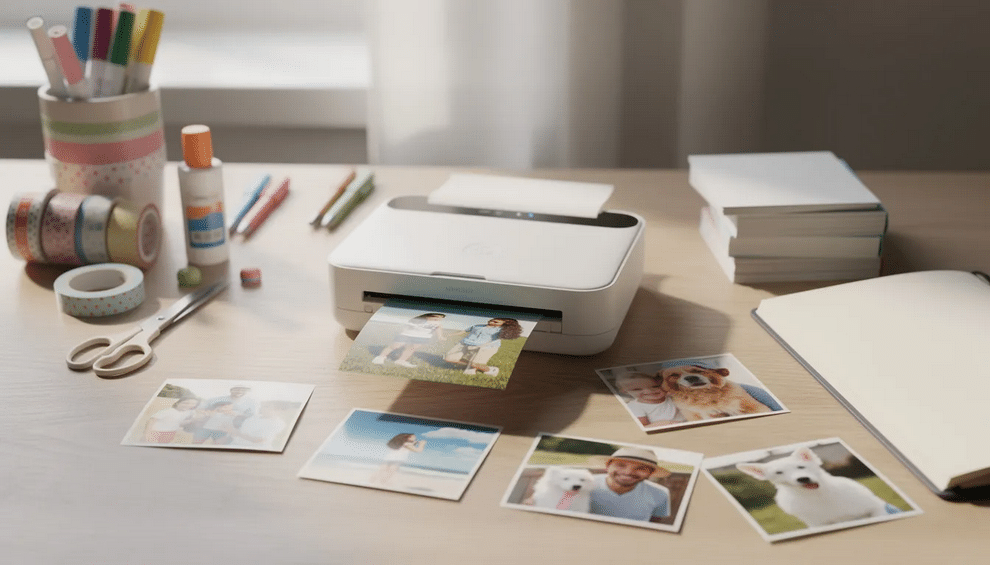
- Hybrid scrapbooking: Combines digital design with physical elements. Many crafters use photo printers like Canon Selphy, HP Sprocket, or inkless Bluetooth printers to quickly print phone photos for physical albums.
Crucially, younger generations often don’t call what they’re doing “scrapbooking.” On Instagram and TikTok, the same activities get labeled as “journaling,” “collage books,” “photo diaries,” or “memory keeping.” But when you look at what they’re actually doing—printed photos, paper, stickers, washi tape, embellishments, and personal stories—it’s scrapbooking by another name.
Specific 2023-2024 trends include massive washi tape collections, sticker hauls, K-pop and anime themed scrapbooks, college memory journals, and travel scrapbooks documented through TikTok videos. The aesthetic has shifted toward more casual, “imperfect” styles with heavy collage influence.
Why Did Traditional Scrapbooking Lose Its Mass-Market Shine?
Understanding the decline helps clarify what remains. Here are the main reasons scrapbooking contracted in the traditional sense:
- Fewer printed photos: Since the mid-2010s, most people store thousands of images on phones and cloud drives instead of printing them. Without printed photos, the fundamental raw material of scrapbooking disappeared from most households. Digital content replaced physical pictures.
- Social media as “instant scrapbooks”: Facebook timelines, Instagram grids, and Stories replaced some of the need for physical albums. When you can scroll through years of memories on your phone, the urgency to create something tangible fades.
- Cost and storage: Large 12×12 albums, page protectors, die cuts, and big stashes of supplies became expensive to buy and difficult to store. Many scrapbookers accumulated tons of stuff during the boom years and then felt overwhelmed by all the supplies they’d never use.
- Time constraints: Busy family and work schedules made multi-hour crops harder to sustain. When life gets hectic, hobbies requiring significant time investment often get cut first.
- Industry consolidation: The closure of local shops eliminated places where the hobby was taught and shared. Companies like Pinkfresh Studio paused scrapbooking lines to focus on stamps and dies for card making. Fewer new paper lines meant less excitement and fewer reasons to visit stores.
It’s worth noting that this “decline” is mainly in the retail and format sense. The underlying desire to document life and create with paper hasn’t disappeared—it’s just found different expressions.
Evidence That Scrapbooking Is Quietly Thriving
The “scrapbooking is a dying hobby” narrative doesn’t hold up under scrutiny. Here’s concrete evidence that the hobby remains vibrant:
Online communities are active:
- Subreddits like r/scrapbooking maintain regular discussions and inspiration sharing
- Facebook groups dedicated to memory keeping, specific album systems, and junk journaling have thousands of active members
- Discord servers connect crafters for real-time conversation and virtual crops
- The spirit of old message board culture lives on in dedicated online communities
Social media engagement is massive:
- TikTok hashtags like #scrapbook, #scrapbooking, #journaling, and #junkjournal collectively have billions of views
- YouTube creators post process videos, livestream crops, and “Use Your Stash” series that draw substantial viewership
- Pinterest identified paper crafts as one of 2023’s biggest emerging trends, with related searches (origami up 175%, quilling up 60%) driving broader interest
Events and crops continue:
- In-person retreats still happen regionally across the country
- Scrapbook expo events have returned to cities after pandemic-related gaps
- Online events like SBC Fest offer virtual classes and community interaction to participants worldwide
Retail and product innovation persist:
- Dedicated online retailers like Scrapbook.com maintain stable business (projected 0-5% growth in 2025)
- Etsy shops offer printable kits, digital cut files, and unique embellishments
- Adjacent categories like stamps, dies, washi tape, and ephemera packs continue growing, serving both card making and scrapbooking audiences
The hobby isn’t dead. It’s just changed address—from your local scrapbook store to your browser and social feeds.
How the Hobby Has Evolved: From Photo Storage to Creative Self-Care
In the early 2000s, scrapbooking was often framed as serious memory keeping “for future generations.” There was pressure to stay “caught up” with chronological documentation of every family event. Many women felt guilty if they fell behind on albums. The hobby came with unwritten rules: acid-free everything, archival materials, chronological order, and thorough documentation of every milestone.
That mindset has largely evaporated.
Today’s scrapbookers increasingly approach the hobby as a creative outlet first and a documentation tool second. Layouts become mini art projects rather than just formatted photos with captions. The shift toward creativity first, records second, has freed people from the “I’m behind” anxiety that plagued many during the boom years.
Mental health benefits have become a central part of the hobby’s identity. Across online communities, people describe scrapbooking as a stress reliever and mindfulness practice. The tactile nature of working with paper, the focus required to arrange elements, and the screen-free time provide genuine therapeutic value. In an era of constant digital engagement, the analog nature of paper crafting feels almost rebellious.
Personal storytelling has expanded beyond weddings and babies. Modern scrapbookers document everyday life, personal growth, challenges overcome, and individual identity—not just family milestones. Many long-time scrappers now say they create primarily for their own enjoyment rather than for loved ones or heirs. The hobby has become more inward-focused, about the process and personal meaning rather than creating keepsakes others will appreciate.
The old “rules” have given way to a “no rules” approach. Mix pocket pages with full layouts. Use non-archival ephemera if you like the aesthetic. Skip events that don’t inspire you. Document a random Tuesday instead of Christmas. The liberation from standards has made the hobby more accessible and fun for those who stay.
Is Scrapbooking Just for Older Generations Now?
There’s a perception that scrapbooking is an “older millennial/Gen X mom” hobby rooted in the Y2K era. Let’s address that honestly.
Yes, most people who practice traditional paper scrapbooking today started scrapbooking years ago—often 15 to 25 years back—and are now in their 30s through 60s. The boom era created a generation of committed crafters who never stopped. If you attend a scrapbook expo or browse a Facebook group, you’ll see this demographic heavily represented.
But younger people are present in the hobby, even if they’re less visible in traditional spaces:
- Gen Z creators post K-pop, fandom, and study-journal scrapbooks on TikTok and Instagram, often with hundreds of thousands of views
- College students keep travel journals and mini albums documenting semesters abroad, concerts, and friendships
- Teens discovering the hobby approach it through the lens of journaling, collage, and aesthetic curation rather than family documentation
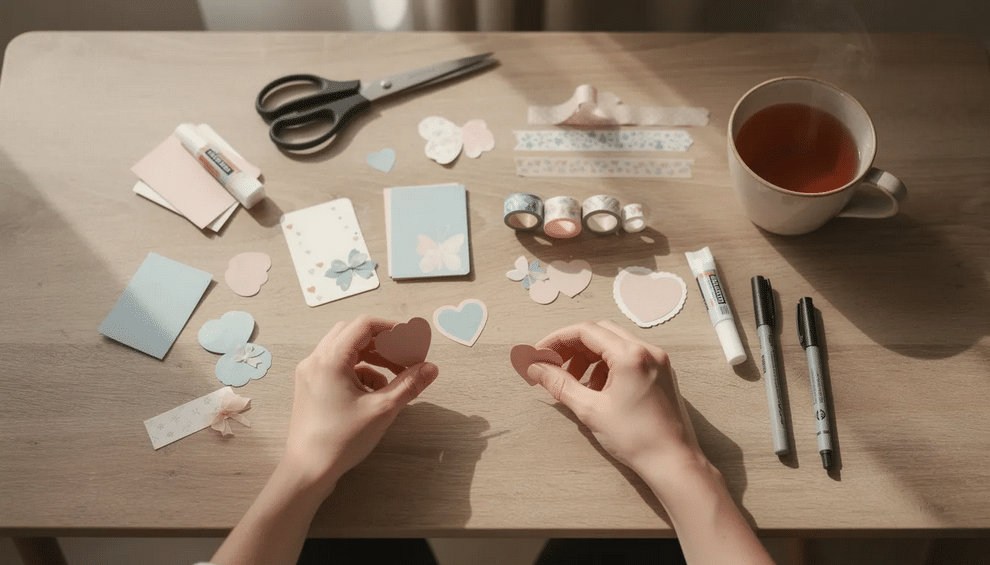
- Younger crafters tend toward smaller formats, more collage-based styles, and heavy use of stickers and washi tape
One observation from long-time community members is that younger paper scrapbookers are “unicorns”—rarer, but they exist and influence overall style trends. Their preferences lean toward casual, imperfect, art-journal-influenced pages rather than the polished, photo-centered layouts of the 2000s peak.
Perhaps most importantly, many younger crafters don’t use the word “scrapbooking” even though what they’re doing—printed photos, paper, stickers, journaling—is essentially the same activity. The terminology gap makes the younger presence less visible in traditional metrics like search volume or group membership, but they’re out there creating.
What Has Replaced Traditional Scrapbooking (and What Hasn’t)
Two related questions need untangling: what replaced scrapbooking in the mainstream, and what do people who used to scrapbook now do instead?
Mainstream replacements:
- Social media feeds as public memory archives: Instagram grids and Facebook timelines serve the “showing life to others” function that scrapbooks once fulfilled
- Phone camera rolls and cloud backups as private archives: Most people’s photos now exist only as digital files, viewed occasionally on screens but never printed
- Photo book services and auto-generated albums: Apps like Google Photos, Chatbooks, and Shutterfly offer one-click photo books that require minimal creative input—the opposite of scrapbooking but addressing the same archival impulse
Within the crafting world:
- Card making’s rise: Many companies have shifted product development toward stamps, dies, and ink that serve card makers primarily
- Mixed media art and bullet journaling: These hobbies absorbed many former scrapbookers who wanted creative expression without the photo-documentation framework
- Hybrid “memory planners” and decorated notebooks: Combining planning with scrapbook elements in smaller, more manageable formats
- Videos as memory keeping: Some families now create edited videos instead of albums, storing them on hard drives or sharing on private social channels
The honest assessment is that nothing fully replaces the tactile, story-rich experience of a handmade scrapbook. Instead, people stack multiple partial replacements—social media for sharing, photo books for printing, journaling apps for reflection—that collectively address needs a single album once met. But none of them feel quite the same as flipping through pages you created yourself.
Is Scrapbooking Worth Starting Now If You’re New?
If you’re considering picking up scrapbooking in 2024 and wondering whether it makes sense to jump into a “shrinking” hobby, here’s a direct answer: yes, it’s still worth it. But approach it differently than someone would have in 2005.
Reasons to start now:
- Unique physical keepsakes in a digital world: A handmade album stands out when everything else lives on screens. For milestone events—weddings, babies, travels, graduations—a tangible album becomes something your friends and family will actually look at repeatedly
- Flexible formats that fit modern lives: You don’t need to commit to 12×12 albums. Smaller notebooks, pocket pages, monthly or yearly overview albums, and single-event mini books all work
- Strong online inspiration: More free resources exist now than during the hobby’s peak. Classes, challenges, free sketches, YouTube tutorials, and community support are all a click away
- The fun factor: If you enjoy working with your hands, organizing memories, and creating art, scrapbooking delivers. Most people who try it get totally obsessed for a reason
Addressing common concerns:
- “Will products disappear?”: Core scrapbook supplies—cardstock, page protectors, adhesives, albums—have been stable for decades. Trends shift, but you’ll always be able to buy the basics from online stores
- “Is it too expensive?”: Start small. A basic toolkit, some printed photos, and a simple album cost less than many single outings. Printable supplies and digital elements keep costs low
Suggested starting points:
- Pick a single 6×8 or A5 album for one trip or one specific year
- Try a hybrid approach: print a limited set of phone photos and mix with journaling and ephemera like tickets and receipts
- Watch a few YouTube videos of different styles before buying anything to see what resonates
- Find a Facebook group or subreddit for your preferred format and lurk for inspiration before diving in
The barrier to entry is lower than ever. You don’t need a dedicated scrap room or all the supplies to begin.
How to Adapt Your Scrapbooking to 2024 (and Actually Keep Doing It)
Whether you’re returning after a long break or trying to sustain an existing practice, here are practical strategies for making the hobby work with current lifestyles:
- Simplify formats: Use pocket pages or traveler’s notebooks if you’re time-poor. These systems require less planning and fewer decisions per page than traditional layouts
- Go hybrid: Design pages digitally using Canva or Procreate and print them, or combine printed journaling cards with physical embellishments. Many different ways exist to blend digital and physical
- Set realistic goals: One album per year, one spread per month, or a vacation-only album. Lower expectations lead to actual completion rather than guilt over unfinished projects
- Use your stash: Build “page kits” from older scrapping supplies instead of chasing every new release. That patterned paper from 2015 still works perfectly fine
- Join community: Online crop weekends, livestreams, classes, or local retreats when available all provide motivation and accountability. The hobby is more fun with friends, even digital ones
- Embrace imperfection: Modern aesthetics lean casual. A “done” page beats a “perfect” never-started page every time
Modern tools worth knowing about:
- Portable photo printers (Canon Selphy, HP Sprocket, Polaroid Hi-Print) let you print phone photos instantly
- Cutting machines (Cricut, Silhouette) create custom die cuts and work across crafts
- Printable journaling cards and digital cut files from Etsy offer affordable, immediate supplies
- Apps like the Project Life app help with layout planning even if you print physically, and you can find inspiration for holiday craft projects to personalize your creations
The key is matching your approach to your actual available time and interest, not to what the hobby looked like in its mass-market heyday.
Is Scrapbooking Still Popular? Final Thoughts
Let’s return to the original question: is scrapbooking still popular?
The mass-market boom years are gone. The days when every strip mall had a local scrapbook store, when Creating Keepsakes had hundreds of thousands of subscribers, when CHA trade shows launched a year’s worth of trends—those aren’t coming back. In that sense, traditional scrapbooking has declined substantially from its peak.
But scrapbooking remains alive in ways that matter. Millions of people still create with paper, photos, stickers, and stories. Digital scrapbooking and hybrid approaches are growing. Junk journaling and art journaling have captured creative energy that once went into traditional layouts. Online communities thrive. Social media introduces the hobby to younger generations under different names. The core impulses—preserving memories, expressing creativity, finding community, creating art by hand—remain as strong as ever.
The hobby has simply evolved. It’s quieter, more niche, more fragmented across formats and platforms. But it’s vibrant for those who participate.
If you’re wondering whether to start, return, or continue, here’s the bottom line: define “scrapbooking” in a way that matches your life. Maybe that’s a classic 12×12 album. Maybe it’s a junk journal stuffed with tickets and receipts. Maybe it’s a decorated notebook of printed phone photos. Maybe it’s a digital photo book with custom layouts.
Whatever form it takes, the act of intentionally capturing and creating from your memories isn’t going anywhere. The world might be more digital than ever, but the desire to make something tangible from our lives endures.
Go make something. The hobby is waiting.