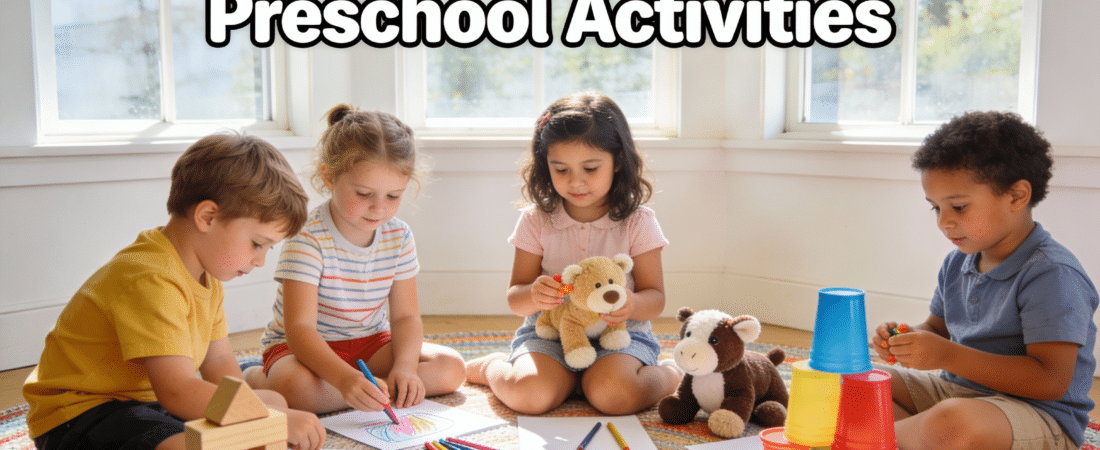

When we talk about no prep preschool activities, we mean exactly that: ideas you can start in under two minutes using materials you already have at home or in the classroom. No shopping trips, no printing, no elaborate sensory bins that take an hour to assemble. Just simple activities that work when you need them most—like while dinner is cooking on a Tuesday in March or during an unexpected rainy afternoon in April.
These activity ideas are designed for children ages 3 to 5, though most can flex up or down with small adjustments for a toddler sibling or an early elementary child who wants to join in. Whether you’re a parent in a small apartment, a teacher in a busy classroom, or a caregiver stuck in a waiting room, you’ll find something here that fits your space and moment.
This article is organized by type of play—movement games, art, sensory, literacy, math, and quiet time—so you can quickly jump to what you need right now. Every suggestion focuses on low-mess, low-cost ideas that work in small spaces, because real life rarely looks like Pinterest.
- Benefits of No Prep Preschool Activities
- Instant Movement Games: No-Prep Ways to Get Preschoolers Moving
- No-Prep Art & Mark-Making Ideas
- Simple Sensory Play with Almost No Setup
- No-Prep Literacy & Language Games
- Quick Math & Thinking Activities with Everyday Objects
- Calm-Down & Quiet Time No-Prep Ideas
- Making No-Prep Activities Part of Your Routine
Benefits of No Prep Preschool Activities
Let’s be honest: unexpected schedule changes happen. Rainy days appear. After-work fatigue is real. Quick, simple play matters because it meets kids where they are without requiring adults to be superheroes first.
Here’s what these straightforward activities actually support:
- Language development through conversation, storytelling, and describing what they’re doing
- Fine motor skills from drawing, pouring, squeezing, and manipulating materials
- Gross motor skills from jumping, hopping, balancing, and whole-body movement
- Self-regulation as children make choices, wait turns, and manage emotions
- Independence when kids can access materials and direct their own play
Consider this comparison: twenty minutes of jumping over a tape line on the floor builds balance, counting skills, listening comprehension, and cardiovascular health. Twenty minutes of a worksheet? Mostly just sitting. Research consistently shows that play-based learning yields benefits in critical thinking, emotional intelligence, creativity, and resilience that outperform rote methods long-term.
No-prep doesn’t mean “less educational.” In fact, child-led exploration with familiar materials often produces richer learning than complex crafts with predetermined outcomes. When a child produces their own ideas—mixing colors freely, deciding what to draw, choosing how to move—they’re building the executive function and problem-solving skills that matter for school and life.
Instant Movement Games: No-Prep Ways to Get Preschoolers Moving
These games work indoors, need almost no space, and use only items like paper, tape, and common toys you already own. They’re ideal for burning energy before bed, during winter afternoons when you can’t get outside, or on rainy weekends when everyone’s climbing the walls.
Each activity below includes the age range it works best for, approximate time needed (usually 5–15 minutes), and at least one variation for older or younger children. Let’s get those preschoolers moving.
1. Tape Line Adventures (Balance Beams & Shape Paths)
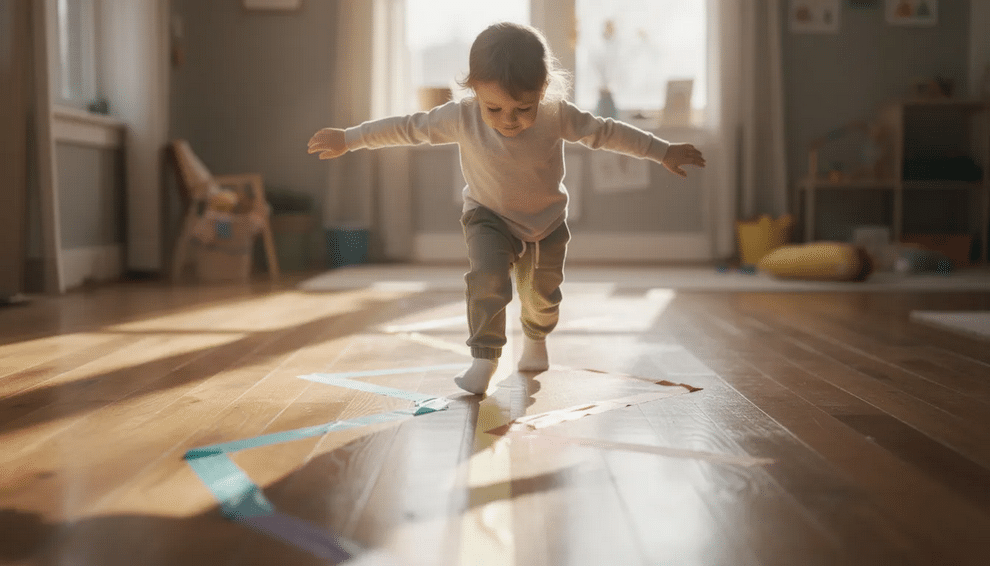
Grab painter’s tape or masking tape and create lines on the floor: straight paths, zigzags, circles, squares, triangles. This simple activity is a fun way to enhance children’s fine motor skills. That’s it. Setup takes about sixty seconds.
How to play:
- “Walk on the blue line like you’re on a tightrope”
- “Jump only on the circles”
- “Tiptoe along the zigzag without falling off”
Variations by age and ability:
- Younger preschoolers: Walk forward slowly, hold a grown-up’s hand
- Older preschoolers: Walk backward, hop on one foot, balance a beanbag on their head
- Toddler version: Just stand on shapes when you call out the color
Learning twists: Place sticky notes with letters, numbers, or colors along the tape. Call out “Jump to the letter B!” or “Find the number 3!” This builds listening skills and letter recognition without any worksheets.
Cleanup: Peel up the tape in under a minute. For safety, use non-slip floors and have kids go barefoot or in grippy socks.
2. Simon Says with a Learning Twist
Classic Simon Says needs zero materials—just your voice and a bit of space to stand and move.
Themed versions to try:
- Animal actions: “Simon says hop like a frog,” “Simon says stomp like an elephant”
- Weather movements: “Simon says blow like the wind,” “Simon says fall like rain”
- Sports pretend: “Simon says shoot a pretend basketball,” “Simon says swing a bat”
Integrate vocabulary and concepts:
- “Simon says touch something red in the room”
- “Simon says make a triangle with your fingers”
- “Simon says take three giant steps”
Keep it cooperative: Instead of having children sit out when they miss, just keep everyone playing. The goal is movement and fun, not elimination. Let kids take turns being “Simon” to practice language and leadership—they love being in charge.
3. Paper Snake Jump (Jump-Over Listening Game)
Take a strip of paper, a line of paper plates, or even a rolled-up towel and lay it on the floor as your pretend snake.
The game: Call out words in categories (animals, foods, letters, sounds). Children jump over the snake only when they hear a target word. For example: “Jump when you hear an animal name!” Then say: “Apple… chair… DOG!” and they jump.
Simpler versions for younger preschoolers:
- Jump when you hear your name
- Jump when you hear a color
- Jump when you hear an animal sound (moo, woof, meow)
For small spaces: Step over instead of big jumps, or use a yoga mat or towel as the snake. This activity stores flat in a folder or can be redrawn in seconds with scrap paper when you need it again.
4. I Like / I Don’t Like Corners Game
Label two walls, chairs, or pieces of paper with simple symbols: a smiley face for “I like” and an X for “I don’t like.”
How to play: Call out items—bananas, cats, rain, pizza, broccoli, dinosaurs—and children move to the side that matches their preference.
Build language: Model full sentences: “I like cats!” or “I don’t like broccoli!” Encourage kids to say their sentence out loud as they move to their chosen side.
For limited movement situations: Children can point, show thumbs up or down, or hold up color cards instead of walking across the room.
Seasonal variations:
- Spring: rain, mud puddles, spring flowers, butterflies, umbrellas
- October: pumpkins, spiders, costumes, candy corn
- January: snow, mittens, hot chocolate, sledding
This game builds vocabulary, opinion expression, and the confidence to share ideas—all with zero materials beyond your voice.
No-Prep Art & Mark-Making Ideas
No-prep art means pulling out a few basics—paper and something to make marks—without fancy art supplies or elaborate setups. The focus here is on process art, where exploration matters more than a finished product to hang on the fridge.
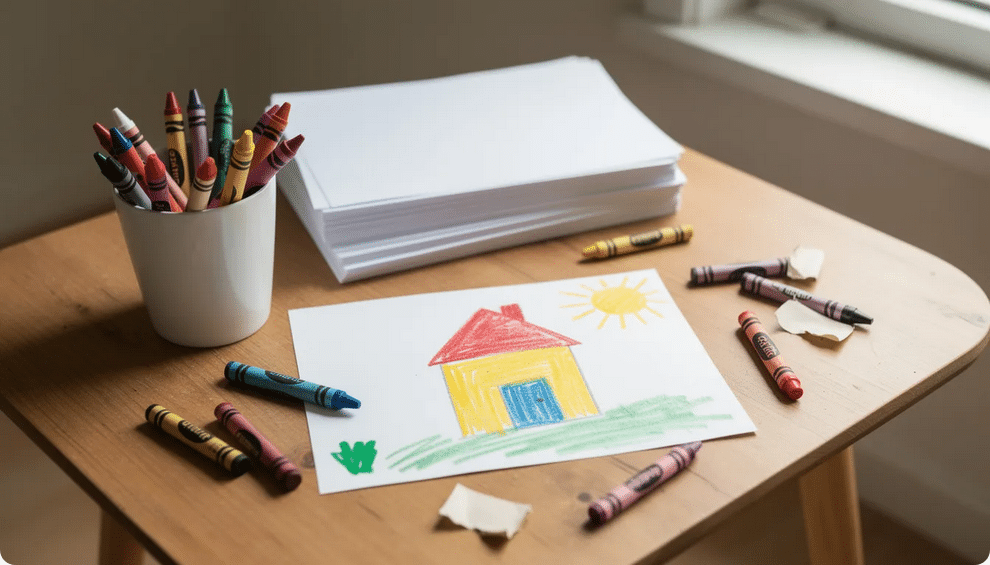
Keep an always-available basket with crayons, washable markers, scrap paper, and a clipboard or tray. That’s your grab-and-go art station. Here are easy art invitations you can start in under two minutes.
5. Everyday Drawing Station (Grab-and-Go Creativity)
Set up a permanent or semi-permanent drawing spot with crayons, chunky pencils, and plain paper. A low shelf, a corner of the table, or a simple basket on the floor works perfectly.
What kids might draw:
- Family members and pets
- Their favorite toys
- What happened at the park today
- The weather outside the window
- Their breakfast or lunch
Rotate surfaces to keep it fresh:
- Index cards for tiny drawings
- The back of junk mail
- Cardboard boxes from cereal or deliveries
- Coffee stirrers can even be dipped in paint for mark-making
Avoid pre-printed coloring pages most of the time. When children create their own images, they practice decision-making, planning, and self-expression in ways that fill-in-the-lines cannot teach.
6. Music and Drawing: Draw What You Hear
Play a short song and invite children to draw how the music feels. This works with anything from a favorite children’s song to classical music.
Try these prompts:
- “Draw fast lines for the quick parts”
- “Use blue for calm sections, red for loud sections”
- “Make big circles when the music gets exciting”
Practical song suggestions:
- “Vivaldi – Spring” (from The Four Seasons) for varied tempos
- “The Carnival of the Animals” by Saint-Saëns for animal-inspired movement
- Any upbeat kids’ song your child already loves
This activity combines listening skills, emotional expression, and early art concepts like line and color. All you need are markers or crayons and paper—materials you already have access to.
7. Water Painting (Indoor or Outdoor)
Provide a small bowl or cup of water and a paintbrush, sponge, or cotton ball. Kids “paint” water on a chalkboard, construction paper, patio stones, or sidewalk chalk drawings.
The magic: Marks appear dark, then slowly disappear as they dry—like magic writing that resets itself. Kids can paint the same surface over and over without running out of space.
Why it works:
- Nearly mess-free (it’s just water!)
- Perfect for renters or classrooms without sinks nearby
- Great for developing fine motor control
Variations:
- Trace around toys with water
- Paint shapes, letters, or numbers
- Draw simple self-portraits in outline
- Paint the house exterior or a window if you’re outside
This is the perfect activity for a warm afternoon in the world outside or a contained table activity indoors.
Simple Sensory Play with Almost No Setup
Sensory play doesn’t require elaborate sensory bins that take an hour to create. Quick, contained, easy-to-clean options exist for every life situation. Always supervise preschoolers closely, especially with small items and water.
Most ideas here use items you already own: rice, soap foam, ice cubes, dry pasta. Use trays, baking sheets, or shallow plastic tubs to keep the mess contained on a table or floor. A bit of preparation goes a long way toward minimal cleanup.
8. Dry Pantry Sensory Bin (Rice, Beans, or Pasta)
Dump 2–3 cups of dry rice, lentils, or pasta into a baking dish or plastic container. That’s your sensory bin, ready to fill with exploration.
Add simple tools:
- Measuring spoons and cups
- A muffin tin for sorting
- Toy cars, animals, or construction vehicles
- Pipe cleaners to bury and find
Learning prompts: For hands-on creativity and educational fun, check out these top DIY kits for creative projects and fun learning experiences.
- Scoop and pour from one container to another
- Count how many scoops fill a cup
- Bury small toys and go on a “rescue mission” to find them
- Practice vocabulary: full, empty, more, less
Quick cleanup tips: Place an old towel or sheet underneath. Pour spilled grains back into the container. Store the whole bin with a lid for next time.
Safety note: For under-3s, use larger pasta shapes rather than tiny rice or lentils. Supervision is non-negotiable with any small materials.
9. Soap Foam Sink Play
Fill a sink, dishpan, or large bowl with warm water and a squirt of dish soap to make bubbles. Add a few plastic animals, spoons, sponges, or cups for washing and pouring.
Play scenarios:
- “Car wash” for toy vehicles
- “Animal spa” where plastic animals get baths
- “Dish washing helper” with real (unbreakable) dishes
This doubles as practical life practice. Kids learn to squeeze sponges, rinse dishes, and wipe the counter afterward. These are real skills that build independence.
This is a good 10–20-minute activity while an adult cooks nearby with clear visibility. Children stay engaged while you get dinner on the table.
10. Ice & Pom-Pom Rescue
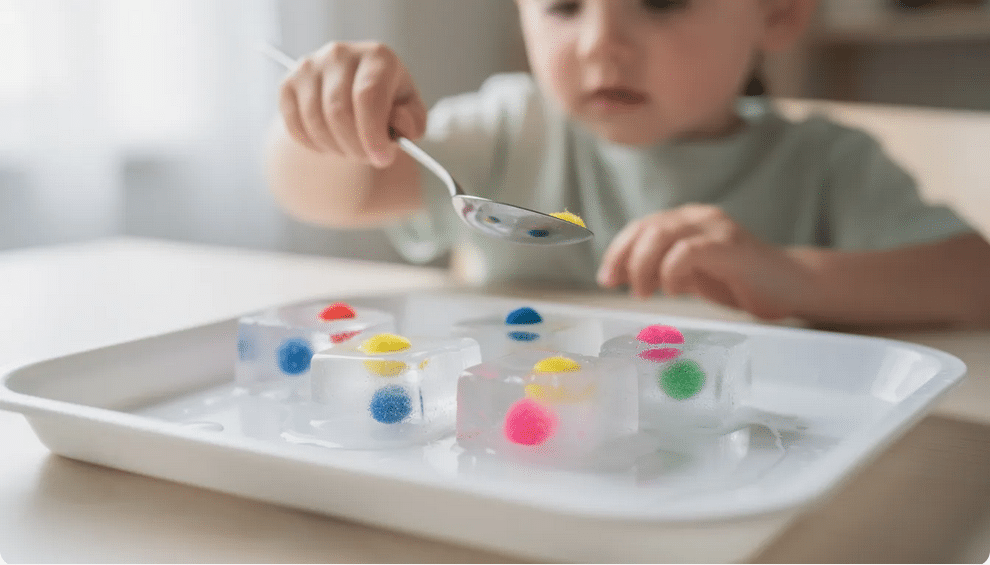
Freeze small pompoms, plastic animals, or other small toys in an ice cube tray or shallow container. At playtime, offer warm water, spoons, or droppers to “rescue” the frozen items.
Science and vocabulary opportunities:
- Discuss melting, cold vs. warm, solid vs. liquid
- Count how many items get rescued
- Predict which will melt first
Truly no-prep version: Just use plain ice cubes in a tray with spoons and small bowls—no frozen objects needed. The sensory experience of cold, wet, and slippery is enough.
Supervision notes: Ice creates slippery surfaces and can be a choking hazard for mouths. Do this activity on a towel-covered surface or tray, and stay close.
No-Prep Literacy & Language Games
Building early literacy happens through conversation, storytelling, and playful exposure to print—not formal lessons. All activities here use only your voice, common household items, or a few sticky notes or index cards.
These work beautifully in waiting rooms, car rides (audio-only versions), or transition times like before bed. Model full sentences and rich vocabulary, even when children’s speech is shorter. The following games can be started instantly with no printing or prep.
11. Sound Hunt Around the Room
Choose a sound (like “m” or “s”) and hunt for objects that start with that sound: mug, marker, milk, sock, spoon, star.
Variations by age:
- Younger preschoolers: Color hunts (“Find something blue”) or shape hunts (“Find a circle”)
- Older preschoolers: Letter sounds, rhyming words, or categories (things you can eat, things that are soft)
Build language: Encourage naming items in full phrases: “I found a blue mug on the table!” This develops vocabulary and sentence length naturally.
This works when stuck indoors, in a classroom, or in a small apartment. For outdoor play, try sound or letter hunts in the backyard, playground, or on a neighborhood walk while walking to the park.
12. Story Dice Without Dice (Make-Believe Story Prompts)
Write or draw quick pictures (cat, tree, car, moon, pizza) on small pieces of paper and fold them. Children pick 2–3 slips and create a story that includes every item.
Totally no-material version: Simply name three items aloud for the child to weave into a story orally. “Tell me a story about a dog, a rainbow, and a sandwich.”
Seasonal themes:
- October: pumpkin, leaf, spider, owl
- January: snowman, mitten, sled, hot chocolate
- Spring: butterfly, rain, flower, nest
This builds narrative skills, memory, and imagination. Adults can introduce new vocabulary naturally, and children practice sequencing events—all with zero printing or special props. For those moments when you want to inspire hands-on creativity, discover essential art supplies for young artists that can further nurture your child’s imagination.
13. Picture Book Play: Act It Out
Choose any familiar picture book and invite children to act out scenes with their bodies and voices. You don’t need costumes or props—just enthusiasm.
Concrete examples:
- Pretend to be “The Very Hungry Caterpillar” munching through fruits
- Be a train from “Freight Train” going fast and slow around the room
- Act out “Where the Wild Things Are” with wild rumpus dancing
Encourage children to retell the story in their own words after acting, even if simplified. Adults can switch roles—adult as narrator, child as characters—to keep children engaged throughout.
This makes a calm, after-dinner or bedtime activity that still supports language and comprehension without screens.
Quick Math & Thinking Activities with Everyday Objects
Preschool math is about sorting, patterns, counting, and comparison—not worksheets. Common objects like spoons, socks, blocks, and bottle caps become instant math tools.
Keep the tone playful and avoid turning everything into a quiz. Follow the child’s interest rather than drilling concepts. Here are ideas that need no more than what’s already on the table or in the room.
14. Sock Sorting & Matching
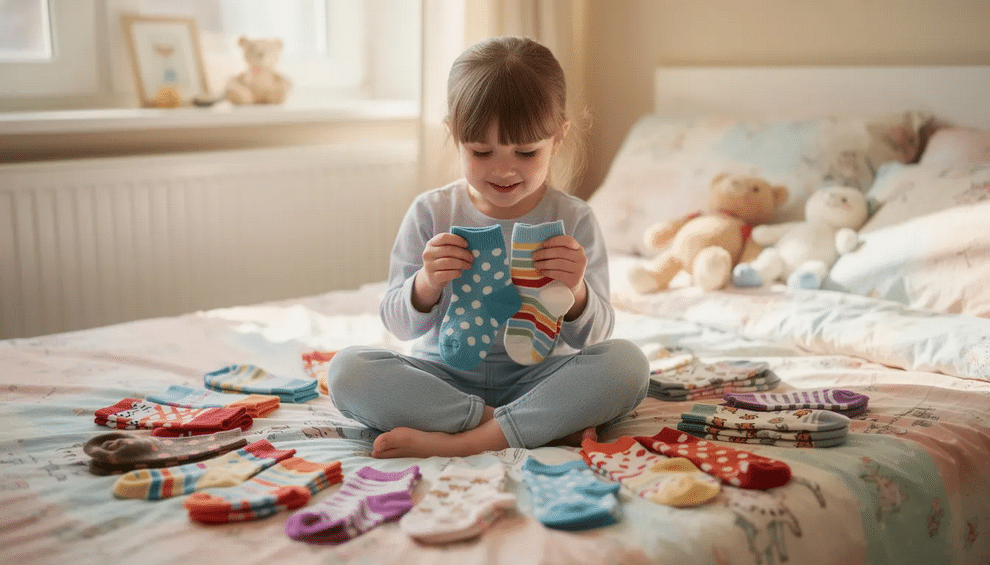
Dump clean socks on the couch or bed and invite children to find matching pairs by color, pattern, or size.
Math concepts to explore:
- Count how many pairs total
- Talk about “longer/shorter” and “thicker/thinner”
- Make simple graphs by creating piles sorted by type or color
Practical life connection: Children can roll or fold pairs and place them in a basket or drawer. This blends math with real responsibility and pride in helping.
This activity naturally happens multiple times a week during laundry and can become a routine job for preschool helpers. They’ll hear you say “thank you for helping!” and feel genuinely useful.
15. Snack-Time Counting and Patterns
Use snack items—apple slices, crackers, raisins, carrot sticks—for simple counting and pattern games right at the table.
Pattern examples:
- Cracker–raisin–cracker–raisin
- Carrot–cucumber–carrot–cucumber
- Red grape–green grape–red grape–green grape
Counting practice: Count pieces aloud together, then “eat down” from 5 to 0. “Five crackers… four crackers… three crackers…”
Keep it light. Don’t pressure kids to finish the snack just to complete an activity. This can happen any day of the week with whatever snack is available, making math a natural part of the routine during the entire year.
16. Toy Sort & Rescue Mission
Dump a small selection of toys—cars, animals, blocks, figures—and ask children to “rescue” items by attribute.
Sorting prompts:
- “Rescue all the red animals”
- “Save the things that can roll”
- “Find three tiny things”
- “Grab everything that’s soft”
This builds sorting, categorizing, and descriptive language all at once. Add a simple countdown to create excitement, and it doubles as a quick tidy-up game.
Keep the pile small so it stays low-stress and truly quick. Four or five handfuls of toys is plenty. The goal is fun, not overwhelm.
Calm-Down & Quiet Time No-Prep Ideas
Quiet activities help when children are overwhelmed, after a busy outing, or before bedtime. These no-prep calm-down ideas can be set up in under a minute using just one book, blanket, or soft toy.
It’s completely normal if toddlers and younger preschoolers only calm briefly at first. Consistency helps build the habit over time. Think of building a small toolbox of go-to quiet activities you can reach for when energy needs to shift.
17. Blanket Cave & Book Basket
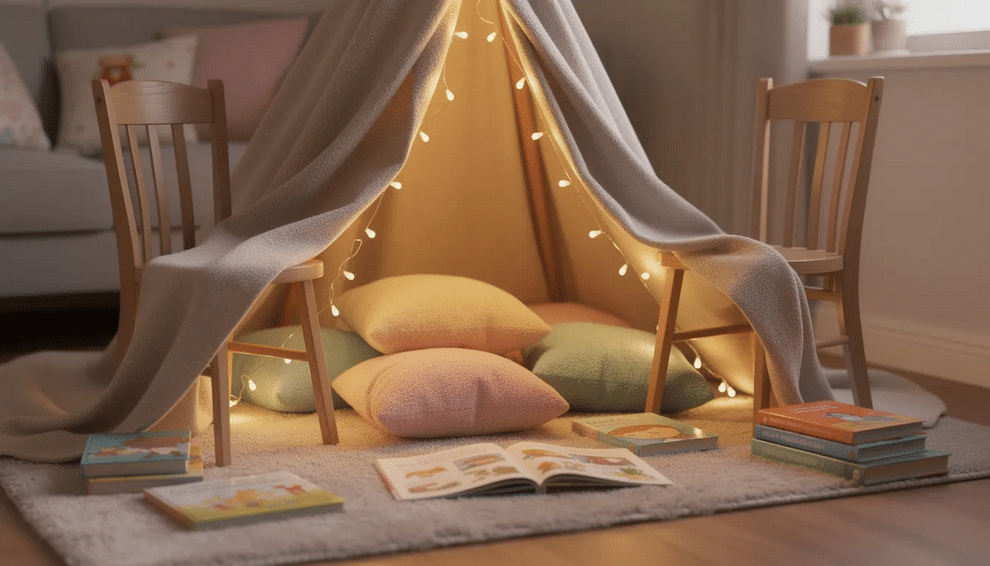
Throw a light blanket over two chairs or a table to make a quick “reading cave” or “cozy tent.” Setup takes about thirty seconds.
Inside the cave:
- A small basket with 3–5 familiar picture books
- A flashlight or battery-powered touch light
- A favorite stuffed animal or doll to “read” alongside
Adults can join for the first story, then quietly step out while the child continues alone if they’re ready. This builds independence and creates positive associations with books and quiet time.
18. Playdough Quiet Hands
Keep a small container of store-bought or homemade play dough on hand as a go-to quiet activity. It requires almost no setup and provides calming, repetitive sensory input.
Simple, no-tool ideas:
- Rolling balls between palms
- Making snakes by rolling dough on the table
- Pressing fingers in to make patterns
- Stamping with blocks, lids, or golf tees
Repetitive squeezing and rolling can help regulate emotions and settle busy hands. A placemat or tray under the dough keeps cleanup fast—usually under a minute.
Adults can narrate calmly (“You’re rolling a long, long snake”) to add gentle language learning without over-directing the play. Let children lead and create at their own pace.
19. Drawing Mandalas and Simple Patterns
Trace a circle on paper using a bowl and invite children to fill it with lines, dots, and shapes from the center out.
This isn’t about perfection—it’s about slow, repeated marks that feel soothing. The act of creating patterns can help children transition from high energy to calm focus.
Tips for success:
- Use just one or two colors at a time to keep it visually calm
- Recommend this for older preschoolers (around 4–5) who can focus longer on fine details
- Adults can draw their own pattern alongside the child to model calm, focused drawing
This teaches patience and concentration while building fine motor skills through controlled mark-making.
Making No-Prep Activities Part of Your Routine
The easiest way to use these easy ideas consistently is to keep a few resources in predictable places: a small art basket on a low shelf, a sensory tub in the closet, a book bin by the couch. When materials have a home, grabbing them becomes automatic.
Start small: Choose 3–5 favorite activities from this article and rotate them through the week. Trying everything at once leads to burnout. Consistency beats variety.
Simple routine ideas:
- One movement game after breakfast to burn morning energy
- One quiet activity before nap or rest time
- A quick art invitation on messy rainy afternoons
- Sensory play while you cook dinner nearby
Pay attention to which activities your specific child or students return to—whether in March, June, or November—and repeat those often. Children learn through repetition with familiar materials, making ongoing discoveries over months rather than needing constant novelty.
Save time by letting go of perfection. Great ideas don’t require great preparation. Teachers and parents alike benefit from embracing simplicity. Subscribe to a weekly newsletter for fresh inspiration, but remember that the activities you already know work just fine.
Simple, consistent play moments matter far more than elaborate setups. It’s okay to keep things easy most days. Your presence and encouragement mean more to your preschoolers than any Pinterest-worthy project ever could. Start with one idea from this list today, and let the play begin.