

Making the switch to sustainable products doesn’t require a complete lifestyle overhaul or emptying your wallet at a specialty store. It starts with understanding what actually makes a product sustainable—and then making smarter choices one category at a time.
This guide walks you through specific product types across your kitchen, bathroom, wardrobe, and beyond. You’ll find concrete examples, practical features to look for, and a clear-eyed approach to spotting greenwashing before it wastes your money.
- Quick Answer: What Are “Products That Are Sustainable” in 2025?
- What Makes a Product Truly Sustainable (vs. Just “Eco-Friendly”)?
- Kitchen & Food: Sustainable Swaps You’ll Use Every Day
- Bathroom & Personal Care: Low-Waste Habits That Add Up
- Clothing & Fashion: From Fast Fashion to Long-Life Wardrobes
- Home, Cleaning & Everyday Utilities: Quietly Powerful Sustainable Products
- Tech, Travel & “Nice-to-Haves”: Sustainable Products Beyond the Basics
- How to Tell if a Product Is Genuinely Sustainable (and Not Just Greenwashed)
- Final Thoughts: Start Small, Use What You Have, Then Choose Better Products
Quick Answer: What Are “Products That Are Sustainable” in 2025?
Sustainable products are goods designed to minimize environmental impact across their entire lifecycle—from raw material extraction through manufacturing, use, and disposal. Unlike items that simply carry an “eco” label, truly sustainable products consider everything: how materials are sourced, the energy used in production, how long the item lasts, and what happens when you’re done with it.
Here are five examples you can start using today:
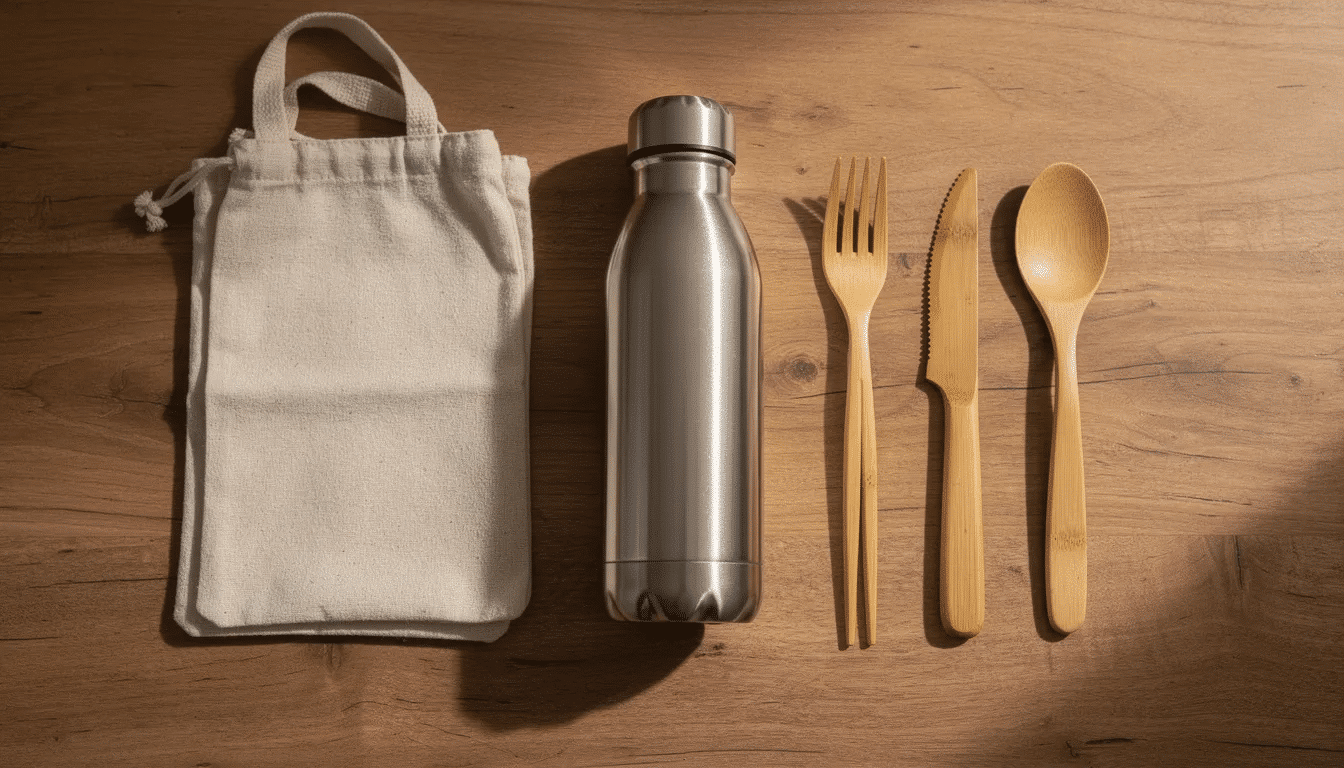
- Stainless steel drink bottles – Made from recyclable materials, last 10+ years, and replace hundreds of single use plastic bottles
- Bamboo toothbrushes – Handles from fast-growing bamboo fiber decompose naturally, unlike plastic brushes that persist for centuries
- Reusable coffee pods – Stainless steel or silicone pods eliminate thousands of aluminium capsules per household annually
- Period underwear – Super absorbent, washable alternatives that replace hundreds of disposable pads and tampons over their lifespan
- Recycled-plastic activewear – Swimwear and gym gear made from recycled plastics pulled from ocean-bound waste
Sustainable products now span every room in your home: kitchen, bathroom, clothing, tech accessories, and travel gear. Throughout this article, you’ll see how each swap reduces your environmental footprint—and often helps you save money over time through durability and reduced waste.
What Makes a Product Truly Sustainable (vs. Just “Eco-Friendly”)?
The terms “eco friendly” and “sustainable” often get used interchangeably, but they’re not the same thing. Eco friendly products typically focus on immediate environmental benefits—a product that’s biodegradable, for instance, or free from certain chemicals. Sustainable products go further, considering the full lifecycle and the social conditions under which they’re made.
Here’s what separates genuinely sustainable products from the rest:
- Renewable or recycled materials – Made from resources that regenerate quickly (bamboo, hemp, organic cotton) or repurposed waste streams (recycled plastics, reclaimed metals)
- Low energy and water in production – Manufacturing process optimized to reduce energy waste and minimize water consumption
- Durability and repairability – Built to last years, not months, with available replacement parts or repair services
- Clear end of life options – Designed for recycling, composting, or return programs rather than landfill
- Fair labor and ethical sourcing – Ethically produced with transparent supply chains and worker protections
The framework behind this is often called the “triple bottom line”—people, planet, profit. This approach, standard in sustainability discussions since the 1990s, recognizes that a product isn’t truly sustainable unless it works for communities, ecosystems, and economic viability simultaneously.
Here’s the key distinction: all sustainable products should be eco friendly, but not all eco friendly products are sustainable. A biodegradable cleaning product manufactured using exploitative labor practices, for example, might be marketed as “green” but fails the sustainability test. The difference matters when you’re trying to reduce environmental impact without shifting harm elsewhere.
Kitchen & Food: Sustainable Swaps You’ll Use Every Day
Kitchens generate enormous volumes of plastic waste and food waste, making them the easiest place to start reducing your environmental impact. From single-use packaging to disposable plastic bags that get used once and thrown away, the average household kitchen cycles through hundreds of wasteful items annually.
Here are the swaps that make the biggest difference:
- Reusable stainless steel drink bottles – Look for 304 or 316 food-grade steel with a 10+ year lifespan. One durable bottle replaces hundreds of plastic bottles over its life. Many come with options for laser engraving, making them easy to personalize and harder to lose.
- Reusable rPET shopping and produce bags – Made from recycled drink bottles, these fold into small pouches you can keep in a jacket pocket or car. They replace the thin disposable plastic bags supermarkets hand out by the dozen and handle heavier loads without tearing.
- Beeswax or vegan food wraps – These replace plastic wrap for covering bowls and wrapping sandwiches. One wrap, used a few times per week, can replace dozens of meters of cling film annually. They keep food fresh using natural wax coatings and last about a year with proper care.
- Reusable silicone baking mats – Heat-resistant up to ~250°C, one mat replaces multiple rolls of baking paper. They’re non toxic, easy to clean, and work with cookies, roasted vegetables, and pastries equally well.
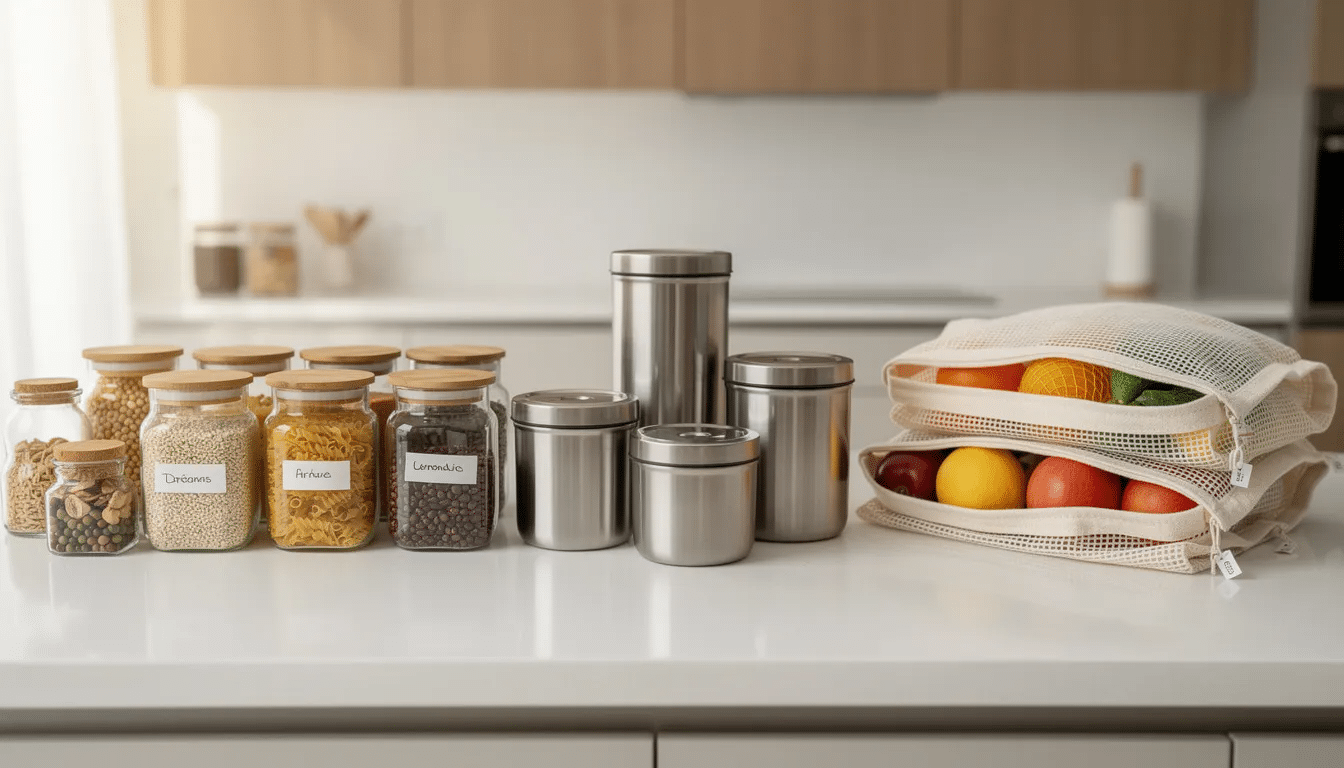
- Stainless steel or glass food containers – Durable, freezer-safe, and free from the chemicals in some plastic packaging. Silicone-lidded versions create an airtight seal that keeps food fresh longer and eliminates the need for takeaway containers.
- Home compost caddies – Steel bins with charcoal filters sit on your counter and collect food scraps without odor. Composting diverts organic waste from landfills, where it would otherwise produce methane—a greenhouse gas significantly more potent than CO2.
- Reusable coffee systems – Stainless steel filter cones, pour-over setups, or reusable pods for capsule machines. Each cup of coffee made this way avoids the aluminium or plastic waste of single-serve pods. One cup at a time, the impact adds up.
Before rushing to buy everything new, make the most of what you already own first. Use existing containers, bags, and tools until they genuinely wear out, then replace them with sustainable alternatives. This approach respects the resources already embedded in your current possessions.
Bathroom & Personal Care: Low-Waste Habits That Add Up
Bathrooms are surprisingly dense with single use plastic waste—shampoo bottles, disposable razors, plastic-wrapped soaps, and period products generate kilograms of landfill-bound packaging every year. The good news is that nearly every bathroom staple has a long lasting, low-waste alternative.
Here are the most impactful swaps:
- Bamboo or bioplastic toothbrushes – Handles made from sustainably grown bamboo can be composted at end of life, unlike conventional plastic brushes that persist in landfills for centuries. Look for plant-based bristles where possible, though nylon bristles can be removed and disposed of separately.
- Safety razors with metal blades – A single metal handle lasts decades with proper care. The blades are recyclable (collect them in a blade bank), unlike plastic cartridge razors where the entire head goes to landfill. Initial cost is higher, but long-term you’ll save money considerably.
- Bar soap, shampoo, and conditioner bars – Minimal packaging (usually just paper or cardboard), and one solid bar typically replaces 2–3 plastic bottles of liquid product. Many brands now offer bars that work across hair types without drying or residue.
- Refillable or concentrated toothpaste formats – Toothpaste tablets in glass or metal tins eliminate plastic tubes entirely. Chew, brush, rinse. Some brands offer concentrates in small glass bottles that you dilute with water in a reusable container.
- Deodorant in refillable or compostable packaging – Paper tubes or stainless steel cases with refillable inserts replace the plastic stick you’d otherwise throw away every few months. Many zero waste brands now offer formulas that work as well as conventional options.
- Reusable menstrual products – Period underwear and menstrual cups replace hundreds of disposable pads and tampons per person over several years. Initial investment is higher, but cost effective within months. Many period underwear brands focus on being super absorbent while remaining comfortable for all-day wear.
- Silk or biodegradable dental floss – Traditional floss is plastic-coated nylon in a plastic dispenser. Silk or plant-based alternatives come in refillable glass or steel containers—you buy the floss spool, not a new dispenser each time.
- Natural skincare in sustainable packaging – Look for products in recycled, recyclable, or glass containers. Third party certifications like B Corp, organic certifiers, or cruelty-free labels offer quick verification that a brand stands behind its claims.
Each swap follows a simple pattern: replace a disposable item with a durable or refillable alternative. The upfront cost is typically higher, but over a year or two, you’ll reduce both waste and spending.
Clothing & Fashion: From Fast Fashion to Long-Life Wardrobes
Fashion carries a heavy environmental footprint. Cotton farming uses enormous volumes of water and pesticides. Synthetic fabrics shed microplastics with every wash. Fast fashion encourages buying cheap clothes that fall apart in months and end up in landfill. Building a sustainable wardrobe means shifting from quantity to quality—and choosing materials that work for both you and the planet.
Here’s what to prioritize:
- Buy secondhand first – The most sustainable garment is one that already exists. Secondhand and vintage clothing reuse what’s already been made, avoiding the resources needed for new production entirely. Resale apps and thrift shops have expanded dramatically through the mid-2020s, making it easier than ever to find quality pieces.
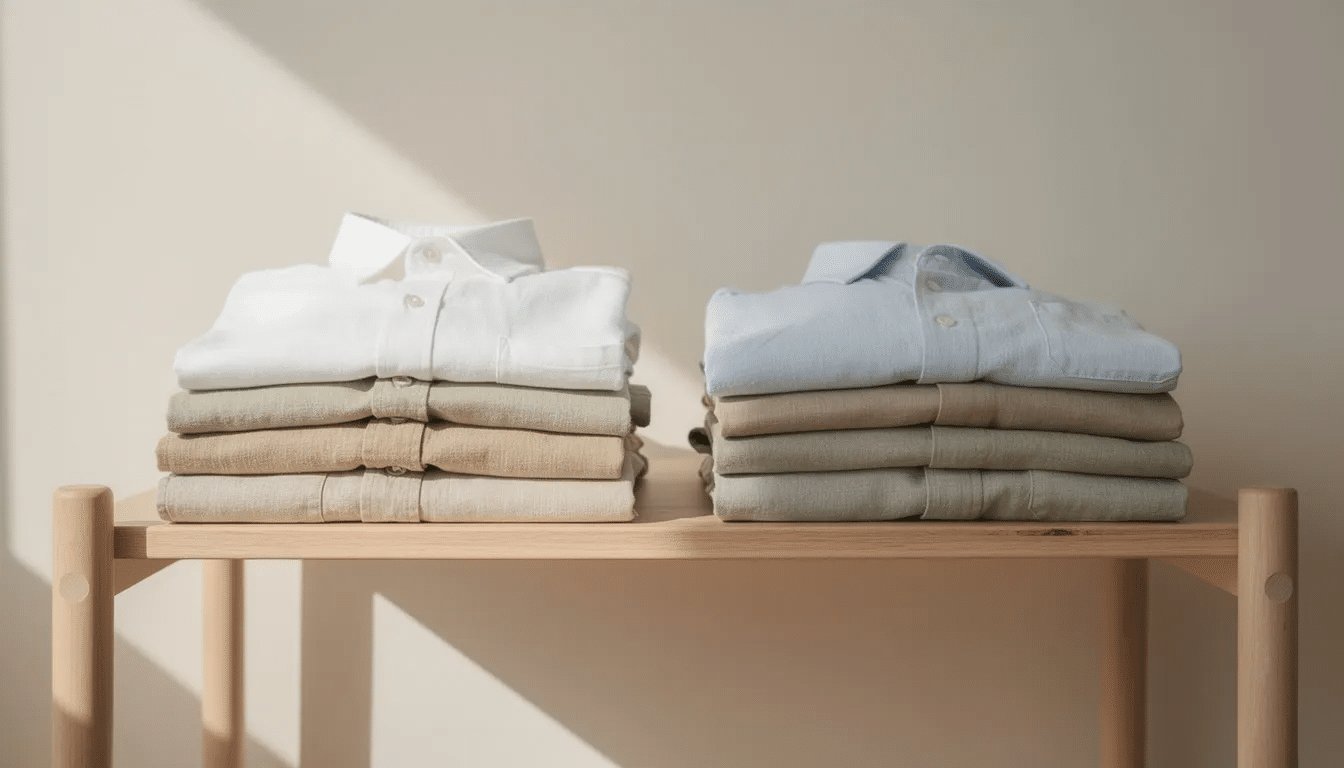
- Clothes made from hemp, organic cotton, linen, or bamboo – These fibers require significantly less water and pesticides than conventional cotton. Bamboo grows rapidly without irrigation or chemical inputs. Organic cotton farming improves soil health and avoids the toxic pesticides linked to environmental degradation in conventional production.
- Recycled polyester and nylon – Activewear made from post-consumer plastic bottles, swimwear from reclaimed fishing nets. These materials keep recycled plastics out of landfills and oceans. Note: synthetic fabrics shed microplastics when washed, so consider using a microplastic-filter laundry bag.
- Durable everyday basics – Quality socks, underwear, and T-shirts from certified sustainable fibers last years rather than months. Prioritize repairability and construction quality over trend-driven designs. A well-made T-shirt at $40 worn for 5 years costs $8 per year; a $10 shirt that falls apart in 6 months costs $20 per year.
- Sustainable accessories – Hats, belts, and bags from recycled leather, plant-based alternatives (apple leather, pineapple fiber, cactus leather), or recycled textiles. These materials perform comparably to conventional options with a fraction of the environmental impact.
- Certifications that matter – GOTS (Global Organic Textile Standard), Fairtrade, and B Corp certifications offer reliable shortcuts for identifying brands committed to both environmental and social standards. Look for these when evaluating new purchases.
The contrast between fast fashion and durable clothing becomes clear in cost-per-wear calculations. A jacket worn twice before it tears costs far more per use than a quality piece worn weekly for a decade—even if the sticker price is five times higher.
Home, Cleaning & Everyday Utilities: Quietly Powerful Sustainable Products
Home cleaning and utilities offer rich opportunities to reduce chemicals, plastics, and energy usage without sacrificing effectiveness. These aren’t glamorous swaps, but they’re powerful—used daily or weekly, their cumulative impact on reducing plastic waste and carbon emissions adds up quickly.
Here are the key product categories:
- Concentrated or refillable cleaning products – Tablets, pods, or concentrates in glass or aluminum packaging that you dilute with tap water in a reusable spray bottle. One concentrate tablet often replaces an entire plastic jug. This approach cuts transport emissions (you’re not shipping water) and keeps plastic free packaging in your cupboard.
- Compostable cleaning tools – Dish brushes and scrubbers with bamboo handles and sisal or coconut fiber bristles. At end of life, these go in your compost bin rather than landfill. Look for metal wire attachments that can be separated for recycling.
- Reusable “unpaper” towels and cloths – Cotton or bamboo flannel rolls that wash and reuse. One set replaces multiple paper towel rolls per year. They’re absorbent, durable, and work for everything from wiping counters to cleaning windows.
- Certified compostable bin liners and pet-waste bags – These meet standards like EN 13432 or AS 5810, ensuring they break down in industrial composting. Important note: they’re designed for composting systems, not landfills where they’ll decompose slowly without proper conditions.
- Laundry sheets or refillable detergents – Pre-measured strips in cardboard boxes eliminate the need for plastic jugs. They dissolve completely in water, work in cold wash cycles (reducing energy waste), and take up far less storage space.
- Dryer balls – Wool or silicone balls that reduce drying time by improving air circulation and soften clothes naturally. They replace single-use dryer sheets and last for hundreds of loads.
Understanding “environmental payback” helps evaluate these products. A reusable spray bottle, for example, might cost $15 but replaces 10–20 single-use plastic trigger bottles over its lifespan. The payback point—where the reusable option’s production impact is offset by avoided waste—often arrives within the first few months of use.
Tech, Travel & “Nice-to-Haves”: Sustainable Products Beyond the Basics
Once you’ve covered everyday essentials, tech and travel products offer additional opportunities to reduce your environmental impact and support circular economy design. These items are less about daily habit change and more about choosing better versions of things you’d buy anyway.
Here’s what to consider:
- Solar chargers and power banks – Portable solar panels that charge devices from sunlight, offsetting grid energy use during travel or outdoor work. Modern panels are compact enough for backpacks and powerful enough to charge phones in a few hours of direct sun.
- Phone cases from biopolymers or recycled materials – Compostable cases made from plant-based materials can be industrially composted at end of life. Cases from recycled plastics keep waste out of landfills while providing the same drop protection as conventional options.
- Suitcases and backpacks with rPET linings – Fabric made from recycled drink bottles diverts plastic from oceans and landfills. Many brands now offer long warranties and repair programs, extending product life significantly.
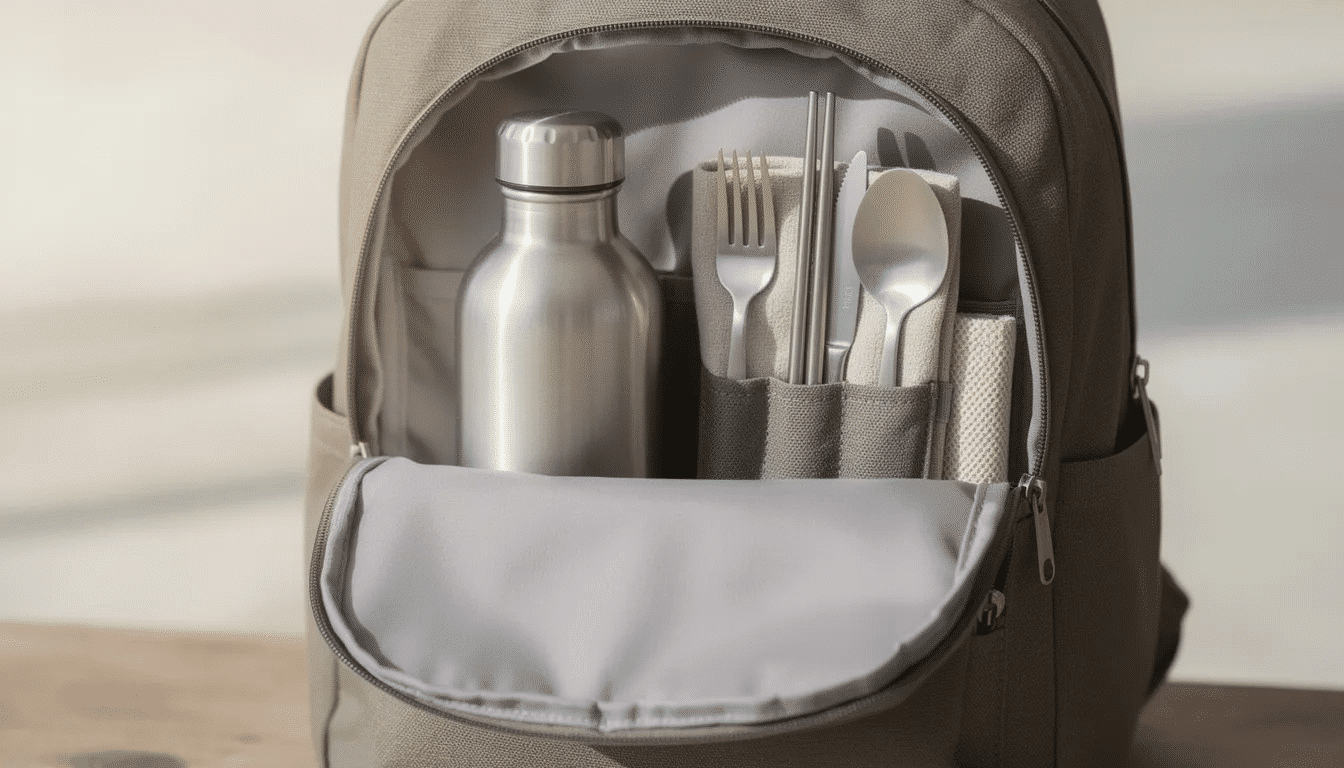
- Reusable travel cutlery and straws – Compact stainless steel or bamboo kits replace airline and takeaway single-use cutlery. A small case that fits in your bag can eliminate hundreds of disposable items annually for frequent travelers.
- Reusable lunch wraps and bento containers – Designed for work and school lunches with leak-proof seals. They replace daily sandwich bags and takeaway containers, keeping both food fresh and waste minimal.
- Recycled-material accessories – Umbrellas from recycled fabric, wallets from reclaimed leather, multi-tools with recycled metal components. These items demonstrate that sustainable doesn’t mean compromising on function or design.
Consider a frequent traveler who switches from disposable coffee cups and airline cutlery to a reusable kit: a steel cup, compact cutlery set, and collapsible water bottle. Over a year of regular travel, that’s hundreds of single-use items avoided—a meaningful difference from small changes.
How to Tell if a Product Is Genuinely Sustainable (and Not Just Greenwashed)
As sustainability sells, greenwashing has become increasingly sophisticated. Brands know that consumers want eco products, so vague claims like “natural,” “green,” or “earth-friendly” appear on packaging without any verification behind them. Learning to distinguish genuine sustainability from marketing spin protects both your wallet and your values.
Here’s a 30-second sustainability check you can apply to any product:
- Look for third party certifications – B Corp, Fairtrade, FSC (Forest Stewardship Council), GOTS, Climate Neutral, and recognized organic certifiers provide independent verification. These matter more than a brand’s self-declared “eco friendly” label.
- Check materials and construction details – Specific percentages of recycled content, exact fiber names (not just “natural materials”), and information about repair options. Vague descriptions often hide conventional materials.
- Research brand transparency – Does the company publish information about sourcing, manufacturing locations, and worker protections? Brands committed to sustainability typically share this openly. Silence often indicates there’s something to hide.
- Consider product lifespan – Warranties, repair services, and availability of replacement parts signal a brand that expects its products to last. Short warranties or no repair options suggest the product isn’t built for longevity.
- Evaluate packaging – Minimal, recycled, or fully recyclable packaging demonstrates attention to the whole product lifecycle. Excessive plastic packaging around an “eco” product is a red flag.
- Beware single “green” features on wasteful products – A gadget made from recycled plastics but designed to be unrepairable and obsolete in two years isn’t sustainable. The closed loop system approach means designing for the entire lifecycle, not just one element.
When evaluating claims, apply the principle that specifics matter more than generalities. “Made with 80% post-consumer recycled polyester, certified by GRS” is verifiable. “Made with eco-friendly materials” is not. The former demonstrates accountability; the latter is marketing.
Final Thoughts: Start Small, Use What You Have, Then Choose Better Products
The most sustainable action you can take is reducing consumption and maximizing use of what you already own. That worn-out plastic container still has life left; the older clothes in your closet don’t need replacing just because sustainable alternatives exist. Use things fully, repair when possible, and upgrade only when genuinely necessary.
When you do need to replace something, sustainable products now span your whole life: kitchen tools that reduce food waste and plastic packaging, bathroom essentials that eliminate single-use plastics, clothing built to last rather than follow fast fashion cycles, and cleaning products designed for a healthier planet. Each thoughtful swap reduces waste, often saves money over time, and shifts demand toward better design.
Rather than overhauling everything at once, pick one or two categories from this article—maybe reusable water bottles and concentrated cleaners—and make those changes this month. Small, consistent actions compound over time into significant reduction of your environmental footprint.
There’s reason for optimism. Rising consumer demand for genuinely sustainable products in 2025 and beyond is pushing businesses toward better materials, smarter circular design, and fairer supply chains. Your choices create market signals. Every purchase of a durable, ethically produced, recyclable product tells manufacturers that a sustainable future matters—and that you’re willing to support companies working toward it.
The world changes one decision at a time. Make yours count.