
There’s something deeply satisfying about creating a birthday card that no store could ever sell. A sewing birthday card combines the tactile beauty of fabric with the personal touch of handmade paper crafts, resulting in a keepsake your recipient will treasure long after the candles are blown out.
Whether you’re a seasoned quilter with overflowing fabric scraps or a beginner looking for a quick, creative project, stitching a greeting card offers endless possibilities. In this tutorial, you’ll learn everything from simple candle designs to patchwork motifs, plus practical tips on threading, mailing, and making your handmade cards look professionally finished.
Quick Answer: What Is a Sewing Birthday Card?
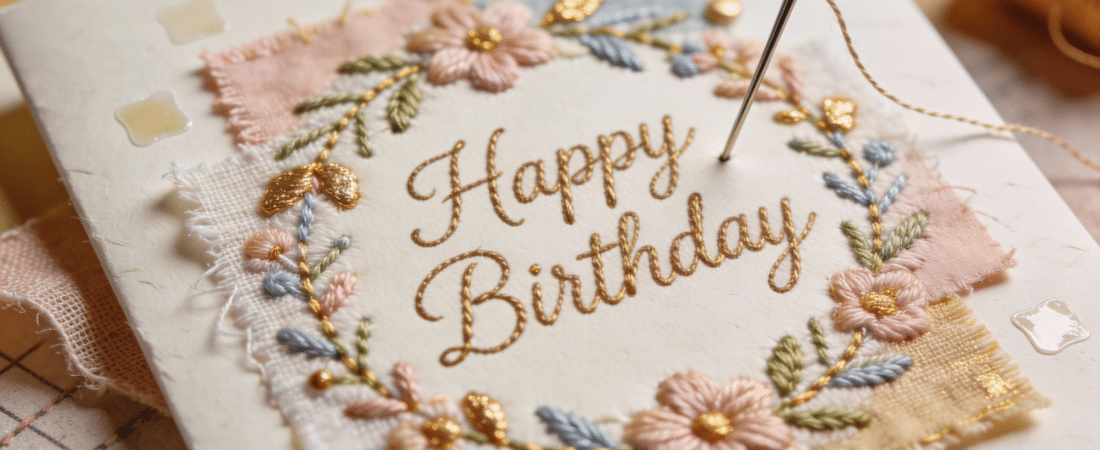
A sewing birthday card is a greeting card made by stitching fabric, felt, or decorative thread directly onto cardstock, creating a textured, dimensional design perfect for milestone celebrations like 30th, 40th, or kids’ birthdays.
Sewing birthday cards come in two main forms: fully handmade cards where you sew directly on cardstock with fabric appliqués, or printed sewing-themed designs featuring motifs like thread spools, scissors, and quilting patterns for seamstresses and fabric lovers. Both approaches deliver that super cute, personal touch that generic store-bought cards simply can’t match.
The main benefit of this craft is creating highly personal, textured, keepsake-worthy birthday cards using scrap fabric, felt, and simple stitches. You can turn tiny fabric offcuts destined for the bin into charming candles, bunting, or kites that match any birthday theme.
This article will cover:
- Easy stitched card tutorials including “Make a Wish” candles and kites
- Ideas for sewing-themed printed cards for quilters and crafters
- Practical tips on threads, card sizes, needle choices, and mailing
Every section uses clear bullet points and concrete instructions, giving you a blueprint you can follow from start to finish.
- Why Make a Sewing Birthday Card?
- Essential Materials and Tools for Sewing Birthday Cards
- Handsewn “Make a Wish” Candle Birthday Card
- Striped “Make a Wish” Sewing Birthday Card (Fast Version)
- More Sewing Birthday Card Ideas with Fabric and Felt
- Sewing-Themed Printed Birthday Cards (For Quilters & Fabric Lovers)
- How to Sew on Paper Without Tearing Your Card
- Personalizing and Presenting Your Sewing Birthday Card
Why Make a Sewing Birthday Card?
Handmade sewn birthday cards feel infinitely more special than grabbing something generic from a supermarket shelf. The texture of fabric, the visible stitching, and the obvious care that went into creating it transform a simple card into something your family and friends will want to keep for years. It’s a cute idea that combines creativity with genuine thoughtfulness.
- Personalization for specific people: Tailor your design to match the recipient—a rainbow fabric candle card for a child’s 7th birthday, a “Happy Birthday Quilter” card for a friend in your local quilt club, or a “Material Girl” design for a fabric-obsessed sister who can never pass a fabric shop without buying something.
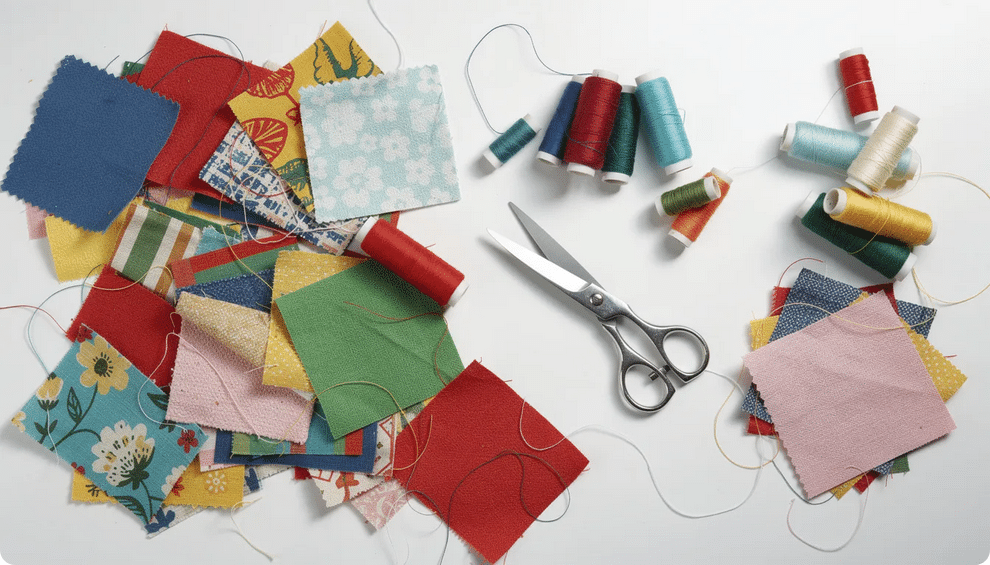
- Use your scraps: Those tiny pieces of cotton, linen, felt, or even selvedge edges taking up space in your sewing room can be transformed into candles, bunting, kites, patchwork blocks, or leaf motifs. It’s the perfect way to give new life to offcuts that would otherwise go to waste.
- Match your handmade gifts: Create a coordinated sewing birthday card to accompany a patchwork pouch, drawstring gift bag, or quilt you’ve made. The card becomes part of the gift itself, showing extra thought and effort.
- Budget and sustainability: Save money on cards for big events by making a batch of 10 sewn cards ahead of a family birthday season. You’ll reuse offcuts and recycled cardstock while avoiding the cost of premium store-bought options.
- Creative satisfaction: Sewing on paper is quick, fun, and doable in under 30 minutes per card once you’ve made one or two designs. It’s the perfect project when you need a creative break from larger sewing patterns or want a quick win.
Essential Materials and Tools for Sewing Birthday Cards
Most cards can be made with standard sewing supplies you already own, plus good quality cardstock. You don’t need a fancy embroidery machine or specialized equipment to create professional-looking results.
- Card base: Use A6 cards (approximately 10.5 × 14.8 cm) or 5” × 7” folded cards. Choose 300–350 gsm weight cardstock, preferably smooth white or kraft paper, which holds up well to stitching without tearing.
- Fabric and felt: Gather cotton quilting scraps, felt sheets in bright birthday colors (red, yellow, teal, pink, navy), and fun prints featuring balloons, confetti, stripes, or florals. These work beautifully for candles, kites, banners, and backgrounds.
- Thread: Stock polyester or cotton thread in contrasting colors—black or dark grey for outlines, metallic gold for flames and sparkles, and bright tones to match your fabric choices. Keep a neutral bobbin thread for the back of the card.
- Adhesives: Use a glue stick or small dots of fabric glue to tack pieces in place before stitching. Avoid heavy liquid glue that seeps through thin fabric and creates visible wet spots.
- Tools: A standard sewing machine with a new size 80/12 or 90/14 needle reserved specifically for paper projects, hand-sewing needles for simple embroidery details, fabric scissors, paper trimmer or craft knife, ruler, pencil, and erasable fabric marker.
- Finishing items: C6 envelopes or matching envelopes for your card size, optional inner liner (thin colored paper or cardstock) to hide back-side stitching, and washi tape or stickers for inside decoration.
Handsewn “Make a Wish” Candle Birthday Card
This design creates a charming row of fabric birthday candles stitched onto white cardstock, with contrasting thread outlining each candle and bright flames dancing above. It’s a perfect handmade birthday card for kids or anyone who loves a classic birthday cake aesthetic.
- Planning the layout: Draw a light pencil rectangle centered on the front of an A6 card to mark your design area. Leave approximately 2 cm of space above or below for “Make a Wish” or “Happy Birthday” printed in 12–18 pt font.
- Preparing candles: Cut narrow fabric strips approximately 1 cm × 5 cm in stripes, polka dots, or solid colors. Create 3–7 candles in a row depending on the birthday—3 candles for a 3rd birthday, 7 for a 7th birthday celebration.
- Preparing flames and wicks: Cut small teardrop shapes from yellow or orange felt for flames. You’ll create thin candle wicks using black thread stitched directly onto the cardstock above each candle.
- Gluing before sewing: Place tiny dots of glue on the wrong side of each candle and flame, tack them to the card about 1 cm below the top edge, and let dry for a few minutes before you begin to sew.
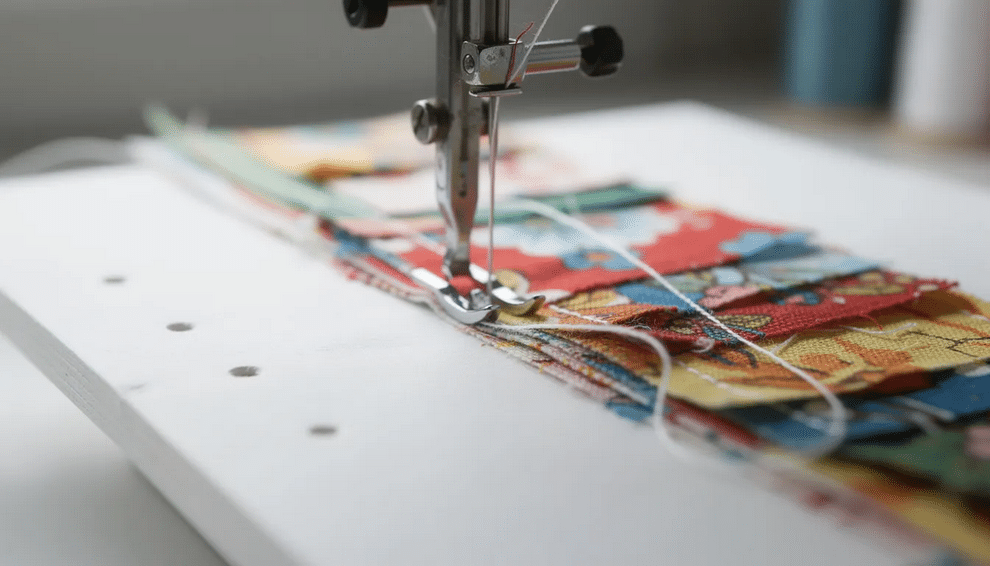
- Machine stitching: Sew sketchy rectangles or double line outlines around each candle using a straight stitch and contrasting thread. Turn the card slowly at corners to prevent cracking or creating deep perforations that weaken the cardstock.
- Flame stitching: Stitch a few short radiating lines around each flame (like sun rays) using metallic thread or bright yellow for extra sparkle. Set your stitch length to 3.0–3.5 mm when sewing on paper to reduce perforation.
- Finishing touches: Trim all threads neatly on both sides. Add your printed or hand-lettered sentiment underneath the candles. Glue an inner cardstock panel slightly smaller than the card front to cover reverse-side stitching and create a clean writing surface inside.
Striped “Make a Wish” Sewing Birthday Card (Fast Version)
This variation offers a quicker approach using pre-stitched background stripes with layered fabric candles and flames on top. It’s ideal for last-minute birthdays when you need something nice but don’t have hours to spare.
- Background stripes: Cut horizontal fabric strips about 2–3 cm wide and the full width of your card. Position them roughly 2.5 cm from the top edge with about 1–1.5 cm space between each strip.
- Light gluing: Tack each strip in place with a glue stick, smoothing out wrinkles and ensuring edges extend slightly past the fold so they can be trimmed flush after stitching is complete.
- Stitching rectangles: Sew loose, sketch-style rectangles around each fabric stripe using contrasting thread (such as navy thread on pastel fabrics). Let your stitches overlap at corners for a playful doodled effect.
- Adding candles: Layer slimmer candle strips vertically over the stitched backgrounds. Position them so the top third of each candle extends above the fabric stripes where you’ll attach flames.
- Flames and details: Cut tiny teardrop flames and stitch around them as described above. Add simple straight-stitch confetti or starbursts between candles for extra celebration.
- Sentiment placement: Print “Make a Wish” or “Happy Birthday” near the top edge or bottom margin before sewing, or stamp it after stitching using birthday-themed stamps.
- Interior finish: Glue a plain white or colored inner panel to hide all stitching and thread tails, giving your card a professional, store-bought finish that belies its homemade cards origins.
The look should be playful and slightly imperfect—embrace the charm of wobbly stitching. That hand-sewn quality is precisely what makes these cards special.
More Sewing Birthday Card Ideas with Fabric and Felt
Beyond candles, countless easy motifs work beautifully for all ages and birthday themes. These ideas use the same basic techniques but open up creative possibilities for every occasion.
- Fabric scraps collage card: Arrange small squares and rectangles in a random “confetti” or mosaic design across the card front. Stitch with multiple vertical and horizontal lines to secure everything in place, creating an abstract celebration of colors and patterns.
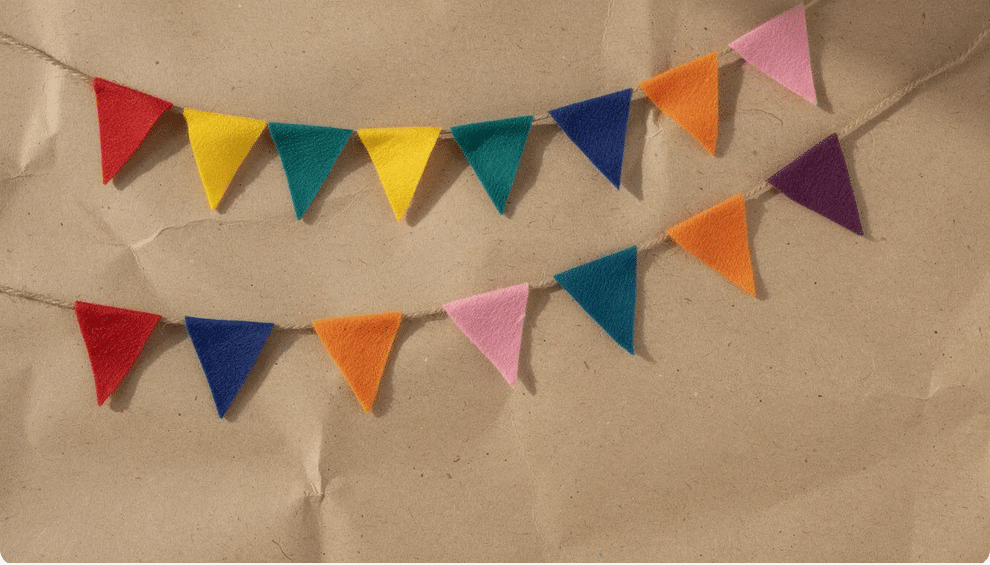
- Felt bunting card: Cut tiny triangles from two contrasting colors of felt, arranging them in a curved banner across the top of the card. Sew along the top edges in one continuous line of stitching to create a festive party bunting effect.
- Fabric kite birthday card: Cut a diamond-shaped kite from patterned fabric, stitch an outline, and add a trailing tail made from tiny fabric or ribbon bows. This design works especially well for spring or summer birthdays.
- Leaf or floral appliqué card: Use leaf-shaped felt scraps sewn in a cluster, or create a simple stylized flower with embroidered stems. This approach suits adult birthdays or occasions close to Mother’s Day perfectly.
- Patchwork mini-quilt card: Sew a 3 × 3 or 4 × 4 grid of 2.5 cm squares onto a separate piece of thin card, then mount it onto the front of your main card. This mimics a tiny quilt and delights any quilter recipient.
- One-piece fabric statement print card: Choose a bold patterned fabric (rainbow stripes or birthday balloons work brilliantly), fuse or glue it to the card front, then stitch around the edge and perhaps highlight some printed motifs with additional stitching.
Sewing-Themed Printed Birthday Cards (For Quilters & Fabric Lovers)
Not every card needs to be fully handsewn to delight a crafter. You can design or buy printed sewing-themed birthday cards that celebrate the recipient’s love of fabric and thread.
- Card size and format: A6 greeting cards (approximately 10.5 × 14.8 cm) printed on 300–350 gsm glossy or matte card work perfectly. These typically feature a blank inside and come with a matching C6 white envelope.
- Design ideas: Consider phrases like “Happy Birthday to my favourite Quilter,” “Material Girl,” “Fabric Stash Queen,” “Cute as a Button,” or “Thanks Sew Much for being born!” Pair these with illustrated scissors, thread spools, pincushions, or rainbows of fabric bolts.
- Target recipients: These printed cards suit quilters, dressmakers, embroidery enthusiasts, or anyone with a towering fabric stash. They also work as appreciation cards for sewing teachers or guild members.
- Production tips: Use digital illustration tools or scan simple collage artwork, then print short runs at a local print shop or via an online printer. This approach lets you create custom designs without hand-stitching every card.
- Finishing touches: If you’re selling or gifting multiple cards, add cellophane wraps for protection. Include small branding on the back with your website or social media handle. Leave the inside fully blank for handwritten messages.
- Combine approaches: Pair a printed sewing-themed birthday card with a small handmade gift like a needle minder, pincushion, or fat quarter bundle for an extra-special presentation.
How to Sew on Paper Without Tearing Your Card
Sewing on cardstock presents unique challenges—perforation, cracking at fold lines, and visible needle holes can all cause frustration. With a few adjustments, you’ll achieve clean, professional results every time.
- Needle choice: Use an older but still sharp universal needle (size 80/12 or 90/14) designated specifically for paper projects. The cardstock dulls needles quickly, so don’t reuse these needles on fabric for garments afterward.
- Stitch length: Choose a longer stitch (around 3.0–3.5 mm) to reduce perforation. Smaller stitches create too many holes close together, which can cause the cardstock to tear along stitch lines.
- Speed and handling: Sew slowly, supporting both sides of the card with your hands. Avoid rapid pivoting at corners. Be aware that folding the card before sewing can weaken the fold, so work on flat cardstock when possible.
- Securing threads: A small backstitch or a few overlapping stitches at the start and end of each line secures threads effectively. Alternatively, pull threads to the back and tie tiny knots before trimming.
- Glue control: Too much glue under fabric makes the needle gummy and leaves visible wet spots on your finished card. Let any glue dry fully before stitching, and clean your needle with a damp cloth if it becomes sticky.
- Inside cover panel: Hide messy stitches and thread tails by gluing a slightly smaller panel of cardstock to the inside front of your card. This creates a clean writing surface and gives homemade cards a polished appearance.
- Mailing considerations: Check your card’s thickness for postage requirements. Avoid bulky buttons or embellishments that could jam letter sorting machines. Send dimensional cards in padded envelopes to protect raised elements during transit.
Personalizing and Presenting Your Sewing Birthday Card
Making each card feel tailored to the recipient transforms a craft project into a treasured gift. Small customizations show you put real thought into the design.
- Names and ages: Add the recipient’s name and age using stitched numbers, stamped letters, or heat-transfer vinyl on the front. “Ella is 5” on a rainbow candle card or “Happy 40th Sarah” makes the card uniquely theirs.
- Color palettes: Choose colors the recipient wears or decorates with. Soft pastels suit a baby’s first birthday, bold jewel tones celebrate a 50th birthday, and bright primary colors work perfectly for children.
- Inside message ideas: Write sewing-themed birthday greetings like “Hope your day is sew special,” “Another year, another yard of fabric,” or “Wishing you a birthday stitched with joy.” These words add extra charm for crafty recipients.
- Coordinated sets: Create a matching gift tag by repeating one candle or bunting motif on a small rectangle of cardstock. Punch a hole and tie with baker’s twine for a complete, coordinated presentation.
- Storage and keepsake tip: Advise recipients that machine-sewn cards last best when stored flat in a box or scrapbook, away from direct sunlight that can fade fabric colors over time.
Your next birthday card doesn’t need to come from a store—it can come from your scrap bin and sewing machine. Start with a simple candle design this week, and you’ll quickly discover how addictive this craft becomes. Share your creations with friends and family, or join online sewing communities to find more inspiration from fellow crafters.
If you found this tutorial helpful, subscribe to our email list for more project ideas, or check out our other posts on handmade gift-making. We hope this post has inspired you to pick up those fabric scraps and create something beautiful for someone’s next birthday.